Categories
Aesthetic Lighting Help

2026 ICFF Report – The Lighting Edition

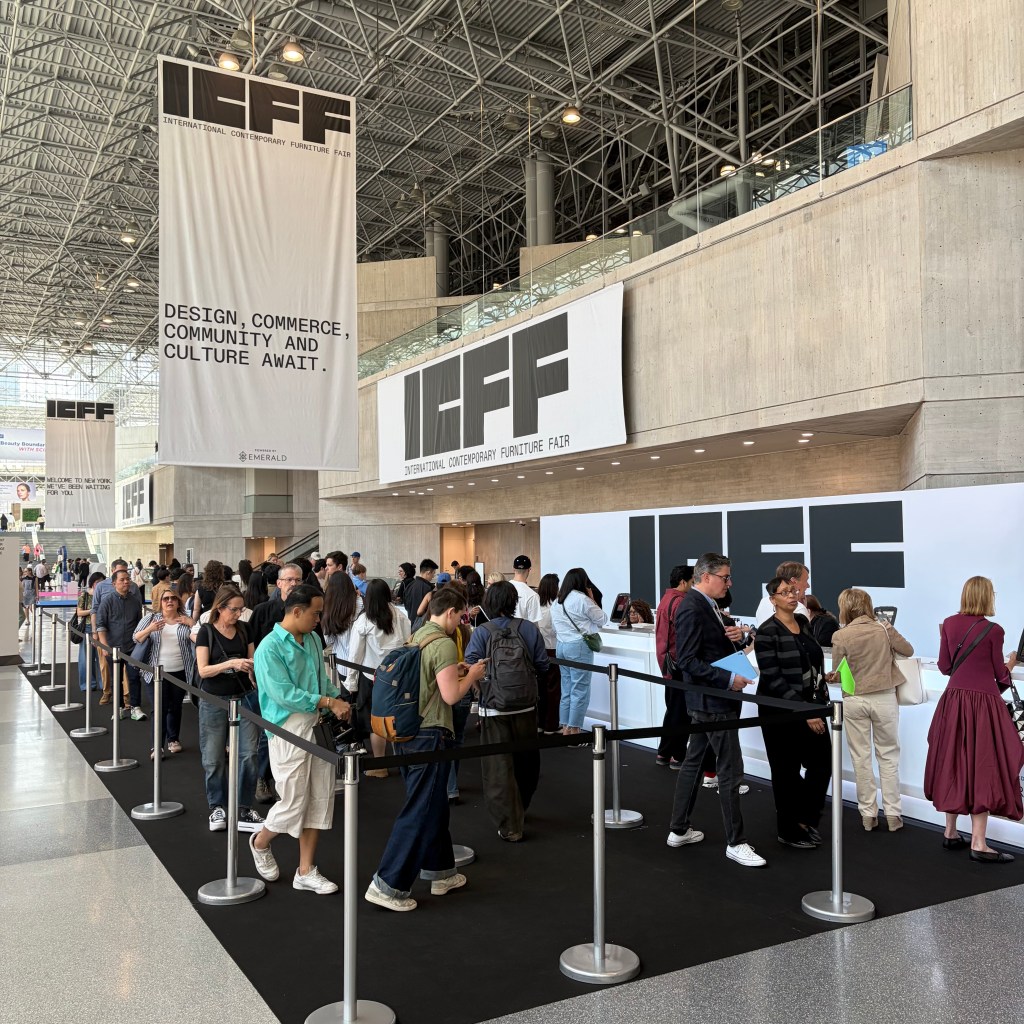
A day before I left for New York, I received an email from ICFF informing me that this would be the last “solo” edition of this show. Starting in 2027, ICFF will co-locate with BDNY. I was beginning to worry that the show would be a disappointment. I thought, they announced the decision at this odd time because of so little interest. When I arrived at the hall, there was no line at the badge pick-up counter. Ah-oh. This does not bode well. Happily, I found many things of interest. By the time I was ready to leave, the lobby was packed. I should have known; this is not a show where attendee wait in an early line to enter. The creative community is much more likely to arrive at the club around midnight. Only old guys like me, who have tickets for a late matinee (Titanique!) before leaving town, arrive early.

A lot of things caught my interest and they are intermingle here with things I found while wandering the city for three days. This post will be about lighting. In two weeks, I’ll discuss the non-lighting things that attracted me.

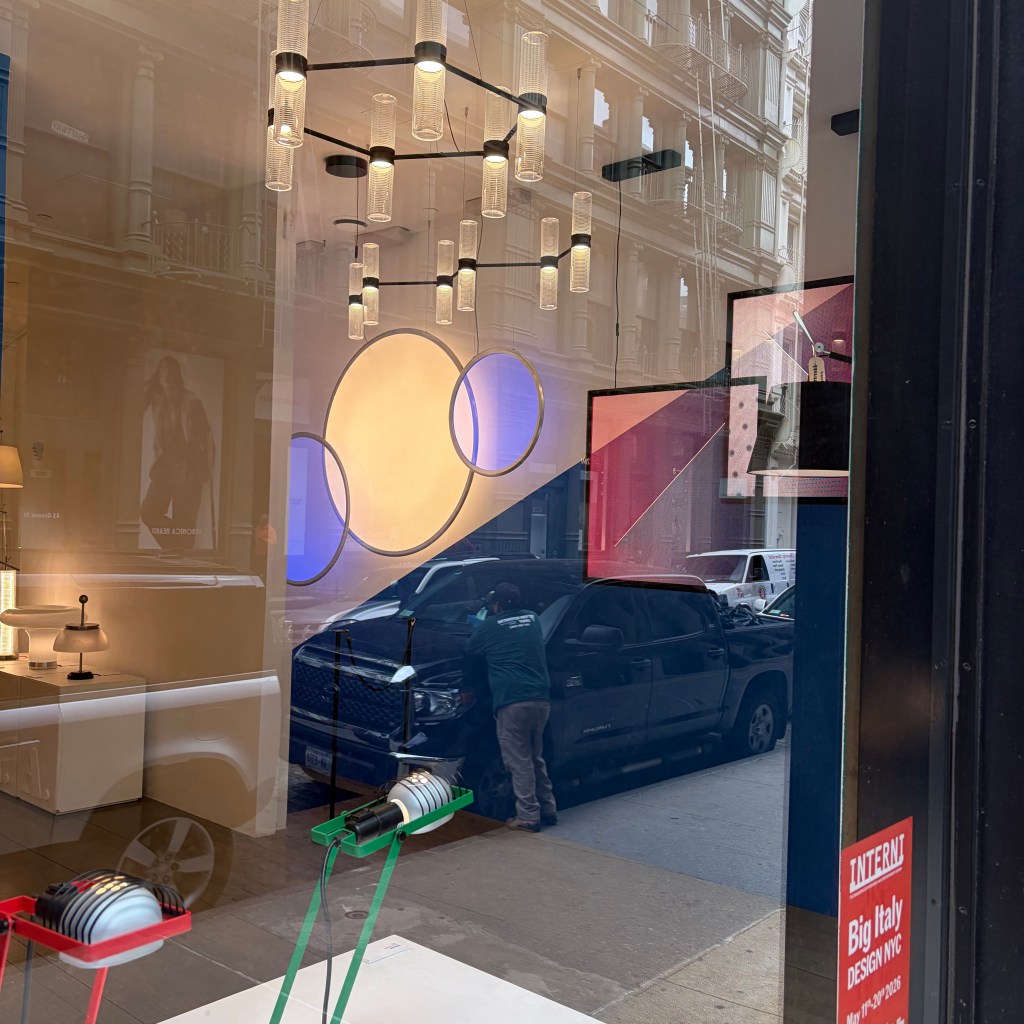
Fontana Arte – SOHO Showroom front window

A few weeks ago at LEDucation, I mentioned that one of the speakers wondered when we might have illuminated wall surfaces. I was reminded of this as I passed the Fontana Arte and saw their square and round LED pendant panels. This concept could easily trigger a new way to illuminate a room.

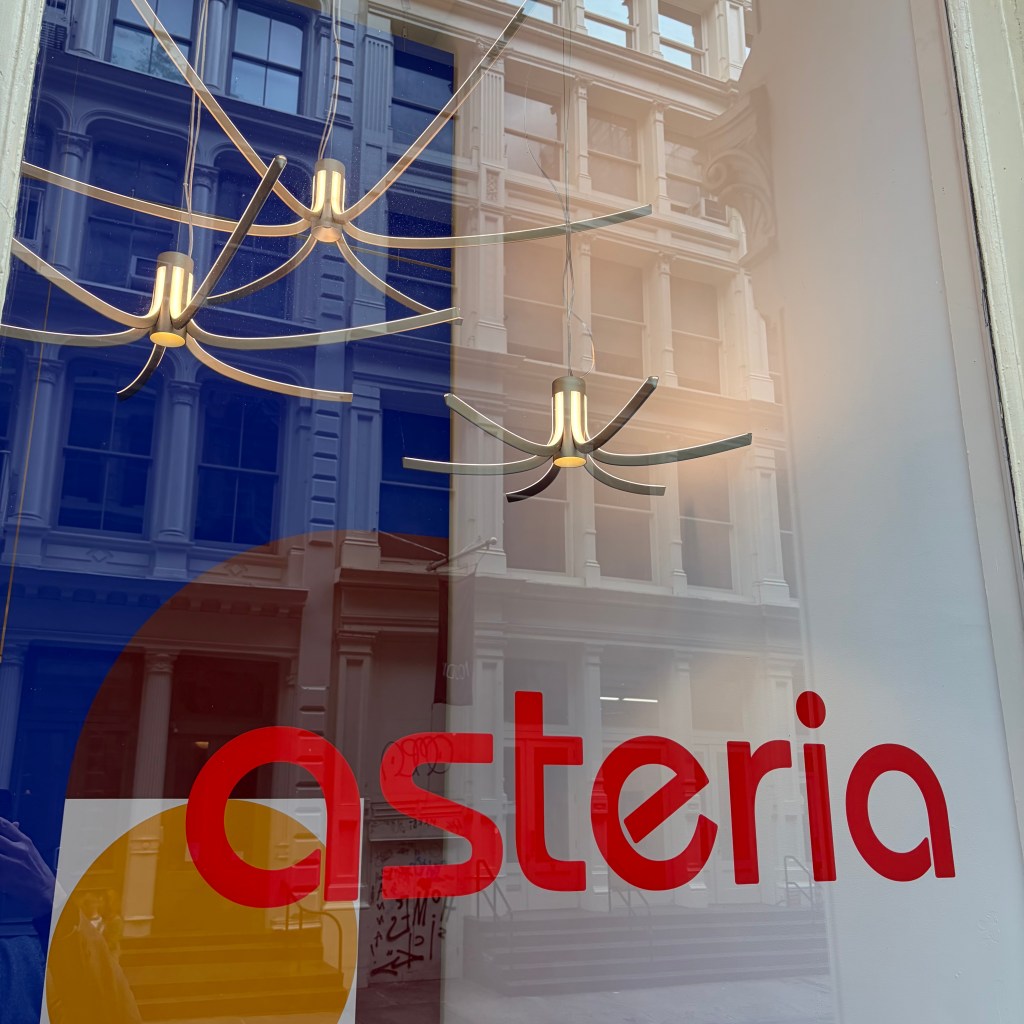
Foscarini SOHO Showroom – Front window displaying Asteria

The new Asteria chandelier from Foscarini is quite nice. They’ve translated a somewhat traditional chandelier shape into an illuminated carrier. The light is positioned in the upper portion of the arms and a central downlight is included. This minimizes glare and reinvents the form.

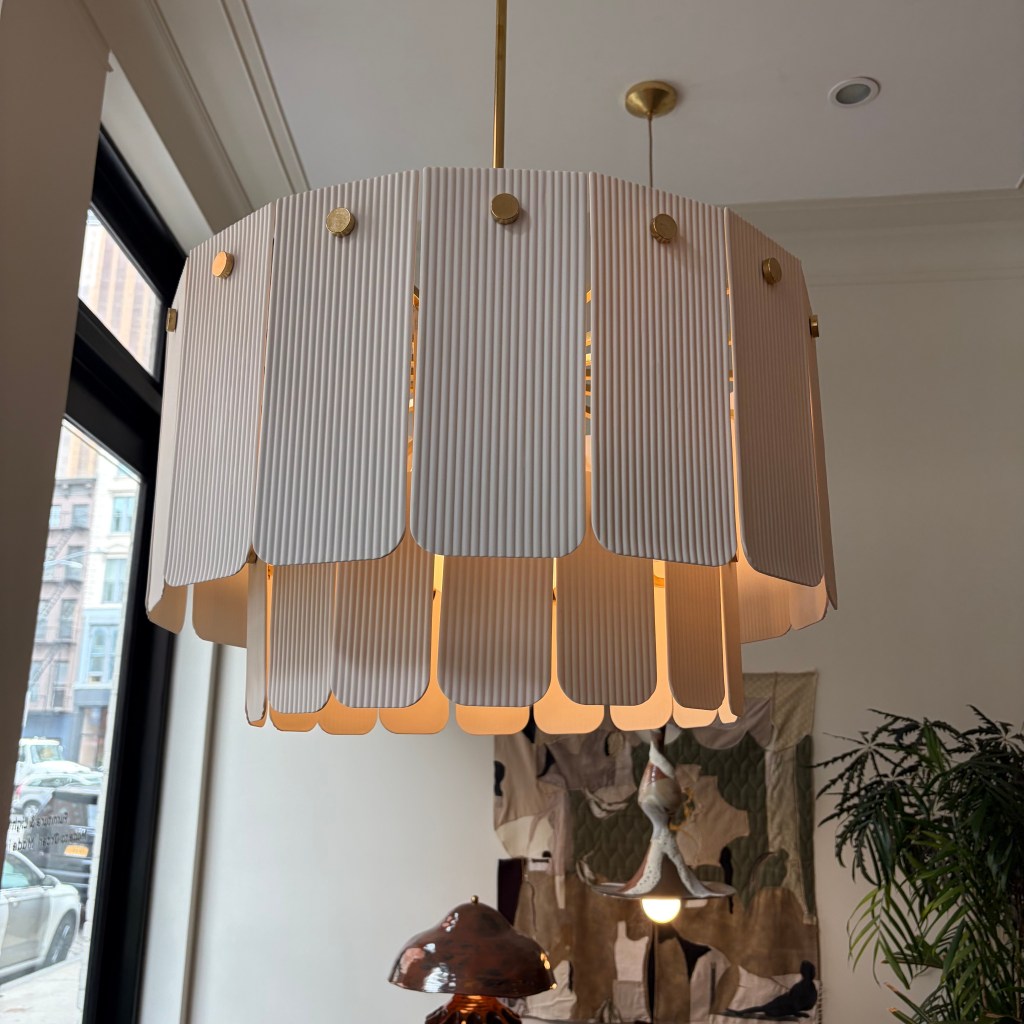
Roll & Hill SOHO Showroom – Veil pendant
Roll & Hill SOHO Showroom – Cloud pendant
Roll & Hill SOHO Showroom – Humboldt pendant

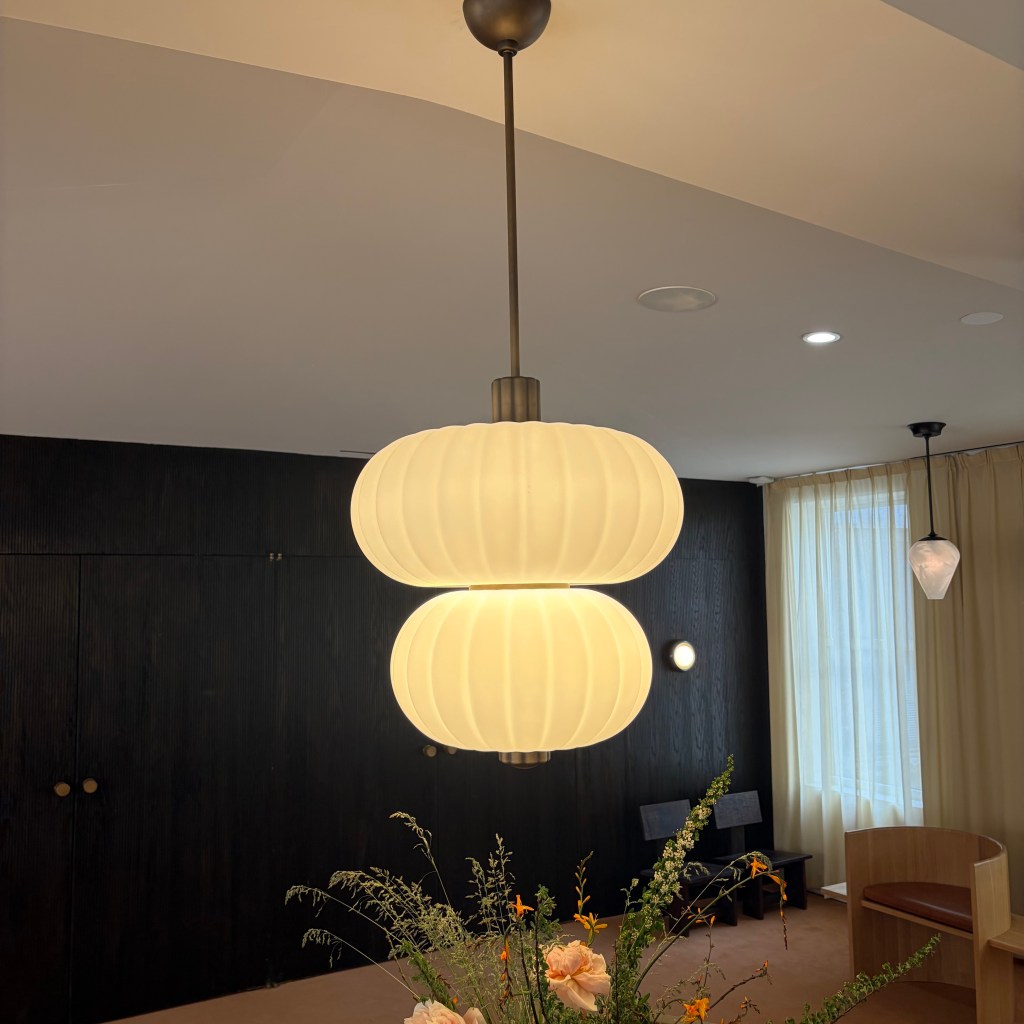
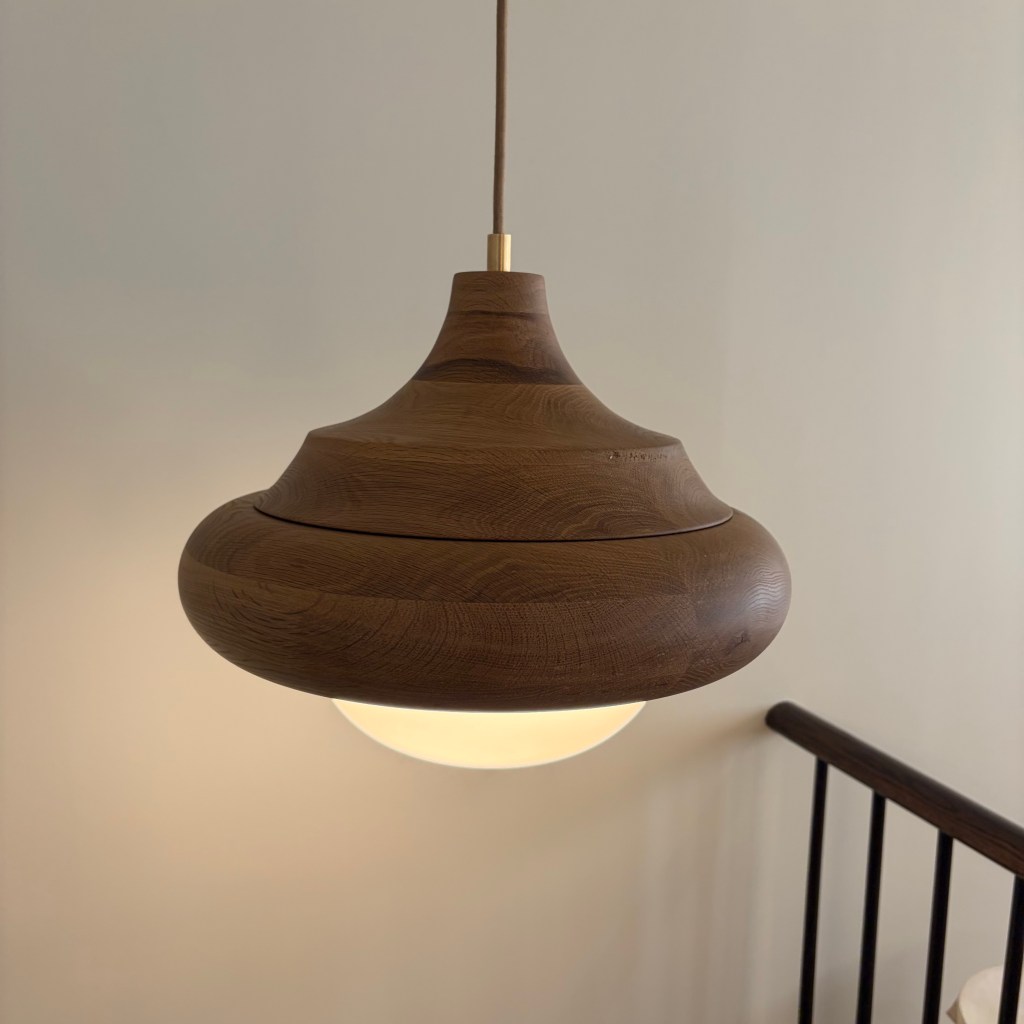
I had a nice conversation with the people at the Roll & Hill SOHO showroom. They showed me the new Veil group, which uses a ribbed porcelain panel to surround a white diffuser for the light source. This delivers a very comfortable ambience. I’ve seen an increase in porcelain lately, but the flat panel is new to me. The Cloud collection uses a scalloped glass diffuser that emotes a warm glow that matches the antique brass metal. The last new piece is the Humboldt pendant, an oversized turned wood “cap” sits over a glass diffuser. The wood is beautiful and the pieces size up to 16” in diameter, so they are a very dominant statement. All three designs are a nice addition to this important American manufacturer.

https://www.rollandhill.com/?srsltid=AfmBOoq32v2b1jBrjXB8acBCsMaKNbFMrnPQiBiFpjIHoF1CZeOnWpix

ICFF 2026 Pablo – Pantaya pendant
ICFF 2026 Pablo – Pantaya sconce
ICFF 2026 Pablo – New pendant

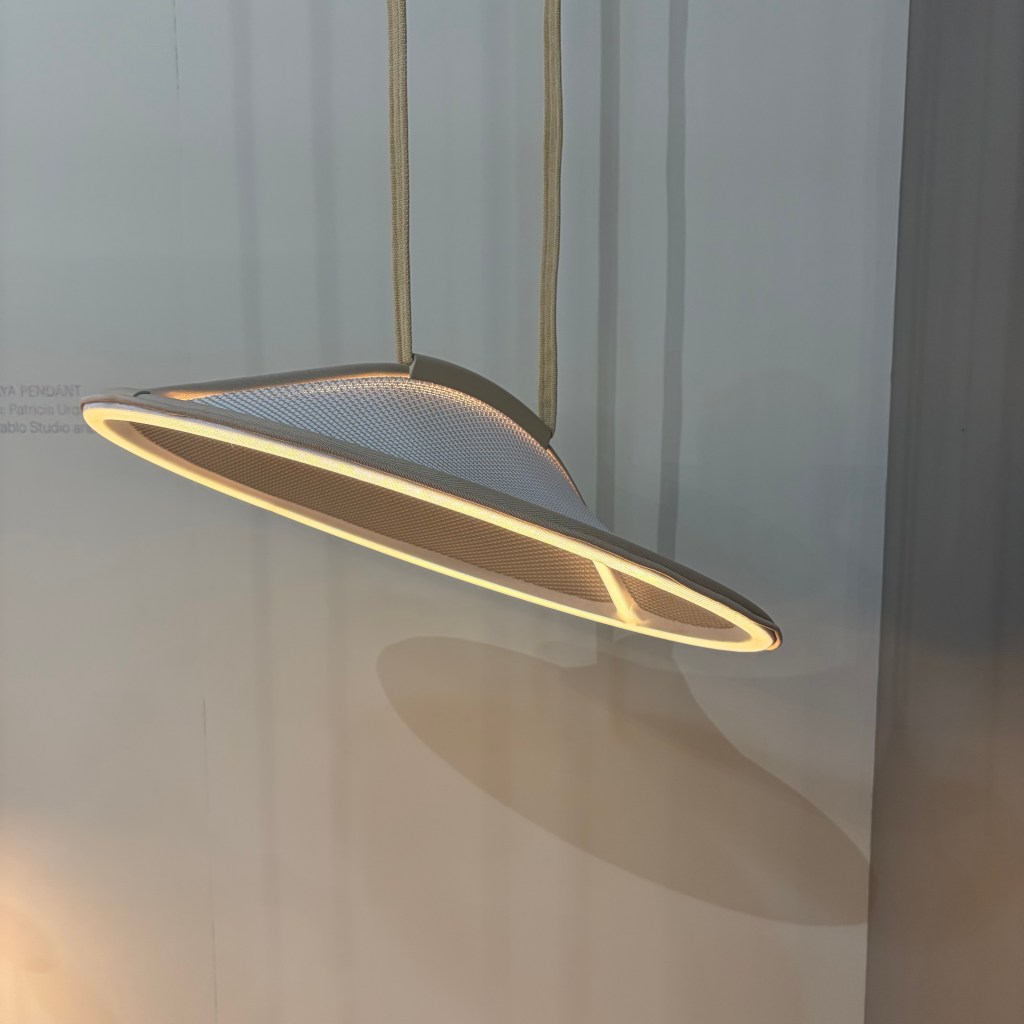
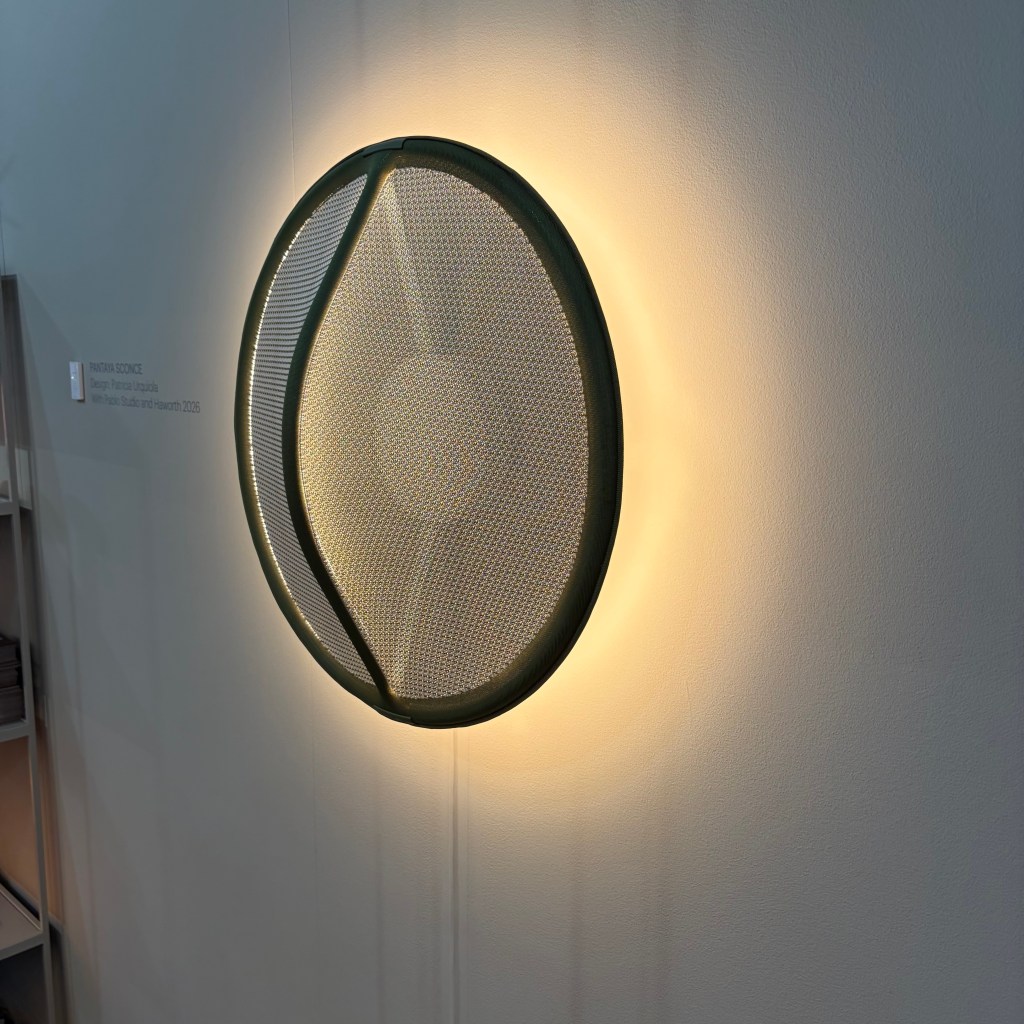
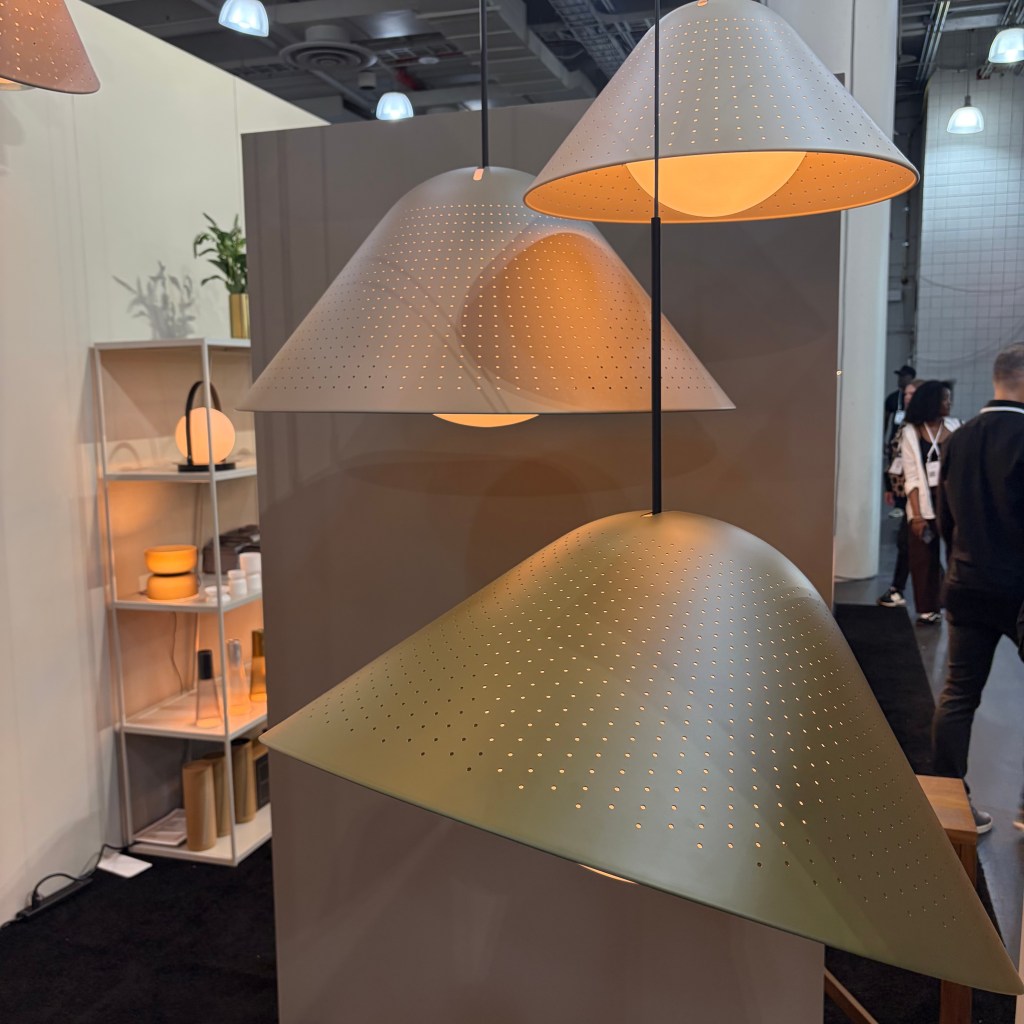
On the ICFF floor, I always look forward to the new Pablo pieces and I was especially pleased with the new Pantaya collection. The shade is 3D knitted polyester, suspended by material that looks like a canvas “belt.” The LED is wrapped around the perimeter of the shade. Also interesting was a pin dot perforated shade pendant, where the shade can be intentionally “tipped” to push light in a specific direction. What I especially liked were the muted earth colors used. They fit in nicely with some of the other displays and I hope to see increased use of this comfortable palette of tones.

https://www.pablodesigns.com

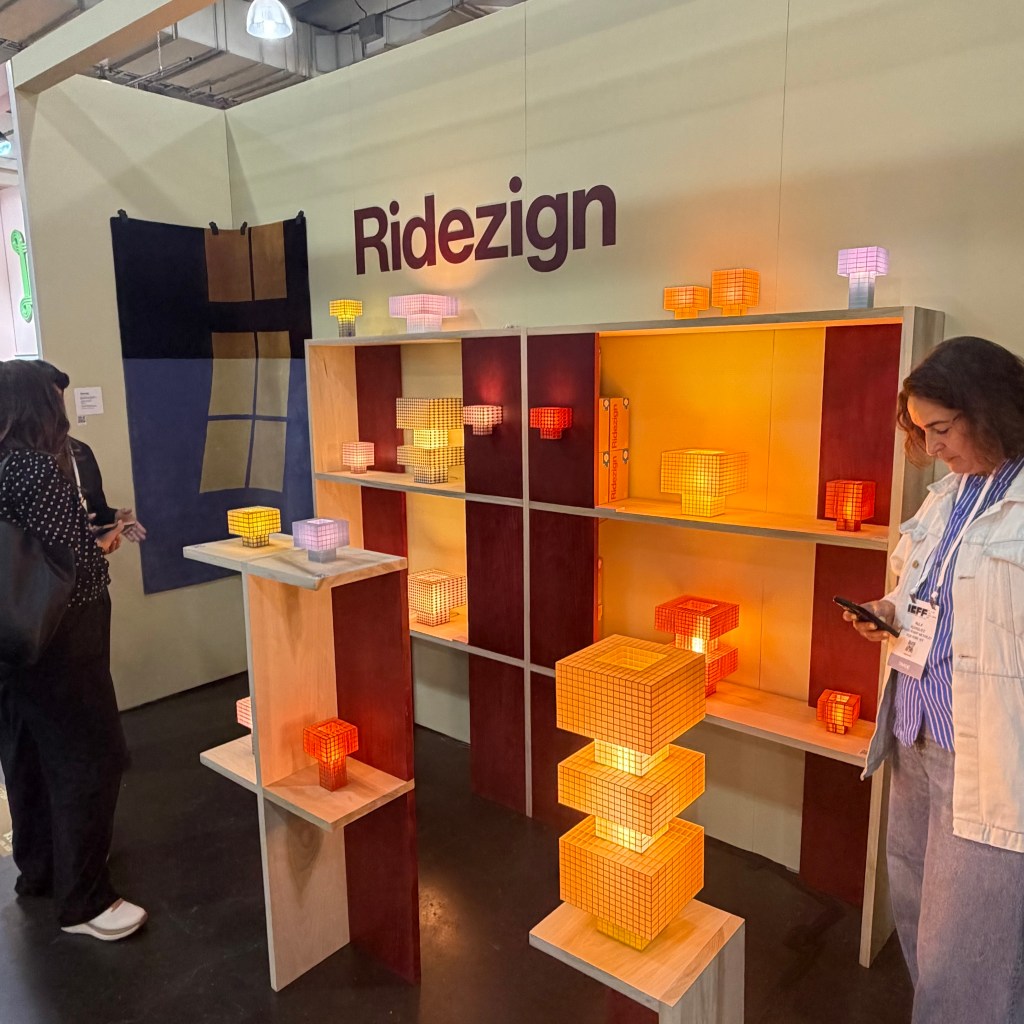
ICFF 2026 – Ridezign lamps

To prove my point about the color, a smaller Brooklyn design company, Ridezign was showing a collection of small lamps in related soft earth colors as the Pablo shades. Not only are the colors nice, but the cube-based lamps were fun and interesting.

https://ridezign.co

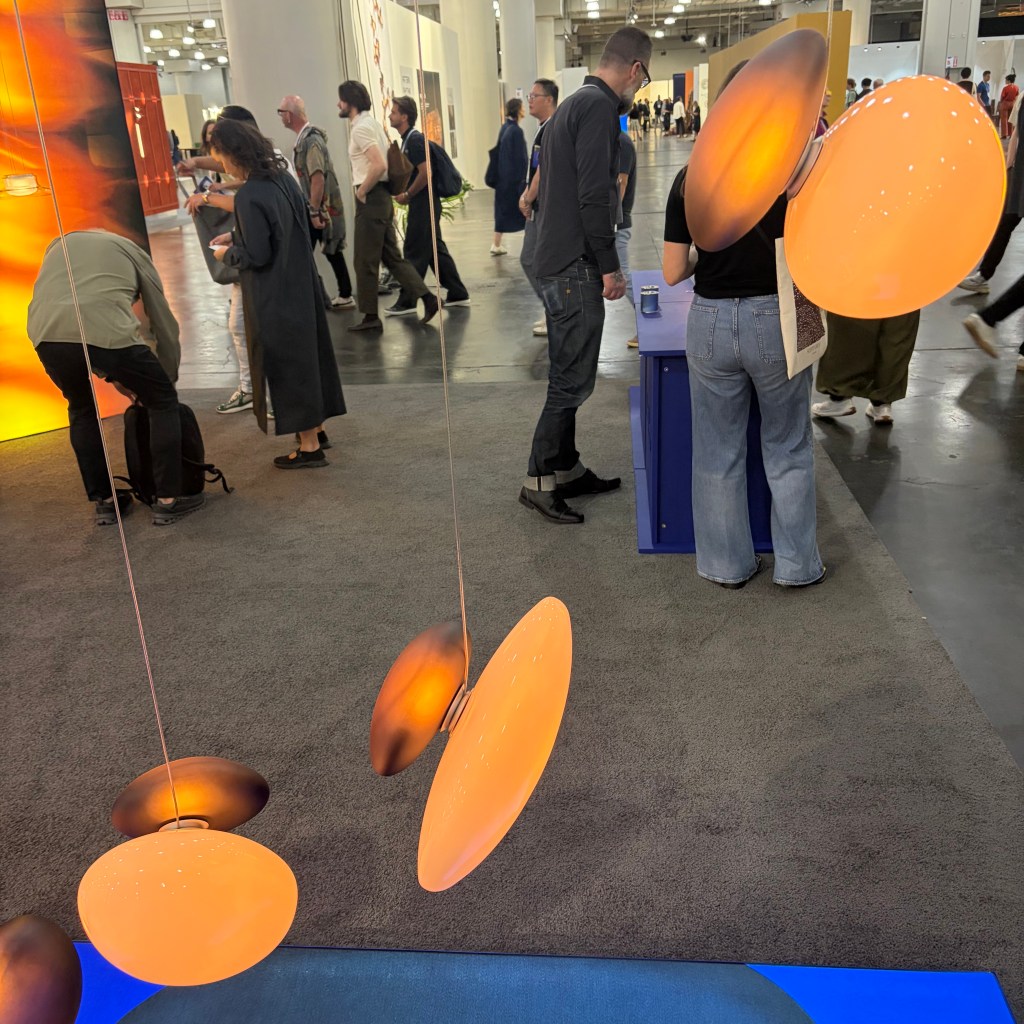
ICFF 2026 – A-N-D Pebble pendants
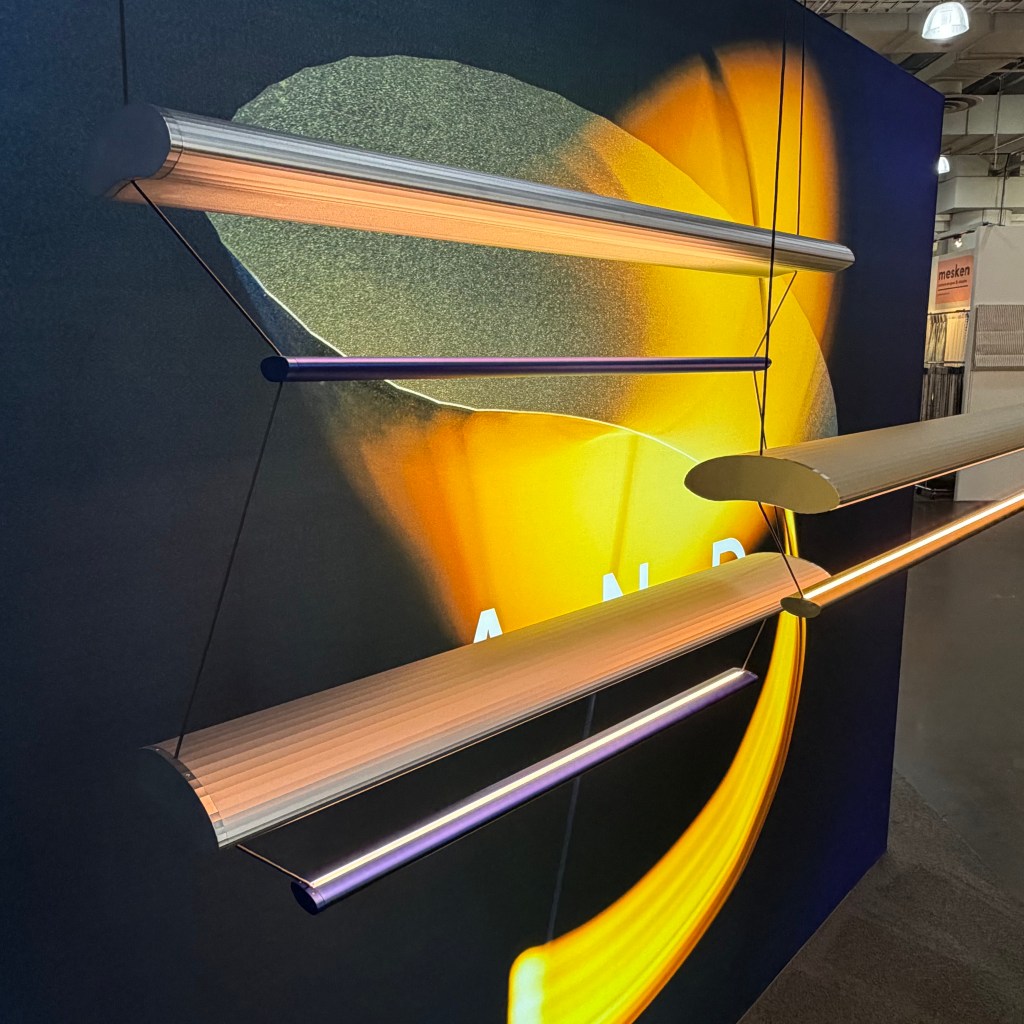
ICFF 2026 – A-N-D Tier linear pendants

Canadian lighting company A-N-D always shows interesting takes on contemporary lighting. Their display of a band of Pebble pendants allowed you to notice the soft etched warm smoke glass and the yoyo-like cable mounting. The display invited touching, as so many people around me reached for the light. At the other end of their display was Tier, a metal extrusion that hovered over the top of a rail of light, thereby providing a beautiful bounce of light in a much more sterile look. It was nice to see this diversity of style in a product line.

https://a-n-d.com

ICFF 2026 – Norska linear pendants
ICFF 2026 – Norska pendants

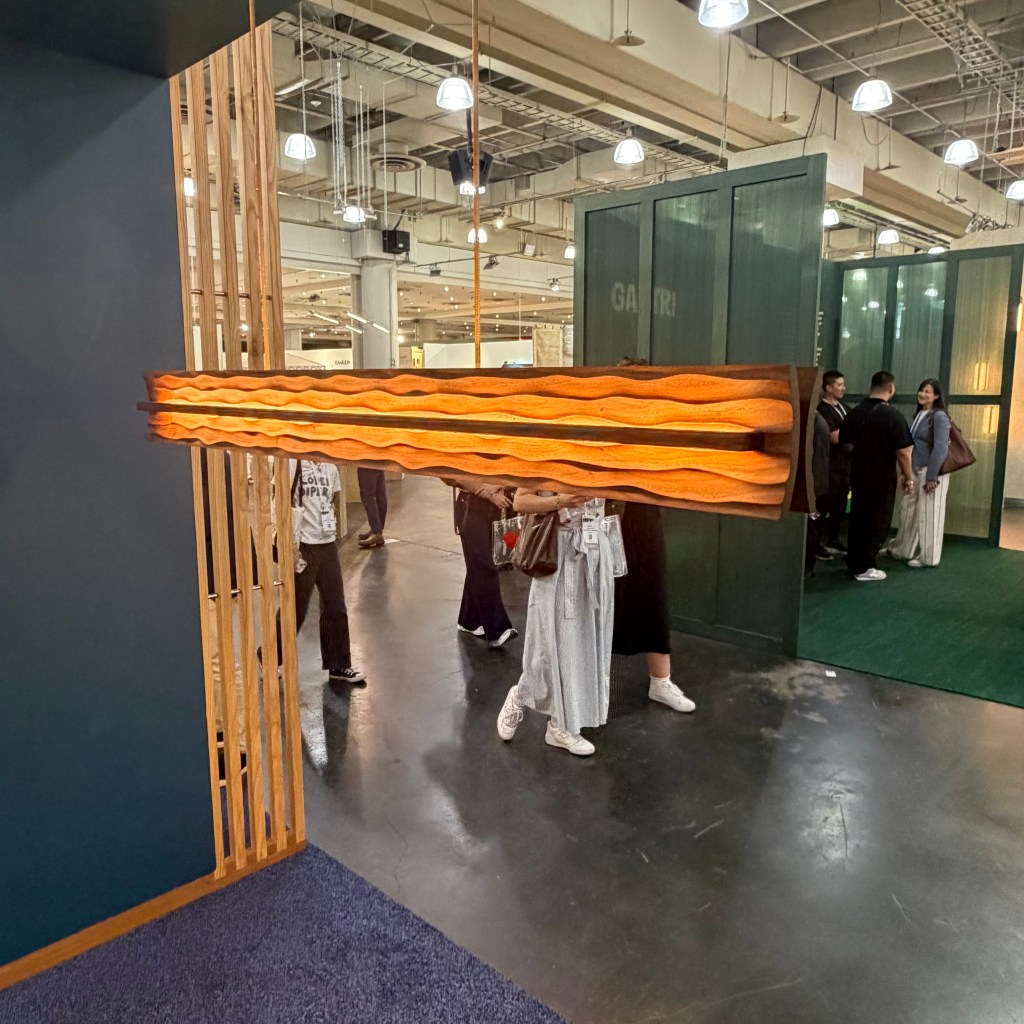
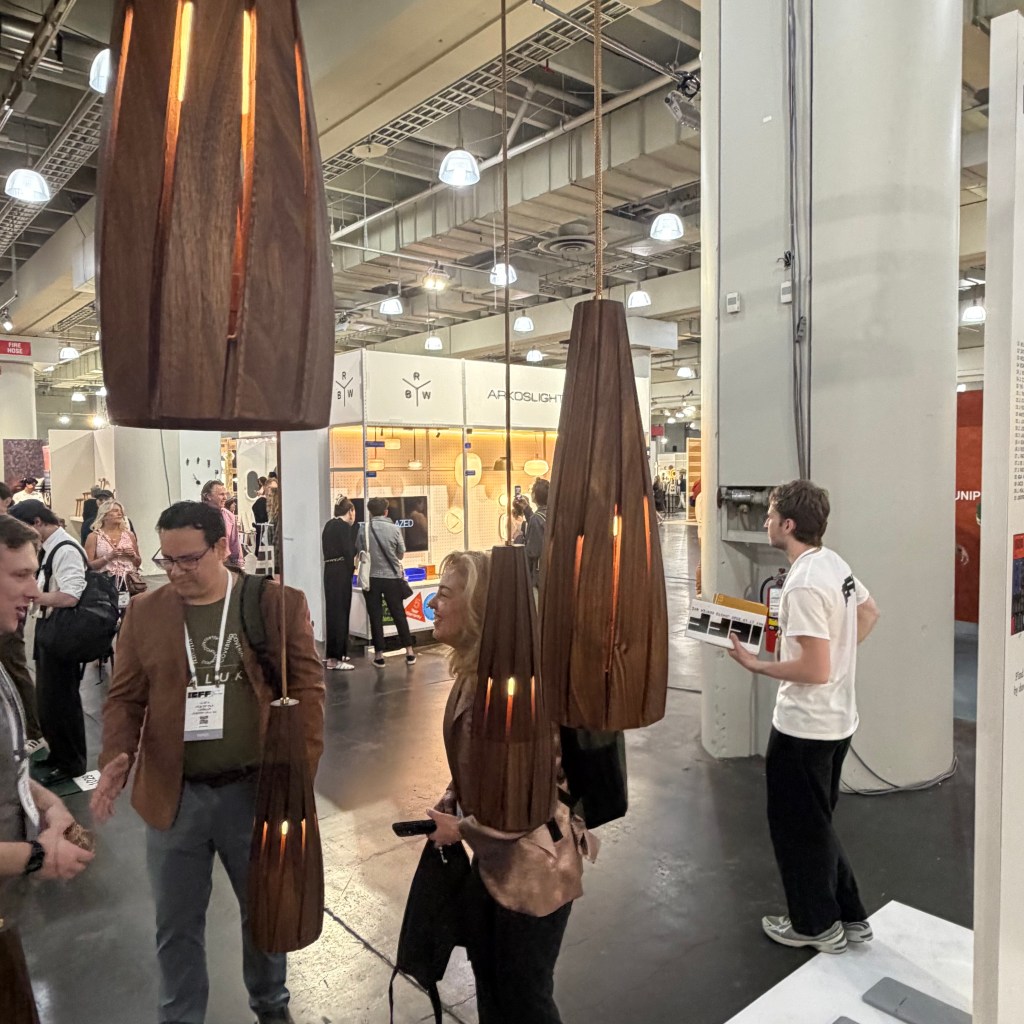
I don’t think I have ever run across Norska lighting before. They are based in the US, but heavily influenced by Scandinavia. It was hard to resist the rich, tactile carved wood used on their products. This is a beautiful piece of nature, expertly sculpted.

ICFF 2026 – Hollis + Morris Beaufort linear pendants

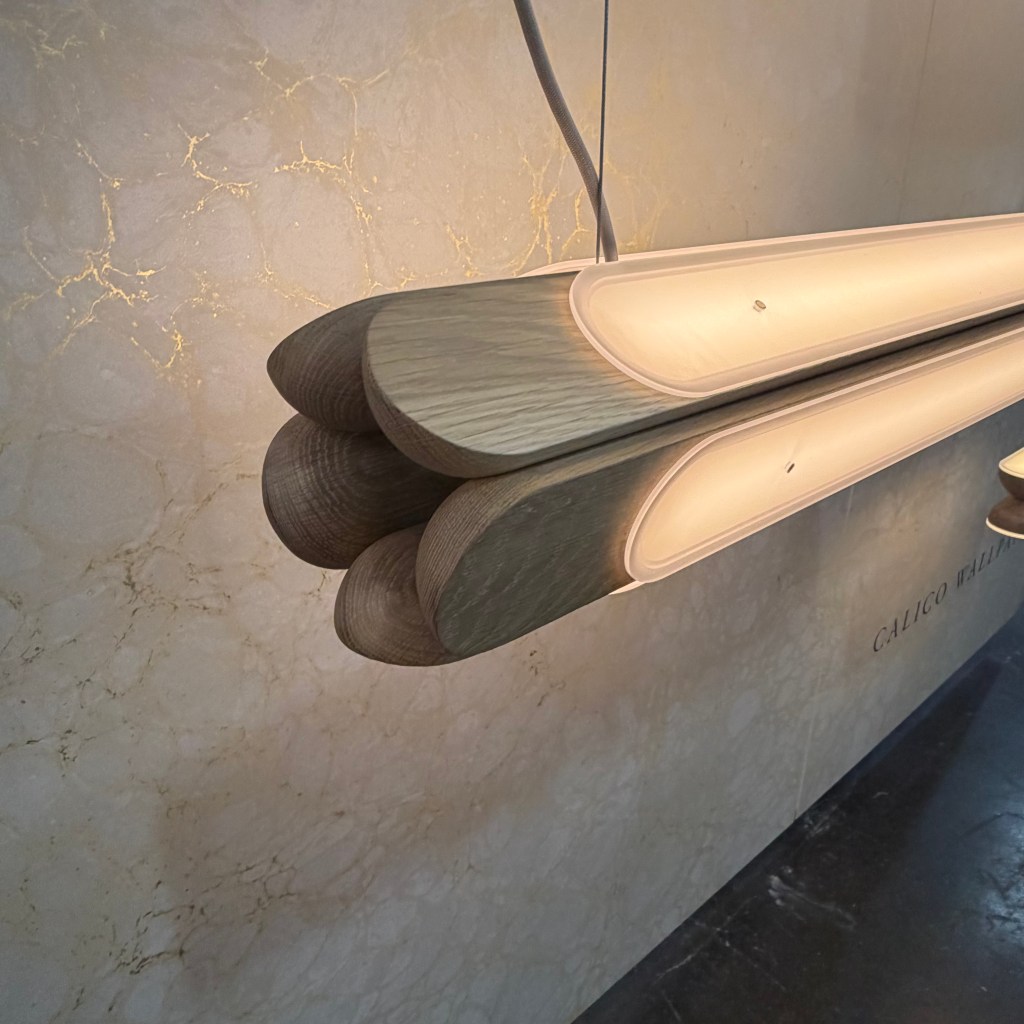
Hollis + Morris employed wood in their new Beaufort group of pendants. By combining half-round profiles they could aim light in multiple directions from the same unit.

https://hollisandmorris.com/?srsltid=AfmBOoo_aA56y0J48vhsEt6rsEKESQGXl1Ya1fzg8e_Z7j0CQc-yS-OD

ICFF 2026 – Hyland Glass

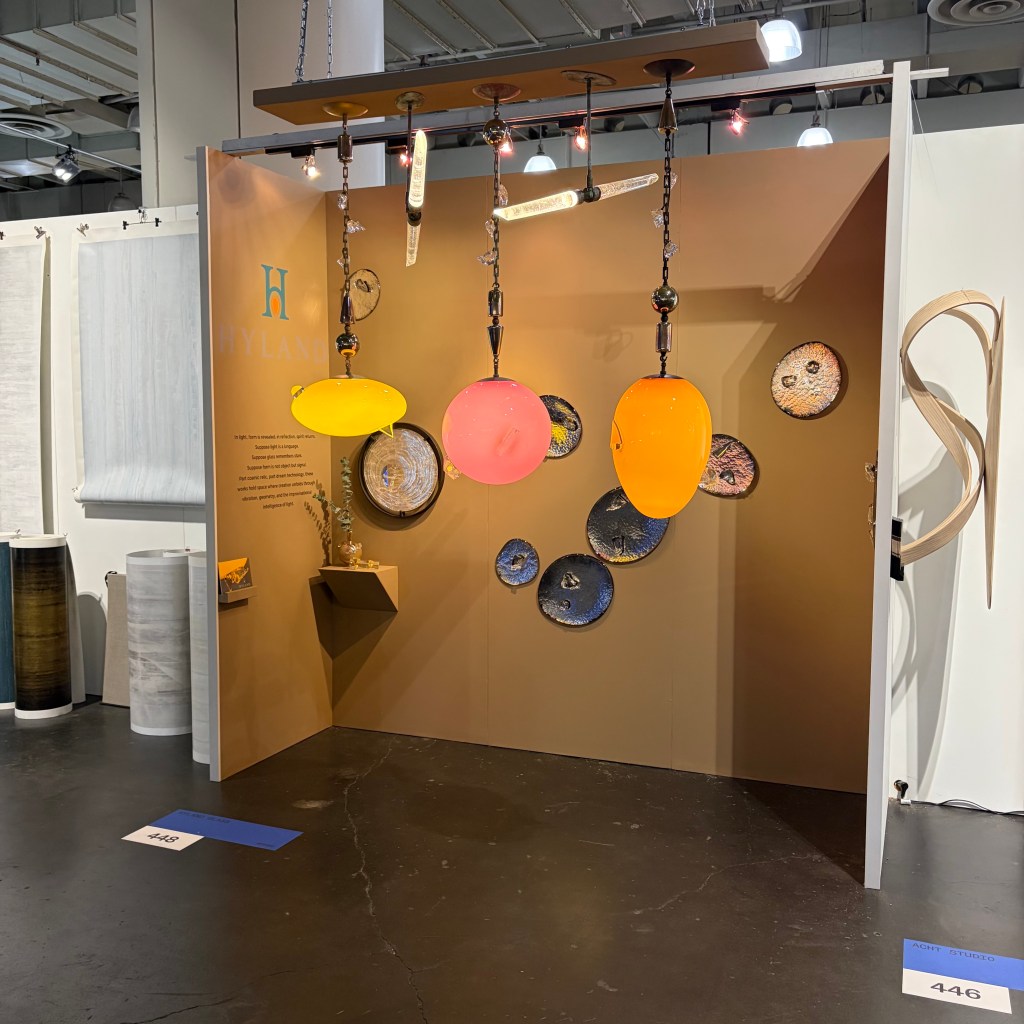
Of course, it would be a glass company that brings bold colors into luminaire glass. Hyland Glass did that in spades, at the show. I’m ready for a little color! How about you?

https://shop.hylandglass.com

Coil + Drift
Coil + Drift

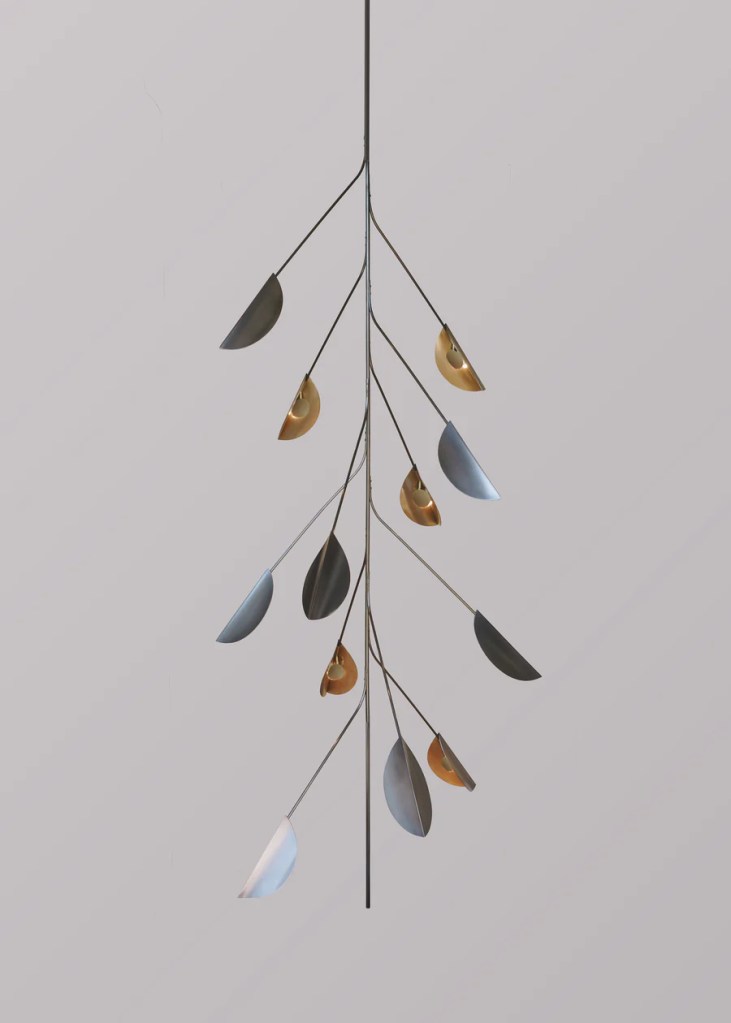
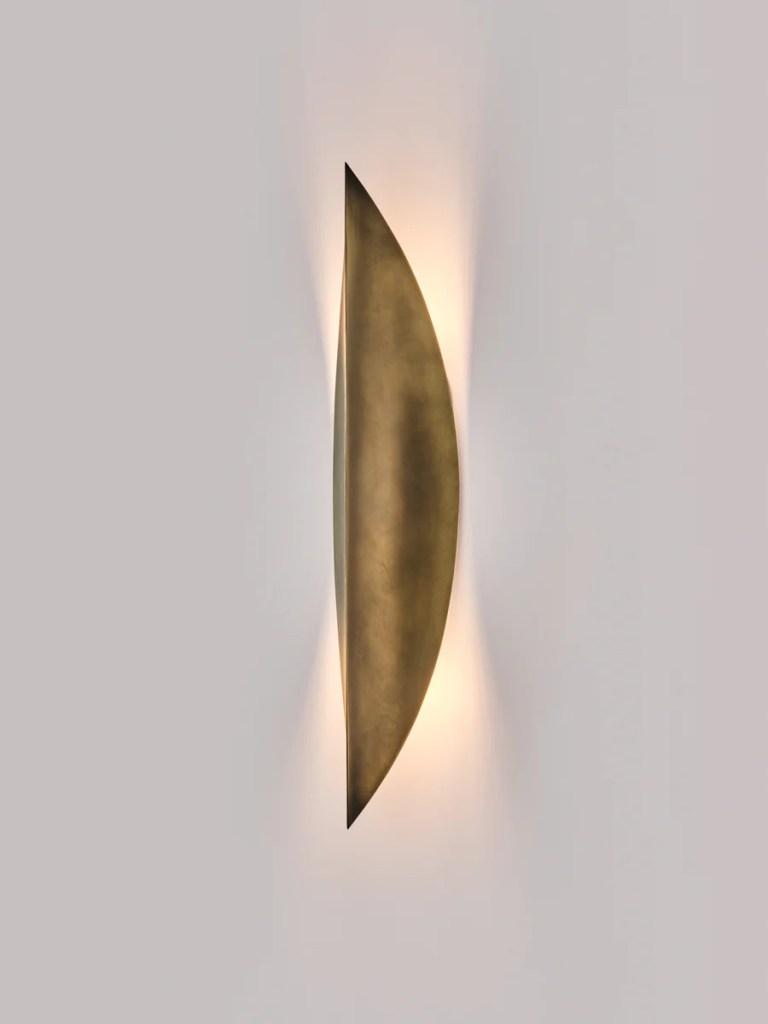
The Coil + Drift pieces shown in their booth were primarily based on a folded oval metal diffuser that shielded the harsh light. Fashioned after a tree that is upside-down, the folded “leaves” could be the same color or a multitude of finishes that reminded me of autumn. The sconce, consisting of a single pinched diffuser was especially nice in size and light delivery.

https://coilanddrift.com/?srsltid=AfmBOor3bAa3uq479Kn7-2PqA5acncqY38324sP0K2pIUBTYu6W1ejqT

Maker Hazel – The Bean

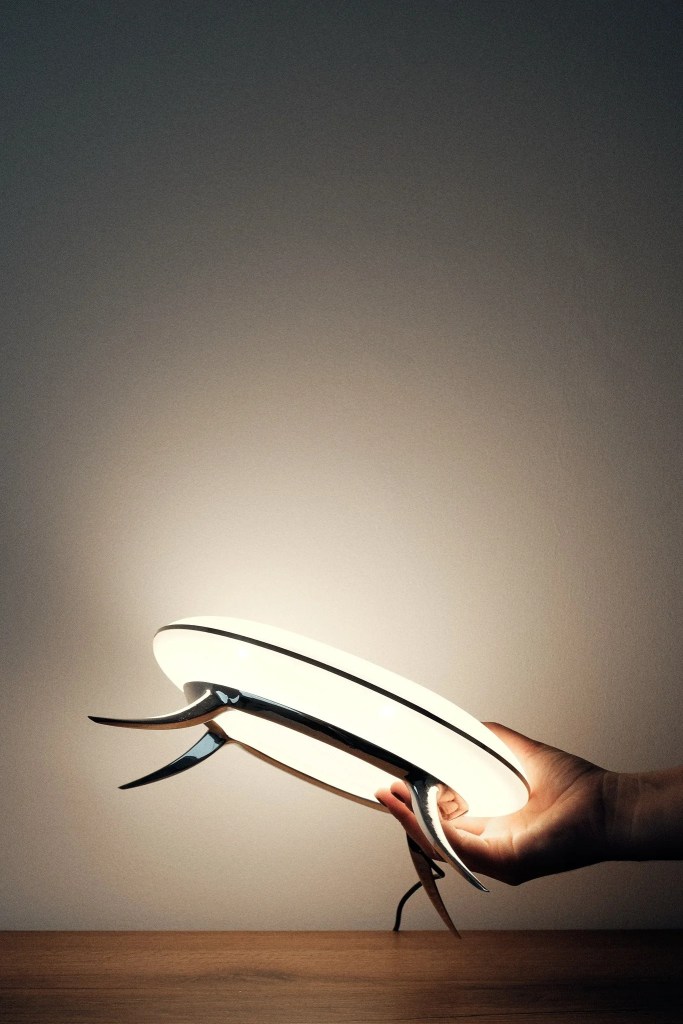
The Bean is a cute little table/bed lamp made by Maker Hazel. Almost like a spaceship that landed in 1960 and stuck around to witness the mid-century revival combined with the LED revolution in light. A nice combination.

https://www.makerhazel.com

H. Isle – Pico desk lamp

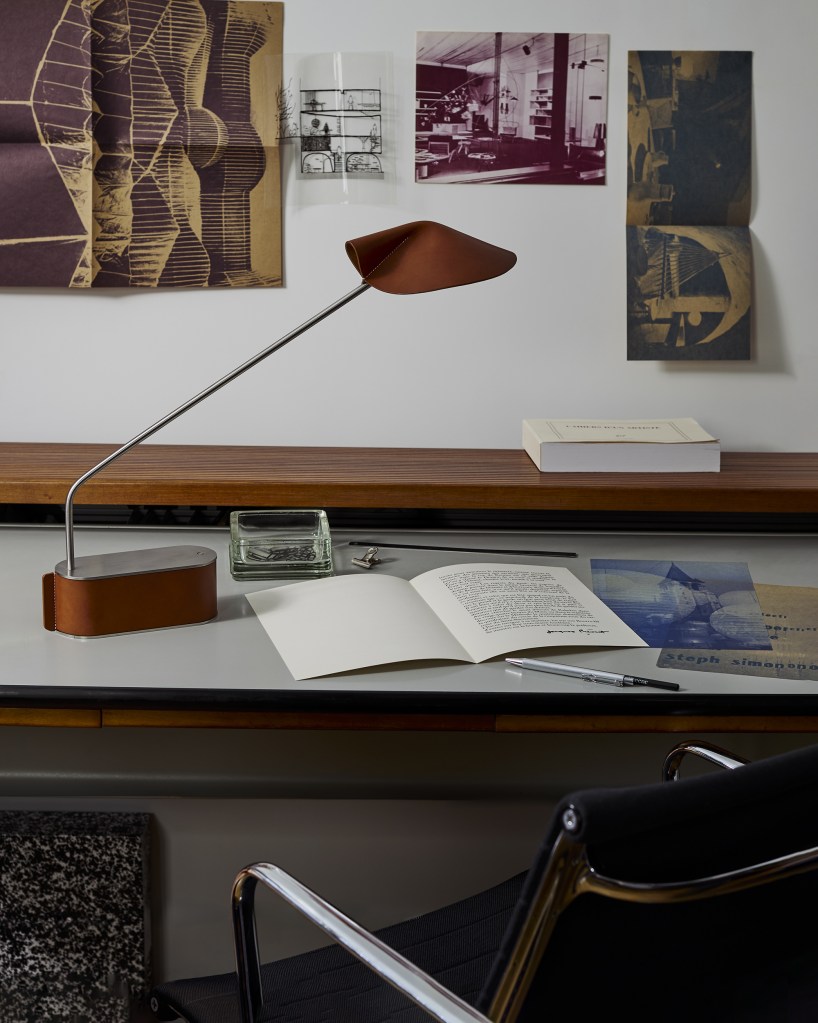
Why not leather lighting? French lighting manufacturer H. Isle, showed Pico, a lamp grouping with a sewn leather diffuser that attracted a lot of attention. It had a nice shape and felt rich and warm.

https://hisle.fr/en/?srsltid=AfmBOorTwdEP5t0rU4Vd25xtBE3l8SjIZ-ujC02G7PlZqhY8QpCOn-6b

I have a lot of questions about Sundial Wire. They manufacture cloth covered wire for lighting products. On the surface, that is ok, but how does this comport with UL? Yes, the colors are nice, but do we invalidate the safety certification when we rewire? (The answer is yes.) If this is intended for homeowners who elect to do this on their own, everything is fine. Everyone has the right to rewire their own lamp and if it catches fire or causes a short, it is on them. How does a designer use this? I’d be very cautious.

https://sundialwire.com/?srsltid=AfmBOorJPTc62To218lrSRhT8rJZ02Iv-FClR-_MwTe0P4D1KNATIhwD

I’m sad to see an independent show that has provided so much value to me, disappear. I also understand the reality of trade shows and know they are dinosaurs. More become extinct every year. I hope the combination of guests at BDNY and ICFF will prop-up both shows so people like me will get the benefit for a few more years. I know the concept no longer works for so many, but I still like the hunt and still enjoy seeing and feeling “the next big thing.” ‘Til 2027.

In two weeks, my report will continue with information on all things, not-lighting.

Categories
Technical Lighting Help

A Lighting Guy Rehabs a House – The Kitchen

A few months ago I posted some statistics about the lighting in the house my wife and I just rehabbed as our “age-in-place” final home. An architect friend I have known for many years reached out, suggesting I post more about the specific “before and after” aspects of the new property. I told him, in a way, I have done that with a CEU session detailing the whole process, from a lighting standpoint. So why not break it down, room by room, in a written format? This is the first post responding to his good idea.

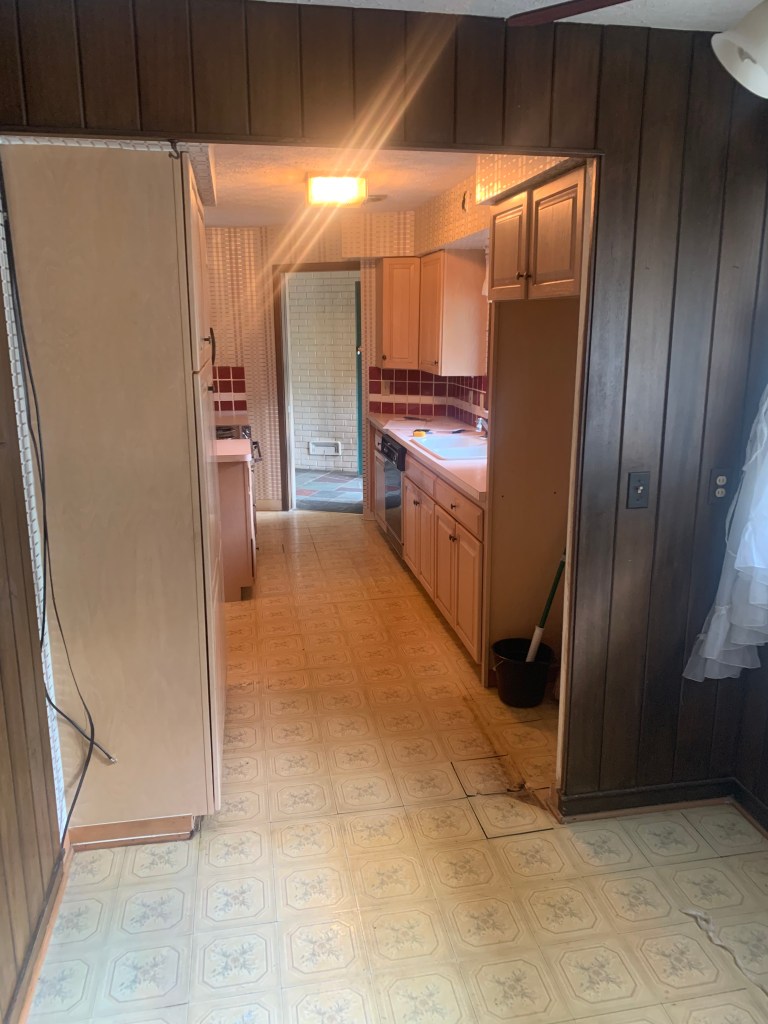
1980s era kitchen when we bought the house. Note the original hardwood paneling that we believe was from the 1950s.

Based on the design, my wife and I believe the kitchen in our new mid-century home was rehabbed at some point in the 1980s. The cabinets were of decent quality, but the overall look was dated and “old” feeling. In the dinette area, the original 1957 solid wood paneling was still in place, but unlike the rest of the house, this wood was stained a VERY dark, blackish-brown. An original sliding glass display case was embed in one wall. We thought about keeping both, but could not rectify their existence with the vision we had for the whole room. The paneling and display case were the only original elements we intentionally removed from the house.

“I want a pink kitchen!”

Many homes in our neighborhood are being flipped. We toured scores of them and they had one thing in common, grey kitchens. I was nonplus, but my wife hated them. Now that she had a clean slate, the sky was the limit.

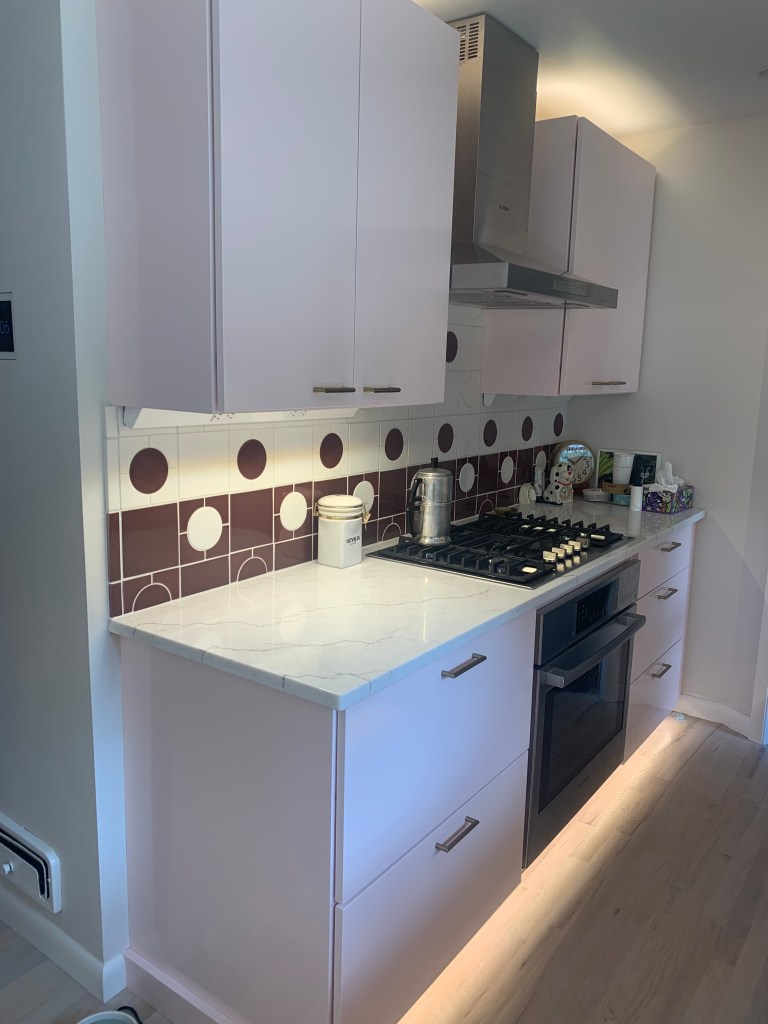
While working with the cabinet designer, we were shown a sea of wood cabinets options, none of which either of us wanted or liked. We initially figured we’d end up with white, then she told the designer of her heart’s desire. He was startled. Pink cabinets were a new one for him and he was taken aback. The GC jumped in, suggesting painted cabinets as a solution.

“What color, pink?”

“Pink.”

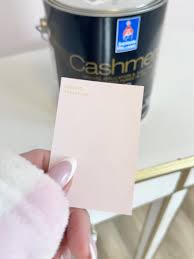
Sherwin Williams #9692 Cotton Candy

The GC and I quickly went next door to the Sherwin-Williams store and we simultaneously reached for a subtle tone of pink, Cotton Candy. We ran back to the cabinet store and showed it to my wife. “Yes! Pink.”

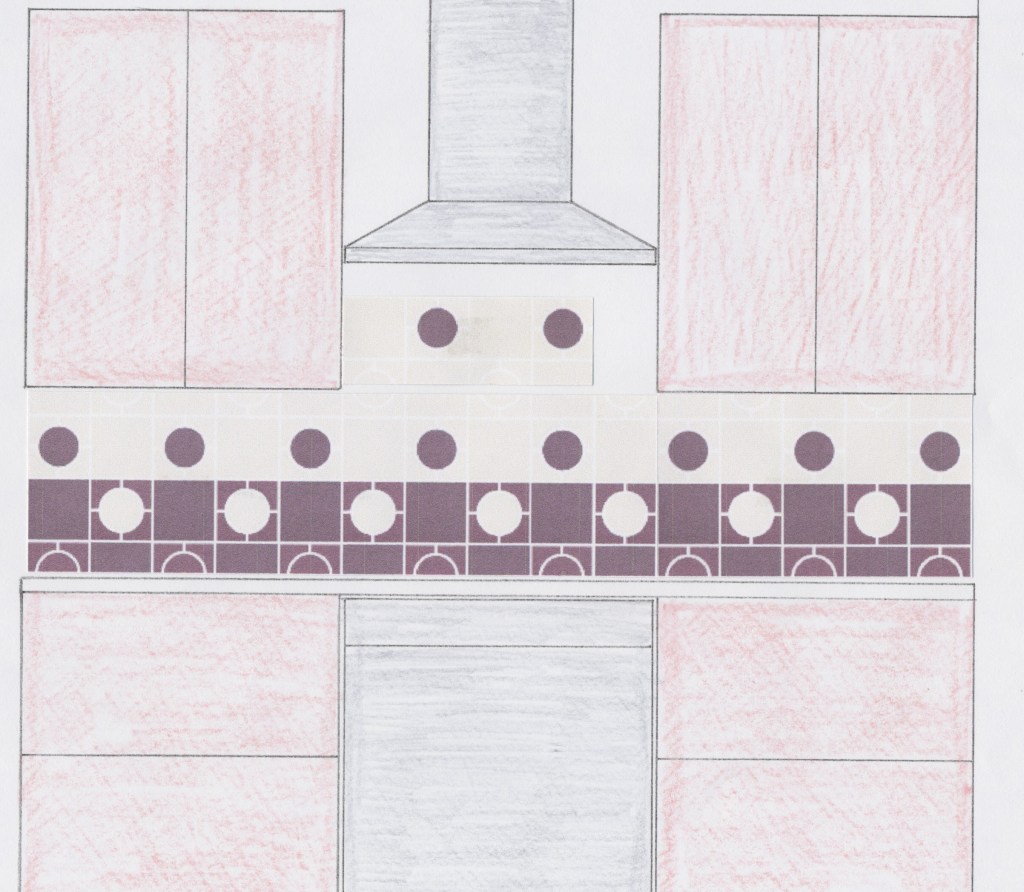
After vising eight granite/stone/quartz showrooms, we finally found a countertop that would match the pink. The backsplash selection was a similar challenge. After we found the color, I designed a dozen pattern configurations and she picked her favorite. Initially, she wanted more pink on the painted walls, but I was able to talk her off that particular ledge. After deciding on blush pleated shades and a bleached white wood floor, I could then concentrate on the important part, the lighting!

One of many backspash sketches I did to secure approval from my wife.
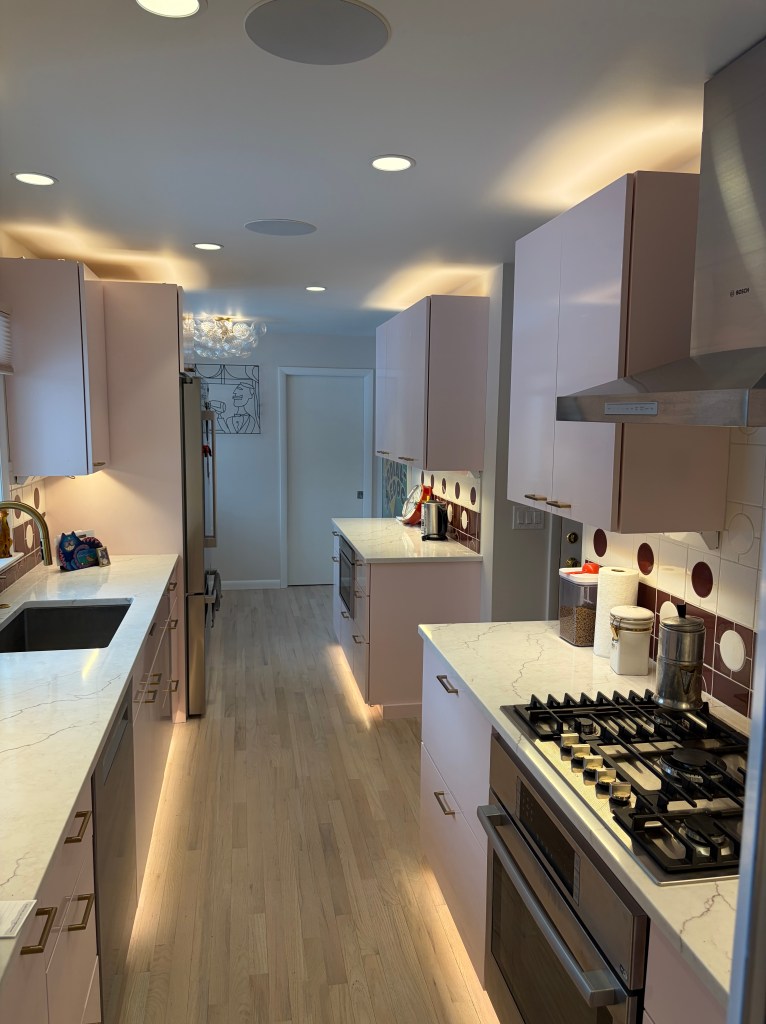
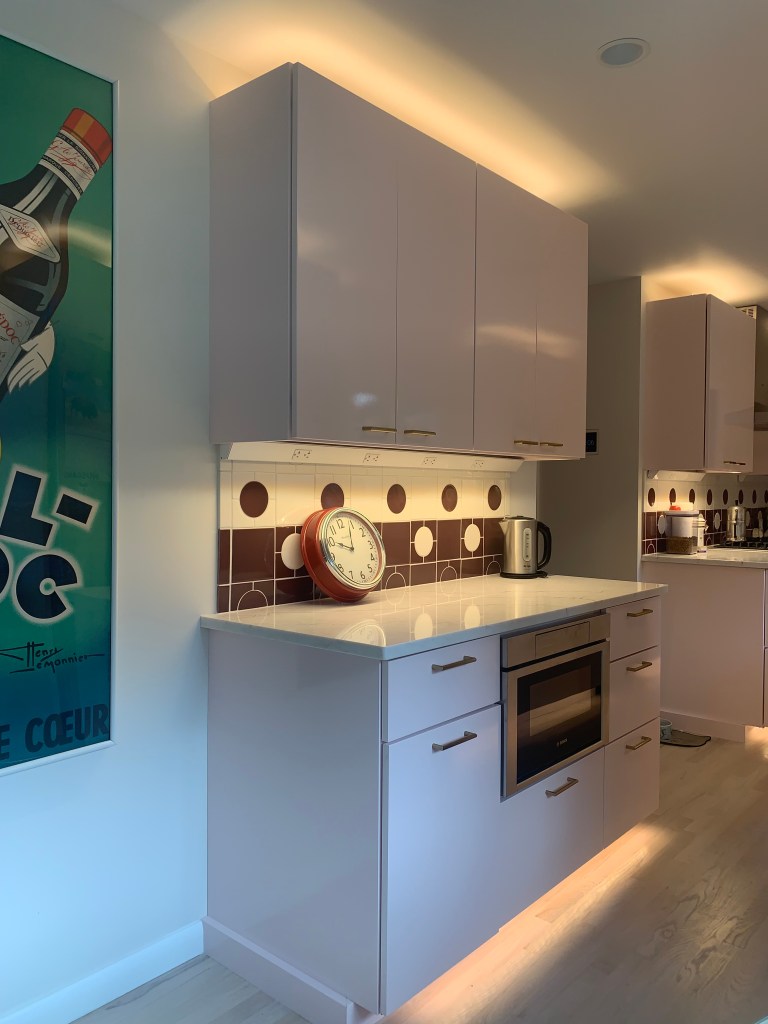
The pink, aubergine veined quartz and burgundy backsplash all work in concert.

Good Lighting

One added trend in all the “flipped” houses we toured was the horrible flat, quasi-recessed lighting used. Almost nothing in new or rehabbed homes is as egregious as the wafer light infestation. Miserable light, that adds glare and doesn’t drop light onto the work surfaces, is not a solution I wanted. I sought out a deep recessed option and found two possibilities, Nora Sapphire III and WAC FQ. Both offered multiple beam angles, lumen output options and assorted color temperatures. I decided to use the Nora brand because they affirmed a 2 ¾” depth and WAC customer service said theirs was, “about 2 ½”.” “About” made me uneasy.

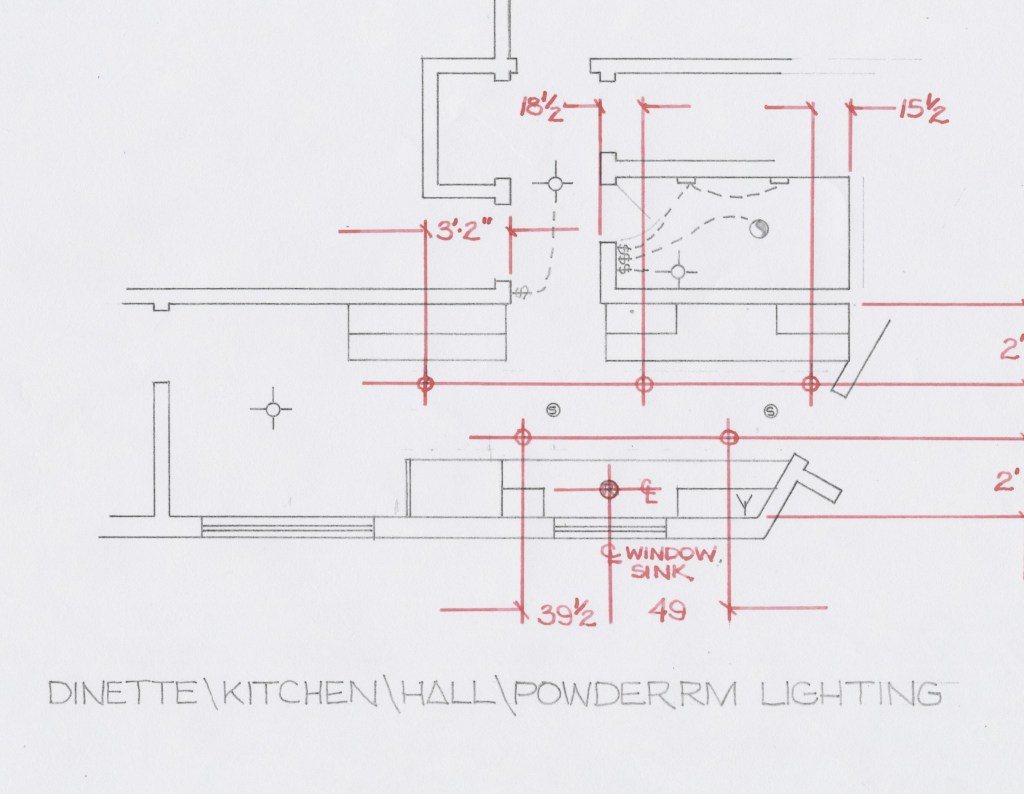
I laid out the recessed placement using both the 38° spot and the 53° narrow flood. Intuitively, I knew the 64° flood wouldn’t give me the illuminance I wanted at the work surfaces. I settled on the 53° option. I also decided on 3000K to insure a great color for foodstuffs and the room finishes. I then provided the electrician with detailed placement measurements for the housings.

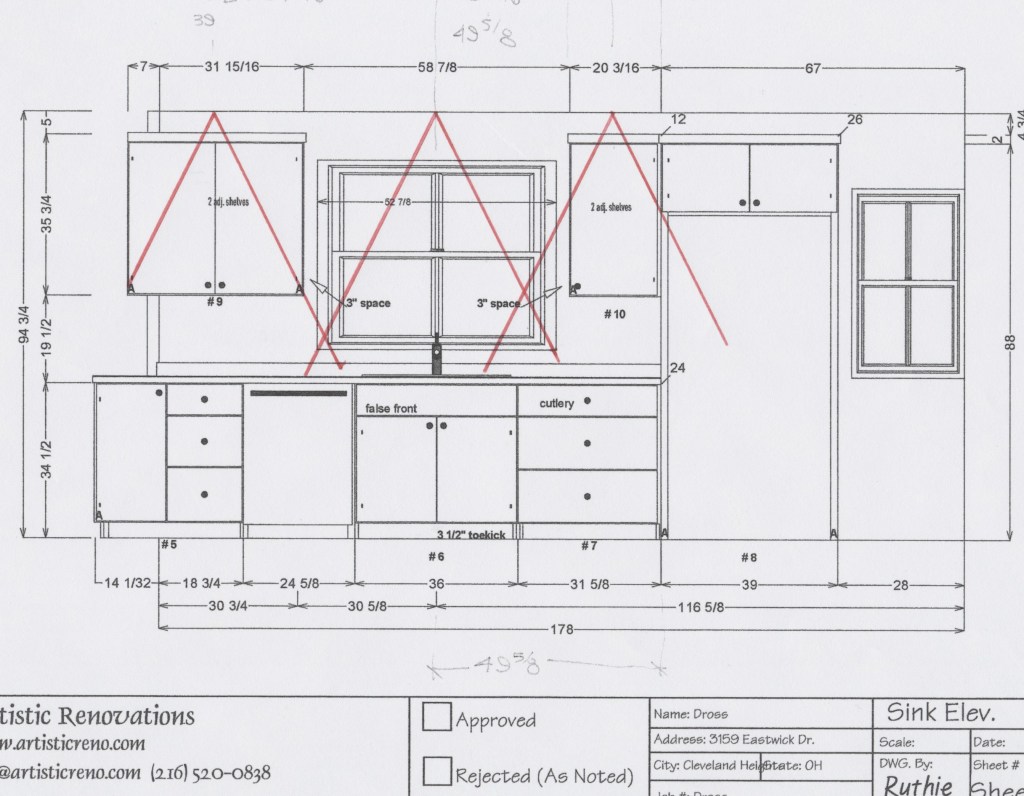
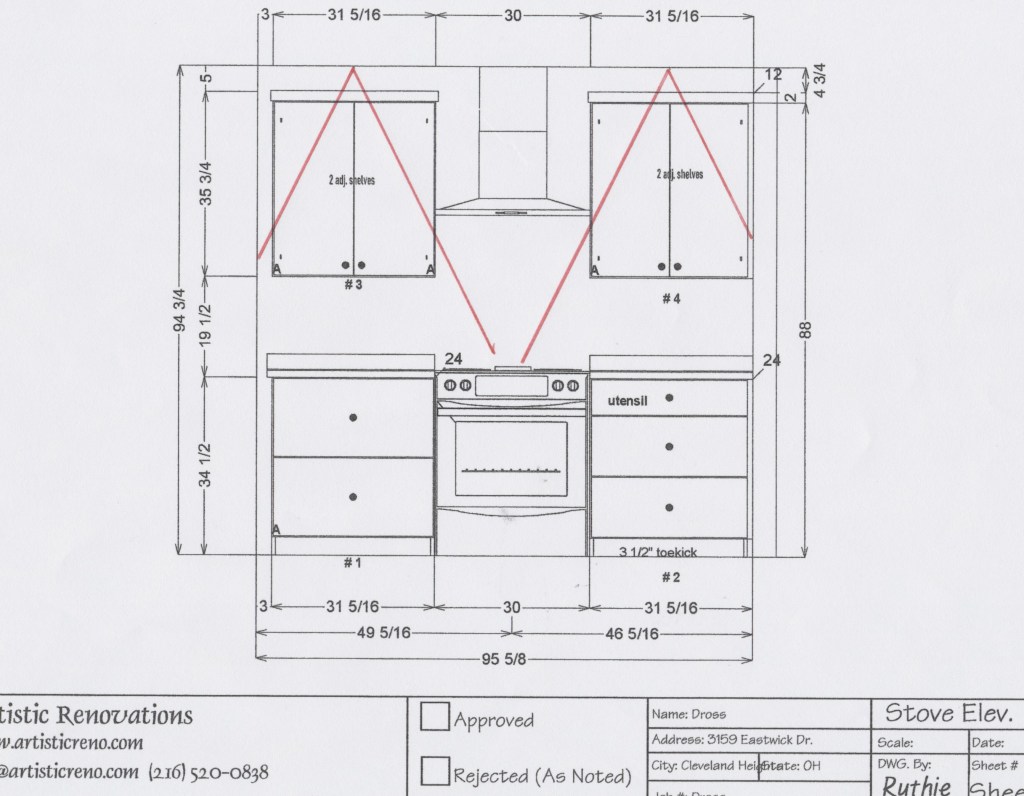
These images were pasted all over the kitchen area during construction

LED Tape

I knew I needed an LED Tape manufacturer with a lot of options. I reached out to a number of Lighting Reps I know. Almost all of them told me to check out American Lighting. They were right; they offer multiple output variations, plenty of color choices and even though I wasn’t interested, they manufacture sheets, wet outdoor, COB, dim-to-warm and color-changing product as well. There are different run-length choices and even a 120V alternative.

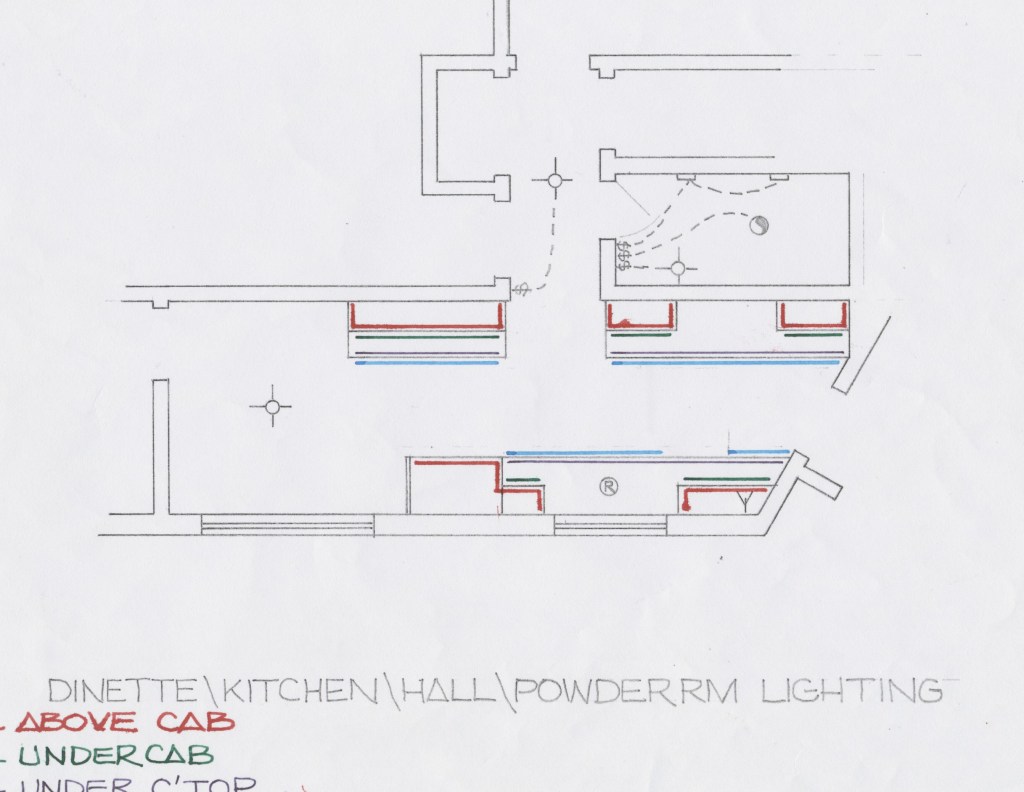
The three layers of LED Tape – Above, Under Cabinets and Toekick – I decided against the under-counter after consulting the cabient and countertop fabricators.

Under cabinet lighting is crucial to good kitchen lighting. I used an LED Tape that pushed out over 1000 lumens per foot for that application. I like to use above cabinet lighting in the morning, so I selected the LED Tape that delivers 310 lumens per foot. This presents a beautiful indirect glow, at the start of each day. Our toekick lighting is on for most of the evening. Not much is needed, so the basic product distributing about 140 lumens per foot was adequate for that job. One vendor, three products and a solid lighting solution.

I personally installed all of the LED Tape. (The power supplies were hardwired by the electrician.) The only problem that occurred was with the connectors. While it does not say so anywhere (that I could find) the connectors are unsuitable for solid-core wire. Unfortunately, the electrician used solid core, Class 2 suitable wire to travel from the remote power supplies to the application position. I was forced to “hide” wire connectors at almost every junction point. This was frustrating and not what I expected. Installation time was tripled. Imagine if I were earning journeyman electrician wages! I hope at some point in the future, they develop a solid core wire connector. American Lighting customer service was of no help either, so that was disappointing.

Decorative

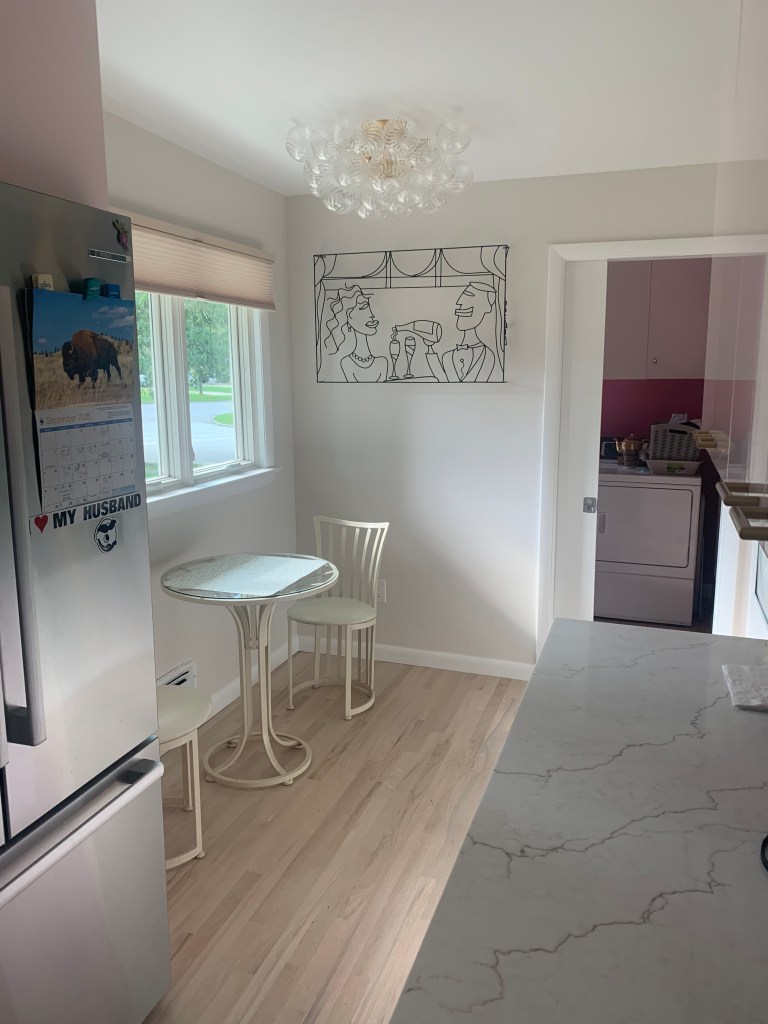
Only one decorative piece was planned for the kitchen. Because the ceilings are at 8’-0” and my wife specifically did not want a hanging pendant that could interfere with normal room navigation, we decided on a semi-flush and we wanted it to be a decent diameter. To maintain the theme of circles started by the backsplash, we sought out a unit with spherical diffusers. After considering a few others, we decided on the Visual Comfort Talia. I installed 2700K lamps to create a warmer glow from the layers of clear glass and gold frame.

A large semi-flush became a more practical option because of the walkway to the adjoining laundry room (painted “Hot” pink!)

Because I installed all of the lighting, I did appreciate the comprehensive instruction sheets and the “spare” glass baubles. While we are currently using a small café set we bought for our first remodeling project of a 9’-0” x 10’-0” kitchen, three houses ago, we think it will allow us to grow into more meaningful space in the future.

Controls

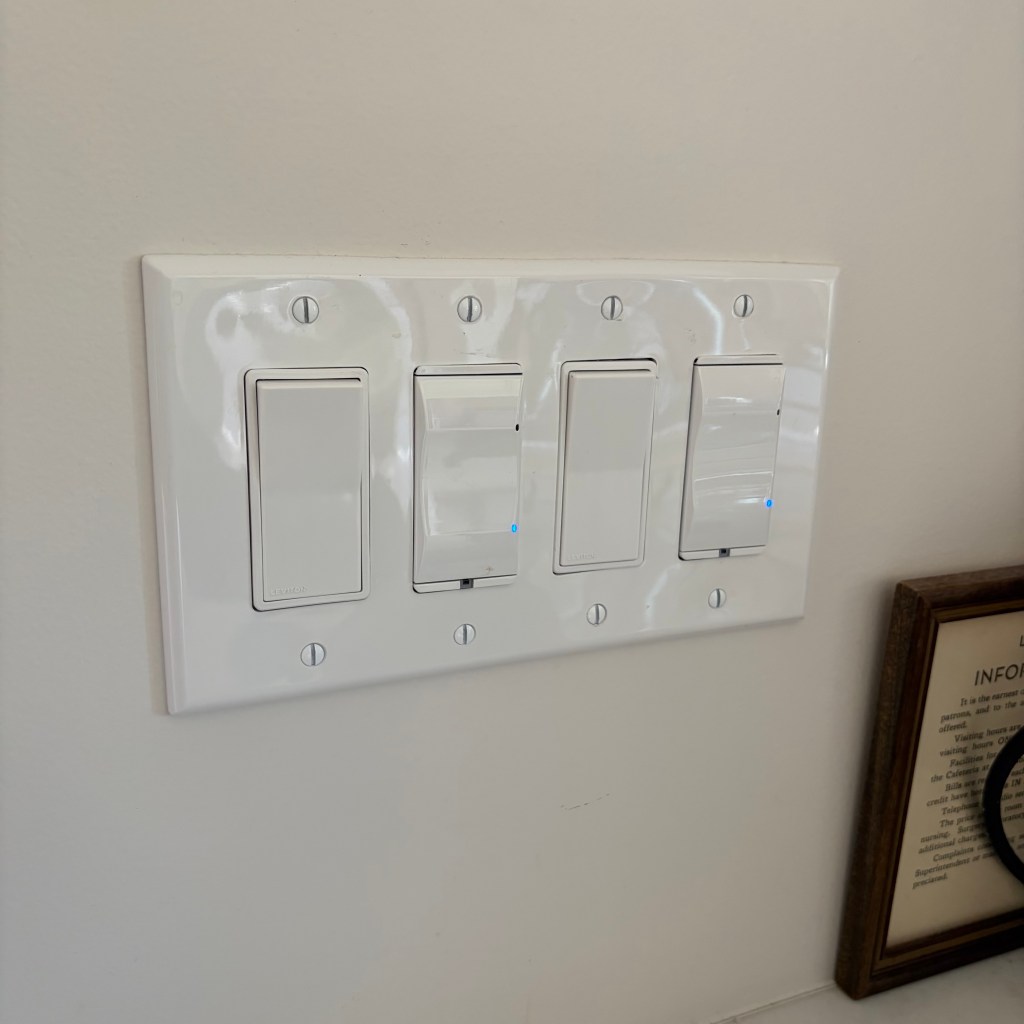
Our house is controlled with a Control 4 home automation system. We’ve tied the toekick and above cabinet lighting into the system. The toekick lighting functions as a nightlight from dusk to 11:00PM. We have not yet imagined a scenario for the above cabinet lights. Should the desire arise, we can upgrade to controllable switches for the recessed, under cabinet and dinette area lighting, but we do not yet see the need.

Switches are arranged from ceiling, down. Recessed, over cabients, under cabinets and toekick. The Over Cabinet and Toekick switches are linked to the C4 home automation system.

If you read my blogs, you likely know I don’t use many dimmers, especially in the kitchen. With four switches in the room, I can establish 24 combinations. Do I need more? It is unlikely. By selecting one of the 24, I have exactly the right amount of light.

Illuminance Measurements

How much light is enough light? In the last house, we existed for about six years before we rehabbed the kitchen. That meant BAD lighting for a long time. We also understand that old age means more light will be needed. Once you have good kitchen lighting, you cannot go back.

I took these measurements at dusk. The sky was clear, the sun had just set, but it wasn’t yet dark, so there is a bit of light coming from outside. (See first line of data.) I averaged measurements from five locations on the 17’-0” liner feet of countertop and backsplash to arrive at the number stated in the chart.

Type of LightAt Sink (located in front of window)At Front of CountertopCountertop at Backsplash
Dusk via Windows17.0 fc1.86 fc1.02 fc
Recessed Only109.0 fc81.66 fc19.0 fc
Under Cab Only38 fc247.6 fc318.4 fc
Above Cab Only29 fc21.06 fc7.96 fc
Recessed & Under Cab *136 fc334.0 fc323.2 fc
All Lighting On **150 fc338.2 fc333.4 fc

* Most popular option for cooking

** Rarely used

As you can see from these measurements, the layered approach to light really makes a difference. Consider the following:

  • While the recessed lighting delivers an adequate level of light at the front of the countertops, darkness looms at the work surface near the backsplash
  • With only the recessed light, shadows are a concern on the countertop. Hence the need for other lighting emanating from a different direction.
  • Conversely, if the under cabinet lighting is used alone, the countertops are well lit, but the remainder of the room, not near an upper cabinet (see sink) is left in the dark.
  • Toekick lighting which delivers about 150fc on the floor, under the toekick and 17fc on the floor, 2” from the toekick edge, do not add an appreciable level of light to the work surfaces.
  • The over cabinet lights, likewise add only negligible levels of light to the countertops (compare last two lines of stats, the difference being the addition of upper and toekick lighting)
  • This means the toekick lighting and the above cabinet lighting perform very specific tasks. Crucial nighttime navigation and supplemental lighting as the morning light breaks. In addition, they carry a much heavier aesthetic load, especially when used together during times of entertainment.

In these numbers, it is easy to quantify a statement everyone in the lighting industry says repeatedly. For proper illumination, multiple layers are needed.

Final Thoughts

I had intended to include under-counter lighting to wash the front of the lower cabinets and illuminate open drawers. I included them in the previous house and found them helpful, but the design of the cabinets and placement of the countertop would have rendered them somewhat ineffective. I abandoned the idea after a few conversations with the fabricators. I also elected to use ceiling mounted audio speakers after realizing the minimal exposed space above the cabinets. Our previous house had 8’-5” ceiling heights. (Yes, I know. Odd.) With so little space, I decided to place the bookshelf speaker in another room. That meant two more holes in the ceiling. Statistically, we have the right light. We also feel we have good lighting that meets our daily needs.

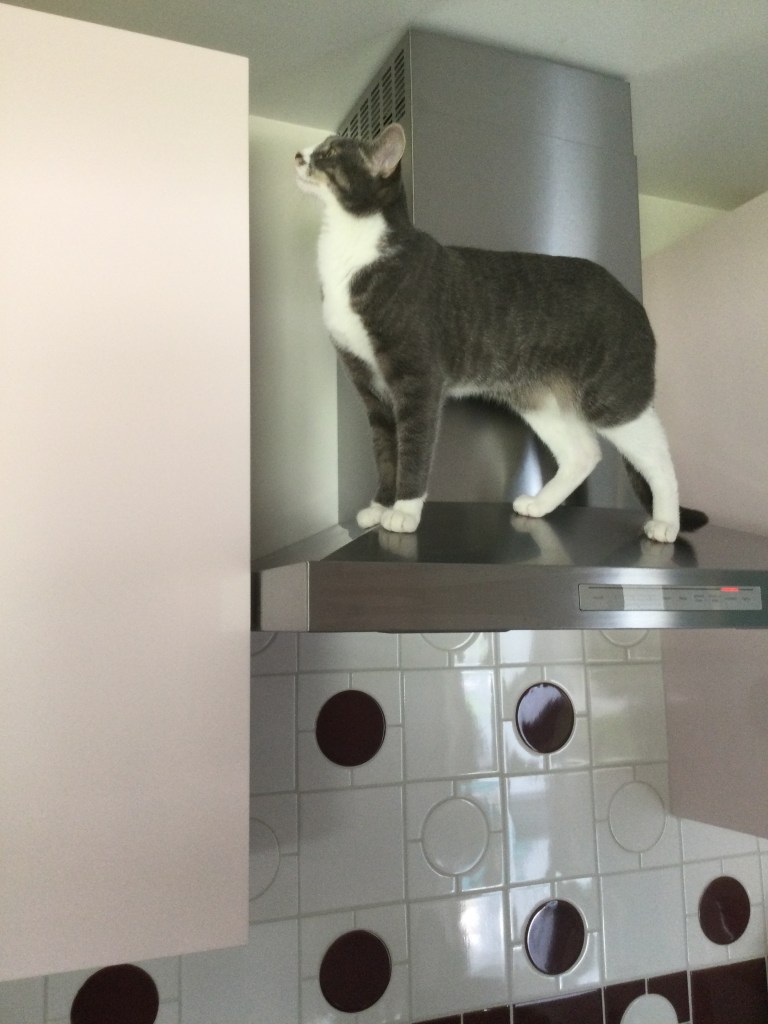
Our cat, Kit giving everything a final inspection!

Upon closer inspection, even our cat, Kit agrees!

If YOU have any thoughts, I’d love to hear them! Look for additional posts covering other room throughout 2026.

Categories
Aesthetic Lighting Help Lighting Commentary

Some “Good Lighting” Stats

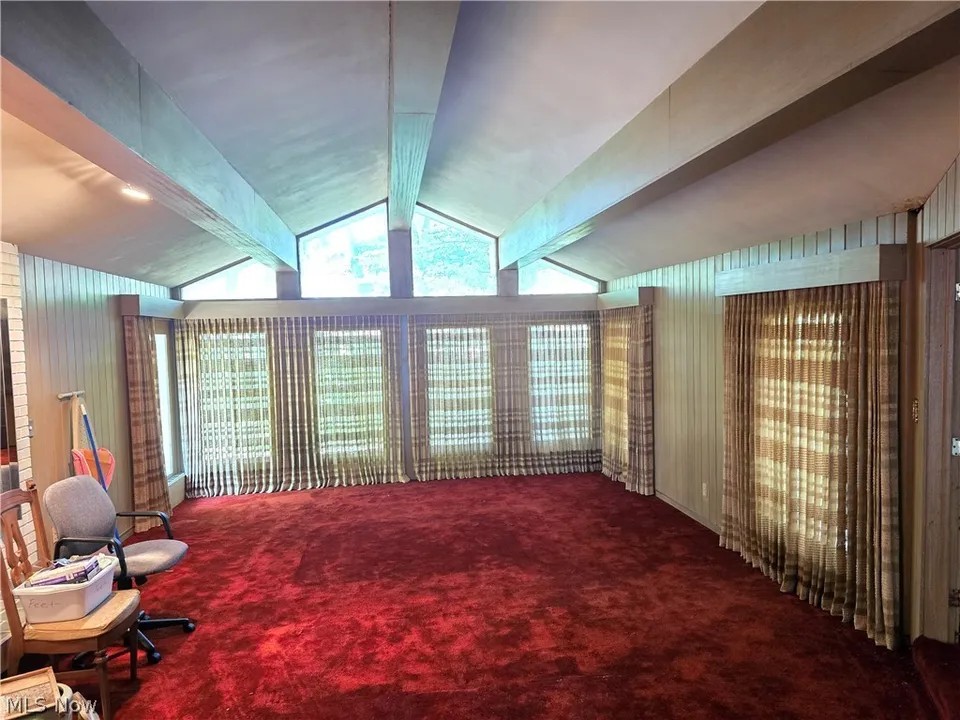
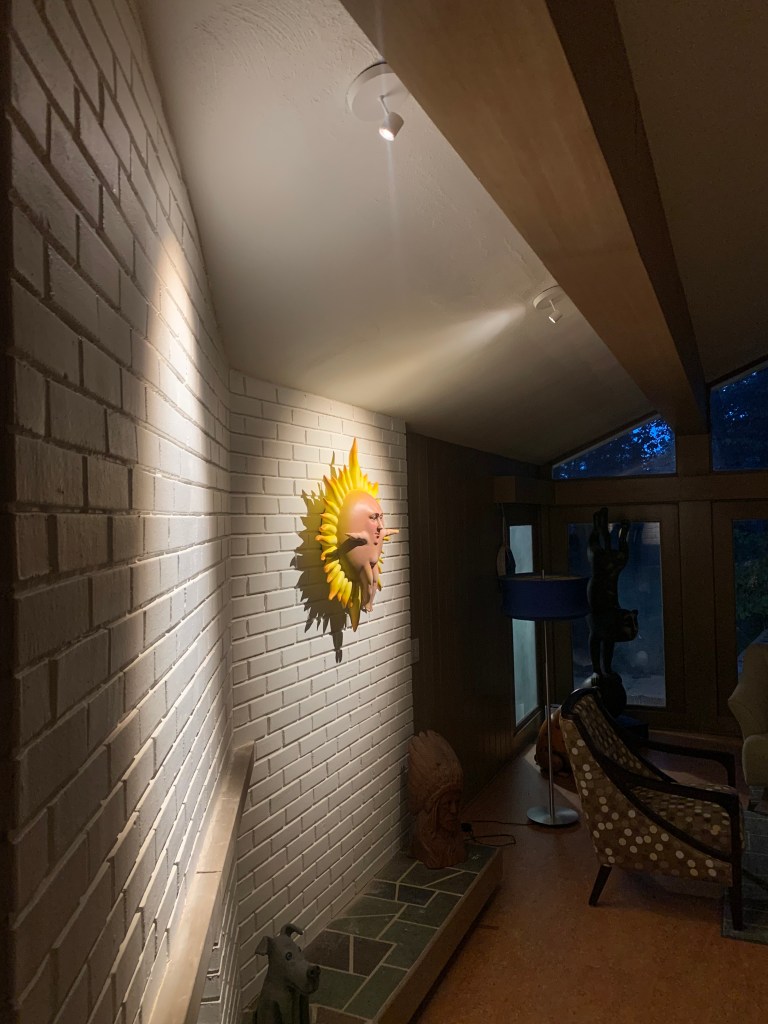
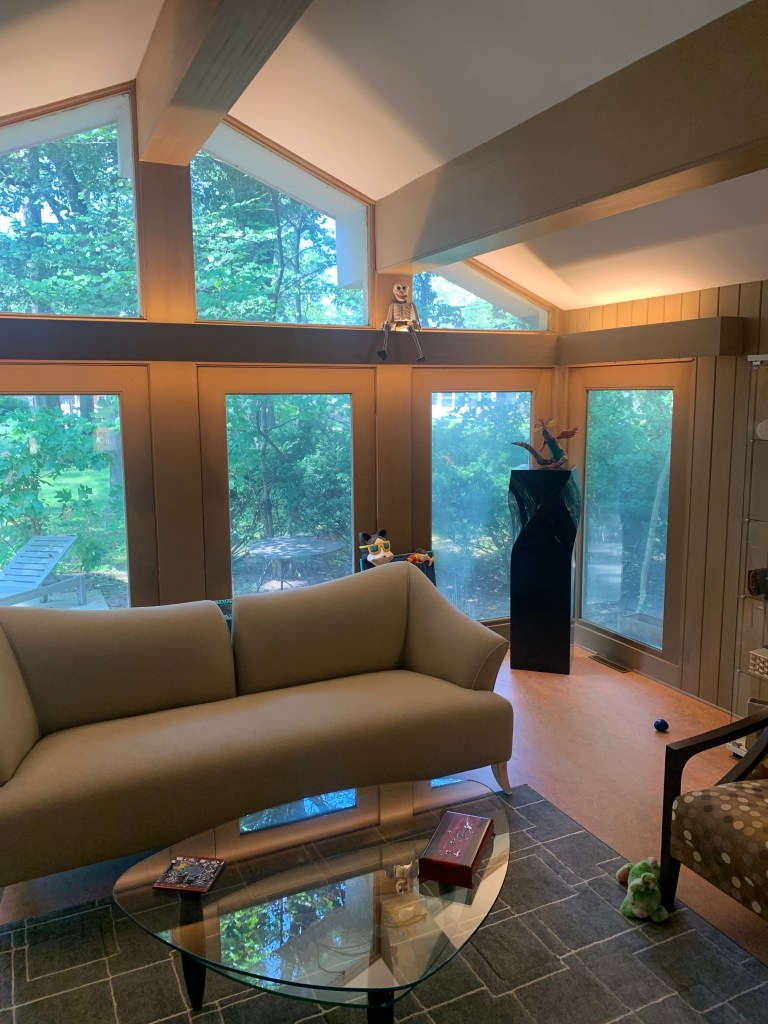
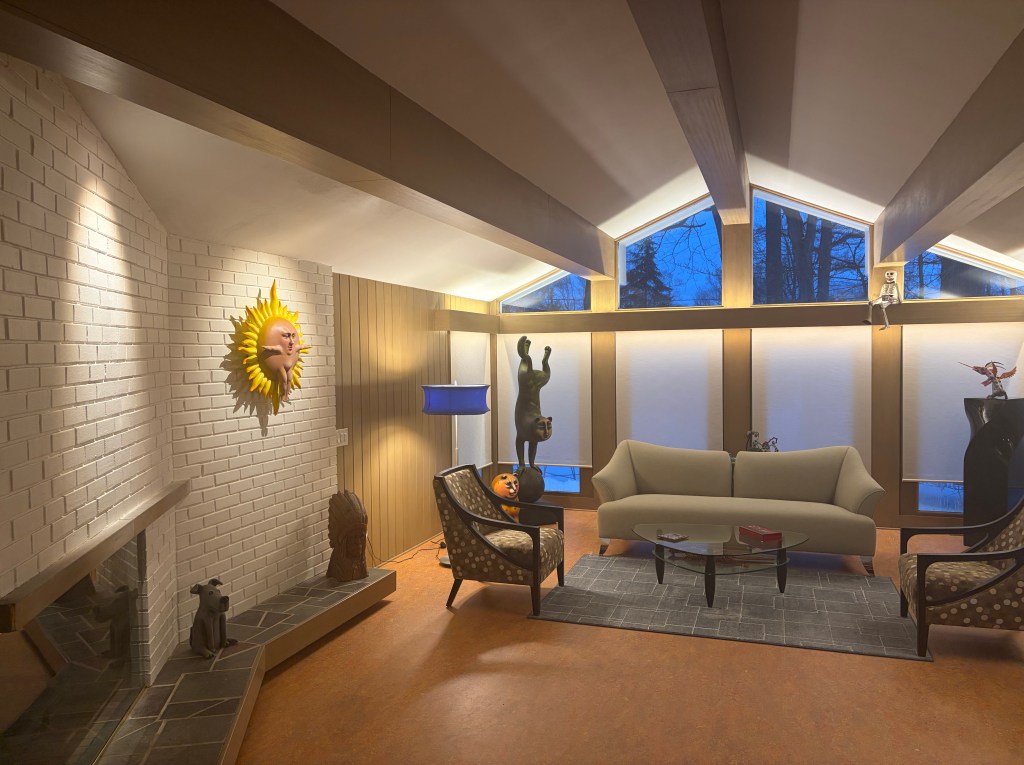
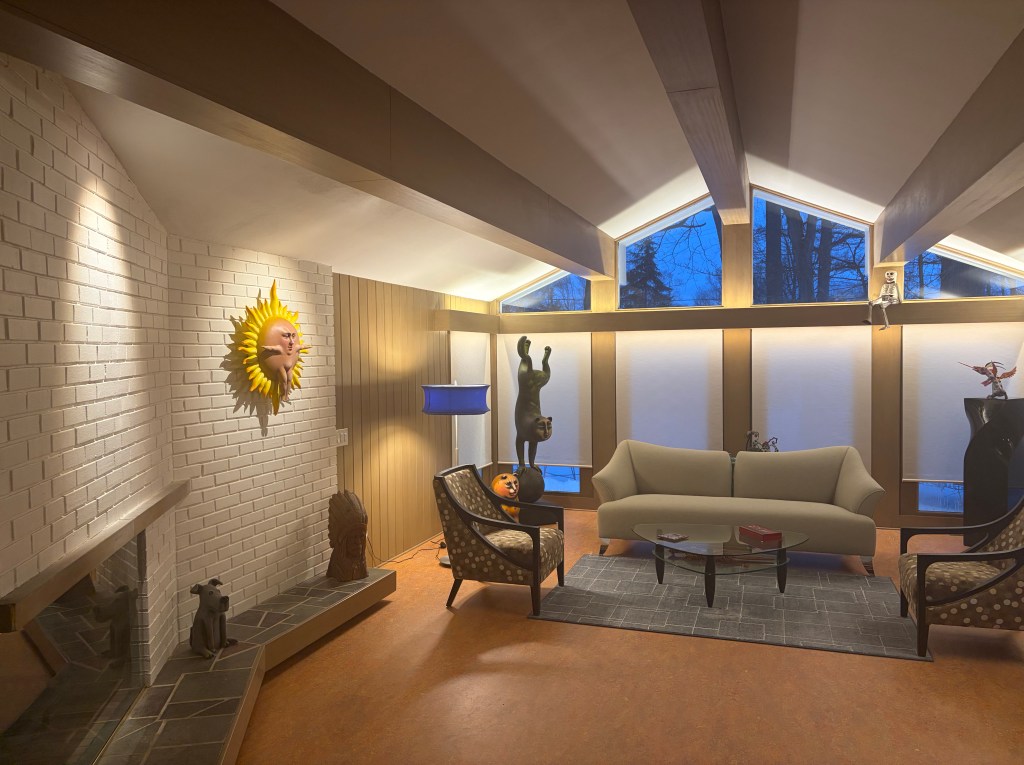
If you’ve read any of my recent blog posts, you’ll know, my wife and I just moved into a new, rehabbed mid-century ranch. The house was rat-infested, filled with mold, had holes in the roof and otherwise, only partially functional. My wife likes to say, “We built a whole new home inside an existing shell.” While that may be true, we were careful to maintain at least 90% of the original character. Walking into the front door, all of the living spaces are exactly as were envisioned in 1957. Sadly, an original bathroom could not be saved as water leakage compromised the supporting floor joists underneath. 1980s era remodeling of the main bathroom and kitchen were not worth the effort to save. We think the house is now a perfect blend of reverence to the past and functionality for today and tomorrow.

Because the lighting and electric was barely viable, up to and including problematic Federal Pacific electric panels, a full rewire with all new lighting was required. This has allowed me to make some observations about the state of residential lighting, at least in this one small instance.

I have been involved in lighting for over fifty years, so I’ll add two provisos. First, I spent more time than the average homeowner thinking about the lighting I wanted and where I wanted it placed. Secondly, I probably used more lighting than most remodelers or designers would typically specify. That said, I believe I have created a nice lighting design for our home and I have solved the consistent lighting complaints we both lived with in our previous homes and their rehabilitation projects. In addition, while our vision is good right now, statically, more and better lighting will be needed as we age. It was easier to add the light at this juncture, rather than later, when we’re less suited to deal with it.

Some Stats

  • 26 outlet box mounted luminaires (12 of which are utilitarian flat-panel flush mounted luminaires plus 2 monopoint spots.)
  • 52 recessed units and recessed housings
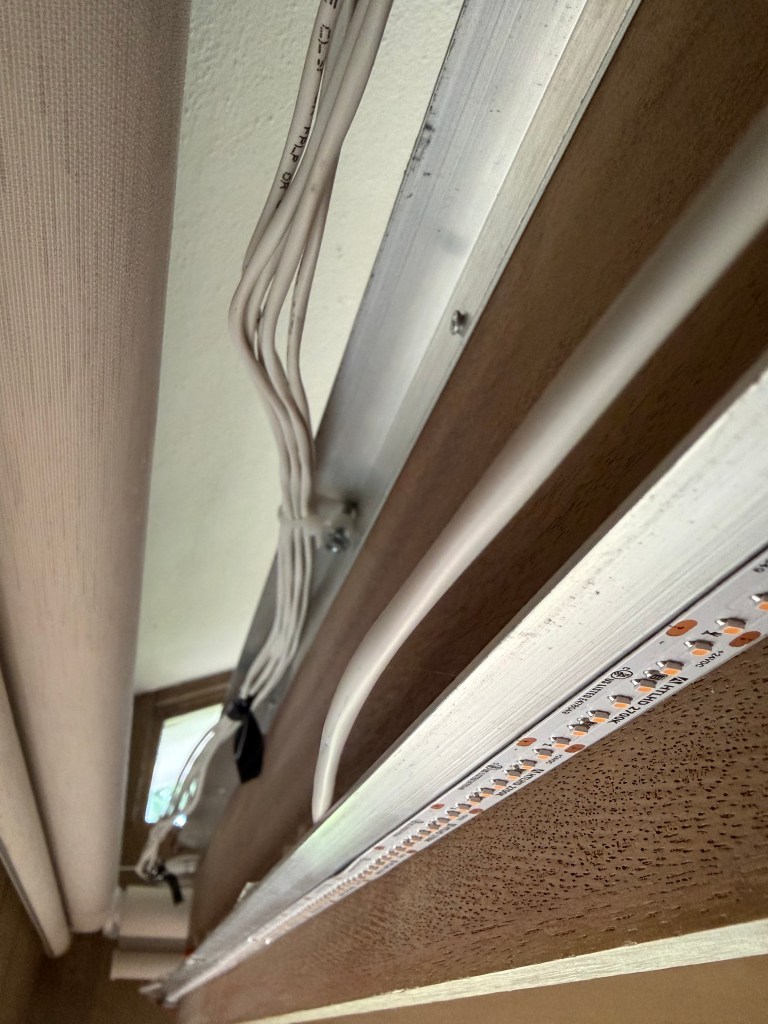
  • 223 feet of LED Tape (four different types)
  • 32 lighting strips totaling 71’-0” illuminate the clothes closets
  • 15 remote power supplies (for tape and lighting strips)
  • 14 step lights
  • 4 exterior spots
  • Scores of cables, connectors & clips, for the assorted lighting systems

Stat Calculations

  • 28% of the fixtures purchased were outlet box mounted
  • 72% of the lighting was a functional systems, placed in, above, below or behind architectural elements of the structure
  • 29.6% of the budget was spent on outlet box mounted lighting
  • 70.4 % of the budget was spent on functional lighting
    • If we include the utilitarian, surface-mounted items as functional lighting, that number jumps to 76.7%

Project Stats

  • 2600 square feet of livable space (includes a basement studio/office/entertainment space) 3105 square feet includes garage, which was also lit.
  • 2902.18 watts are consumed if ALL luminaires are engaged
  • 0.93 watts of lighting energy per square foot
  • 7% – percentage of total budget was dedicated to lighting. If initial cost of the building is included, (this was a rehab) the number falls to 5.6%.

As I look at these numbers, they reflect what I have suspected and mentioned here over the years.

  • Functional lighting is heavily outweighing decorative lighting in quantity, dollars and impact to the room at a pretty substantive level.
  • As a percentage of new home or remodel budgets, lighting needs to be increased. I suspect my number, at 5-7% is higher than most. Many people believe 10% is a better number. The electricians on the job parroted that, indicating our house was the most involved they had ever done. While there was a room or two in their past, a whole-home of correct lighting hasn’t been normal. That means, there are a lot of poorly illuminated houses out there.
  • Despite my large number of lighting options, my watts/square foot umber fell below most averages of 1.0 to 2.5. Not where it needs to be if I wanted LEED, or some other energy saving certification, but pretty low. (More on this point in the next blog post.)

When I started work in this field, well over 90% of lighting used in a home was outlet box mounted decorative. A handful of recessed pieces were used in select spots and undercabinet lighting was, if used, fluorescent strips. 2’-0” x 4’-0” fluorescent boxes in the kitchen were soon replaced with a grid of 6” recessed cans. Bedroom bent glass was replaced with bowls, then ceiling fans. Hallway bowls were swapped for more recessed. Now, many bath strips are being supplanted with illuminated mirrors. Fluorescent undercabient was replaced with Halogen, then Xenon and now LED Tape. The ease of LED Tape, to say nothing of the reduced cost, has made accent lighting much more viable. All of these transitions are visible in my “real world” lighting installation. Are we, as professional lighting people dedicating the correct percentage of our efforts to the right categories? I’m not sure we are. We seem to spend an inordinate amount of time on decorative products and not enough on functional.

I also worry about our failure to push for better lighting. I often play a game when the new issue of Architectural Digest magazine arrives. I count the visible, decorative lighting fixtures in each article/issue. The number was shockingly low when I first started. As we moved toward the minimalistic 2010s, it got even smaller. Recently, the number is increasing because designers are doing exactly as I expected, they are featuring one or two key luminaires in a space. Lighting fixtures have moved from functional distributors of light to art that also provides some light. What hasn’t changed is the overall poor lighting found in almost every article in the magazine. If you’ve made it into Architectural Digest, there is no question, the design and implementation of the space is breathtaking. The furniture, wallcoverings and window dressings are flawless. You can’t help but be envious. Look a little deeper and the lack of usable light in the majority of the rooms is astonishing. Millions were spent on the redecoration, but only a couple of thousand dollars was spent on lighting that will allow you to see the space and live in the house.

The lighting design I provided for our new/old (last) home solved multiple problems, too little light, too much glare, poorly located lights and light oblivious to our security needs. Combined with a home automation system, the home lighting functions almost without our intervention. To achieve that, more systems-based functional lighting was needed than decorative outlet box mounted products. I’m not sure I’m an anomaly. As an industry, are we balancing this need correctly? All we need do is check out the statistics.