Categories
Aesthetic Lighting Help

BDNY 2024 Report

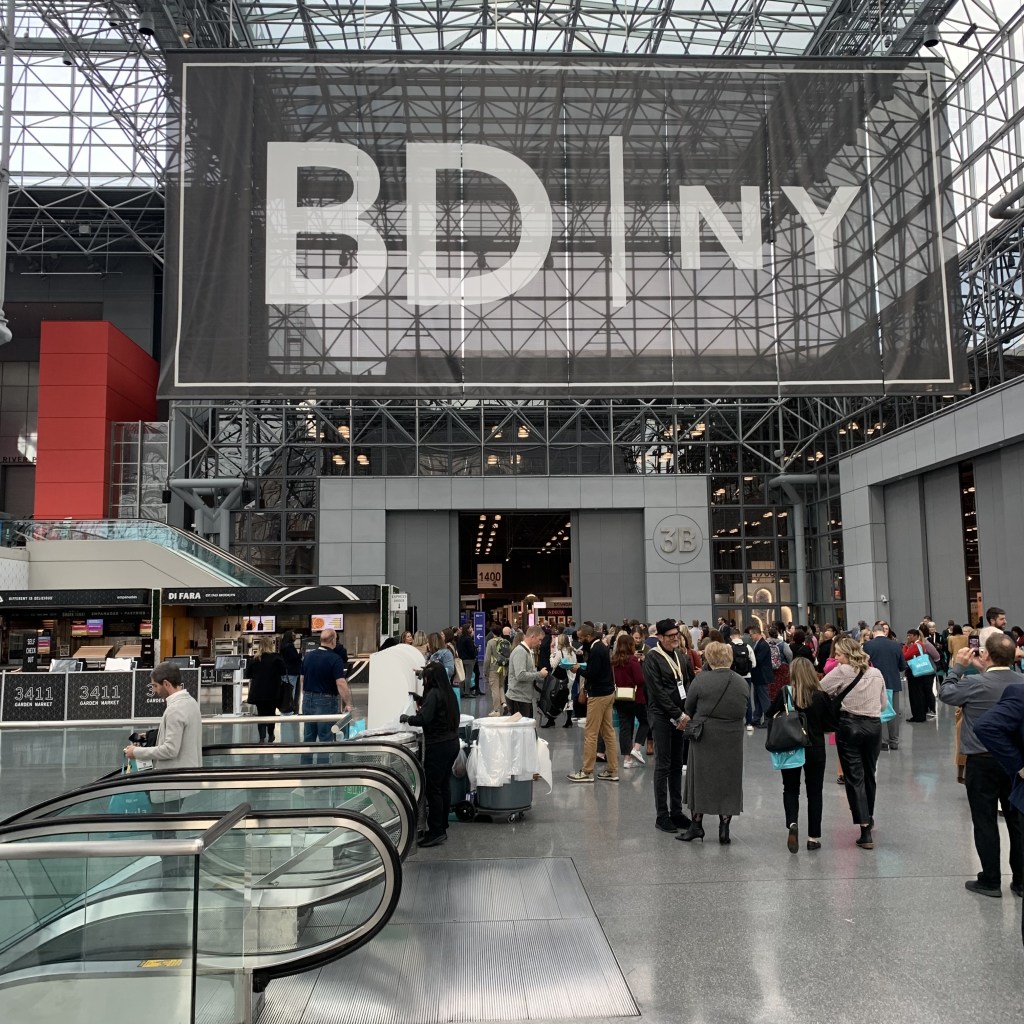
Another year, another trade show. Overall, I found less of interest than normal at this year’s BDNY. It also seemed like a lighter attendance than last year. Nonetheless, there are a handful of things worth noting from this show, which concentrates on the needs of the hospitality trade.

Germs

Stern Engineering Ltd. showed touchless WC partition doors. Operating via proximity sensors, the user no longer needs to manually operate the toilet partition door. As we become more sensitive to germs and with the reality that 80% of germs are transferred by touch, this is a solution for a problem that might extend beyond a public restroom.

A continual issue with shower enclosures is grout mold. Mincey Marble is promoting cast marble that eliminates the grout. Unfortunately, for me, it has the look of the inexpensive resin/plastic tub enclosures that are advertised on late-night television. Too bad, they may be on to something here with a higher-end answer to black mold. I hope they continue to work on it.

https://minceymarble.com/

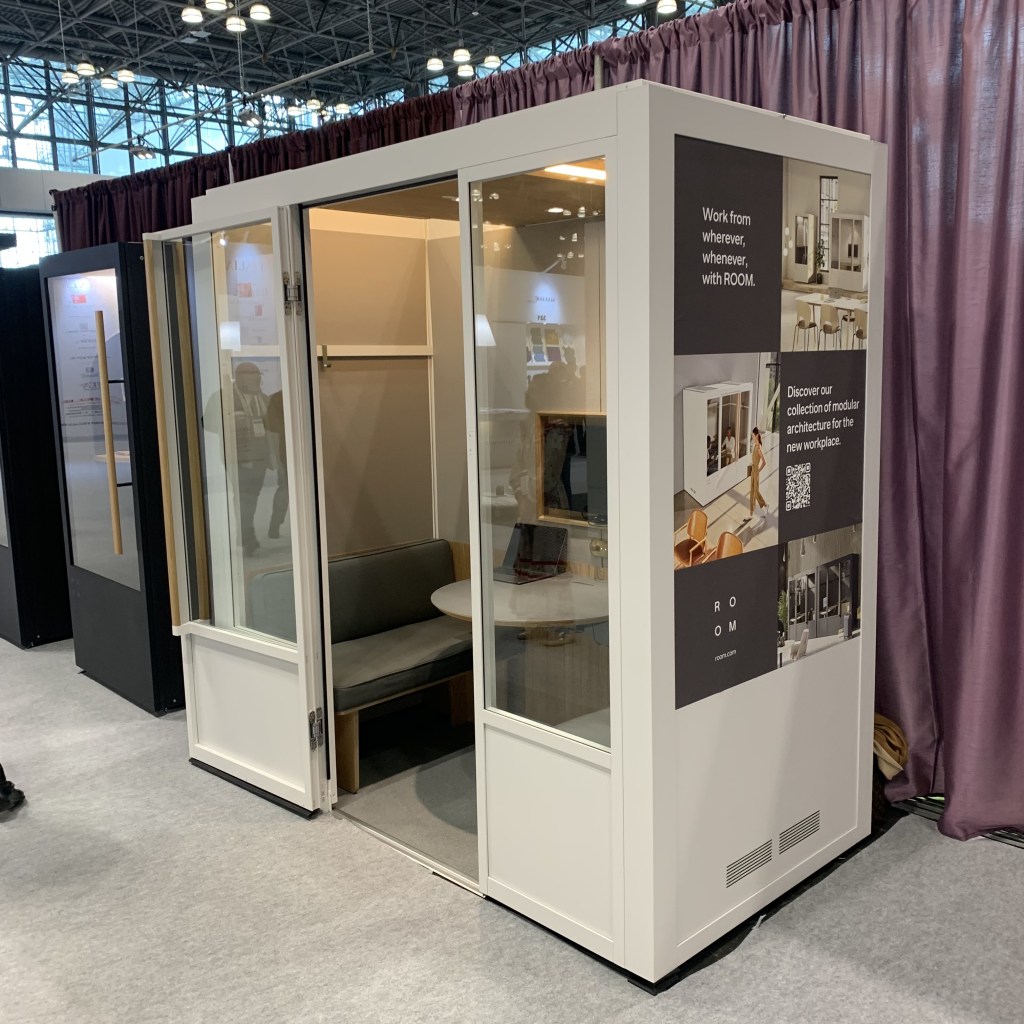
Need privacy in a large space? Room offers a collection of portable spaces that can insure some level of quiet and a place to meet. While this can be of value in hotels, I can also see the importance in open-plan office settings and maybe even homes with two “work from home” living partners.

BDNY 2024 – Room – Portable spaces

https://room.com/?srsltid=AfmBOorunYggcJhlk0dTOnh_xOLfZpU-47rDZVgue8E4U2fPBHbKNy58

Lighting

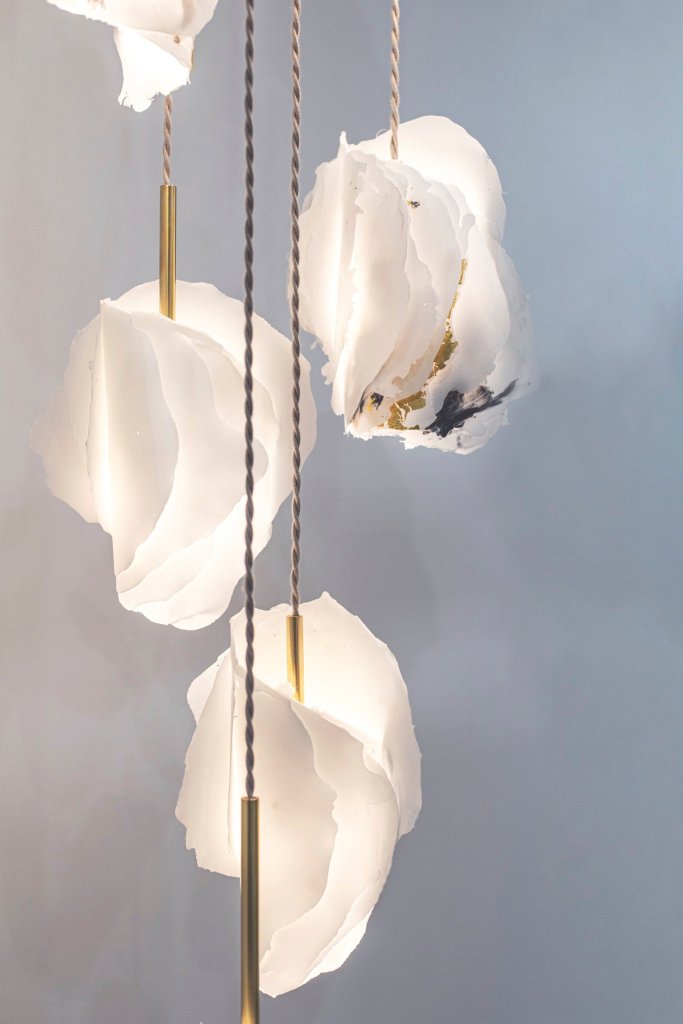
I have mentioned Swadoh before and their product bears repeating. Their design approach is different and unique. I was especially drawn to the look of torn and battered pages of a book used in their Fungia collection. If something special is needed, I’d suggest a look here.

BDNY 2024 – Swadoh – Fungia

https://www.swadoh.com/

Uecko is a Spanish cabinet company. Nice products, but what attracted my attention was the internal lighting. 3/8” wide LED Tape has become the default for so many tasks, so when I saw the internal cabinet lighting, I was very surprised. A tiny 3/16”, at most ¼” sliver of LED lit the cabinet interiors. This forced me to ask, “Why have we settled on the current LED Tape width?” Perhaps it is easy. No need to reinvent the printed circuitry that drives the concept. No need to engineer new connectors. Regardless, LED is very adaptive and why not consider a smaller concept. It certainly works here.

https://uecko.com/en/

As I gazed into the Artemide showroom window in SOHO, I was reminded of a past comment I made on RGB lighting. “Just because you can, doesn’t mean you should.” Yes, color changing lighting is fun, but it has a very limited practical use, especially in a home. I’m not sure where “Discovery Dialogue” by Ernesto Gismondi will be used, but I love the conversation and I appreciate the respect for technology expressed in the creator’s abstract. We must understand lighting technology will change and luminaire design and application will change. We need to get on board, or step aside.

NY 2024 – Artemide – Discovery Dialogue

https://www.artemide.com/en/subfamily/4746461/discovery-dialogue

Miscellaneous

I liked the combined materials of ceramic and leather used by Meso Goods in their wall hanging, Tela de Barro. Meso products are made in Latin America and this was an especially appealing design and use of mixed materials.

BDNY 2024 – Meso Goods – Mix of leather and ceramic

https://www.mesogoods.com/

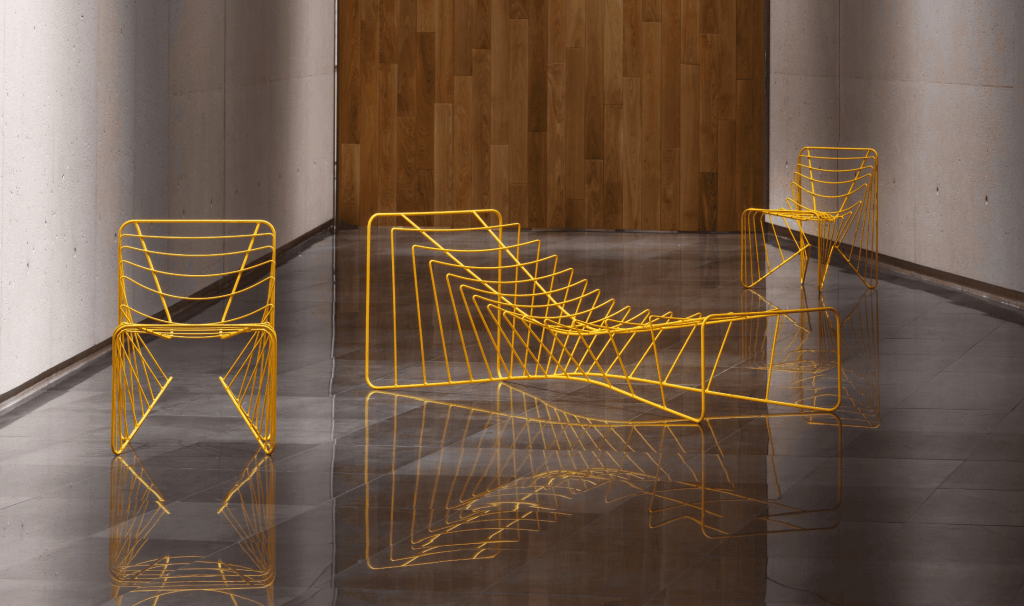
Anytime I see Zaha Hadid, I am hooked. Despite her dying many years ago, her architectural firm continues and they have been remarkably consistent with her artistic vision. Isimar, a Northern Spain manufacturer of galvanized metal rod products, has engaged her firm and they have created Topos an outdoor chaise and chair that immediately brings to mind some of Hadid’s architectural work.

BDNY 2024 – Isimar – Zaha Hadid designed Topos collection

https://www.isimar.es/en/

Outdoor heating has become more and more important, yet the design of the units has been somewhat pedestrian. Heatsail is a Belgian company that is creating interesting and fashionable heating units. Resembling pendants and 70s era Italian floor lamps, outdoor heating in outdoor spaces can be achieved more beautifully now.

BDNY 2024 – Heatsail

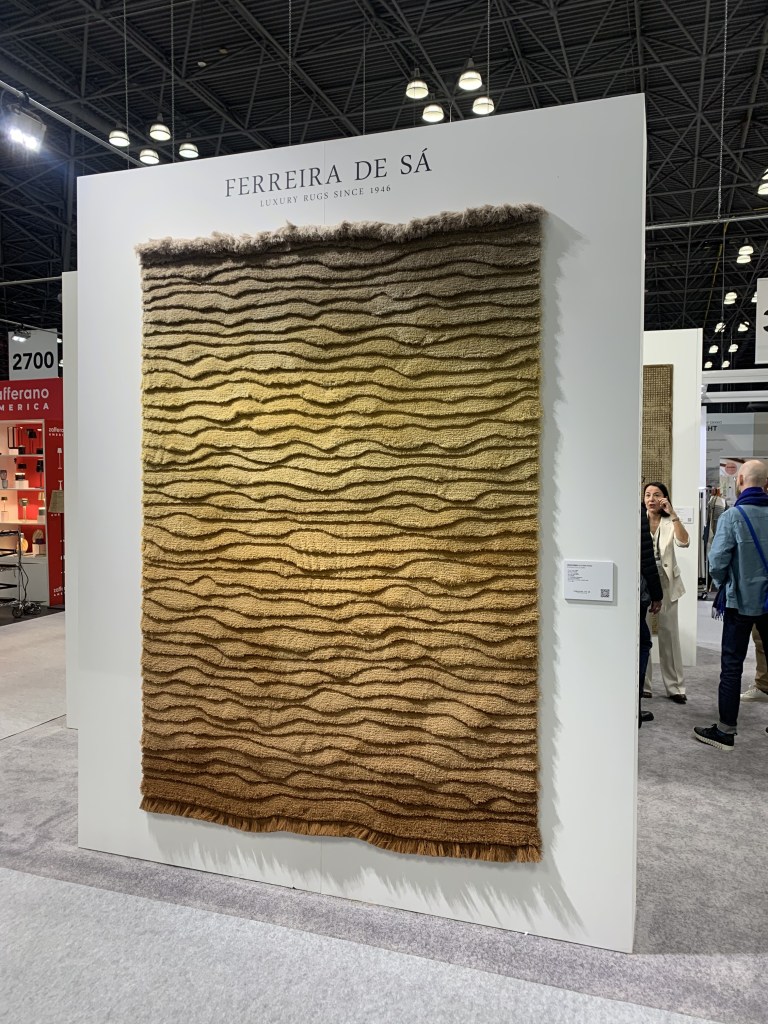
I loved the dimensionality of the rugs at the family run, Portuguese weaver Ferreira de Sá. The addition of these pieces would make almost any room better.

BDNY 2024 – Ferreira de Sa – Sculpted Rugs

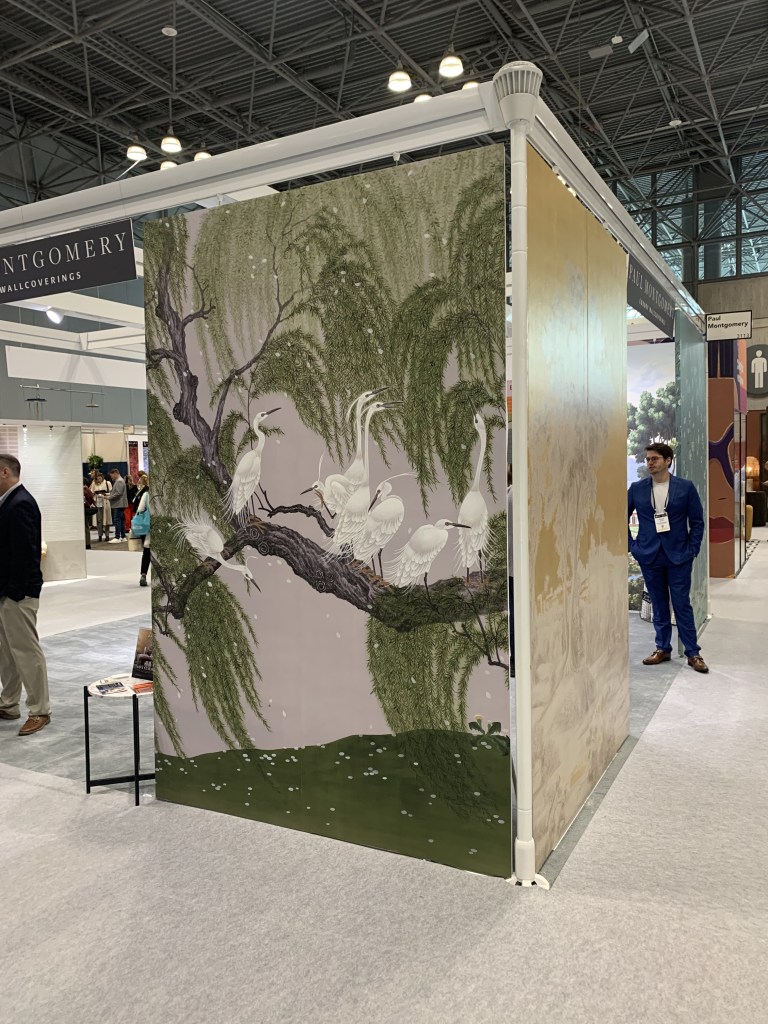
These might appear “old fashion” but I liked the full wall murals displayed by Paul Montgomery. I think these could find a place in the interiors of the next decade, especial the less literal compositions like birds on a tree and jungle scenes. The concept of large, immersive wall coverings fits with the bend to maximalism and these are wonderful options.

BDNY 2024 – Paul Montgomery – Wall coverings

Despite a limited amount of new ideas, my trip to New York and BDNY did deliver a few concepts that will drive the future. We must all remember that the hospitality industry is often the driving force of design for the residential consumer. It is important to understand this industry to better determine what the residential consumer will want and desire in the future.

Categories
Technical Lighting Help

“Let’s Just Eliminate the Stove.”

Photo by AS Photography on Pexels.com

At the recently completed American Lighting Association (ALA) conference, the concept of cost overruns was discussed. The lighting pros in attendance were commiserating the unfortunate fact that light, too often is the victim of an expensive refrigerator. When costs need to be cut, lighting becomes the sacrificial lamb.

I suggested we should all counter that response with a different argument.

Client: “We are spending too much money on the new kitchen. We’ll need to eliminate some of the lighting.”

Lighting Professional: “I have a better solution. Let’s remove the stove.”

At this point, the customer will respond and push back. Of course, a kitchen without a stove isn’t much of a kitchen. A kitchen without proper lighting is equally ineffective. If you can’t see the carrots, dragging out a knife could be a lethal, or at least messy problem.

There is a better way that doesn’t mean the elimination of half the light or one La Cornue. Multiple lighting options should be considered so a good lighting design will be the result.

The first design you offer should be the optimal version. You should include the luminaires that will do the best job, perform the best and deliver the finest design possible.

A second option should include alternatives and the reasons they are second should be included in the notes.

  • “Adequate, but not perfect beam angle”
  • “Shorter expected life span – 25,000 hours vs 60,000”
  • “Increased likelihood of glare”
  • “X”

You might want to offer a third, but I wouldn’t unless you like extra work, or that has been agreed upon when discussing the job.

Sometimes, the customer needs to understand why they are selecting what they are selecting. They might choose a Sub-Zero because it has a reputation and a certain amount of élan, but they do not have that connection to lighting. They can acquire a visceral connection to a chandelier, but functional lighting is different. A stove roasts a chicken, a dishwasher cleans the pots, a freezer makes ice cubes, but they might not realize properly designed recessed cans (pots) deliver glare-free light that supports all of the tasks a user achieves in a kitchen.

The accent lighting layer is an easy victim to cost overruns. In order to swing that copper farmhouse sink, the toekick and above cabinet lighting could be sacrificed. The lighting designer should ask, “At what cost?”

“Why install a Poggenpohl kitchen, if you aren’t going to light it properly?” If you can’t see the beautiful finishes, the seamless craftsmanship and the flawless functionality, what is the point?

In a perfect world, kitchens should be offered at multiple price points, each with commensurate lighting. Here are a few lighting options matched with the overarching kitchen concepts.

Entry Level Kitchens

If the client is furnishing their first home, or if they are young and just starting life’s journey they will likely be using stock cabinets, basic appliances, introductory priced granite countertops and simple flooring. The suggested lighting could be:

  • Decorative surface mounted luminaires – flush or semi-flush, depending on the ceiling height. (Surface mounted “discs” are not an option at ANY price point!!)
  • Good output, LED Tape in a plastic channel as under-cabinet lighting. Depending on price, an integrated under-cabinet option might work. LED Tape is typically less expensive (based on lumens per foot) but still confounds some less skilled electricians.

Mid-Level Kitchens

If the customer is moving into a second or “forever” home, they will likely be using semi-custom cabinets, more elevated appliances with better features, quartz countertops and ceramic or wood flooring. The suggested lighting could be:

  • Pendants at the island that have a size equal to the girth of the surface and a height that conforms with the ceiling height. In other words, avoid using tiny 5” spheres in a room with 10’-0” ceilings over a 48” wide island.
  • Well positioned recessed lighting. They may not have optimal beam angles and they might not be as recessed as those found in a perfect design. (Surface mounted “discs” are not an option at ANY price point!! Yes, I wrote this twice for a reason.)
  • 300 to 500 lumens per foot LED Tape in a channel as under-cabinet lighting
  • Above cabinet accent lighting provided by LED Tape delivering between 150-250 lumens per foot.

Luxury Kitchens

This client might have a kitchen designer. They might be using an interior design specialist or architect. They are familiar with what they want and have the funds to achieve that goal. This is not their first home purchase and might not be their last. They will be specifying the aforementioned La Cornue and Sub-Zero appliances in a SieMatic kitchen. High end backsplash and flooring materials will employed. The suggested lighting could be:

  • Pendants at the island should be perfectly sized to the girth of the counter and height of the ceiling. The quantity used should also fit the scale.
  • A separate dining area might need supplemental lighting and a fine decorative chandelier/pendant/semi-flush should be selected.
  • Well positioned recessed lighting with optimal beam angles and lumen output. They should be recessed into the ceiling a minimum of 2 ½”. (Surface mounted “discs” are not an option at ANY price point!! Once more for effect.) There will never be a reason to replace these, so buy the product that is warrantied for 50,000 hours or higher.
  • 300 to 500 lumens per foot LED Tape in a channel as under-cabinet lighting
  • Above cabinet and toekick accent lighting provided by LED Tape delivering between 150-250 lumens per foot.
  • Under countertop lip accent lighting should also be discussed and considered. It can be a wise alternate to inside drawer lighting.
  • Under island accent lighting (again, LED Tape) at about 200-300 lumens per foot will work nicely
  • There is a good chance this kitchen will feature some display cabinets. They will need to be lit to fully appreciate the items. The necessary illumination can vary widely from 150 to 500 lumens per foot depending on the goal.

There are many differences found in all the kitchen designs in America and they diverge in as many ways as the customer does. Despite that range, no one need go without a stove to have good lighting. Good lighting simply needs to be planned in concert with the rest of the kitchen’s functional elements.

Categories
Lighting Commentary

My 100th Blog Post

Photo by Markus Spiske on Pexels.com

When it was suggested I write a series of blog post dealing with lighting, I thought, deep down inside, “Do I really have enough to say?” With this being my one-hundredth blog post, I guess I do!

Long ago, while working for a manufacturer, when I originally proposed a blog on lighting, I received pushback of a different kind. There were scores of legal and marketing concerns that stretched far beyond simply typing out 500 words. You would have though I solved the problems of campaign financing, only to realize that there would be no influence left to abuse. Everyone wants “content” but content is problematic for a corporation. Upon retirement the problem part of the blog disappeared. This is just Jeffrey sharing thoughts, opinions and best practices, not a company existing in a litigious society.

Post-retirement, when people found out I was still alive and asked me if I would take on some consulting jobs, I realized I would need to stay current with fashion, aesthetic, architectural and lighting trends. That meant I needed to rebuild the network of tools I used for that purpose in the past. I did that. Once the pandemic waned, I could get out in the world and continue the hands-on research in showrooms, galleries, trade shows and design centers. Translating those finding, from internal documents to blogs was pretty easy. That left me with a wide swath of subject matter on which to draw.

Trade show reports, administrative agency findings, scientific discoveries, legislative initiatives, design best practices and personal observations have allowed me to create 100 blog posts over four years. I regularly acquire new subscribers, so they must be of some value. I like to write, therefore the process is far from daunting. Overall, this is a win-win; I learn something and share it with anyone who cares to read it. In my mind, this is a formula that could last another 100 post, at least!

I hope you’ve enjoyed reading! Stay tuned for more.

Categories
Lighting Commentary

A Teaching Moment at the Shoeshine Stand…and Two Conferences

Photo by Kelly on Pexels.com

I love to have my shoes shined at the airport. In a world where most people are wearing sneakers and air-travel clothing has skidded on, beyond casual, I realize I am an anomaly. Having this service performed has increasingly been a challenge. The Cleveland Hopkins Airport shoeshine stand is essentially closed until long after the morning flights are gone and prior to the return of evening flights, so an open and inviting stand in the Denver airport was a welcome sight.

I was wearing a pair of olive green, Spanish made Mezlan slip-ons. I asked the gentleman if he felt he could do something with the odd color. The woman at the next chair, delivering a killer shine to a pair of tan boots owned by another customer, could not help diverting her eyes from my green shoes. The supervisor, who escorted me to the chair, also gathered around my odd shoes. Whispers abound. With a lifetime of wearing “odd” shoes, I did not find this attention unusual. People typically appreciate and admire my unusual shoes, even if they are unwilling to wear the same.

After giving my temporary neighbor a few last-minute tips on caring for his newly refurbished boots, the other shoeshine artist placed herself at my feet. She immediately took control of the shine while the supervisor and other shiner looked on. She asked the others if they had green polish. A feverish search ensued. Not finding what she wanted, she told the first guy to deal with my soles while she ran to the other shoeshine stand to grab green polish.

Upon her return, she got to work, but she did not leave her coworker or supervisor in the dust. She explained that she was mixing the green with a dot of brown to achieve the right tone. She defined how she applied the mix, how she buffed the polish and how to properly finish-buff the softer Mezlan leather. She conducted a master class on shoe shining, but she did not do it in a vacuum. At each step, she narrated her efforts. Amidst our casual chit-chat, she said, “We can all learn with each new challenge.”

Over the last two weeks I traveled to the American Lighting Association (ALA) and the Interior Design Society (IDS) annual conferences to deliver educational presentations and I hope I was as effective a teacher as this young woman. Her summation was very similar to the goal of each conference. Yes, there was talk about family, vacations and golf scores, but the crux of the conversation revolved around design and lighting. Ideas were shared, challenges were aired, problems were solved and “doing better” was the takeaway. Like the trio of shoeshine professionals, when information is shared it raises the level of excellence for the entire organizations.

If I owned a company, I would have hired this woman straightaway. She would and will be an asset wherever she works, or whatever company she forms, but that is not the point here. She could have easily buried her head and performed her task. Instead, she talked through the process and checked to insure each step was understood. Head nodding confirmed her efforts. Her messaging was the goals of each conference. Gather likeminded people, pull them into groups and teach them something that will raise their value to their consumers. The ALA and IDS Conferences achieved those goals and were worth attending for these very reasons. Attendance should be considered at both in 2025.

Next time I pass through DEN, I plan on wearing my red or purple shoes and hope there is no flight delay! I await a new lesson.

Categories
Lighting Commentary

Solar Panels and Exterior Architecture

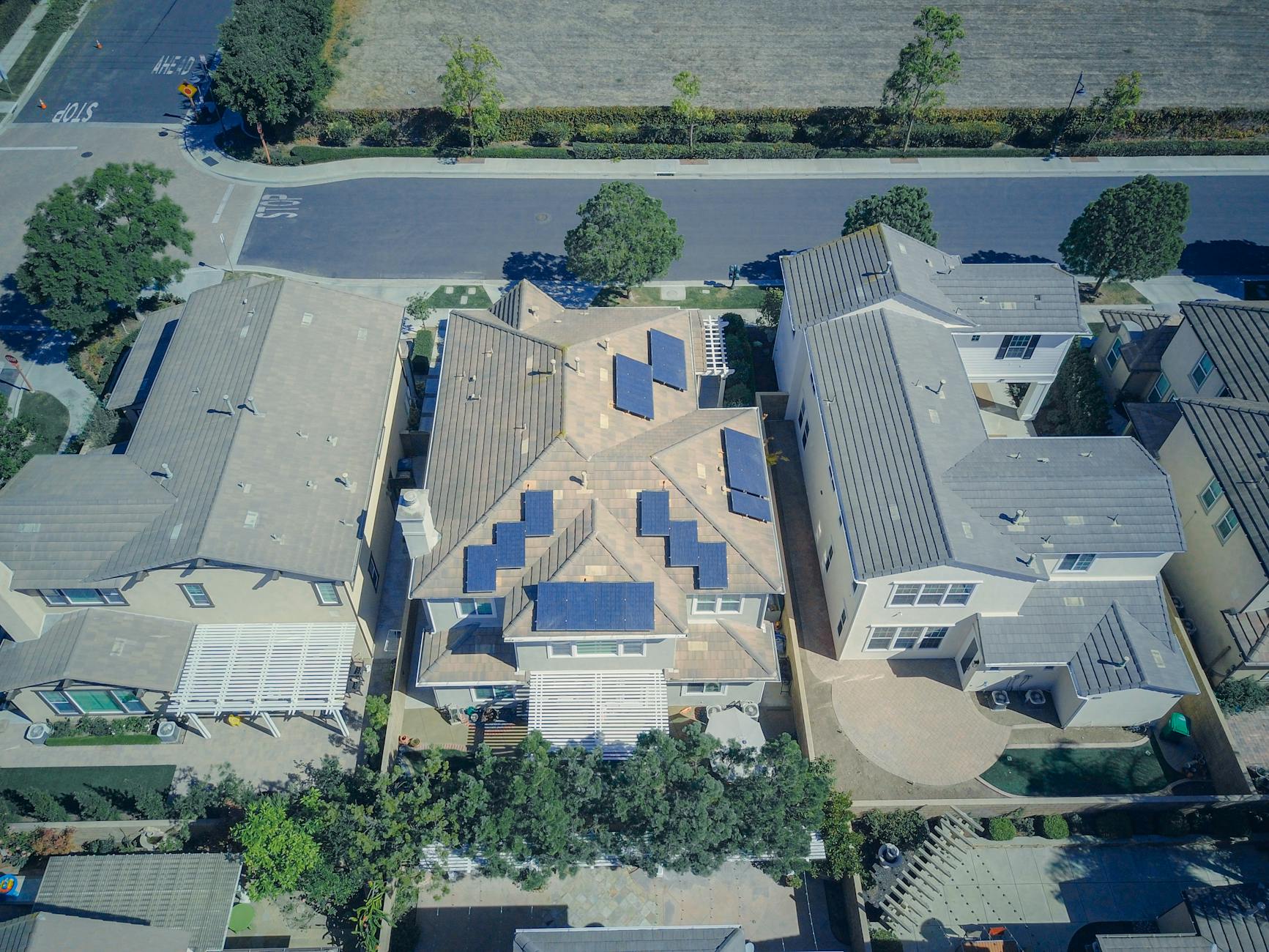
Photo by Kindel Media on Pexels.com

My wife and I current live in a home that is listed on the US Department of the Interior, National Register of Historic Places. We have both served on the board of the local historic preservation society and remain active members of the Cleveland Restoration Society. It is safe to assume we like the look and feel of older architecture…of any generation. That last part is becoming important, now that we have reached “old age.” Our current home features LOTS of stairs and living with them increases mobility difficulty. We are both very healthy, but my wife has the cumulative effect of having stood in a surgery theater for most of her career and I have a degenerative joint disorder that has impacted my wrists and already eliminated one of the discs in my spine. Who knows what will be next for us?

Luckily, there are a number of one-story homes in our neighborhood. These are classic mid-century ranches build in the 50s that feature some very “cool” attributes, such as real hardwood paneling, under-counter vertical refrigerators and front doors with the doorknob in the center. For the last few (five?) years, we have been looking for a home with great bones that has seen better days. We have finally found, what will ultimately be our retirement home. To get to that point will require months (and months) of repairs and restoration.

It is our intent to bring in as many elements of home automation as possible. We are also providing for accessibility needs that might be required as we age and deteriorate. Of course, the lighting must be right and there are hundreds of other things we want to do, so we won’t have to worry about them when we’re 90 years old. All of that will of course be wrapped around our desire to be sensitive to the mid-century roots of the building design.

To remain cognizant of energy consumption, we talked about added insulation, but what of solar panels? That is where our two desires have collided.

If you drive around new neighborhoods in the south and southwestern US, you will immediately see solar panels slapped on roof in whatever pattern and manner possible. Most new construction has only a marginal concern for exterior aesthetics, so a couple of big black plates on the roof are no more a deterrent to style than the plastic faux shutters, veneered brick façade and vinyl siding. That they are arranged on the roof in no particular pattern and with no regard to appearance probably isn’t a concern. Plopping these panels on a piece of classic mid-century architecture that includes an old-growth, cedar shake roof is.

This is where my active, dual, right-side/left-side brain gets me in trouble. I love the confluence of design and space and visuals, but I also see the statistical importance of energy savings and the mounting cost per kilowatt hour of electricity. I could easily create a spreadsheet that details the month and year when I would break-even on the solar panel investment.  I also know it will never happen, because that pesky “other-side” of my brain won’t allow it.

My plea to the solar panel world remains the same and has remained the same for years. Design a panel or panels that include some aesthetic finesse. Come to terms with the fact that your product is big and highly visible. Do something to ameliorate the appearance of big, black blobs glued on a roof.

A few years ago, someone developed an individual solar shingle that interlocked with the adjoining shingles to form a solar roof that delivered the appearance of typical roofing material. They were shaped as slate, tile, shingle, shake, etc. I assumed the look and benefits would quicken their adoption. Perhaps they were cost prohibitive, but I never saw them again.

I have also heard of growing complaints with solar panels, not the performance, but instead, with installation. Solar installers are typically not roofers, but installation requires hole drilled into the roof of a home or building. The solution to roof holes is often caulk. To a roofer, caulk is a supplement to proper installation technique, not a solution. Their advice; select a roofer who installs solar panels, not a solar specialist who will install a panel anywhere you need, including a roof. You want an installer who knows how to properly flash around every hole added to a roof. Failure will result in a leaky roof.

A renovated mid-century ranch can have the latest home automation, it can be equipped with integrated LED luminaires throughout, the garage can feature electrical plugs and capacity to charge an electric vehicle and it can be packed with insulation to control HVAC energy consumption. In my case, it will not include solar collection panels on the roof, until the solar panel industry makes a product that can live in visual concert with the architecture of a home. That is where I draw the line.

Categories
Lighting Commentary

An Insensitive New York Times Talks Lighting

The Wirecutter feature of the New York Times was added a little while ago to provide product assessments across a wide variety of categories. A quick look at the internet and it is easy to see that “Top 10” and “Best of…” lists abound. It seems natural that The Times would jump into the fray. Honestly, I haven’t found this feature as good as the news coverage. The few analyses I read have been a mixed bag. I have found a few brands of gin that have improved the occasional Martini and Negroni I drink, but the other “bests” they promoted have been ok, at best. In general I ignore the section while I’m reading the news online.

When the NYT email arrived announcing their next Wirecutter finding, I was a bit taken aback with their use of a rude, perhaps sexist trope. “We Tested Tulip’s Renter-Friendly Boob-Light Cover in 3 of Our Own Homes” https://www.nytimes.com/wirecutter/reviews/tulip-shade-review/?searchResultPosition=1 Because it concerned lighting, I did reread the title to be certain I understood their intent. After I realized they were talking about flush pan luminaires, I shook my head and deleted the email.

A few days later, a friend forwarded his email to me, knowing I spent a career in lighting. He indicated that he always disliked this crude colloquialism. I jotted a note back telling him, while I have of course heard of the reference, it was rarely used by most of the people I know in the industry. Flush ceiling light, ceiling pans, ceiling mushroom and just plain “ceiling” are much more common.

Interior aesthetics is overwhelmingly populated by female professionals. As a guy talking about design, trends, color, tone, shape and the nuances of space, I have always tried to be respectful of the audience. Even if every design pro was a man, I don’t think I’d use this definer. It just seemed too much like salacious jargon for me. I wouldn’t want anyone to be uncomfortable with something I’ve said. I am very surprised its use got past the NY Times editorial staff.

Both my friend and I stumbled over a poorly employed phrase, but we ignored the reviewed product. I thought that was interesting. These types of ceiling flush units are quickly becoming dated. I remember their mass introduction over 25 years ago. Much nicer options are now available. However, if you have limited funds, or if you are a renter (as the article concentrates) can anything be done? A magnetic rimmed-fabric shade could be a solution, but I didn’t think much of the look they created. Kind of a sloppy Noguchi paper lantern pendant stuck on the ceiling. Interesting concept, but poor implementation. Did the headline writer make a mistake by alienating a population sector with a poorly chosen word?

The headline writer should have been more sensitive to their audience. I’d like to believe that most people in the industry he discussed already are.

Categories
Aesthetic Lighting Help

The Disappearing Dining Room Chandelier

Photo by Lum3n on Pexels.com

An article on the lack of dining rooms in a recent issue of “The Atlantic” reinforced what I’ve been saying for a long time. When the dining room disappears, so too does the need for a formal chandelier. As this becomes more and more prevalent, like the article predicts and any visit to new model home illustrates, it will be a devastating blow to the decorative lighting business.

We can’t say the warning signs have not been posted. Grandiose, crystal-enhanced, multi-tier monsters have been virtually nonexistent of late. The more casual linear chandeliers continue to grow in popularity. Pendants, in place of classic chandeliers, have reduced the formality of the dining space. Dining room furniture has gone through its own metamorphosis, from stately and staid sculpted wood to mismatched tables and chairs, benches in place of seats and an almost complete elimination of buffets and china cabinets. Formal crystal, silver and china is a thing of the past. As homes increased in size, dining rooms have shrunk. It is only natural and obvious that the 100 to 200 sq. ft. dedicated to a barely used room would soon succumb to the inevitable, elimination.

I heard a designer years ago say, “…a chandelier is the feature, around which a home is built.” If that is true, we’ll need to find a way to replace this central luminescent element of our residential living spaces. I have three options.

  1. About a year ago I wrote about smaller spaces and the rise of prominence in island lighting (Select Meaningful Island Pendants in Smaller Homeshttps://wordpress.com/post/lightingbyjeffrey.com/2357 ) The same logic can be applied to larger homes. The kitchen island is becoming the new centerpiece, so the pendants selected should carry the same aesthetic punch as chandeliers of the past. An increased awareness of pendants over an island and selecting pendants that are commensurate in size and shape to the island is key. Combined with proper placement, island lighting will be the new residential showpiece.
  2. Most of the guests to our homes enter through the front foyer. This is the place to make first impressions. At the beginning of the millennium, the foyer was king, but like the dining room, it has suffered the indiscretions of reality. Foyers represented a LOT of wasted space that could be more effectively used. Still, by nature of its location, it remains the spot with the most potential to impact opinion. I’ve written about well-placed semi-flush lighting. https://wordpress.com/post/lightingbyjeffrey.com/1790 Perimeter sconces can also differentiate a foyer, so too can floor lamps, illuminated mirrors and buffet lamps. We often ignore this tiny area of a home. Doing so is a mistake. It will be a larger folly when dining rooms exit the home.
  3. This post is beginning to sound like a recap of my past warnings, so at the risk of delivering a blog post version of a broken record, this point might be expected. We all must be better at defining functional and non-decorative accent lighting so it delivers fashionable results. Using LED linear lighting well, selecting the proper recessed lighting with the proper beam angle, considering perimeter lighting and layering light so that the delivery of illumination is interesting and varied is crucial. Meaningful functional and intelligently placed accent light can easily be interpolated as an aesthetic statement, if defined by a smart designer.

I had a conversation about disappearing dining rooms with a builder based in Texas a few years ago. They were simply not seeing the reduction of demand. She reminded me that, “This was, after all, Texas. If we have one thing, it is land.” Texas, after all held onto oil-rubbed bronze, long past the rest of the country. Texas withstanding, America is in the midst of a substantial household structure deficit. We simply don’t have enough building to support the quantity of new households being formed. Affordability, caused by years of irrational minimum wage numbers has made homes and home ownership nearly impossible. Average homes will be smaller, spaces will become more compact and yes, the dining room will disappear from many, if not most homes. To maintain the impact light can provide, it is time to rethink how that is achieved.

Categories
Lighting Commentary

The Whitney Biennial Can Point a Direction

While in New York two months ago, I had a few unused hours, so I took the opportunity to check out the Whitney Biennial. Over the years, I have walked a number of editions of this thought provoking show. Some were good, some a waste of time, but I was fully taken aback by this year’s offering. By definition, the show is designed to be a showcase of the most relevant art of the time. What we forget is that artists are trained to think differently, so while we are commiserating over the impending technological leaps, artists are exploring them and working out ways to employ them in their work. By using 3-D printing and AI technology, these creative people are blazing a path which the rest of us can use in our more pedestrian endeavors. Following are a few works that force me to consider how it might change non-art products.

There have been countless editorials and a generous amount of handwringing over Artificial Intelligence (AI.) Accordingly, artists, writers, designers and composers will no longer be needed. All of their efforts can easily and cheaply be repeated as AI matures and naturally improves. Holly Herndon, a musician who has worked with AI in its most primitive form and continues to create inventive music supported by AI, understands the reality of the technology. Her preferred term is Collective Human Intelligence because AI is simply digesting all of the currently available data (created by humans) and reconfiguring it into new forms. For the Biennial, Herndon and her partner, Mat Dryhurst focus on this core data to essentially “game” the AI system to create false results. By infusing the systems with key data points of “female, red hair, white skin, blue eyes, straight bangs” to equal “Holly Herndon,” text-to-image” AI models of “Holly Herndon” have produced an odd collection of results that distort reality, essentially resulting in consistently “wrong” AI output. Basically, we are not forced to accept the intended reality of AI. Like all technology, it should support the human work, not supplant human ideas.

Holly Herndon – as imagined by AI

Who among us hasn’t looked in wonder at Pre-Columbian earthenware? Clarissa Tossin has recreated Pre-Columbian musical instruments using 3-D printing. She then had musicians play the instruments so that, for the first time, modern museumgoers could experience the sound in addition to the beauty of the ceramic pieces. Yes, today, these are precious pieces of art. When created, they were simply tools for making music. She is hoping to return these pieces to their proper functional perspective.

Clarissa Tossin – 3D printed replicas of Pre-Columbian musical instruments that can now be played and heard

A piano is designed solely to convey sounds input by a musician. The combined human action and mechanical reaction of the instruments delivers music. What would happen if the musicality of the piano were extricated? There are still piano keys being pushed and piano hammers striking and those action do deliver visual movement and sound, just not music. Nikita Gale shared just that scenario in “Tempo Rubato.” In a quiet space a “player piano” keys and pedals moved, hammers struck and sound was heard, just not the sound you’d expect. Siting and listening for a couple of minutes was a delightfully contemplative time in a busy museum floor. Not music, but rhythmic sound and movement.

Nikita Gale – “Tempo Rubato” – A piano without human intervention and the expected music, but nonetheless, sound and motion

Can we imagine an artist making a painting without canvas? Suzanne Jackson uses acrylic paint as the medium to created suspended paintings. The acrylic and gel are mixed with natural objects to form translucent shields of amorphous forms and color. This is simply a different way to create a piece of art without the use of a predefined substructure.

Susan Jackson – canvas-less painting
Suzanne Jackson – canvas-less paintings

Artist, Jes Fan used 3-D printed CAT scans of his body to create a series of sculptures. Because they are personal CAT scans, the work is very intimate, but the result has no visual reference to human form owning to his duplication and manipulation. Again, we have a tool, 3-D printing thought to produce a series of repeatable units, instead being used and configured into unique art.

Jes Fan – Artist manipulated 3D printed CAT scans of his body parts

Using video and five screens, Isaac Julien asks us to rethink the connection of Black Americans to African art and African-American cultural heritage. It forces the question why the art is honored within the halls of venerable institutions while the creators are/were often ignored or dismissed, especially during the era of thinker, Alain Locke, who is used as a voice here. This piece asks a lot of tough questions.

Some artists provide an inexplicable artist bio with a complicated raison d’être that belies their work. Even after reading it again, I don’t understand Ektor Garcia mission statement, (other than learning the crochet craft from family elders) but the work is detailed and remarkable fiber sculptures.

Ektor Garcia – Crocheted fiber sculpture

Just for pure fun, I want to live in the world of Pippa Garner. Her wall of inventive and wholly impractical consumer goods (called “Impossible Inventions”) should make any industrial designer smile. What is does do is remind us all that the creative process is filled with “bad ideas” and it takes a bunch of them to arrive at the one idea that is good.

Pippa Gardner – “Impossible Inventions” – Not sure any of these designs would be picked up by a major luminaire manufacturer.

So What Does All This Have to Do With Lighting?

More than once, I have heard designers express concern over the possible ramifications of AI. Manufacturers have grown concerned about where 3-D printing might leave them. As sustainability drives so much of the trend conversations, new materials are almost inevitable. These challenges are being met head-on by artists and the paths they are blazing should help everyone else. By viewing complex art accomplishments, we should feel more comfortable approaching these tasks for consumer goods. Change can be scary, but change is inevitable. The quicker we adopt new ideas, the more valuable we become as professionals. Artists can be the gatekeepers, ushers and guides that make our journey easier.

Categories
Technical Lighting Help

2020 US Lighting Market Characterization

Photo by Nothing Ahead on Pexels.com

Imagine my excitement when I found out the DOE’s, 2020 U.S. Lighting Market Characterization report had been released! This is the forth in a series that attempts to understand the United States consumption of lighting and its commensurate energy use. While I was unaware of the initial 2001 report, by 2012, (the publication date of the 2010 findings) I was deeply enmeshed in energy efficient lighting. That report, along with the oddly named 2012 DOE study, Residential Lighting End-Use Consumption Study: Estimation Framework and Initial Estimates, were heralded as benchmarks of data for their comprehensive approach to understanding where we were in the lighting/energy consumption space. The 2015 report (published in 2017) helped the energy efficient lighting industry see what they had accomplished in five years. Now, ten years after the industry started to take efficient lighting seriously, solid results of a decade of blood, sweat and tears can be shown. In short, this is good news, but there is also more work that can and will be done.

History

Let’s assume you’re not like me (lucky you!) and you have not waited with bated breath for this report. Let’s also assume, you didn’t even know about the three previous editions. That’s OK. That’s why you read this blog. I’ll happily slog through a 70 page government document and extract the valuable nuggets of information. Before I do that, let me give you some background information.

Because of the importance in reduced energy consumption, the US government became involved in a number of energy saving efforts over the years. Adopting the “lowest hanging fruit” parameters, items like refrigeration, industrial motors, AC units and appliances were pushed toward greater efficiency through a combination of incentives and mandates. By the time I became involved in energy efficient lighting, they had reach better, almost optimal performance. Lighting was the “next big thing.” At the time, lighting consumed almost 15% of the typical residential consumer’s expenditure on electricity, bested only by room temperature conditioning. If nothing were done, that number was calculated to reach an incredible 45%, while other equipment became more and more efficient. To determine if the efforts were working, they needed information that no one had. How many light bulbs/luminaires are there in the US? Where are they? What type are they and how much electricity do they really consume? By creating the first, but more importantly, the 2010 report, a baseline was established. This report told us how many lights we had, how much power they consumed and how they were used. To this day, it is information I use regularly.

People will often question the need of government agencies. This information, available to all, is one of the many great reasons.

What Can We Learn From This Report?

There is an installed inventory of 8.1 billion lighting products (light bulbs and/or integrated luminaires.) This represents a 5% increase in residential, but a reduction in commercial lighting when compared with the 2015 report. That commercial reductions is attributed to multi-lamp linear fluorescent troffers being replaced with integrated LED units. Residential units account for an astounding 6.5 billion.

 201020152020
Residential5.812 billion6.219 billion6.506 billion
Commercial2.069 billion2.076 billion1.643 billion
Total7.881 billion8.295 billion8.149 billion

LED has made tremendous inroads in use. LED represented only 1% in the 2010 report, 8% in 2015 and now is responsible for almost 48% of all light sources in 2020. We can assume it to be even larger today, four years after the data collection.

Lamp Type2020 Percentage of Installed Units
Incandescent12.6%
Halogen6.6%
CFLs24.6%
Linear Fluorescent8.2%
HID0.1%
LED47.6%
Other0.3%
Miscellaneous0.3%

Reviewing the installed percentages helps us see that there are a LOT of CFLs still in place, as America’s first foray into energy efficiency. At 12.8% the tiny amount of incandescent is encouraging. I guess it means that the people who were hording light bulbs represented a lot less than were reported.

As a note, I continue to remain skeptical of the fairly large percentage of linear fluorescent used in the home. I raised this point with the DOE in 2012 and still need convincing. If we dig deeper into my concerns, the next tranche of data adds additional fuel to my fire of doubt.

The data below indicates the average quantity of installed units per 1000 sq. ft. I have expanded the LED section so you can see those details. I think they are telling as well.

If we think about an average 2000 sq. ft. home, we’ll need to double these numbers and I believe a lot of this makes sense. Incandescent lamps have burned out and have been replaced, first with CFLs and then later with LED. Because they are longer lasting than the incandescent they replaced, many are still in service.

Lamp Type2020 Average Number of Installed Units per 1000 sq. ft. of Building Space
Incandescent6.5
Halogen3.4
CFLs12.7
Linear Fluorescent4.2
HID0 / negligible
LED – Total24.5
General Service “A”14.1
General Service “Decorative”3.5
Integrated LED Luminaire1.2
Linear0.2
Reflector5.5
Miscellaneous LED0.1
Other / Miscellaneous0.36

Here also, I think you can see my concern with the linear fluorescent number. 8 ½ linear fluorescent lamps seems high. I guess a 2000 sq. ft. home could have two shop lights and a 2’-0” x 4’-0” fluorescent in the kitchen, but it seems a stretch, especially because this means EVERY home in America must have this amount. That means many people have MORE! This just does not add up.

I’m also suspicious of the LED integrated luminaires and the reflector numbers. I wonder if there is some confusion with integrated recessed units and retrofit recessed PAR & R lamps. This might just be a transition year, but with integrated recessed, integrated under cabinet lighting, integrated utility lighting, LED integrated into bathroom mirrors, 2 ½ integrated LED luminaires per 2000 sq. ft. home seems low.

The distribution of installed wattage is also telling.

Lamp Type2020 Percentage of Installed Wattage
Incandescent32.7%
Halogen15.9%
CFLs17.3%
Linear Fluorescent14.7%
HID0.1%
LED18.8%
Other0.4%
Miscellaneous0.4%

The installed wattage lets us know that incandescent still consumes 32.7% of our energy for lighting. The good news is that the next highest number is LED at 18.8%, then CFLs at 17.3%. Halogen is 4th at 15.9%, so that means almost half (48.6%) of our energy for lighting is still servicing non-efficient light! There is huge room for more reduction.

The average TOTAL wattage of the installed units has gone down to 21.6 watts in residential installations and down to 26.6 in commercial use.

Also interesting is the daily operating hours of lighting per room.

Room2020 Average Daily Operating Hours
Basement/Crawlspace1.4
Bathroom1.2
Bedroom1.1
Closet1.4
Dining Room1.5
Exterior3.1
Garage1.2
Hall/Stair/Entry0.7
Kitchen2.5
Living Room / Den1.6
Office1.7
Utility Room1.4
Other1.4
Unknown1.6
Average Overall1.6

As with past surveys, the exterior lighting is used for the longest period of time each day, followed by the kitchen. This is no surprise, except the hours is even higher for exterior lighting than in surveys of the past, meaning we are using outdoor lighting more than ever. Offices are now #3 beating out living rooms, probably because of the increase in “Work from Home” activity, although this is pre-pandemic 2020 data. If this is a trend, expect to see it even higher in the next survey.

The use of controls were also measured for effectiveness. I’m only showing residential use here as commercial use of controls is radically different and much more effective.

No ControlDimmerDay-
lighting
Occu-pancy SensorTimerEMSMulti
89%9%0%0%0%0%1%

Controls were only considered if they showed the ability to reduce wattage consumption. Based on their collection of data, 89% of the lighting used in residences is not operated with a control that can reduce energy consumption. (Think of this as the number using a simple on-off switch.) That means, the placement of energy-reducing controls per room is surprisingly low. Dimmers are the most popular and they are most used in dining rooms and living rooms, as expected. Occupancy sensors have some use, again low, primarily in garages, closets, utility rooms and exterior locations.

This is why we are seeing such a push for controls as the next step in reduced energy consumption. They have the capacity to reduce energy almost without impact to the user, but we are not seeing much movement yet, even with the mandates established by California Title 24. I had expected to see a slightly higher adoption here.

Power Consumption is also covered extensively. Remember, the whole goal of the efficiency push in lighting was to reduce overall energy use. Overall power consumption of electricity for residential and commercial lighting is 244 TWh. Overall, lighting consumes 9% of all electricity used. The data below shows the huge reductions delivered since the 2010 report.

 201020152020
Residential175 TWh148 TWh76 TWh
Commercial349 TWh237 TWh168 TWh
Total524 TWh386 TWh244 TWh

Residential lighting represents 80% of the installed base but consumes only 76 TWh or 31% of the total. Conversely, commercial lighting is only 20% of the installed units, but consume 69% of the total.

Digging deeper into the data we see clearly why the change to LED was so important.

  • 2010
    • 78% of electricity for residential lighting was consumed by incandescent
  • 2015
    • 42% of electricity for residential lighting was consumed by incandescent
    • 2% of electricity for residential lighting was consumed by LED
  • 2020
    • 28% of electricity for lighting was consumed by incandescent
    • 20% of electricity for lighting was consumed by LED

In ten years the energy consumed for lighting moved from 78% to 48%. That is quite an achievement. All you lighting people out there have earned a cookie!

As you might imagine, this report is rich with information. If you are inclined to read the whole thing, please do so. It’s a page-turner! https://www.energy.gov/eere/ssl/articles/2020-us-lighting-market-characterization

The companion piece, Residential Lighting End-Use Consumption Study: Estimation Framework and Initial Estimates can be found here: https://www1.eere.energy.gov/buildings/publications/pdfs/ssl/2012_residential-lighting-study.pdf

(Remember, this was foundational 2012 data and should be used to understand the history and where we were at that point. Nonetheless, some of the stats found in this report are still considered valid and used in the calculations of the new 2020 data.)

If you elect to forgo the entire report, I hope this was a good overview that will help you plan energy efficient actions into the future, or at the very least, provide a “pat on the back” for your past hard work.

Categories
Uncategorized

My 50 Years in Lighting

Photo by Nataliya Vaitkevich on Pexels.com

Fifty years ago last week, I was hired into my first job in lighting. I was studying Architectural Engineering and my part-time job was coming to an end. I worked as a drafter for a rubber machinery rehab company. (Sort of a used-car lot for rubber machinery.) They needed a full-time person and preferred someone with machine-engineering skills. Gear pitch and key dimensions were not my idea of a life’s work, so I was not too upset. The school readily accepted employment requests from the local business community, so I asked if there were any available options. I was told a local lighting company needed a part-time drafter. I had no more knowledge of lighting than any other nineteen-year old, but it was a job. I requested an interview, met with the General Manager, Department Manager and on a card table in the VP’s office, I filled out an employment test and some required paperwork. I was hired a week, or so later.

My first job was creating a library of every component part used in the factory. Every luminaire was made in-house from hundreds of components and only a few had engineering drawings. (I know. It was a different time.) With a warehouse filled with parts, employees were having a hard time disseminating one socket from another, one screw from the next and recalling a part-number for a less-than-popular lockwasher. I made scaled drawings and some full-sized drawings on 8 ½” x 11” sheets of every component category in the company. As the company grew, these books became indispensable tools for foreman, storage personnel and engineering.

I graduated, but architecture in Cleveland in the 1970s was challenging. There was little work and less construction. The lighting company asked if I would consider taking a full-time job. I accepted, figuring I could do this for a while, until a “real” job in architecture popped-up.

My second assignment, the first as a full-time employee, was the cleansing of each product’s Bill of Material. I pulled a unit out of stock, opened the carton, removed the parts, disassembled, reassembled and hung it to insure each component worked and was accounted for on the B/M. I then restructured the layout of the B/M to better service the costing, parts acquisition and inventory set-up for construction and assembly. In one year’s time, I had broken-down, build and hung hundreds of luminaires. I still can think of no better introduction to lighting, or if similarly structured, any other career.

While I still love architecture and always treat it as my, “what if” career, my life took multiple detours that filled the non-professional half of my vessel. I continued to act in local amateur stage productions, eventually directing. My friend and I wrote five theatrical plays, I learned to sculpt, paint, weld and blow glass. I traveled and ran for local political office. Underpinning all of this was a growing knowledge of lighting.

I began to write all new Bills of Material for the company, handled all of the “change requests,” wrote all of the catalog copy and dove into the layout and orchestrated order of each printed catalog. I spent so much time with printers, I devoted a year of evenings at a local community college to learning the fundamentals of Graphics Arts so I could intelligently communicate with these professionals. A Graphics pro was eventually hired. I was also the Quality Assurance person prior to a professional being hired and I troubleshot production issues before a manufacturing expert was brought onboard. I was becoming a pretty good “generalist.” A career I now know to be very valuable.

The company grew. I no longer actually made drawings; drafters with CAD skills were hired and I was the last person in the company to receive an “official” title beyond employee. I became the Engineering Supervisor. As production transitioned to Asia, I found ways to communicate with people speaking a different language by creating documents filled with sketches that indicated errors, suggestions and changes. Because they did not rely on the one or two people in the company who spoke English, they were widely welcomed. Eventually, I became the Engineering Manager.

When a computer was introduced into the company, (there were no computer when I was hired,) I oversaw the data input. As the Millennium approached, like so many other companies, a computer update was required and I worked on a core team to transition the company to a new ERP system.

As lighting became more complex and new light sources were just peaking their heads around the corner, I realized my mechanical engineering skills were not going to serve the company. It was time for a change. I took an assignment to live on and off in China for a year, the goal being to educate Chinese manufacturers and guide the company staff located in China. What did North American consumers want? What expectations did US consumers have? Incoming quality improved to 99% after my sojourn. I believe vendors and staff were better for the effort.

I eventually was moved to Product Management where, over my years in the department, I directed almost every sector of the company’s many lines. During oversight of the more complex items, LED became a factor and I realized that important product education was missing. I started to develop educational tools for the design-professional user community. That led to yet another career transition.

I was asked to abandon my Product Management responsibilities and concentrate on Education, but also, stay aware of related industry aesthetic trends, serve as corporate spokesperson and keep involved in the emerging “Energy Efficiency” community. That was my concentration until the “pandemic” interrupted the world and I was “invited” to retire.

I thought it a good time to exit. More plays needed to be written. I had arranged a comfortable post-work existence. A funny thing happened on the way to the retirement forum. (Musical theater reference intended!) Somewhat surprising to me, other people outside the company knew who I was and I was asked repeatedly if I could help them with a wide variety of problems.

Sharing information about lighting, using 50 years of experience has been a very rewarding way to slowly move away from full time employment. I am able to spend time writing a new play, but I am continually challenged to reflect on a variety of topics thanks to the large population of design practitioners who listen to my regular educational talks. I have volunteered my time with The Illuminating Engineering Society, restructuring industry “best practices” standards, I have also been asked to help in other facets of the industry and that has been very rewarding. Reports of my death were, apparently, greatly exaggerated.

When I muse about a total exit from lighting, my wife asked me what I would do to stay active. Sure, theater still serves as a siren, but is it enough? Right now, it looks like I will continue until I see my value reduced. I still find myself interested in the transition of an industry that, when I was first hired, had operated for over 100 years with nary a change. The last twenty years have admirably made up for lost time. I can’t wait to see what it will do in the next 25, at which time I will celebrate my diamond anniversary in lighting!