My last blog was on ultraviolet light, now one on infrared. Do we detect an “unseen” pattern here?
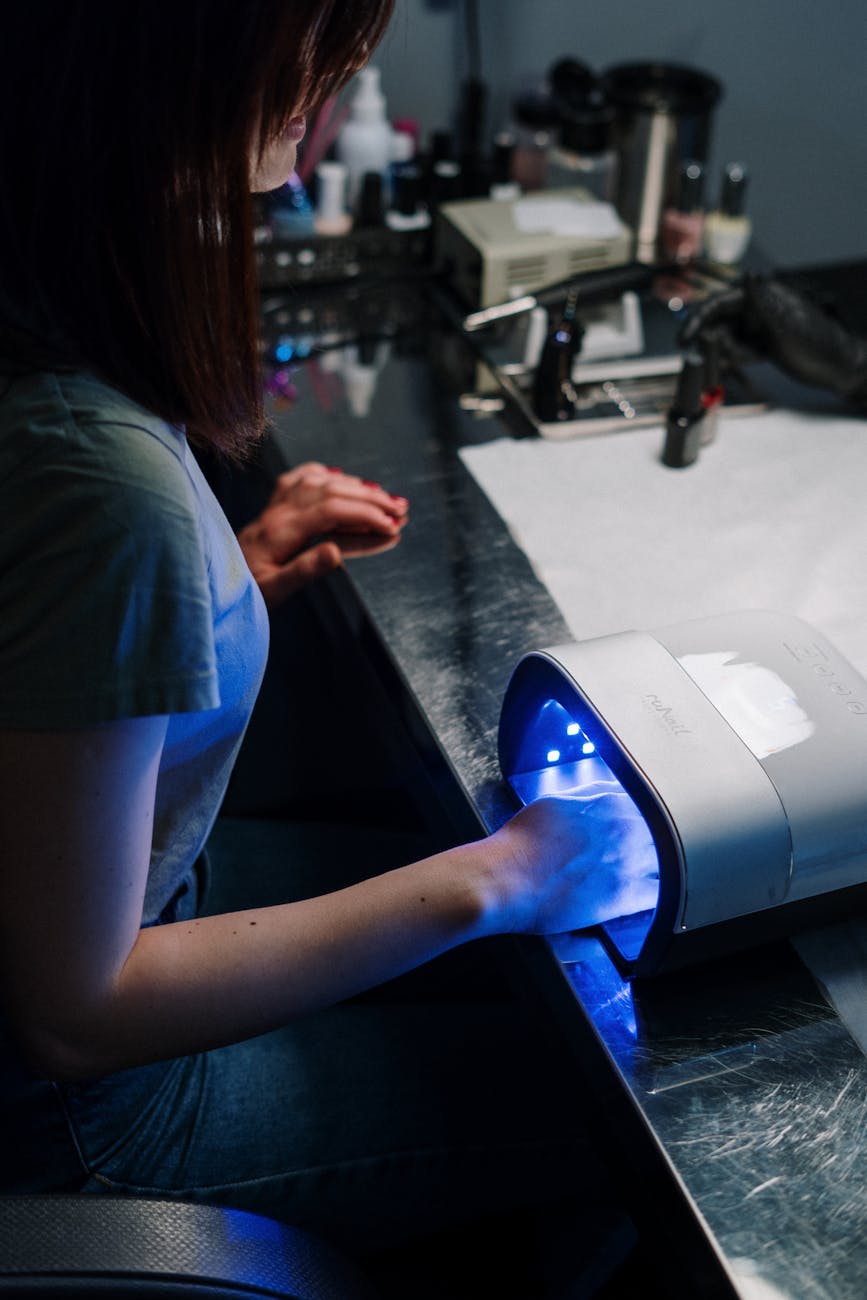
Here’s an interesting twist that few people saw coming. The Journal of Environmental Psychology recently published a report, “Effects of near-infrared radiation in ambient lighting on cognitive performance, emotion and heat rate variability.” While this is an early study and the paper itself states that additional research is needed, this initial review indicates that light minus the near infrared radiation (NIR) found in the sun may have some implications on human health.
Upon the introduction of LED, the elimination of IR light was hailed as a benefit. IR can damage tissues and cells on the body and is typically manifest as a sun burn or eye damage, such as cataracts. This study now indicates that the total elimination could cause some additional concerns, especially as humans spend so much more time indoors under artificial light; more so than our predecessors in an agrarian economy.
In a double-blind study, 151 students were monitored, half in light that contained a normal level of NIR (daylight,) compared with the other half subjected to near zero NIR, typical of standard LED lighting. The absence of NIR was found to influence the human’s physiological and psychological levels.
Cognitive performances improved in the participants who received light with normal levels of NIR, resulting in better attention, better perception, improved short term memory, increased working memory and better executive function.
Mood also improved in the participants who were tested under light with NIR. They showed increased levels of pleasure, more alertness and higher levels of environmental satisfaction.
Subjects exposed to the typical levels of NIR showed beneficial effects on resting high-frequency heart rate variability (HF-HRV) and the HF-HRV response to cognitive demand.
Our old incandescent and fluorescent delivered plenty of light in the infrared range. With LED in the midst of a near total domination of both commercial and industrial settings, humans will be experiencing substantially lower levels of NIR than generations prior. This possible impact on humans must be balanced against the benefits as well as the energy savings earned by more efficient LED. Again, remember, this is an EARLY study. The scientific community will be digging into this issue over the next decade. Stay tuned.
[It has been brought to my attention that I transposed a point of data in my paragraph concerning Long Term Performance of UV-C LED when this post was initially released 3-3-2025. I incorrectly stated that there was a 76% loss, when in-fact the product maintained 76% of its initial output. I have corrected that paragraph.]
As I read the finding of the second round of CALiPER testing on Germicidal Ultra Violet (GUV) lighting, I homed in on the final section. “Conclusions and Next Steps.” The report is chockfull of data points and detailed findings that are very interesting, but probably don’t help a typical user. I want to share a few that trouble me and should concern users and specifiers as they consider GUV.
Incomplete Product Performance Data
Some of the products had no performance data and only half had some data available via a website. This lack of information really makes it difficult to consider adding GUV to a space. One would think, when dealing with a light source that included a potentially dangerous byproduct, information would be crucial to the purchase to insure proper installation and a commensurate results. Without it, who would consider a purchase and how could a consumer determine if a purchase would be helpful? This means, only the included marketing information becomes the deciding factor. Remember how marketing told us that we should buy Chesterfield cigarettes because more doctors smoked them? We are reentering the 1950s.
Inaccurate Performance Claims
If you recall the CALiPER testing done for the original LED retrofit bulbs, this was a very common issue, No difference here. One of the great things to come from that process was better facts and more reliable packaging information. Hopefully, that will be the end result of the GUV CALiPER process if it moves forward under the new federal government that is decidedly less receptive to research, technology and education.
Potential for Unsafe Products
This round of testing concentrated on wall mounted upper room luminaires. These units are intended to treat air in a portion of the room NOT occupied by humans. That means, humans can safely navigate the room below, because the light will not reach them. CALiPER found that two of the luminaires emitted lighting below horizon (where people inhabit.) These two, plus an additional two were found to exceed UL 8802 safety limits for irradiance. These could be potentially damaging to humans. When dealing with light in the UV range, care must be taken. Failure can have significant repercussions.
Long-term Performance of UV-C LED
One tested product maintained only 76% of its initial output at 500 hours of operation, despite a claim of 8000 hours of operation. The plotted decline was also very consistent. This is a relatively quick deterioration and the typical consumer might be concerned with a 24% decline in performance in so short a time.
My Thoughts
While we lived through COVID, the rise of a lighting solution to combat airborne pathogens seemed like a godsend. As our memory fades, so too has interest in non-medical applications. The one thing we can guarantee is the blossoming of a new disease and a new problem, quickly followed by a reemergence of interest in this type of lighting solution. That we are doing these reviews now means we might be ready when the time comes. In the meantime, buyers should approach with caution these products. They should also push for a more formulaic review of these luminaires. They should seek out and ask for independent test lab reviews. Only then will manufacturers start to abandon their use of marketing promotions and replace them with fact-base statistics. Once we have that data, we will be ready to battle the next dangerous microbe.
A few months ago, I received an unsolicited request to write a post on indirect lighting. This sounded like a great idea to me. I immediately dropped a note into my “reminder file” figuring inspiration would quickly burrow itself into my brain and text would come flowing through my fingers into a MS Word document. Alas, that has not occurred.
Indirect light is a remarkable addition to a room. When my wife and I renovated our second home, we added perimeter lighting to a basement rec-room, tucked behind a ceiling mounted valance. Despite the other layers of light I included in the space, it became the first and typically only light we used. It was comfortable, provided no glare and seemed so natural, despite the fact that it was linear fluorescent, in those pre-LED years. In our third home, I included LED linear over-cabinet and toekick lighting in our kitchen remodel. Again, we use them much more that the four other switches in the room. Clearly, we prefer the output provided by the indirect source.
But, what science did I use when I specified it? Surely there was a method to my madness. Actually, I had no method, just a gut response to the need. In the basement installation, I used the available T8 fluorescent product sizes in double-tube, offset models, because I hated the “dark gap” left when non-offset product was used in long linear lines. I had specific lengths, so I used a combination of 48”, 36” and 24” units that would give me a full and even delivery of illumination.
In the kitchen, it was even less “scientific.” I made a decision to install an “All LED” lit room. At the time, it was quite a challenge. My electrician was VERY excited, knowing he could take the experience with him to his next job. I was a Product Manager at the time and my kitchen along with the kitchens of the Engineers involved in the design became “linear lighting guinea pigs.” We learned about output, how color temperature interacted with room settings and how lumen output informed products. (There were limited LED options at the time.) Like Henry Ford’s famous quote, “You can have any color as long as it is black.” I had one option. I made installation videos while I installed the light that I hoped could be used to help others and in the process. I learn of some issues that would inevitably arise, so I was preemptively prepared for Sales Rep questions. What I did not do and could not do was consider the options, because, they simply did not exist.
Since my early interaction with indirect light, I have tried to quantify my preferences. I’ve tried to digest the WIDE assortment of linear lighting now on the market. I’ve also attempted to integrate the needs of more light required for senior eyes and their preference for indirect light. Couple all of that with the variety of room reflectance and ranges quickly become important.
With that in mind, let’s revisit my previous installations. The double T8 installations hidden behind a valance were producing about 1400 lumens per foot. (Florescent T8 lamping produced between 650 and 750 lumens per foot and there were two, side by side in each fixture.) The valances ran the length of the room on both sides. While I no longer have the details, I believe there was about 25’-0” of light, amounting to 35,000 lumens in a 15’-0” x 28’-0” (420 sq. ft.) room. This was enough to illuminate a room comfortably with no-glare. That may seem like a huge amount of light, but we must remember, because it was indirect, a reasonable proportion is lost in absorption and reflectance.
In my second installation, using early LED linear lighting, I know the output was much lower, approximately 50 lumens per foot. With a linear length of 20’-0” in a 9’-0” x 13’-0” room, that delivered 1000 lumens of light. The toekick at 16’-0” of linear length produced 800 lumens. When used together, 1800 lumens of indirect light was easy to like.
My non-exacting use ranged from 50 to 1400 lumens per foot. Looking at the wide variety of products now on the market, we can easily specify eleven different static white options from 112 lumens per foot to 1163 lumens per foot, and that is from just one company! By developing comfort with this “lumens per foot” metric, it is easy to apply the correct amount to each application.
Now, let’s understand the relationship between room size and the indirect light’s lumens per foot delivery. If we consider my original rec-room with the old fluorescent, 420 sq. ft. multiplied by the desired 20Fc illuminance level from the chart below, 8400 lumens is needed.
The indirect light in the kitchen is intentionally less functional, so the 117 sq. ft. against a desired illuminance level of 5Fc would require 585 lumens of light.
Area / Task
Desired Illuminance Level in Footcandles (Fc)
Hallway/Passageway
5-10
Conversation Area / Entertaining
5-20
Dining
10-20
Reading (General)
20-50
Bathroom / Grooming
20-50
Laundry / Ironing
20-50
Kitchen (General)
20-50
Kitchen (Work Areas)
50-100
Reading (difficult) Study / Hobby / Music
50-100
Hand Sewing / Detail Hobby
100-200
The 35,000 lumens I liked is four times the anticipated need. The 1800 lumens in the kitchen is closer to three times the need. Because indirect light takes a circuitous path from the light source to the user, much is absorbed in the reflecting surfaces.
Think about this, a mirror only reflects back about 92% of the original. If I measure my above cabinet light directly overhead (12”,) I record 20.7 Fc at the ceiling. My toekick lighting measures 130.8 Fc on the floor below (Very close at 4” to the floor.) Standing in the middle of the room with both systems engaged, I have a mere 3.5 Fc of usable illuminance from 3600 lumens. Obviously, a lot of that light is lost in surface absorption and distance.
To achieve usable levels of indirect light, a 3:1 to 4:1 ratio makes sense. If you want to reach the levels of usable light the second chart suggests, you need to use products that create three to four times that number.
There are more complicated calculations that could be employed to insure exacting levels of light. Many commercial projects first construct models to understand the end result of the proposed light. Both are impractical for the residential space and occasional lighting designers. At the risk of suggesting my hunch, rather than proven data is the way to go, I’ll leave you with a 3:1 to 4:1 ratio.
If anyone else has a better suggestion, or an easy calculation, let me know. Next time, I may be less accommodating when someone suggests a blog post topic!
Most people are unaware of the outsized place Cleveland holds in the history of lighting. I live in the inner-ring suburb of Cleveland Heights, less than a mile from Nela Park, the original home of the National Electric Lamp Co., later General Electric. Nela Park itself is considered the first “industrial park” in the nation. It is also the location of many lighting “firsts.”
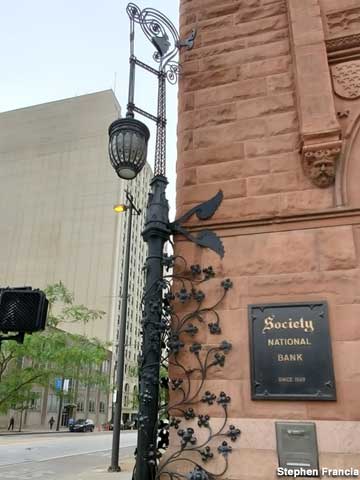
In 1878, the arc light was invented in Cleveland by Charles Brush of the Brush Electric Company, later to become the lighting division of General Electric. His creation allowed Cleveland’s Public Square (then Monumental Park) to feature the first street lighting in America in 1879. That original fixture remains in place today.
Based on the foundation of work completed by scored of researchers and scientists across the globe, GE built the first prototype fluorescent lamp in 1934 in Cleveland. After a series of patent battles and product demand, egged on by the requirement of low cost lighting to run factories 24 hours a day for the war effort, they began production of the first fluorescent lamp (that delivered white light) in 1938.
Working on the concept that had confounded scientists previously, Elmer Fridrich began to experiment with halogen based lighting. By 1959, with colleagues Bill Hodge and Emmett Wiley they created Tungsten Halogen lamps. Fridrich continued to work on the improvement of lighting at GE Nela Park Cleveland until the 1980s.
While not in Cleveland, the first baseball game played at night, under artificial illumination took place on May 24, 1935. The Cincinnati Reds beat the Philadelphia Phillies 2-1. Crosley Field in Cincinnati is over 200 miles away, but the lighting was designed by GE and in the history of light, it is often mentioned in the same breath.
We all know incandescent lamping can be VERY yellow and warm. The GE Reveal lamp was an immediate success because it enriched colors and improved the look of residential surroundings. Through the efforts of Julianna Reisman, improving on the foundational work of Bill James, a viable coating that could filter out the undesirable yellows was made possible here in Cleveland (with a little help from a Spanish glass manufacturer Cristalerias de Mataro.)
Even beyond the influence of GE, there are other notable lighting milestones in Cleveland.
The world’s first red & green electric traffic light was put into service at the intersection of Euclid Avenue and East 105th Street in Cleveland in 1914. The very prolific Cleveland inventor Garrett Morgan improved on the concept after witnessing a bad automobile accident. He introduced the “caution” light, that allowed intersections to be cleared, prior to the start of traffic flow in the opposite direction. (Note to Hollywood, a biopic or documentary of this guy should be made!)
More recently (2014) the world’s largest outdoor chandelier has been in place at the intersection of Euclid Avenue and East 14th Street in Playhouse Square, downtown Cleveland. It is 20 feet tall, weighs 8500 pounds, features 4200 crystals and is suspended by a triple-post, 44 foot high steel structure. Playhouse Square is the world’s largest theater restoration project and the second largest theater district in the United States, after Lincoln Center, in New York City.
At a more professorial level, The Michelson-Morley experiment was conducted in 1887 at Western Reserve University (now Case Western Reserve University) in Cleveland. The experiment was designed to detect the motion of the earth via a theoretical substance that was essential to the transmission of light. Through the interference of light waves, precise measurements could be taken. Their failure to detect movement confirmed and supported Albert Einstein’s Theory of Relativity (E=MC2). This is very foundational work in our understanding of light.
Many average people (not lighting nerds like me) know Cleveland as the home of the creators of Superman (Jerry Siegel and Joe Shuster) and the place where the first rock concert (The Moondog Coronation Ball) was held and the term “Rock and Roll” was coined (by disc jockey Alan Freed.) The Cleveland Orchestra is generally regarded as the best symphony orchestra in America and the Cleveland Art Museum is typically considered to have the finest collection outside of New York. (Arguments will be accepted by fans of the Chicago Institute of Art and the Philadelphia Museum of Art.) At the turn of the last century, there were more millionaires in Cleveland than anywhere else on the planet. Cleveland was also know for many years as the “Sixth City” because it was “that” large and “that” influential. The endowment to cultural entities in Cleveland continues to support the arts while other cities across America struggle. (St. Louis enjoys the only other similarly endowed cultural landscape.) Add to that the foundational milestones of lighting and it is easy to understand why I really love living in Cleveland and why Cleveland is so important to the world of lighting.
I’m old enough to remember when all lighting was manufactured in the USA. I was also dropped, smack-dab in the middle of the transition from “Made in America” to “Made in China.” Let me help you understand the realities as we approach a political atmosphere with limited knowledge on the topic and the guillotine of added tariffs over our heads.
In the 1970s most lighting companies assembled parts made in-house, or by a collection of suppliers to the industry, also located in the US. Arms were bent, pipes were swaged, glass was blown and wood was turned and fabricated all by an army of small job shops. Painting, polishing and plating was done in-house, or at small local suppliers. France, Greece and Mexico made a fair amount of glass and the ubiquitous bronze was created in Spain, but that was about all that was imported.
That was followed by a short period when manufactures sourced components from around the world and assembled or packed them in the US or Mexico. This globalization of manufacturing was a precursor to the eventual shift to Asia, a move that was forming in the background.
During the energy crisis of the late 1970s, Taiwan began to build the inexpensive ceiling fans America demanded and through that effort, they inadvertently stumbled into the lighting fixture business. The floodgates were opened.
Taiwan and Korea became the primary source for lighting, but because of the highly educated local populations, neither could satiate the American demand. It was so difficult to find polishers and machine operators, Korea allowed many Bangladeshi migrants into the country, but it wasn’t enough. The Taiwanese manufacturers started to build alliances with people and facilities in China. Korea made attempts to partner with the Chinese, but for a series of reasons, they did not succeed and disappeared shortly thereafter. The Taiwan manufacturers kept the more complicated products and shifted the lesser-quality good to China. I and hundreds of other Americans spent days and weeks in the country helping the factories create the products that American consumers wanted.
The part most people don’t realize is that it took time to develop a mature global supply chain in China. Reliability, technological proficiency and production functionality needed to rise to western expectations. With that in place, the product quality, style and value progressively rose. Because decorative lighting is a low-volume business, Production automation was almost impossible. Components needed to be processed individually and the luminaires assembled one at a time. Some product would never have been made in the US. They were now possible in China. All those advancements however came at a price, duty.
To assess a duty, each product produced overseas must be assigned a Harmonized Tariff Schedule (HTS) classification code. This informs the importer how much they must pay the US government to bring this product into the country. There are also duty brokers who facilitate this transfer of payment who need to be paid. The final adder can also be sizable, overseas and across-land freight.
To better understand this, let’s consider buying a wall sconce from China. Here is a theoretical cost breakdown.
Cost
Description
Paid to:
$10.00
Cost of the wall sconce, assembled and packed
Chinese Manufacturer
$0.76
HTS Code 9405.11.60 (Chandelier & other electrical ceiling or wall lighting fixture) 7.6% (not made of brass) duty
US Government
$1.00
10% added tariff by President Trump in September 2018
US Government
$1.50
15% added tariff by President Trump in September 2019
US Government
$0.05*
½% Broker’s Fees (est.)
Brokerage Company
$2.36
Ocean Freight 1 cu. Ft. volume carton. $5000 avg. cost for 40’ container w/ 90% efficiency.
Freight Company
$0.38*
Overland Freight $3/mile approx. 300 miles
Freight Company
$0.80*
Importer Overhead at 8% For Purchasing, Importation and Warehouse personnel + any drayage fees
Held by Manufacturer/Importer
$16.85
Total cost in 2024
* Educated guesses
Now, let’s assume new tariffs are assessed to all imported products. All of the above will remain, but a new number will be added;
Cost
Description
Paid to:
$1.00
10% added tariff promised by President Trump when he takes office (Per his 11/26/24 announcement)
US Government
$17.85
New 2025 Total
To this number, the manufacturer must now add their profit and the cost of doing business. If you’ve watched enough Shark Tank, this is called “margin” and can mean the difference of staying in business and going out of business. Simply, the margin is the percentage of the selling price that is profit. For this exercise, let’s assume we need a 50% margin to keep our theoretical company afloat. (in practice, this number can vary quite a bit.)
Now, let’s see how tariff increases impact the consumer costs.
Importer/Manufacturer’s Cost
Profit Margin
Distributor’s Net Price
Pre-2018 w/ duty base of 7.6%
$14.35
50%
$28.70
Current state with the 25% 2018/2019 tariff upcharges
$16.85
50%
$33.70
2025 with the promised additional 10% tariff
$17.85
50%
$35.70
The retailer, who prior to 2018 purchase the sconce for $28.70, saw a 17.4% increase over two years and will see another 5.9% increase in 2025, if the new administration follows through with its plan. That means, the collective Trump administrations will be responsible for a 24.4% cost increase. This is in addition to any inflation-related increases.
The retailer must now take the price they paid to the importer/manufacturer and add a level of profit required to run their retail establishment. I am not a retail expert, but have learned that number can range from two to three times the incoming cost of goods. Some retailers might actually need a higher level of profit, especially if they are located in a high-rent district, or a city with a higher cost of living. For this exercise, I’ll provide a range of two to three times their cost of goods. Understand, it could be higher.
Retailer paid Cost
Profit Margin
Retail Selling Price
Pre-2018
$28.70
2 to 3 times the cost
$57.40 to $86.10 paid by the end consumer
Current state with the 2018/2019 tariff upcharges
$33.70
2 to 3 times the cost
$67.40 to $101.10 paid by the end consumer
2025 with the promised 10% added tariff
$35.70
2 to 3 times the cost
$71.40 to $107.10 paid by the end consumer
The impact to the end consumer can now be assessed. An increased price in excess of inflation of 24.4% is the result. Most of that addition will be paid to the Federal Government.
Could the importer/manufacturer reduce their margins? Perhaps slightly, but most companies know their cost of running a business. If they slip below their 50% margin (in this hypothetical) or 2-3 time markup, something will need to be sacrificed. Service, salaries, employee/customer benefits, something will need to be reduced to make up for the loss. Retailers and manufacturers have no choice but to pass the added expense on to the consumer. It will either be that, or bankruptcy. In the last few years we have seen consolidation as an effort to reduce margins, initiated, in part, due to these increases. Perhaps more will be forthcoming.
Of course, the new President’s concept is that manufacturing will be returned to the United States, thereby eliminating the cost of duty, brokerage fees and ocean freight. (The Import Overhead will switch to Manufacturing Overhead and stay basically the same.) That supposes someone in America can hand-build, low volume products. Like the initiation of bringing lighting to China, all that will need to be repeated, this time in America. Labor, skill, investment and time will make this VERY difficult. It might work for highly automated, high volume industries like steel or automobiles, but the likelihood of lighting returning to the days of 1970 is slim.
That means a few realities will take place:
Customers will pay more for lighting.
The federal government will see a windfall of incoming dollars, all borne by the consumer.
Things will remain pretty much the same for the Chinese manufacturers and the Chinese government.
Who is being helped and who is being harmed in this new scenario? It seems to me that someone from the new administration might be well served spending a day in the office of a lighting supplier before doing something rash.
In the 1976 election, I worked on the presidential campaign of Mo Udall. I didn’t care much for Jimmy Carter as a candidate, or the emerging neoliberal era he would ultimately introduce. During the 1980 reelection campaign, after it was clear Ted Kennedy could not unseat him for the Democratic nomination, I supported third-party candidate, John Anderson. Carter was not worthy of reelection and Ronald Reagan proved to be as divisive and damaging to the United States as I had imagined at the time. It is safe to say, I was not a fan of Jimmy Carter’s presidency. There are, however a few things worthy of respect as it regards Mr. Carter.
After defeat he established a pattern to which all Ex-Presidents should aspire. He is the best Ex-President America has ever had. He used his celebrity and stature where it could do the most good and forewent notice when the only result would be narcissistic. This was so tough, 36 others could not and have not been able to pull it off.
More importantly to this blog, in the face of much derision, Jimmy Carter introduced America to the frailty of fossil fuel use and the inevitable problems that would bring to the country if changes were not made. In response to what he saw, he delivered speeches to the American public indicating that this problem was “the moral equivalent of war.” He addressed the nation wearing a cardigan sweater rather than the typical suit, he urged Americans to use less energy, reduce the wintertime temperature of homes to 65°F, and changed highway speed limits to a maximum of 55 miles-per-hour. He installed solar panels on the White House and in a speech delivered April 5, 1979 he said:
“The energy crisis is real. It is worldwide. It is a clear and present danger to our Nation. These are facts and we simply must face them.”
Despite a pretty consistent message, the American public ignored almost all of what he said. After his reelection defeat, the shortsighted and backward-looking Reagan removed the solar panels. Surely we could “drill” our way out of this crisis. That was, after all the probable reason for his election. We don’t have to face up to our problems because America is “stronger, number one, unbeatable” or some other diversionary adjective. All we need is a different leader who will change the storyline. A spent “B” movie actor was just the person to do it. We are still reeling from the wayward direction of his leadership.
In high school, we were required to periodically deliver “current events” reports. The job was to find a story in the newspaper, read it and deliver a three or five minute speech about the subject. While I likely did this scores of times, I only remember one. In the early 1970s, I found an article in the Cleveland Press that indicated we would run out of oil by a date in the reasonably near future. As was the case with all current events reports, the class ignored the information, just like America ignored Jimmy Carter.
Jimmy Carter was an untypical politician. He was not a lawyer. Instead, he was an engineer. He looked at information differently than most political people. He knew that fossil fuels were a finite source and hence would need replacement eventually. Imagine if we had listened in 1979 rather than acquiescing to faux cowboy bluster about superiority.
If we would have treated shrinking fuel availability as a true “moral equivalent of war,” America could have led the world in new power source creation, elevated product performance and developed thousands of other energy saving advances. Countries around the world would have been compelled to buy goods from the US rather than the reverse. Perhaps more manufacturing would have remained in America rather than fleeing as a result of the anti-worker policies heralded by Reagan. We would never have had to listen to the foolish “don’t take my light bulbs” arguments by light-brained politicians like Michele Bachmann, Joe Barton and Mike Enzi because we would have been in the middle of a national effort to move beyond. One could also argue that the climate crisis and sustainability drive we are now facing would be of substantially less a world concern had we addressed fossil fuel use when Carter suggested, rather than 40 years later.
While I barely supported the political life of Jimmy Carter, I had grown to respect him since. Under different circumstances and perhaps with different political advisors, he could have been a better president. Nonetheless, he made an impact and proved a very prophetic voice in a central part of my career, energy efficiency. If on this one point, we would have listened more carefully to a man from Plaines, Georgia, we’d all be in a much better place.
You had to have it. You finally bought that RGB lighting. Wow! Thousands of color options! In the first week, you bored your friends and family with all the variations. Then you realized that a purple dining room does nothing for the appeal of a roast chicken dinner. Berber carpet turns a horrible shade when lit with blue light. Flesh tones, no matter what the level of melanin, do not look good in red light. After the first week of playing with the RGB controller, you’ve permanently set it to “white light” and tossed it in the junk drawer.
Until now! We are approaching the holiday season and this is the time to finally use the RGB lights you so coveted. Set them for green and red, or blue and white. Go wild! Have fun! Those “ugly sweaters” will never look better. People and food won’t look any better, but at least they’ll have egg nog to blame. Just remember to reset them back to “white” for the remaining 50 weeks pf the year.
Here’s hoping you have a “colorful” RGB-filled holiday season! I’ll be back in 2025 with a whole new collection of topics. If there is lighting information that Santa has failed to help you with, drop me a line. It might be a subject that is confusing others, as well.
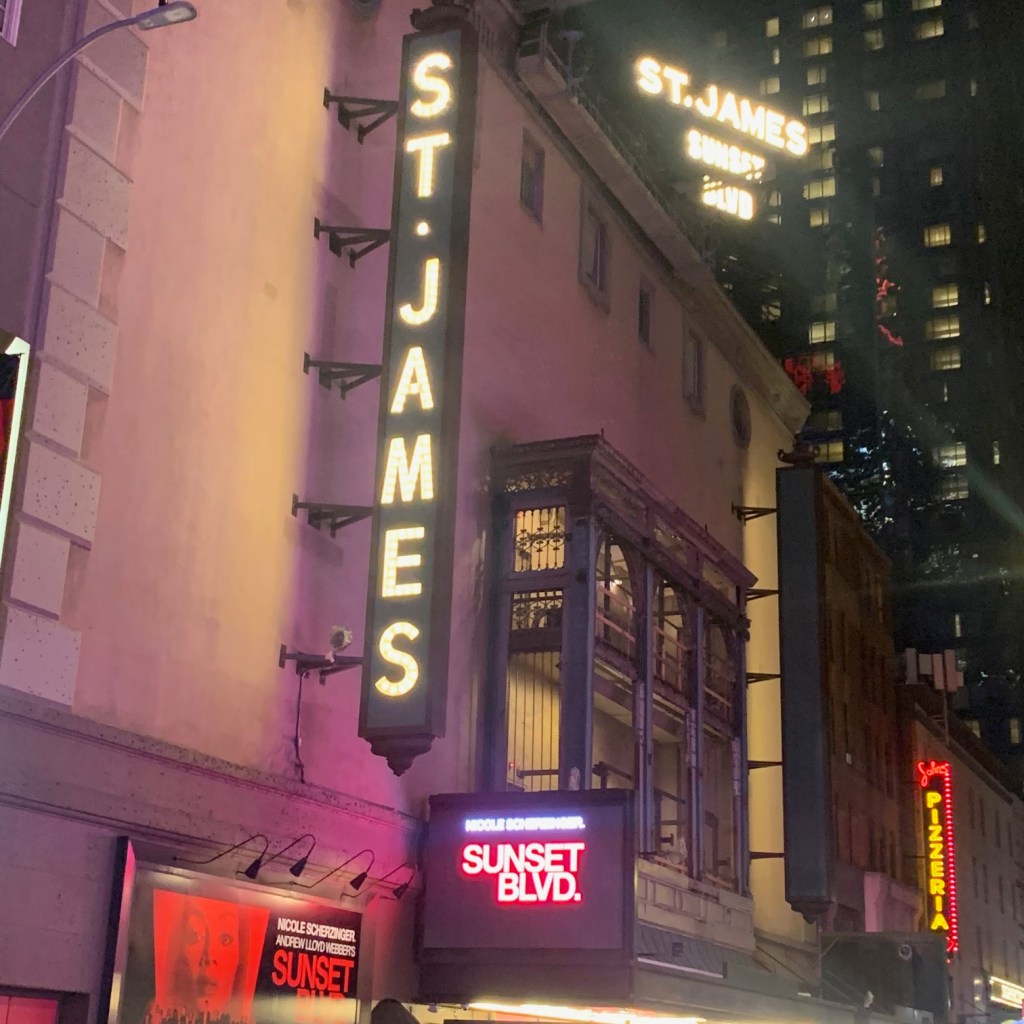
While watching the stunning new production of Andrew Lloyd Webber’s “Sunset Blvd.” I couldn’t help but wander back to the afternoon I spent walking Madison Avenue. From about East 50th up to around East 90th, there are clothing stores from almost every brand you’ve heard of and many you haven’t. I was trying to make sense of the direction of fashion. I wrote a few notes in my book, but nothing coalesced, until the show.
If you are familiar with the Billy Wilder movie starring Gloria Swanson, you probably remember Swanson’s magnetic film performance, but you’ll also recall the wonderful 50s style of Joe Gillis and the young Hollywood wannabees countered by the bygone palatial style and elegance of the 20s era Norma Desmond mansion. If you are old like me and you have seen the 1990s original theatrical production, it was famous for having a swimming pool on stage to service the climactic end. To understand the plot a viewer needed to be immersed in the ambience, right? But what if that is not necessary?
In a neck-twisting reversal, the new production forgoes almost all the outward decadence, drapes the actors in simple black and white, strips the set of everything except the most basic necessities and even inserts cultural anachronisms. The result was as mesmerizing a show as I’ve ever seen. The story was crystal clear because rather than ogling the surroundings, you were instead concentrating on the story, fine lyrics and award winning performances. It is a musical I won’t soon forget.
Like the show, it is no secret that daily-use clothing is becoming increasingly casual. The complex story of life can and does however continue. There was no secret held by outwardly elegant clothing. They did not/do not define the human inside.
As I noted points about fashion, it is clear that the basic units of clothing have stabilized into a uniform of sorts, jeans, cords, pullovers, vests and slightly oversized shoes/boots. The colors acceptable to men are however expanding beyond grey and black. I see more rich greens, burgundy, gold and different blues in menswear. Men are being given a wider berth with accessories. Glasses and sunglasses are becoming more fanciful. (Hey, the conservative Governor of Ohio has been wearing blue glasses for years!) There is more jewelry, bolder belts and funky swimwear available to men today. Women continue to have plenty of options to dress up or down. The extent to which they use that advantage, still remains in question. That power appears to be slimming almost daily.
So how does this relate to interiors?
We see the rise of a softer contemporary percolating right now. Consumers don’t want those stark hard edges, instead they are seeking softer lines, added radiuses and the warmer tones of brass in place of chrome. While still popular, I can see the end of Black on the horizon, it being too stark, too invasive for this new direction. The traditional side of the aesthetic world is seeing increased ornamentation, even the partial return of Victorian design is a muted version. None of this is staid or stifling, however. All of it feels like a home dressed in blue jeans and a cozy, overstretched sweater.
Nothing in the home defines casual more than the return of beige. Beige is again the center of the world. It dominates every showroom I visited over three days. With metal accessories now firmly entrenched in brass/gold, this is a trend that has legs. I really wouldn’t expect to see a shift any time prior to 2040. Brass and beige are THAT dominant a force. If you question this, check out the historical perseverance of this duo from the 1970s to the end of the millennium.
We are not a nation that will go back to the era of Nick and Nora Charles, a proper 5:1 gin martini and dressing for dinner, but the cyclical nature of design and style will drive change. That change will be mixed with the cultural reality of the time, including fashion…as it always has.
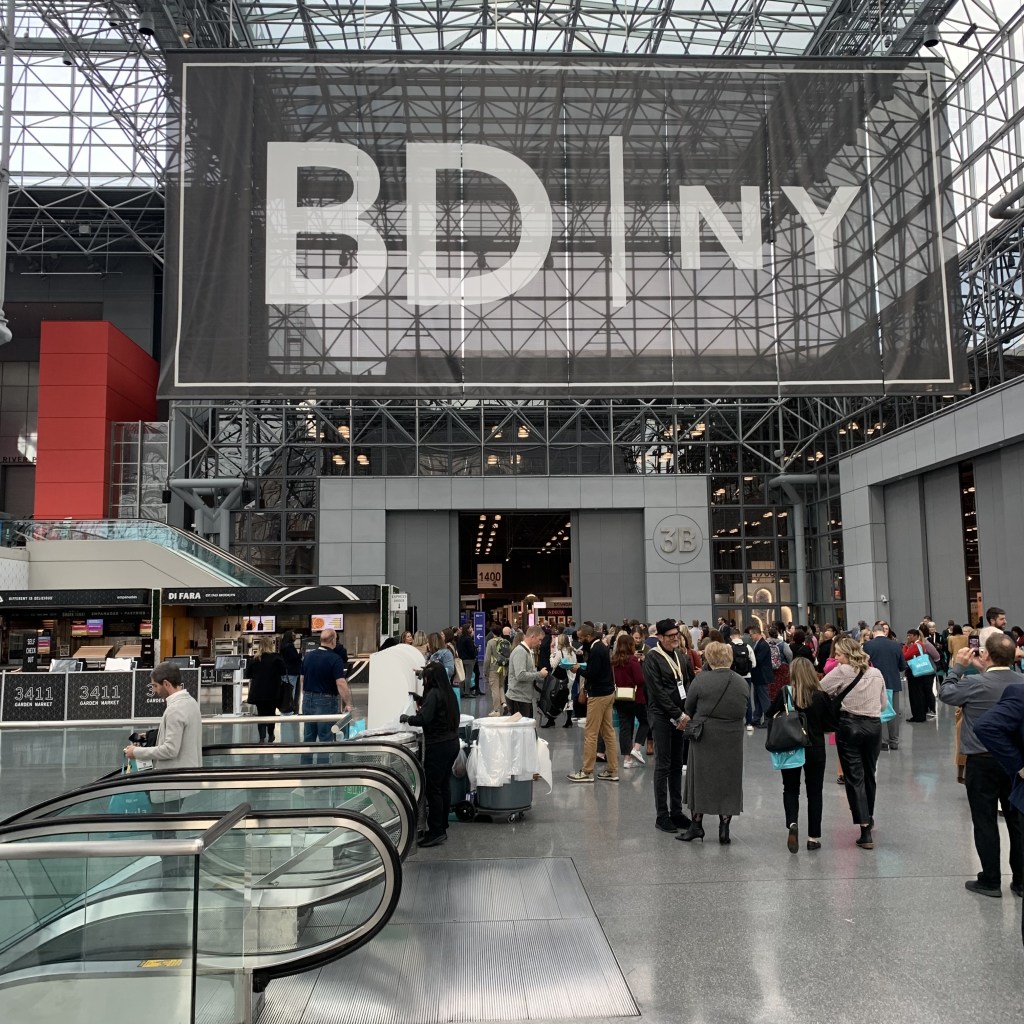
Another year, another trade show. Overall, I found less of interest than normal at this year’s BDNY. It also seemed like a lighter attendance than last year. Nonetheless, there are a handful of things worth noting from this show, which concentrates on the needs of the hospitality trade.
Germs
Stern Engineering Ltd. showed touchless WC partition doors. Operating via proximity sensors, the user no longer needs to manually operate the toilet partition door. As we become more sensitive to germs and with the reality that 80% of germs are transferred by touch, this is a solution for a problem that might extend beyond a public restroom.
A continual issue with shower enclosures is grout mold. Mincey Marble is promoting cast marble that eliminates the grout. Unfortunately, for me, it has the look of the inexpensive resin/plastic tub enclosures that are advertised on late-night television. Too bad, they may be on to something here with a higher-end answer to black mold. I hope they continue to work on it.
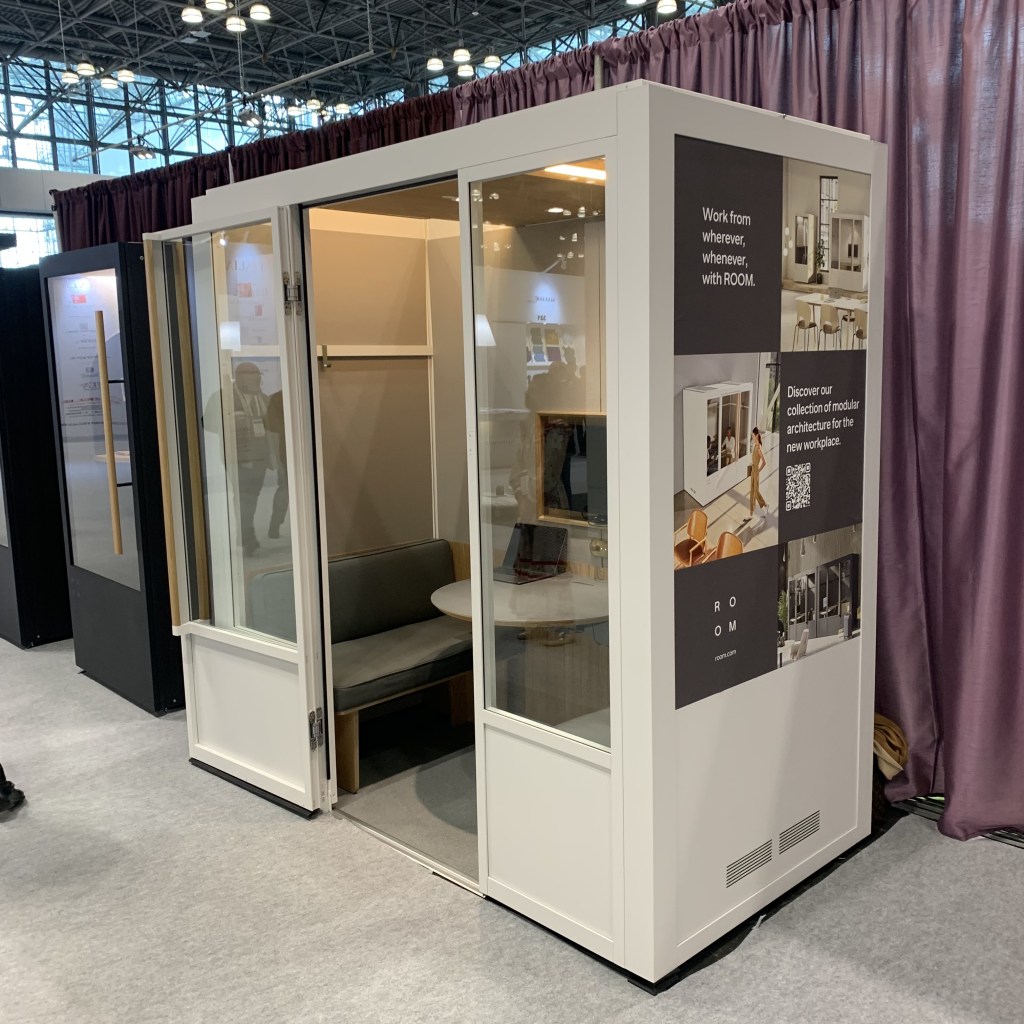
Need privacy in a large space? Room offers a collection of portable spaces that can insure some level of quiet and a place to meet. While this can be of value in hotels, I can also see the importance in open-plan office settings and maybe even homes with two “work from home” living partners.
I have mentioned Swadoh before and their product bears repeating. Their design approach is different and unique. I was especially drawn to the look of torn and battered pages of a book used in their Fungia collection. If something special is needed, I’d suggest a look here.
Uecko is a Spanish cabinet company. Nice products, but what attracted my attention was the internal lighting. 3/8” wide LED Tape has become the default for so many tasks, so when I saw the internal cabinet lighting, I was very surprised. A tiny 3/16”, at most ¼” sliver of LED lit the cabinet interiors. This forced me to ask, “Why have we settled on the current LED Tape width?” Perhaps it is easy. No need to reinvent the printed circuitry that drives the concept. No need to engineer new connectors. Regardless, LED is very adaptive and why not consider a smaller concept. It certainly works here.
As I gazed into the Artemide showroom window in SOHO, I was reminded of a past comment I made on RGB lighting. “Just because you can, doesn’t mean you should.” Yes, color changing lighting is fun, but it has a very limited practical use, especially in a home. I’m not sure where “Discovery Dialogue” by Ernesto Gismondi will be used, but I love the conversation and I appreciate the respect for technology expressed in the creator’s abstract. We must understand lighting technology will change and luminaire design and application will change. We need to get on board, or step aside.
I liked the combined materials of ceramic and leather used by Meso Goods in their wall hanging, Tela de Barro. Meso products are made in Latin America and this was an especially appealing design and use of mixed materials.
BDNY 2024 – Meso Goods – Mix of leather and ceramic
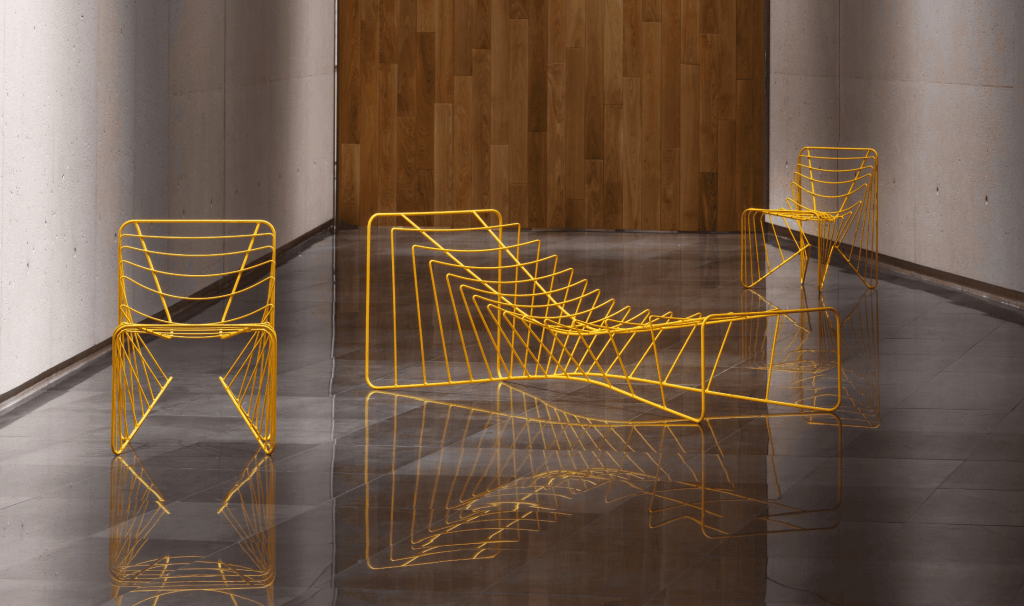
Anytime I see Zaha Hadid, I am hooked. Despite her dying many years ago, her architectural firm continues and they have been remarkably consistent with her artistic vision. Isimar, a Northern Spain manufacturer of galvanized metal rod products, has engaged her firm and they have created Topos an outdoor chaise and chair that immediately brings to mind some of Hadid’s architectural work.
BDNY 2024 – Isimar – Zaha Hadid designed Topos collection
Outdoor heating has become more and more important, yet the design of the units has been somewhat pedestrian. Heatsail is a Belgian company that is creating interesting and fashionable heating units. Resembling pendants and 70s era Italian floor lamps, outdoor heating in outdoor spaces can be achieved more beautifully now.
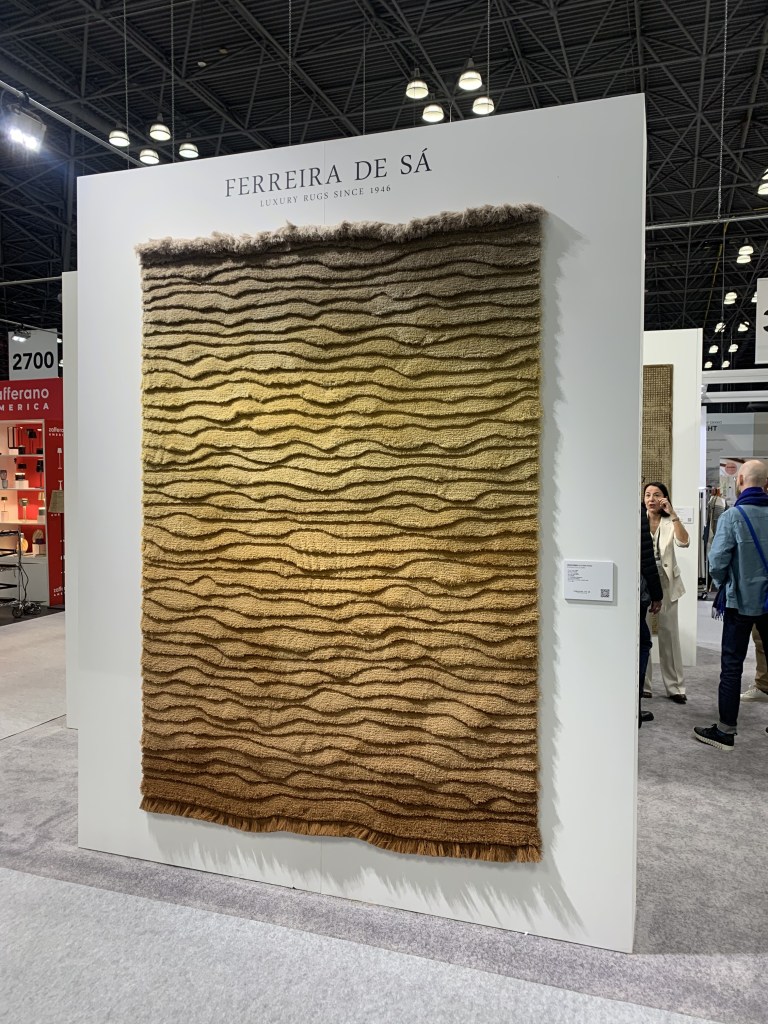
I loved the dimensionality of the rugs at the family run, Portuguese weaver Ferreira de Sá. The addition of these pieces would make almost any room better.
BDNY 2024 – Ferreira de Sa – Sculpted RugsBDNY 2024 – Ferreira de Sa – Sculpted Rugs
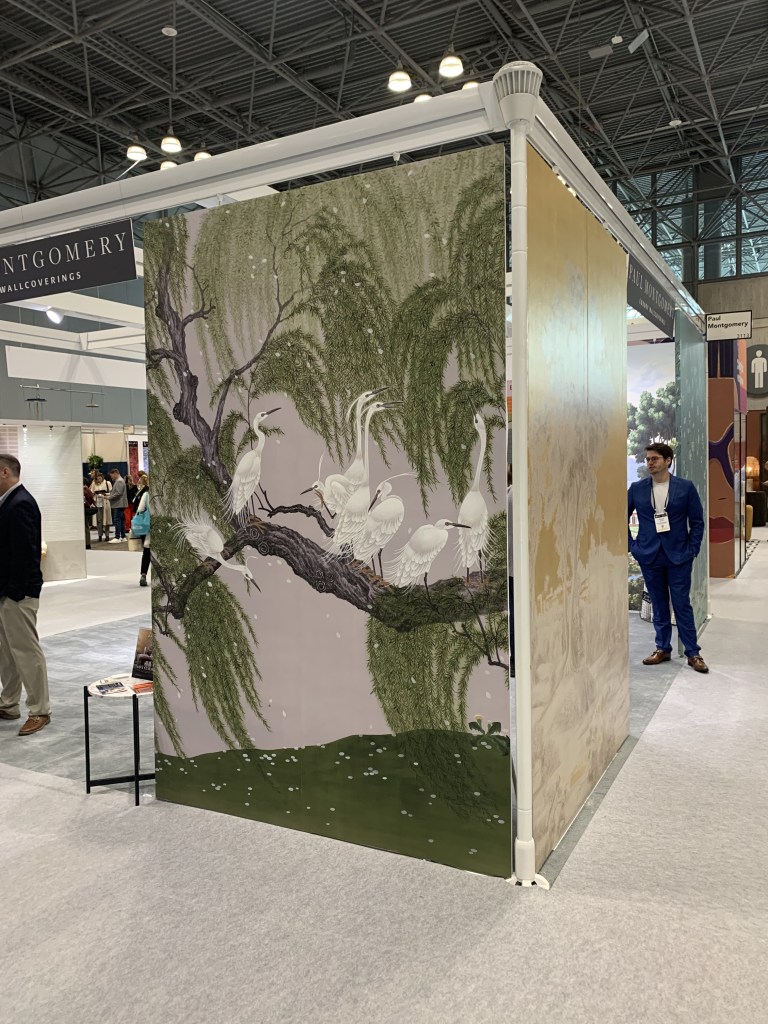
These might appear “old fashion” but I liked the full wall murals displayed by Paul Montgomery. I think these could find a place in the interiors of the next decade, especial the less literal compositions like birds on a tree and jungle scenes. The concept of large, immersive wall coverings fits with the bend to maximalism and these are wonderful options.
Despite a limited amount of new ideas, my trip to New York and BDNY did deliver a few concepts that will drive the future. We must all remember that the hospitality industry is often the driving force of design for the residential consumer. It is important to understand this industry to better determine what the residential consumer will want and desire in the future.
At the recently completed American Lighting Association (ALA) conference, the concept of cost overruns was discussed. The lighting pros in attendance were commiserating the unfortunate fact that light, too often is the victim of an expensive refrigerator. When costs need to be cut, lighting becomes the sacrificial lamb.
I suggested we should all counter that response with a different argument.
Client: “We are spending too much money on the new kitchen. We’ll need to eliminate some of the lighting.”
Lighting Professional:“I have a better solution. Let’s remove the stove.”
At this point, the customer will respond and push back. Of course, a kitchen without a stove isn’t much of a kitchen. A kitchen without proper lighting is equally ineffective. If you can’t see the carrots, dragging out a knife could be a lethal, or at least messy problem.
There is a better way that doesn’t mean the elimination of half the light or one La Cornue. Multiple lighting options should be considered so a good lighting design will be the result.
The first design you offer should be the optimal version. You should include the luminaires that will do the best job, perform the best and deliver the finest design possible.
A second option should include alternatives and the reasons they are second should be included in the notes.
“Adequate, but not perfect beam angle”
“Shorter expected life span – 25,000 hours vs 60,000”
“Increased likelihood of glare”
“X”
You might want to offer a third, but I wouldn’t unless you like extra work, or that has been agreed upon when discussing the job.
Sometimes, the customer needs to understand why they are selecting what they are selecting. They might choose a Sub-Zero because it has a reputation and a certain amount of élan, but they do not have that connection to lighting. They can acquire a visceral connection to a chandelier, but functional lighting is different. A stove roasts a chicken, a dishwasher cleans the pots, a freezer makes ice cubes, but they might not realize properly designed recessed cans (pots) deliver glare-free light that supports all of the tasks a user achieves in a kitchen.
The accent lighting layer is an easy victim to cost overruns. In order to swing that copper farmhouse sink, the toekick and above cabinet lighting could be sacrificed. The lighting designer should ask, “At what cost?”
“Why install a Poggenpohl kitchen, if you aren’t going to light it properly?” If you can’t see the beautiful finishes, the seamless craftsmanship and the flawless functionality, what is the point?
In a perfect world, kitchens should be offered at multiple price points, each with commensurate lighting. Here are a few lighting options matched with the overarching kitchen concepts.
Entry Level Kitchens
If the client is furnishing their first home, or if they are young and just starting life’s journey they will likely be using stock cabinets, basic appliances, introductory priced granite countertops and simple flooring. The suggested lighting could be:
Decorative surface mounted luminaires – flush or semi-flush, depending on the ceiling height. (Surface mounted “discs” are not an option at ANY price point!!)
Good output, LED Tape in a plastic channel as under-cabinet lighting. Depending on price, an integrated under-cabinet option might work. LED Tape is typically less expensive (based on lumens per foot) but still confounds some less skilled electricians.
Mid-Level Kitchens
If the customer is moving into a second or “forever” home, they will likely be using semi-custom cabinets, more elevated appliances with better features, quartz countertops and ceramic or wood flooring. The suggested lighting could be:
Pendants at the island that have a size equal to the girth of the surface and a height that conforms with the ceiling height. In other words, avoid using tiny 5” spheres in a room with 10’-0” ceilings over a 48” wide island.
Well positioned recessed lighting. They may not have optimal beam angles and they might not be as recessed as those found in a perfect design. (Surface mounted “discs” are not an option at ANY price point!! Yes, I wrote this twice for a reason.)
300 to 500 lumens per foot LED Tape in a channel as under-cabinet lighting
Above cabinet accent lighting provided by LED Tape delivering between 150-250 lumens per foot.
Luxury Kitchens
This client might have a kitchen designer. They might be using an interior design specialist or architect. They are familiar with what they want and have the funds to achieve that goal. This is not their first home purchase and might not be their last. They will be specifying the aforementioned La Cornue and Sub-Zero appliances in a SieMatic kitchen. High end backsplash and flooring materials will employed. The suggested lighting could be:
Pendants at the island should be perfectly sized to the girth of the counter and height of the ceiling. The quantity used should also fit the scale.
A separate dining area might need supplemental lighting and a fine decorative chandelier/pendant/semi-flush should be selected.
Well positioned recessed lighting with optimal beam angles and lumen output. They should be recessed into the ceiling a minimum of 2 ½”. (Surface mounted “discs” are not an option at ANY price point!! Once more for effect.) There will never be a reason to replace these, so buy the product that is warrantied for 50,000 hours or higher.
300 to 500 lumens per foot LED Tape in a channel as under-cabinet lighting
Above cabinet and toekick accent lighting provided by LED Tape delivering between 150-250 lumens per foot.
Under countertop lip accent lighting should also be discussed and considered. It can be a wise alternate to inside drawer lighting.
Under island accent lighting (again, LED Tape) at about 200-300 lumens per foot will work nicely
There is a good chance this kitchen will feature some display cabinets. They will need to be lit to fully appreciate the items. The necessary illumination can vary widely from 150 to 500 lumens per foot depending on the goal.
There are many differences found in all the kitchen designs in America and they diverge in as many ways as the customer does. Despite that range, no one need go without a stove to have good lighting. Good lighting simply needs to be planned in concert with the rest of the kitchen’s functional elements.