Categories
Lighting Commentary

Interesting Lighting I Saw In NYC/ICFF 2022

The pandemic has disrupted many things in our lives, trade shows being among the most noticeable, especially for older people like me. As I’ve indicated previously, I believe these shows have one foot on a roller skate and the other on a banana peel. COVID just oiled the surface. I think the way industry responds in 2023 will provide a good indication of whether they are down for the count. This, of course, depends on a virus-free 12-months. Additional variants of Mr. C and all bets are off.

Even though the 2021 version of the International Contemporary Furniture Fair (ICFF) was just six months ago, to hop back into their typical mid-May schedule, another edition just occurred. Because if lacked the BDNY “half” featured in the fall of 2021, the 2022 outing was smaller. There also appeared to be fewer people. The shops, showrooms and galleries of New York showed minimal change as well. Nonetheless, there were new things and items that forced notice. This post discusses just the lighting. A future post will talk about the “non-lighting” items of interest.

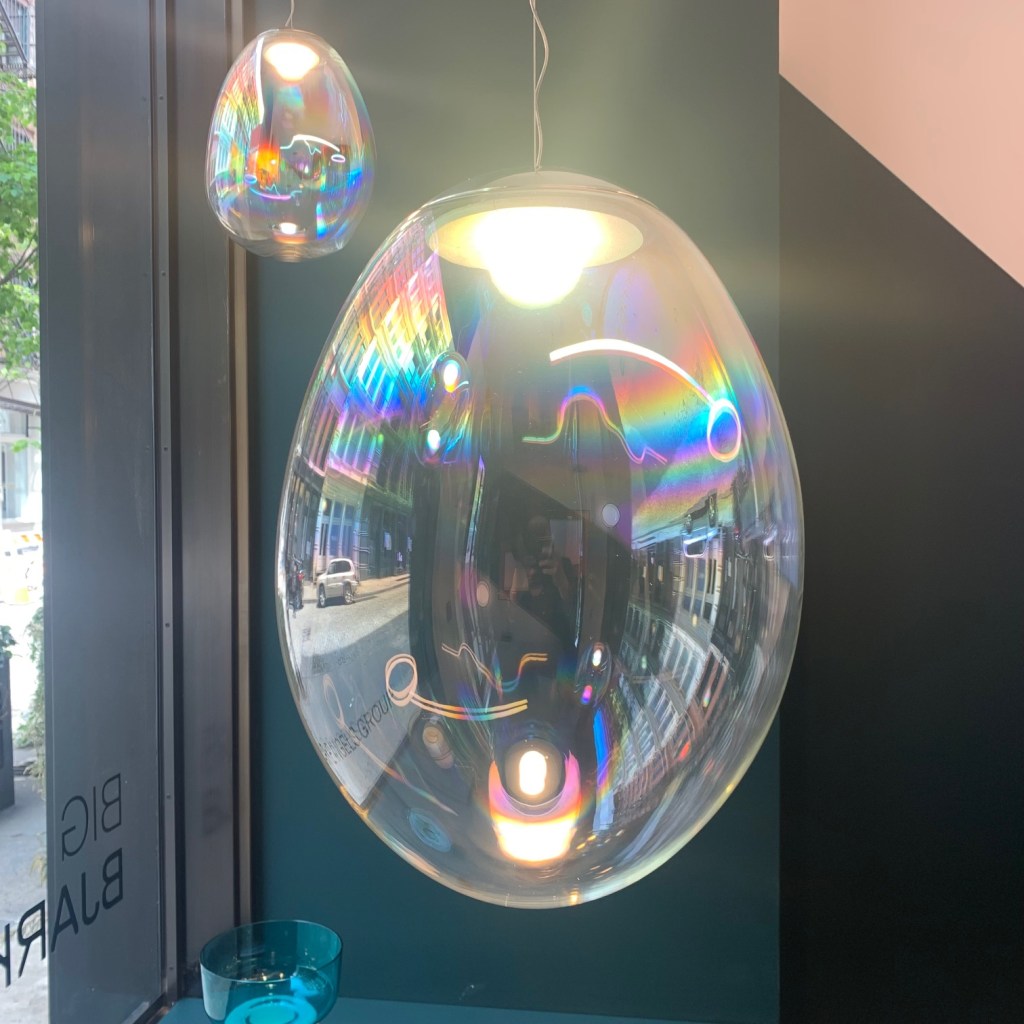
Tom Dixon

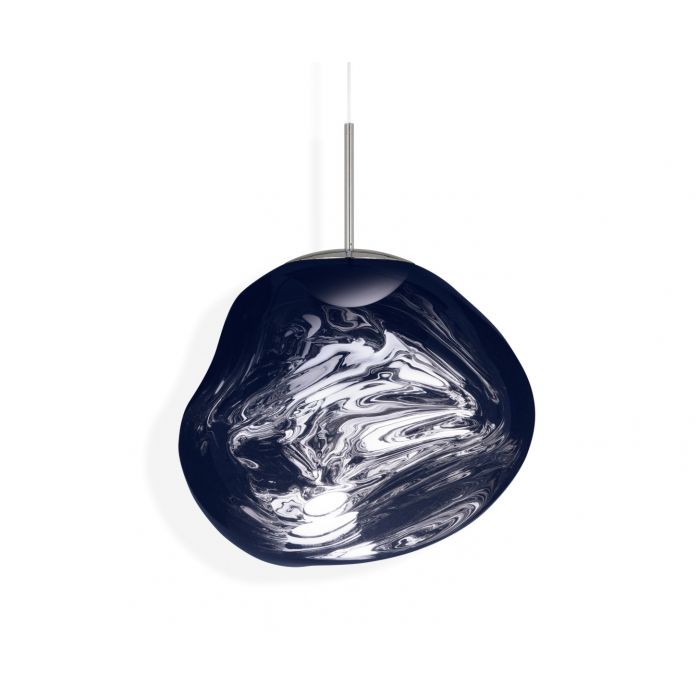
First, Tom Dixon taught us copper was ok, then he told us gold/brass is coming. He moved from simple shaped metal shades to blown glass orbs and now the blown glass has taken on a distorted, amorphous “melted” shape. The Melt shades are huge, or small and multiples are pulled into chandeliers. The exciting option this year is a polished, black nickel, or metallic black option that carries a subtle purple tint. An LED disc/module tucked up into the shade provides illumination.

https://www.tomdixon.net/en_us/melt-led-pendant-us-3-configurable.html

NYC – Tom Dixon 2022

Artemide

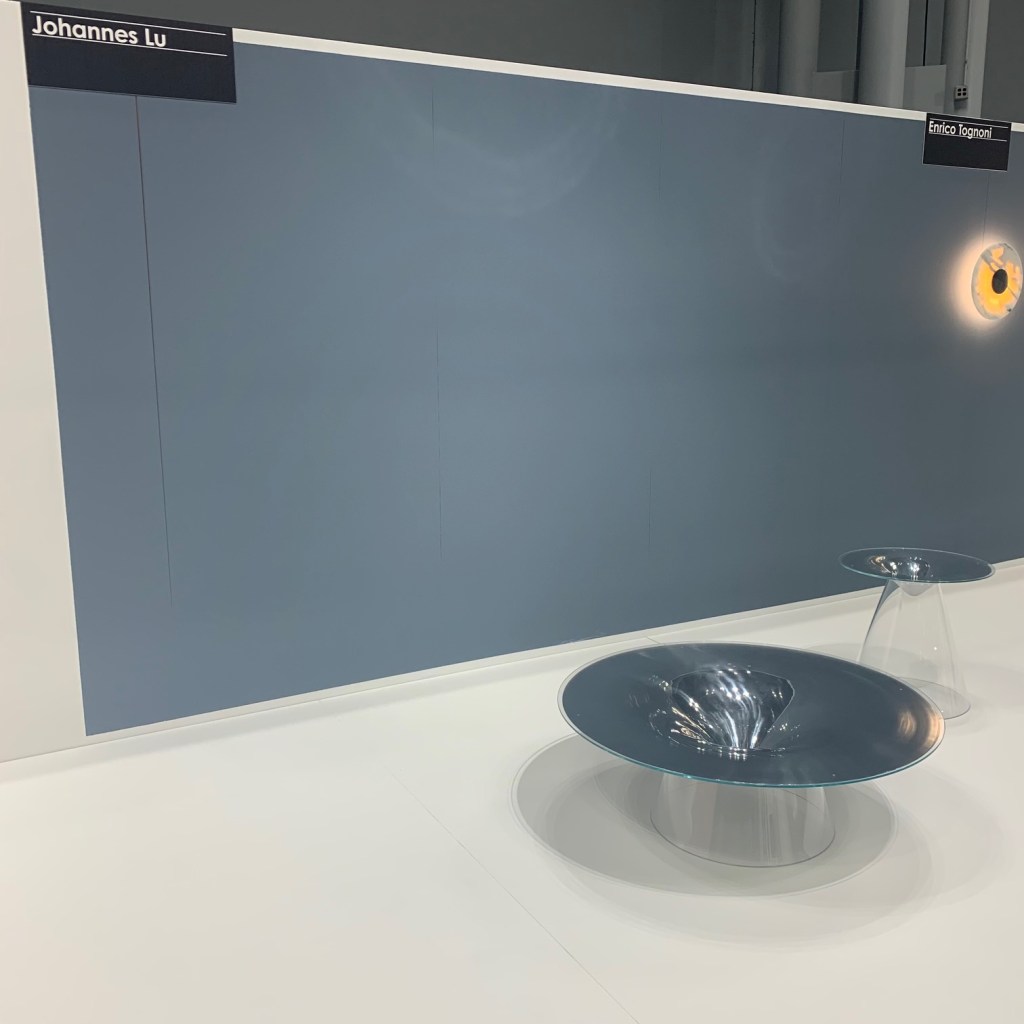
Artemide appears to have gotten the message from Tom Dixon and has produced Stellar Nebular, a collection of quasi-symmetrical, dichromatic clear glass pendants that appear simple, but alter in appearance and color as you move around them.

https://www.artemide.com/en/search?searchString=stellar+nebular

NYC – Artemide – Stellar Nebular – 2022

Arrival borrows similar amorphous shapes, but relegates them to a tripod frames. The skeletal outlines feature LED built into the rails. Table lamps, floor lamps and semi-flush ceiling units have been created. I love the extremely long semi-flush. This size is needed and should be more popular than it is currently. These are not yet available in the US and still a few weeks away in Europe, but I feel they will be worth the wait.

NYC – Artemide – Arrival – 2022

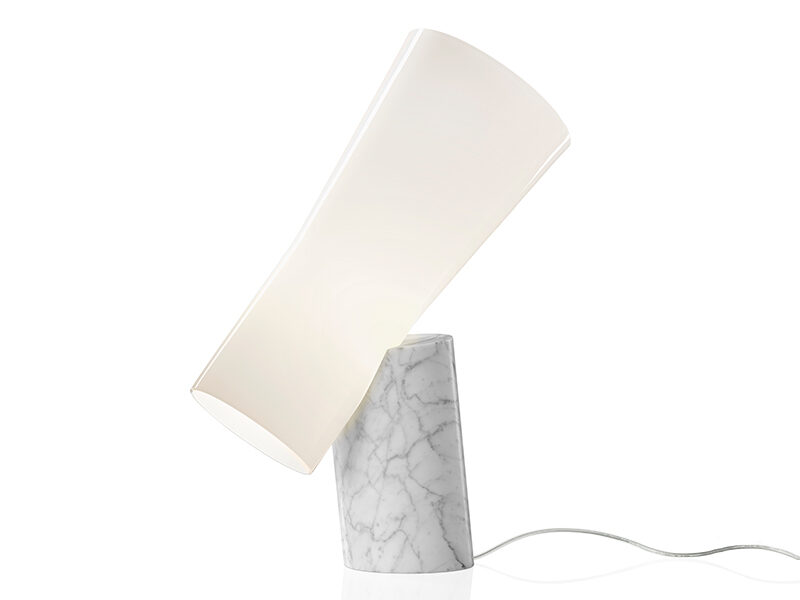
Foscarini

A fun additions to their line this year. Based on the monumental bust of Nefertiti, the Nile lamp diffuser resembles her head and crown, while the lamp base is shaped like her neck and shoulder.

NYC – Foscarini – Nile Lamp 2022

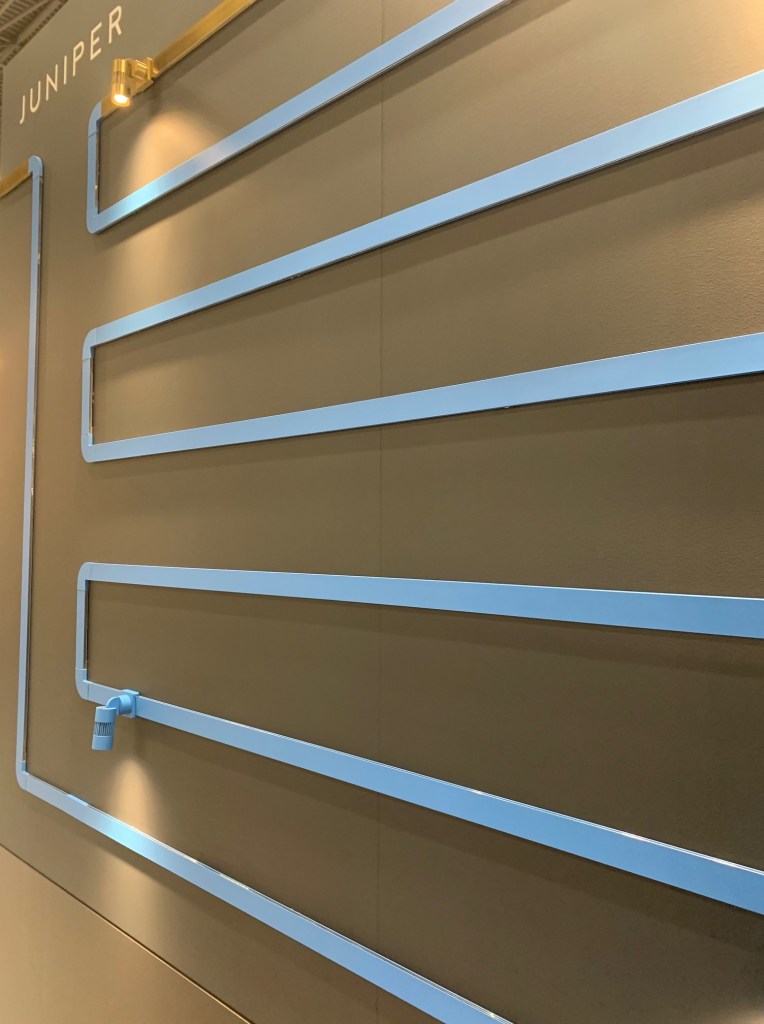
Juniper

In all of the ICFF show floor, I was most impressed with a new approach to track lighting. The Multiverse is an extremely thin track. Endcaps are available flat and rounded. They can transition from ceiling to wall mounting. The adjustable heads have a magnetic feature that allows them to be momentarily set in place, before a collar is then tightened into position. The track is paintable and available in a wide variety of finishes. This is a substantially more appealing track system and should be considered for a different answer to a common lighting solution.

https://juniper-design.com/multiverse-power-distribution-system/

ICFF 2022 – Juniper – Multiverse track system

Cuero

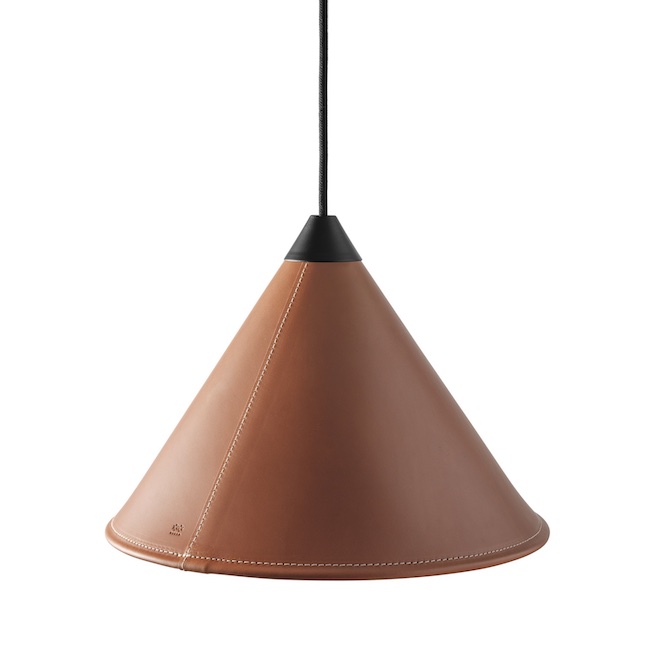
Perhaps not new or earthshattering, but the leather cone pendants from Cuero Design were beautiful. The variety of natural, vegetable dye finishes was also appealing. As we transition to more beige interiors, these colors and simple shapes will fit in nicely.

ICFF 2022 – Cuero Design leather pendant

Sharon Marston

You might have thought, fiber optics have had their day and it is time to move on to the next technological trend. Certainly, LED and laser lighting is more exciting. Sharon Marston has created a collection of ethereal, phantasy-based luminaires that when shown, collectively stopped the show traffic. Employing the thin fiber strands, tiny crystal figures and miniature glass diffusers, you were immediately relaxed and brought into a new plane of existence. These were beautiful pieces.

https://www.sharonmarston.com/

ICFF 2022 – Sharon Marston – Fiber optics and ethereal designs

Jamie Harris Studio

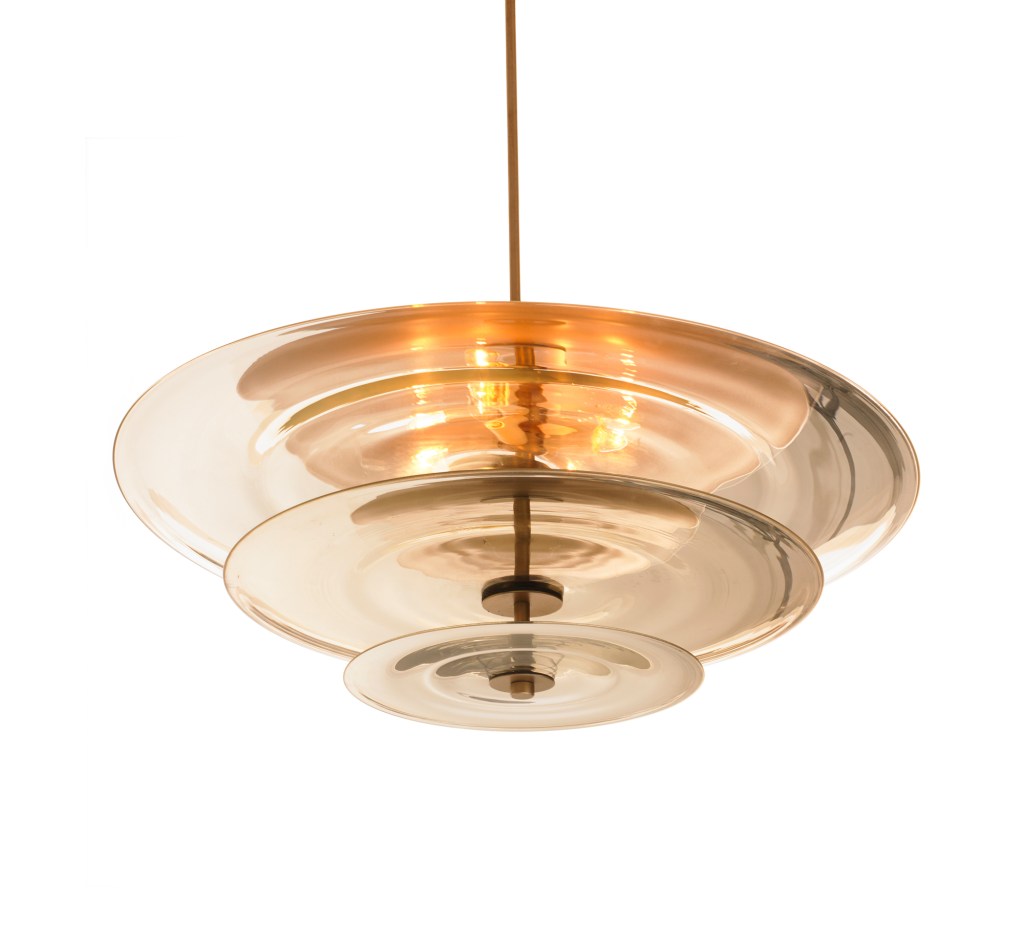
Jamie Harris is a Brooklyn glass blower and he has shown products at a number of New York venues over the years. The stacked discs pendants and ceiling units are appealing. They expand across large areas and the individual disc is smooth, polished and alive with color.

https://www.jamieharris.com/custom-lighting

ICFF 2022 – Jamie Harris – stacked plates of glass

Parachilna

This is an Australian company with a modern version of Moroccan lighting. The Ma-Rock is an all metal pendant collection, pierced to allow light movement. It is a dominant piece that will command a space, just like its classic predecessors.

ICFF 2022 – Parachilna – Ma-Rock pendant

The Gweilo collection takes acrylic panels and melts or distorts them into floor lamps whereby the LED edge lights the contorted shape. Despite the clear material, like their Ma-Rock brother, these would demand a central point in a room and cannot not be ignored.

https://www.parachilna.eu/

ICFF 2022 – Parachilna – Gweilo lamp

Katy Skelton

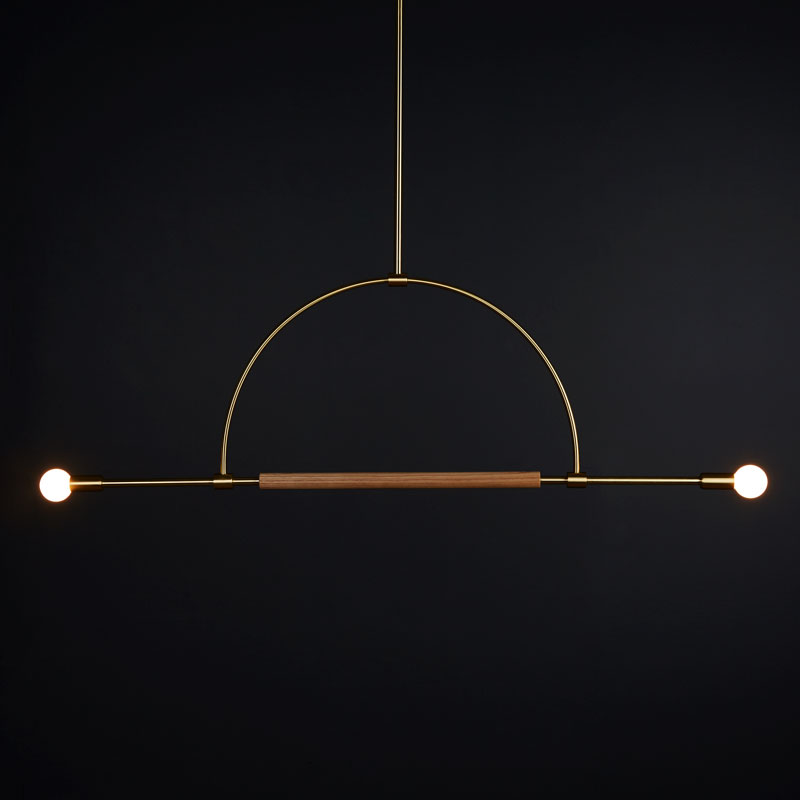
This Georgia based lighting designer has developed a line of simple, clean and unassuming products. They almost have a light, “trapeze” feel with a heightened sense of construction and a deep understanding of the way in which the units are connected to the building.

ICFF 2022 – Katy Skelton linear pendant

Tom Kirk Lighting

As with Katy Skelton, the simple quasi-teardrop shape of the Cintola collection appears unassuming, but with multiple colors and configurations, the core design element bubbles up into a useful luminaire baseline.

https://tomkirk.com/shop/collections/ceiling/

ICFF 2022 – Tom Kirk – Cintola collection

Talbot & Yoon

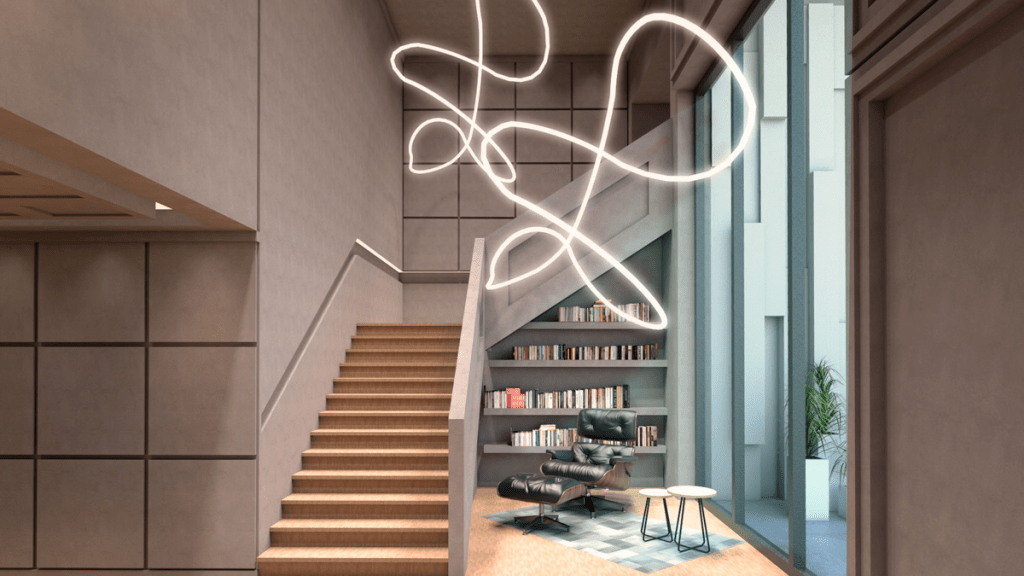
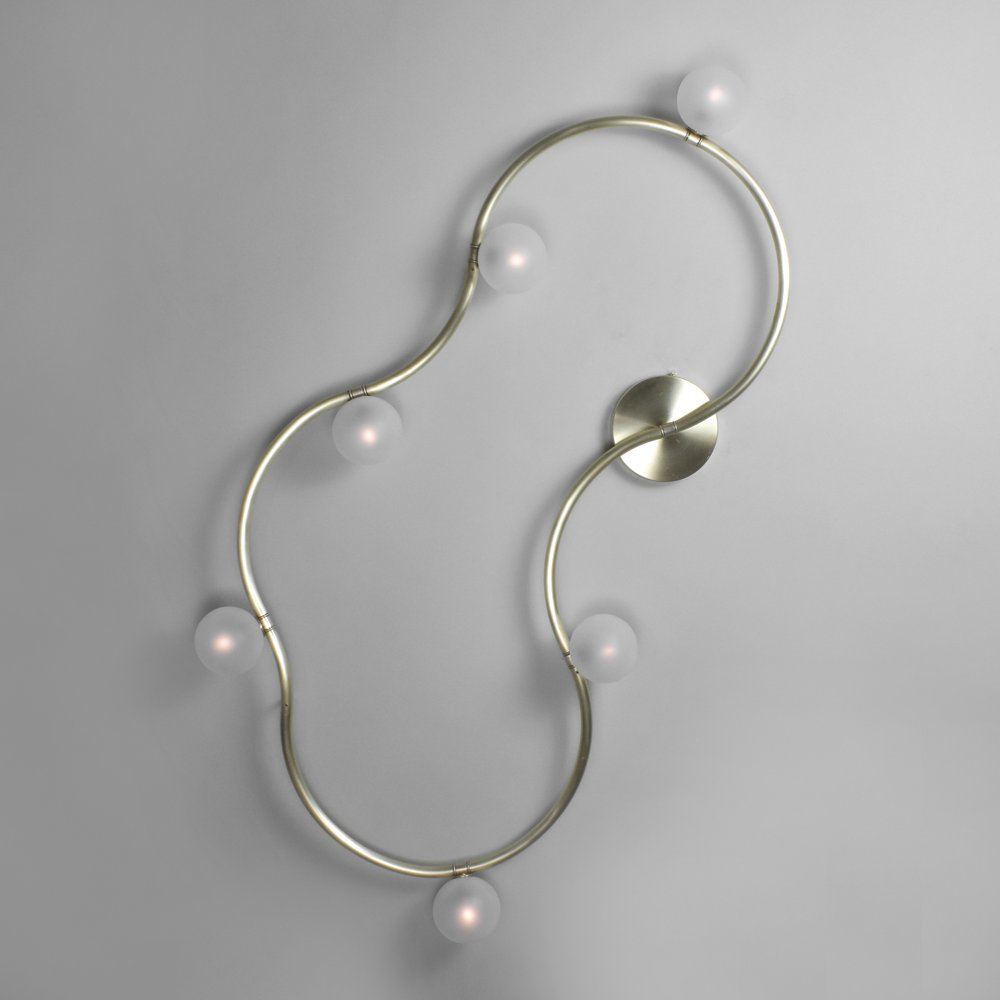
Their Loop Light is an easy concept with which to create unique and customizable wall art lighting. By piecing together bent segments of tube with a ball lampholder, an endless trail of lights and curves can be presented on a wall.

Some of the science of light is telling us we may need more light delivered from vertical surfaces. Adding that light via an artistic approach such as this will make the clinical necessity much more palatable.

http://www.talbotandyoon.com/

ICFF 2022 – Talbot & Yoon – Loop Light

Swadoh

In the United States, there is no more unique city than New Orleans, so it makes sense that Swadoh, the byproduct of a French designer who has relocated there, would be creating such unique lighting options. They have a very feminine feel made of papers, fabric, guilt accents and some conventional materials. Their different approach is worth a quick review of their website. They could be an interesting addition to many interiors.

https://www.swadoh.com/

ICFF 2022 – Swadoh – Lighting

Koncept

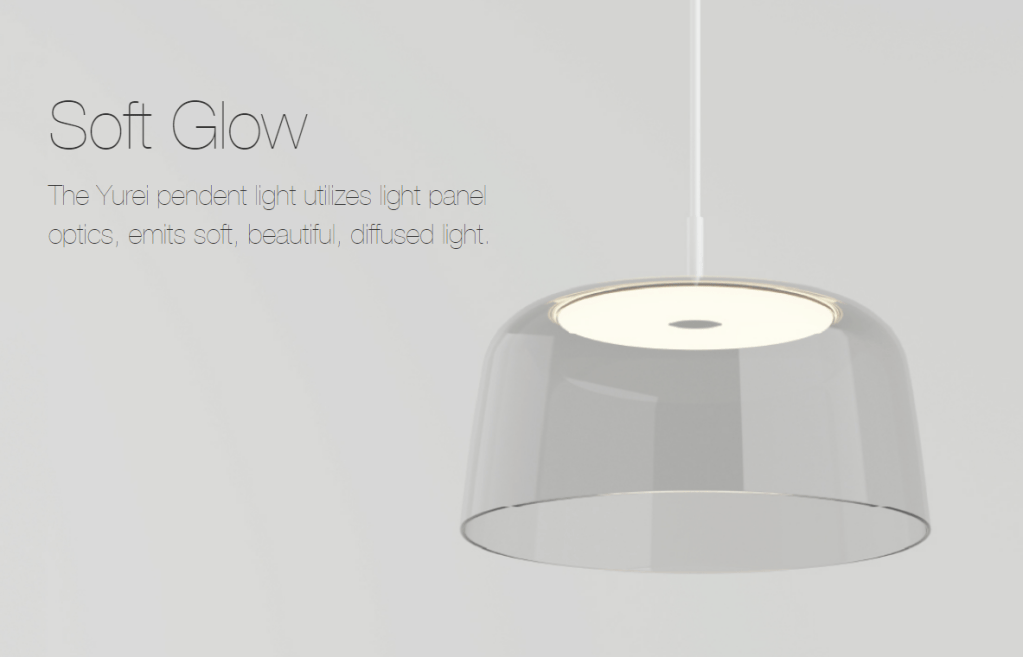
Koncept always shows a new idea that answers a current lighting problem. This year, Yurei is a shallow pendant shade realized in glass (teal tint, clear, copper-bronze and black smoke) and metal (white and black). The illumination comes from a disc of LED that sits against the inside top surface. I like the size of these pieces. They have not yet been released to the market, but if interested, Koncept will notify those who sign-up on their website.

https://www.koncept.com/yurei

ICFF 2022 – Koncept – Yurei

Trella

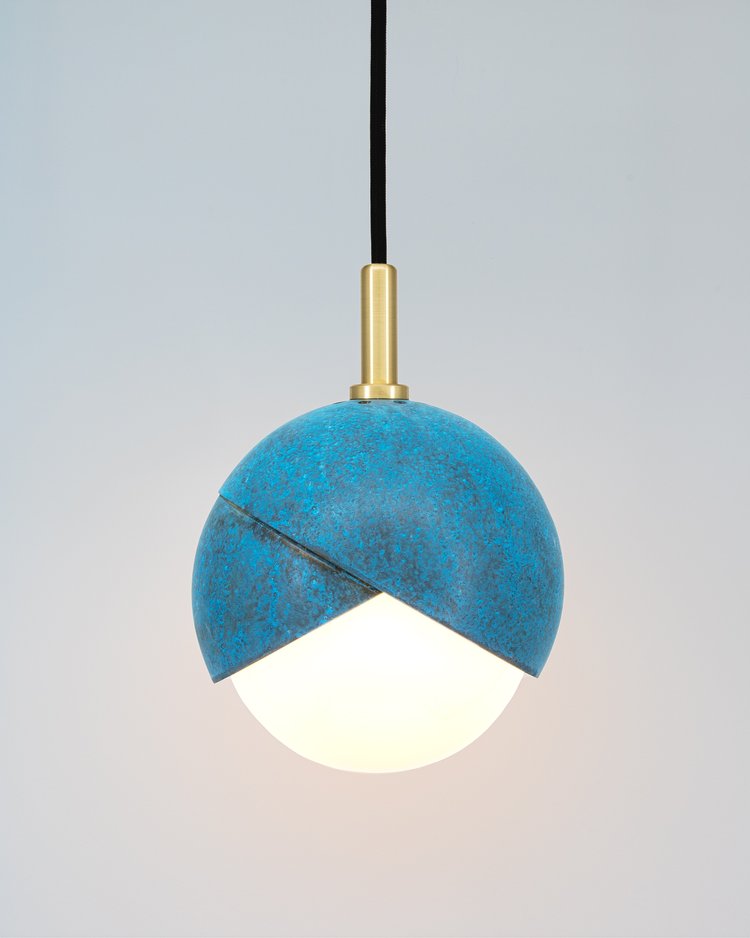
The new Benedict collection starts with two nested spheres that surround a glass globe. This module is then used in a couple of sizes and singularly, as a pendant and in multiples as a chandelier. Because they are handmade, many customizable options are available.

https://www.trellastudio.com/

ICFF 2022 – Trella – Benedict

Of the many new products created each year, it is sometimes difficult to get a grasp on them all. While I worry about the validity of shows like ICFF and even the retail establishments that are slowly dwindling in SOHO, lower Park Avenue and the Flatiron District, I still appreciate their existence. Speaking for people my age, I need these physical entities to exist a few more years. Younger folks, apparently, have found better, more efficient ways to track new goods. A transition is now in place. Until that is complete, I’ll continue to record trend shifts coming to me in the only way I understand.

Categories
Aesthetic Lighting Help

Tetrachromatic Vision

Photo by Magda Ehlers on Pexels.com

Each month, I deliver an educational lecture to hundreds of talented designers and architects from across the United States and Canada. A recent event centered on the color of light, a subject that has leapfrogged in importance exponentially since the introduction of LED and which I have spent a fair amount of time studying. In the Q&A section, for the first time, in a long time, I was stumped by a question. One of the designers wanted to know what I understood about those with tetrachromatic vision. Like a teenage boy being asked to define onomatopoeia and differentiate between a gerund and a noun, I mumbled, “Ahhh, I don’t know.”

Days after my Rick Perry, “Duhhh?” moment, a friend, who knows of and understands my interest in all things color, sent me an article from the Wall Street Journal discussing the research of tetrachromatic sight. (The Rare Gift of Seeing Extra Color – Jackie Higgins, February 22, 2022) The world was telling me it is time for some additional study.

Human color perception is delivered through tri-stimulus values. In other words, we have three photoreceptors in our eyes, one with peak sensitivity for blue, one with more highly refined sensitive to green and the third with heightened sensitivity for red. Images enter our eyes, the colors are separated into three “buckets” (R,G&B) and the information is sent to our brains for processing the understanding of the color of an object. (If you’re an ophthalmologist reading this, I apologize for that simplistic explanation!) If a person has some sort of color-blindness, one, or more of those photoreceptors does not work properly. If a person has tetrachromatic vision, they have a fourth photoreceptor. This fourth receptor allows that person to perceive higher gradations of color.

What Does Tetrachromatic Vision Do?

Explaining this is akin to developing an orthographic projection of an M. C. Escher drawing. How do we understand a higher level of color perception, when we, or the researchers can never experience it?

Imagine two paint samples. The average person sees the same color. In his research on color perception at Kodak, David MacAdams found that 90% of the population had average color comprehension, but about 10% had some level of elevated ability. They are able to hone in on the nuances and discern a difference. Those folks are likely my audience of designers, but also printers, photographers, artists, paint store specialists and even a few like MacAdams, a Physicists and Color Scientists. To understand persons with tetrachromatic vision, they see multiples of differences even in color samples perceived to be the same, by the rarified 10%.

Hourly and salaried wage-earners are the 90%, the 10% with better color perception are millionaires and those with tetrachromatic vison are the multi-billionaires of the world. Just a few, with overabundant powers.

So How Do We Respond to These Talents?

Unless the designer is equally gifted, it is near impossible to design to the demands of a tetrachromatic client. From comments provide by those with tetrachromatic vision, they also have no way of perceiving a life of color in any other way. How does one understand what one does not possess?

Recruiting people with tetrachromatic vision into the field of LED technology would be very helpful. Their superior color perception could help in the development of better products. If it passes muster with them, the rest of us will be well served with lighting of perfect quality. Wage-earners, millionaires or billionaires will all have great light. That egalitarian color solution sounds pretty good to me!

Categories
Lighting Commentary

The Complex Lighting Supply Chain

Photo by Luis Yanez on Pexels.com

Since moving into her first home, my niece has undertaken a beautiful renovation of her charming house. Upon her request, I suggested some appropriate lighting fixtures months ago and recommended a local supplier who could help her. (We’re in different states.)

Jump ahead nine months. She sent photos of her completed bathroom renovation, with a “thank-you” included. It took a few minutes to register the fact I had anything, albeit minor to do with this fresh new space. I completely forgot because, unfortunately, she was caught up in this crazy “supply chain” mess that has remained a news story for almost one year.

Shortly thereafter, the New York Times published an article, “4 Bed, 3 Bath, No Garage Door: The Unlikely Woes Holding Up Home Building,” https://www.nytimes.com/2022/02/15/upshot/homes-garage-door-shortage.html?referringSource=article  The article dug into the complicated reality of building a home in a global economy. While the story spotlighted garage doors, as I dug deeper I learned that lighting fixtures have an even more complex supply chain than the doors featured in the headline. They were in fact in first place! I guess, “4 Bed, 3 Bath, No Lighting” didn’t have the punch needed to grab readers!

Why Lighting?

Prior to retirement, I spent 35 of my 47 working years in the development of residential lighting fixtures. I had been responsible for the drawing, engineering and product management of hundreds (OK, I’m old, thousands!) of luminaires. While this supply chain information might come as a surprise to many, I’m not one of them. Over the years I spent weeks and months in factories all over Asia. When not in another country, each day, emails, faxes prior to that and telex message before that arrived on my desk, asking for answers to unexpected issues. Today it is supply chain, fifteen years ago it was plating in China. (At that time, due to newly installed EPA-like regulations.) Like Roseanne Roseannadanna used to say, “…If it’s not one thing, it’s another.”

Humans

If you have observed lighting for any period of time, you will likely note that there are tens of thousands of different designs in the market. With that massive quantity of products, it might not surprise you to know that many of the components have far less automation involved in the production than you might imagine. There is NO automation in the assembly of lighting. Each piece is hand-built. Sales quantities of even the best sellers do not warrant robotic or automated assembly. Because of this, lighting is desperately reliant on humans. When humans disappear from the equation there is slowdown.

While the numbers continue to mount, COVID has taken a massive toll on the human population. Laborers have been much more vulnerable to acquiring the disease and dying because of that contact. Add to that number, the amount of “baby-boomers” who decided, or were “invited” to retire early and you have a massive chunk of the functioning human supply chain simply out of the picture. These are numbers that cannot easily be rebuilt.

Chinese New Year

To most Americans, Chinese New Year (actually, the lunar new year) is a time to visit your favorite restaurant and perhaps watch a small dragon dance in their parking lot. For companies, it is a HUGE annual business interrupter. It is no exaggeration to state that the “entire” country shuts down, reconnects with family, relaxes and celebrates. If you have not seen the documentary film, “Last Train Home” you may not realize the magnitude of disruption the Lunar New Year has on factories. Somewhere between 10% and 25% of workers do not return to the company after the holiday. To prepare, American companies order and Chinese factories build extra inventory to cover a six to eight week interruption. When added to an already strained system, there is no other way to go, than down. Training a large, new quadrant of employees every spring, also slows the restart process.

Cheap, Please!

Americans, over the last twenty years have been on a toboggan ride to the bottom of price; the price on everything and anything. To provide customers the cheap they expect, manufacturers have had no choice but to run, pell-mell into Asia (next stop, Africa!) for inexpensive goods. What is the weak link in that shift? Everything must be boxed up and shipped, via container, in the hull of massive cargo ships. Ships have become the funnel, the weak link in the chain. Ships are also expensive and take long to build, so you just can’t go to “ocean-freighter.com” and order a new one. With a waning pandemic, a good economy and record-high employment, there is pent-up demand and plenty of money for everything. That “everything” must now pass through the funnel of a freight container.

USA Manufacturing

Making goods in America can surely help, IF customers will pay a bit more. When I started in the lighting world, around the time of the Coolidge administration, every lighting fixture was made in the US. Same with the components. Some glass was produced in Mexico. A lot of glass came from France, Spain and Greece, but the majority was manufactured in America. That was great until the largest manufacturer of US lighting glass experienced a devastating fire. The industry was decimated for almost two months. There wasn’t a container, or container of dollars that could help.

Et Al

Supply chain disruption can happen at any time and for a number of reasons. While I am intimately familiar with the problems of lighting, you can take the above factors, adjust and apply them to appliances, windows and garage doors to understand the reason why things are not now available when they are needed. Keep that in mind next time you watch the national news.
Categories
Aesthetic Lighting Help

How Big is Too Big?

Simply add chain!
Photo by Dids on Pexels.com

The Wall Street Journal asked the question, “Are Massive Lights the Next Big Thing?” in a January 8, 2022 article. In the story, radically oversized lighting was discussed, such as a 90” sisal pendant that oddly enough was dwarfed in the accompanying photo, by a huge room with 11’-0” ceiling heights. Personally, I think this was a case of a reporter jumping on a unique situation and turning it into a trend. It did, however raise the very real question of lighting size.

A quick search on the internet will deliver some very solid and consistent size recommendations for lighting size.

  • Add the two lengths of the room together to arrive at a minimum diameter (in inches) for a dining room chandelier.
  • Linear chandeliers should be between 1/3 and ½ the length of the table below.
  • Front porch lights should be between 1/5 and 1/6 of the door size.

I use these numbers, too…as a starting point. I then typically ignore them and think about the whole room, the size of the table and the height of the humans who occupy the space.

With those parameters understood, let’s unpack this reporter’s perception for a moment and think about when “big” (or bigger) could actually work in a design.

Dining Room

I always lean toward a larger chandelier than any calculation suggests. Most dining room tables are 30” wide, but if a larger one is used, that becomes a visual excuse to go bigger. 36” wide? Use a 36” diameter chandelier. A room that can hold a wider table can surely accept a larger chandelier. A 5’-0” to 6’-0” diameter or square table can also easily accommodate a larger chandelier.

Consider too, the ceiling height. Larger should be considered in the verticality as well. 12’-0” ceiling demand some vertical attention. Fill that space with stretched and elongated chandelier designs.

Squares contain more actual area than a round, so simply choosing a 32” square luminaire over a 32” diameter alternative will give you more mass and a bigger presence.

Dining rooms remain a showplace in a home. Allow them to earn that regard with majestically sized lighting.

Foyer

As we move away from two-story entrance foyers, we still need a dynamic introduction to the home. A one-story home with 10’-0” or even 12’-0” ceilings cannot accommodate a hanging chandelier, but a huge semi-flush, stretched across the ceiling can elevate that space. Unfortunately, not a lot of luminaire manufacturers build oversized semi-flush units. I suspect, if no one asks for one, and they can’t sell the ones they’ve made, there is a good reason for the void. I’d love to see a reverse of that trend.

Until more are made available, I suggest installing a chandelier without the chain or stem, tucked up to the ceiling. We can always find a wide variety of large chandeliers. Pay attention to the height. A chandelier with a body height of 18” will work on a foyer with ceilings as low as 9’-0”, 30” works on 10’-0” and 54” body heights will fit in spaces with 12’-0” ceilings. Not all designs will work hung in this manor, so attention must be paid to the view from below. Once the right piece is unearthed, you might ask why anyone would ever hang it from a chain or stem!

Consider the same thing with sconces. Forego the ceiling lights altogether and use a collection of TALL sconces around the perimeter. A 36” tall sconce will fit nicely in rooms with 9’-0” and 10’-0” rooms. Go longer in 12’-0” ceiling heights.

Islands

In the March 2022 edition of Architectural Digest, one of the featured homes used a 36” diameter wicker shade over a 5’-0” Square Island. This is probably larger than most of us would consider, but I think it works. The ceiling was exposed, the space was open and the light cane and whitewashed island material created an airy feel. Square, or oversized islands can be a great place to consider larger than average lighting. They are big and fill a lot of space in the room so, commensurately sized accessories work. The additional lesson here is to understand how the colors will impact the visual proportionality.

With conventional islands, we all know to stay away from the petite pieces that were popular over a decade ago. There is strong evidence we are moving in the correct direction. Larger and especially taller pendants are being used. Continue that trend, stretch the envelope. This is the right direction. The open floor plans of living can readily accept larger island pendant lighting.

Great Room

If you are not already using massive chandeliers, ceiling fans and wall sconces in the great room, start now and disown any previous installations. These rooms are called “great” for a reason! They are big spaces and anything less is a huge mistake. Seek out those 96” fans, 72” tall chandeliers and 36” tall sconces. This room should be the easiest of all to adapt to larger sizing options, especially if you are currently using Lilliputian-sized luminaires.

Big

You may never be responsible for a home that can comfortably embrace a 96” diameter pendant or a 10’-0” tall chandelier. Stretching common norms a few inches is however, a real possibility and should definitely be considered in more “typical” residences. That small difference can deliver a big impact.

Categories
Lighting Commentary

Eyes, Light and Sometimes, Brain

Photo by Ilargian Faus on Pexels.com

In an episode of the “Revisionist History” podcast (“The Dog Will See You Now” Revisionist History, Season 6, Episode 10) host, Malcolm Gladwell dug into the fact that different species rely more heavily on one of the five primary senses. In the story he tells of the amazing success dogs have had detecting the presence of diseases and viruses in humans. This is primarily due to the superiority of the dog’s nose. A dog’s nose is hundreds, perhaps thousands of times more powerful than a human’s, so they can pick up the subtleties of scents that humans cannot even comprehend. Dogs can and do easily sniff out weapons in airports and have been proven to detect the presence of colorectal cancer, prostate cancer, COVID and hundreds of other disease. They are 99% accurate, far superior to human-created methodologies.

Humans, on the other hand, are sighted beings, hence, we rely primarily on our sight. Because of that, we develop medical tests that allow us to see evidence of the physiological problem. An x-ray is taken, a doctor reviews the x-ray and when an issue is seen, the diagnosis is established. Because of the narcissistic nature of humans, we assume dominance of our intelligence. Dogs are unfamiliar with egalitarian structures. They understand a trainer seeking out a particular smell. Their superior nose can easily provide that information. A pat on the head and a doggie-treat and they are on to the next exam.

Dogs don’t understand the excellence of their nose, it’s just their nose and sniffing is what dogs do. Humans could come to terms with the hierarchical relevance of their scents, but don’t. Our inability to prioritize the right light, in the correct location, at needed times of the day is within our grasp, but we ignore it.

It is time for humans to pay more attention to the needs of their dominant sense. We rely more heavily on sight, but we don’t act like it. We accept light glare knowingly, we contort our bodies into odd configuration to grab a touch more of the light that has been poorly positioned and we pay little attention to the color, despite our bodies needs and wants. We then complain, unable to connect cause and effect.

Dogs don’t ask for “more scents” they simply push their head out of the window when they are lucky enough to enter a car, knowing a rush of interesting, life-affirming smells will be coming their way. Humans are smarter than dogs, but we don’t necessarily act like it all the time. Especially, when it comes to lighting.

Categories
Aesthetic Lighting Help

Rings! Rings! Rings!

A few posts ago, I talked about using linear LED extrusion luminaires. Almost as ubiquitous are LED rings. A wedding cake of them are stacked in halls, dining rooms and commercial spaces. Sizes at 5’-0” and beyond are not uncommon. Some are plain, in black or white. Others are finished in the popular metallic colors and even wrapped in leather or bejeweled in crystal. With this avalanche of options, what new options are possible? I think application offers a great amount of new possibilities. Like the linear pieces, let’s explore some alternate hanging scenarios.

Multiple Single Rings

A stack of rings has been a pretty reliable use of this luminaire type, but when faced with a shorter ceiling, or if in quest of something different, it might be time to consider an alternative.

Think about four or five smaller rings dancing over a dining room table. How about a ring at each corner of a large, square island? Three or five rings placed in the center of a bedroom tray ceiling will certainly add a look that departs from the norm. We already use multiples over countertops. Rings could be a nice variant, especially if combined with some of the ideas listed next.

Replacing one large ring chandelier with multiple smaller ring pendants can be a great way to differentiate a space.

Different Sizes/Colors

Is there a reason to have all the rings the same size? No! Try a variety instead. Are multiple finishes used in the room? Are two-toned elements used? Why not try three rings in one color and two in the other?

If using multiple rings, consider going one step farther and altering the size as well. A mix of sizes can create added visual interest. In rooms where it might work, consider using multiple finishes as well.

Varying Elevations

A collection of rings hung at different heights can be as interesting as size differences.

Angles

Rings are all aircraft cable suspended. Adjusting one cable can deliver a quirky angle for the ring. Repeat that with all of the suspended rings and the result will be a fun look. Don’t like it? The adjustment back to plumb, is easier than any of the other suggestions!

Adjusting the cable that suspends each ring can provide an interesting visual presentation that elevates the look and differentiates the space.

Placement

Pendants do not need to be on the centerline of the table or countertop below. Adjusting them closer to one edge will add yet another level of interest. Remember, if this is done, hanging heights may need some adjustments to avoid contact with the humans who occupy the space. You may also need to visually balance the space if doing this, unless an intentional asymmetry is the goal.

Shape Shifting

Take everything I just wrote here and replace rings with squares. Now take half of the rings and replace them with squares. You’ve just duplicated all of the possibilities! Black rings and Natural Brass squares. Chrome squares and White rings.

Exceeding Expectations

There is nothing wrong with simply using the ring as initially intended. Simple geometric shapes are classic elements of design and the rings (or squares) will look just fine. Consider moving beyond “just fine.” Experiment, explore and try something different. It might be exactly what is needed to elevate a room design and create something special.

Categories
Technical Lighting Help

DOE Solid State Workshop 2022

Photo by Olya Kobruseva on Pexels.com

Earlier this month, I spent a lot of hours in front of the computer listening to the virtual, U.S. Department of Energy, Solid State Workshop. This was four days of in-depth conversation covering the current-state and likely, future direction that solid state lighting technology will take. There was a ton of information shared and honestly, I felt somewhat like comedian George Gobel in the classic Tonight Show episode where he walked onto a dais with Bob Hope, Dean Martin and host, Johnny Carson. Clearly outclassed, Gobel quietly commented to Carson, “Did you even get the feeling that the world was a tuxedo and you were a pair of brown shoes?”

Like Gobel that night, a lot of the information was over my head. These highly educated individuals reached beyond common knowledge and current circumstances. The introduction of LED into the lighting world has elevated the conversations and concepts to heights heretofore unimaginable. Even for a lighting geek like me, it is hard to keep up!!

With that in mind, I’ve tried to boil down the information to that which concerns residential users, or might be of interest to “average” brown shoe-wearing folks.

  • No surprise, but LED efficiency continues to improve and gains in efficacy are likely well into the future. LED energy efficiency will however, be less important because of the tiny incremental growth the technology now experiences.
  • The use of smarter, better, more carefully programed controls will continue to earn larger and larger shares of the energy savings. The possibility of less expensive electricity (don’t add the money to your bank account, just yet) will change a lot in the way we consider operational value and energy investments.
  • In customer preference studies, 5000K lighting was considered the most favorable light in parking garages to find cars and find a parking space.
  • The same study showed that the old adage, “We cannot light our way to seeing better or feeling safer.” remains true. At a certain point, regardless of how much light is added, the perceptions of safety and our ability to see in the space do not improve.
  • The biggest barrier to altering state and local lighting ordinances for better efficiency, is public perception – people still believe MORE light is the best light.
  • As we learn more and more about the body’s need for light, some key metrics will be set on their ear. Initially, daylight harvesting was set in place to save electric lighting energy, but the byproduct may be a healthier environment. That healthier setting could result in higher rents garnered by the owner.
  • Additional study are showing that melatonin suppression has a more complex manor of functioning. The wavelength of melatonin sensitivity is different from the visual wavelength. That means, most, NOT ALL, of the impact comes from ipRGC (intrinsically photosensitive retinal ganglion cell) with the cones primarily responsible for short, initial reaction. As science gets closer and closer to understanding this complex interplay, expect lighting to be adjusted with the idea that good lighting can mean good health. This will be a powerful step in the maturation of solid state lighting! (I wrote about this point in a previous post, if interested in more information: https://wordpress.com/post/lightingbyjeffrey.com/483
  • Because of this newer understanding of melatonin wavelength peak, we now know that it overlaps with the blue LED that is the basis for most white light. There is now talk of changing blue to violet and then adjusting the phosphor blend resulting in the same visual appearance, but without the harmful byproduct. While not mentioned in this talk, there had been some concern that violet would reintroduce ultraviolet light, losing one of the key benefits of LED light. As with so much of these findings, more information is yet to come!
  • Remember the “L” prize light bulbs? The first 60-watt, incandescent LED retrofits announced in 2011? Those lamps are still energized and operating in the test lab! They are all operational, now at 90,000 hours with NO failures and virtually no reduction in light output and color shift! (Remember what I said in the previous post on “buying cheap? https://wordpress.com/post/lightingbyjeffrey.com/603 )
  • Many parts of a building are moving to a more sustainable version, but lighting is lagging behind. (Sound familiar? Remember the halcyon days of residential energy use improvements, pre-LED?) It is expected that lighting too, will be dragged into this desire for a more sustainable product. There are reasons why it is more difficult, but in the long run, change will be demanded.
  • Diffuser science is getting VERY interesting. Because of the adverse initial reaction to the intense LED “dots” of light, a substantially different diffuser is needed. Diffusers are not just pieces of plastic any longer! Waveguides push light in complex directions to eliminate the glare. Micro-printing adds microscopic dot of wave scattering ink onto the surface, without much light loss or color characteristics reductions.
  • Customers are now faced with a much more complex lighting systems. Because everyone want to “invent” the next, best, great luminaire, product has arrived in a silo and the backlash has started. There is growing demand for interchangeability. There is a need for a more common language. In the past, a 40W ballast on a luminaire could easily be swapped. That is not the case with LED. An industry agreement is needed to achieve cross-vendor flexibility. The customer is rumbling and this must be solved soon.
  • There is growing evidence that communication between the HVAC system and the lighting systems is needed. Both are needed when people are in a space and not needed when empty. Expect more conversations to come on this merger.
  • 28% of carbon emissions are from building operations. That includes lighting. If we are able to bring the cost of electricity down through the use of non-fossil fuel creation (still a while, in my estimation!) then the onus will be on carbon emission from buildings, not power plants! Improvements will be needed, fast.
  • The large-scale use of LiFi is as close as two to three years away. Because of our cluttered radio wave environment, this will be a welcome relief and a game-changer.

We need to design light for a space, rather than fitting light into a form that has previously existed. Remember, lighting started with a candle, replaced with gas, delivered in a pinpoint shape, like a wick, changed to a filament in a glass enclosure the shape of a flame and now we are stuffing LED componentry into the same flame shaped envelop! As the science matures, lighting used in the future will be very different. The arc of change is very long, but it does indeed bend. Get ready for it!
Categories
Aesthetic Lighting Help

How To Use Linear Extrusion Chandeliers/Pendants

It seems, slender, linear luminaires are all the rage today. The tiny profile and baseline aesthetics allow them to slip, almost unannounced, into a design. Channel extrusions have allowed this grown in popularity. Filled with LED Tape, they can now be configured into custom lengths, specifically formatted to the space. They are taking their place over kitchen islands, dining room tables, bedrooms and great rooms. Because of their simplicity, customizability and ease of use, expect these lighting options to stay around for a while.
The simplicity of a 1” wide by 2” or 3” height can be intoxicating, but what if you want more? The fact that it is so easy to customize, might promote the idea of using these pieces in more interesting ways. Sure, a line of light, 36” above the island, a foot shorter than the island length will be stunning, but could something more creative be considered? When asking about a unique option, my answer is always, “Yes!”

Consider multiples. Think about varying lengths, plan altered hanging elevations. There are countless ways employ these pieces. Here are a few inspiration starters.

Multiples

The idea of using two or three chandeliers over a dining room table is not new. Now apply that same logic and design sense to linear pieces. Perhaps they are positioned 45° or 60° to the surface of the table top. What about three lengths, forming a triangle over a rounded table? Four lengths can accentuate the perimeter of a table or island, one length on each side. Start with thinking about, “more than one.”

Varying Lengths

Each length can easily be different. A hacksaw and a blade that cleanly cuts aluminum will do the trick. Extrusion manufacturers sell end caps that can be assembled to whatever length you decide.

Using linear units of varying lengths can be a simple, yet exciting way to create a unique space, when faced with a tight budget.

Alternate/Angled Elevations

These extrusions are installed with the use of aircraft cable. This cable is easily adjusted, so hanging the piece at an angle is simple. One cable just needs to be shorter and an angle is created. Combine the angle hung akimbo to the ends of the table/countertop for a more exaggerated variant.

While hanging extrusion pendants parallel with the table/counter is fine, a slight angle will add energy to the space and interest to the room. In a plan view, avoiding parallels to the table or countertop will add another layer of interest.

Different Extrusions

Aluminum extrusions are available in a wide variety of shapes. We might be inclined to stick with a single profile, assuming the simple look will allow the lighting to disappear into the background. That is certainly an option. Variation can, however work well. Think about a common width and three different extrusion height, or a common height with varying width. This also invites the inclusion of additional strips of LED Tape. Like everything else in design, when done with intent, the results can be exciting.

Use linear extrusion pendants of varying widths and lengths to add more interest to a design and a space.

Different Lumen Levels

There are different extrusion sizes and each size can accommodate different quantities of LED Tape. Different amounts of light could be installed, delivering varying levels of illuminance. Perhaps the center light is brighter (has more strips of LED Tape) than those at its side. The supplemental light can serve as a more ambient illumination, thereby adding to the room’s aesthetic.

Think about using different levels of light in each of the extrusions. This play of light can be as visually exciting as multiple paint shades and complimentary tile solutions.

It’s Easy to Be Creative

Extrusions are just straight lines. If a straight line design can be imagined, it can be realized in light. When working with lighting, remember, they are simply another aspect of design. Treating them as such will open up a whole new palette of creativity.

Categories
Technical Lighting Help

Buying Cheap Will Cost You!

Photo by Medhat Ayad on Pexels.com

A recent Wall Street Journal article (Why LED Bulbs Don’t Always Live Up to the Hype About Their Life Span – Jo Craven McGinty 10-1-2021) detailed some of the frailties surrounding expected lifespan of LED light bulbs. Unfortunately, they failed to discuss a crucial element that is now leading to shorter lived lamps…the desire for cheap.

The reporter talked to the Director of Research at the Rensselaer Polytechnic Institute and he clearly defined the reasons for lower longevity. There is, however an underlying reason for his recommendation to use “LED System Life” rather than LED life as a better way to measure expected life. Multiple reports and investigations indicate failure is most likely to occur in the driver and electronics. The LED have proven to be very effective and hardy, failing at a very low rate. A quick overview by the DOE https://www.energy.gov/sites/prod/files/2014/04/f14/life-reliability_fact-sheet.pdf helps us to understand the conclusion delivered by Rensselaer.

Consumers were never able to justify a light bulb that cost tens times a conventional incandescent lamp. Initial sales were poor. At those prices, efficiency needs would not be met.

One of my favorite jokes tells the story. A kangaroo walks into a bar and orders a martini. The bartender prepares the drink and places it on the bar. “That will be $35.” The kangaroo pays the bartender and the bartenders comments, “You know, we don’t get many kangaroos in here.” The kangaroo responds, “At these prices, I’m not surprised!”

To make LED lighting more acceptable to the greater kangaroo population, they had to be cheaper. That means money needed to be extracted from the components and manufacturing process. Using high quality LED, electronic circuitry, drivers and a strong deference to thermal management, the original LED would last far longer than the advertised 50,000 hours. Cheaper electronics, disregarding heat or combining circuits on a common board all make the light bulb less expensive, but at a cost to longevity.

There is a wonderful analysis conducted by the website “Hackaday” that tells this tale. By analyzing the components and construction of three readily available LED lamps, understanding “you get what you pay for” is easy.

To paraphrase the research, a very inexpensive lamp combines the LED and driver on a single board. (There are other electronic and wiring variations I will not recount.) With inexpensive components, wiring and assembly, this lamp promises a life of 7500 hours. The second lamp is a bit more expensive and the life expectancy is doubled to 15,000 hours. This is accomplished by separating the driver, thereby protecting it from the heat and delivering an incrementally better product. The best of the three tested light bulbs separates the driver and LED and uses superior capacitors rated for higher temperatures. (There are other improvement as well.) The price is the highest of the three and it lasts the longest, at a promised 25,000 hours. If longer lasting light bulbs are desired, they can be had, but it will cost more.

(If desired, you may read the full report here: https://hackaday.com/2019/02/05/what-happened-to-the-100000-hour-led-bulbs/)

LED System Life should be the barometer of the future. The reality of our desire for cheap, cheaper and cheapest has forced a realignment of expectations for LED. It is a shame that the LED is getting the bad name.

Categories
Aesthetic Lighting Help

Interesting Things I Saw in NYC/ICFF/DBNY 2021

Photo by Roberto Vivancos on Pexels.com

Sure, I am a “lighting guy” but it is virtually impossible to ignore all or the “other” interesting design ideas that surround me. By nature, I am aesthetically inquisitive. I see, assess and catalog, fashion, labels, product design, interiors…almost anything that comes from the mind of a creative person. During that absorption, some strike me as interesting, fresh and worthy of note, perhaps indicating some sort of trend change, or maybe they might have an impact on the next trend. Here is my list of things that stood out.

Beige! Beige! Beige!

It’s as if gray neutrals never existed. Every major furniture manufacturer was showing beige products. Now don’t get me wrong. This does not mean a return to all beige, all the time. It simply indicates that beige, rather than gray will be the hinge on which interiors will be hung. In my mind, this makes sense. We see brass/gold rising, brushed nickel declining and black at its peak, with a decline inevitable. As we enter this warmer design phase, beige and warm brass are perfect partners. Expect this combo to dominate for the next ten to fifteen years.

Pile

Could Glyn John’s 60s era fashions, so dominant in “The Beatles: Get Back” documentary have made such an immediate impact (doubtful, simply because of timing) or are we just looking for something cozy because of the never ending pandemic separation? (More likely!) For whatever reason, pile is EVERYWHERE! Pile lined coats, pile coat exteriors, cuffs and collars, pile covered furniture (in beige, of course!) and pile trimmed everything else. It is textural, demands a touch and just feels engaging.

Demar Leather

We all know leather is hot right now, so I could have easily passed by this company. What is so striking here is the WIDE variety of color. They are combining high quality materials and a nice selection of textures with their ability to customize color. There are a lot of possibilities here, delivering trend-relevant material in brand-specific color palettes. https://demanrleather.com

Poltrona Frau

With leather in mind, I love to visit the Poltrona Frau showroom. The furniture is intoxicating and so beautifully crafted. In the window of their Wooster Street showroom they displayed ottomans with a basket weave pattern in dense red. Adding the pattern was a nice way to contemporize classic leather furniture.

Poltrona Frau – SOHO front window featuring beautifully woven leather furniture.

https://www.poltronafrau.com/en

Bernhardt (Terry Crews)

Many people know Terry Crews as an actor, most recently, television’s Brooklyn Nine-Nine. Others remember him as a football player. Football players remember him as the player who created individualized artwork that appealed to the narcissistic tendencies of the star athlete. Some people might even know him as a body builder, inspirational speaker or all-around “nice guy.” I, on the other hand respect him and know him for his talent as a designer. So does Bernhardt, the premium manufacturer of fine furniture. Over the last five (?) years, Crews has design some remarkable pieces for Bernhardt and I look forward to seeing each new item, every year. Crews worked his way through art school as a ball player, when success came in that field he never forgot his core calling. With success in many areas, his return to art/design probably was inevitable for such a motivated guy. Regardless of how he got here, we should all enjoy the end result. The new Belmont chair just became another jewel in his crown.

Bernhardt – The Belmont chair designed by Terry Crews

https://bernhardt.com/

Lioli Glass Tiles

Lioli produces thin micro-tiles (3mm) in an astounding array of colors. The small size allows them to contour to irregular surfaces and refract light in multiple directions. Because of the size and palette, there are endless possibilities for use. I must admit, their website and displays can be perceived as tacky with too much glitz and corny examples, but in the hands of the right designer, this is a product that could individualize a space.

Lioli Glass – miniature sized mosaic glass pieces combined to create amazing designs and item facades.

https://www.lioliglass.com/

Arte

When wallpaper reemerged I was mesmerized by the reinvention of the stale product I remember from my youth. Gone were the tiny flowers, pinstripes and inane patterns. Bold, clever design was everywhere. Since then, I have nodded politely to most wallcovering sources. Been there. Seen that. So I was surprised to be taken aback by Arte. Some were bold, some subtle, some textural, others with the complexity of a Persian rugs. Perhaps, to a more learned eye, there is nothing new here, but for me, this was notch above what I have seen for a while.

Arte – Textured wallpaper
Arte – Wallpaper borrowing from the detailed visuals created by Persian rug artisans.

https://www.arte-international.com/en

Lab Designs

Like wallcoverings, laminates have been readily available and oh, so typical. I found the variety and color of Lab Designs to be different and new. The range of creative patterns and colors was inspiring. A quick review of their samples has me wondering where I could use it. Done well, it could substantially elevate a space. I’m pumped!

Lab Design – It might look like wallpaper, but it is in-fact, a laminate surface!
Lab Design – It might look like wallpaper, but it is in-fact, a laminated surface!

https://www.labdesignlaminate.com/

Brizo Faucet

I’ve always associated the introduction of black into the bathroom with the Jason Wu collection of faucets for Brizo. Perhaps there were others who proposed matte black, but none so elegantly and persistently. They alone persevered until the whole industry followed. Black can now be found in Home Depot and Brizo has shifted to a wood-enhanced faucet, part of their Frank Lloyd Wright collection. While I’m not sure how FLW connects with this design, it is time to think about the proposed intersection of wood, chrome and water. The wood compels you to touch and feel the faucet in a way metallic finishes alone do not. The hardware feels soft and approachable. The designs are also available in metallic-only finishes, but they are really uneventful without the draw of wood.

By the way, Jason Wu is now showing Brizo faucet designs in white, a finish that has been unused in plumbing for over twenty years and it looks fresh, new and revolutionary. The difference here is a subtle matte instead of the 1990s gloss. Re-read the first few sentences of this section and buckle your seat belts for what is next!

Brizo – Frank Lloyd Wright inspired faucet suite.
Brizo – Frank Lloyd Wright inspired suite uses wood as a design element.

https://www.brizo.com/

Poggenpohl

What’s not to like about a Poggenpohl kitchen? I find myself drooling over each one. I was especially drawn to the Venova island, realized with chrome “legs,” gloss white surfaces and stepped countertop. It is flawless.

Poggenpohl – a streamlined island with simple legs and tiered countertop.

https://www.poggenpohl.com/

Vaask

Let’s face it, hand sanitation stations are REALLY ugly. Some are placed on a wobbly pole in the middle of a hallway, others are mounted in bathrooms featuring some pedestrian, brand-specific look. We need this cleansing juice, but we surely don’t want to interact with the homely dispenser. Vaask has elevated this yeoman’s piece of equipment into an aesthetically interesting and interactive tool. The station recognizes the user when a hand is placed under the sculptural spigot by illuminating the wall surface. As the sanitizer is distributed, the light replicates the fluid’s motion. A mirror-image drip guard eliminates the unsightly and inevitable puddle on the floor below. Don’t you love when a designer solves a multi-faceted problem with a great looking solution? Sure, it’s a sanitizer dispenser, but I love this design!

Vaask – Why do hand sanitation stations need to look ugly? Vaask has solved the problem with a beautiful, streamlined design.

https://www.vaask.com

Brian Peters

Peters is creating 3D printed ceramics and employing them in installations that take advantage of the multiplicity of the printed unit. Because of the digital manufacturing, these pieces appear to be delicate and more detailed than those produced using conventional methodology.

Brian Peters – 3-D printed ceramic that takes advantage of duplicates to form something amazing.

https://www.brian-peters.com/

Inspiration comes from many places. Pile lined parkas lead to furniture fabric that defines the tonal nuances of the metallic surroundings and that in-turn drives the style of a space. Trends start from the oddest places and typically die of exhaustion. Watchful eyes can understand those paths and determine how to use the information. Trips to New York help me sort through these concepts. I hope this miniature overview helped you as well.