Photo by u0415u0432u0433u0435u043du0438u044f u0415u0433u043eu0440u043eu0432u0430 on Pexels.com
I regularly read a newsletter about lighting, Light Now published by my friend David Shiller and his consulting organization, Lighting Solution Development. I urge you to do the same. (https://www.lightnowblog.com/ ) There is always great information and insight. Often times, it is research you didn’t know you need to know. In a recent post, Light Now pointed to new research on “why flying insects gather at artificial light.”
When LED was new I delivered hundreds of educational talks about this newfangled technology. As people learned more about it, better, more pointed questions would be posed. Through one of these queries, I was compelled to understand an insect’s attraction to light and laissez faire reaction to LED light. Why? I quickly learned that bugs are not actually attracted to light, but instead the infrared glow of a heated incandescent light bulb and the hot metal surroundings of the luminaire. LED do not emit any light in the infrared spectrum and the low heat produced by LED barely warms the surrounding lighting fixture. If you were the moth’s version of SNL’s Stefon, pointing out the “hottest new club” in the neighborhood, it would not be located at the newly installed LED outdoor wall bracket. All of the “cool moths” are of course, still hang around the IR rich, incandescent lamps.
That explained the attraction, but not the kinetic action of the flying insects. This new report finds that when the insect “sees” the artificial light, it assumes it to be natural light. In their world, light is overhead and dark is below. The movement is the insect’s natural reaction to place the light in the right relative location, at their backside. Flying bugs are actually backing into the vertically installed luminaire and erratically circling the light with rises and dips.
I’ve written a few posts about sustainability and our responsibility as lighting professionals to “do the right thing” with light. The way we add light to the human environment has a tremendous impact on the animal population. This scientific research points out that even an insect as simple as a moth understands the proper position of the moon and the darkened land at night. Their hysteric dystonia is an effort to correct something which in their mind must be of their doing, not the peculiar humans who cohabit their neighborhood.
Artificial light has been around for as long as humans have employed fire and will remain for as long as humans exist. We could simply ignore the problem, but the natural balance of life will be tipped. When adding light to the nighttime, think about neighboring wildlife, plant life and aquatic life as well as the human client. While small, we shouldn’t forget bugs, either. Mother Nature will thank you.
The Mantis Shrimp and their dozen photoreceptors Photo by William Warby on Pexels.com
I recently finished reading An Immense World by Ed Yong. The book covers an overview of how animals use their senses in substantially different ways from humans. Some of the information is well known. Dogs have a sense of smell that is somewhere between 10,000 to 100,000 time better than humans. Bats use an echolocation “sense” to navigate at high speeds in the dark to locate miniscule flying game. Birds of prey (eagles, falcons, etc.) have superior eyesight that allows them to see forward and sideways to best home in on a meal. The book however goes deeper and helps the reader understand that most every “superiority” is balanced.
The dog has a remarkable sense of smell, but their eyes have only two color photoreceptors, so their world looks different than what humans see. Humans have three photoreceptors, a handful are tetrachromats with the benefit of four (I wrote about this phenomenon in a previous post: “Tetrachromatic Vision” https://lightingbyjeffrey.com/2022/05/09/tetrachromatic-vision/ ) but the mantis shrimp has TWELVE photoreceptors! Wow! You’d think their sight was miraculous, but alas, they have a tiny brain (brain size and functional capacity is a crucial piece of data in these analyses) so rather than witnessing colors beyond our imagination, they use the twelve photoreceptors as a type of binary coding system. If, for example photoreceptor one, three and eleven are triggered, they know prey is within reach. If photoreceptor two, eight and nine send feedback to the brain, it is time to move, an enemy is near. All benefits are balanced by Mother Nature.
Humans are sighted creatures and we regard the world based on sighted preferences. (I wrote about this in yet another post: “Eyes, Light and Sometimes, Brain” https://wordpress.com/post/lightingbyjeffrey.com/684 ) When we do that, we ignore the needs and demands of the other animals who occupy the planet. Even other animals who enjoy sight as their primary sense, do not use it in the same way as humans. Owls need dark nights to survive. The lack of light and their ability to see in it, sustains them. Bees have three photoreceptors, but because they can see UV light, the three receptors read different information and feed that back to the brain, so their color palette is radically different from ours.
Humans have risen to the top of the community of earth’s animals and our single-minded concern with human need is unfortunately harming the greater animal community. This summation ended the book. The human need to illuminate “everything” is doing irreparable harm to other animals. It is only getting worse, despite an avalanche of data on animals and their worlds. We read books like An Immense World and still increase street lighting, parking lot lights and high-rise building illumination. After becoming enamored with the content of the book, his plea to the reader is for some kind of action.
As a lighting community, we can do better. I’ve just looked at a wide variety of new luminaires released at the January Dallas Market and still we offer light aimed up into the sky where it does no good and only delivers harm to plants and animal. We use lumen levels way beyond what is necessary and that color of light is often blue, not only bad for humans, but many in the animal community are likewise impacted.
Can we help? We are in a unique situation to do just that. We can’t help much directly with pollution, micro-plastics in the oceans or noise levels that also impact, confuse and confound animals, but we can control light. That’s what we do as lighting professionals. Could we start to include concern outside of our genetic spectrum in addition to the color spectrum?
Since my “retirement” I have had the opportunity to continue interfacing with thousands of interior designers. Through these points of connection, I have noticed a trend of questions and commentary that are driving designer’s conversations. The topic that is top-of-mind today is “sustainability.” Specifically, how long-lived LED can possibly coexist with short-lived fashion. It is brought up in virtually every Q&A session I conduct.
Supreme is a brand of clothing that was birthed by way of the skateboard culture of the 90s to poke a finger in the eye of staid fashion nameplates. Consisting of tees, baggy pants and sneakers, it became a huge success to a point where the company is now valued at over $2 billion. What started as a “fashion-less” alternative to seasonal runway offerings is now riding atop the same tiger. To stay ahead, Supreme must now continue to create new and equally desirable products.
Supreme could have been the answer to sustainability in fashion, the “Mao Suit” of its generation. Alas, humans want, perhaps need change. Hemline rise and fall, lapels narrow and widen. Hair lengthens and shortens. This constant desire for change forces us all back into the retail market, continues to circulate dollars and keeps the world employed.
Magic Wand
So let’s say, tomorrow, by nature of a magic wand, trends die, fashion becomes frozen and the human desire for something new stops. What then?
First, there will be a lot of unemployment. Designers, engineers, marketers, retail associates, home remodelers, construction workers, dock worker, virtually every facet of the supply chain will be impacted. We will have a substantially more sustainable world, but we won’t have much of a world to enjoy.
I think it is safe to say, this is an unlikely scenario. Fashions have shifted almost since cavemen sought out a new pelt covering. Some variant is much more likely.
The Alternative
More realistically, we might stop buying so many variations of things in our lifetime. This would allow us to buy better quality with the idea that it will last for a longer period of time. Liken this to the difference in American vs. European roadways. America installs cheap roads with minimal foundation and limited attention to drainage that in turn, need frequent repairs and quicker replacement. European countries install much more expensive pavements based on multiple layers of substructure and ample drainage that last substantially longer and show less wear and tear during their long life.
That idea fits nicely into the use-pattern of LED. Well-built LED product can last as long as twenty to thirty years with limited need for maintenance. Better built LED product simply lasts longer.
Rethinking Lighting Use
New, more sustainable lighting still requires a bit more forethought in the development of the overall lighting design. This is a point I have been making for a number of years. The future of lighting means more functional light (that transcends fashion) and less decorative lighting (which will require replacement when the style ages,) despite the continued viability of the light source.
If we are going to blend sustainability with fashion, we will need to reassess the financial parameters used to make buying decisions. Rather than first-cost, (the initial cost of the luminaire, only) we will need to consider life-cost (cost of luminaire, repair cost, operational costs, etc.) Purchasing lifetime functional lighting that dies after ten years does not support the cause of sustainability. We will need to pay more attention to quality components, conscientious construction and whether the company building the product will be around in fifteen years, should there be a warranty issue. Our initial cost will be higher, but decades of trouble-free operations make that dollar amount easy to swallow.
I was talking to someone in the window business about the plethora of replacement window companies and the avalanche of advertisements they’ve placed on television. Knowing I live in a 90+ year old home, he said, “Despite what they say, those ads aren’t for old-old home like yours. Your windows and windows from that era are a bit less energy efficient, but are usually of excellent quality and most probably don’t need to be replaced. (There are always exceptions.) These guys are servicing the bad windows put into new construction over the last twenty-five to forty years. New tract home construction windows are getting cheaper and cheaper and they barely make it out of warranty.” The low initial cost is intriguing, but the life cost is high.
Added Opportunities and Challenges
That allows for another opportunity; the return of manufacturing to North America. The desire for “cheap” forced manufacturing to Asia. The revolving door of style and trends kept manufacturing there. The combination of geopolitical events and sustainability demands might now encourage some companies to recalculate their costs. If consumers are willing to pay more, they might be able to build longer lasting items locally.
The pushbacks are often the same. If a new home is more expensive, or the remodel too costly, fewer people will buy them. Because of that, the banking/lending industry might also need to reset in an era of more sustainability. If the cost of “living” in a house is lower, more money, as a percentage, could be allotted to the mortgage because less will be needed for repairs. Think of the money used to buy “one window” so they can get, “the second window for free!” When windows don’t need replacing and insulation doesn’t need to be added and cheap LED doesn’t need to be upgraded, all that results in a higher value of the home. If sustainability can equate to higher property value, almost everybody wins.
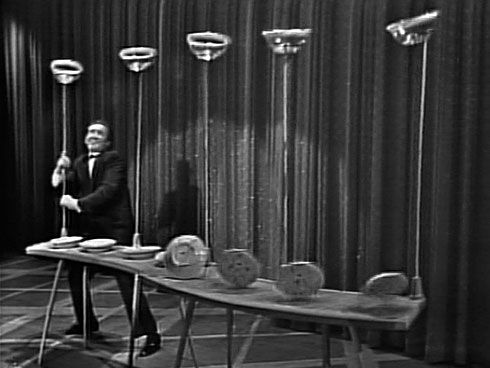
When all of these things happen (insert image of plates balancing on a row of sticks!) fashion can be sustainable. When a single aspect is not adopted, the whole concept fails. For sustainability to succeed, we must embrace ALL of these ideas, all at once. That then becomes the challenge. How good of a juggler can we become?
If like me, you always check out trend predictions, wherever and from whomever they emerge, you are seeing a reoccurring mention of sustainable products. I am constantly questioned about sustainability. Designers are hearing the request and like a canary in a coalmine, they are often the first to recognize a shift. As I pointed out in the first part of this series [link] there will be changes in our application of light. Nonetheless, the disposable nature of a heretofore endlessly reusable luminaire, continues to trouble designers, users and sustainability proponents. “There has to be a better way!” is a very common comment.
I realized this is not a problem exclusive to lighting as I read about Golden Goose, a Milan-based manufacturer of high-end casual footwear. [TheNew York Times (August 7, 2022) “Don’t Toss Those Old Sneakers” by Laura Rysman. https://www.nytimes.com/2022/07/09/style/golden-goose-sneaker-repair.html?smid=url-share ] Like lighting, once a pair of sneakers is “worn out” they are unceremoniously tossed and replaced. In an effort to extend the life of the sneaker, they are offering bespoke repairs. The problem, as few as five years ago, is that there was no such thing as sneaker repair. Because of the typical manufacturing process, the sole could not be removed from the top, so an entirely different methodology was required. By considering the classic construction method of formal shoes, a new sneaker assembly process was created that allows for the teardown and repair. While not inexpensive, their sneakers can now be repaired and reused, almost endlessly.
LED longevity makes them the perfect light source for new sustainability demand, but they sit on the edge of some shaky foundations, much like the typical vulcanized rubber sole that encases a sneaker top and precluded disassembly. We discussed aesthetic trends in the previous post. There are three additional problems that must be addressed to increase the sustainability of LED lighting.
Driver Longevity
When a LED luminaire fails, it is most likely because of driver malfunction or some sort of circuit interruption. In the industry’s quest to achieve lower costs, corners have been cut in this all-important, albeit hidden, component. Quite simply, to have a more sustainable product, better built drivers and circuitry components are required.
Proof of Longevity
LED longevity is a predicted “guess” based on calculated performance characteristics. Basically, if the system lasts for X hours, testers feel comfortable projecting that it will last 6X hours. Tests of 10,000 hours (maximum) will allow a manufacture to promise the product will last 60,000 hours. One of the reasons we cannot go much farther is because 10,000 hours is a long time! After 14 months of testing, there is a very good likelihood that a newer, better model of LED is on the market and the cycle must be started anew. Most manufactures test for 6000 hours, allowing a promise of 36,000 hour lifespan and consuming only 8 ½ months of time, still a considerable length. Some sort of accelerated testing and performance affirmation is needed.
Repair
Incandescent luminaires are like a pair of leather brogues, we can change light bulbs as easily as shoelaces. Resoling is however another thing entirely and must be completed by a cobbler. A repair professional is usually needed to replace sockets or broken chandelier arms. LED lighting becomes closer to the conventional sneaker, nearly impossible to rebuild, even by a pro, unless you rethink the entire process. That, I believe is where the luminaire manufactures are today. To meet the sustainability expectations of the near future, they must plot out a path to luminaire repair.
This might be realized in a number of different ways. Perhaps some companies can easily adapt their business to include a repair service. We might also see LED luminaire repair shops popping up around the country. We could also see lighting retailers adding LED repairs to their list of luminaire services. Only real demand will tell the tale.
“It’s Gotta Be the Shoes!”*
To meet the needs of a sustainable future, electronic repairs will need to be more common. We might see the return of TV repairmen, small appliance repairs and people who specialize in fixing our much more technological environment.
By their own admission, Golden Goose is not seeing a positive ROI on repairs. Knowing repairs are possible is however, turning out to be a substantial selling point for this expensive footwear. I think that might turn out to be the case with lighting, too. The lighting will last longer than most people expected. There will be fewer breakdowns than anticipated. The newness of LED will wear-off and failure expectations will be reduced because it is an effortless product. When needed, there will be some avenues available for resolution, even if they are not ultimately used. That may satiate the consumer.
In a 1988 Nike commercial, Mars Blackmon (a comedic avatar of Spike Lee) tried to explain the god-like moves of Michael Jordan on a basketball court. Discounting every other conceivable option, he reached the conclusion, “It’s gotta be the shoes!” despite the objections of Mr. Jordan. (If you’re not a basketball fan, Michael Jordan was an excellent player, probably even in bare feet.) Offering repairs when they might be of minimal real value, just might be the sustainable aspect we’ve convinced ourselves we need, just like the illusion worked for Mars.
*Mars Blackmon – 1988 Nike commercial with Michael Jordan and Spike Lee
I was recently asked to speak about sustainability and how it impacts lighting. I have to admit, this is a tough one. There are a lot of elements under the sustainability umbrella; only a handful relate to lighting.
Much effort has occurred over the last fifteen years centered on the reduction of energy consumed for illumination. Lighting, specifically designed to respect the “Dark Skies” (light pollution) and sea turtle habituate is now readily available. Pendants constructed of old, recycled wine bottles are available. (Desire for them is another thing.) Digging deeper into sustainability will require an almost complete rethinking of how we light our homes, in much the same way that commercial buildings are embracing daylight harvesting, site placement and advanced fenestration design.
In a recent post, I suggested the reduction of decorative lighting would be an inevitable aspect of the future of lighting. Sustainability is the main reason. Lighting as we see it now is a fashion business. Like necktie widths and hem lengths, lighting goes in and out of style. With long-lasting LED, the twelve year aesthetic cycle is anathema to lighting that could be functionally viable for thirty. This fissure can only be overcome with good lighting design and application that promote the appearance of light, not the look and form of the luminaire.
Another aspect of sustainability we have heretofore ignored will be reuse. Tossing a dated chandelier in the garbage is pretty common. Creative people will need to come up with adaptive reuse as we enter the sustainability era.
My wife and I took on our first rehab project when we moved into our second home in 1990. It was a great 1917 colonial with much of the original lighting still in-place. Despite an update on the entire living room, we kept the slightly gauche ceiling light in place. It was just too, “too” to remove!
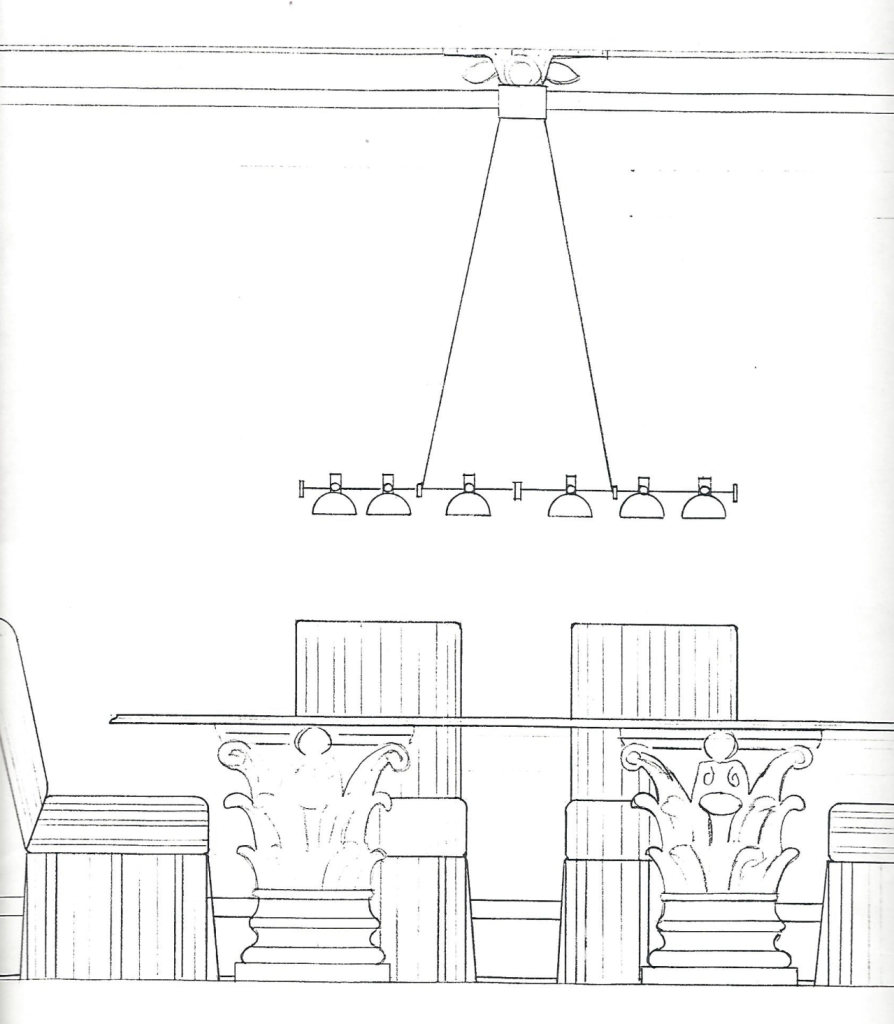
When we redid the dining room, we wanted a chandelier over the table. The room was already equipped with a ceiling flush-mounted, gold plaster starburst with five light bulbs jutting out at a 45° angle. We simply could not remove it, so I turned the piece into an exaggerated, lighted ceiling canopy. I wired it into the chandelier and it remained proudly on the ceiling until we sold the house.
My circa 1990 dining room sketch with the original ceiling flush light serving as a canopy for the modern linear chandelier.
To the obvious benefit of Salvation Army and Goodwill stores everywhere, spray painting old Spanish Bronze and Faux Williamsburg chandeliers manufactured in the 1970’s has been a popular way to light kitschy boutiques and cutting-edge restaurants for years. Like all trends, that too will end and we will be left with hard sustainability decisions. With more lighting hidden in the structure and fewer decorative pieces, future generations will be left with usable lighting AND a more receptive planet.
Before creating your next room design, give a moment of thought to sustainability. Is there possible adaptive reuse of existing lighting? Would the room be better served with creatively applied utilitarian lighting that will last through the next two redesigns? Considering a sconce made of recycled 2-liter Mountain Dew bottles, might, however be a bridge too far.



 Lighting by Jeffrey