Categories
Uncategorized

ICFF & NY 2024 – The Non-Lighting Report

As I try to wrap my thoughts around all of the things I saw in New York and on the ICFF show floor, I wondered if there is a theme, a common thread that might tie new products to birth in 2024. I suspect that might be too easy. There are far too many creative ideas and this is a worldwide showcase. One thing did come up, time and again and it is a movement with which I have had some struggles. Sustainability is something we all know is needed. It is a direction we all know we must follow, but it runs counter to so much of what we do as creators of interesting, unique and personal interiors. I’ve asked this question before and will probably ask it again. “Can design, trends and sustainability coexist?” I’m no closer to an answer, but I have more fuel for the argument.

New York 2024 – Kirna Zabete window

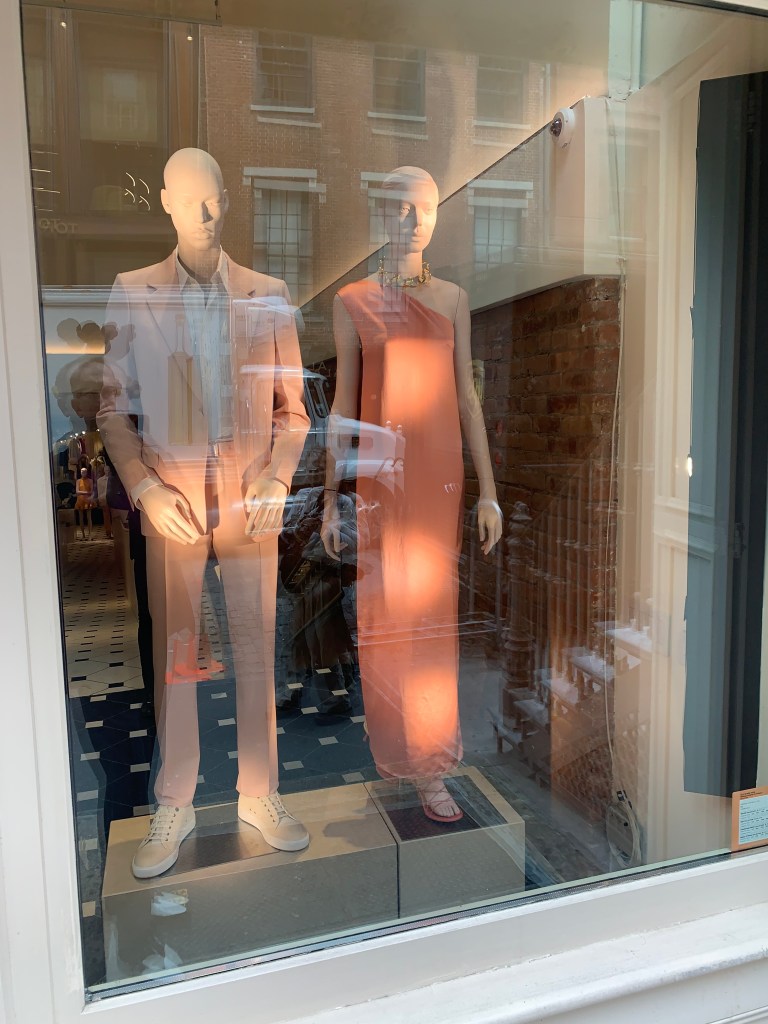
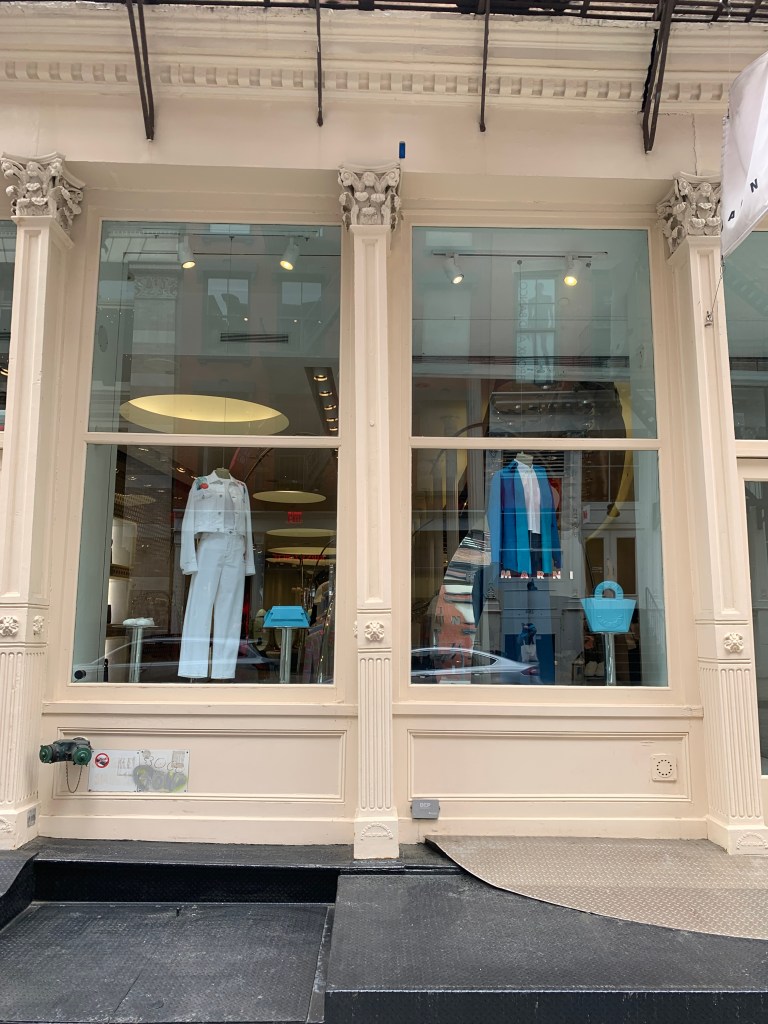
Upon seeing the showrooms, stores and galleries of SOHO, the dichotomy couldn’t be stronger. In one short section of a block, the fashion industry was having this same battle. The Kirna Zabete window featured bold, funky “Maxi” dresses that are sure to have a short shelf life, while across the street, the Marni storefront showed simple and clean blue and white suits, designs that could easily transition trends and time. Likewise, the Simkhai showroom next door and Lavin, two-doors down kept it simple and stately. A few more steps and the Mango showroom, a new fast-fashion brand who makes trendy product quickly and offered it for less money pulled us back to a typical merry-go-round of fashion retailer.
New York 2024 – Lanvin window
New York 2024 – Marni window
New York 2024 – Simkhai window

I think the fashion industry is wrestling with itself on this topic. For the average consumer who has moved into a type of American Mao Suit of jeans, sneakers and tees, the question is moot. They have already established a de facto sustainability. This further begs the question, “Can fashion survive?” North Americans are, however a much more quantitative based consumer than the rest of the world. Sure, we wear jeans 90% of the time, but we want a closet full of clothes to service the remaining 10%. That, I think is where we get into trouble balancing the need for sustainability. Other geographic areas of the world are emotionally better equipped to handle a smaller closet of well-built clothes. Citizens of the US and Canada, not so much.
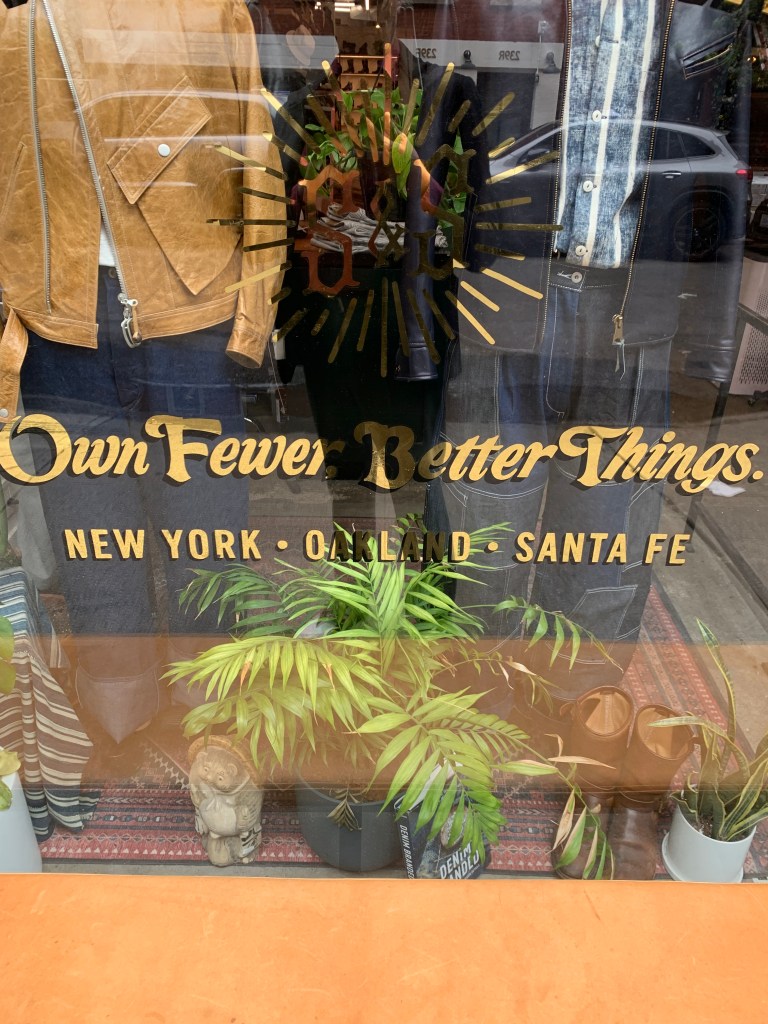
New York 2024 – Standard & Strange window

Retailers are trying. Yet a few more steps down the street is Standard & Strange with their moto. “Own Fewer, Better Things” emblazoned on the window. Will it work? I’m still not sure.

Fashion
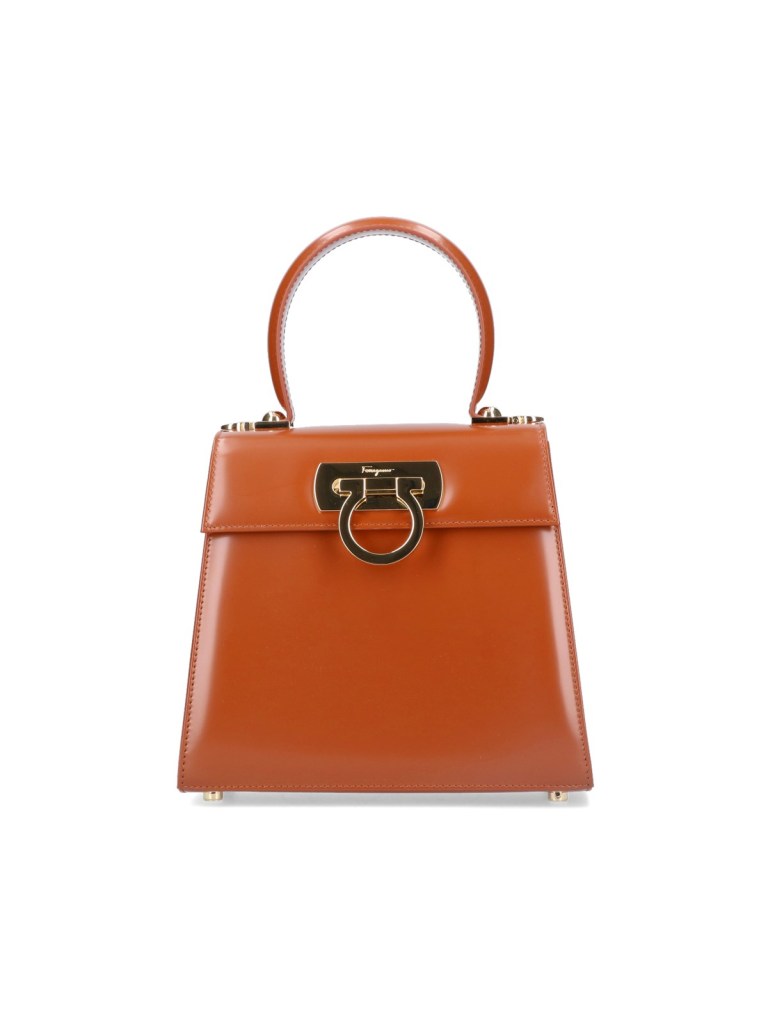
New York 2024 – Fendi handbag

Despite being involved in residential consumer goods, we can learn a lot from trends in fashion. The sustainable battle is only one point on which we can draw inspiration. For example, I’m surprised the short handled trapezoid shaped purse hasn’t inspired some sort of home-related product. This shape is everywhere in woman’s apparel stores and fine leather establishments, but I don’t see the crossover. I’m not sure what I expected, but I had expected something.
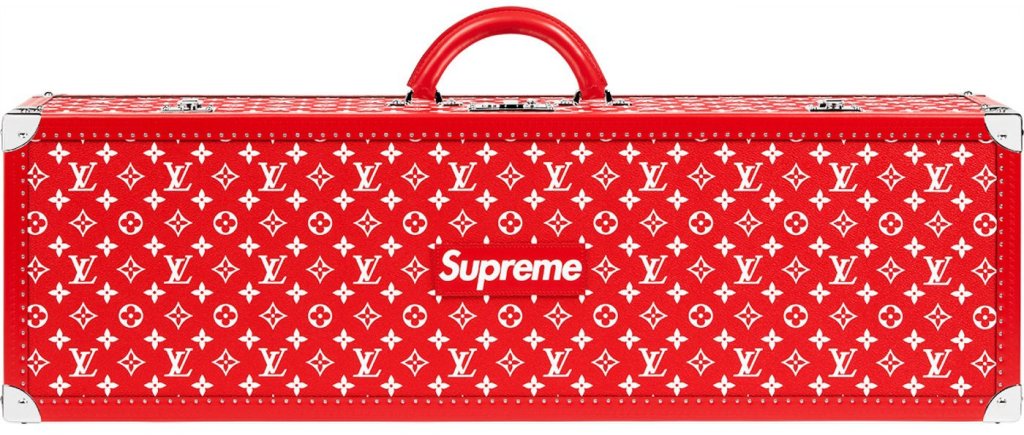
New York 2024 – Louis Vuitton / Supreme collaboration

The cobranding of Louis Vuitton and Supreme is an odd one, but it does speak to the need for old brands to stay relevant and new brands to gain some legacy in order to survive. It can benefit both if done well. The challenge will always be in the implementation.
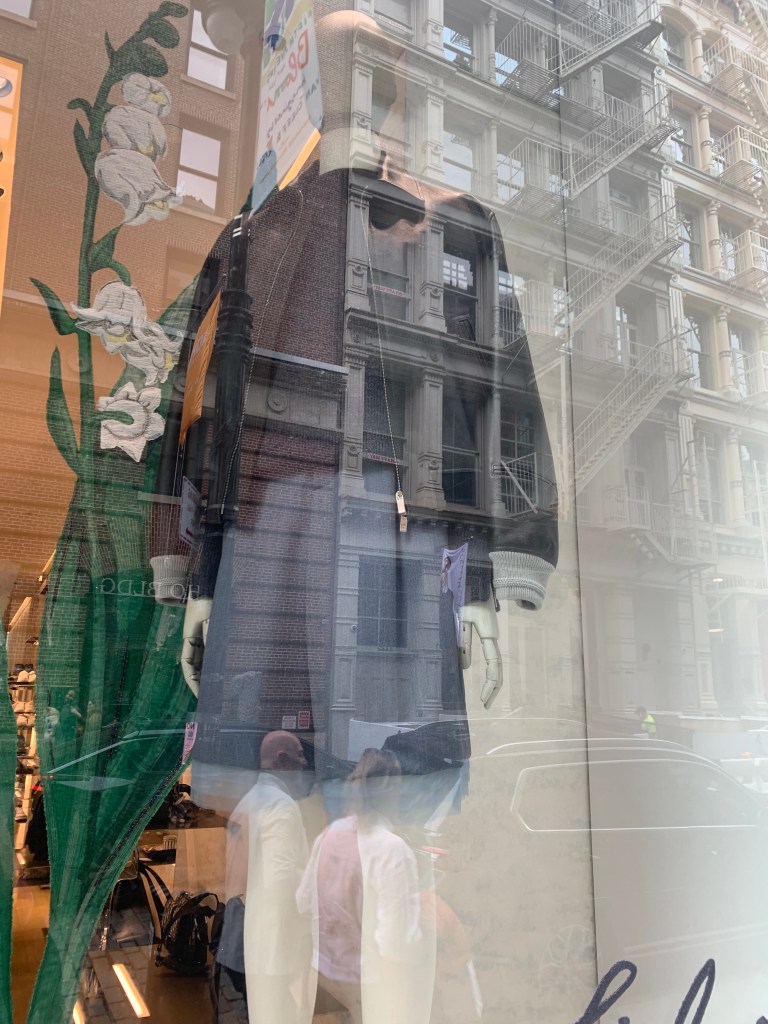
New York 2024 – Dior Men’s window

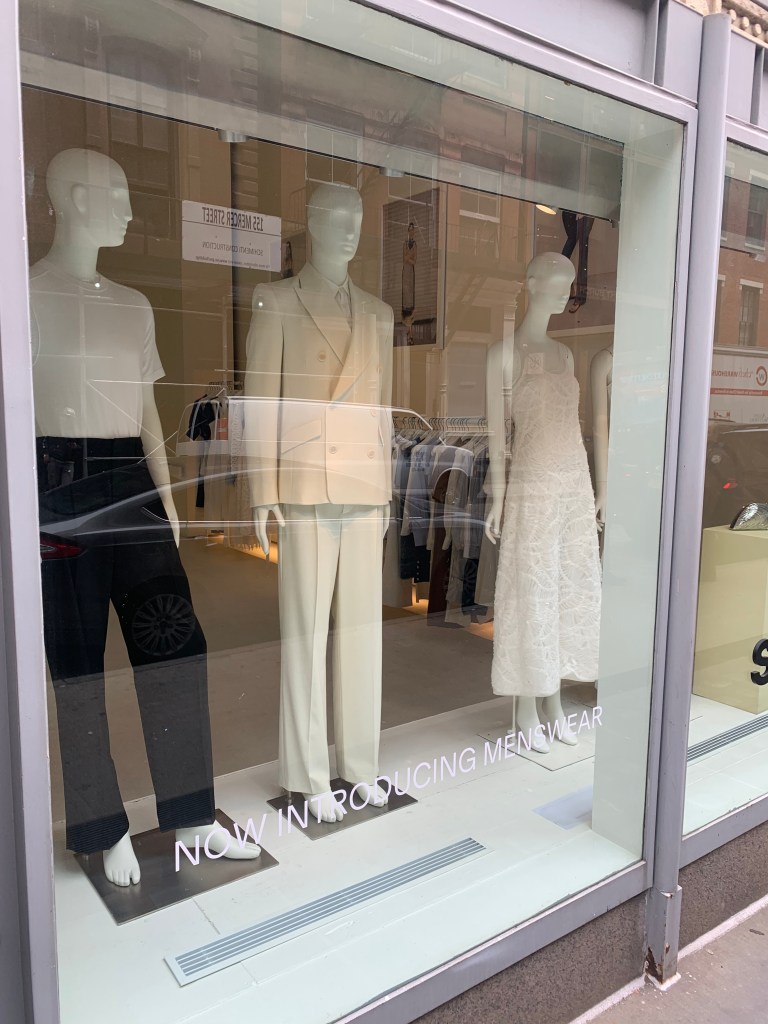
Men’s pants are of course shifting from ultra-skinny to massive and floppy. Men’s short pants had been minimal for a few years and Dior wants that to continue to the obvious extreme as exemplified by their window display. Men’s shorts so full they appear as a skirt. Yet another step in the gender blurring of clothing.

Floor Covering

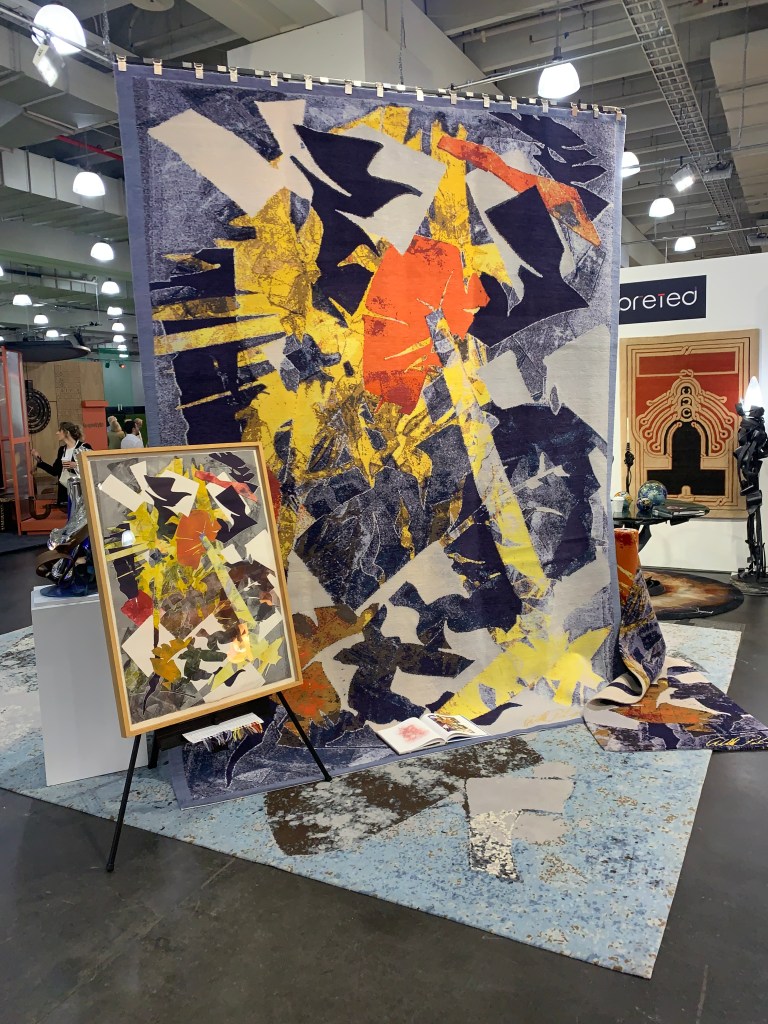
I enjoyed a number of conversations with the rug creators at ICFF this year. Why is a lighting guy looking at rugs? In each case, the people staffing the booths pointed out the importance of lighting to handmade rugs. One gentleman even mentioned he will not begin the weave of a custom piece until he understands the placement of light. Fiber has a nap that conversely reflects and absorbs light. If placed in one direction, the rug will look different than positioned in the opposite direction. We also discussed the difficulty with showroom lighting, to say nothing of the 5000K warehouse lighting on the Javits Center show floor. I left these conversations feeling much more positive than I had expected.
ICFF 2024 – Art Interpreted

Art Interpreted hires artists to create works, then recreates those pieces in fiber. The artist’s signature is prominent in the recreation. Illulian has hired famed Industrial Designer, Karim Rashid to develop designs. Using a different approach, Warp & Weft drew inspiration from organic elements such as birch and earth along with urban topographies simplified into unidimensional planes. JD Staron, a favorite from last year, took a more psychedelic, funky approach. This has to be some sort of renaissance period for rug manufacturers. They are creating interesting, fun and exciting designs that are allowing homes to really shine with the vibrancy they add.

ICFF 2024 – JD Staron rugs

https://artinterpreted.com/

https://www.warpandweft.com/

https://www.jdstaron.com/

Wall Art / Wall Covering

ICFF 2024 – PlusObject wall coverings

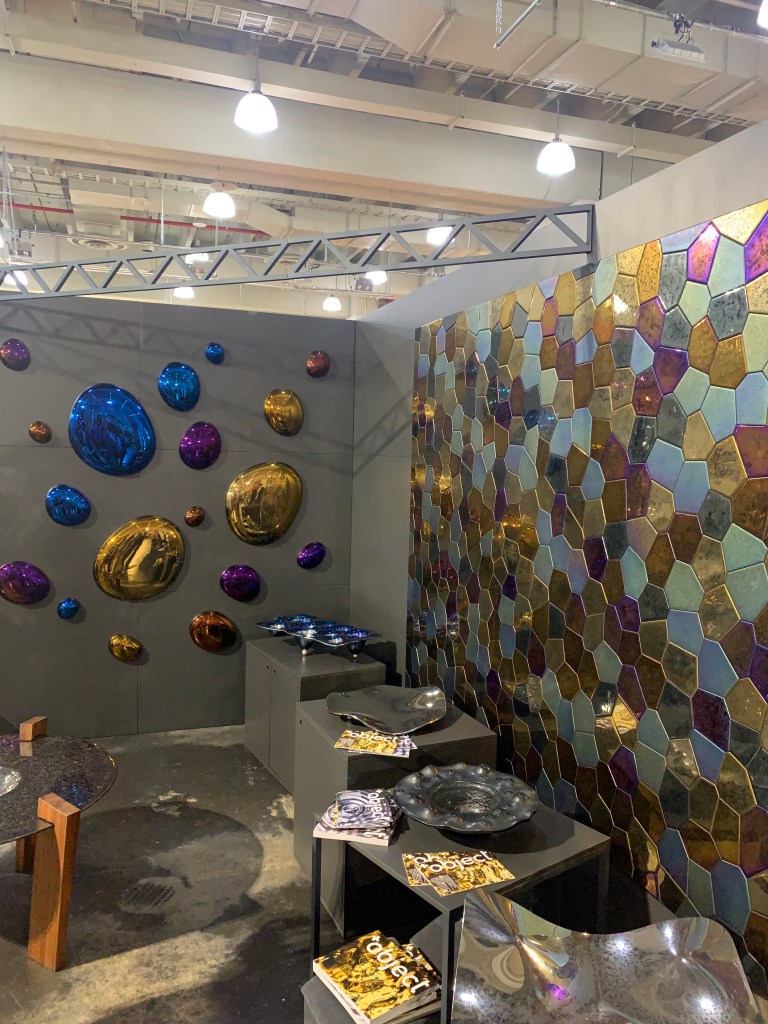
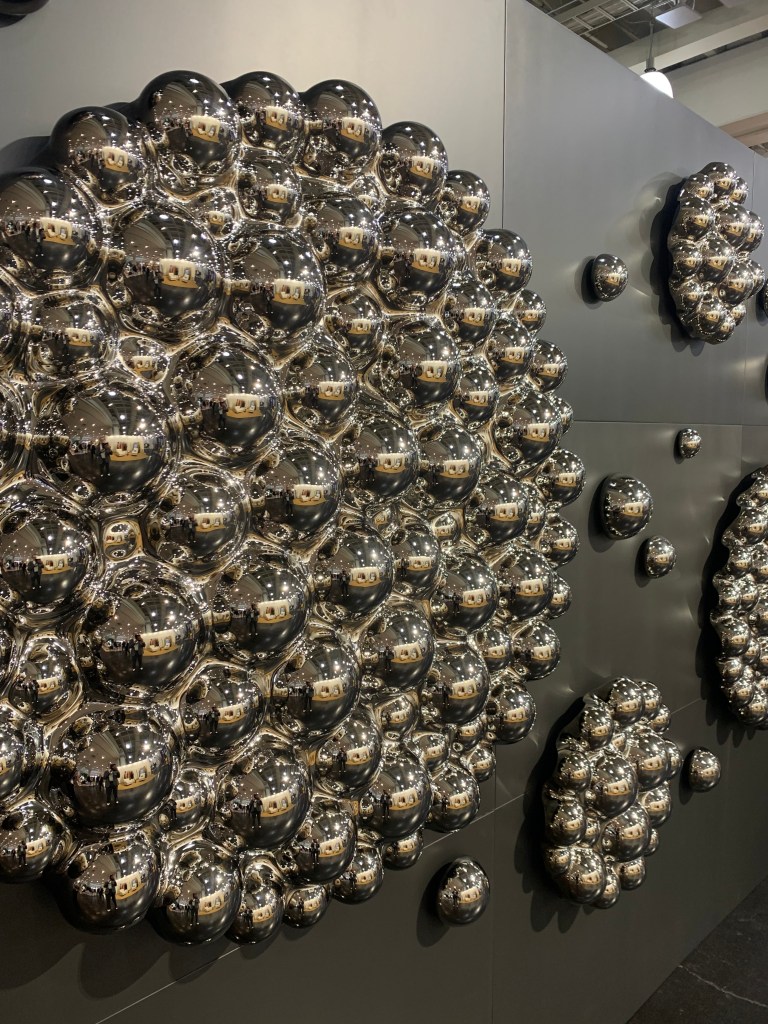
By combining glass and titanium, PlusObject has created some very interesting wall art/wall coverings. They are at once, polished and textural and can easily add a dynamic touch where one is not expected. There are so many ways these could be used. There are also so many other industries that could borrow this concept within their own product lines.

https://plusobject.com/

ICFF 2024 – Bert & May tiles

I liked the soft color tiles shown at Bert & May. They featured nice subtle patterns that will work in softer, organic contemporary spaces.

https://www.bertandmay.com/

Kitchens

The overall design of a high-end kitchen is not experiencing much movement. A visit to Bulthup, Poggenpohl, Boffi and Scavolini this year could be easily swapped out for a visit in 2022. Kitchens are increasingly minimalist, with clean lines and tailored finishes. The rise of convection stovetops is further smoothing surfaces. With kitchens open to the whole home, they have adopted a higher level of aesthetics than these workplaces ever had in the past. Appliances are hidden, cooking tools are housed and dinnerware is barely tolerated. No wonder there is a rise of “back kitchens” or “dirty kitchens” in higher end homes. Despite the desire for the contrary, food preparations can sometimes make a mess. I wonder if the pendulum is at its turning point and we are about to see a shift. Stay tuned.

I continue to see increased use of glass countertops. A number of these showrooms and related spots include smoked glass, clear glass with etched underside and a number of other variants.

Furniture
New York 2024 – Flou showroom

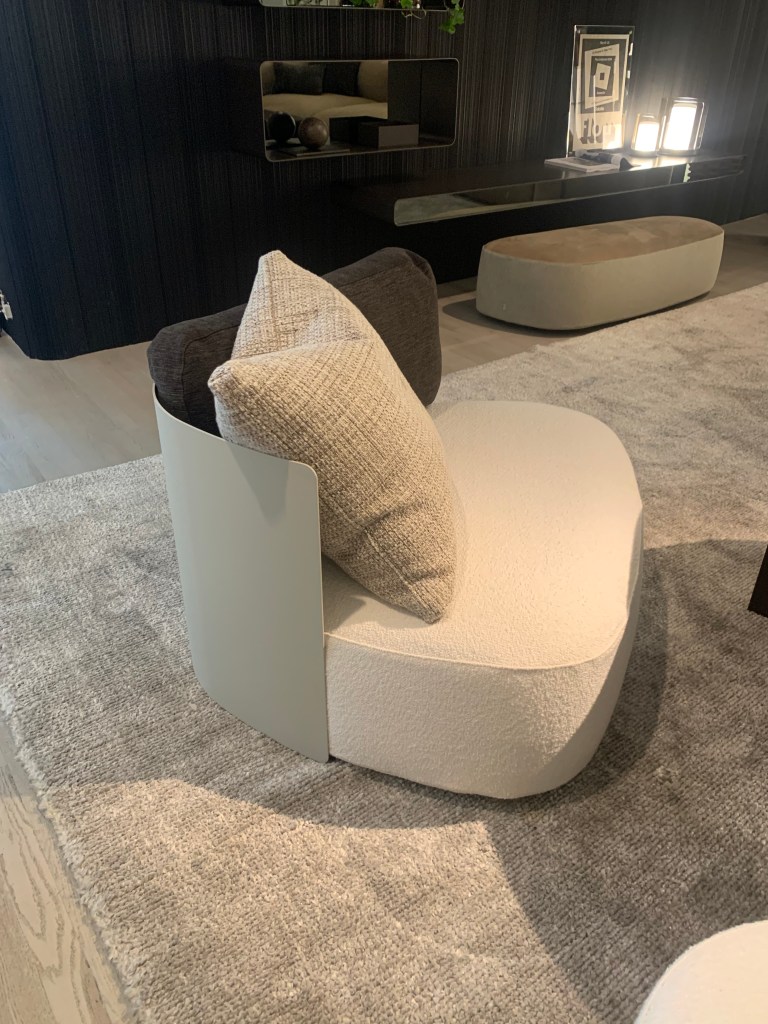
There were a handful of things to note in the Flou showroom this year. Metal-backed chairs really hardened the appearance of what could have been a “cozy” chair. I liked this combination. A huge pouf ottoman was a nice compliment. Also of note was the extra deep sofa seat. This feature can be found in many other brands, likely a result of demand from people who use the seating in a much more casual way than in the past. (feet up, curled up, snoozing, etc.) Even higher-end manufactures are serving a more casual need.
https://www.flou.it/en

New York 2024 – Gandia Blasco showroom window

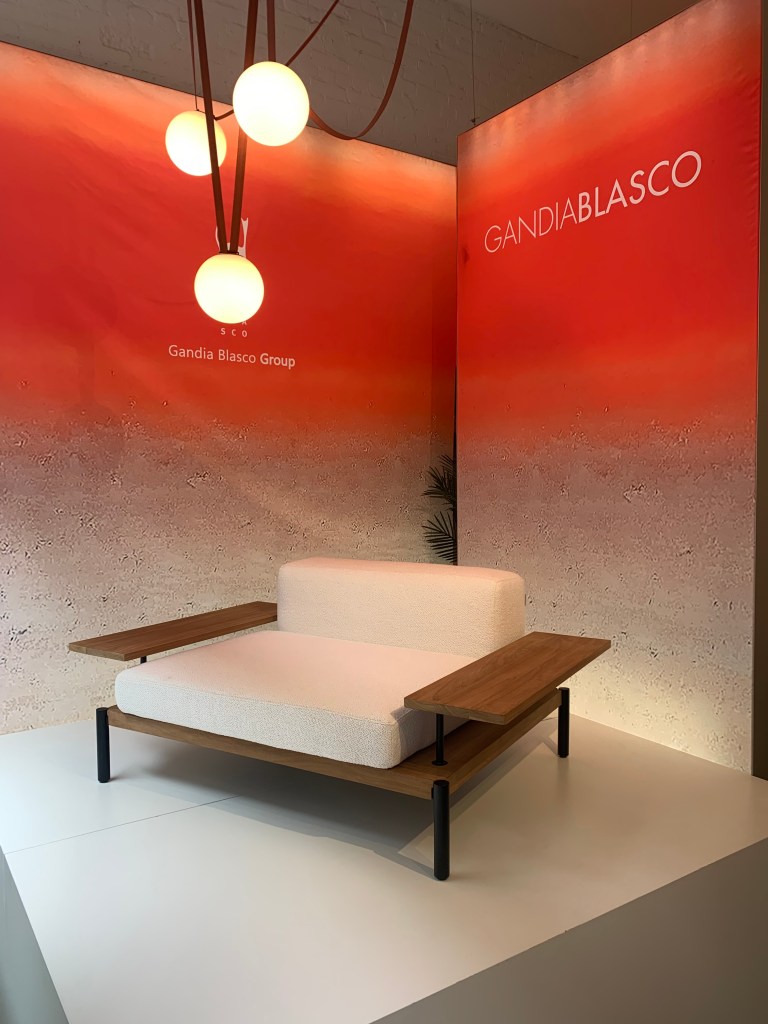
Take the wide arm of an Adirondack chair and plant them on a new lounge chair and you have the new Lademadera seat by Gandia Blasco. The deeper and wider seat is perfect for casual relaxation. It is also available as a sofa and two-person loveseat.

To accommodate people who both sit and stand at a desk, Beflo has developed a desk that easily transitions between the two demands. Couple that with an effective “wire management” system and this desk could become as hardworking as you!
https://gobeflo.com/

ICFF 2024 – Zachary A Design cast seating

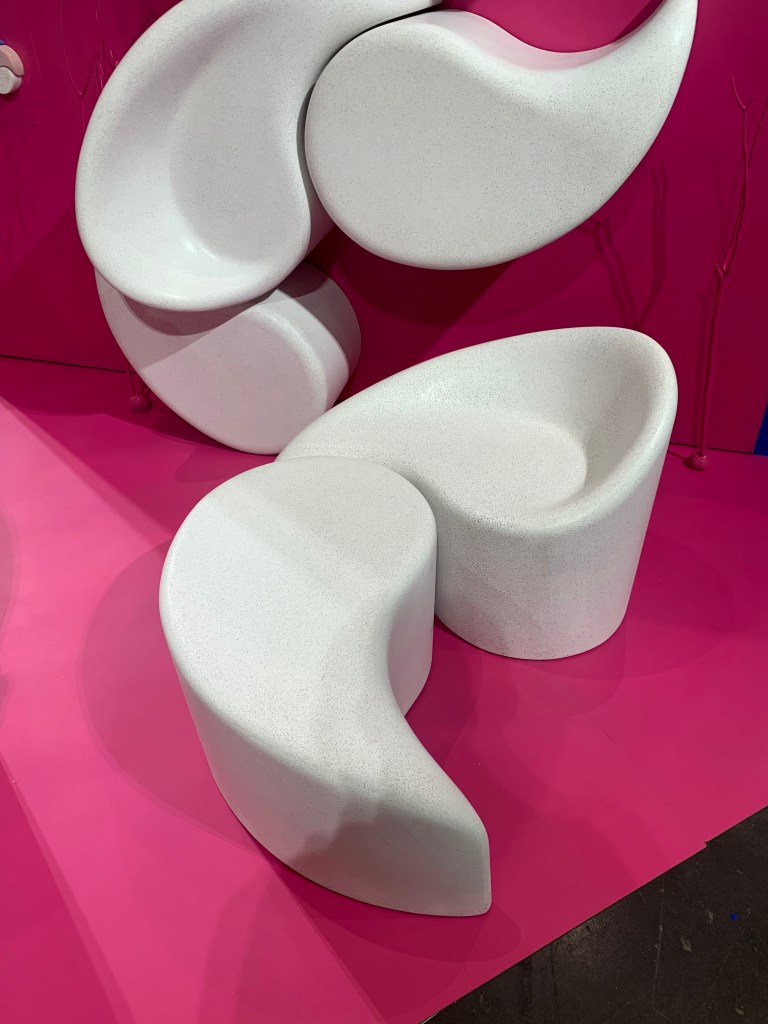
Hand cast in the US from thin wall resin, the Polli collection from Zachary A. Design has a real amorphous look that I felt could quickly adapt to outdoor environments. Luckily, the material can be used indoors and outdoors.

https://www.zacharyadesign.com/
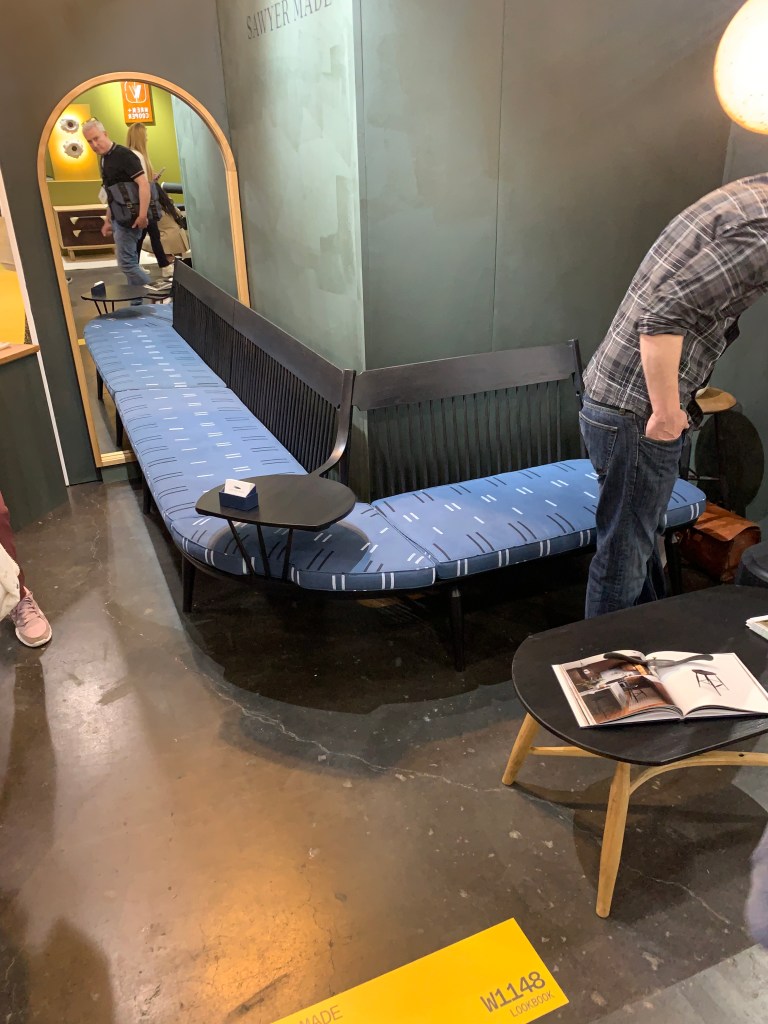
ICFF 2024 – Sawyer Made furniture

So much at the ICFF is contemporary. It is, after all, right there in the name! When I saw the work at Sawyer Made, the classic traditional shapes and forms were a bit startling. This is beautiful handcrafted work.

Miscellaneous “Others”

There are often items that defy category; where interest is not typically found. A few of those popped up and I could not help but notice.
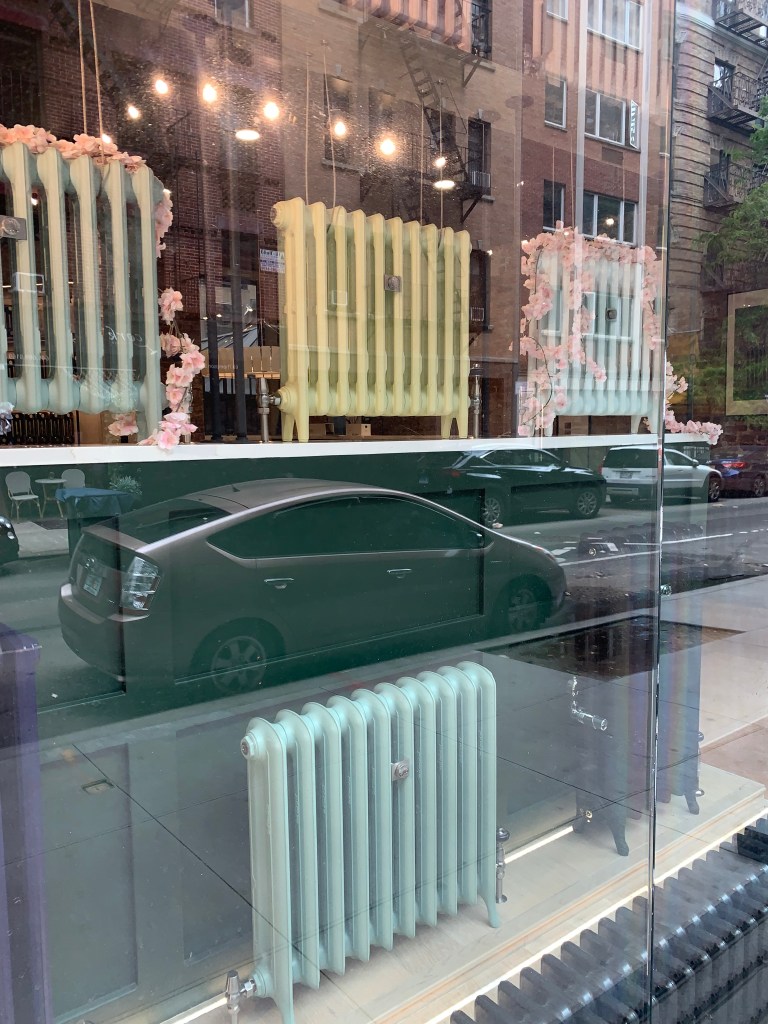
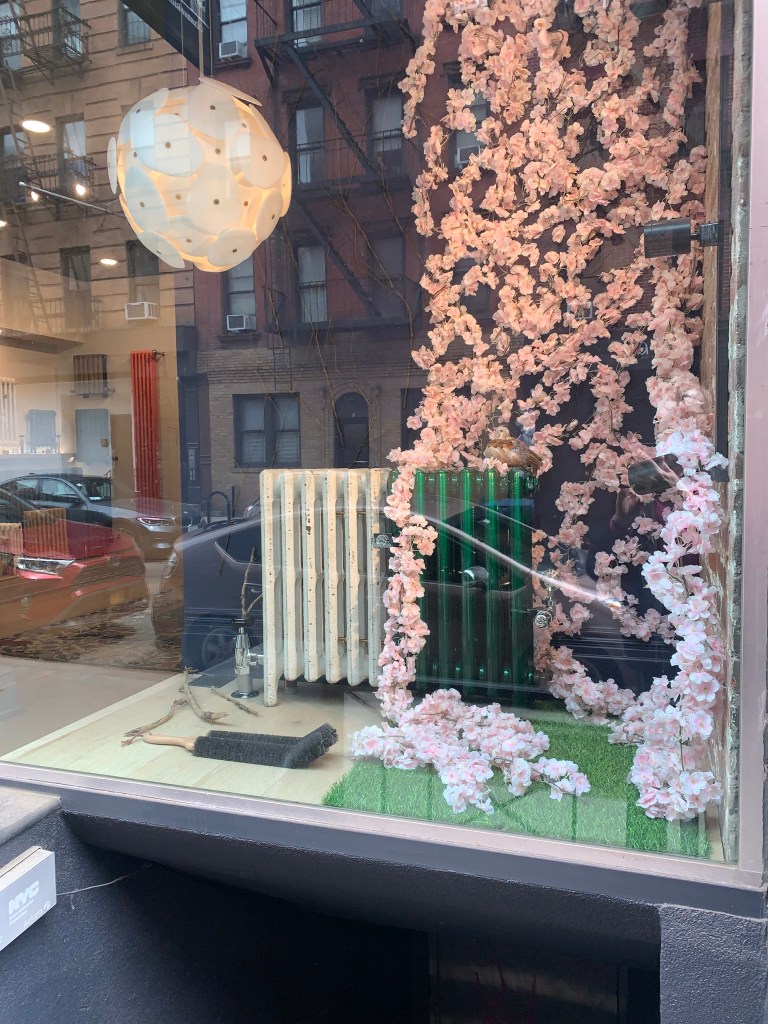
New York 2024 – Castrads radiators

If you live in an older home (like me!) and have looked at beaten-up radiators you can imagine the excitement stumbling upon Castrads. They can either create bespoke replacements or refurbish your old, worm unit. Radiators are such a dominant piece of architecture in an older home and very few people know what to do with them, they just sort of “exist” in perpetuity, brown, decaying and hissing. What a refreshing difference new radiators can make to a space.

https://www.castrads.com/us/

Equally ignored are fireplace grates. Most of us have probably never replaced one and fewer have thought about them overall. DFA Fire Chair has created a better grate that allows wood to burns better, prevents fire “spitting” and reduces smoke escaping into the living space. That it is a much sexier design is simply icing on the cake.

https://www.dfafirechair.com/

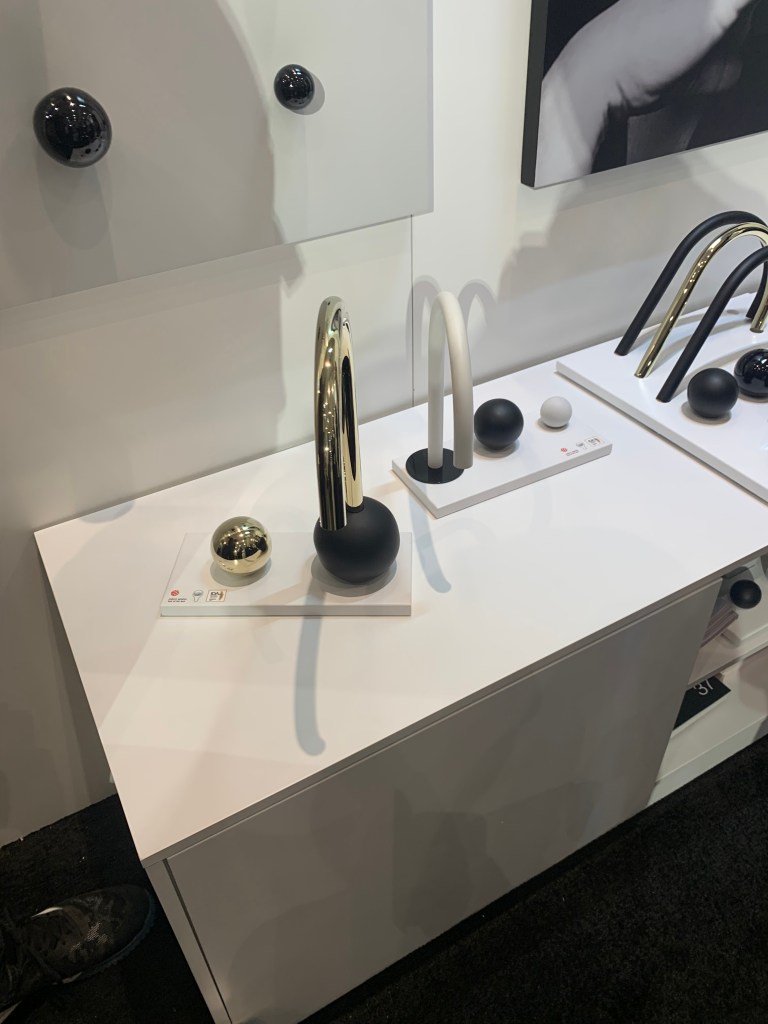
ICFF 2024 – Ylisse

We might not think of storage as a place for clean and effective design, but Ylisse does. They have developed a collection of beautifully simple, clean storage accessories. Shelves, coat racks, magazine pockets and tables are solid and simple. Made in Canada, they are also well priced. Can we ask for more?
https://ylisse.com/en-us

ICFF 2024 – Baril plumbing

Perhaps the most exciting plumbing I saw this trip was from a Quebec based, family owned plumbing manufacturer, Baril. I’ve never heard of them, but found their new designs, which incorporated spheres into the faucets very creative and exciting.

https://barildesign.com/en

I haven’t thought much about exterior hardscapes, but the products offered by Prism Hardscapes was interesting. Fire pits, planters and outdoor furniture had a nice clean look.

ICFF 2024 – Prado Invisible Home Technology

Prado wants technology to disappear into a home. “Invisible Home Technology” is their slogan. There when you need and invisible (or barely visible) when no longer required. They started with an award winning, round C/O and have moved into recessed lighting that is combined with ventilation. At this point, no information is available online for their lighting. Let’s watch this space. It could be exciting.

While at the hotel gym prior to the show, I noticed that the huge and heavy mirrors affixed to the gym wall were pulling away from their mountings. One of the three mirrors was akimbo, looking very precarious. I thought of this as I walked past Lite Mirror while a person was tossing about a VERY large mirror. To solve this problem of weight, they use a highly reflective optical film to create unbreakable, glassless mirrors. The available sizes are very large, so most applications can be filled. Good news for a particular hotel gym I use.

https://www.litemirror.com/

Reishi is a proprietary name for the mycelium based leather alternative developed by MycoWorks. They promise equal durability, performance and feel. I agree on the feel. If I didn’t know better, I’d have said it was fine calves leather. Of course, I can’t speak to the longevity, but over the years there have been many attempts to find a vegan replacement for leather. While I’m not a fabric expert, I’d say they are getting mighty close.

As you can see, there is much to gather from related industries. Lighting shares the home with all of these things. To understand them is to understand how they will comingle with illumination. We want the very apparent product, such as a chandelier and pendant to work together, but we also need to respect the room as functional lighting is positioned. Mutual respect will deliver excellent results for the overall design of a home.

Categories
Lighting Commentary

Bugs and Outdoor Lighting

Photo by u0415u0432u0433u0435u043du0438u044f u0415u0433u043eu0440u043eu0432u0430 on Pexels.com

I regularly read a newsletter about lighting, Light Now published by my friend David Shiller and his consulting organization, Lighting Solution Development. I urge you to do the same. (https://www.lightnowblog.com/ ) There is always great information and insight. Often times, it is research you didn’t know you need to know. In a recent post, Light Now pointed to new research on “why flying insects gather at artificial light.”

When LED was new I delivered hundreds of educational talks about this newfangled technology. As people learned more about it, better, more pointed questions would be posed. Through one of these queries, I was compelled to understand an insect’s attraction to light and laissez faire reaction to LED light. Why? I quickly learned that bugs are not actually attracted to light, but instead the infrared glow of a heated incandescent light bulb and the hot metal surroundings of the luminaire. LED do not emit any light in the infrared spectrum and the low heat produced by LED barely warms the surrounding lighting fixture. If you were the moth’s version of SNL’s Stefon, pointing out the “hottest new club” in the neighborhood, it would not be located at the newly installed LED outdoor wall bracket. All of the “cool moths” are of course, still hang around the IR rich, incandescent lamps.

That explained the attraction, but not the kinetic action of the flying insects. This new report finds that when the insect “sees” the artificial light, it assumes it to be natural light. In their world, light is overhead and dark is below. The movement is the insect’s natural reaction to place the light in the right relative location, at their backside. Flying bugs are actually backing into the vertically installed luminaire and erratically circling the light with rises and dips.

I’ve written a few posts about sustainability and our responsibility as lighting professionals to “do the right thing” with light. The way we add light to the human environment has a tremendous impact on the animal population. This scientific research points out that even an insect as simple as a moth understands the proper position of the moon and the darkened land at night. Their hysteric dystonia is an effort to correct something which in their mind must be of their doing, not the peculiar humans who cohabit their neighborhood.

Artificial light has been around for as long as humans have employed fire and will remain for as long as humans exist. We could simply ignore the problem, but the natural balance of life will be tipped. When adding light to the nighttime, think about neighboring wildlife, plant life and aquatic life as well as the human client. While small, we shouldn’t forget bugs, either. Mother Nature will thank you.

Categories
Lighting Commentary

An Immense World

The Mantis Shrimp and their dozen photoreceptors
Photo by William Warby on Pexels.com

I recently finished reading An Immense World by Ed Yong. The book covers an overview of how animals use their senses in substantially different ways from humans. Some of the information is well known. Dogs have a sense of smell that is somewhere between 10,000 to 100,000 time better than humans. Bats use an echolocation “sense” to navigate at high speeds in the dark to locate miniscule flying game. Birds of prey (eagles, falcons, etc.) have superior eyesight that allows them to see forward and sideways to best home in on a meal. The book however goes deeper and helps the reader understand that most every “superiority” is balanced.

The dog has a remarkable sense of smell, but their eyes have only two color photoreceptors, so their world looks different than what humans see. Humans have three photoreceptors, a handful are tetrachromats with the benefit of four (I wrote about this phenomenon in a previous post: “Tetrachromatic Vision” https://lightingbyjeffrey.com/2022/05/09/tetrachromatic-vision/ ) but the mantis shrimp has TWELVE photoreceptors! Wow! You’d think their sight was miraculous, but alas, they have a tiny brain (brain size and functional capacity is a crucial piece of data in these analyses) so rather than witnessing colors beyond our imagination, they use the twelve photoreceptors as a type of binary coding system. If, for example photoreceptor one, three and eleven are triggered, they know prey is within reach. If photoreceptor two, eight and nine send feedback to the brain, it is time to move, an enemy is near. All benefits are balanced by Mother Nature.

Humans are sighted creatures and we regard the world based on sighted preferences. (I wrote about this in yet another post: “Eyes, Light and Sometimes, Brain” https://wordpress.com/post/lightingbyjeffrey.com/684 ) When we do that, we ignore the needs and demands of the other animals who occupy the planet. Even other animals who enjoy sight as their primary sense, do not use it in the same way as humans. Owls need dark nights to survive. The lack of light and their ability to see in it, sustains them. Bees have three photoreceptors, but because they can see UV light, the three receptors read different information and feed that back to the brain, so their color palette is radically different from ours.

Humans have risen to the top of the community of earth’s animals and our single-minded concern with human need is unfortunately harming the greater animal community. This summation ended the book. The human need to illuminate “everything” is doing irreparable harm to other animals. It is only getting worse, despite an avalanche of data on animals and their worlds. We read books like An Immense World and still increase street lighting, parking lot lights and high-rise building illumination. After becoming enamored with the content of the book, his plea to the reader is for some kind of action.

As a lighting community, we can do better. I’ve just looked at a wide variety of new luminaires released at the January Dallas Market and still we offer light aimed up into the sky where it does no good and only delivers harm to plants and animal. We use lumen levels way beyond what is necessary and that color of light is often blue, not only bad for humans, but many in the animal community are likewise impacted.

Can we help? We are in a unique situation to do just that. We can’t help much directly with pollution, micro-plastics in the oceans or noise levels that also impact, confuse and confound animals, but we can control light. That’s what we do as lighting professionals. Could we start to include concern outside of our genetic spectrum in addition to the color spectrum?

Categories
Lighting Commentary

How Investor-Owned Homes Will Change Lighting Demand

While the number of homes purchased by investors has shrunk in the most recent quarters, the percentage of homes owned by investors remain high, at a national average of 18.4% (2022 – Redfin.) The percentage of homes also varies widely based on location, with highs of over 30% in Miami, FL and lows of 9% in Warren, MI. These are higher numbers than the real estate industry has seen in the past and this new type of ownership is going to change the way America spend money on durable aspects of the home, such as lighting.

I live in a historic part of suburban Cleveland, an “inner-ring” or very old suburb. Moneyed and “white-collar” Clevelanders in the early part of the1900s wanted to escape the industrial dirt and grim that made the city home of vast amounts of wealth. The solution was to “head for the Heights” literally located at a higher elevation than the steel mills, factories and foundries centered on the river lowlands. Homes in my portion of the city (a slightly newer area) are all architect designed and built between 1929 and the post-war late 1940s and 50s. They are graced with excellent quality materials including roofs primarily of slate, with some tile and shake.

Because of its proximity to the highly regarded cultural and healthcare industries in Cleveland, investors have started to buy homes in the area. Cleveland also enjoys some of the lowest home prices in the nation, primarily due to the outmigration of young people. Investors have determined they can easily buy low, sell (reasonably) high here with minimal amounts of money.

Slate roofs last a lifetime, but they do require regular “tune-ups” to avoid water ingression. Rather than replacing my roof every twenty or thirty years, I need to spend a few buck every other year. Investors view this differently. Rather than spend, say $6000 to bring a neglected slate or tile roof back to par, they are electing to tear off a lifetime roof and replacing it with a $4000, 10-year warranted asphalt shingle. From an investor’s perspective, he has saved $2000. From the point of view of the neighborhood, the investor has markedly altered the timbre of the community.

Now, take that logic and multiply it to all other aspects of the interior and exterior rehab. Good recessed lighting is not used. The cheap “10-pack” found at the big box stores are instead employed. A builder-grade chandelier is hung and ferrous exterior lanterns are slapped on the porches, sure to last long enough to see just one winter. The initial reaction to the completed home is a buyer who doesn’t have to change anything. They falsely believe, no money will be spent beyond the celebratory bottle of champagne.

When a downtrodden house is purchase by people who hope to live in the home “forever” they will be more inclined to choose products of higher quality. They may opt for the more impressive island pendants, a show stopping chandelier for the dining room and even a ceiling fan that is correctly sized to the room. They will enjoy the benefits of “better” rather than rolling it over to a new buyer in a few months.

This is a problem with no easy solution. Folks in my neighborhood were successful in getting the permit application for roof replacement changed to include a viability assessment of the existing historic roofs after dozens were removed for investors, by unreputable contractors working weekend hours. The illegal removals are now being forwarded to the city’s Law Department for prosecution. Lighting doesn’t have that quick fix. Mr. & Mrs. Buyer won’t know they have substandard recessed cans until they die an early death. At that point, it’s too late. No one will go to jail because they bought a cheap chandelier.

From the opinion of a lighting guy, perhaps the prospect of incarceration might get people to think more carefully about this very important aspect of a home interior. I do however live in the real world (at least some of the time!) People have been using bad lighting since Thomas Edison suggested an alternative to natural gas. Perhaps the emerging push for a more sustainable world will magically instill some sense of duty in investors. The more likely scenario is investor’s failure to find customers for poorly conceived rehabs. When money is the driver, only a lack of return will change their direction. As customers we should reject homes when historic roofs have been removed, cheap appliances have been installed and bad lighting has been used.

We can always dream, can’t we?

Categories
Lighting Commentary

Can Fashion be Sustainable?

Since my “retirement” I have had the opportunity to continue interfacing with thousands of interior designers. Through these points of connection, I have noticed a trend of questions and commentary that are driving designer’s conversations.  The topic that is top-of-mind today is “sustainability.” Specifically, how long-lived LED can possibly coexist with short-lived fashion. It is brought up in virtually every Q&A session I conduct.

Supreme is a brand of clothing that was birthed by way of the skateboard culture of the 90s to poke a finger in the eye of staid fashion nameplates. Consisting of tees, baggy pants and sneakers, it became a huge success to a point where the company is now valued at over $2 billion. What started as a “fashion-less” alternative to seasonal runway offerings is now riding atop the same tiger. To stay ahead, Supreme must now continue to create new and equally desirable products.

Supreme could have been the answer to sustainability in fashion, the “Mao Suit” of its generation. Alas, humans want, perhaps need change. Hemline rise and fall, lapels narrow and widen. Hair lengthens and shortens. This constant desire for change forces us all back into the retail market, continues to circulate dollars and keeps the world employed.

Magic Wand

So let’s say, tomorrow, by nature of a magic wand, trends die, fashion becomes frozen and the human desire for something new stops. What then?

First, there will be a lot of unemployment. Designers, engineers, marketers, retail associates, home remodelers, construction workers, dock worker, virtually every facet of the supply chain will be impacted. We will have a substantially more sustainable world, but we won’t have much of a world to enjoy.

I think it is safe to say, this is an unlikely scenario. Fashions have shifted almost since cavemen sought out a new pelt covering. Some variant is much more likely.

The Alternative

More realistically, we might stop buying so many variations of things in our lifetime. This would allow us to buy better quality with the idea that it will last for a longer period of time. Liken this to the difference in American vs. European roadways. America installs cheap roads with minimal foundation and limited attention to drainage that in turn, need frequent repairs and quicker replacement. European countries install much more expensive pavements based on multiple layers of substructure and ample drainage that last substantially longer and show less wear and tear during their long life.

That idea fits nicely into the use-pattern of LED. Well-built LED product can last as long as twenty to thirty years with limited need for maintenance. Better built LED product simply lasts longer.

Rethinking Lighting Use

New, more sustainable lighting still requires a bit more forethought in the development of the overall lighting design. This is a point I have been making for a number of years. The future of lighting means more functional light (that transcends fashion) and less decorative lighting (which will require replacement when the style ages,) despite the continued viability of the light source.

If we are going to blend sustainability with fashion, we will need to reassess the financial parameters used to make buying decisions. Rather than first-cost, (the initial cost of the luminaire, only) we will need to consider life-cost (cost of luminaire, repair cost, operational costs, etc.) Purchasing lifetime functional lighting that dies after ten years does not support the cause of sustainability. We will need to pay more attention to quality components, conscientious construction and whether the company building the product will be around in fifteen years, should there be a warranty issue. Our initial cost will be higher, but decades of trouble-free operations make that dollar amount easy to swallow.

I was talking to someone in the window business about the plethora of replacement window companies and the avalanche of advertisements they’ve placed on television. Knowing I live in a 90+ year old home, he said, “Despite what they say, those ads aren’t for old-old home like yours. Your windows and windows from that era are a bit less energy efficient, but are usually of excellent quality and most probably don’t need to be replaced. (There are always exceptions.) These guys are servicing the bad windows put into new construction over the last twenty-five to forty years. New tract home construction windows are getting cheaper and cheaper and they barely make it out of warranty.” The low initial cost is intriguing, but the life cost is high.

Added Opportunities and Challenges

That allows for another opportunity; the return of manufacturing to North America. The desire for “cheap” forced manufacturing to Asia. The revolving door of style and trends kept manufacturing there. The combination of geopolitical events and sustainability demands might now encourage some companies to recalculate their costs. If consumers are willing to pay more, they might be able to build longer lasting items locally.

The pushbacks are often the same. If a new home is more expensive, or the remodel too costly, fewer people will buy them. Because of that, the banking/lending industry might also need to reset in an era of more sustainability. If the cost of “living” in a house is lower, more money, as a percentage, could be allotted to the mortgage because less will be needed for repairs. Think of the money used to buy “one window” so they can get, “the second window for free!” When windows don’t need replacing and insulation doesn’t need to be added and cheap LED doesn’t need to be upgraded, all that results in a higher value of the home. If sustainability can equate to higher property value, almost everybody wins.

When all of these things happen (insert image of plates balancing on a row of sticks!) fashion can be sustainable. When a single aspect is not adopted, the whole concept fails. For sustainability to succeed, we must embrace ALL of these ideas, all at once. That then becomes the challenge. How good of a juggler can we become?

Categories
Lighting Commentary

Sustainability Part 3 – How Am I Going to Make This Work?

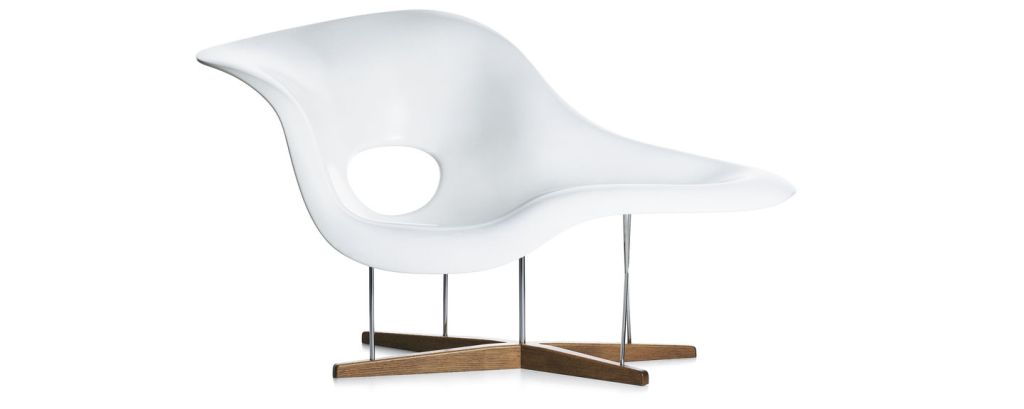
Charles and Ray Eames, La Chaise

Imagine you are Ben Watson. The world of offices has changed and he sits atop the Herman Miller – Knoll merger. Will people return to an office? Will offices disappear completely? Can his company survive? What do you do? What products will be needed in this new world?

Watson holds a degree in visual and environmental studies from Harvard and spent years in product development and marketing for Knoll. His senior thesis explored La Chaise, the modern-classic chair with a white molded polyurethane seat and crossed wooden feet designed by Charles and Ray Eames. Like all designers, he is uniquely qualified to solve a problem he had not anticipated. It is in fact why we have designers. Designers solve problems that most people find confounding.

Like Watson and office furniture, lighting is now shifting. An increased desire for sustainability is leading to pushback of disposable luminaires. Renewables are overshadowing replacements. As a result, a complete rethinking of how we illuminate our spaces must now occur.

In the first part of this sustainability blog-triumvirate I indicated that fewer decorative lighting products would be employed in the future. In part two, I talked about the ways in which the industry must step up to meet the needs of the new sustainable consumer. Figuring out how to put it all together in a way that is aesthetically pleasing now falls to the designer.

When to Feature Decorative Lighting

If we are going to use less decorative lighting and most of the decorative lighting on the market will deliver fewer lumens, not because of the substandard capabilities of LED, but because of the forms in which the LED is placed, then we must choose wisely. A five light chandelier equipped with five, 60 watt incandescent light bulbs delivered about 4000 lumens of light. Because the diffusers were large enough to cover a medium-based lamp, almost all of that light was usable. 4000 lumens of light was plenty for most dining rooms, dinettes and bedrooms. While many of the newer LED luminaires might promise 4000 lumens, it may be delivered in a slightly different way. It might be more directional, it might be concentrated in an oblique pattern or, it may obscured or simply used as an aesthetic element rather than a functional lighting machine. To make this work, the designer must be more comfortable with the overall lumen demands of a room or space.

With that in mind, the functional lighting must deliver almost all of the needed light in the space. Any illumination provided by the decorative product will likely be icing.

There are guidelines that help us determine optimal light levels for every room in a residence. There are also easy ways to use this information. Below is a chart that provides optimal light levels for each space.

Area / TaskDesired Illuminance Level in Footcandles (Fc)
Hallway/Passageway5-10
Conversation Area / Entertaining5-20
Dining10-20
Reading (General)20-50
Bathroom / Grooming20-50
Laundry / Ironing20-50
Kitchen (General)20-50
Kitchen (Work Areas)50-100
Reading (difficult) Study / Hobby / Music50-100
Hand Sewing / Detail Hobby100-200

To use this information, simple calculate the room or space area (Length multiplied by width) and multiply it by the desired footcandle level. The result will provide the needed lumens.

Length x width x footcandle = minimum Lumens needed for the room

Let’s assume we have a 12’-0” x 12’-0” dining room. 12 x 12 = 144 x 10 = 1440. 12 x 12 x 20 = 2880. That means the minimum amount of light should produce between 1440 and 2880 lumens.

When you think about that 5-light chandelier at 4000 lumens, or even a classic Williamsburg-type 10-light chandelier with candelabra lamps (280 lumens x 10 = 2800 total lumens.) incandescent provided very usable amounts of light for a dining room. We now need to think about it, just a bit more.

A New Way Forward

Let’s put the chandelier on the back-burner initially. The important thing to understand is decorative lighting will not and likely cannot provide all of the needed light. It should represent a declining percentage of the total demand for a sustainable future. How might that be delivered? Consider this.

Recessed cans around the perimeter might be a starting point. On a smaller room like this, think about one in each corner. Using a typical LED version, 650 lumens each will be provided. Now, consider an illuminated tray, or perhaps cove lighting. Somewhere between 48 linear feet of LED Tape (cove,) or as little as 32 linear feet (tray.) There are many LED Tape options. I’ll use an average of 200 lumens per foot. That will deliver between 6400 (tray) and 9600 (cove) lumens. Keep in mind, this is indirect light, so that might seem high, but will be very usable and acceptable. With the corner lights and tray lighting, the needed amount is met. These are sustainable choices and will have no impact on the style choice of the room, modern or tradition or anything in-between.

Decorative lighting can now be added. The amount of light provided will be unimportant. These then become aesthetic choices. Include them, or don’t. They will add light, but will not bear the bulk of the illuminance burden.

Now, simply repeat this with the other lighting in the other areas of the house.

LED lighting is different light, but it has also allowed designers and engineers to create more interesting and better luminaires. That means as design practitioners, we will need to take a few added steps to insure quality lighting is delivered in the space. As more sustainable environments are demanded, this added step will be needed.

Categories
Lighting Commentary

Sustainability Part 2 – Can Lighting Be Sustainable?

Photo by Jordan Hyde on Pexels.com

If like me, you always check out trend predictions, wherever and from whomever they emerge, you are seeing a reoccurring mention of sustainable products. I am constantly questioned about sustainability. Designers are hearing the request and like a canary in a coalmine, they are often the first to recognize a shift. As I pointed out in the first part of this series [link] there will be changes in our application of light. Nonetheless, the disposable nature of a heretofore endlessly reusable luminaire, continues to trouble designers, users and sustainability proponents. “There has to be a better way!” is a very common comment.

I realized this is not a problem exclusive to lighting as I read about Golden Goose, a Milan-based manufacturer of high-end casual footwear. [The New York Times (August 7, 2022) “Don’t Toss Those Old Sneakers” by Laura Rysman. https://www.nytimes.com/2022/07/09/style/golden-goose-sneaker-repair.html?smid=url-share ] Like lighting, once a pair of sneakers is “worn out” they are unceremoniously tossed and replaced. In an effort to extend the life of the sneaker, they are offering bespoke repairs. The problem, as few as five years ago, is that there was no such thing as sneaker repair. Because of the typical manufacturing process, the sole could not be removed from the top, so an entirely different methodology was required. By considering the classic construction method of formal shoes, a new sneaker assembly process was created that allows for the teardown and repair. While not inexpensive, their sneakers can now be repaired and reused, almost endlessly.

LED longevity makes them the perfect light source for new sustainability demand, but they sit on the edge of some shaky foundations, much like the typical vulcanized rubber sole that encases a sneaker top and precluded disassembly. We discussed aesthetic trends in the previous post. There are three additional problems that must be addressed to increase the sustainability of LED lighting.

Driver Longevity

When a LED luminaire fails, it is most likely because of driver malfunction or some sort of circuit interruption. In the industry’s quest to achieve lower costs, corners have been cut in this all-important, albeit hidden, component. Quite simply, to have a more sustainable product, better built drivers and circuitry components are required.

Proof of Longevity

LED longevity is a predicted “guess” based on calculated performance characteristics. Basically, if the system lasts for X hours, testers feel comfortable projecting that it will last 6X hours. Tests of 10,000 hours (maximum) will allow a manufacture to promise the product will last 60,000 hours. One of the reasons we cannot go much farther is because 10,000 hours is a long time! After 14 months of testing, there is a very good likelihood that a newer, better model of LED is on the market and the cycle must be started anew. Most manufactures test for 6000 hours, allowing a promise of 36,000 hour lifespan and consuming only 8 ½ months of time, still a considerable length. Some sort of accelerated testing and performance affirmation is needed.

Repair

Incandescent luminaires are like a pair of leather brogues, we can change light bulbs as easily as shoelaces. Resoling is however another thing entirely and must be completed by a cobbler. A repair professional is usually needed to replace sockets or broken chandelier arms. LED lighting becomes closer to the conventional sneaker, nearly impossible to rebuild, even by a pro, unless you rethink the entire process. That, I believe is where the luminaire manufactures are today. To meet the sustainability expectations of the near future, they must plot out a path to luminaire repair.

This might be realized in a number of different ways. Perhaps some companies can easily adapt their business to include a repair service. We might also see LED luminaire repair shops popping up around the country. We could also see lighting retailers adding LED repairs to their list of luminaire services. Only real demand will tell the tale.

“It’s Gotta Be the Shoes!”*

To meet the needs of a sustainable future, electronic repairs will need to be more common. We might see the return of TV repairmen, small appliance repairs and people who specialize in fixing our much more technological environment.

By their own admission, Golden Goose is not seeing a positive ROI on repairs. Knowing repairs are possible is however, turning out to be a substantial selling point for this expensive footwear. I think that might turn out to be the case with lighting, too. The lighting will last longer than most people expected. There will be fewer breakdowns than anticipated. The newness of LED will wear-off and failure expectations will be reduced because it is an effortless product. When needed, there will be some avenues available for resolution, even if they are not ultimately used. That may satiate the consumer.

In a 1988 Nike commercial, Mars Blackmon (a comedic avatar of Spike Lee) tried to explain the god-like moves of Michael Jordan on a basketball court. Discounting every other conceivable option, he reached the conclusion, “It’s gotta be the shoes!” despite the objections of Mr. Jordan. (If you’re not a basketball fan, Michael Jordan was an excellent player, probably even in bare feet.) Offering repairs when they might be of minimal real value, just might be the sustainable aspect we’ve convinced ourselves we need, just like the illusion worked for Mars.

*Mars Blackmon – 1988 Nike commercial with Michael Jordan and Spike Lee

Categories
Lighting Commentary

Sustainability Part 1 – More Utilitarian, Less Decorative – The Future of Lighting

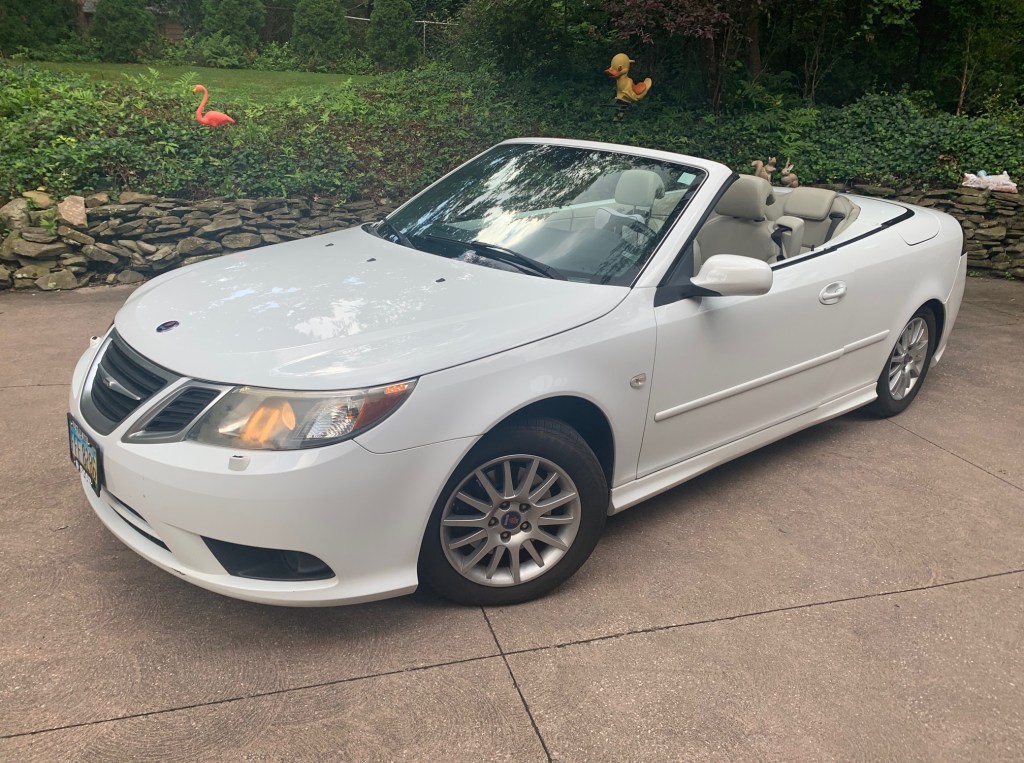
2009 SAAB 9-3 Convertible – The original sustainable vehicle?

I drive a 2009 SAAB 9-3 Convertible. This is, without question the best car I have ever owned and despite its age, still looks great. I purchased this car a few months prior to SAAB exiting the automobile business. I never owned a SAAB prior, but I quickly found out that there is a joyful cult surrounding current and former SAAB owners. When the closure of the manufacturer was announced, fellow SAAB owners would pull up next to me, open their window and ask, “What are we going to do?” I learned that many SAAB owners were SAAB owners for life. Like me, they liked the solid, dependable build and the quirky stylings that made the design impervious to trends, fads and the constant waves of the “next best thing.”

For the last few years, I have been predicting a lighting “future world” where fewer decorative lighting products are used and more (much more) functional lighting products will be installed in residential spaces. We will still have centerpiece items featured in dining rooms, over multiple areas in the kitchen and foyers, but the rest of the home will see lighting hidden in, over, behind, inside and below architectural elements in the room. Like recessed cans, lighting will be indirect, easy to use and impervious to the stylistic shifts that are inevitable in the home furnishings industry. Product that forgoes style fads, like my SAAB will maintain relevance farther into the future than flash-in-the-pan ideas.

Why is This Occurring?

Because of the rapid adoption of LED technology, a couple of things have occurred. First, the LED diode is small. Very small. This has allowed for the development of tiny functional light. LED Tape has, in just a few years, become a ubiquitous method of lighting. It is filling trays, coves, toekicks, cabinets and over-cabinet areas. It is very fairly priced, has proven to last for a long time and the lumen output options are many. Versions of LED Tape are also finding their way into integrated luminaires. Designers are taking advantage of the tiny size and reimagining decorative lighting.

LED diodes are expected to last between 40,000 to 50,000 hours. Operating six hours a day, that calculates to somewhere between 18 and 24 years! When the average luminaire is replaced every 7-10 years, it is easy to see that the viability is not matching demand. We can and will use functional products longer, because they have no impact on aesthetics. They will last over three or four home remodels before replacement is needed.

Sustainability is of growing concern to the consumer. It is more important right now to the younger buyer, but those customers will be around for many more years and their peak spending years on home furnishings are starting now and will rise as we move into the future. As this group mature and younger people age into home ownership, it is predicted their demand for sustainability will NOT disappear. Products removed and replaced long before their end of life will not jell with a sustainably conscious consumer. Knowing that 75% to 90% of the lighting could last longer and perhaps only one or two luminaires would need to be replaced due to a dated appearance, will be much more palatable. These new realities will change how designers interact with customers and together how they interact with lighting.

Meanwhile, Back On the Road

A constant question or comment shouted from other drivers to me centers around longevity.

“How many miles does your car have?”

“What year is that?”

“I drove my [fill in the year and/or model of their SAAB] for [fill-in a HUGE quantity of miles]

SAAB owners know that timeless design allows them to ignore trends. They will receive the benefit of great performance and extended years of use because the engineering is solid. LED is earning the same reputation. Early on, people worried about what would happen when the LED “burned out.” They are finding that it just doesn’t happen that often. My “ALL LED” kitchen has been humming along for fourteenth year with nary a problem. It is not an anomaly.

To fully take advantage of this longevity, a shift is occurring. More indirect light, more functional light. More utilitarian light. A greater reliance on recessed lighting. Fewer decorative pieces. This change makes sense for the room, the ecologically sensitive consumer and perhaps more importantly, the planet. As designers, we need to make this work aesthetically. Trust me. That is the easy part. Reducing landfill. That’s the tough one.

143,130 miles…and counting.

Categories
Aesthetic Lighting Help Technical Lighting Help

Lighting and Sustainability

I was recently asked to speak about sustainability and how it impacts lighting. I have to admit, this is a tough one. There are a lot of elements under the sustainability umbrella; only a handful relate to lighting.

Much effort has occurred over the last fifteen years centered on the reduction of energy consumed for illumination. Lighting, specifically designed to respect the “Dark Skies” (light pollution) and sea turtle habituate is now readily available. Pendants constructed of old, recycled wine bottles are available. (Desire for them is another thing.) Digging deeper into sustainability will require an almost complete rethinking of how we light our homes, in much the same way that commercial buildings are embracing daylight harvesting, site placement and advanced fenestration design.

In a recent post, I suggested the reduction of decorative lighting would be an inevitable aspect of the future of lighting. Sustainability is the main reason. Lighting as we see it now is a fashion business. Like necktie widths and hem lengths, lighting goes in and out of style. With long-lasting LED, the twelve year aesthetic cycle is anathema to lighting that could be functionally viable for thirty. This fissure can only be overcome with good lighting design and application that promote the appearance of light, not the look and form of the luminaire.

Another aspect of sustainability we have heretofore ignored will be reuse. Tossing a dated chandelier in the garbage is pretty common. Creative people will need to come up with adaptive reuse as we enter the sustainability era.

My wife and I took on our first rehab project when we moved into our second home in 1990. It was a great 1917 colonial with much of the original lighting still in-place. Despite an update on the entire living room, we kept the slightly gauche ceiling light in place. It was just too, “too” to remove!

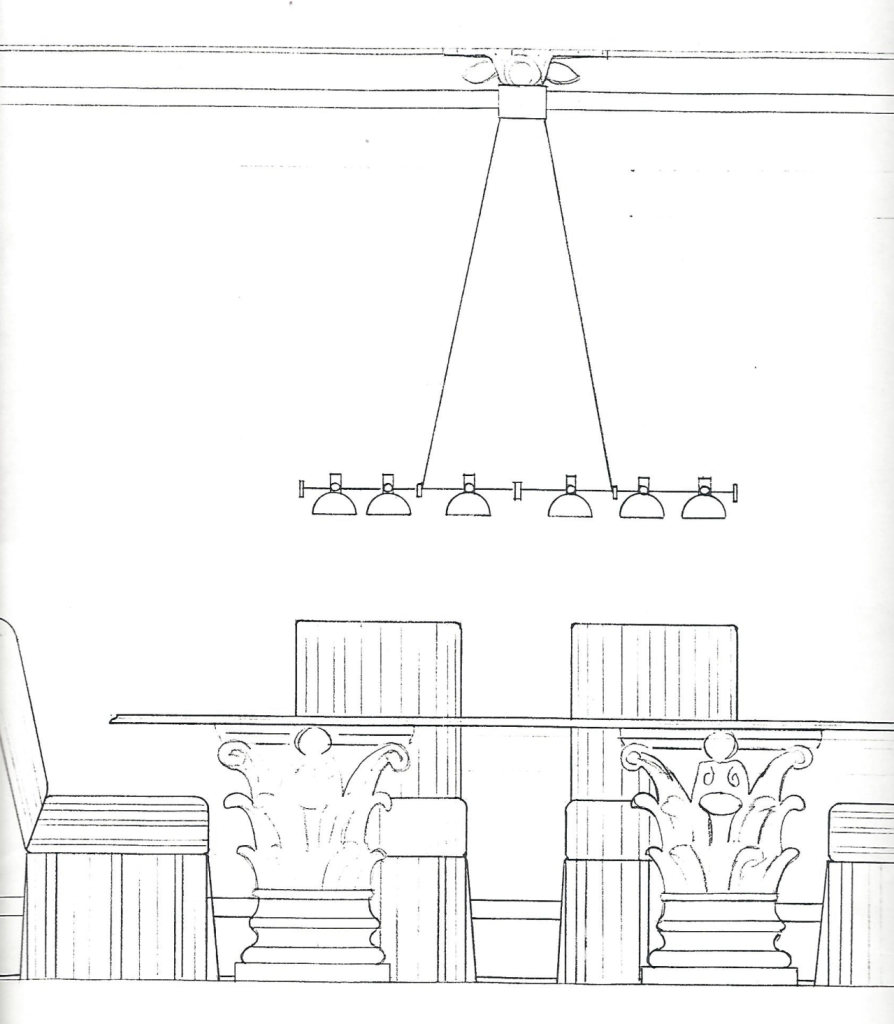
When we redid the dining room, we wanted a chandelier over the table. The room was already equipped with a ceiling flush-mounted, gold plaster starburst with five light bulbs jutting out at a 45° angle. We simply could not remove it, so I turned the piece into an exaggerated, lighted ceiling canopy. I wired it into the chandelier and it remained proudly on the ceiling until we sold the house.

My circa 1990 dining room sketch with the original ceiling flush light serving as a canopy for the modern linear chandelier.

To the obvious benefit of Salvation Army and Goodwill stores everywhere, spray painting old Spanish Bronze and Faux Williamsburg chandeliers manufactured in the 1970’s has been a popular way to light kitschy boutiques and cutting-edge restaurants for years. Like all trends, that too will end and we will be left with hard sustainability decisions. With more lighting hidden in the structure and fewer decorative pieces, future generations will be left with usable lighting AND a more receptive planet.

Before creating your next room design, give a moment of thought to sustainability. Is there possible adaptive reuse of existing lighting? Would the room be better served with creatively applied utilitarian lighting that will last through the next two redesigns? Considering a sconce made of recycled 2-liter Mountain Dew bottles, might, however be a bridge too far.