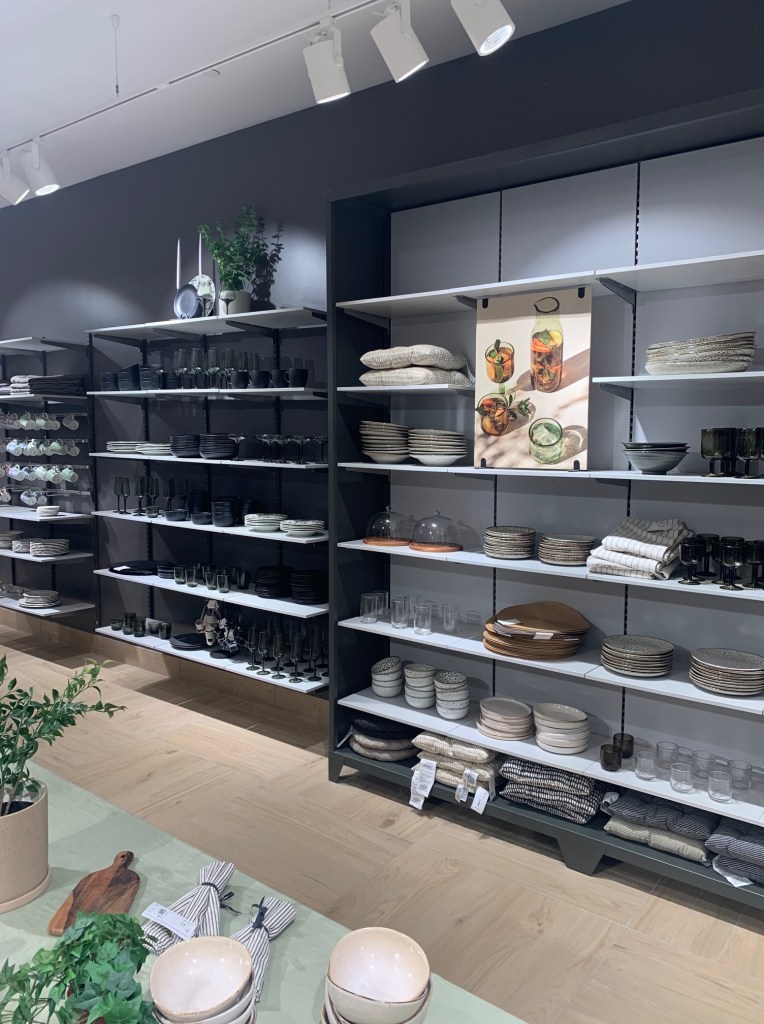
When my wife and I are shopping in a multi-department retail store, she always knows where to find me when we get separated. Inevitably, I am wandering the aisles in the Housewares section. What sheets, dinnerware, appliances, cooking equipment and household accessories are on the racks, on sale, sold out or in the clearance section? What colors are low in supply and what finishes are in the discount section? Has the “latest trend” been reduced in price?
A recently opened H&M Home featured a prominent “SALE” rack. What is that telling us about Teal and Dark Blue home accessories?
Initially, we all want to know what is new. If we shop a store, or flip through a mail-order catalog or browse an online website, we do so to see the latest options. Understanding what is waning is of equal importance.
The same H&M Home with regular priced merchandise, not a blue or teal accessory to be seen!
I wander retail aisles to try and understand the impact on the look and trends of home interiors. One retailer selling orange, bunny motif accessories is just a funky idea. After the initial sighting, that observation is filed someplace in my brain. I move on. When I then notice the fifth or tenth retailer selling a variety of goods with orange bunnies it is likely becoming a fad or possibly a trend. An idea with which some reckoning is needed. Orange bunnies will now apparently be a factor.
Of course, orange bunny motifs are deceptively simple. They are most likely going to end up in the sale rack during the next season and in the “dollar store” six months later. Paying as much attention to the closeout racks as the new merchandise will help in the understanding of the trend cycle. One orange bunny at 50% off is a sale. Every retailer with all of their orange bunnies at 50% to 75% off and orange bunnies aplenty at the “Dollars Are US” store means they are no longer relevant.
I remember the first time I questioned the continuing viability of Oil-Rubbed Bronze. The finish had been red-hot for about a decade. I knew, the end had to be near, but it remained popular. I toured a new construction home (I’m always touring new construction!) and noticed the oil rubbed faucet in the bathroom. It immediately looked dated. The dark lighting above brought a depressed feel to the room. I knew then, it was on the downslide. A subsequent visits to Home Depot, TJ Maxx and Target confirmed stocked shelves of oil-rubbed bronze. When mass retailers are neck deep in a trend, it is clear, the end is nigh.
When a long-serving trend winds down it means a new option is on the rise. By paying attention to deteriorating trends, it forces observers (and me!) to ask the question of replacement. That in itself is just as loaded a problem. There is almost never a one-for-one swap. What happens after a trend deteriorates is a rebalancing. New ideas come forward and fill in gaps, trends midway through a cycle become more dominate and some other rising trends might accelerate their decline. In short, it turns into an aesthetic game of “Whac-A-Mole.” Balance is usually stabilized when the economy is roaring. Sluggish economies instigate change.
Consciously or subconsciously, we all know trends have a finite lifespan. Our personal methods for digesting them and using the information to our best ability can be supplemented by good observation skills. It is important to comprehend upcoming trends. One way which we can supplement that knowledge is by embracing the information gathered around the discount rack and discount stores.
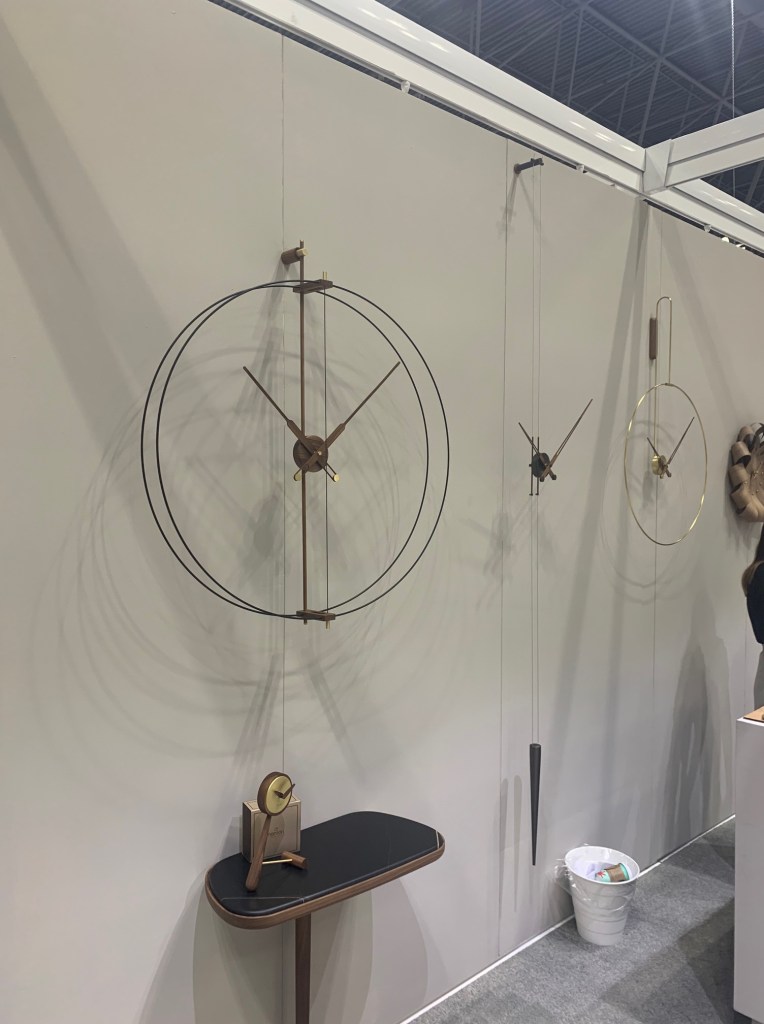
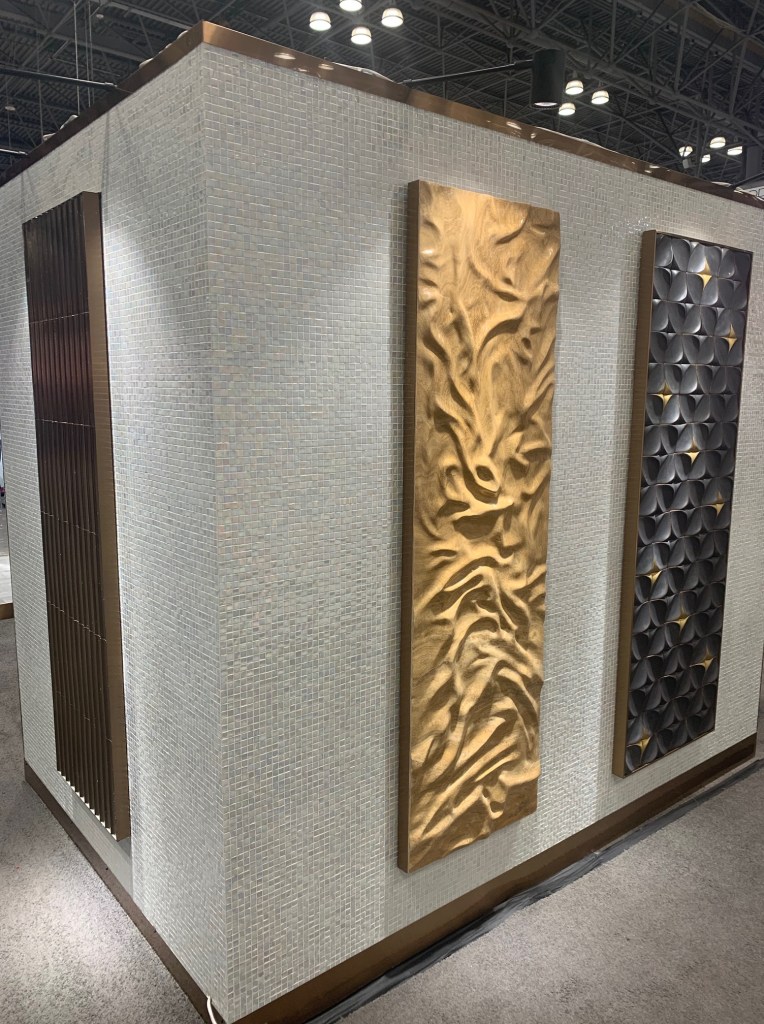
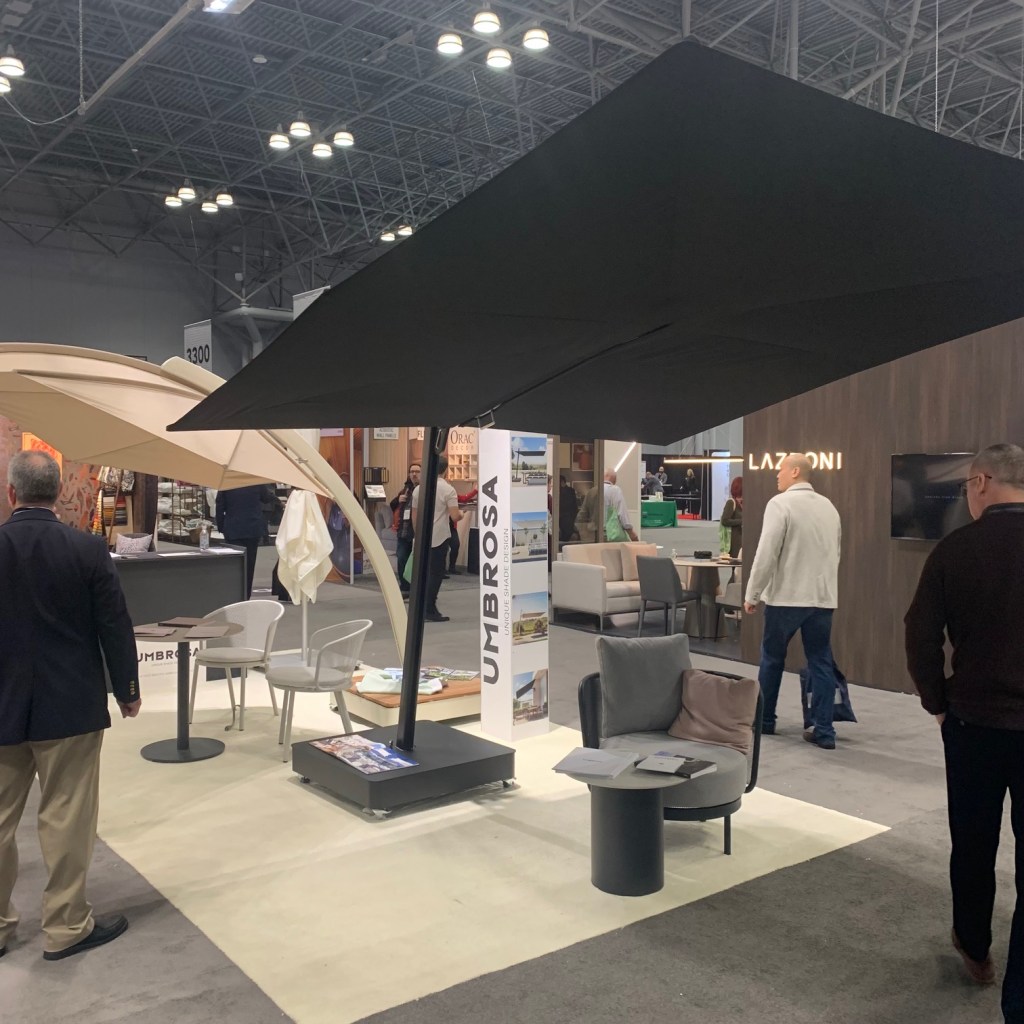
Sure, I’m a “Lighting Guy” but it is impossible to visit showrooms, galleries, design show floors and window-shop without seeing things outside of lighting that attract attention and ultimately will interact with lighting in the residential environment. While exploring the International Contemporary Furniture Fair and the streets of New York, the following items could not be ignored.
A New Finish Direction?
I immediately fell in love with the new Umber finish show by THG called simply “Umber”. If you’ve been around metallic finishes for a while, you might remember the Burnished Umber or Umbered Brass finish popular in the late 1990s. It was created by oxidizing brass and polishing off the oxidization into a sheen, rather than the matte found in antiqued finishes. The oxidization was brownish. The new THG Umber has more black with red undertones. Darker than the brass now used, this could be a nice brass/bronze finish alternative, or next-gen brass direction. The same finish is also available in a matte version, equally interesting.
I was struck by the addition of textural elements in some new plumbing products. Brizo showed the new Tulham faucet with a glossy faceted ring on the end of a matte ensemble. This small ring detail was a nice way to extend the idea that some accessories are indeed, the “jewelry of the home.”
ICFF 2022 – Brizo Tulham faucet set with faceted trim ring
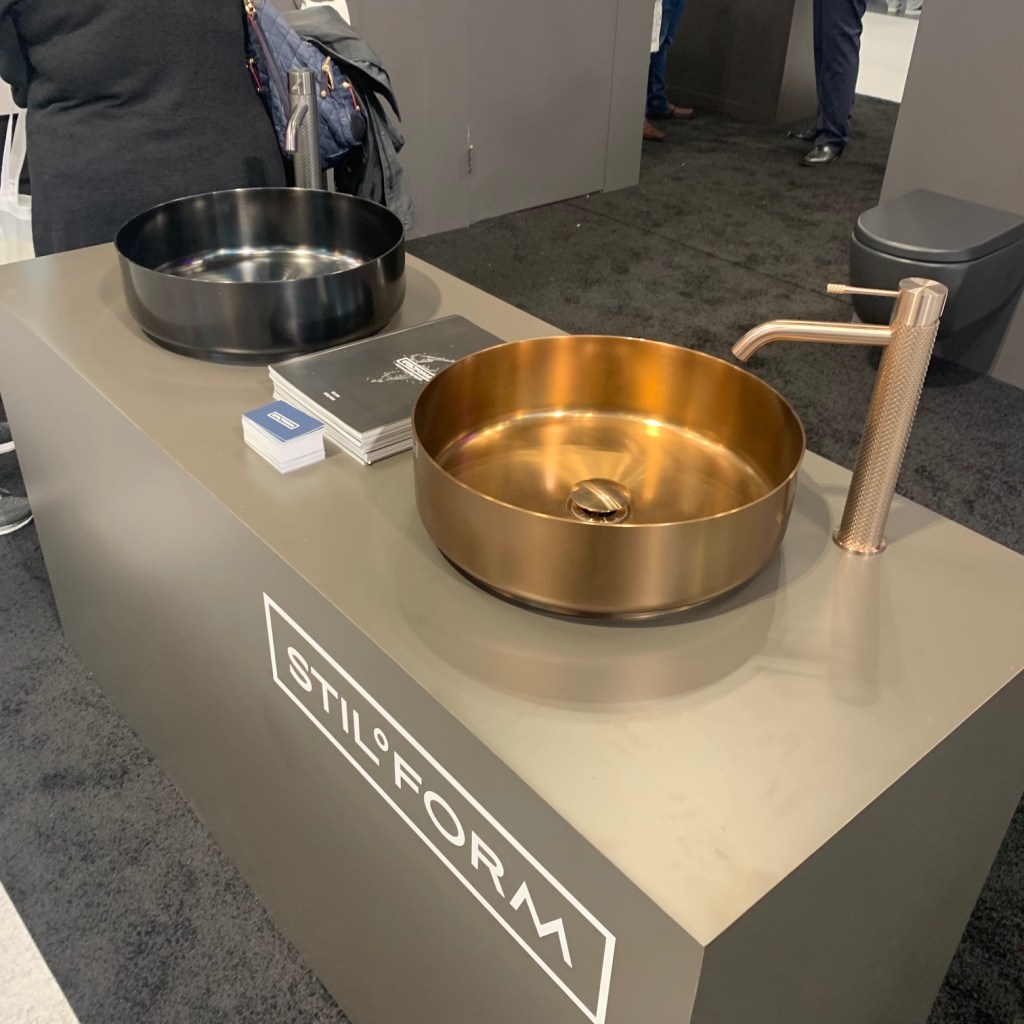
Similarly, Samuel Heath, the British “tap” manufacturer used a faceted ring around the handles of their One Hundred Collection. Stiloform, an Austrian company displayed a faucet with a knurled shaft that extended the texture idea into new areas.
ICFF 2022 – Samuel Heath One Hundred CollectionICFF 2022 – Stiloform
Perhaps some of the most interesting and amazing faucets in the whole show were on view at Uniq-e! an Italian concern that appears to be reinventing all of the known parameters surrounding faucets. A quick look through their website information will provide an idea of their creativity.
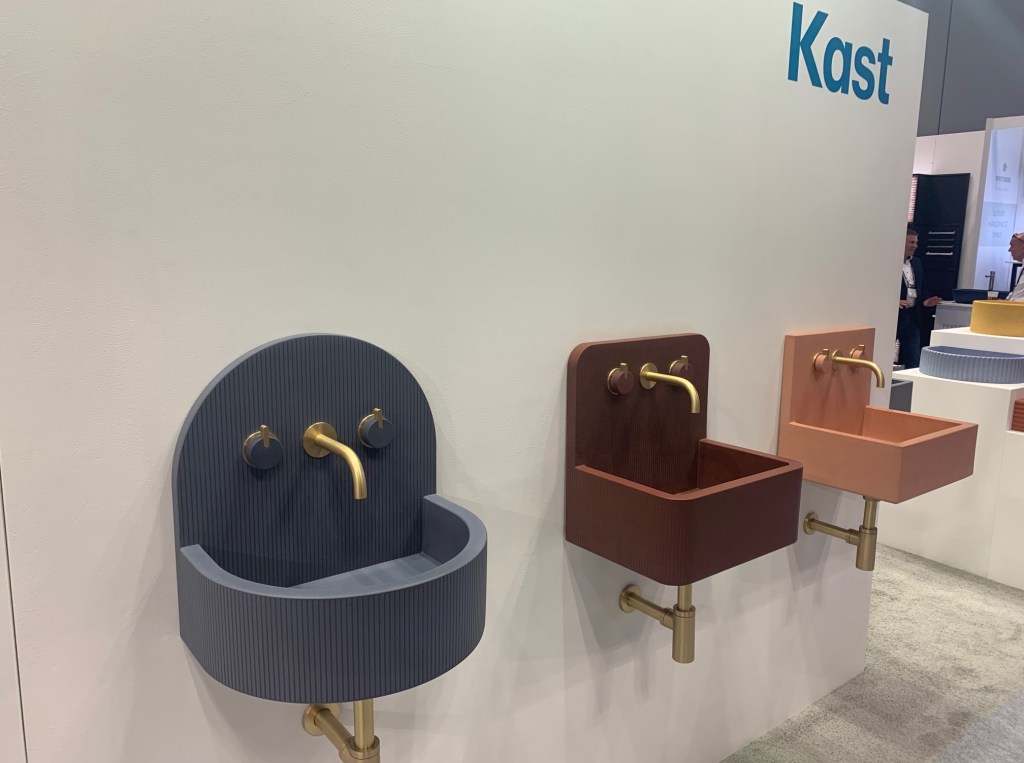
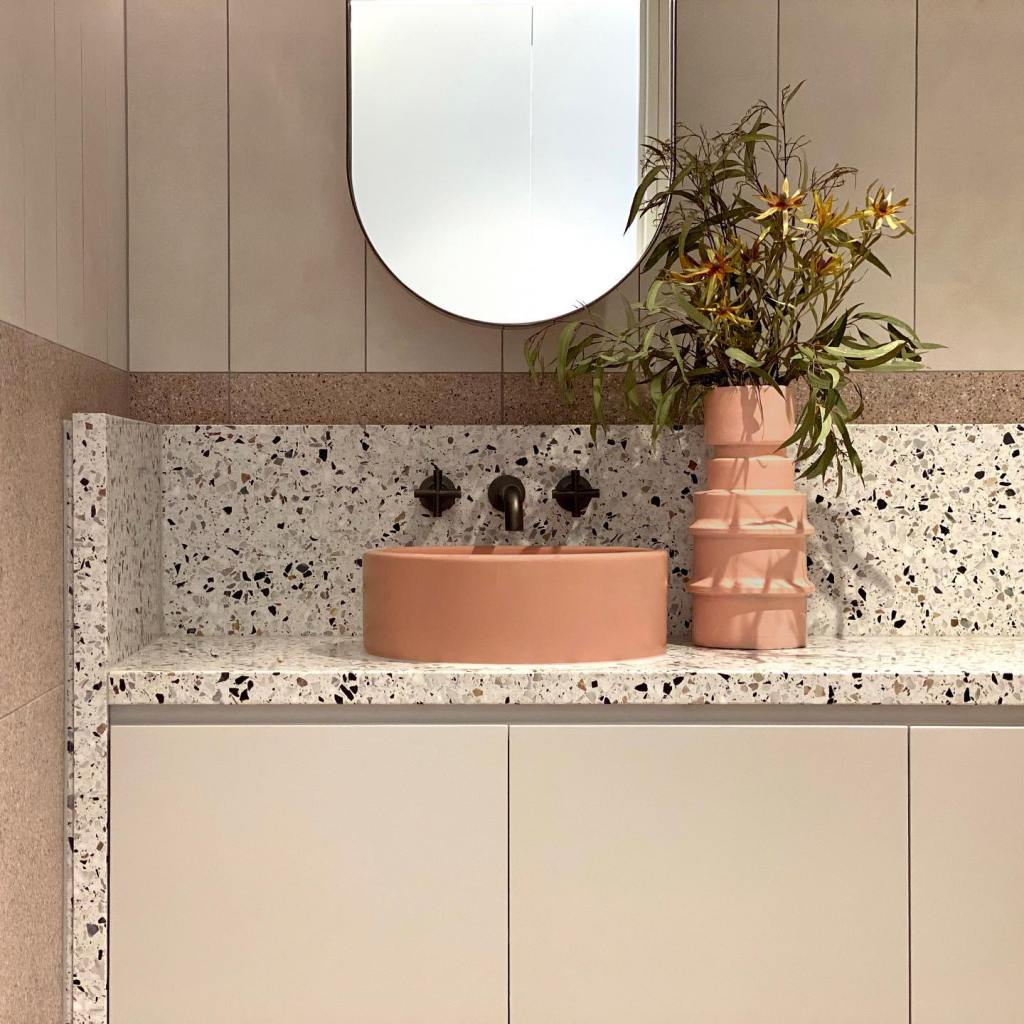
For the last couple of decades, vessel sinks have been sucking up all most all of the creative air in the bathroom space. Thankfully, that era is at an end. Placing the proverbial nail in the coffin, a number of manufacturers were helping designers to ease out of their reliance to these ubiquitous sink options. Perhaps the most engaging and “fun” were the cast concrete sinks shown by Kast. In fresh colors and interesting shapes, these will quickly allow a homeowner to forget they ever hear of a vessel. They can read as modern, deco, mid-century or slightly retro. These are exciting options for the progressive home.
The LaCava Linea sink has reinvented the vanity and enclosed it within an invisible frame of square tubing. Add to the mix a delightful collection of colors and it immediately ups the appearance of any bathroom. There is also a wide variety of frame configurations available. I like this look.
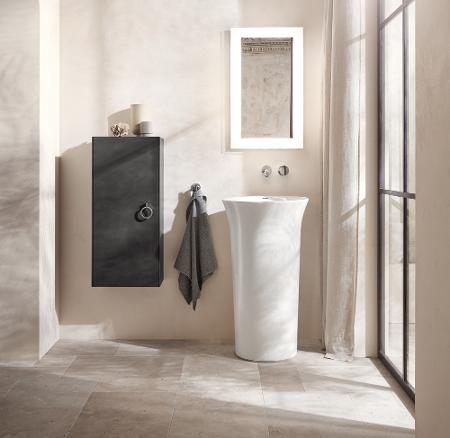
I am a sucker for almost anything Philippe Starck does and his White Tulip collection for Duravit is no exception. With just the gentlest of curves, the standing sink opens at the top to serve as a beautifully sculpted tower sink. The tub and surface mounted sink feature the same appealing curve. This is a stunning bathroom suite.
ICFF 2022 – Duravit White Tulip collection by Philippe Starck
On the opposite end of the aesthetic spectrum are the handmade sinks from Whitebirk. Made in England, these sinks are beautifully crafted, but lean a touch more traditional. Again, color is being used to better differentiate what is available from a high-quality supplier and that which is purchased through mass-retailers.
ICFF 2022 – Whitebirk
Outdoor Living
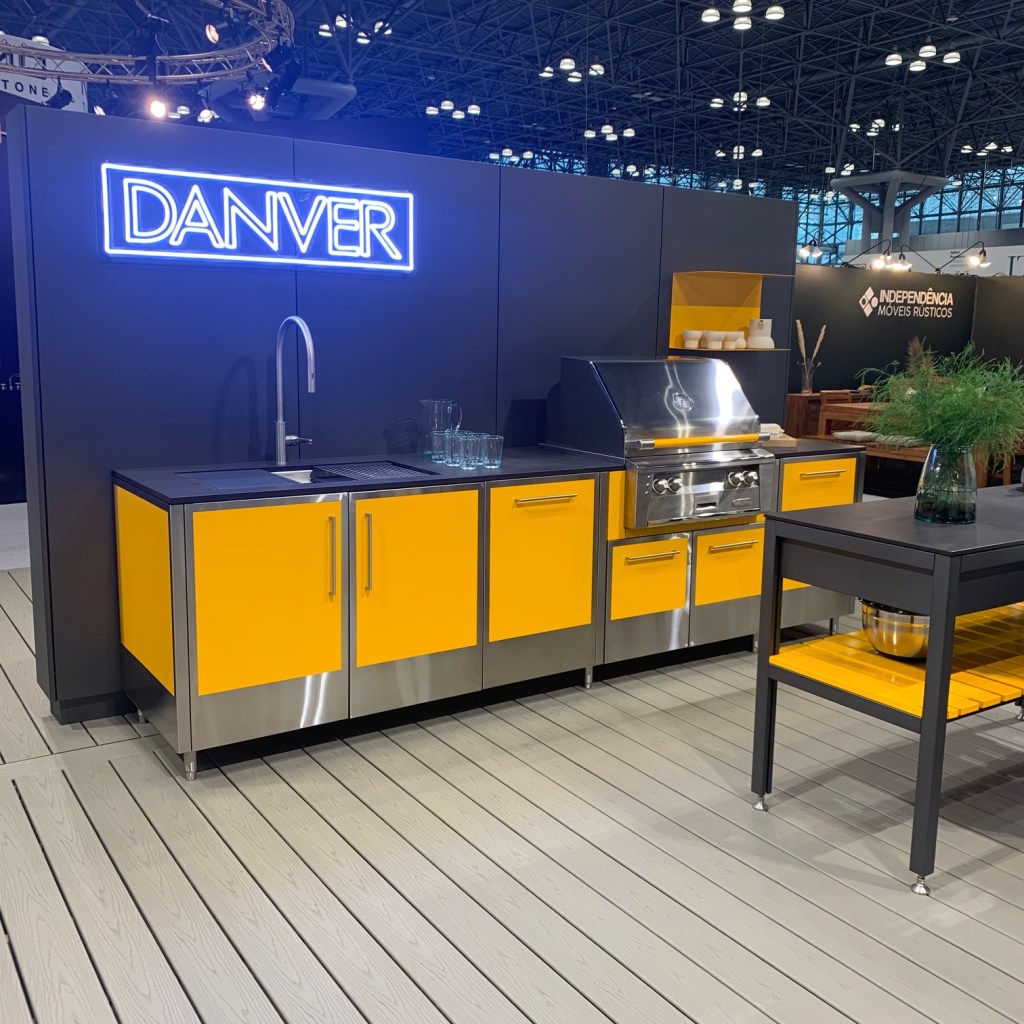
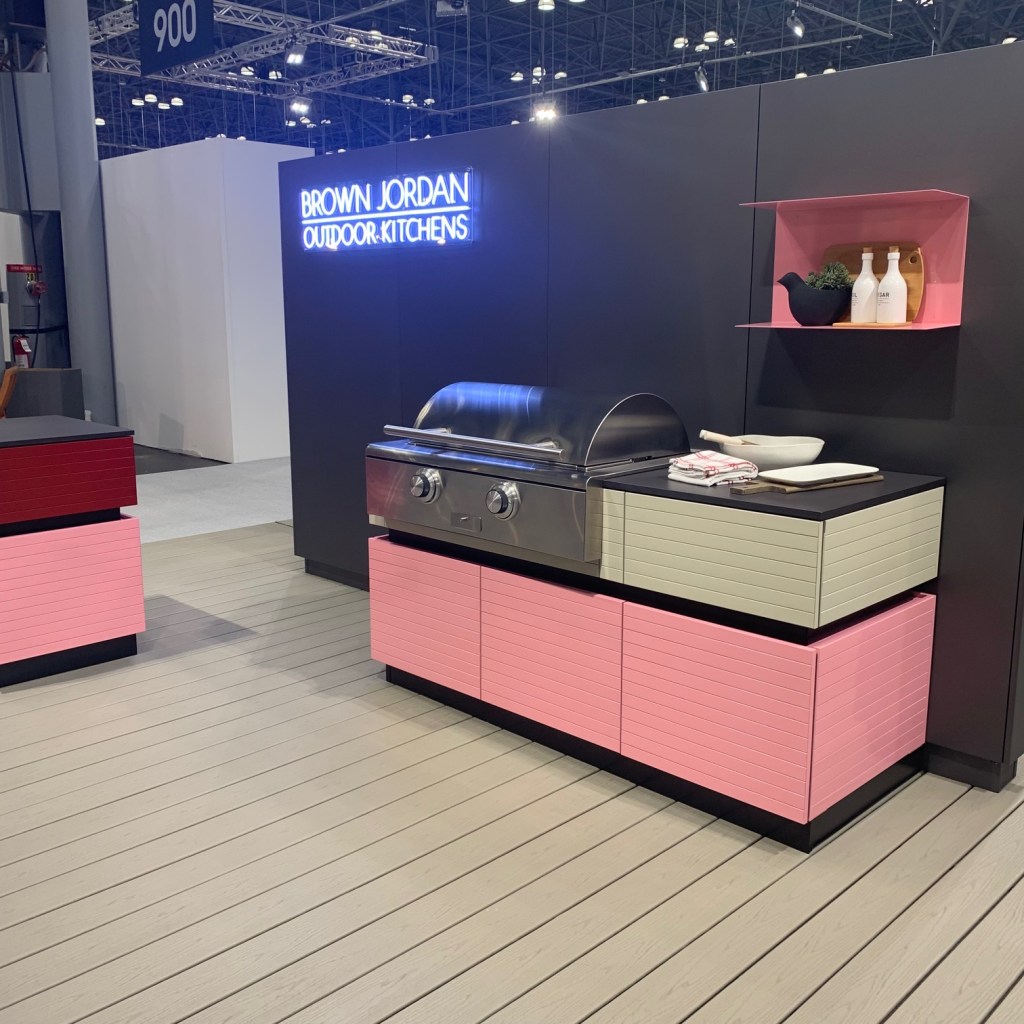
The partnership between Danver and Brown Jordan has produced exciting outdoor kitchens in bold, unusual colors (notice a pattern here?) Danver showed an electric yellow outdoor kitchen and a contemporary pink option. The acceptance of colored laundry room appliances, then high-end ranges (or was the progression reversed?) has allowed consumers to feel comfortable using big ticket items in something other than stainless steel. I think this is a wonderful step forward. We can never have too much color in a home.
ICFF 2022 Danver outdoor kitchen for Brown JordanICFF 2022 – Danver outdoor kitchen for Brown Jordan
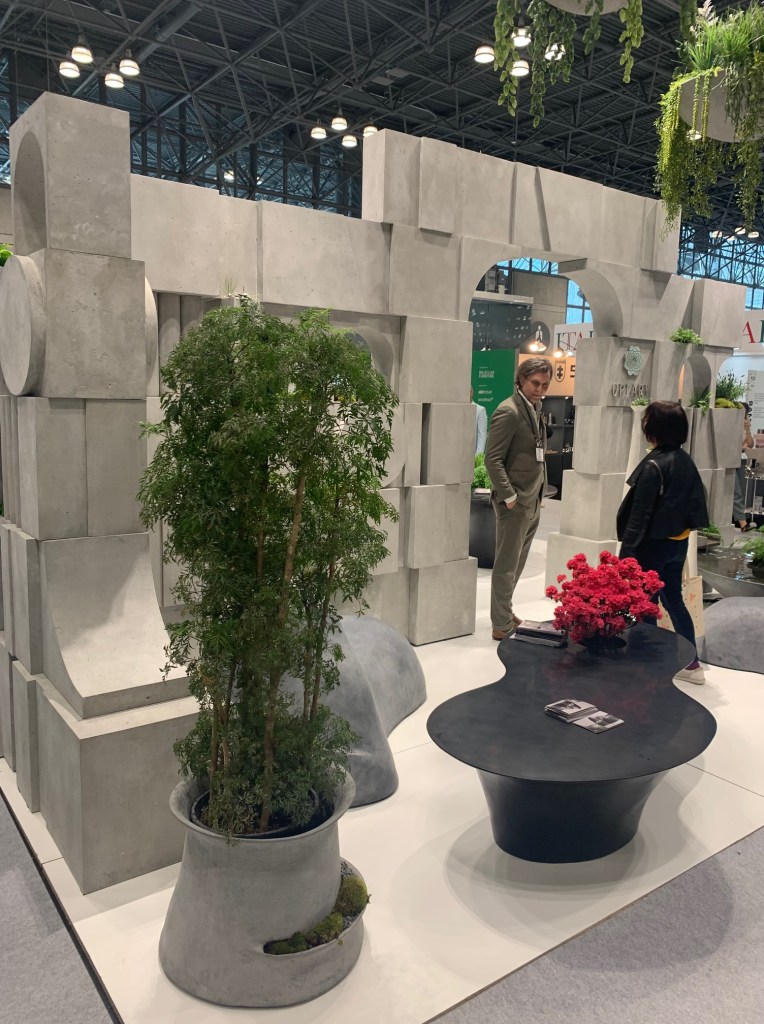
Opiary is a Brooklyn creator of concrete outdoor furnishings. The product is so fluid and organic that it belies the tough material employed in fabrication. Seating, water features, tables, planters and surrounds are all built for an unyielding outdoor reality, but look as if they are delicate and born of the earth.
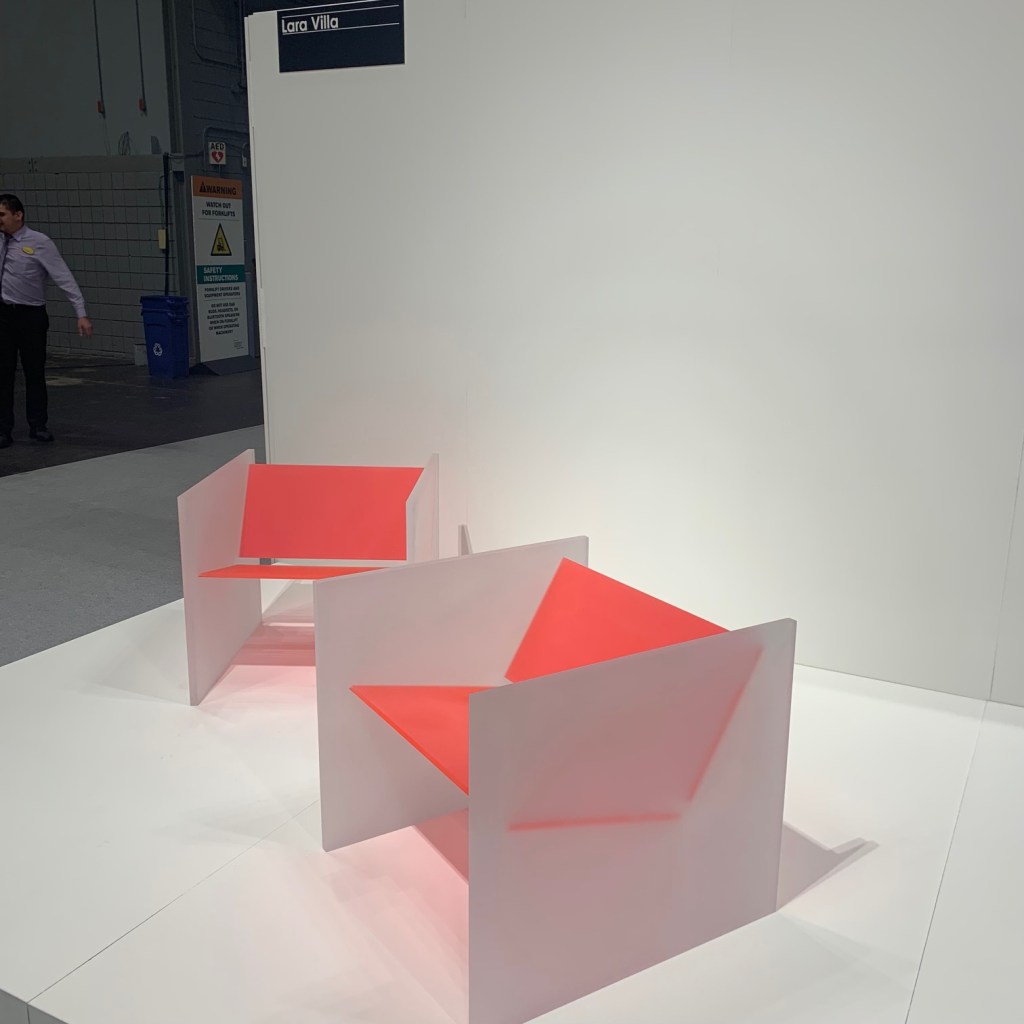
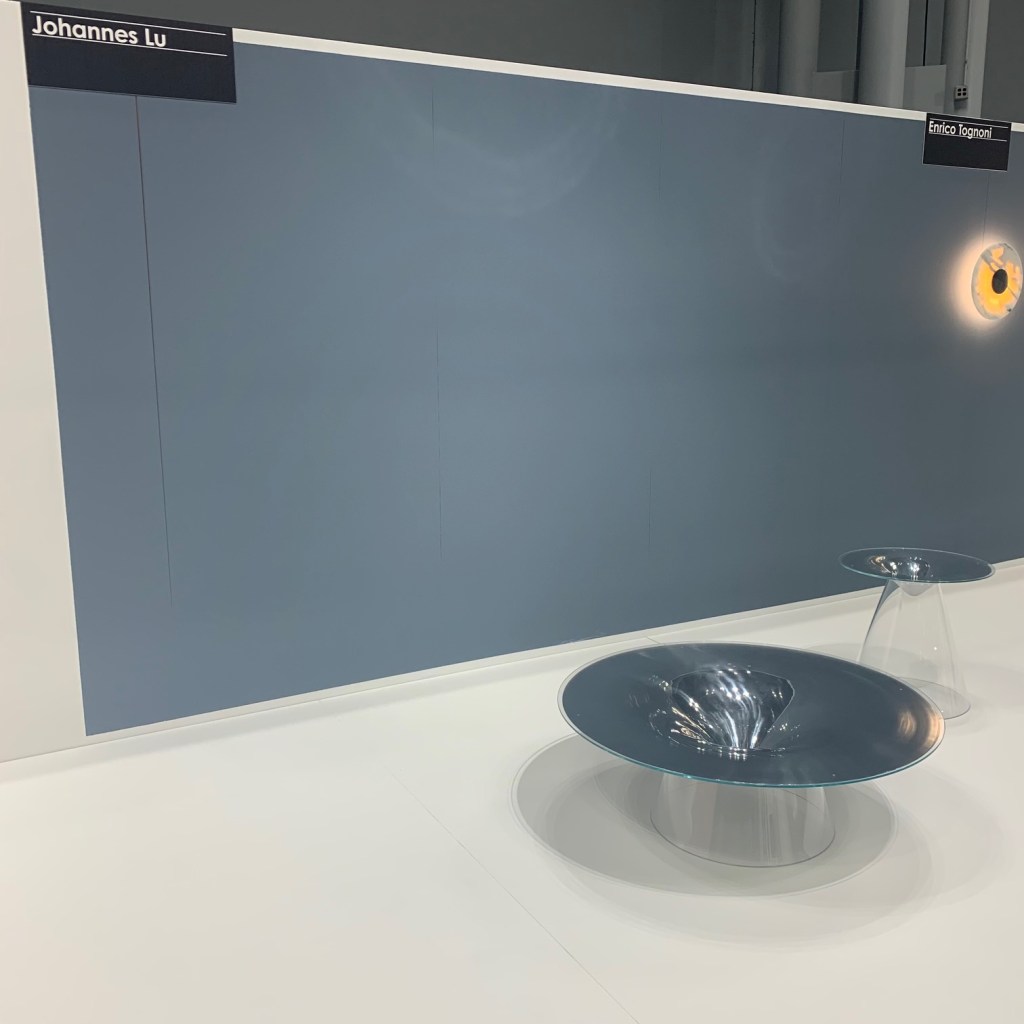
Interestingly, I’m seeing fewer and fewer new and exciting things in furniture. Yes, I liked the Bernhardt seating and I loved the joint between leg and top of the Ethnicraft PI tables. I also loved the student presentations of a table (Johannes Lu) and chair (Lara Villa) in the ICFF Studio. Despite that, I’m just not seeing the next “big thing” beyond the reemergence of beige I discussed in the 2021 report.
ICFF 2022 – Ethnocraft – PI leg-top jointICFF 2022 – Studio – Chair by Lara VillaICFF 2022 – Studio – Table by Johannes Lu
Wallpaper
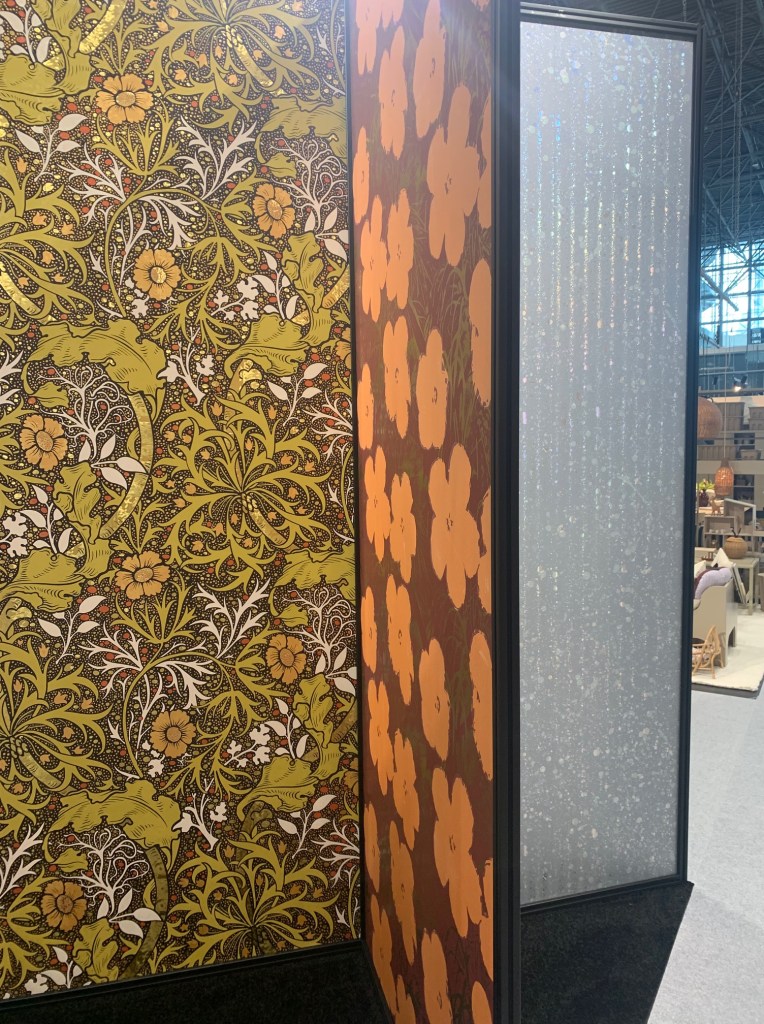
Wallpaper continues to be BIG, BOLD and exciting. A quick review of the options available from Wow Papers reveals an explosion of color and patterns. Even the staff manning the booth were dressed commensurately. The patterns replicated illuminated surfaces with blasts of neon and lighted tubes. Flavor Paper options were tame in comparison, but not when set aside toile versions of the past. Both of these companies believe that if a wall is going to be covered, it may as well be for a reason…a very bold reason. I love these extreme wall covering options!
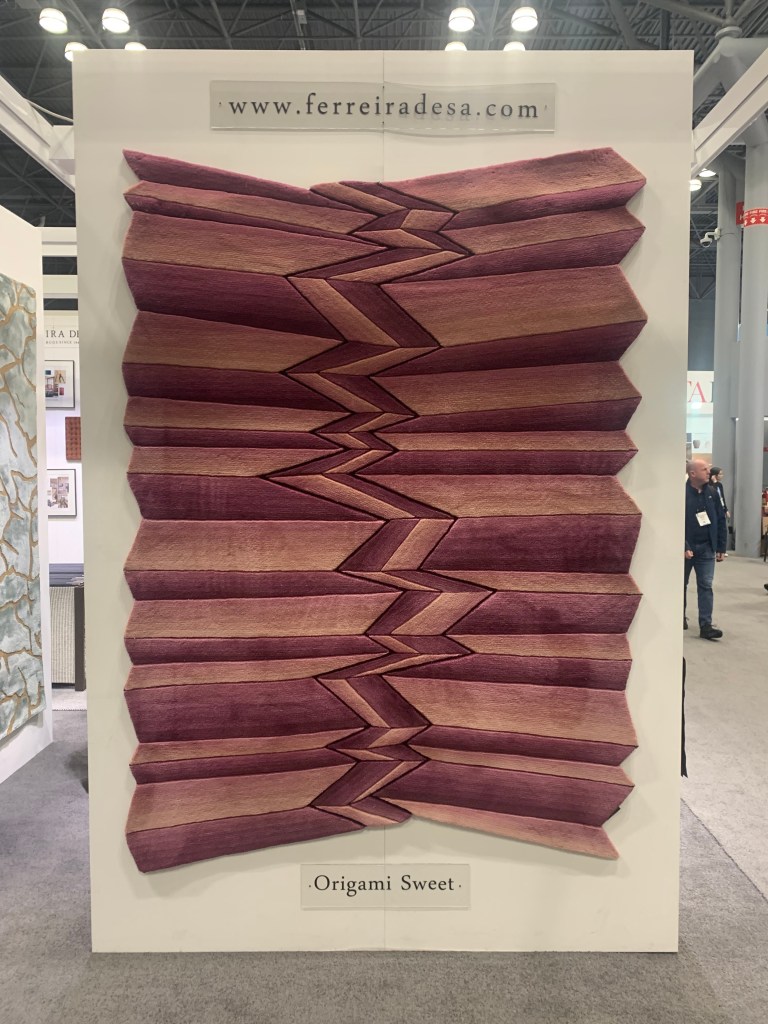
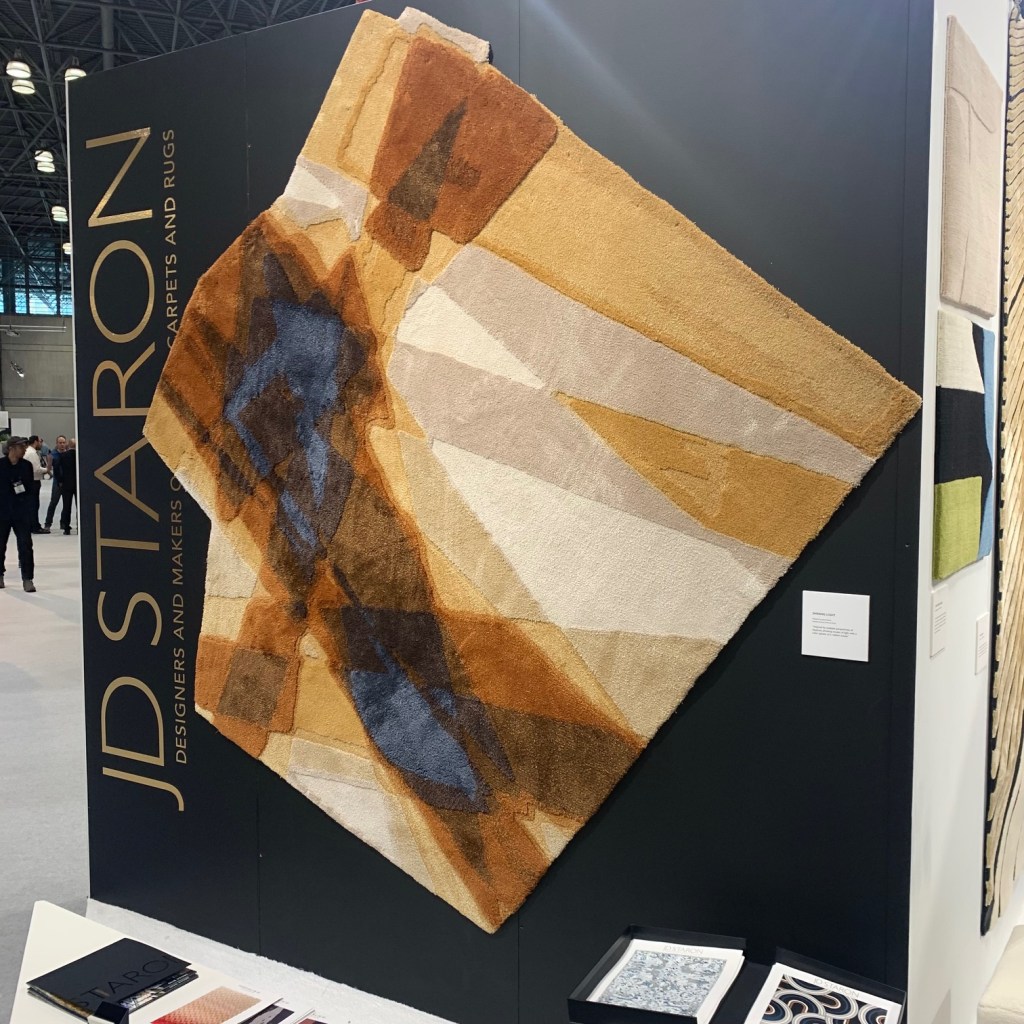
Two different accessories stood out to me. JD Staron creates rugs like Flavor and Wow create wallpaper, big and bold. This bespoke creator can deliver a variety of custom handwoven rug options. Each is more beautiful than the next.
Equally interesting were the mirrors shown by Zieta. One might initially believe these are fabricated from blown glass, but instead they are metal formed in Poland using the internal pressure, FiDU process. This involves welding thin plates of metal together at the edge, then inflating the assembly to create the interesting shapes. Sort of like a balloon made of metal! Construction process aside, what really matters is the amazing result. Airy mirrors, “blow-up” tables and ice cube columns. Really amazing stuff. I encourage you to follow the link below and check out some of their other projects.
ICFF 2022 – Zieta inflated metal
Fashion
I’m always challenged to understand how personal fashion connects with home furnishings. Window shopping New York revealed light, feminine colors and fabrics and dainty jewelry for women and a wider color palette of equally light materials for men. The dichotomy here is the shoes. Sure, there is an occasional spike heal and slim brogue, but most women’s shoes were heavy, clunky and dark, while men are being sold heavy sports sneakers. What does this mean? Do we want a carefree life of fun and excitement, but our feet must be firmly planted on the ground to do so? Is the weight a counterbalance to the fluff we encounter daily? Are we both serious and goofy at the same time? The differences certainly make for an interesting conversation starter.
Faith Ringgold – The New Museum
Perhaps the single more interesting thing I experienced in New York this spring was the Faith Ringgold retrospective at The New Museum. This was a fascinating review of a 50+ year career that explores and attempt to understand the life of a Black, female artist in a world that is primarily centered on white European men.
She supplants herself in classic European cultural environments, places where no African descendants were likely to be found. It forces one to ask, “But, why not?” why wasn’t a Black artist, or simply a female amongst the masters in Arles? Shouldn’t a Black artist or writer have been involved in the roundtable conversations at Gertrude Stein’s Paris salons? While not invited and not expected, her art forced the viewer to see her image there and ask, why this is not a reality. Why would she have been relegated to Alice B Toklas’ separate room each Saturday evening?
Her artistic questions do not stop there. She brought the same perplexing questions into her later work. Women and Black individuals are missing from so many of our cultural milestones. Today we see images of Kamala Harris, Nancy Pelosi and Ketanji Brown Jackson, but we are well into the 21st Century. Ringgold’s art forced the point decades prior. Is it possible her work established a path to these “firsts?”
Ms. Ringgold remains an active artist, now well into her 90s. She continues to force everyone to recon with the failings of an American society to include ALL of its citizens. By doing so, through her art, Faith Ringgold explains the losses and missed opportunities we all face.
New York
No, I did not spend all of my time working in New York! I caught some exciting new shows on Broadway. A Strange Loop and POTUS should be on your list! I also ate at some dynamic new restaurants. Consider a visit to the inventive, Ernesto’s, Kimika and The Commerce Inn. By considering all a city has to offer, a better idea of where we are going can be imagined. I can’t wait to go back and see what is next!
Each month, I deliver an educational lecture to hundreds of talented designers and architects from across the United States and Canada. A recent event centered on the color of light, a subject that has leapfrogged in importance exponentially since the introduction of LED and which I have spent a fair amount of time studying. In the Q&A section, for the first time, in a long time, I was stumped by a question. One of the designers wanted to know what I understood about those with tetrachromatic vision. Like a teenage boy being asked to define onomatopoeia and differentiate between a gerund and a noun, I mumbled, “Ahhh, I don’t know.”
Days after my Rick Perry, “Duhhh?” moment, a friend, who knows of and understands my interest in all things color, sent me an article from the Wall Street Journal discussing the research of tetrachromatic sight. (The Rare Gift of Seeing Extra Color – Jackie Higgins, February 22, 2022) The world was telling me it is time for some additional study.
Human color perception is delivered through tri-stimulus values. In other words, we have three photoreceptors in our eyes, one with peak sensitivity for blue, one with more highly refined sensitive to green and the third with heightened sensitivity for red. Images enter our eyes, the colors are separated into three “buckets” (R,G&B) and the information is sent to our brains for processing the understanding of the color of an object. (If you’re an ophthalmologist reading this, I apologize for that simplistic explanation!) If a person has some sort of color-blindness, one, or more of those photoreceptors does not work properly. If a person has tetrachromatic vision, they have a fourth photoreceptor. This fourth receptor allows that person to perceive higher gradations of color.
What Does Tetrachromatic Vision Do?
Explaining this is akin to developing an orthographic projection of an M. C. Escher drawing. How do we understand a higher level of color perception, when we, or the researchers can never experience it?
Imagine two paint samples. The average person sees the same color. In his research on color perception at Kodak, David MacAdams found that 90% of the population had average color comprehension, but about 10% had some level of elevated ability. They are able to hone in on the nuances and discern a difference. Those folks are likely my audience of designers, but also printers, photographers, artists, paint store specialists and even a few like MacAdams, a Physicists and Color Scientists. To understand persons with tetrachromatic vision, they see multiples of differences even in color samples perceived to be the same, by the rarified 10%.
Hourly and salaried wage-earners are the 90%, the 10% with better color perception are millionaires and those with tetrachromatic vison are the multi-billionaires of the world. Just a few, with overabundant powers.
So How Do We Respond to These Talents?
Unless the designer is equally gifted, it is near impossible to design to the demands of a tetrachromatic client. From comments provide by those with tetrachromatic vision, they also have no way of perceiving a life of color in any other way. How does one understand what one does not possess?
Recruiting people with tetrachromatic vision into the field of LED technology would be very helpful. Their superior color perception could help in the development of better products. If it passes muster with them, the rest of us will be well served with lighting of perfect quality. Wage-earners, millionaires or billionaires will all have great light. That egalitarian color solution sounds pretty good to me!
The Wall Street Journal asked the question, “Are Massive Lights the Next Big Thing?” in a January 8, 2022 article. In the story, radically oversized lighting was discussed, such as a 90” sisal pendant that oddly enough was dwarfed in the accompanying photo, by a huge room with 11’-0” ceiling heights. Personally, I think this was a case of a reporter jumping on a unique situation and turning it into a trend. It did, however raise the very real question of lighting size.
A quick search on the internet will deliver some very solid and consistent size recommendations for lighting size.
Add the two lengths of the room together to arrive at a minimum diameter (in inches) for a dining room chandelier.
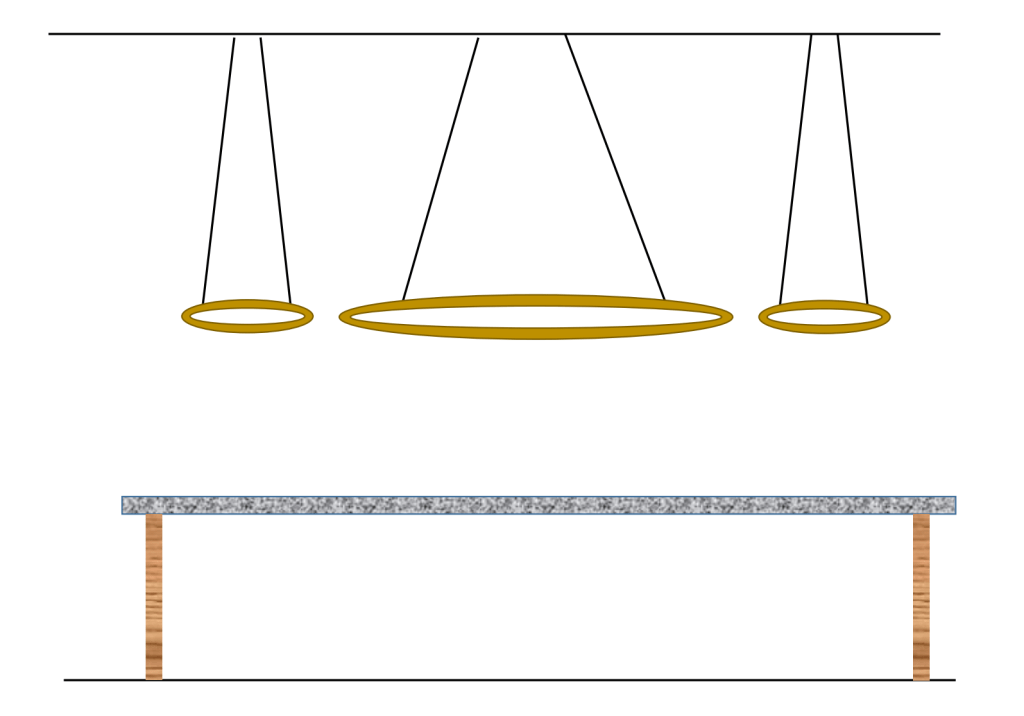
Linear chandeliers should be between 1/3 and ½ the length of the table below.
Front porch lights should be between 1/5 and 1/6 of the door size.
I use these numbers, too…as a starting point. I then typically ignore them and think about the whole room, the size of the table and the height of the humans who occupy the space.
With those parameters understood, let’s unpack this reporter’s perception for a moment and think about when “big” (or bigger) could actually work in a design.
Dining Room
I always lean toward a larger chandelier than any calculation suggests. Most dining room tables are 30” wide, but if a larger one is used, that becomes a visual excuse to go bigger. 36” wide? Use a 36” diameter chandelier. A room that can hold a wider table can surely accept a larger chandelier. A 5’-0” to 6’-0” diameter or square table can also easily accommodate a larger chandelier.
Consider too, the ceiling height. Larger should be considered in the verticality as well. 12’-0” ceiling demand some vertical attention. Fill that space with stretched and elongated chandelier designs.
Squares contain more actual area than a round, so simply choosing a 32” square luminaire over a 32” diameter alternative will give you more mass and a bigger presence.
Dining rooms remain a showplace in a home. Allow them to earn that regard with majestically sized lighting.
Foyer
As we move away from two-story entrance foyers, we still need a dynamic introduction to the home. A one-story home with 10’-0” or even 12’-0” ceilings cannot accommodate a hanging chandelier, but a huge semi-flush, stretched across the ceiling can elevate that space. Unfortunately, not a lot of luminaire manufacturers build oversized semi-flush units. I suspect, if no one asks for one, and they can’t sell the ones they’ve made, there is a good reason for the void. I’d love to see a reverse of that trend.
Until more are made available, I suggest installing a chandelier without the chain or stem, tucked up to the ceiling. We can always find a wide variety of large chandeliers. Pay attention to the height. A chandelier with a body height of 18” will work on a foyer with ceilings as low as 9’-0”, 30” works on 10’-0” and 54” body heights will fit in spaces with 12’-0” ceilings. Not all designs will work hung in this manor, so attention must be paid to the view from below. Once the right piece is unearthed, you might ask why anyone would ever hang it from a chain or stem!
Consider the same thing with sconces. Forego the ceiling lights altogether and use a collection of TALL sconces around the perimeter. A 36” tall sconce will fit nicely in rooms with 9’-0” and 10’-0” rooms. Go longer in 12’-0” ceiling heights.
Islands
In the March 2022 edition of Architectural Digest, one of the featured homes used a 36” diameter wicker shade over a 5’-0” Square Island. This is probably larger than most of us would consider, but I think it works. The ceiling was exposed, the space was open and the light cane and whitewashed island material created an airy feel. Square, or oversized islands can be a great place to consider larger than average lighting. They are big and fill a lot of space in the room so, commensurately sized accessories work. The additional lesson here is to understand how the colors will impact the visual proportionality.
With conventional islands, we all know to stay away from the petite pieces that were popular over a decade ago. There is strong evidence we are moving in the correct direction. Larger and especially taller pendants are being used. Continue that trend, stretch the envelope. This is the right direction. The open floor plans of living can readily accept larger island pendant lighting.
Great Room
If you are not already using massive chandeliers, ceiling fans and wall sconces in the great room, start now and disown any previous installations. These rooms are called “great” for a reason! They are big spaces and anything less is a huge mistake. Seek out those 96” fans, 72” tall chandeliers and 36” tall sconces. This room should be the easiest of all to adapt to larger sizing options, especially if you are currently using Lilliputian-sized luminaires.
Big
You may never be responsible for a home that can comfortably embrace a 96” diameter pendant or a 10’-0” tall chandelier. Stretching common norms a few inches is however, a real possibility and should definitely be considered in more “typical” residences. That small difference can deliver a big impact.
A few posts ago, I talked about using linear LED extrusion luminaires. Almost as ubiquitous are LED rings. A wedding cake of them are stacked in halls, dining rooms and commercial spaces. Sizes at 5’-0” and beyond are not uncommon. Some are plain, in black or white. Others are finished in the popular metallic colors and even wrapped in leather or bejeweled in crystal. With this avalanche of options, what new options are possible? I think application offers a great amount of new possibilities. Like the linear pieces, let’s explore some alternate hanging scenarios.
Multiple Single Rings
A stack of rings has been a pretty reliable use of this luminaire type, but when faced with a shorter ceiling, or if in quest of something different, it might be time to consider an alternative.
Think about four or five smaller rings dancing over a dining room table. How about a ring at each corner of a large, square island? Three or five rings placed in the center of a bedroom tray ceiling will certainly add a look that departs from the norm. We already use multiples over countertops. Rings could be a nice variant, especially if combined with some of the ideas listed next.
Replacing one large ring chandelier with multiple smaller ring pendants can be a great way to differentiate a space.
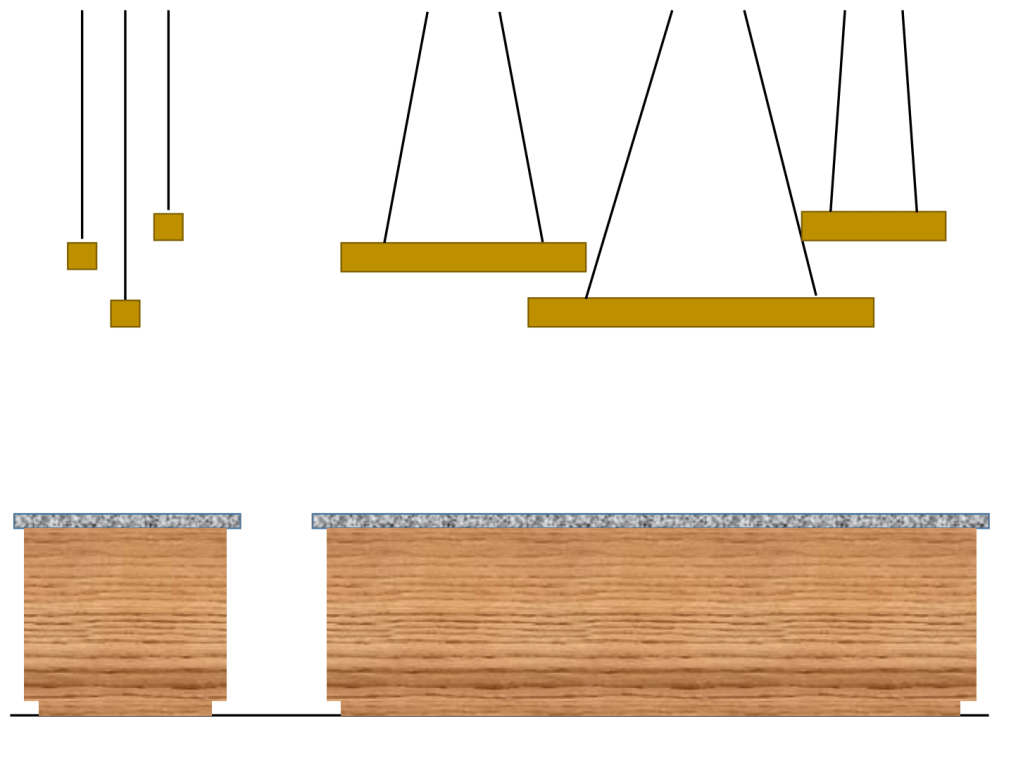
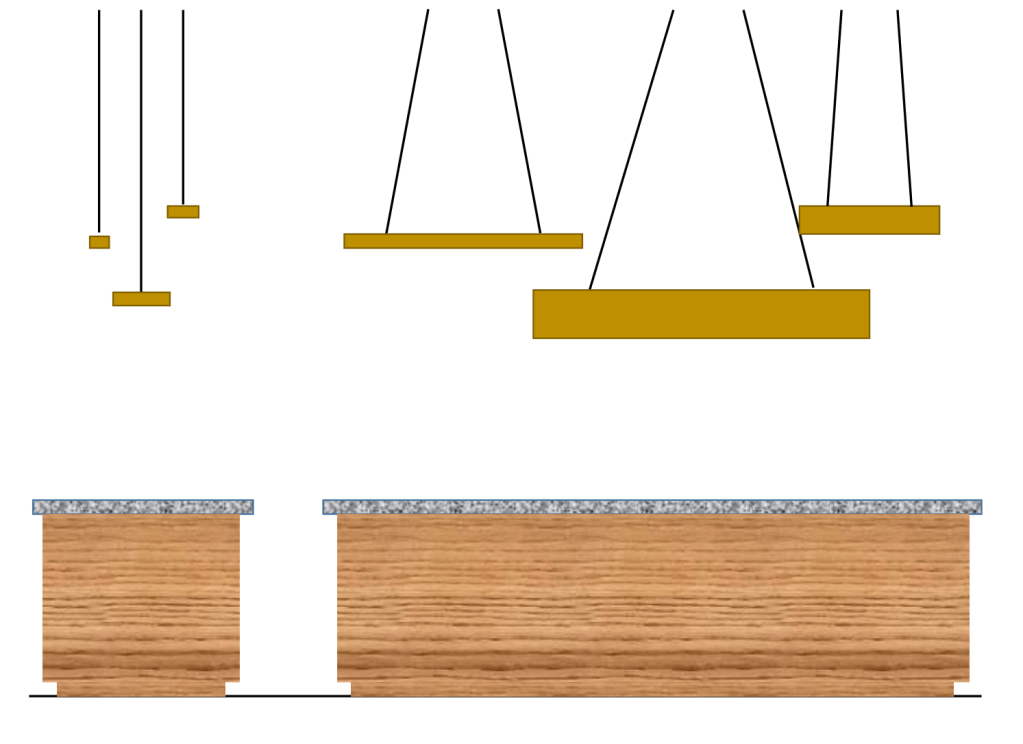
Different Sizes/Colors
Is there a reason to have all the rings the same size? No! Try a variety instead. Are multiple finishes used in the room? Are two-toned elements used? Why not try three rings in one color and two in the other?
If using multiple rings, consider going one step farther and altering the size as well. A mix of sizes can create added visual interest. In rooms where it might work, consider using multiple finishes as well.
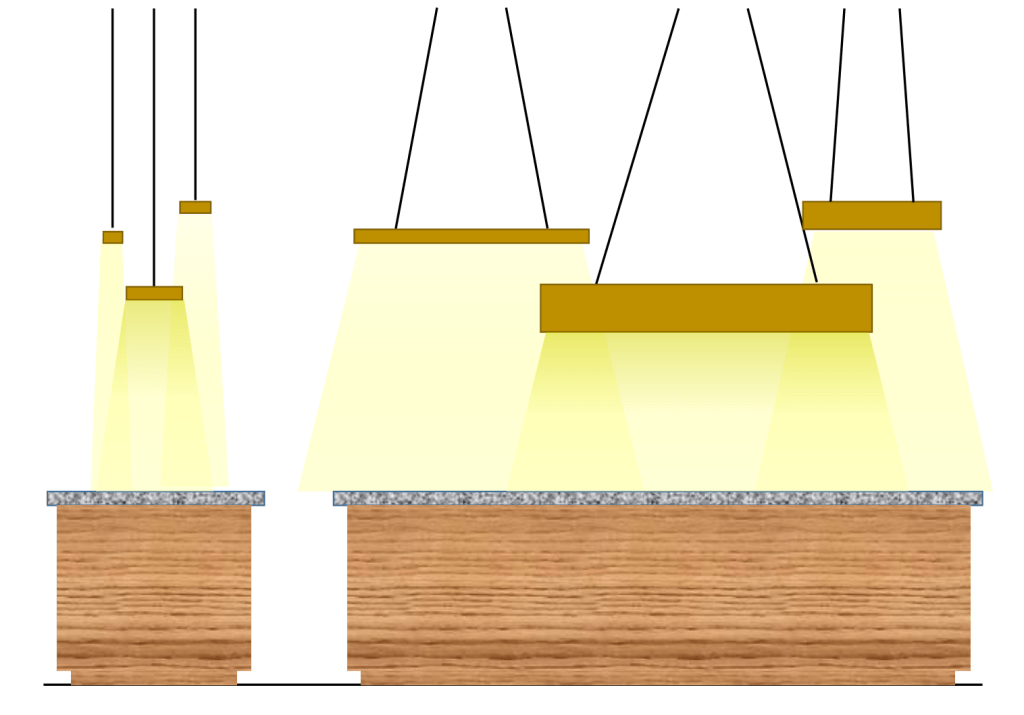
Varying Elevations
A collection of rings hung at different heights can be as interesting as size differences.
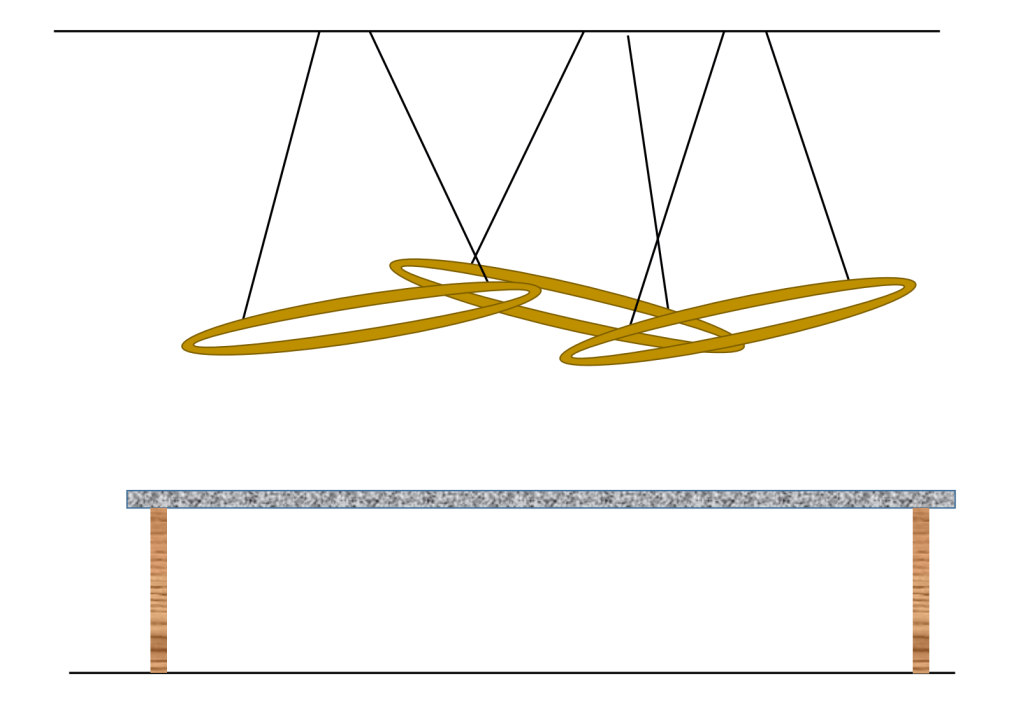
Angles
Rings are all aircraft cable suspended. Adjusting one cable can deliver a quirky angle for the ring. Repeat that with all of the suspended rings and the result will be a fun look. Don’t like it? The adjustment back to plumb, is easier than any of the other suggestions!
Adjusting the cable that suspends each ring can provide an interesting visual presentation that elevates the look and differentiates the space.
Placement
Pendants do not need to be on the centerline of the table or countertop below. Adjusting them closer to one edge will add yet another level of interest. Remember, if this is done, hanging heights may need some adjustments to avoid contact with the humans who occupy the space. You may also need to visually balance the space if doing this, unless an intentional asymmetry is the goal.
Shape Shifting
Take everything I just wrote here and replace rings with squares. Now take half of the rings and replace them with squares. You’ve just duplicated all of the possibilities! Black rings and Natural Brass squares. Chrome squares and White rings.
Exceeding Expectations
There is nothing wrong with simply using the ring as initially intended. Simple geometric shapes are classic elements of design and the rings (or squares) will look just fine. Consider moving beyond “just fine.” Experiment, explore and try something different. It might be exactly what is needed to elevate a room design and create something special.
It seems, slender, linear luminaires are all the rage today. The tiny profile and baseline aesthetics allow them to slip, almost unannounced, into a design. Channel extrusions have allowed this grown in popularity. Filled with LED Tape, they can now be configured into custom lengths, specifically formatted to the space. They are taking their place over kitchen islands, dining room tables, bedrooms and great rooms. Because of their simplicity, customizability and ease of use, expect these lighting options to stay around for a while.
The simplicity of a 1” wide by 2” or 3” height can be intoxicating, but what if you want more? The fact that it is so easy to customize, might promote the idea of using these pieces in more interesting ways. Sure, a line of light, 36” above the island, a foot shorter than the island length will be stunning, but could something more creative be considered? When asking about a unique option, my answer is always, “Yes!”
Consider multiples. Think about varying lengths, plan altered hanging elevations. There are countless ways employ these pieces. Here are a few inspiration starters.
Multiples
The idea of using two or three chandeliers over a dining room table is not new. Now apply that same logic and design sense to linear pieces. Perhaps they are positioned 45° or 60° to the surface of the table top. What about three lengths, forming a triangle over a rounded table? Four lengths can accentuate the perimeter of a table or island, one length on each side. Start with thinking about, “more than one.”
Varying Lengths
Each length can easily be different. A hacksaw and a blade that cleanly cuts aluminum will do the trick. Extrusion manufacturers sell end caps that can be assembled to whatever length you decide.
Using linear units of varying lengths can be a simple, yet exciting way to create a unique space, when faced with a tight budget.
Alternate/Angled Elevations
These extrusions are installed with the use of aircraft cable. This cable is easily adjusted, so hanging the piece at an angle is simple. One cable just needs to be shorter and an angle is created. Combine the angle hung akimbo to the ends of the table/countertop for a more exaggerated variant.
While hanging extrusion pendants parallel with the table/counter is fine, a slight angle will add energy to the space and interest to the room. In a plan view, avoiding parallels to the table or countertop will add another layer of interest.
Different Extrusions
Aluminum extrusions are available in a wide variety of shapes. We might be inclined to stick with a single profile, assuming the simple look will allow the lighting to disappear into the background. That is certainly an option. Variation can, however work well. Think about a common width and three different extrusion height, or a common height with varying width. This also invites the inclusion of additional strips of LED Tape. Like everything else in design, when done with intent, the results can be exciting.
Use linear extrusion pendants of varying widths and lengths to add more interest to a design and a space.
Different Lumen Levels
There are different extrusion sizes and each size can accommodate different quantities of LED Tape. Different amounts of light could be installed, delivering varying levels of illuminance. Perhaps the center light is brighter (has more strips of LED Tape) than those at its side. The supplemental light can serve as a more ambient illumination, thereby adding to the room’s aesthetic.
Think about using different levels of light in each of the extrusions. This play of light can be as visually exciting as multiple paint shades and complimentary tile solutions.
It’s Easy to Be Creative
Extrusions are just straight lines. If a straight line design can be imagined, it can be realized in light. When working with lighting, remember, they are simply another aspect of design. Treating them as such will open up a whole new palette of creativity.
Sure, I am a “lighting guy” but it is virtually impossible to ignore all or the “other” interesting design ideas that surround me. By nature, I am aesthetically inquisitive. I see, assess and catalog, fashion, labels, product design, interiors…almost anything that comes from the mind of a creative person. During that absorption, some strike me as interesting, fresh and worthy of note, perhaps indicating some sort of trend change, or maybe they might have an impact on the next trend. Here is my list of things that stood out.
Beige! Beige! Beige!
It’s as if gray neutrals never existed. Every major furniture manufacturer was showing beige products. Now don’t get me wrong. This does not mean a return to all beige, all the time. It simply indicates that beige, rather than gray will be the hinge on which interiors will be hung. In my mind, this makes sense. We see brass/gold rising, brushed nickel declining and black at its peak, with a decline inevitable. As we enter this warmer design phase, beige and warm brass are perfect partners. Expect this combo to dominate for the next ten to fifteen years.
Pile
Could Glyn John’s 60s era fashions, so dominant in “The Beatles: Get Back” documentary have made such an immediate impact (doubtful, simply because of timing) or are we just looking for something cozy because of the never ending pandemic separation? (More likely!) For whatever reason, pile is EVERYWHERE! Pile lined coats, pile coat exteriors, cuffs and collars, pile covered furniture (in beige, of course!) and pile trimmed everything else. It is textural, demands a touch and just feels engaging.
Demar Leather
We all know leather is hot right now, so I could have easily passed by this company. What is so striking here is the WIDE variety of color. They are combining high quality materials and a nice selection of textures with their ability to customize color. There are a lot of possibilities here, delivering trend-relevant material in brand-specific color palettes. https://demanrleather.com
Poltrona Frau
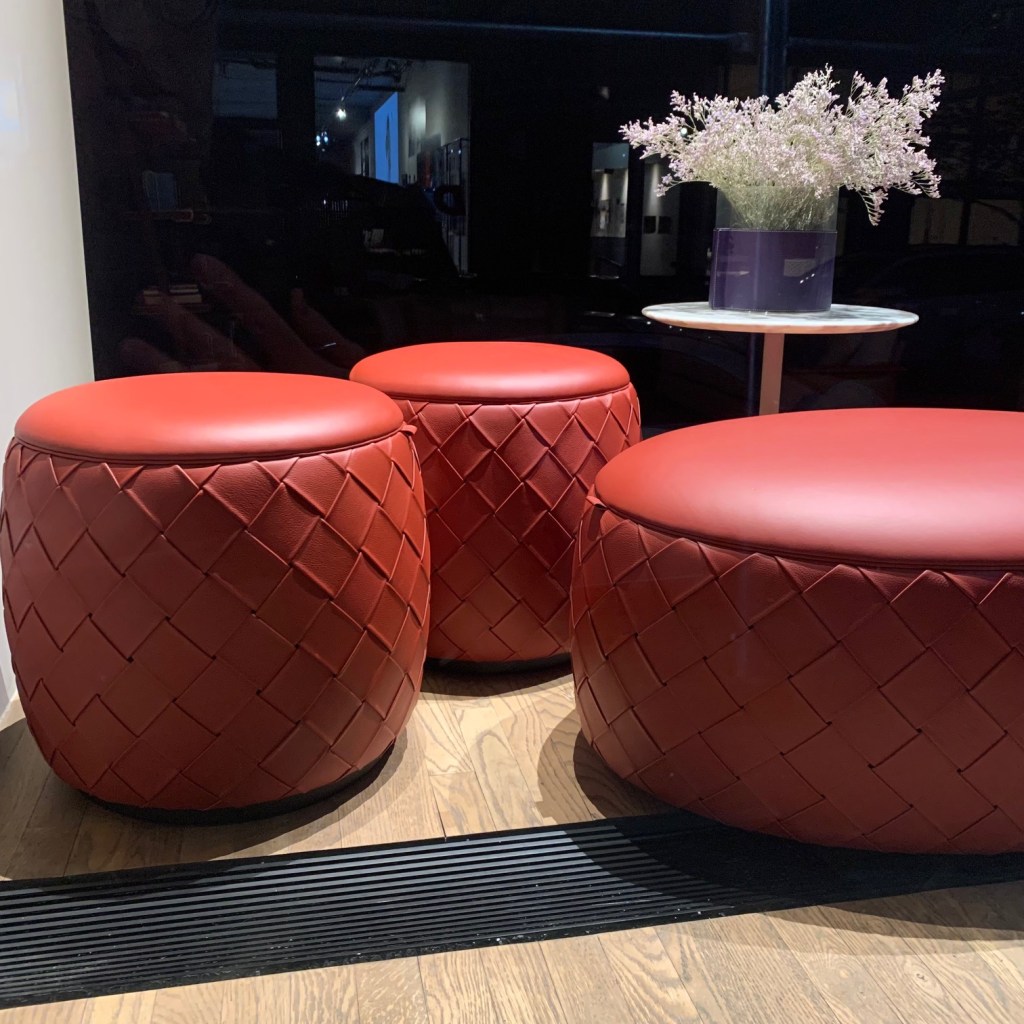
With leather in mind, I love to visit the Poltrona Frau showroom. The furniture is intoxicating and so beautifully crafted. In the window of their Wooster Street showroom they displayed ottomans with a basket weave pattern in dense red. Adding the pattern was a nice way to contemporize classic leather furniture.
Poltrona Frau – SOHO front window featuring beautifully woven leather furniture.
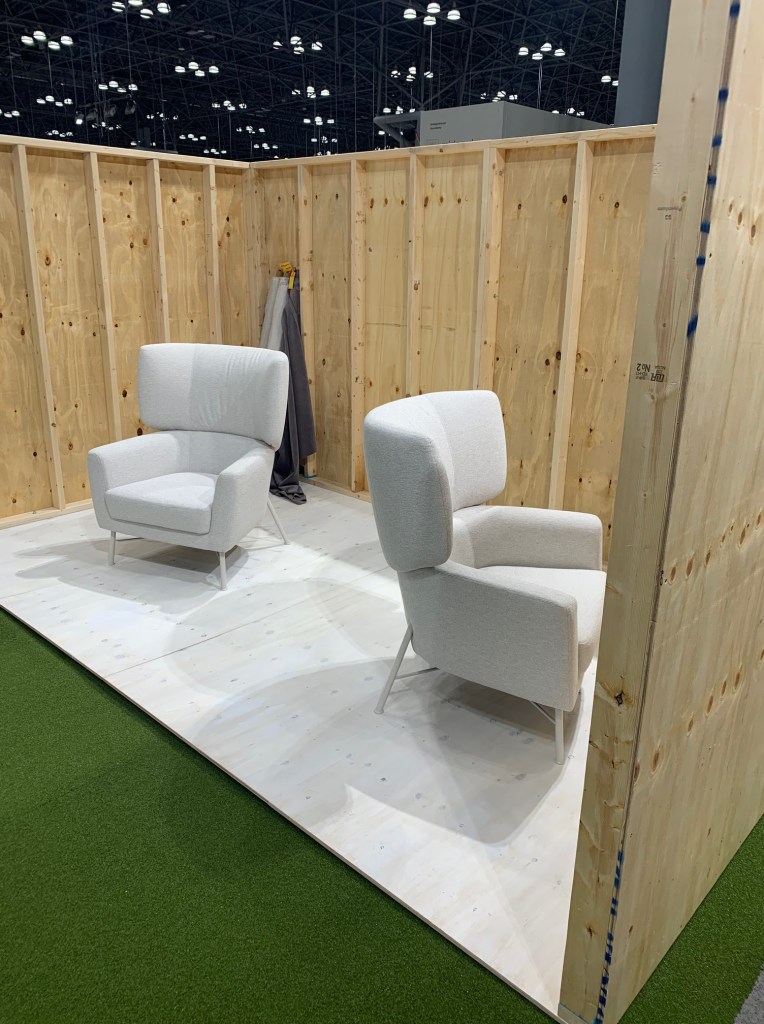
Many people know Terry Crews as an actor, most recently, television’s Brooklyn Nine-Nine. Others remember him as a football player. Football players remember him as the player who created individualized artwork that appealed to the narcissistic tendencies of the star athlete. Some people might even know him as a body builder, inspirational speaker or all-around “nice guy.” I, on the other hand respect him and know him for his talent as a designer. So does Bernhardt, the premium manufacturer of fine furniture. Over the last five (?) years, Crews has design some remarkable pieces for Bernhardt and I look forward to seeing each new item, every year. Crews worked his way through art school as a ball player, when success came in that field he never forgot his core calling. With success in many areas, his return to art/design probably was inevitable for such a motivated guy. Regardless of how he got here, we should all enjoy the end result. The new Belmont chair just became another jewel in his crown.
Bernhardt – The Belmont chair designed by Terry Crews
Lioli produces thin micro-tiles (3mm) in an astounding array of colors. The small size allows them to contour to irregular surfaces and refract light in multiple directions. Because of the size and palette, there are endless possibilities for use. I must admit, their website and displays can be perceived as tacky with too much glitz and corny examples, but in the hands of the right designer, this is a product that could individualize a space.
Lioli Glass – miniature sized mosaic glass pieces combined to create amazing designs and item facades.
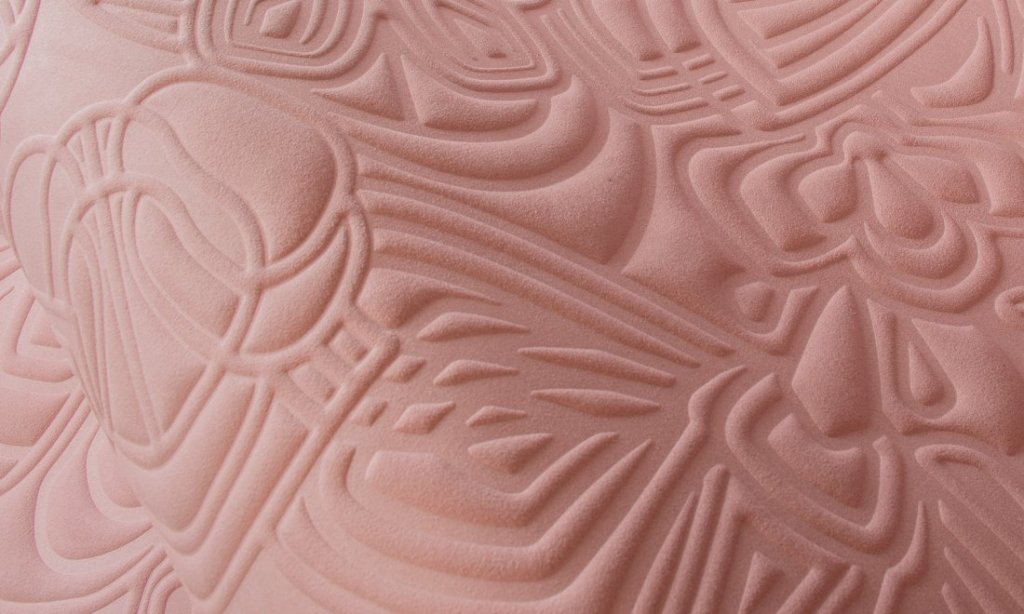
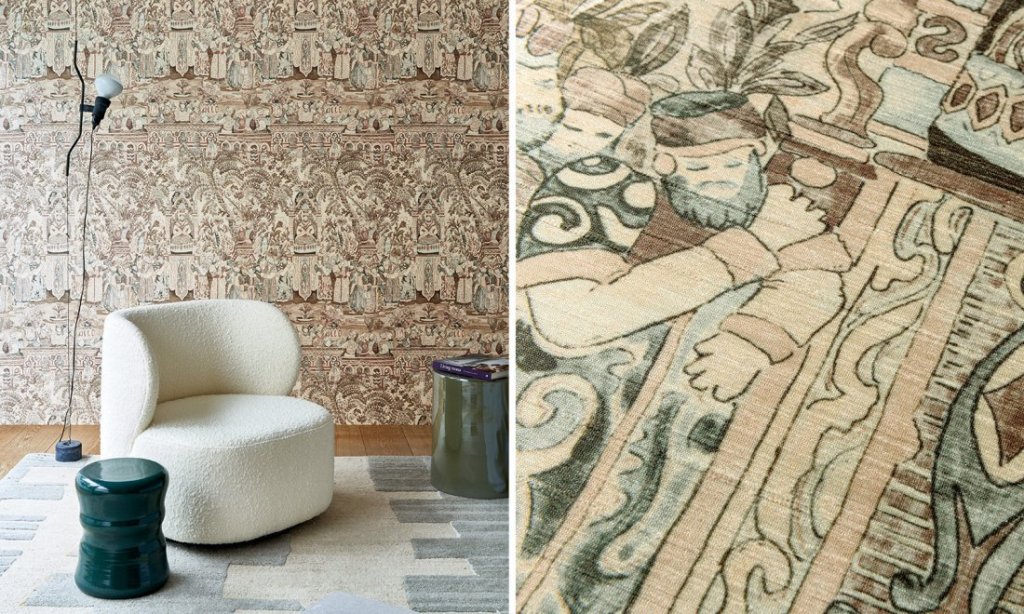
When wallpaper reemerged I was mesmerized by the reinvention of the stale product I remember from my youth. Gone were the tiny flowers, pinstripes and inane patterns. Bold, clever design was everywhere. Since then, I have nodded politely to most wallcovering sources. Been there. Seen that. So I was surprised to be taken aback by Arte. Some were bold, some subtle, some textural, others with the complexity of a Persian rugs. Perhaps, to a more learned eye, there is nothing new here, but for me, this was notch above what I have seen for a while.
Arte – Textured wallpaperArte – Wallpaper borrowing from the detailed visuals created by Persian rug artisans.
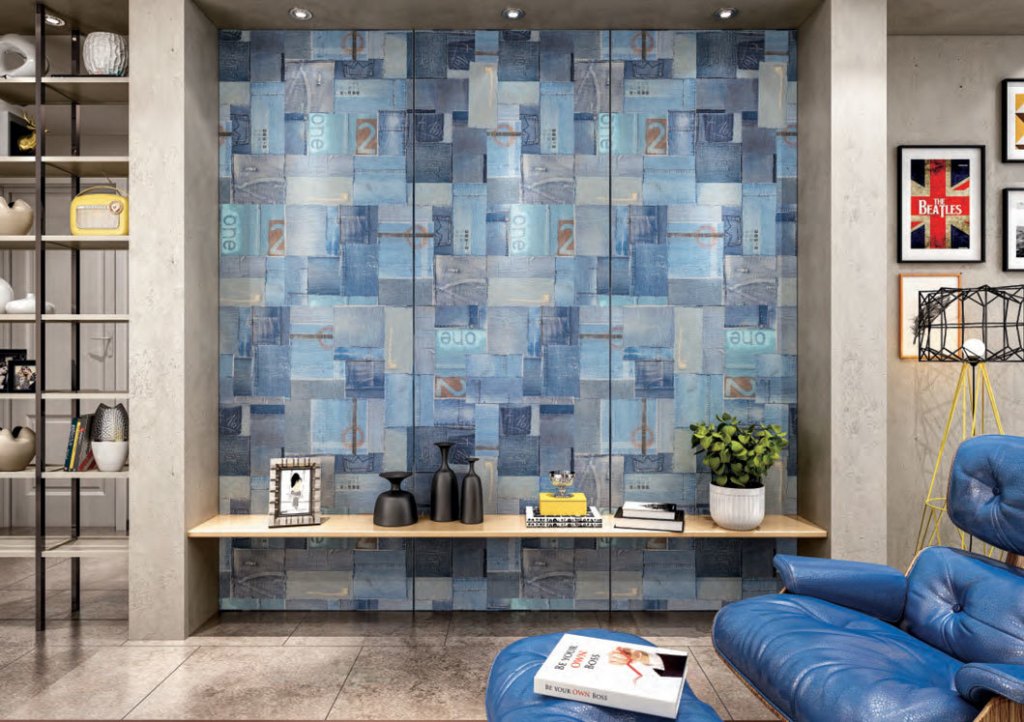
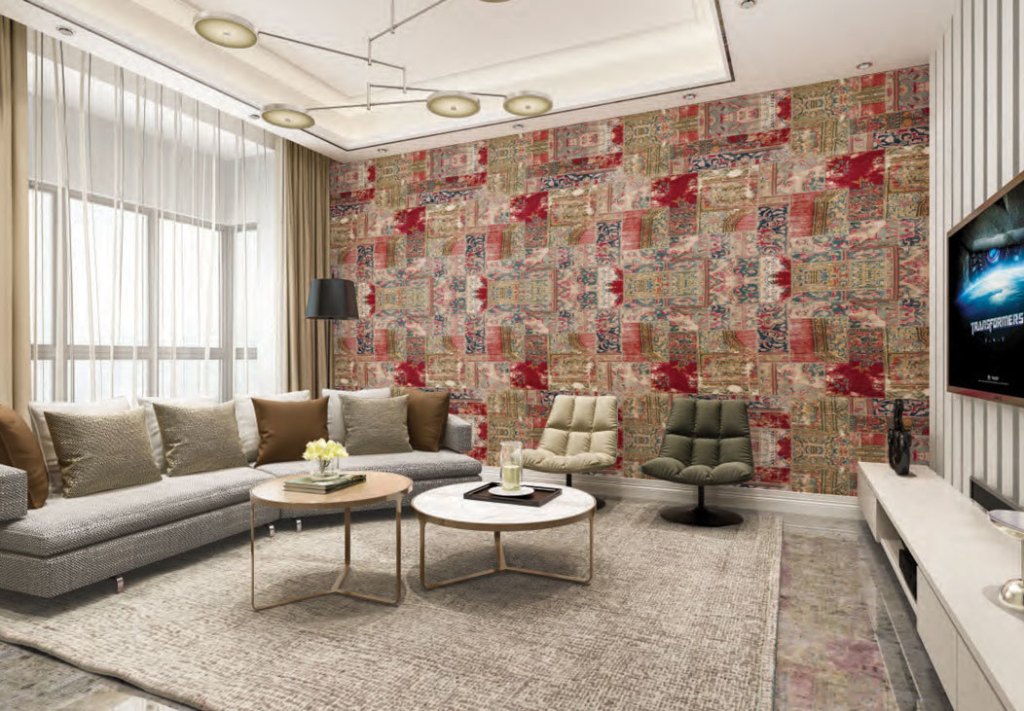
Like wallcoverings, laminates have been readily available and oh, so typical. I found the variety and color of Lab Designs to be different and new. The range of creative patterns and colors was inspiring. A quick review of their samples has me wondering where I could use it. Done well, it could substantially elevate a space. I’m pumped!
Lab Design – It might look like wallpaper, but it is in-fact, a laminate surface!Lab Design – It might look like wallpaper, but it is in-fact, a laminated surface!
I’ve always associated the introduction of black into the bathroom with the Jason Wu collection of faucets for Brizo. Perhaps there were others who proposed matte black, but none so elegantly and persistently. They alone persevered until the whole industry followed. Black can now be found in Home Depot and Brizo has shifted to a wood-enhanced faucet, part of their Frank Lloyd Wright collection. While I’m not sure how FLW connects with this design, it is time to think about the proposed intersection of wood, chrome and water. The wood compels you to touch and feel the faucet in a way metallic finishes alone do not. The hardware feels soft and approachable. The designs are also available in metallic-only finishes, but they are really uneventful without the draw of wood.
By the way, Jason Wu is now showing Brizo faucet designs in white, a finish that has been unused in plumbing for over twenty years and it looks fresh, new and revolutionary. The difference here is a subtle matte instead of the 1990s gloss. Re-read the first few sentences of this section and buckle your seat belts for what is next!
Brizo – Frank Lloyd Wright inspired faucet suite.Brizo – Frank Lloyd Wright inspired suite uses wood as a design element.
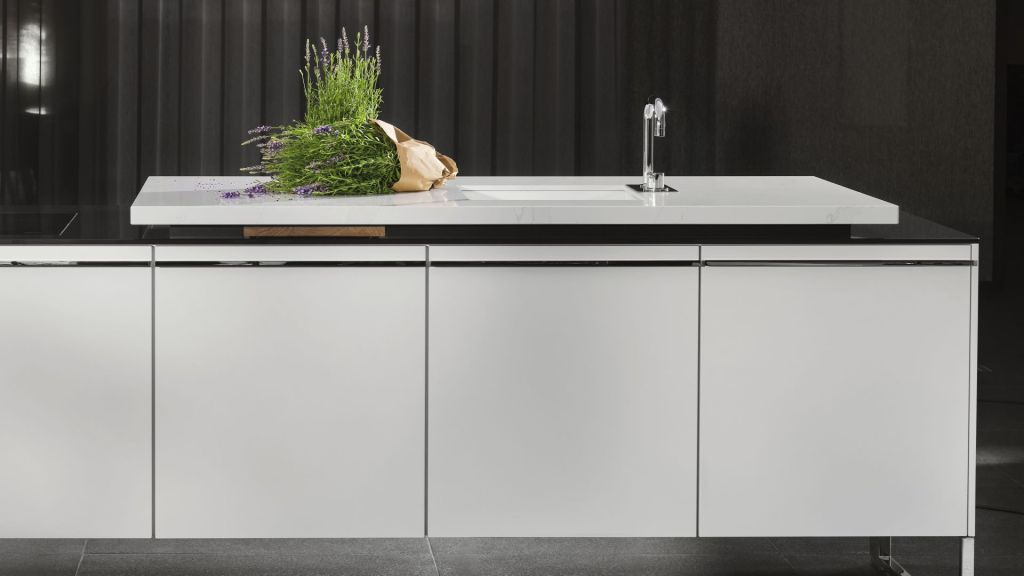
What’s not to like about a Poggenpohl kitchen? I find myself drooling over each one. I was especially drawn to the Venova island, realized with chrome “legs,” gloss white surfaces and stepped countertop. It is flawless.
Poggenpohl – a streamlined island with simple legs and tiered countertop.
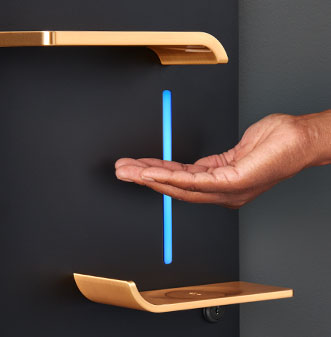
Let’s face it, hand sanitation stations are REALLY ugly. Some are placed on a wobbly pole in the middle of a hallway, others are mounted in bathrooms featuring some pedestrian, brand-specific look. We need this cleansing juice, but we surely don’t want to interact with the homely dispenser. Vaask has elevated this yeoman’s piece of equipment into an aesthetically interesting and interactive tool. The station recognizes the user when a hand is placed under the sculptural spigot by illuminating the wall surface. As the sanitizer is distributed, the light replicates the fluid’s motion. A mirror-image drip guard eliminates the unsightly and inevitable puddle on the floor below. Don’t you love when a designer solves a multi-faceted problem with a great looking solution? Sure, it’s a sanitizer dispenser, but I love this design!
Vaask – Why do hand sanitation stations need to look ugly? Vaask has solved the problem with a beautiful, streamlined design.
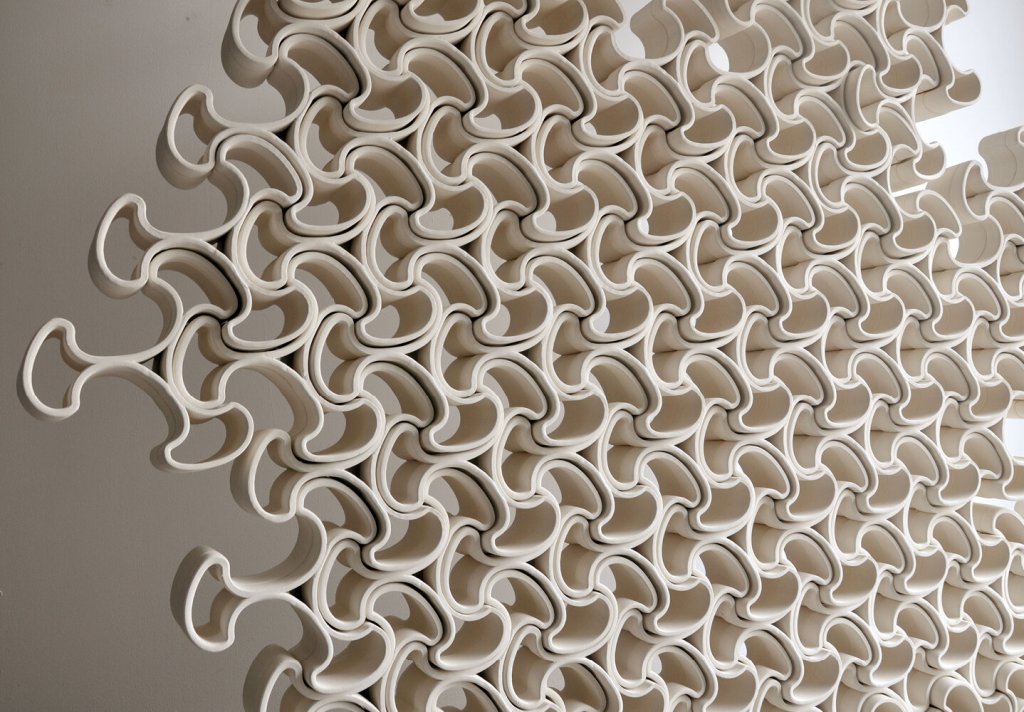
Peters is creating 3D printed ceramics and employing them in installations that take advantage of the multiplicity of the printed unit. Because of the digital manufacturing, these pieces appear to be delicate and more detailed than those produced using conventional methodology.
Brian Peters – 3-D printed ceramic that takes advantage of duplicates to form something amazing.
Inspiration comes from many places. Pile lined parkas lead to furniture fabric that defines the tonal nuances of the metallic surroundings and that in-turn drives the style of a space. Trends start from the oddest places and typically die of exhaustion. Watchful eyes can understand those paths and determine how to use the information. Trips to New York help me sort through these concepts. I hope this miniature overview helped you as well.
Every year (COVID 2019/2020 excluded) I spend a long weekend, or two in New York. I plan my trip(s) around the International Contemporary Furniture Fair (ICFF) and another design-related show that attracts my attention. In the past, the Architectural Digest Design Show, NY Now and BDNY have provided a second reason to visit. This year, LightFair gave me that excuse. During two visits, I try to absorb ideas, trends and directions that provide a vison of where we are and where we are headed in home furnishings. This year, ICFF was combined with BDNY and Most Wanted, a show featuring emerging home furnishings and design talent. Outside of the show, I visit galleries, showrooms, window-shop and poke around the many corners of the city to simply absorb.
This is the first of two posts covering my trips of 2021. It is concentrated on lighting. The next post will review interesting “non-lighting” (basically, everything else!) finds.
Pure Edge TruTrack
So much track lighting looks like it is pasted on the ceiling. While we need the light at various points around the room, to do so, the track must build a path to those assorted locations. TruTrack is only 5/8” deep, so it can be mounted directly on studs. The drywall is then installed against the track. After following the finishing instructions and using a paintable track cover, the track disappears into the ceiling! Only the head is visible. Finally, a clean look on the ceiling where track is needed.
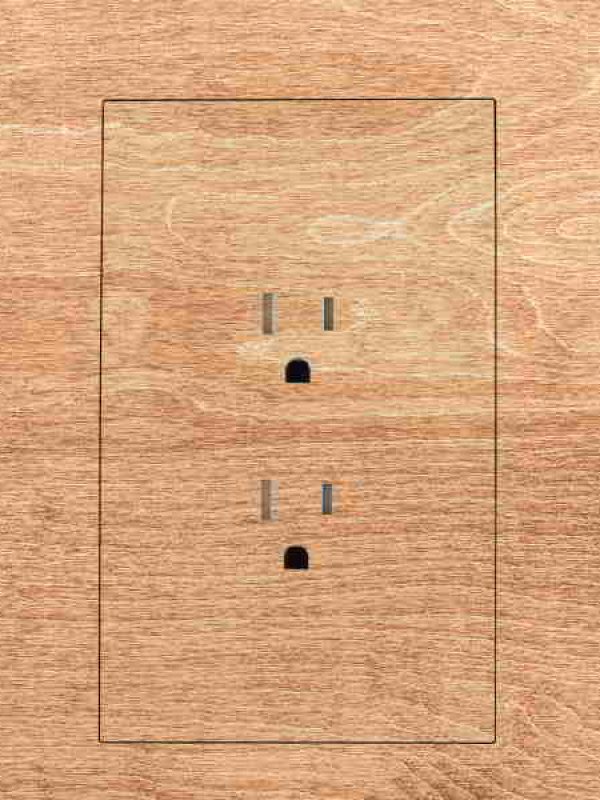
In the same way that TruTrack allows the track to disappear, Hide-A-Trim has developed tools to hide wall mounted light switches and GCOs. The componentry works with all of the popular brands of control devices. Paint and wall covering expose only the usable or moving parts of the controls.
Hide-A-Trim – Flush mounted GCO
Artemide Lighting
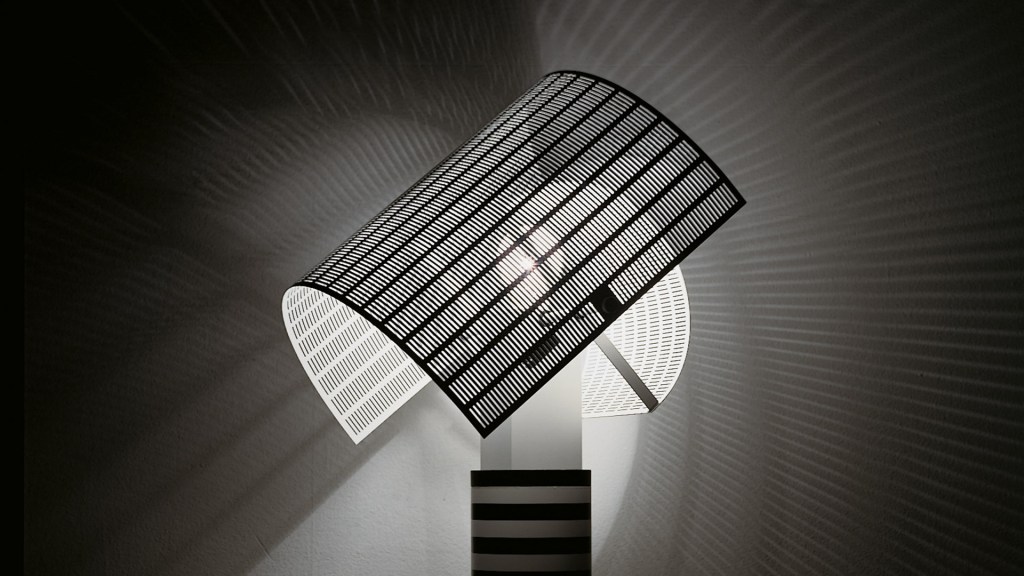
LED has allowed for a complete rethinking of how we build luminaires. The Shoegun lamp rethinks the purpose of a lampshade, dividing it in half and forcing each section to diffuse the light in an unusual and different way.
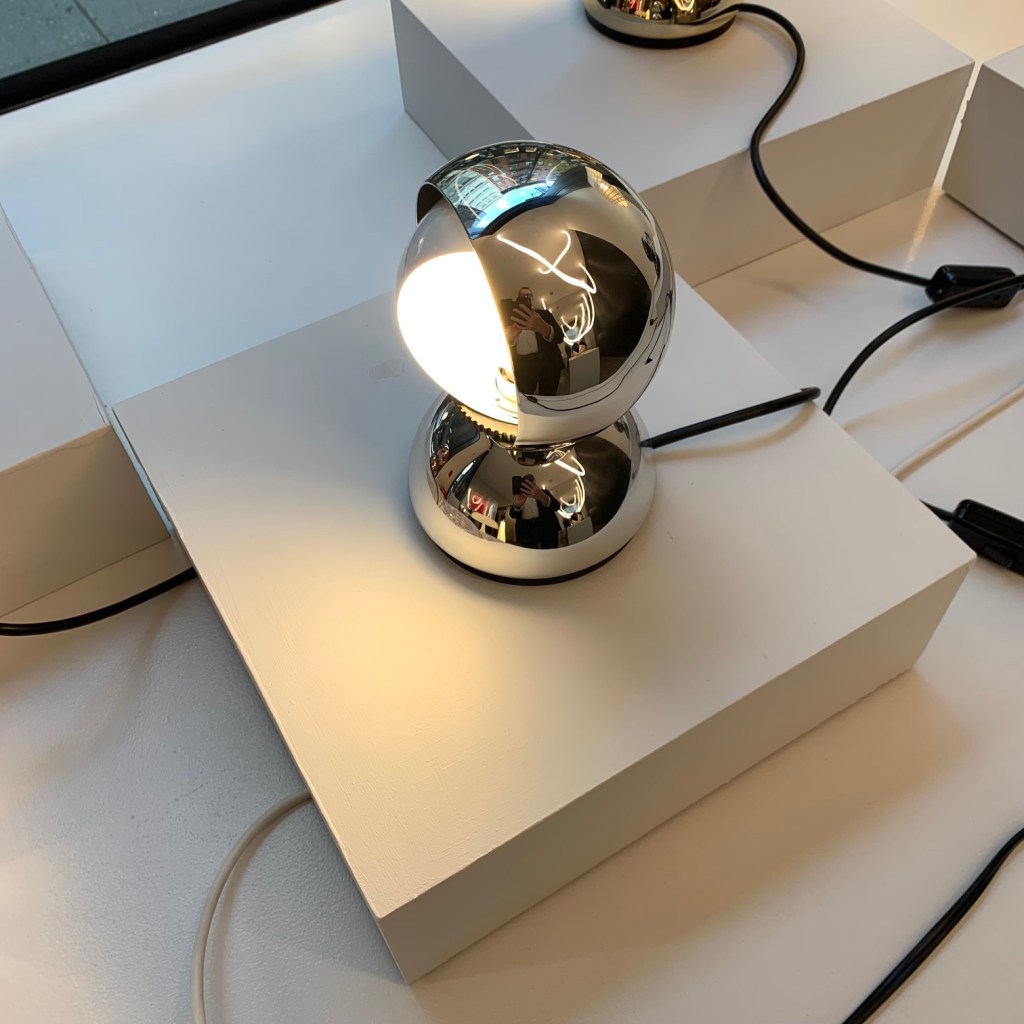
The classic 1960s Eclisse design has been reintroduced in a series of metallic finishes. As with the Shoegun, an inner-shade can be rotated to serve as a regulator of the light. The size, colors and functionality make these little table lamps highly desirable again.
Artemide – Shoegun Lamp with two, adjustable half-shadesArtemide – Eclisse portable lamps with directional shields.
Kartell
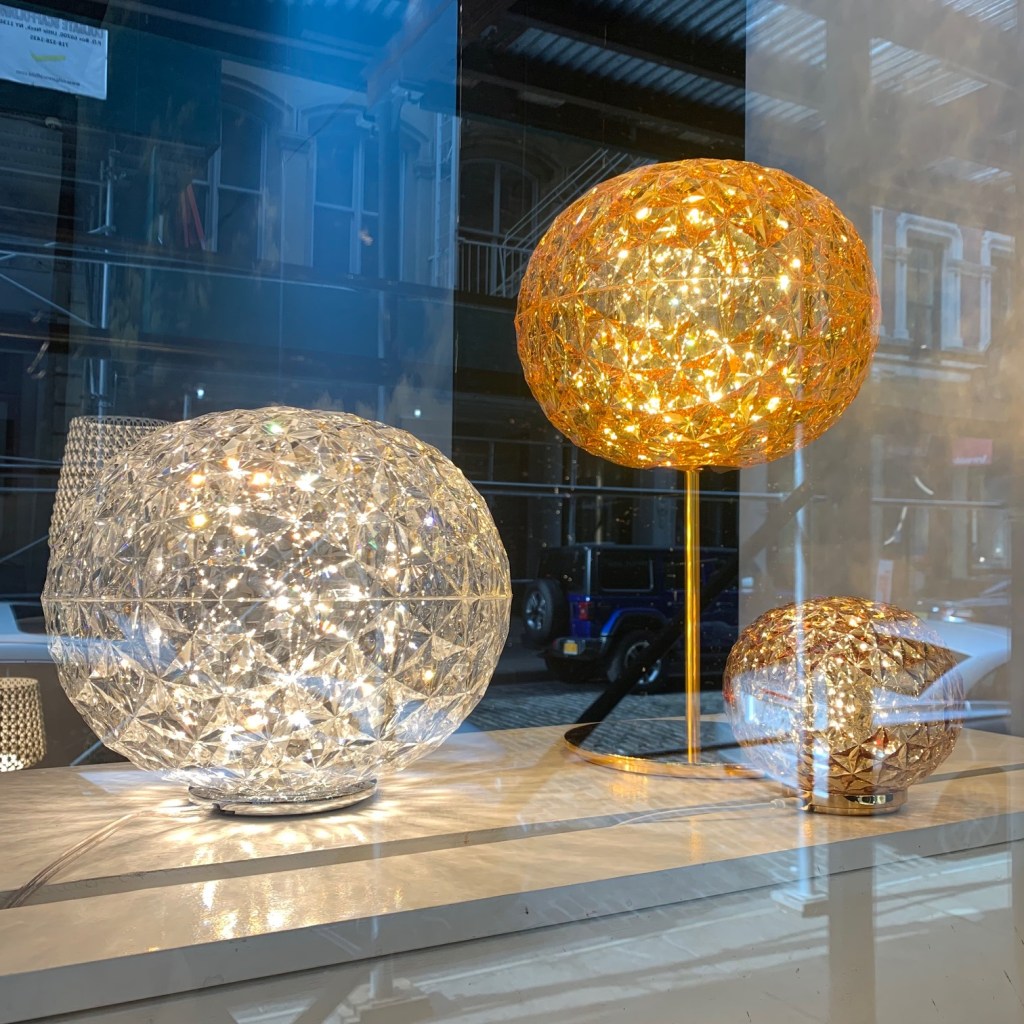
Kartell has always been known for fine acrylic that elevated simple product beyond what “plastic” means to most people. They have so often played with classic designs, typified by the Louis XV inspired, Ghost Chair that I should not have been surprised to see the fine facet-cut crystal rendered in acrylic. These smoke, clear and amber pendants and lamps (Planet) are dazzling.
Equally interesting are the lace inspired resin lamps (Kabuki.) With an offset inner and outer shell, the result is much more delicate than one would expect from thermoplastic!
Kartell – SOHO window featuring the Planet lighting products with a cut-crystal feel.
Kartell – SOHO window featuring the Kabuki lamp with a resin-lace look.
Ochre
Ochre does not introduce a lot of new products, but what they present is always intriguing and subtle. Mandala is a soft porcelain rectangle with light that peeks out from behind, with just the softest glowing ring in the face of the porcelain. Very ethereal. https://ochre.us/
Ochre – Mandala sconce with light through and around a delicate porcelain plate.
Original BTC
The new Pebble pendant from Original BTC uses plates of English bone china that are stacked into a sphere to deliver a warm alabaster glow. BTC excels in the use of fine china and each year I look forward to their new pieces, even though they are a bit more transitional than my person preferences. https://www.originalbtc.com/?country=United%20States&cclcl=en_US&redirectSeoId
Original BTC – SOHO showroom front window – Pebble Pendant featuring overlapping English bone china plates.
Bandido
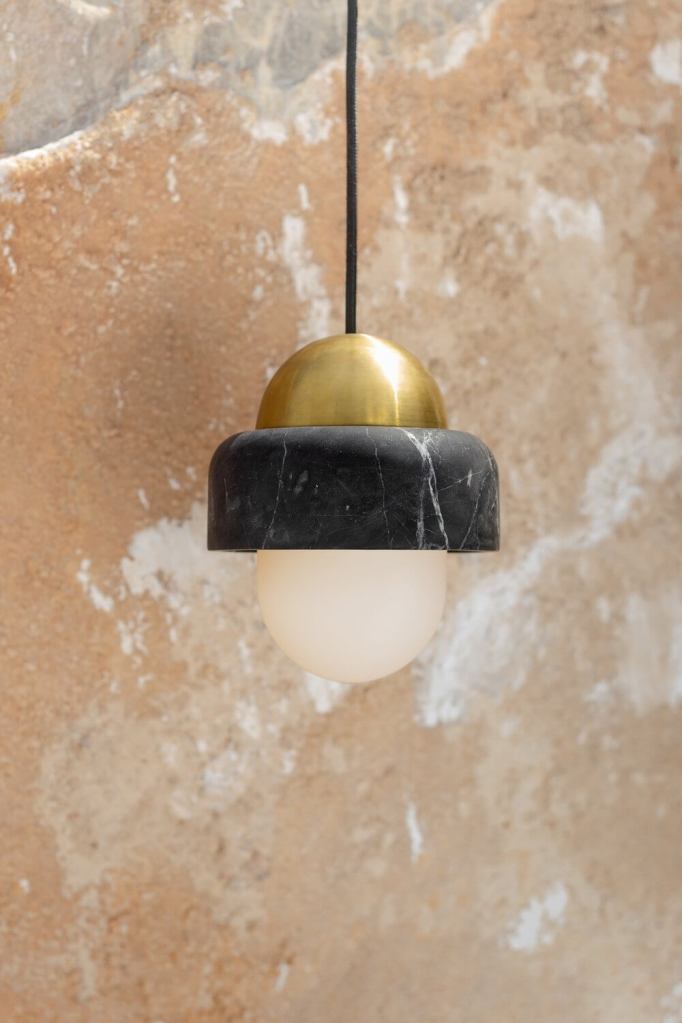
This Mexican company is turning marble into beautifully handcrafted lighting. The NAGA pendant features a collar of marble that encases the diffuser and is topped by a metal cone. This is nicely done marble from a place where polished stone usually means inexpensive souvenir trinkets. This is heirloom quality. https://www.bandidostudio.com/
Bandido – NAGA pendant features a polished stone center ring,
Secto Design
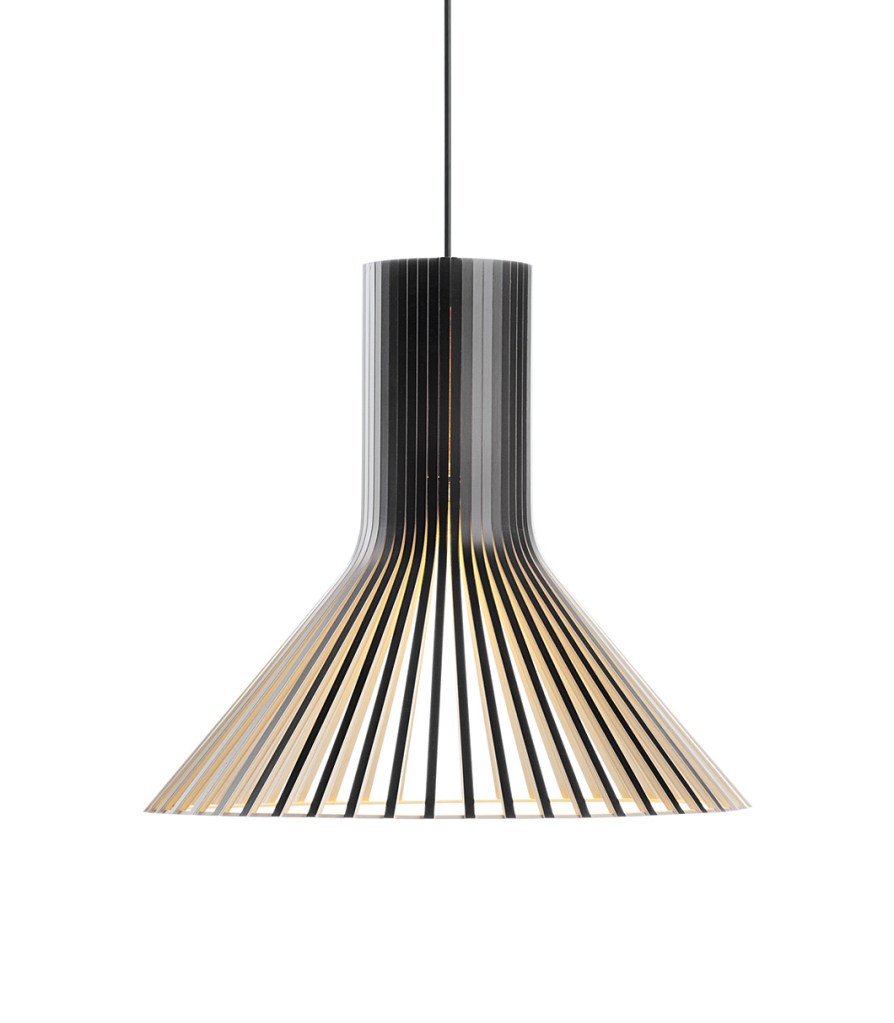
Secto is a Finnish company that has created a line of paper-based laminate covered birch wood. The result is delicate and airy. The pendants seem to float in space (actually, they do, albeit via a cord!) The lightness is accentuated with an LED light source that is tucked up inside and almost invisible, allowing the rays of light to play along with the scored wood shading. I loved this warm Scandinavian feel. This is a look immediately on-trend today with the rise of “Japandi” styling.
Secto Design – Paper based laminate covered birch wood shade.
Pablo
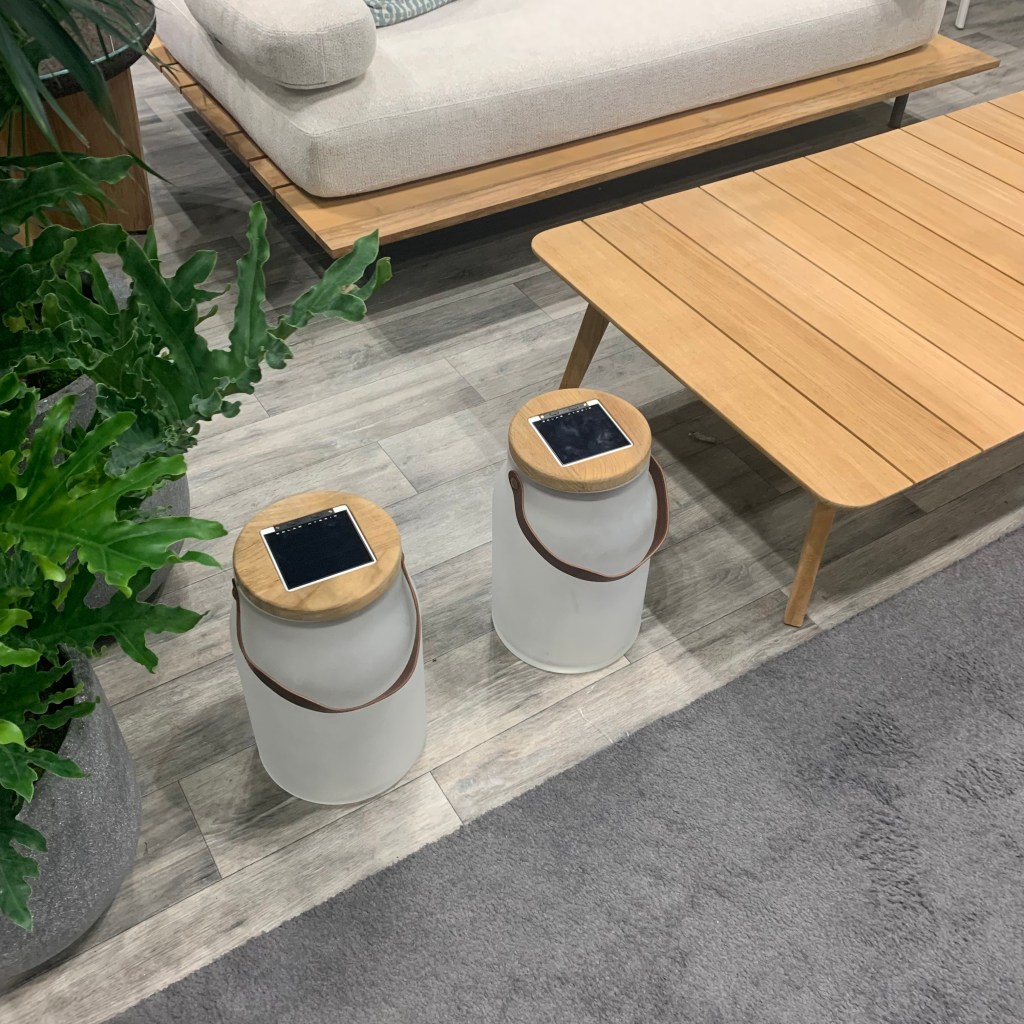
You can always count on Pablo to deliver an interesting and exciting new luminaire. This year, Luci forces a rethinking of what we think we know about portable lamps. Luci is unencumbered with cords. These are rechargeable and lightweight floor and table lamps. Light can be brought along wherever it is needed.
Danish company, Luxicole showed a similar product. It however featured a weighty base that subtracted from the light simplicity of the idea. Nonetheless, it is still a nice design.
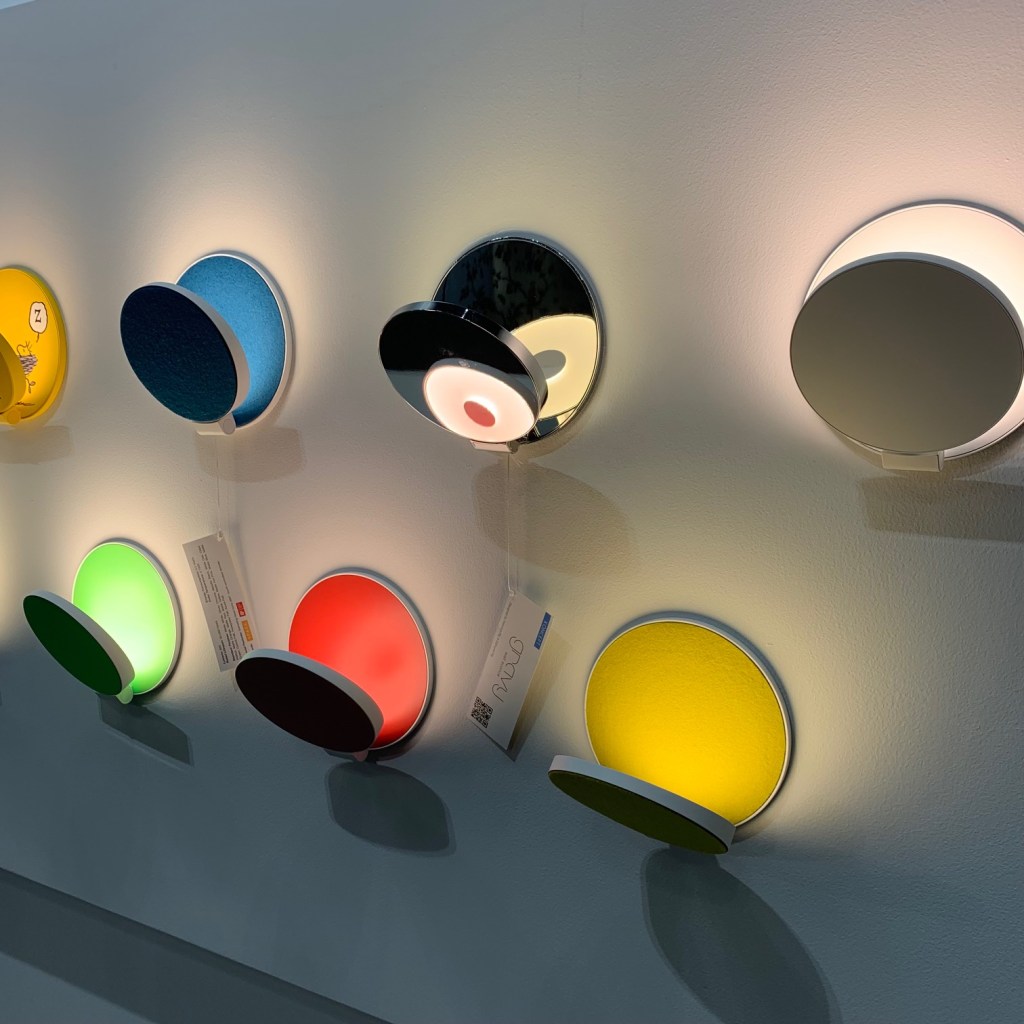
Do women still use compacts? The women in my life do not, but Koncept took this purse staple and turned it into the Gravy Wall Sconce. As the photo suggests, all manner of color and patterns are fair game, but more importantly, the reflective “lid” is fully adjustable, allowing the amount and direction of light to be adjusted as needed. This is a fun, playful little luminaire!
Koncept – Gravy Wall Sconce with an adjustable front “compact” lid.
Nina Magon for Studio M
Studio M showed a collection of products designed by Houston based, Nina Magon called Zeppelin that made wonderful use of LED. The cylinders of glass feature linear etchings and are encased in a structural frame that hides the light source. That light magnifies the etch and defines the design. It is an elegant collection of light.
Nina Magon for Studio M – Zeppelin collection with a linear etched diffuser surrounded by a metal frame.
Aaron Ethan Green
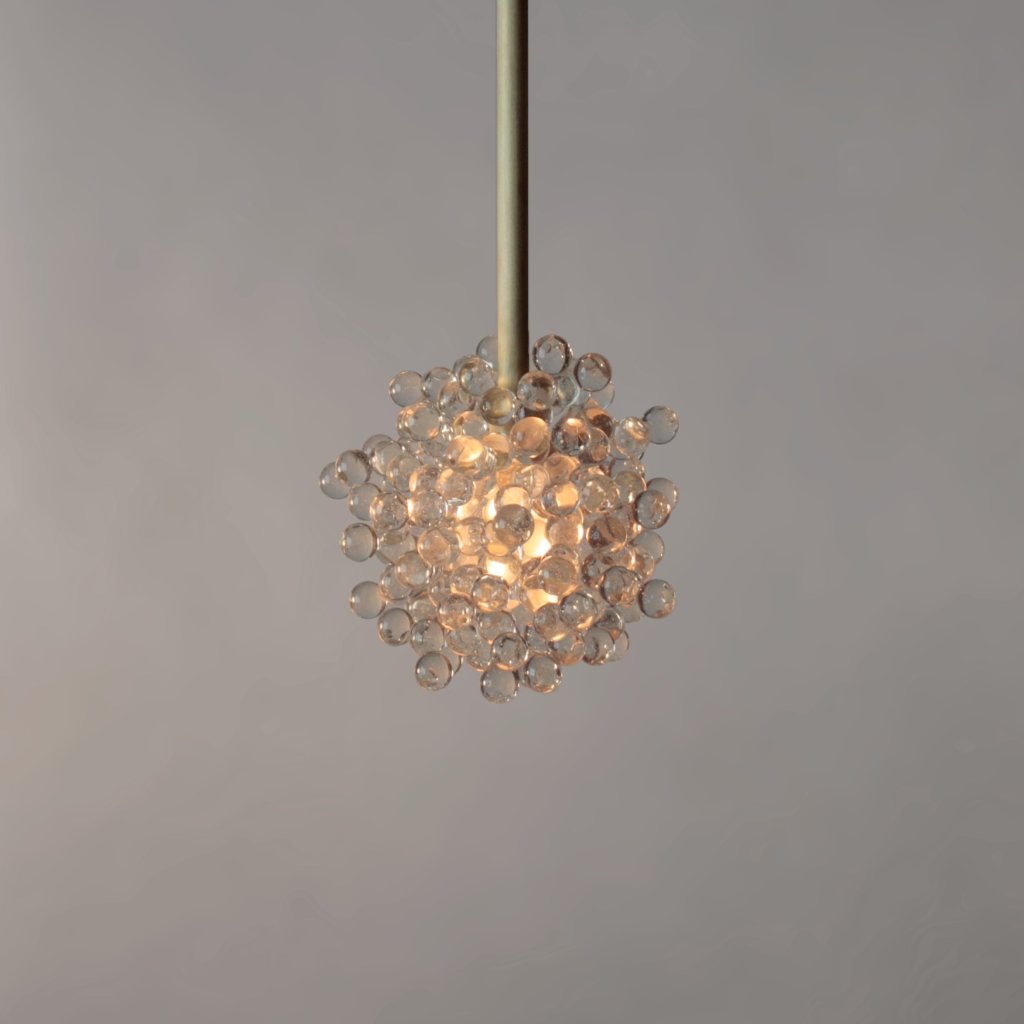
A standout in the Wanted Design section of the show was the Roe collection by Brooklyn designer, Aaron Ethan Green and it was so simple. A collection of marble-sized glass spheres are gathered together in a cluster, reminiscent of fish eggs, hence the name, Roe. Light is nicely diffused and they look so delicate as a pendant or sconce.
Aaron Ethan Green – Roe lighting collection features a collection of marble-sized spheres clustered together.
Roll & Hill
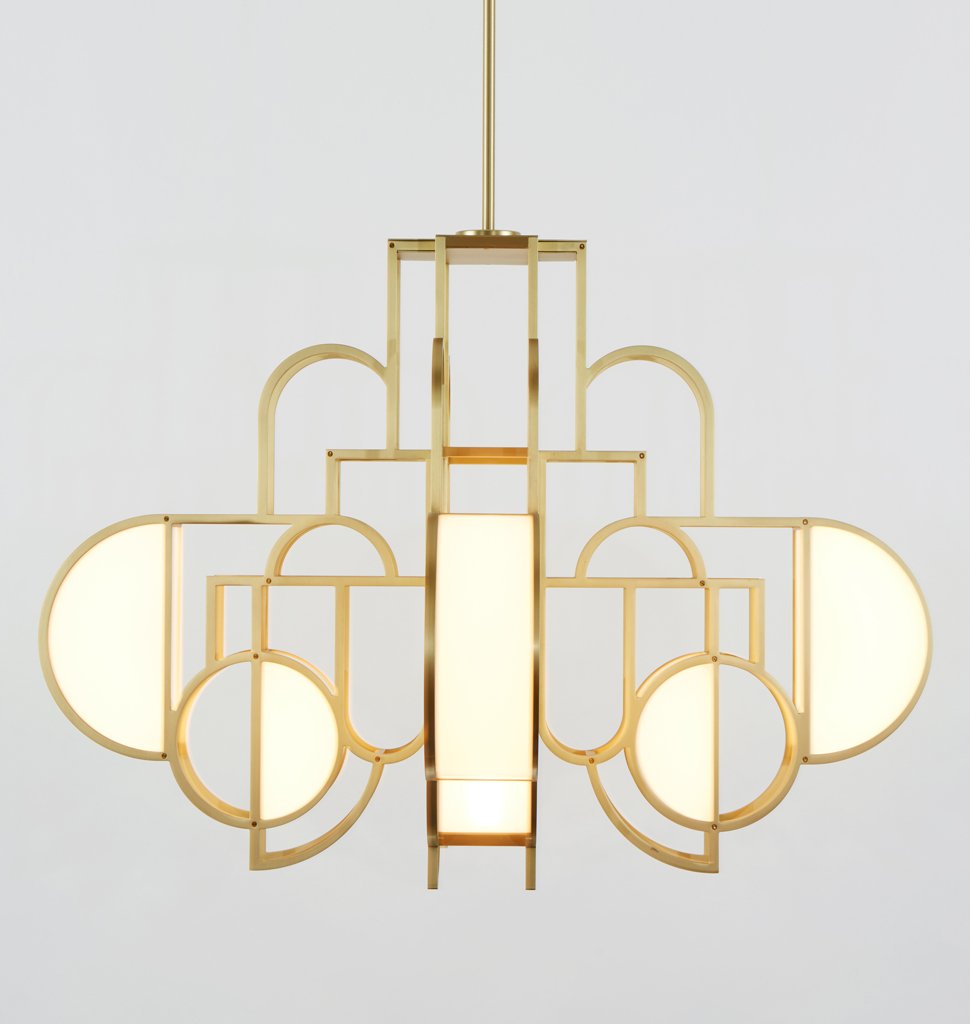
No trip to SOHO is complete without a visit to the Roll & Hill showroom. Imagine my disappointment when I found paper on the windows. Not to worry, they are adding a collection of furniture to their lighting lines that I am sure will be great. Sadly, I was unable to see their new Deco collection, Moonrise. As we exit a fairly strong Mid-Century trend, look for many people to find solace in Art Deco, or pieces that have an inkling of deco. Moonrise is perhaps more than an inkling, but nevertheless interesting and exciting.
There was a fair amount of wood used in lighting at the show. Much of it borrowing heavily from actual tree architecture. There were driftwood chandeliers, raw wood pendants and this polished tree branch lamp from Joel Seigle, a Brooklyn wood designer. Indo Puri went back to woven wicker, rattan, etc. to create folk-world and earthy lighting products.
On a sad note, some of my favorite spots in New York closed. It might be hard to say if this is COVID related, or a result of internet sales, but the wildly inventive Ingo Mauer SOHO showroom is no more. Since his recent death, this may be the result of a company change or…? The Stickbulb SOHO showroom also closed. I wonder if this is a trend with no end in sight. I’ll see, when I return in May 2022.
I hope some of these new lighting ideas will inspire you. They sure motivated my creative juices! Remember, my next post will cover “non-lighting” ideas that caught my attention. I know. What could be better than lighting? Stay tuned!
Many years ago, I participated in an energy-use roundtable. Sitting around the perimeter of a hotel ballroom were representatives from energy producers (utility companies) energy program authors/administrators, governmental agencies and manufacturers. Many aspects of energy use were discussed, but I have been unable to forget the continual pleas from the Canadian utility representatives for more energy efficient holiday lighting. Throughout the day, it was brought up multiple times by all of the electrical producers in attendance. Finally, at about the three-quarter mark in the proceedings, one of the Americans asked what many of us were thinking. “Holiday lighting has been mentioned multiple times by every Canadian sitting around this table. Could someone explain why?”
At that point, all of the Canadians (knowingly) giggled. One of the members of the contingency from BC Hydro, the electric producer for the British Columbia province swallowed his laughter and helped us ill-informed Americans with a little known fact. According to the utilities, Canada is the world’s per-capita leader in the use of holiday lighting. (I have no way of confirming this, but if anyone should know, it was these electricity executives.) The period of time from the second week of December to sometime in mid-January represents the largest levels of electric consumption over the entire year. All production must be geared toward that six to eight week period of electricity demand. ANY reduction, however small is considered a gift to producers. Simply put, holiday lighting dictates their business.
This meeting occurred at the heady early days of energy efficient lighting. Much has changed since. Canada outlawed anything other than LED holiday lights and both Canada and America have made significant strides toward better lighting. Knowing that, let me leave you with a few holiday lighting tips.
Outdoors, it is best to remember, less is more. Clark Griswold probably doesn’t live in your neighborhood, but even if he, or his ilk do, your home will be better noticed with a subtle application of festivity.
Many people love to set up a “spot light” on their front door for the holiday season. I’m not sure when and why this started, but here we are, stuck with tradition. In this regard, I urge you to revolt. DO NOT light your front door with a spot! Don’t give your relatives an opportunity to quote Manfred Mann’s Earth Band, Bruce Springsteen or The Weekend (depending on age!) Aim the spot on a beautiful tree and save yourself a New Year’s law suit because your great aunt was unable to see the porch steps. (We’ll ignore the fact that she had a fourth egg nog.)
Telemarketers have been advertising a child’s “cuddly toy” that shoots light out of its belly, delivering a celestial pattern onto the nursery or bedroom ceiling. Yikes! This thing scares the hell out of me! Without better information on the color of light, the lumen intensity and its impact on sleep, I’d run far away from this product. No one needs an insomniac youngster. Buy a stuffed narwhal or cobra instead. It will be safer!
Most importantly, have a wonderful holiday. Please overeat. Have one more drink. Tip your taxi/Uber/Lyft/Curb driver. Resolve to pay more attention to lighting in the New Year. Of all resolutions, this is the one that will deliver dividends for many years to come! Life is too short to live with poor lighting.
A friend allowed me to borrow a book he thought would interest me. The 99% City (Mars & Kohlstedt) is described as “a field guide to the hidden world of everyday design” whereby it explores the important, but overlooked elements that make a city function. He knows my passion for better lighting and called my attention to sections on street lighting.
“City of Light – Dissuasive Illumination,” explains that street light was an early way to make streets safer at night. They raised visibility and invited community. Street lights are certainly not new. Ancient Roman, Chinese and 15th century Europe all found value in better nighttime illumination and levels of use continued to increase, until, the book points out, there was pushback. Dark nights were good places for French Revolutionists. On the opposite side of the equation, people engaging in unseemly activities also preferred the dark.
Too Much Light
Another chapter, “Moonlight Towers” talks about the multi-story, arc-light towers that were constructed in Austin, Texas, among other US municipalities in the 1890s. Along with the required daily replacement of the electrodes, the noise, waste and intense glare caused push-back from residents. They were eventually removed in every city, except for the cash-strapped, Austin. The un-electrified towers remain as an indicator of the city’s historic past. Welder’s helmets, no longer required.
Like Austin, at that time, most of our cities are over-lit. Every alleyway has lighting, car lots are blasted with light all night and downtowns are bombarded with excess light that often does nothing but erase our ability to see the sky. Plants and animals are subsequently impact by excess nighttime lighting, effecting migratory patterns, nocturnal predators, adjoining aquatic life and a fairly large swath of conifer varietals, among other plants.
Just the Right Amount of Light
We are nearing a similar “good/bad, more/less light” position today. New research has been published recently that shows lower levels of light, but with better color properties is better for the user, pedestrian and worker in nighttime situations. Most of these measurements are substantially below government mandated levels. We all know that changing government regulations is akin to a “U” turn in an aircraft carrier, but the enticement of lower electric costs should make change inevitable.
Many people still believe more light is better and even higher levels of light are even better than that. Simply put, they are wrong. Our eyes function very well in extremely low levels of light and are slow to adjust to higher levels. Turn on the bedroom light in the middle of the night and you’ll know what I mean. This can be a difficult argument to win, however, especially when perceptions of safety are at stake.
Roadblocks!
Just as headway was being made in convincing people to reduce lumen amounts in outdoor residential applications, energy efficiency introduced better fluorescent, then new LED lamping. Light quantities popped back up. With integrated LED luminaires, the lumen output is staying high and a front porch light is often the last place you’ll find a dimmer. The use of color temperatures over 3000 doesn’t help either. In an effort to do the right thing, the unexpected consequence was the wrong thing. Sigh.
I have always recommended the lowest wattage possible for any surface mounted light on a home, especially if a professional landscape lighting solution has been installed. Anything higher will force visitors to squint as they approach the door. As we adjust to energy efficient product, find the LED lamp that delivers 200 to 400 lumens rather than the 800 lumens you got from a 60 watt incandescent lamp. If using an integrated luminaire, (bravo to you!) install a dimmer. Your guests, along with the birds and trees will thank you.
I do not expect lighting professionals to become Robespierre, shouting “À la lanterne!” if lower light levels are not heeded. (Lampposts served as impromptu gallows for hanging during la révolution française.) I hope some common sense is employed and a happy balance between no light and too much is found. Now, if we are going to argue over the effectiveness of the Jacobins or Cordelier factions as they relate to the French Revolution, a lamppost might be in order. On or off won’t make a difference.