Categories
Aesthetic Lighting Help

Human Centric Lighting vs. Circadian Supportive Lighting

I believe we lighting people have a tendency to mix or confuse Human Centric Lighting with Circadian Supportive Lighting. It was a point well-made by a lecturer at the recent Cleveland Electric Expo. I’ve written a lot about Circadian needs and concerns, but I really haven’t touched on Human Centric Lighting. I hope this brief description helps clarify the differences.

First, let’s remember that Circadian lighting is basically a replica of natural light, regardless of what we humans are doing, the sun rises and falls. The sun doesn’t care about us, it is totally independent. At a base level, this is the light our body craves. The main point the speaker made was that Human Centric Lighting was more of a design practice, with a goal to improve the life of the human who uses the space. Designers must balance the physiological needs with the practical demands of life. That can be done is a number of ways.

Quality of Light

The point of the light is to bring out the beauty of the surroundings and the space being lit. To do so, the quality of the luminaire must be high. Selecting good light insures the result will be excellent.

Natural Light

The goal is to end up with light that feels natural, not forced or fake. It should have a connection to daylight in color and direction.

Connection to the Outdoors

The built environment should have a link to the surrounding landscape. A harmonious blend makes the space feel real and comfortable. People will enjoy occupying the space because of these connections.

Adaptive and Personal Controls

We all feel better when we have control. Control of the lighting is included in that emotion. Intelligent solutions should adapt to the user. If automation is not being used, then the occupant should have the ability to personally adjust and regulate the light as needed.

Shading

Shading is a crucial part of lighting, especially with the inclusion of more natural light. Direct sun can produce a lot of glare. Proper shading can ameliorate that problem and create a comfortable place. For successful shading, a designer must consider the proper material and how use will impact energy consumption.

Benefits

Human Centric Lighting has been found to deliver benefits to businesses, employees and tenants.

Where Do I Start?

When thinking about Human Centric Light, one must consider natural light first. It is consistent and dependable, so how does the sun fall on the building? With more daylighting employed, how will that natural light enter and work within the interior space? How will you, as a designer balance the desirable natural light with the designed interior space? You will need to have adjustable interior light that can match the natural light in intensity and color. That will require control systems and shading (as mentioned above.)

Now, take a minute to understand what the body needs. (Circadian Supportive Lighting) How can we balance that need and the needs of modern people? Working adults cannot awake at 8:00AM in the winter and still hope to get paid, so we make a sacrifice. What is the task? What type of light will accomplish that? Can it be done with the least possible offense? We introduce lighting into the space that will deliver what is needed in the most respectful way possible.

During the day, our bodies want to absorb as much light as possible, but as people, we need to perform tasks and glare can be a huge deterrent. We might need some glare shields. We might need controls. Applying the points listed above lets us do that.

Unless we are a 19th century farmer, it is unlikely we will go to sleep at sunset, so a good lighting designer will provide light that allows us to perform any necessary life tasks, while preparing our bodies for sleep, perhaps six hours later. Light, of the right color and delivered in the most amiable way will have minimal impact to our circadian needs.

Understand the circadian needs; add only the light needed to supplement tasks in a way that connects the user to the space; make sure that light is of high quality and add shading and controls to increase its value.

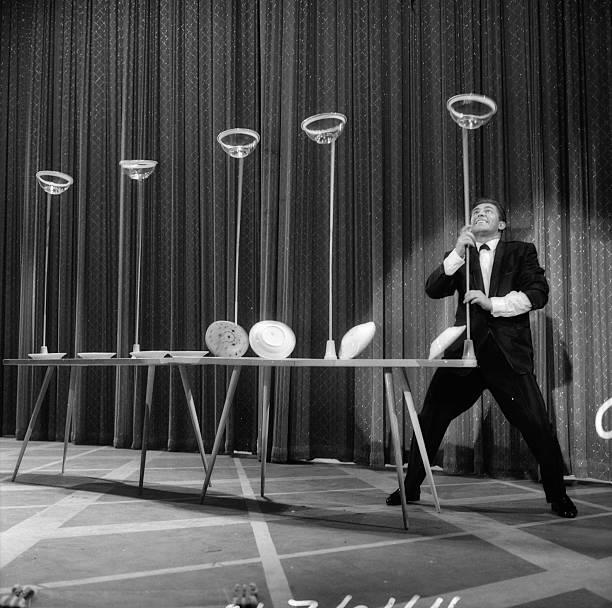
This is new territory for all of us. When I first started in the lighting business, we simply worried about filling all the outlet boxes in the ceiling and walls. As we entered the new millennium we learned about the power of our circadian rhythm and its impact on our life and health. Plants and animals had similar needs. That has complicated things, at the same time we began to adopt a new light type. We are now like the guy on the Ed Sullivan show who balanced a dozen plates on wobbly sticks. Each plate needs attention or the whole act will come tumbling down.

Categories
Lighting Commentary

What to Do About Kangaroo Pricing

Photo by Ethan Brooke on Pexels.com

A kangaroo walks into a bar and orders a martini. The bartender looks up quizzically, grabs the gin and start preparing the drink. After an appropriate shake and swirl, he pours out the drink into a glass with the olive and slides it across the bar to the kangaroo.

“That will be fifty buck.”

The kangaroo reaches into his pouch, grabs his wallet and pays the bartender.

“You know, we don’t get many kangaroos in this place.”

The kangaroo looks up from his drink and says, “At these prices, I’m not surprised.”

My favorite joke sprang to mind as I listened to a news report that indicated tariffs were starting to become a factor in consumer spending. Yes, the TACO president has kicked the can down the road time and again and the road has now apparently ended. Just a few countries have played along and those that have appear to have snookered Trump with promises of reciprocal spending that will never maturate. In a need for immediate gratification, he’ll get the press release, the news story and no change will be realized beyond the price increase to the consumer.

Products now cost more. Shipments are slowing, containers, once at a premium are waiting for freight. Prognosticators continue to suggest a bleak holiday shopping season. The US Treasury is however seeing an increased input of funds from these new duty payments. Those dollars are going to be hard to end in a country so deeply in debt. We must assume these to be the new normal. This is not good news for someone building or rehabbing a home. Lighting (and a lot of other things) is getting very close to kangaroo pricing. Nice, if you can afford it, but likely to keep away a mob of kangaroos.

I had believed that LED was going to substantially alter the type and quality of lighting used in new home construction. In some cases, it has. Think LED Tape. Other light types have fallen in the opposite direction. Good recessed light has now been replaced with surface mounted, glare-inducing blobs of light. That popularity is not because of LED, but instead, due to a low price. I now believe price will drive a total reassessment of what type lighting builders will include in new homes.

In a previous blog post I shared that builders have been forced to provide rebates or “give backs” to try and ameliorate the impact of higher interest rates, but they are not going to be able to do that forever. Manufacturers have also done the same thing with heavy buying of inventory. Ford Motors is expected to lose $2 Billion this year because of tariffs. They and every other company cannot continue this practice. Prices will rise.

Because of these new prices, inflation is a real concern and interest rates are unlikely to lower. The best case has rates remaining stable. If Donald Trump decides to fire Federal Reserve Chair, Jerome Powell and replace him with a toady, we should all assume higher inflation. Don’t believe me? Ask Richard Nixon to explain how presidential intervention in monetary policy fared for him and the country. (Who remembers his successor’s WIN [Whip Inflation Now] policy? I still have the lapel pin.) You can almost bank on it.

Builders might be forced to look again at more steel stud use in residential construction to avoid the Canadian lumber tariffs, but it is difficult to see an alternative to drywall. An almost total elimination of copper plumbing, if not already a reality is probable, but appliances, whether imported or made in the US are still going to see increased cost because of component tariffs. Electric and lighting changes COULD however result in savings.

In the recent rehab of our new, older home, a total rewire was needed. A pile of superfluous switches were code mandated, forcing the addition of way more wire and labor than I had ever expected. This is ripe for change. Builders could push for changes that automate a home, eliminate all switches and in-turn reduce the amount of copper needed to wire a home. We might also see a switch from AC wired homes to AC wall plugs and DC lighting, thus allowing much less expensive wire to run to the luminaires. Eliminating the transformer could mean a less expensive lighting fixture. As lighting people, are we ready to explore these ideas?

LED Tape has made LED undercabinet luminaires obsolete, but I still see a ton offered. Why? Manufacturers still haven’t developed a quick, stable, sure and visually appealing connection method from the service wire to the LED Tape. I’ve often said, the company that does this, wins. Cost per foot of lumen output makes this a hands down deal. Crappy wire connection points have kept the old, more expensive (lumens/foot) luminaires in business.

Dining Rooms are going to disappear in multi-family and entry level new home construction. So too will the dining room chandelier. I can’t see any trend where this stays. (Higher-priced homes will be untouched.) Have new light source types been developed to fill the sales gap these losses will create?

The bathroom bar lights concepts are the oldest remaining lighting types still in continued use. I think more lighted mirrors and mirrors with better lighting are a solution that will take over. We do need to ask ourselves how that will impact our sales numbers. In addition, we’ll need to consider additional sizes, better light output and light delivery that reduces glare. Today, we are selling mirrors that include light, in the future, we should be selling bathroom lighting that includes the mirror. Of course, the recently announced mirror tariff increases might totally change this burgeoning demand.

These are just a handful of thoughts. Were I a manufacturer with connections to mass builders, I’d try to arrange a working summit, toss out any preconceived ideas on what lighting is needed in a room and instead discuss lighting that would provide good lumen output AND cost less. Can we rethink everything about lighting with the goal of better lumen output, less wires and less cost? I think it is possible. In a world now filled with $50 martinis, it might also be necessary.

Categories
Lighting Commentary

Housing Stats and Lighting Use

Photo by Steffen Coonan on Pexels.com

The recently released “2025 State of the Nation’s Housing” report from the Harvard Joint Center for Housing Studies is a daunting read. Try as I might, I could not find a silver lining in this cloudy collection of stats and data. As anyone involved in decorative residential lighting knows, there is a close correlation between home sales and lighting sales and like the relationship between Harvard University and Donald Trump, it looks rocky.

Let’s start with a few statistics that should make us all a bit uneasy.

  • The median price for a previously owned home has risen to $412,500.
  • The “Home Price to Income Ratio” has risen to 5.0:1, the highest it has been since the housing bubble of 2006.
  • Of the top 100 metro areas, only three had a “Price to Income Ratio” below 3.0.
  • The monthly mortgage payments on that median home have reached record highs of $2560. That is an incredible 40% higher than 1990 after adjustments for inflation.

This reality has resulted in even more harrowing information.

  • The lowest number of previously owned home sales since 1995 at 4.06 million.
  • A decline in home ownership to 65.6% of the population.
  • A record high median age for 1st time home buyers at 38 years old.
  • Add to this another stat. The Leading Indicator of Remodeling Activity (LIRA) also just published, indicates lower than expected home renovation and repair activity with just a 1.2% growth for 2026. (to the 2nd quarter)

As folks involved in supplying decorative accessories to homeowners, this does not bode well for us. New home ownership usually sparks spending on redecorating and remodeling. No new homes means no new lighting purchase.

We might be encouraged by the increase in rental market participation as an alternative, but according to the report, that too is a place of concern. Renters are experiencing an affordability crisis.

  • A record number of households are spending more than 30% of their income on rental housing at 22.6 million.
  • A record number of households are spending more than 50% of their income on rental housing at 12.1 million.
  • There are now record low amounts of remaining income after paying for housing of only $250/month for renters who earned less than $30,000/year.
  • There are record levels of homelessness, now at 771,480 humans.

Even the good news is tempered with red flags. 1.02 million new single family homes were completed in 2024, representing a 3% increase over the previous year. A 7% increase in starts was reported for 2024 as well. However, to deal with the rising price of a home, homes are now equipped with fewer or cheaper amenities. The average size at 2150 sq. ft. is the third decline in three years. The average price for a new home fell to $420,300, because builders were forced to offer incentives and mortgage rate “buy-downs.” Pointing to the reality, the reports suggested this was an untenable situation that could not legitimately continue. Inevitably, prices would need to rise, meaning fewer units would be sold. Add to this the tariff implications and the amount of new construction homes is sure to plummet.

Splashing cold water on the “it’s got to get better” argument, household formation was also included in the report. For the second year, there is deceleration. New homes are needed as new households are formed. A major driver of new households is immigration. With the near total elimination of immigration provided by the new presidential administration, a slowdown is on the horizon. Immigration is not, however, the only bellwether that should draw concern.

  • In 2026, Baby Boomers will reach the age of 80 and this massive driver of economic power will experience accelerated levels of mortality that will NOT be replaced with the next generation’s new household replacement levels.
  • As can be witnessed by the recently passed “Big Beautiful Bill” (I have a few other nom de plumes that could replace that moniker) federal housing assistance will not be maintained, further exacerbating the cost complications of housing.

What Can Lighting People Do?

I worked with a guy years ago who self-deprecatingly referred to himself as, “just an old light bulb salesman.” A few drinks into an evening and added adjectives were pasted onto his faux title. Like my former coworker, we just want to create, market, design, employ and sell lighting. How do we do this in this new environment? Here are a few thoughts. I’m sure you have a number of your own.

  • Cater to the Boomer generation and their much smaller sister, the “X” generation. Together they command about 75% of wealth in the United States today and they are viable consumers for at least ten, perhaps twenty years. Just realize, they are a diminishing entity.
  • Wealthy people are now in the driver’s seat. As we see from the afore mentioned federal funding legislation, we will be witnessing the greatest transfer of money from the middle-class and working poor to the wealthy and “well to do.” Cater to this consumer. This is a small, but mighty block of people, if you can figure out how to meet their needs, you can win.
  • Despite the setbacks, a lot of homes and apartments will be built, but they will likely be of lower cost, so that means a need for viable, low-cost lighting. What does that mean today? What will it mean tomorrow? I expect to see a total reassessment of what lighting is included in new construction, tract housing and multi-family housing, Forget what is used today and invent the low-cost requirements of tomorrow. If there is ever a time to toss away the box and consider what lies beyond, it is now.
  • Growth might be reduced. With that inevitability, how do you plan for that? A non-rising, bottom-line isn’t necessarily a bad thing, as long as you understand this reality,
  • Does the “middle class” disappear? Are we about to find ourselves in a world with super wealthy and everyone else? Based on the reality of politics today, this looks like the future. If that is, in fact the reality, companies and distributors might need to bisect their lines to accommodate the new norm.

This information and many others like it is available from many sectors. There is lots of information and some of it is conflicting. Read as much as you can and digest it well. I believe you will find that the home furnishings market is moments away from a paradigm shift. Are you ready? Is anyone ready?

Categories
Technical Lighting Help

Is Home Automation a “Time-Saver?”

Photo by picjumbo.com on Pexels.com

My wife and I have just moved into our new-old home. We have spent almost a year restoring and reinvigorating a mid-century ranch that will deliver a more carefree (and step-free) life for us as we age. Because of the rough state of the home when we purchased it, a rewire was required. Many walls were removed (black mold) the ceilings were taken out (water ingression from a leaky roof) and fuse boxes removed (Federal Pacific Electric Panel.) The lack of physical encumbrances made the lighting choices easier. I could spec almost everything I wanted and the wiring part would be easy. (Well, easier. Doing so within the confines of maintaining the mid-century characteristic of the home soon became the hindrance.)

I decided to install a Control 4 Home Automation system to “run” the house. Security, lighting, garage door, shading controls, temperature control and intercom could fall under one umbrella. The Bosch appliances, themselves supported by a proprietary app could be brought into the group. There are other functions that could be integrated as well. Luckily, I have been using a local tech-guru that helped me through this process. More often than not, when I asked if something could be done, his answer was, “Yes!” I cannot amply stress the importance of having a tech-champion on your team. This person is as important as a plumber or an electrician. (Please note, a tech person COULD be an electrician, but an electrician is not necessarily a technology expert! Get the right person for the needed job.)

I wanted the system because of my belief that, despite the conflicting realities, automation is probably more beneficial to seniors than the tech-savvy Millennials. My wife selected faucet handles that will work better for arthritic hands, the AIP contractor suggested a drawer microwave because it is more conducive to someone who might be wheelchair bound. Wet baths were included to eliminate the possibly hazardous step and aesthetically sensitive grab bars were included, just in case. Automation systems can be equally helpful for many of the other things that become a struggle as we age.

The back of the house features sixteen large windows that look out on a wooded area (in the middle of an inner-ring urban/suburban neighborhood.) Without automation, opening and closing them daily could be an onerous task. Insuring nightlights are turned on at night has shown to reduce falls in seniors. That is an easy thing for home automation systems. Nighttime security checks can quickly be achieved by a control system. All of these things should make life for us better as we age. All of these things should not be a burden.

I was reminded of the burden of automation after reading a New York Times opinion feature that shared the fact that automation is NOT saving us any time. Workers using AI to “help” are not saving time. Technology-enhanced homes are not allowing active young homeowners added time to lollygag and “chill.” Statistics state they spend roughly the same amount of time doing (loosely defined) housework as their parents. But why? The creators of these products promised me peeled grapes and a pink pony!

Each time my wife attempts to book a doctor’s appointment online, I am reminded why technology does not always save time. The two-step authentication becoming more and more ubiquitous was probably invented by lawyers in an effort to protect their litigious-prone industry. How many times has a slow server, or a weak Wi-Fi connection caused you to “time-out” of your ability to enter the six-digit code? My moderate dyslexia invariably forces me to reenter the number more than once. Does the cybercrime version of Boris & Natasha really care my annual physical is scheduled for next Thursday?

I’ve never figured automation to save me time. In pre-computer days, when I managed an Engineering Department, I had an assistant. If I needed communication to be sent to people in the company, outside the company, whomever, I asked her to write a note to them about whatever topic was required. Later that day, she had typed a letter covering the required topic. As fax machines came online, I was required to write letters with sketches and details she could not complete. When each of us was given a computer and an email address, all of the correspondence was now my responsibility. My assistant could no longer handle that portion of my workload. I was now the typist. Luckily for her, she was an immensely talented person and went on to manage her own collection of people in a different area of the company. Automation simply meant I now had more work. Different work, but more than I had prior.

I did not buy and have installed a Control 4 home automation system to save time and money. I did not expect to save energy. I did hope a home support network would allow my wife and me to live in our last home longer by eliminating some of the more cumbersome tasks from our daily routine. I still believe this to be true. I am also realistic (and old) enough to know that sometimes you get wasabi and sometimes you get horseradish with food coloring and cornstarch, more often, the latter.

Categories
Technical Lighting Help

Why is Color Fidelity Better Than Color Rendering?

Photo by Magda Ehlers on Pexels.com

In my last blog post, I explained the recent recommendation by the CIE (International Commission on Illumination) to move away from CRI and replace it with Rf, CIE General Color Fidelity Index. Almost immediately, I was asked why. It’s a good question. On the surface, they appear to be very similar.

  • Both use a zero to 100 ranking system
  • Both use the same Spectral Power Distribution (SPD)
  • Both compare a source against reference colors

This last point is what makes the biggest difference.

Color Rendering Index (CRI) uses only eight reference colors. All eight are pastels with similar levels of saturation. For years, known flaws included the lack of red, bold colors and flesh tones, but because incandescent light does a good job rendering pastels, it never raised much concern. The rise of LED laid bare the failures.

To solve this key flaw, Rf uses 99 reference colors, evenly spread across the color spectrum. These are also colors drawn from real-world objects and dyes. A wider sampling will deliver a more realistic metric.

One additional pushback I have heard concerns the similar results garnered by each test method. Perhaps the CRI is 90 and Rf is 92. Of course, that is possible. MicroSoft Windows 1.0 could allow us to write a letter and the same can be said about today’s most current operating system. The difference is in all of the other features. As we begin to use and understand Rf, the added features will grow in value. With the added data provided by Rf, one might find one light source does a great job rendering wood tones and another a better with bold blue colors. As lighting professionals, we can select the light that best suits the application. As the CIE address the other know flaws, new measurements will build on this foundation to be more robust method of color measurement.

I can’t stress this more. Find a way to introduce yourself to this new metric. Like commercial lighting professionals have realized before us, the advantages will far outweigh the learning curve.

Categories
Technical Lighting Help

Goodbye CRI, Hello?

Photo by Alexander Grey on Pexels.com

You may have heard that the CIE (International Commission on Illumination) has finally agreed with numerous illumination and color of light experts to abandon the Color Rendering Index (CRI) method of measuring the quality of white light. That was the easy part (not really, it took a long time, but stick with me.)

While those of us who simply want to specify and use good light have referred to this characterization as CRI, the CIE calls it Ra, CIE General Color Rendering Index. They are recommending a replacement with Rf, CIE General Color Fidelity Index.

When we lived in an incandescent and fluorescent world, CRI worked fine. As we started to employ more fluorescent and then a total LED replacement, the known flaws in the CRI system became more and more apparent. Something different was needed. Early on, the CIE admitted that CRI was not acceptable, but was noncommittal on a replacement. This world organization is known for its detailed deliberation. When it makes a decision, it comes with a lot of weight.

Over the years, a number of replacement concepts were proposed and rejected until the lighting community was presented with TM-30. While there were a few objections, most everyone agreed this was a superior metric. Much of the commercial lighting industry has already begun using TM-30. We decorative lighting folks have maintained an allegiance to CRI for very clear reasons. It was easy. 100 = good; zero = bad. If we’re close to 100, we should be satisfied. Besides, we have just begun to take light quality seriously, some slack was needed to be given to those of use less technically inclined.

One reason TM-30 is so fully supported is because it is actually two different measurements packed into one metric. There is a one-for-one replacement for CRI or Ra. That is Rf (fidelity.) It also measures color saturation and that portion is call Rg (gamut.) The CIE also recognizes that a single fidelity measurement does not tell the whole story. They are setting a foundation for a more comprehensive metric that could be TM-30, or could be something else.

What Can Decorative Lighting Expect?

I understand change is hard. I was around when decorative manufacturers, retailers and the design community needed to digest a new set of data points. Color Temperature and CRI were rarely discussed and poorly understood prior. Nonetheless, we all rose to the occasion. Here’s what we should expect to see in the coming months and years.

TimingMetric 
The past and currentlyCRIWe may see many decorative manufacturers cling to the old measurement
Coming SoonCRI + RfTo help in the transition, showing both numbers will help users understand the number and the benefits of change
FutureRfWith the term an integral part of the dialog, CRI can then be eliminated
The Desired FutureRf + Rg (?) / TM-30 / ?Everyone understands we need a more comprehensive metric. Will TM-30 be the answer, or a stepping stone to something else?

I don’t know how long it will take for the decorative lighting world to see this change, but I do know, TM-30 was adopted a lot faster than I had expected in the commercial space. For that reason, I urge you to take a minute or two and understand what could be coming your way. Remember when you were the only one who understood CRI? That time is coming again.

Categories
Aesthetic Lighting Help

Field Adjustable Lighting – Good or Bad?

Photo by Anna Nekrashevich on Pexels.com

We have all heard the statistics about dimmers. An inordinately high percentage of dimmers are never changed. People set it to some level they desire and it never moves from that point for the rest of its usable life. I recently attended the 2025 Cleveland Electric Expo and listened to a lecture covering controls and learned that the same thing is happening with color controls. This expert indicated that 85% of their installations are set once and never moved again. Sort of defeats the idea of circadian-sensitive lighting, hum?

If you have listened to me speak or read my posts, you know I do not use many dimmers in my lighting designs. I’d much rather have multiple switches control specific areas of the room. With multiple switches, I get all the variation I could possible need or want. For example, I have five switches in my kitchen that control lighting (one controls a non-illuminated ceiling fan, so we won’t bring this into the conversation.) That provides me with 120 variations of light. (5 x 4 x 3 x 2 x 1) Do I need more than 120 options? Does anyone?

My reasons also go beyond simple options. When I spent a portion of my career thinking about landscape lighting, dimmable product was entering the market. I couldn’t think of anything less viable. The job of a landscape lighting designer is to place the correct amount of light in the right area and contrast that with the surrounding lighted and unlit elements in the space. The result is a delicate balance. Some trees are intentionally lit brighter. Some shrubs are simply touched with light. Yard art might demand more (or less) brightness. Pathways and steps are illuminated to provide safety to the user. This symmetry would be quickly defeated upon the introduction of a dimmer. Nonetheless, I see dimmers advertised for use in landscape lighting. Why? It’s a gadget marketing can use to grab the attention of the consumer.

I understand the need for field adjustability in commercial spaces. Commercial lighting is far more complex than the residential world I inhabit. Field adjustability is a crucial aspect, insuring each unique business and workspace gets the light needed and desired, while maximizing savings on energy. The adjustability might only be used upon initial set-up, or perhaps when a new occupant takes over a space or office. A leather boutique might have very different demands for light when compared with a jewelry store. Adjustability has its place.

I worry now about color adjustability. We are learning more daily about the demands our body has on light. We could begin regulating light color transitions that support our circadian needs (bright bluer mornings and afternoons and dim, warmer evenings.) Then the customer gets involved playing with the dials and before you know it, they are lighting the evenings with bright 6500K light and wondering why they can’t sleep. Sure, once we go away, the property is owned by the client, but do we forfeit responsibility? How do we prevent our clients from being their own worst enemy?

I remember talking to a landscape designer about customer interaction. He told me that he explains to the prospective customer that he will select ALL the accent lighting used on a job. The customer would choose the pathway luminaires. He then offered three options. I asked why he only gave them three. He told me that if he gave the customer more, or, god-forbid, the whole catalog, a decision would never be made. Seeing the catalog and reading the marketing descriptions, the client might also start asking about some of the accent lighting choices. By limiting their options, he gave the homeowner a choice of what he believed to be three excellent options. Any of the three would properly illuminate the pathways. It insured a better job than if the client were in the driver seat.

Field adjustability is not a dimmer. Some significant variants can now be programed and provided with lighting. Human health benefits are now possible with light programing. Do we really want to leave this in the hands of a layman?

Categories
Lighting Commentary

Alternate Outlooks

Wendy Maruyama – Modesty Box 2006

I was reading an article the other day talking about the increase in woman who have taken up woodworking as an artistic outlet. After reading the first sentence, I stop for a moment and thought, “Wow, this is interesting. I wonder how that might manifest itself?” If I would have continued reading, I would have quickly learned that one of the artists created a 4’-0” wooden box stand perfectly sized for an 18-pack of tampons. Again, I stopped reading. This time I grabbed a pen and jotted in the blank space of the article, “Why is diversity a good thing?” It was immediately clear to me that there is not a single male woodworker I know, or have known that would have created a storage box for tampons. Had I just continued to read, the very capable writer went on to make that exact point. Not covered in the article was my final thought. “Perhaps I should just read the article and avoid the stop-think-start method of digesting information! I’m an old guy. That ship might have sailed.

Diversity, Equity and Inclusion are very much on the minds of everyone today as political leaders work to destroy the voice of all in favor of the supremacy of one. I’m not sure I understand why this is considered a favorable action. I’ve never heard a cogent argument for exclusion. If all voices are uniform, then why do you need more than one “yes man?” Who believes inequity should be a defining goal of a business, let alone a government and its people? This is just one example where there is a benefit to a different voice.

During most of my career in residential lighting, we knew our primary customer is a female between the ages of 35 and 50. That is a narrow palette and it has since widened, but while men are now more involved in home décor, most residential design decisions are still made by women. Nonetheless, more men are employed in the lighting business. That too is changing. I see multiple notices in LikedIn featuring the promotion of a woman taking on a new role. Perhaps they’ll do a great job. Maybe they’ll fail, but it won’t be genital based, it will be skill-based. In the past there was this mythical “old boys network.” We now see the ALA has a “Women in Lighting” subgroup that appears to be growing each year. This can only be a good thing.

I remember, in the early days of LED I was asked to give a talk to a Houston area NKBA meeting. By that time, I was pretty good at explaining this more complicated technology to people who only understood the simplicity of incandescent. After the talk, one of the attendees of the all-female audience stopped me. I’ve never forgotten what she said. (Some paraphrasing may be included after so many years!)

“I did not want to come to this meeting, but I knew I had to. I knew this LED technology was going to change a large portion of what I do for a living and if I was going to be a successful guide for my clients, I had to understand it. My apprehension was that some pencil-neck engineer was going to either speak down to me, or speak over my head. When I saw you with that bowtie and cool shoes, I figured it would be OK and I was right. You told me exactly what I needed to be successful. Thanks!”

Imagine if the speaker at this afternoon lunch was a female engineer. Would more female designers have attended? Would the design community have adopted LED faster? Would the LED stigma have disappeared quicker?

Sometimes the messenger is as important as the message. We can’t immediately assume acceptability, hence the importance of opening our arm to everyone. We need everyone because we never know from where the next great idea will emerge. By including a wide expanse of people, we have the best possible shot at overall and total excellence. Just because our political leaders want to narrow the future does not mean the lighting community must follow.

Categories
Uncategorized

Health and Lighting…Again

I continue to be fascinated by the connection of lighting and health. I remember attending a lecture on the topic about twenty years ago at LightFair and it opened up a wide avenue of thought. If you read these blog postings regularly, you know that the topic is a reoccurring feature. This one came to me totally out of the blue. Neither my wife, nor I contracted COVID. We remained stubbornly healthy, despite people all around us succumbing to the virus. For that reason, I haven’t really thought about it much. Nonetheless, for the handful of people who have “Long COVID” it does appear to be quite devastating. I can’t imagine the worst flu you’ve ever had hanging on for months. It seems unbearable.

When I read the medical study, “The possibility of circadian rhythm disruption in long COVID” I was intrigued, but not necessarily surprised. Since my first exposure to the power of the circadian cycle and all of the subsequent research, we are learning more and more about the healthy power of light. As research enlarges, we might just find out that the move from an agrarian society to a manufacturing economy, now to a service economy is having a substantial impact on our bodies. Because we are not outside enough and because the artificial light we use does not contain a full enough spectrum of light, our bodies are revolting in interesting and amazing ways.

Solutions are coming to the rescue and they do not involve each one of us becoming farmers again. (Thanks for that; my green thumb is actually gangrene.) At the recently concluded MWC Barcelona tech fair, a Dutch tech start-up introduced SunBooster, a computer mounted devise intent on delivering Near Infrared light (NIR.) (You may have read my very recent blog post on this topic https://lightingbyjeffrey.com/2025/03/17/light-and-health-and-infrared-light/  While working at your indoor job typically at the computer, the devise passively delivers the needed NIR light at a targeted wavelength of 850nm. Help, you didn’t even know you needed, delivered in a way you won’t notice.

Like the GUV equipment introduced mid-pandemic, expect more IR tools to appear as we unearth more knowledge about its impact. As I have mentioned many times prior, the facts may arrive slowly as scientists work carefully to determine the best way to solve the problem. As lighting professionals, we should keep our eye on the pulse of new developments, in service of the end consumer.

Want to read the entire paper on long COVID:

An article covering the release of SunBooster:

Categories
Technical Lighting Help

Data Driven Lighting Selection

A friend of mine is doing a substantial amount of research of interurban transportation of the early 1900s. To aid in his efforts, he has acquired many years of the trade publication, Electric Railway Journal. In the midst of culling this vast haystack of data to find the “needle” he needs, he stumbled across an article covering the testing that was done by General Electric Company’s National Lamp Quality Division for the illumination of railcars. To insure there was adequate lighting at the fare box, aisles and for general passenger comfort, they took readings at multiple locations in the car. To satisfy the manufacturer, they recorded various voltage draws and power consumption. Being mindful of costs, they also compared operating expenses for three lamp options. Basically, this was an extremely thorough examination of the available lamping of the time.

As I read this report, I realized that presenting the information in a trade publication was a very fortunate thing. When selecting a product now, we can always Google, “Top 10 Best [fill-in the blank]” and read a handful of lists and reviews before buying. That would not have been the case in the 1910s. There was probably a low likelihood that a local train car lighting expert was in your neighborhood. Finding expertise was a bigger challenge then, hence the need for trade publications.

Today, there are a lot of lighting options. Almost too many. The introduction of LED has opened the floodgates of choice and we could easily drown from it. I have heard some people toss up their hands and almost give up. “Forget it, just install some pancake recessed!” Ain’t nobody wants to hear that!

What parameters should we use to select lighting? Here’s four key topics that might help make the choice easier. Style, size, lumen output and placement.

Style

Decorative lighting is an integral part of our home’s interior. When using a decorative luminaire, style becomes a very important part of the puzzle. Choose a design that melds with the room, the space and the context. Luminaires are often hanging right in the middle of a living space. They are a dominant aesthetic element. Selecting a style that does not work with the furniture, floor coverings, window dressings and wall decorations will be a huge mistake.

Size

Decorative luminaires should be sized commensurate with the application. I’ve written a few blog posts on this point in the past so I won’t repeat myself, but size relative to place is key. Too small makes the light insignificant, too large allows it to dominate a room. Care should be taken when choosing the size of a luminaire.

Lumen Output

Again, I have included the charts for expected lumen demand in various places multiple times in prior posts, for good reason. You need a specific quantity of light in specific use applications. Follow the recommendations and you will enjoy successful lighting.

Placement

Will you put a light over the mirror in a bathroom and blind the user, or will you use the more visually comforting lights flanking the mirror? Will you use surface mounted pancake LED faux recessed, or the correctly deigned recessed luminaires? Will you diffuse lamping, or will you use bare bulbs? Placing lighting in a location that will serve the room and the user will be the most well received addition to a home.

Sure, the needs of 1910s interurban rail riders seems like it has no bearing on our life a century ahead, but these early users were taking care to employ the right light for the task with the technology available at the time. 100+ years in the further, we should be doing the same.