You may have heard that the CIE (International Commission on Illumination) has finally agreed with numerous illumination and color of light experts to abandon the Color Rendering Index (CRI) method of measuring the quality of white light. That was the easy part (not really, it took a long time, but stick with me.)
While those of us who simply want to specify and use good light have referred to this characterization as CRI, the CIE calls it Ra, CIE General Color Rendering Index. They are recommending a replacement with Rf, CIE General Color Fidelity Index.
When we lived in an incandescent and fluorescent world, CRI worked fine. As we started to employ more fluorescent and then a total LED replacement, the known flaws in the CRI system became more and more apparent. Something different was needed. Early on, the CIE admitted that CRI was not acceptable, but was noncommittal on a replacement. This world organization is known for its detailed deliberation. When it makes a decision, it comes with a lot of weight.
Over the years, a number of replacement concepts were proposed and rejected until the lighting community was presented with TM-30. While there were a few objections, most everyone agreed this was a superior metric. Much of the commercial lighting industry has already begun using TM-30. We decorative lighting folks have maintained an allegiance to CRI for very clear reasons. It was easy. 100 = good; zero = bad. If we’re close to 100, we should be satisfied. Besides, we have just begun to take light quality seriously, some slack was needed to be given to those of use less technically inclined.
One reason TM-30 is so fully supported is because it is actually two different measurements packed into one metric. There is a one-for-one replacement for CRI or Ra. That is Rf (fidelity.) It also measures color saturation and that portion is call Rg (gamut.) The CIE also recognizes that a single fidelity measurement does not tell the whole story. They are setting a foundation for a more comprehensive metric that could be TM-30, or could be something else.
What Can Decorative Lighting Expect?
I understand change is hard. I was around when decorative manufacturers, retailers and the design community needed to digest a new set of data points. Color Temperature and CRI were rarely discussed and poorly understood prior. Nonetheless, we all rose to the occasion. Here’s what we should expect to see in the coming months and years.
Timing
Metric
The past and currently
CRI
We may see many decorative manufacturers cling to the old measurement
Coming Soon
CRI + Rf
To help in the transition, showing both numbers will help users understand the number and the benefits of change
Future
Rf
With the term an integral part of the dialog, CRI can then be eliminated
The Desired Future
Rf + Rg (?) / TM-30 / ?
Everyone understands we need a more comprehensive metric. Will TM-30 be the answer, or a stepping stone to something else?
I don’t know how long it will take for the decorative lighting world to see this change, but I do know, TM-30 was adopted a lot faster than I had expected in the commercial space. For that reason, I urge you to take a minute or two and understand what could be coming your way. Remember when you were the only one who understood CRI? That time is coming again.
We have all heard the statistics about dimmers. An inordinately high percentage of dimmers are never changed. People set it to some level they desire and it never moves from that point for the rest of its usable life. I recently attended the 2025 Cleveland Electric Expo and listened to a lecture covering controls and learned that the same thing is happening with color controls. This expert indicated that 85% of their installations are set once and never moved again. Sort of defeats the idea of circadian-sensitive lighting, hum?
If you have listened to me speak or read my posts, you know I do not use many dimmers in my lighting designs. I’d much rather have multiple switches control specific areas of the room. With multiple switches, I get all the variation I could possible need or want. For example, I have five switches in my kitchen that control lighting (one controls a non-illuminated ceiling fan, so we won’t bring this into the conversation.) That provides me with 120 variations of light. (5 x 4 x 3 x 2 x 1) Do I need more than 120 options? Does anyone?
My reasons also go beyond simple options. When I spent a portion of my career thinking about landscape lighting, dimmable product was entering the market. I couldn’t think of anything less viable. The job of a landscape lighting designer is to place the correct amount of light in the right area and contrast that with the surrounding lighted and unlit elements in the space. The result is a delicate balance. Some trees are intentionally lit brighter. Some shrubs are simply touched with light. Yard art might demand more (or less) brightness. Pathways and steps are illuminated to provide safety to the user. This symmetry would be quickly defeated upon the introduction of a dimmer. Nonetheless, I see dimmers advertised for use in landscape lighting. Why? It’s a gadget marketing can use to grab the attention of the consumer.
I understand the need for field adjustability in commercial spaces. Commercial lighting is far more complex than the residential world I inhabit. Field adjustability is a crucial aspect, insuring each unique business and workspace gets the light needed and desired, while maximizing savings on energy. The adjustability might only be used upon initial set-up, or perhaps when a new occupant takes over a space or office. A leather boutique might have very different demands for light when compared with a jewelry store. Adjustability has its place.
I worry now about color adjustability. We are learning more daily about the demands our body has on light. We could begin regulating light color transitions that support our circadian needs (bright bluer mornings and afternoons and dim, warmer evenings.) Then the customer gets involved playing with the dials and before you know it, they are lighting the evenings with bright 6500K light and wondering why they can’t sleep. Sure, once we go away, the property is owned by the client, but do we forfeit responsibility? How do we prevent our clients from being their own worst enemy?
I remember talking to a landscape designer about customer interaction. He told me that he explains to the prospective customer that he will select ALL the accent lighting used on a job. The customer would choose the pathway luminaires. He then offered three options. I asked why he only gave them three. He told me that if he gave the customer more, or, god-forbid, the whole catalog, a decision would never be made. Seeing the catalog and reading the marketing descriptions, the client might also start asking about some of the accent lighting choices. By limiting their options, he gave the homeowner a choice of what he believed to be three excellent options. Any of the three would properly illuminate the pathways. It insured a better job than if the client were in the driver seat.
Field adjustability is not a dimmer. Some significant variants can now be programed and provided with lighting. Human health benefits are now possible with light programing. Do we really want to leave this in the hands of a layman?
I was reading an article the other day talking about the increase in woman who have taken up woodworking as an artistic outlet. After reading the first sentence, I stop for a moment and thought, “Wow, this is interesting. I wonder how that might manifest itself?” If I would have continued reading, I would have quickly learned that one of the artists created a 4’-0” wooden box stand perfectly sized for an 18-pack of tampons. Again, I stopped reading. This time I grabbed a pen and jotted in the blank space of the article, “Why is diversity a good thing?” It was immediately clear to me that there is not a single male woodworker I know, or have known that would have created a storage box for tampons. Had I just continued to read, the very capable writer went on to make that exact point. Not covered in the article was my final thought. “Perhaps I should just read the article and avoid the stop-think-start method of digesting information! I’m an old guy. That ship might have sailed.
Diversity, Equity and Inclusion are very much on the minds of everyone today as political leaders work to destroy the voice of all in favor of the supremacy of one. I’m not sure I understand why this is considered a favorable action. I’ve never heard a cogent argument for exclusion. If all voices are uniform, then why do you need more than one “yes man?” Who believes inequity should be a defining goal of a business, let alone a government and its people? This is just one example where there is a benefit to a different voice.
During most of my career in residential lighting, we knew our primary customer is a female between the ages of 35 and 50. That is a narrow palette and it has since widened, but while men are now more involved in home décor, most residential design decisions are still made by women. Nonetheless, more men are employed in the lighting business. That too is changing. I see multiple notices in LikedIn featuring the promotion of a woman taking on a new role. Perhaps they’ll do a great job. Maybe they’ll fail, but it won’t be genital based, it will be skill-based. In the past there was this mythical “old boys network.” We now see the ALA has a “Women in Lighting” subgroup that appears to be growing each year. This can only be a good thing.
I remember, in the early days of LED I was asked to give a talk to a Houston area NKBA meeting. By that time, I was pretty good at explaining this more complicated technology to people who only understood the simplicity of incandescent. After the talk, one of the attendees of the all-female audience stopped me. I’ve never forgotten what she said. (Some paraphrasing may be included after so many years!)
“I did not want to come to this meeting, but I knew I had to. I knew this LED technology was going to change a large portion of what I do for a living and if I was going to be a successful guide for my clients, I had to understand it. My apprehension was that some pencil-neck engineer was going to either speak down to me, or speak over my head. When I saw you with that bowtie and cool shoes, I figured it would be OK and I was right. You told me exactly what I needed to be successful. Thanks!”
Imagine if the speaker at this afternoon lunch was a female engineer. Would more female designers have attended? Would the design community have adopted LED faster? Would the LED stigma have disappeared quicker?
Sometimes the messenger is as important as the message. We can’t immediately assume acceptability, hence the importance of opening our arm to everyone. We need everyone because we never know from where the next great idea will emerge. By including a wide expanse of people, we have the best possible shot at overall and total excellence. Just because our political leaders want to narrow the future does not mean the lighting community must follow.
I continue to be fascinated by the connection of lighting and health. I remember attending a lecture on the topic about twenty years ago at LightFair and it opened up a wide avenue of thought. If you read these blog postings regularly, you know that the topic is a reoccurring feature. This one came to me totally out of the blue. Neither my wife, nor I contracted COVID. We remained stubbornly healthy, despite people all around us succumbing to the virus. For that reason, I haven’t really thought about it much. Nonetheless, for the handful of people who have “Long COVID” it does appear to be quite devastating. I can’t imagine the worst flu you’ve ever had hanging on for months. It seems unbearable.
When I read the medical study, “The possibility of circadian rhythm disruption in long COVID” I was intrigued, but not necessarily surprised. Since my first exposure to the power of the circadian cycle and all of the subsequent research, we are learning more and more about the healthy power of light. As research enlarges, we might just find out that the move from an agrarian society to a manufacturing economy, now to a service economy is having a substantial impact on our bodies. Because we are not outside enough and because the artificial light we use does not contain a full enough spectrum of light, our bodies are revolting in interesting and amazing ways.
Solutions are coming to the rescue and they do not involve each one of us becoming farmers again. (Thanks for that; my green thumb is actually gangrene.) At the recently concluded MWC Barcelona tech fair, a Dutch tech start-up introduced SunBooster, a computer mounted devise intent on delivering Near Infrared light (NIR.) (You may have read my very recent blog post on this topic https://lightingbyjeffrey.com/2025/03/17/light-and-health-and-infrared-light/ While working at your indoor job typically at the computer, the devise passively delivers the needed NIR light at a targeted wavelength of 850nm. Help, you didn’t even know you needed, delivered in a way you won’t notice.
Like the GUV equipment introduced mid-pandemic, expect more IR tools to appear as we unearth more knowledge about its impact. As I have mentioned many times prior, the facts may arrive slowly as scientists work carefully to determine the best way to solve the problem. As lighting professionals, we should keep our eye on the pulse of new developments, in service of the end consumer.
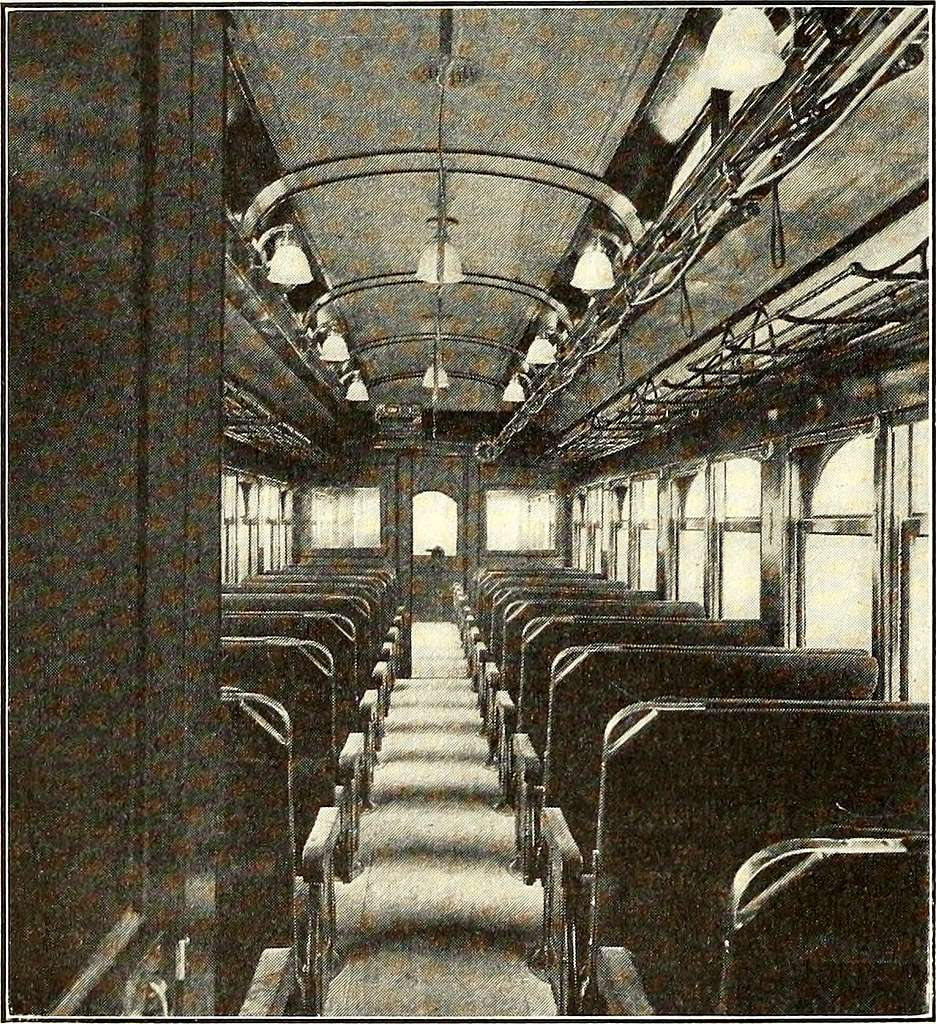
A friend of mine is doing a substantial amount of research of interurban transportation of the early 1900s. To aid in his efforts, he has acquired many years of the trade publication, Electric Railway Journal. In the midst of culling this vast haystack of data to find the “needle” he needs, he stumbled across an article covering the testing that was done by General Electric Company’s National Lamp Quality Division for the illumination of railcars. To insure there was adequate lighting at the fare box, aisles and for general passenger comfort, they took readings at multiple locations in the car. To satisfy the manufacturer, they recorded various voltage draws and power consumption. Being mindful of costs, they also compared operating expenses for three lamp options. Basically, this was an extremely thorough examination of the available lamping of the time.
As I read this report, I realized that presenting the information in a trade publication was a very fortunate thing. When selecting a product now, we can always Google, “Top 10 Best [fill-in the blank]” and read a handful of lists and reviews before buying. That would not have been the case in the 1910s. There was probably a low likelihood that a local train car lighting expert was in your neighborhood. Finding expertise was a bigger challenge then, hence the need for trade publications.
Today, there are a lot of lighting options. Almost too many. The introduction of LED has opened the floodgates of choice and we could easily drown from it. I have heard some people toss up their hands and almost give up. “Forget it, just install some pancake recessed!” Ain’t nobody wants to hear that!
What parameters should we use to select lighting? Here’s four key topics that might help make the choice easier. Style, size, lumen output and placement.
Style
Decorative lighting is an integral part of our home’s interior. When using a decorative luminaire, style becomes a very important part of the puzzle. Choose a design that melds with the room, the space and the context. Luminaires are often hanging right in the middle of a living space. They are a dominant aesthetic element. Selecting a style that does not work with the furniture, floor coverings, window dressings and wall decorations will be a huge mistake.
Size
Decorative luminaires should be sized commensurate with the application. I’ve written a few blog posts on this point in the past so I won’t repeat myself, but size relative to place is key. Too small makes the light insignificant, too large allows it to dominate a room. Care should be taken when choosing the size of a luminaire.
Lumen Output
Again, I have included the charts for expected lumen demand in various places multiple times in prior posts, for good reason. You need a specific quantity of light in specific use applications. Follow the recommendations and you will enjoy successful lighting.
Placement
Will you put a light over the mirror in a bathroom and blind the user, or will you use the more visually comforting lights flanking the mirror? Will you use surface mounted pancake LED faux recessed, or the correctly deigned recessed luminaires? Will you diffuse lamping, or will you use bare bulbs? Placing lighting in a location that will serve the room and the user will be the most well received addition to a home.
Sure, the needs of 1910s interurban rail riders seems like it has no bearing on our life a century ahead, but these early users were taking care to employ the right light for the task with the technology available at the time. 100+ years in the further, we should be doing the same.
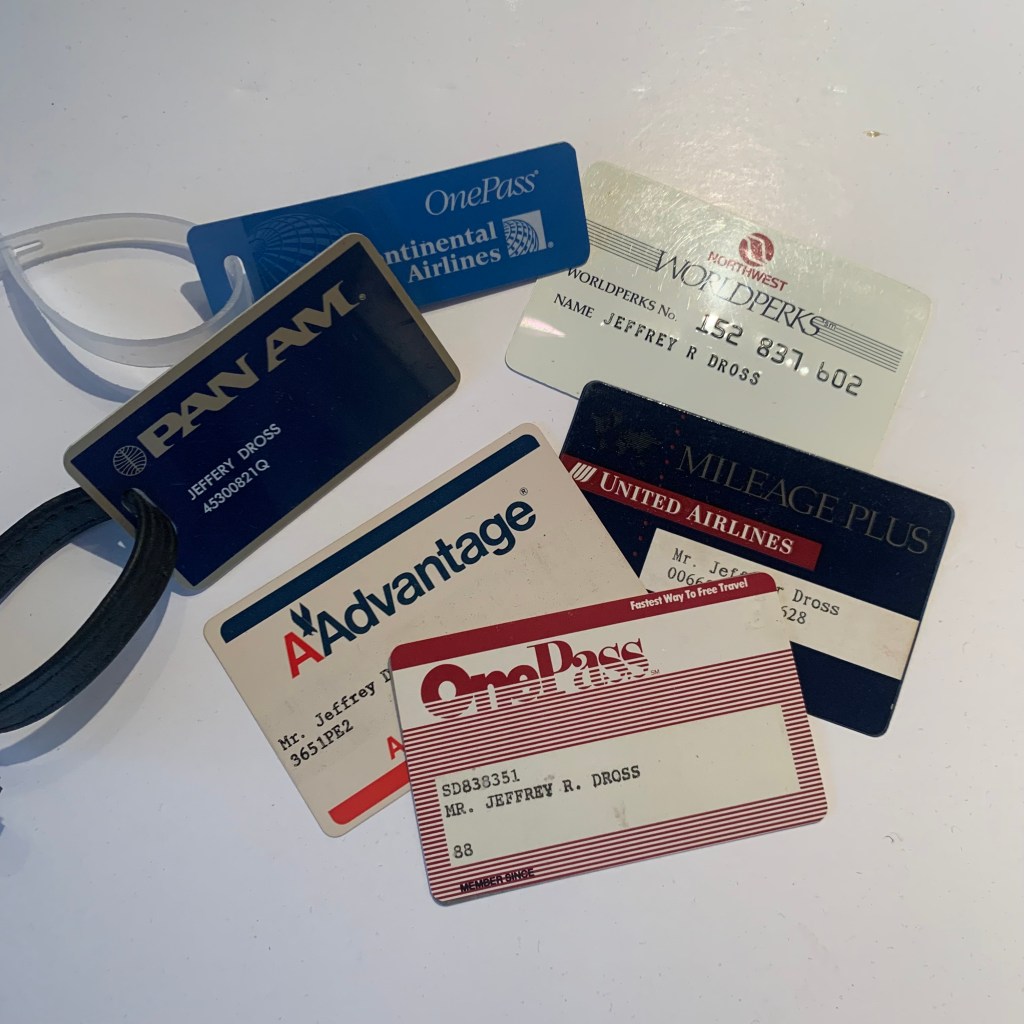
My wife and I enjoy traveling and have our entire life together. Our United frequent flyer numbers were actually generated by Eastern Airlines (which became Continental, which became United) we have (permanently) unused reward miles with TWA and PanAm. In 2018, I became a United 1 Million-Miler. I did not however, get that status from leisure travel (despite our herculean efforts!) Million Mile status came because I spent twelve years traveling back and forth to China as manufacturing of luminaires transitioned from the United States to Asia.
I was reminded of this as I listened to the “manufacturing return to America” pipe-dream espoused by our President. Tariffs will be raised, manufacturers will shutter Asian facilities, reopen US buildings, start making goods here. No more tariffs. “Easy-peasy!”
Oh, if it were as simple as this President believes. Transitioning to a new factory in a new country is HARD work. It can and has broken many companies. Simply moving a factory across town has crippled some organizations. It takes years and the efforts of countless people to make a move successful.
Before I ever set foot in Korea (my first factory visit in Asia) I was preceded by my boss, who did the initial legwork over a five-year period. While he was on the ground, I was writing directions and drawing illustrations via a fax machine to insure product outcomes were clear. Samples were shipped back and forth with detailed information on how to correct the problem and what end result we wanted. When I started to travel instead of him, I arrived with three legal pads of paper and multiple pen cartridges, leaving all of the filled paper with the factories, each sheet containing sketches, suggestions, options and instruction that needed to be done to make the product correctly. After a twelve hour day in the factory, I spent a few hours in my hotel room or lobby bar writing reports, then an hour in the “Business Center” faxing that information back to the office. (Note: fax machines were slow! Especially US to Asia!) If anyone ever asked me if I “enjoyed” my trip to China, I responded with a less than charitable answer. 24 concurrent 18-hour days does not equal “fun.” If it weren’t for the magnificent people I met and the few “days-off” I was afforded, I might not remember this time as fondly as I do now. It was a tough but rewarding part of my life’s work.
…and I wasn’t alone!
Purchasing people would make shorter trips, managers for different lines arrived for conversations, designers, planning the next release and logistics people all worked on their particular aspect of insuring good product arrived for the consumer. Perhaps even more challenged than engineering was the QA function. They were probably in the factory as long, or longer than me.
Multiply that by every other lighting company in the US and Canada. (Plenty of Europeans and Australians, too!) There was a buzzing hive of lighting people all helping a collection of 100, perhaps more factories make quality goods for the world market.
Today, a lot of that is reduced. The roads are better, so travel is easier. The hotels are more accommodating to western preferences. There are more people who speak English and more Americans who mumble through Mandarin. Some of this is being repeated right now in India, where the skills are not yet as well formed, but at least communications are easier.
A Quick Return to America?
When I read about a return to American manufacturing, I typically chuckle. Not because of the improbability, but because of the hubris. It took the blood, sweat and tears of thousands of Americans, Taiwanese, Chinese, Filipinos and Koreans over a dozen years to get manufacturing set up in Asia. Returning it to the US will be accomplished in a few months? I have more optimism that my wife and I can return to Portugal using our TWA frequent flyer miles.
In an editorial overview of the latest New York Fashion Week, New York Times Fashion Editor, Vanessa Freidman wondered, “What it means to dress like a woman in the era of the manopshere…? When macho posturing is on the rise, do you lean into ruffles and lace and corsets and hobble skirts?” (New York Times February 16, 2025) Our new political reality has already caused economic rumblings, if not instability. The tariff-happy president insures we will be paying more for a host of goods and virtually every economics professional has predicted instability and higher inflation. In an era when reliable trading partners have become enemies, the first financial statistics of the new administration are backing this up. It appears we will be entering a period of time circumscribed by a difficult economy.
The connection to fashion and economics goes deeper. We have always heard that women’s hemlines rise during prosperous economic times and fall when the economy declines. I’ve always found, in lighting and most home goods, economically fruitful times means a somewhat stagnant period of design. Manufacturers are so busy meeting production demand that new ideas and new design trends fall to the back burner. When the economy begins to slip, new ideas are proposed to initiate added interest and fuel demand where it might otherwise flounder. I believe we will be entering a time like this shortly.
If you think about lighting design lately, we are in an aesthetic rut. How many more spindly chandeliers with a bare bulb can we digest? These, of course were created when lighting duty was increased (by the same President) in 2017 and 2018. Builders and consumers refused to pay more for a luminaire, so the result was product with a smaller physical size. The elimination of a diffuser made packaging easier and less costly as well. Add to that a declining economy and this reemergence of white male dominance and the landscape is ripe for a new shift.
Where do we go from here? For the cost-conscious tract-builder, the elimination of decorative lighting seems almost certain. There is virtually nothing left to remove from a chandelier now and it will be 20% more expensive. Unfortunately, that will likely mean more surface mounted faux-recessed lighting. In smaller homes, the dining room is probably on the block as well, so even an “inexpensive” chandelier will not be an issue. Spec and custom homes are likely to continue to use decorative pieces. I just wonder how many and at what price point.
Numbers and demand aside, here are a few things I expect to see in the next year or two. (2025-2026)
Natural Brass/Warm Gold will remain dominant. As I’ve indicated before, once natural colors alight at the top of lighting trends, they stay for an inordinate length of time. Polished Brass lasted 40 years the last time it was popular. We are at the beginning of a long run for brass/brasses/golds.
Brushed Nickel seems ripe for disappearance, but I still see it being used in more traditional settings. Brushed Nickel is surprisingly not going away without a fight, even after a quarter century of popularity. Nonetheless, it is now the oldest finish, by many measures and its influence continues to shrink beyond builder product and big-box retailers.
Hard Contemporary continues to slip in importance, in favor of its more amiable sister, Soft Contemporary. Softer lines that fit more comfortably with casual living environments will be the most in demand. This is a category that almost disappeared after its heyday in the end of the 1990s-beginning of the 2000s. Trends are cyclical.
I had expected to see a rise in more overtly traditional products. We had touches of maximalism and nouveau Victorian, but neither appears to have connected with wide swaths of consumers. Will the rise of he-men and a call for “beautiful” public buildings change this? I don’t think so. Some softer, or transitional styles will remain, but we are headed into a very casual style period. We see this in fashion and food and an almost complete lack of fine china, crystal and flatware sales. It should not be a surprise. If we need more supporting data, we are in the middle of a generational shift of home buyers. Gen Xers are buying the most expensive houses and Millennials are buying the largest quantity of homes. Theirs is a much more laid back lifestyle and their homes will reflect that.
Bare bulbs and clear diffusers are likely to be replaced with more white, etched, smoked or colored finishes. If we see clear, it will be supplemented with textures, surface treatments and obfuscation of some sort, in an effort to diminish the glare. Glare, which has always been bad will be discovered as such by the greater population (again!)
Pendants, of all sizes (small to jumbo large & shallow to tall) in any styles will be very popular. We might even be inclined to blur the line between chandeliers and pendants and linear chandelier/pendants. These will be the decorative showpiece items in a home, whether placed over a dining room table, nook dinette or kitchen island. Sure, chandeliers will remain, but I expect pendants to meet the cost and size demands of the home for the next few years. They are an easy way to fit within a builder’s budget.
Lighted mirrors will continue to replace conventional bath and vanity luminaires, especially in powder room applications.
This will be a new era. A desire to return the US to the 1950s when white men were supreme, but it wasn’t too hot for everyone else. Male dominance will be at the forefront of society. The general population and the economy will suffer as a new experiment in economics is tried. Consumers will again take their well-worn backseat as this fad plays out. Like has happened before, new ideas and change will keep the economy rumbling in the interim.
My last blog was on ultraviolet light, now one on infrared. Do we detect an “unseen” pattern here?
Here’s an interesting twist that few people saw coming. The Journal of Environmental Psychology recently published a report, “Effects of near-infrared radiation in ambient lighting on cognitive performance, emotion and heat rate variability.” While this is an early study and the paper itself states that additional research is needed, this initial review indicates that light minus the near infrared radiation (NIR) found in the sun may have some implications on human health.
Upon the introduction of LED, the elimination of IR light was hailed as a benefit. IR can damage tissues and cells on the body and is typically manifest as a sun burn or eye damage, such as cataracts. This study now indicates that the total elimination could cause some additional concerns, especially as humans spend so much more time indoors under artificial light; more so than our predecessors in an agrarian economy.
In a double-blind study, 151 students were monitored, half in light that contained a normal level of NIR (daylight,) compared with the other half subjected to near zero NIR, typical of standard LED lighting. The absence of NIR was found to influence the human’s physiological and psychological levels.
Cognitive performances improved in the participants who received light with normal levels of NIR, resulting in better attention, better perception, improved short term memory, increased working memory and better executive function.
Mood also improved in the participants who were tested under light with NIR. They showed increased levels of pleasure, more alertness and higher levels of environmental satisfaction.
Subjects exposed to the typical levels of NIR showed beneficial effects on resting high-frequency heart rate variability (HF-HRV) and the HF-HRV response to cognitive demand.
Our old incandescent and fluorescent delivered plenty of light in the infrared range. With LED in the midst of a near total domination of both commercial and industrial settings, humans will be experiencing substantially lower levels of NIR than generations prior. This possible impact on humans must be balanced against the benefits as well as the energy savings earned by more efficient LED. Again, remember, this is an EARLY study. The scientific community will be digging into this issue over the next decade. Stay tuned.
[It has been brought to my attention that I transposed a point of data in my paragraph concerning Long Term Performance of UV-C LED when this post was initially released 3-3-2025. I incorrectly stated that there was a 76% loss, when in-fact the product maintained 76% of its initial output. I have corrected that paragraph.]
As I read the finding of the second round of CALiPER testing on Germicidal Ultra Violet (GUV) lighting, I homed in on the final section. “Conclusions and Next Steps.” The report is chockfull of data points and detailed findings that are very interesting, but probably don’t help a typical user. I want to share a few that trouble me and should concern users and specifiers as they consider GUV.
Incomplete Product Performance Data
Some of the products had no performance data and only half had some data available via a website. This lack of information really makes it difficult to consider adding GUV to a space. One would think, when dealing with a light source that included a potentially dangerous byproduct, information would be crucial to the purchase to insure proper installation and a commensurate results. Without it, who would consider a purchase and how could a consumer determine if a purchase would be helpful? This means, only the included marketing information becomes the deciding factor. Remember how marketing told us that we should buy Chesterfield cigarettes because more doctors smoked them? We are reentering the 1950s.
Inaccurate Performance Claims
If you recall the CALiPER testing done for the original LED retrofit bulbs, this was a very common issue, No difference here. One of the great things to come from that process was better facts and more reliable packaging information. Hopefully, that will be the end result of the GUV CALiPER process if it moves forward under the new federal government that is decidedly less receptive to research, technology and education.
Potential for Unsafe Products
This round of testing concentrated on wall mounted upper room luminaires. These units are intended to treat air in a portion of the room NOT occupied by humans. That means, humans can safely navigate the room below, because the light will not reach them. CALiPER found that two of the luminaires emitted lighting below horizon (where people inhabit.) These two, plus an additional two were found to exceed UL 8802 safety limits for irradiance. These could be potentially damaging to humans. When dealing with light in the UV range, care must be taken. Failure can have significant repercussions.
Long-term Performance of UV-C LED
One tested product maintained only 76% of its initial output at 500 hours of operation, despite a claim of 8000 hours of operation. The plotted decline was also very consistent. This is a relatively quick deterioration and the typical consumer might be concerned with a 24% decline in performance in so short a time.
My Thoughts
While we lived through COVID, the rise of a lighting solution to combat airborne pathogens seemed like a godsend. As our memory fades, so too has interest in non-medical applications. The one thing we can guarantee is the blossoming of a new disease and a new problem, quickly followed by a reemergence of interest in this type of lighting solution. That we are doing these reviews now means we might be ready when the time comes. In the meantime, buyers should approach with caution these products. They should also push for a more formulaic review of these luminaires. They should seek out and ask for independent test lab reviews. Only then will manufacturers start to abandon their use of marketing promotions and replace them with fact-base statistics. Once we have that data, we will be ready to battle the next dangerous microbe.
A few months ago, I received an unsolicited request to write a post on indirect lighting. This sounded like a great idea to me. I immediately dropped a note into my “reminder file” figuring inspiration would quickly burrow itself into my brain and text would come flowing through my fingers into a MS Word document. Alas, that has not occurred.
Indirect light is a remarkable addition to a room. When my wife and I renovated our second home, we added perimeter lighting to a basement rec-room, tucked behind a ceiling mounted valance. Despite the other layers of light I included in the space, it became the first and typically only light we used. It was comfortable, provided no glare and seemed so natural, despite the fact that it was linear fluorescent, in those pre-LED years. In our third home, I included LED linear over-cabinet and toekick lighting in our kitchen remodel. Again, we use them much more that the four other switches in the room. Clearly, we prefer the output provided by the indirect source.
But, what science did I use when I specified it? Surely there was a method to my madness. Actually, I had no method, just a gut response to the need. In the basement installation, I used the available T8 fluorescent product sizes in double-tube, offset models, because I hated the “dark gap” left when non-offset product was used in long linear lines. I had specific lengths, so I used a combination of 48”, 36” and 24” units that would give me a full and even delivery of illumination.
In the kitchen, it was even less “scientific.” I made a decision to install an “All LED” lit room. At the time, it was quite a challenge. My electrician was VERY excited, knowing he could take the experience with him to his next job. I was a Product Manager at the time and my kitchen along with the kitchens of the Engineers involved in the design became “linear lighting guinea pigs.” We learned about output, how color temperature interacted with room settings and how lumen output informed products. (There were limited LED options at the time.) Like Henry Ford’s famous quote, “You can have any color as long as it is black.” I had one option. I made installation videos while I installed the light that I hoped could be used to help others and in the process. I learn of some issues that would inevitably arise, so I was preemptively prepared for Sales Rep questions. What I did not do and could not do was consider the options, because, they simply did not exist.
Since my early interaction with indirect light, I have tried to quantify my preferences. I’ve tried to digest the WIDE assortment of linear lighting now on the market. I’ve also attempted to integrate the needs of more light required for senior eyes and their preference for indirect light. Couple all of that with the variety of room reflectance and ranges quickly become important.
With that in mind, let’s revisit my previous installations. The double T8 installations hidden behind a valance were producing about 1400 lumens per foot. (Florescent T8 lamping produced between 650 and 750 lumens per foot and there were two, side by side in each fixture.) The valances ran the length of the room on both sides. While I no longer have the details, I believe there was about 25’-0” of light, amounting to 35,000 lumens in a 15’-0” x 28’-0” (420 sq. ft.) room. This was enough to illuminate a room comfortably with no-glare. That may seem like a huge amount of light, but we must remember, because it was indirect, a reasonable proportion is lost in absorption and reflectance.
In my second installation, using early LED linear lighting, I know the output was much lower, approximately 50 lumens per foot. With a linear length of 20’-0” in a 9’-0” x 13’-0” room, that delivered 1000 lumens of light. The toekick at 16’-0” of linear length produced 800 lumens. When used together, 1800 lumens of indirect light was easy to like.
My non-exacting use ranged from 50 to 1400 lumens per foot. Looking at the wide variety of products now on the market, we can easily specify eleven different static white options from 112 lumens per foot to 1163 lumens per foot, and that is from just one company! By developing comfort with this “lumens per foot” metric, it is easy to apply the correct amount to each application.
Now, let’s understand the relationship between room size and the indirect light’s lumens per foot delivery. If we consider my original rec-room with the old fluorescent, 420 sq. ft. multiplied by the desired 20Fc illuminance level from the chart below, 8400 lumens is needed.
The indirect light in the kitchen is intentionally less functional, so the 117 sq. ft. against a desired illuminance level of 5Fc would require 585 lumens of light.
Area / Task
Desired Illuminance Level in Footcandles (Fc)
Hallway/Passageway
5-10
Conversation Area / Entertaining
5-20
Dining
10-20
Reading (General)
20-50
Bathroom / Grooming
20-50
Laundry / Ironing
20-50
Kitchen (General)
20-50
Kitchen (Work Areas)
50-100
Reading (difficult) Study / Hobby / Music
50-100
Hand Sewing / Detail Hobby
100-200
The 35,000 lumens I liked is four times the anticipated need. The 1800 lumens in the kitchen is closer to three times the need. Because indirect light takes a circuitous path from the light source to the user, much is absorbed in the reflecting surfaces.
Think about this, a mirror only reflects back about 92% of the original. If I measure my above cabinet light directly overhead (12”,) I record 20.7 Fc at the ceiling. My toekick lighting measures 130.8 Fc on the floor below (Very close at 4” to the floor.) Standing in the middle of the room with both systems engaged, I have a mere 3.5 Fc of usable illuminance from 3600 lumens. Obviously, a lot of that light is lost in surface absorption and distance.
To achieve usable levels of indirect light, a 3:1 to 4:1 ratio makes sense. If you want to reach the levels of usable light the second chart suggests, you need to use products that create three to four times that number.
There are more complicated calculations that could be employed to insure exacting levels of light. Many commercial projects first construct models to understand the end result of the proposed light. Both are impractical for the residential space and occasional lighting designers. At the risk of suggesting my hunch, rather than proven data is the way to go, I’ll leave you with a 3:1 to 4:1 ratio.
If anyone else has a better suggestion, or an easy calculation, let me know. Next time, I may be less accommodating when someone suggests a blog post topic!




 Lighting by Jeffrey