Categories
Technical Lighting Help

How to Effectively Select LED Tape – Part Two

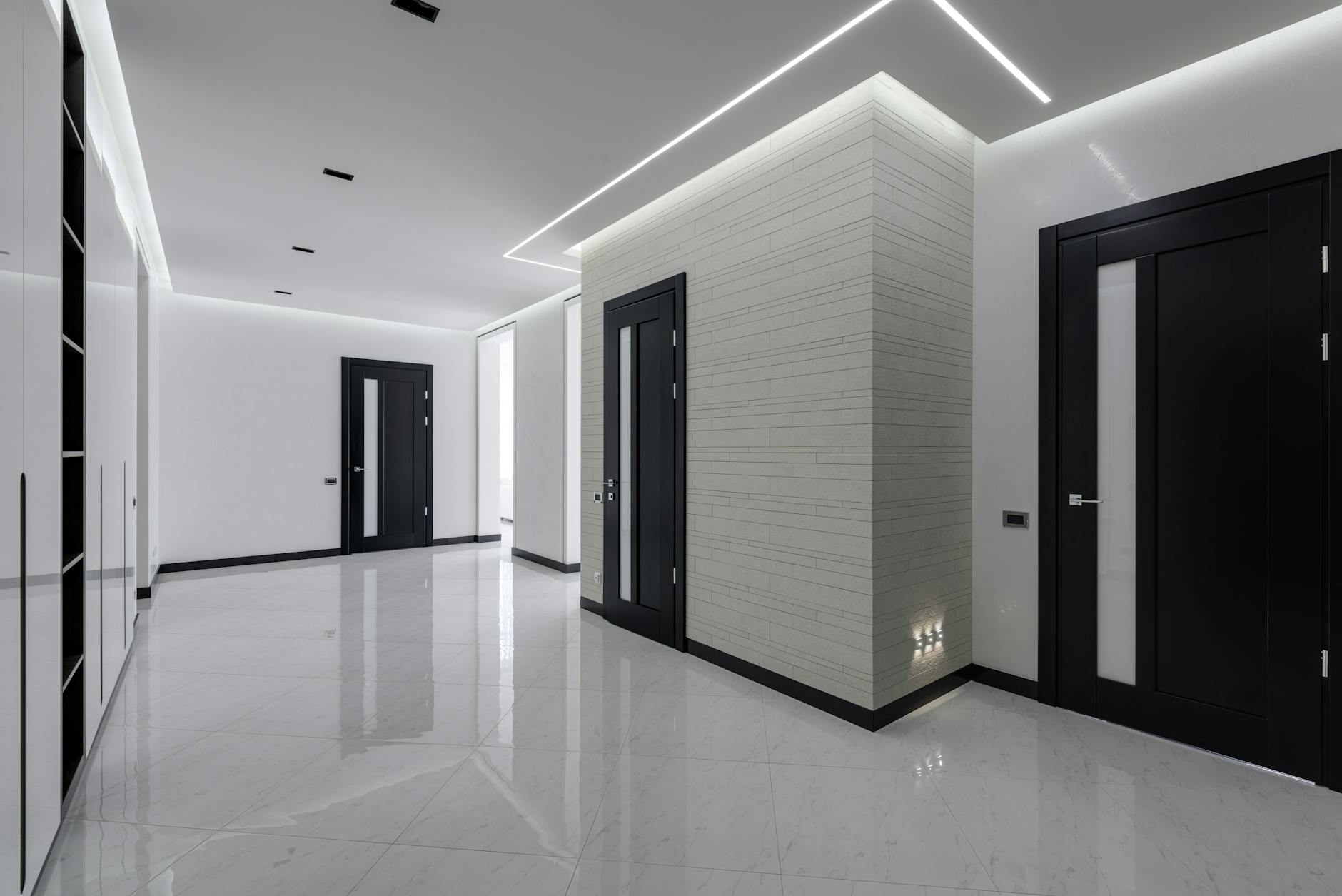
Photo by Max Rahubovskiy on Pexels.com

In the last post I talked about the ubiquity of LED Tape and where it can be placed. Three key areas remain. First, how much light do I need? What lumen output should I select when considering the addition of LED Tape? Then, maximum run lengths must be regarded. These will be a factor when designing the system. Lastly, we’ll review color temperature recommendations. With the four areas covered, selection, design, specifying and implementing LED Tape into an interior design is easy…or can be easy, once you’ve done it a few times!

Output

Like a Ford Model “T” black-only color choice, when LED Tape was first introduced, there was a single light output available. A quick glance at almost every major manufacturer’s catalog today will result in a huge variety of lumen output options. That is in response to the varied applications in which LED Tape has found itself. Toekicks, above cabinets, inside cabinets, coves, tray ceilings, drop ceilings and under countertops. Each of these spots need different light. In addition, surrounding surface colors will impact output, so more light should be used with darker colors.

When looking at an LED Tape product catalog. You will find a key piece of information, “Lumens per Foot.” This will range from 100 to about 1000 lumens/foot. You can assume cost will be commensurate with output, so it is important for lighting professional to select the item that delivers the right amount of light; but what is right?

Here are few guidelines based on use. Remember darker surrounding colors should use the numbers at the high end of the range. Light on taller ceiling might need a bit more light than an older 8’-0” ceiling height. If the distance from the top of the cabinet to the ceiling is short, use less light, if the cabinet is small, minimal lighting is needed inside. These are lumen ranges for a reason. Categories are intentionally vague to invite design professional input.

ApplicationLumens per Foot Range
Mood lighting / Light Used as a Background100 to 300
Accent lighting / For Added Aesthetics150 to 500
Task Lighting – Close275 to 500
Task Lighting – Far Away (light location)350 to 700
Indirect Lighting375 to 575
Cove Lighting180 to 500
Principle Lighting in a Room400 to 1000
As a Replacement for Linear Fluorescent Lamping500 to 950
Kitchen Under-Cabinet Lighting175 to 550*

*see comments regarding kitchen under-cabinet use in the previous post

Remember, lighting is cumulative, if you cannot find 800 lumens per foot tape at your favorite retailer or from a preferred brand, use two rows of 400 and you will get the same output. Two low-lumen output lengths might also be less expensive than a single length that delivers twice the light. Consider all options.

When designing with light, as with any other aesthetic element, extra attention might be desired in select areas. Feel free to veer from the suggestions. Like with anything, understand the guidelines and alter them with knowing intent.

Diffusers – The use of diffusers over LED Tape will reduce the lumen output. In some places, it is necessary, such as in-wall, drywall deep designs. That should be factored into the design. Some clients prefer the clean, non-mechanical looks of a channel and diffuser even in under-cabinet or above cabinet applications, usually for cleaning purposes. When not required, consider eliminating diffusers. Better output will result.

Run Lengths

The other piece of information you will find next to every manufacturer’s product is “Maximum Run Length.” You will typically find an inverse correlation between “Lumens per Foot” and “Maximum Run Length.” Essentially, you can run tape farther with less lumen output. If large amounts of light are needed, the runs will be shorter. You will see maximums of as little as 10’-0” and I have seen some specifications that reach up to 65’-0”, but usually 32’-0” is the limit.

Maximum run lengths comprise of the actual lighted length of LED Tape, so if the start of the tape is 5’-0” from the power and wire is needed to jump from one cabinet section to another requiring 9’-0” of interconnection wire, those are NOT counted into the maximum run length.

When laying out a LED Tape system, clever power supply placement can maximize these limitations. For example, if a 10’-0” square tray ceiling is to be illuminated and 20’-0” run length maximums are selected, place the power supply in a corner and run the first 20’-0” length in one direction and the second run in the opposite direction. This will not be a contiguous 40’-0” run, but it will give the exact same appearance. A small amount of pre-planning will eliminate hours of rework or multiple power supplies.

Color

If you read this blog regularly, or if you have heard me speak at any point in the last decade, you know I regard light color in residential applications very narrowly. I believe lighting should be either 2700K or 3000K. Warmer finishes used in the home, such as beige walls, wood cabinets and earth-tone carpets will always look better with 2700K light. Homes that are “cooler” with lots of white, black, blues, greys and stainless steel will find those colors best represented using 3000K. The ONLY time I suggest or use anything different is if a client has a display case with collectable crystal or sterling silver. 4000K adds the necessary blue to allow these object to “sing!” Other designers disagree and employ a wider variety of color. Many of their opinions are well placed, but I still maintain the “A” or “B” decision is all that is required. It doesn’t have to be complicated.

While most reputable LED Tape uses diodes with a Color Rendering Index (CRI) of 90 and above, be sure to check the CRI is in this range. CRI is an important indicator of how well the colors in a room will look.

Another frequently asked question regarding color is, “Can I mix color temperatures in a room/home?” My response is always the same. “Do you mix colors in a room?” If you’ve ever painted a room with two or three different shades, you did that for a reason. A deliberate decision was made to use light blue paint on the wall, mid-range blue tiles on the floor and deep indigo on the window dressing. Apply the same logic to light. If there is a reason for 3000K light in a tray ceiling and 2700K at the counters, then mix away. Do not, however simply scatter varying colors of light pell-mell across the room. This is the design equivalent of five different fluorescent tubes in the ceiling troffers of an old office.

A Few More Things

As we have seen change in LED Tape over the last ten years, change continues today. Manufacturers introduce new “bells and whistles” every month and the popularity of the product has pushed vendors to change, update and rethink almost everything about it. Following are a few things you can buy now or will see on the horizon.

COB Tape – Some consumers have objected to the dot of LED reflecting in polished granite surfaces. One solution is placing the LED Tape inside an extrusion and adding an etched acrylic cover or diffuser. While this does ameliorate the bright spot of light, it also reduces the lumen output, sometimes considerably. Chip-on-Board (COB) Tape delivers a continuous strip of light, rather than individual dots. Some brands are offering it today. It is priced higher than traditional LED Tape, but the output is good and the run lengths are likewise acceptable. This could be a nice option when faced with this particular client pushback.

Dimming – Most every manufacturer now offers dimmable LED Tape. Remember, dimming requires a power supply with dimming capabilities and like all LED, the dimmer and the power supply MUST be compatible. Always consult the tape manufacturer’s dimmer recommendation. Before that, ask whether dimming is even required. With the wide range of lumen output, dimming might take a great lighting design and ruin the results as output is constantly in flux.

120V LED Tape – We are seeing more and more “line-voltage” LED. The elimination of a power supply is very enticing. Simply connecting the electrical wires directly to the LED is an intoxicating draw. Some are good. Many have problems. Caution should be used if 120V LED Tape is considered. The same cautions you would attribute to 120V LED bath lighting or chandeliers.

  • 120V LED are substantially more vulnerable to flicker. This can be eliminated, but it required additional circuitry that might reduce the monetary savings achieved by removing the power supply. Ask about flicker rates or percentages, especially if clients are physiologically vulnerable to flicker.
  • 120V LED are more difficult to dim. Again, this can be solved, but the added circuitry means more money. If dimming is necessary, be sure to investigate the approved dimmers and other requirements.
  • LED Life – Most 120V LED do not last as long as low-voltage LED. The functional light provided by LED Tape could easily overlap multiple room remodels. Low-life cycle LED might not be the best option in these applications.

What started as a simple four part answer turned into a two-post response. It might sound complicated, but it isn’t. Once one systems is installed, it becomes much more intuitive. Trust me.
Categories
Technical Lighting Help

How to Effectively Select LED Tape – Part One

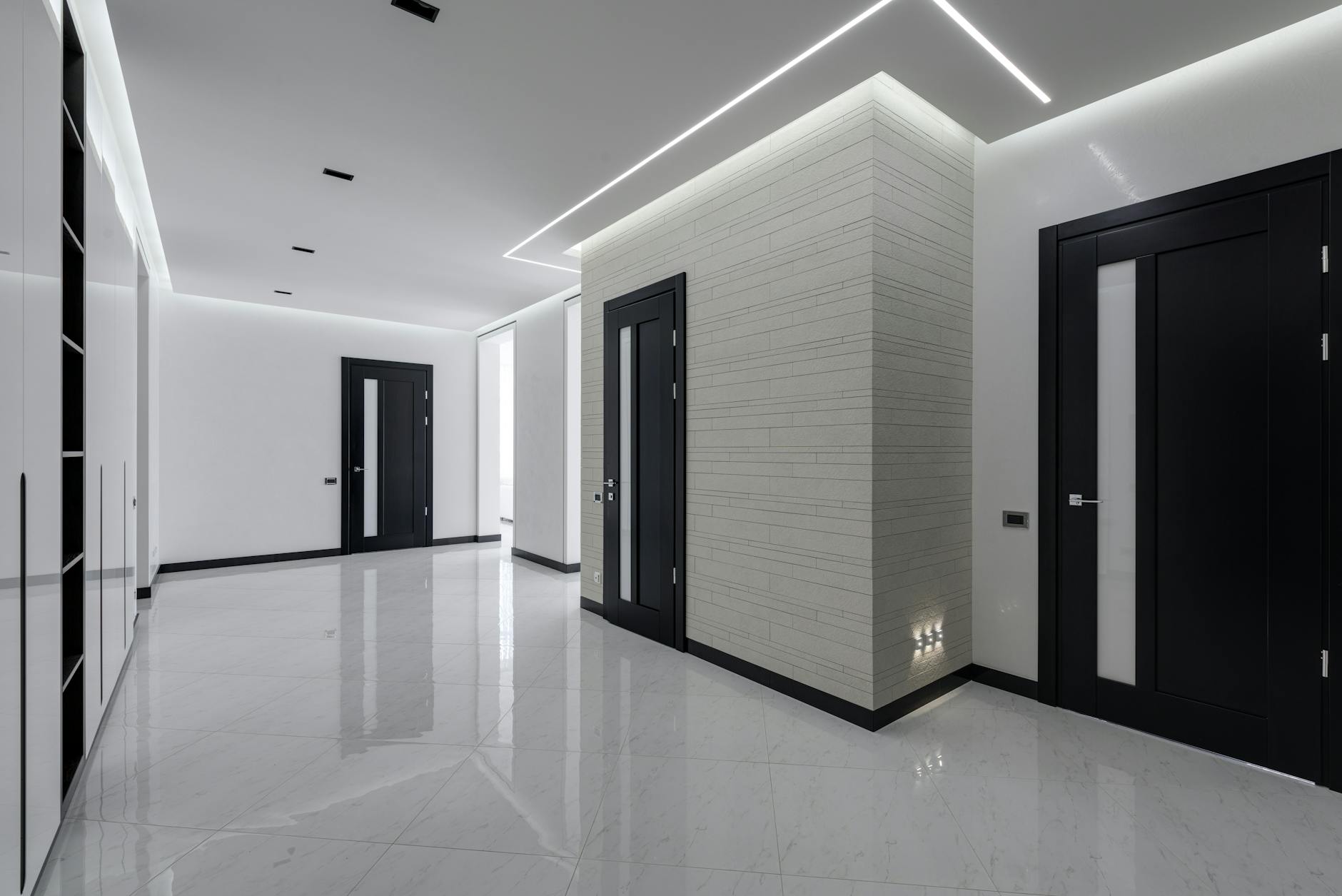
Photo by Max Rahubovskiy on Pexels.com

Since its introduction about a decade ago, LED Tape has become an almost ubiquitous element of lighting design. When introduced, it was the first LED lighting product that was less expensive than the legacy product it replaced. Festoon lamp based linear lighting soon disappeared. (Good riddance! What a horrible product!) LED Tape prices continued to drop and wider varieties and options were soon added. The market is now filled with a massive array of LED Tape, such that a very frequent question is the title of this post. “How do I effectively buy or specify LED Tape?” Put as simply as possible, I recommend using four factors in the decision. Color, output, placement demand and run lengths.

I originally thought I could cram all of this into a single post, but the more I wrote, the more I realized readers might be better served if I went a bit deeper into each section. Part One will cover placement. The next post, Part Two will complete the information and discuss color, output and run lengths.

Placement Demand

Since I began this blog, I have periodically provided some suggestions for LED Tape placement. Avoiding many of the reasons and some details, I’ll quickly recap my location suggestions for a group of the most popular and emerging uses.

  • Above Cabinets – Place the tape 3” from the front edge of the cabinet. Follow the full perimeter edge if variations in depth are present. Place tape on the side of the cabinet, to the wall, if there is a break in the continuity of the cabinet run. (i.e. a doorway, appliance or room entrance)
  • Above Cabinet Alternative (installed as back-lighting or to highlight a wall) – Run a straight line of tape along the BACK of the upper cabinet 3” to 6” from the wall the full length of the upper cabinets.
  • Inside Cabinet WITH Front Fascia – Mount the LED Tape on the inside of the fascia faced into the cabinet on the hinge side. Tape should be run from the top to the bottom. If more light is desired, or if the cabinet is wide, mount a strip on both sides.
  • Inside Cabinet WITHOUT a Front Fascia – Mount the LED Tape on the hinge side wall perpendicular to the door surface. Tape should be run top to bottom. Try to avoid using a run on the handle-side of the cabinet. When the cabinet is opened, it could be too blinding. If additional light is needed in this type of cabinet design AND shelves are translucent, consider a strip along the top. While it will be seen when the door is opened, it will likely be far enough out of sight and cause only minimal glare issues.
  • Under Countertop – A ½” wide by 1/16” to 1/8” deep router about ½” from the front edge of the countertop will accommodate most every tape option. Surface depth of counter might need to be increased. If an ogee edge is used, fabricators have told me that the router cut must start where the full thickness of the material starts. This may require and even larger surface depth. My experience indicates that a granite, marble and quartz stone routered groove may be more problematic than Formica, Corian and concrete. Always review the need with the countertop fabricator. Don’t forget the “mouse hole” that allows the wire to enter the inside of the cabinet!
  • Under Countertop Alternate – If the space between top of the lower cabinet doors and the underside of the countertop is sufficient, the LED Tape can be mounted on the underside surface in a channel without a router. If this option is considered, always check the door swing clearance.
  • Under Island – Run the tape the full length of the island overhang installed about 9” from the chairside front edge of the island top.
  • Toekick – Run the LED Tape along the center of the toekick space. Remember, do not place toekick lighting in front of appliances. Instead, use an extension around the sides of the cabinet and behind the appliance opening so there will be no issue when removing the appliance for cleaning or servicing.
  • Cove – Mount the LED on the wall, just below the front edge of the cove material height.
  • Cove Alternative – Mount the LED on the front edge of the cove material aimed inward toward wall or at the bottom of the cove aimed upward to the ceiling, depending on the desired lighting effect.
  • Drop Ceiling – Mount the LED Tape on the end of the drop panel, about 2” from the edge, aimed up.

Tray Ceilings

There are countless versions of tray ceiling construction. Adding LED Tape here is easy, but rather than providing ten locations, let me provide a few thoughts.

  • Unless using an LED Tape aluminum extrusion where the visible light become a part of the design, try to avoid seeing the LED light. Place them behind barriers of forward enough so direct sign is impossible.
  • Be careful with corners. Linear light that intersects at boxed corners will deliver odd lines and shadows that some people like and others dislike. If you think this could be an issue, test the output prior to finished installation. One option is to cut the tape short of the corner to reduce some of the light patterns you might dislike. Mounting the tape on a different surface will also change the light/shadow patterns.
  • To connect LED Tape corners, a corner-connector is used. Be careful with the wire! It can also lead to odd shadows. Use electric tape and affix the connector wires to the mounting surface so it will not rise above the light.
  • Cove extrusions mounted inside a simple tray construction are a nice way to achieve the same effect with less complex tray framing.

Aluminum Extrusions Aided Placement

Shortly after the creation of LED Tape, installers and designer realized that new and exciting ideas could be realized with the assistance of aluminum extrusions. A row of LED Tape (or two, or three, or six, depending on the extrusion size!) is adhered to the inside of the aluminum. Most have matching diffusers. These combinations have unleashed an avalanche of exciting installation options.

  • Drywall deep light designs in walls and ceilings
  • Inside and outside (drywall) corner illumination
  • Wall wash ceiling perimeter lighting
  • Tray ceiling edge lighting (see above)
  • Step tread lighting
  • Stair rail lighting
  • Lighted baseboard perimeters
  • IP rated floor lighting installation

The combination of extrusions that accommodate various quantities of LED Tape and a little creativity has allowed these options to change interior lighting design.

LED Tape Used In Under-Cabinet Kitchen Applications

The old, self-contained under-cabinet lights used to deliver between 200 and 400 lumens per foot. Because they contain 1, 2, 3 or 4 individual lamps, they were also somewhat spotty. There is virtually no reason to use them any longer LED Tape in a simple channel or in a stylish aluminum extrusion can service the same need, deliver even light across the full length of the countertop AND save a fair amount of money. The only question that need resolution. Can the installation accommodate the required remote power supply? Perhaps it is located in the attic, at the top of the upper cabinets, in the basement or the inside of the cabinet with low-voltage wire traveling to the tape. Determine power placement as carefully as the lighting for the best results.

Once power supply location is resolved, how much light is the right amount of light? When deciding, I ask about the cooking practices of the owner. Are they a gourmet chef, “Heat-n-Serve” cook or a Door Dash practitioner? With that information known, good decision can be made.

  • The gourmet will need plenty of high quality light and it will be used for many hours. Specify the highest lumen per foot options (500+ lumens per foot) from the most reputable manufacturer.
  • The “Heat-n-Serve” cook needs light, but will be opening cans and ripping envelops to mix up a quick meal. The mid-range numbers will serve them well. Find 250 to 400 lumens per foot tape.
  • When countertops are only used to read online menus and find pizza delivery numbers, there is no need to invest in expensive under cabinet lighting. The low lumen output product is fine. Spend the savings on better island pendants!

Lastly, ALWAYS use an extrusion on wood, at a minimum, the low-priced plastic option, when installing LED Tape to the underside of a cabinet. The double-back tape, even the high quality 3M is no match for raw wood. The wood will pull moisture from the tape and before you know it, a sag will occur.

Occasional Demand Use

The client wants to light an area that is used only on birthdays, Halloween and the end of year holidays. If this is the case, consider using some of the readily available “budget” LED Tape options on the market. They are cheap, they may not last 40,000 hours, but for the occasional use, they could be just what is needed. Again, save the money and spend it elsewhere. Conversely, this budget product might be enticing to use everywhere. Don’t do it! It is budget priced for a reason! It will likely fail to withstand the demands of continual use, might have subpar color rendering and the double-sided tape will almost certainly not last.

In two weeks, I’ll post the second half of this discussion and talk about lumen output, run lengths and color.