
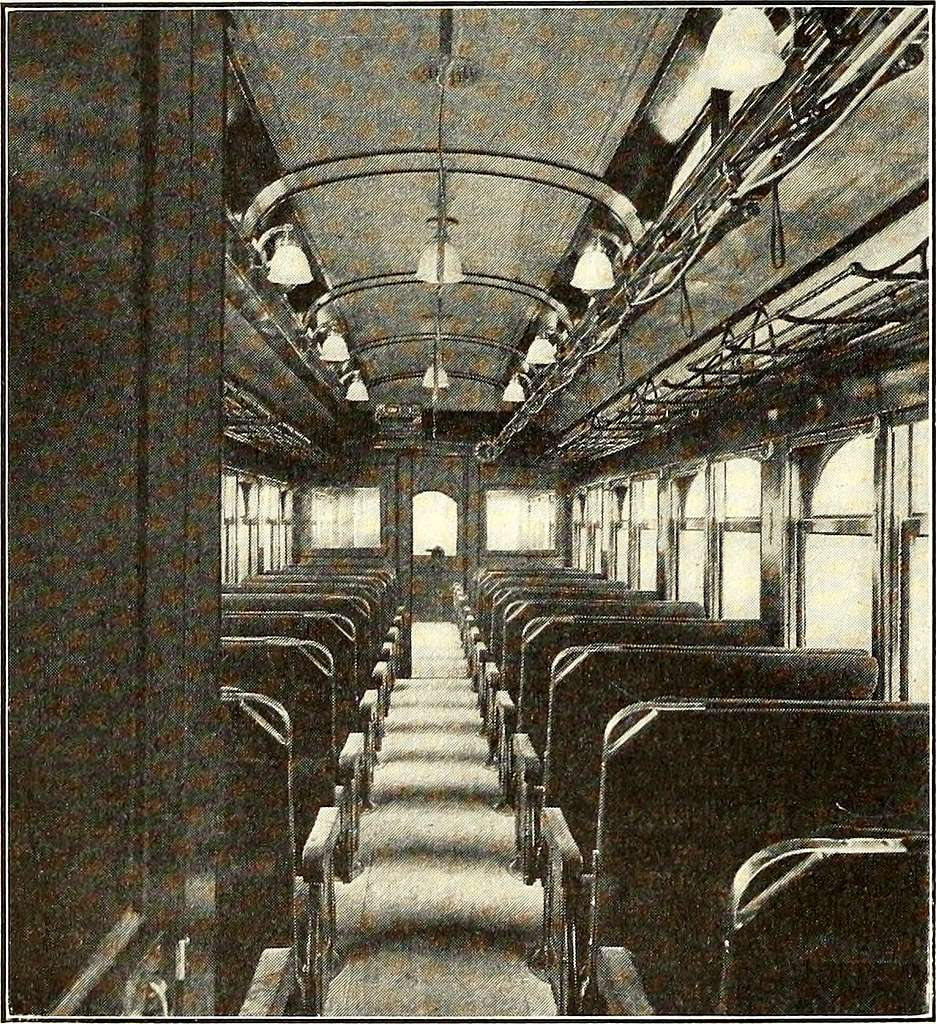
A friend of mine is doing a substantial amount of research of interurban transportation of the early 1900s. To aid in his efforts, he has acquired many years of the trade publication, Electric Railway Journal. In the midst of culling this vast haystack of data to find the “needle” he needs, he stumbled across an article covering the testing that was done by General Electric Company’s National Lamp Quality Division for the illumination of railcars. To insure there was adequate lighting at the fare box, aisles and for general passenger comfort, they took readings at multiple locations in the car. To satisfy the manufacturer, they recorded various voltage draws and power consumption. Being mindful of costs, they also compared operating expenses for three lamp options. Basically, this was an extremely thorough examination of the available lamping of the time.
As I read this report, I realized that presenting the information in a trade publication was a very fortunate thing. When selecting a product now, we can always Google, “Top 10 Best [fill-in the blank]” and read a handful of lists and reviews before buying. That would not have been the case in the 1910s. There was probably a low likelihood that a local train car lighting expert was in your neighborhood. Finding expertise was a bigger challenge then, hence the need for trade publications.
Today, there are a lot of lighting options. Almost too many. The introduction of LED has opened the floodgates of choice and we could easily drown from it. I have heard some people toss up their hands and almost give up. “Forget it, just install some pancake recessed!” Ain’t nobody wants to hear that!
What parameters should we use to select lighting? Here’s four key topics that might help make the choice easier. Style, size, lumen output and placement.
Style
Decorative lighting is an integral part of our home’s interior. When using a decorative luminaire, style becomes a very important part of the puzzle. Choose a design that melds with the room, the space and the context. Luminaires are often hanging right in the middle of a living space. They are a dominant aesthetic element. Selecting a style that does not work with the furniture, floor coverings, window dressings and wall decorations will be a huge mistake.
Size
Decorative luminaires should be sized commensurate with the application. I’ve written a few blog posts on this point in the past so I won’t repeat myself, but size relative to place is key. Too small makes the light insignificant, too large allows it to dominate a room. Care should be taken when choosing the size of a luminaire.
Lumen Output
Again, I have included the charts for expected lumen demand in various places multiple times in prior posts, for good reason. You need a specific quantity of light in specific use applications. Follow the recommendations and you will enjoy successful lighting.
Placement
Will you put a light over the mirror in a bathroom and blind the user, or will you use the more visually comforting lights flanking the mirror? Will you use surface mounted pancake LED faux recessed, or the correctly deigned recessed luminaires? Will you diffuse lamping, or will you use bare bulbs? Placing lighting in a location that will serve the room and the user will be the most well received addition to a home.
Sure, the needs of 1910s interurban rail riders seems like it has no bearing on our life a century ahead, but these early users were taking care to employ the right light for the task with the technology available at the time. 100+ years in the further, we should be doing the same.
 Lighting by Jeffrey