

I love the artwork of Thomas Hart Benton. My favorite artist is Edward Hopper. I remember when the Cleveland Museum of Art bought the Grant Wood’s painting, “Haystacks.” I rushed to the museum unveiling and immediately fell in love. George Bellows’, “Stag at Sharkey’s” is the best piece of art at the second best art museum in the country.
I really enjoy opera and can’t get enough Broadway musical show tunes. Peggy Lee can do no wrong and “Kind of Blue” is unlikely to be bettered in my lifetime. Thank you, Miles.
With this cadre of preferences, people might expect me to be a bit more conservative, but to the contrary, I am always looking for the “next big thing.”
My favorite movie is “Chinatown” but I recently saw “Beau is Afraid” and it completely blew me away. This director is performing a high wire act while most others are barely juggling two bowling pins. I almost never listen to “oldies” instead I spend most of my radio time tuned to the local college stations, where they play a mix of rap, jazz, Latin and progressive contemporary rock. There is a reason Kendrick Lamar is the first rap artist to receive a Pulitzer Prize. Got a few hours? Listen to Kamasi Washington’s “The Epic” and you will understand the emergence of jazz genius. (Perhaps it might entail a second listen, too!) I am constantly looking at new art, checking out what maturing artists are doing at the Museum of Contemporary Art Cleveland and excited to see what is presented at the Cleveland Institute of Art graduate show each year. When I’m out of town and have an hour, I look for a gallery, museum or art show.
When I look at home furnishings, I also want to see the next new thing. When LED emerged, I was all-in. When home automation popped up, I immediately clung to its every possibility. I have spent a fair amount of time trying to understanding germicidal UV light and remain fascinated with the possibilities of circadian-effected light. Each and every day I wait for an inkling of proof that LED will be replaced with [fill-in the blank.] Somebody has to be working on something, right? Two lectures at the recently completed, LightFair talked about Laser Lighting and my mind has begun to resemble a top. Where could laser lighting head? What will it mean? Does it have any residential applications?
I do not want change, just for the sake of change. I do however know that as a society, we are constantly moving forward. As humans, we like to see alternatives. Technology cannot and should not be stopped, despite the Luddite tendencies we occasionally display. (Why do they keep changing my iPhone power cord, for example? I know, I know, there are very valid reasons.) Progress has lessened the drudgery of laundry cleaning and reduced the reams of paper required for long division. Movement forward means kids born in this decade will likely fail to understand what “changing a light bulb” means. They will not relate to a stack of light bulbs in a closet. Lighting that does not illuminate will mean a call to a professional, or replacement. It will be an anomaly rather than typical.
I read recently that young people are being educated in a slightly different way than I and perhaps most readers of this blog. Rather than repetition and memorization (When was the Magna Carta signed?) they are being taught critical thinking and more application of thought. To me, this makes much more sense, when combined with the tools you and I never had. Multiplication tables were crucial information in an era before calculators, but have become redundant when math solutions can now be resolved with a dollar store accessory purchase. Students can now spend less time on the mechanics of math and more on the reason and application of the calculations. That will be a far better use of a mind.
As I wrote this post, I could not recall the actual name of the George Bellows painting in the Cleveland Art Museum. I knew it included “Sharkey’s” and thought vaguely it might include the word, “Stag” but was uncertain how they were combined. “Stag Night at Sharkey’s?” “Sharkey’s Stag?” “Sharkey’s Night?” “Fight at Sharkey’s” Rather than fret over it, I simply did a quick internet search and immediately had the correct name, correct spelling and another look at this powerful piece of brutal, realistic art. My recollection of the name of a particular painting was substantially less important than the point I was/am attempting to make. Young people, guided under these alternate parameters of knowledge application will be far more valuable than a student who can recite from memory all the capitals of Europe. Knowing unaided and immediately that Vaduz is the capital of Liechtenstein is of value only when playing Trivial Pursuit. Understanding that Liechtenstein is a country and Vaduz is a city, located on the European continent does however constitute a baseline of knowledge that some students have overlooked. This realignment is important and valuable.
I like the combination of my life’s concentrations. I can be passionate about older art and new art ideas. I can find antiques as interesting as the new furnishings created by Zaha Hadid’s company. I can sing along with a show tune and remember my time in the theater seeing the performance while at the same time, marvel at the newness of “Chaise Lounge” by the (really young) women who headline Wet Legs. I’m an old lighting guy that can revel in the replacement of LED lighting. I think that’s a good thing. What about you?
PS: If you don’t understand some of the cultural references made here, you could ask your grandmother or daughter and they might be able to explain, but Google will most assuredly know and even provide some background.
PSS: June, 15, 1215. Thanks Google.

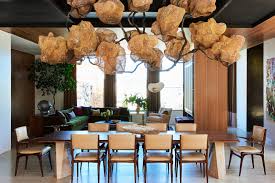
 Lighting by Jeffrey