Categories
Lighting Commentary

The Shape of Light

Photo by Dhivakaran S on Pexels.com

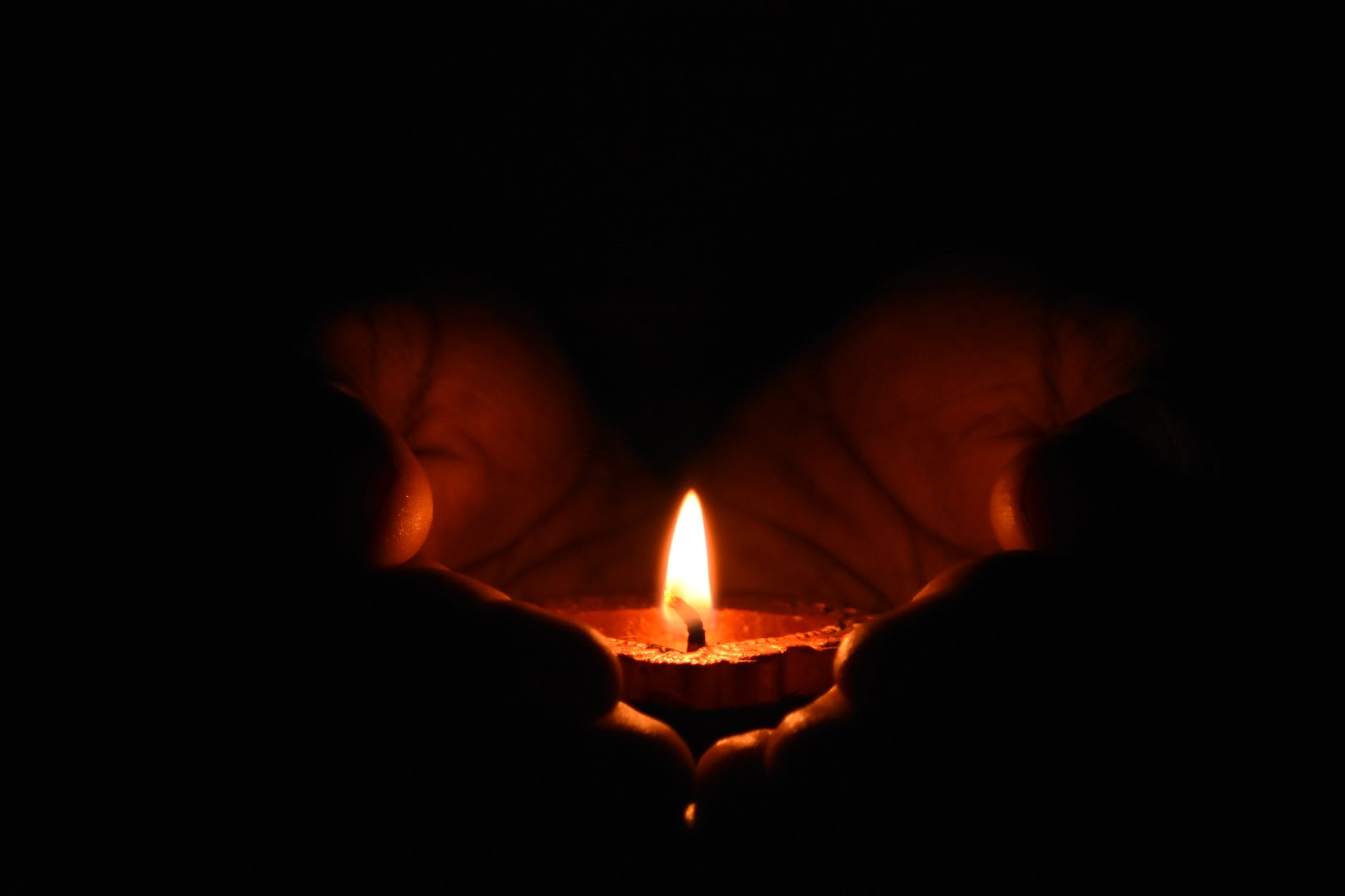
Artificial light has been around since some caveman figured out how to create, or harness fire. In those early days, the shape of light was roughly equivalent to the pile of combustible material gathered to keep the fire functioning. Those early Neanderthals quickly learned that if the material was tightly packed, the burn was much more controlled and consistent. A heap of wood created a heap of light.

As we moved from caves to constructed dwellings, fire was now allowed inside, the fire transitioning from outdoor pits to fireplaces. Human demand for a more controlled application led us to create lanterns fueled by oils and candles supported by wax and wick. The candle and the lantern were no longer associated with its byproduct of either heat, or food preparation. Its sole reason for existence was illumination. Humans have been stuck with that shape ever since.

Stuck? What?

As interiors transitioned to gaslight, hanging lights, chandeliers and sconces retained the same basic shape and size of candlelight and oil light by forcing the gas to similar delivery shapes. A gas stopcock was added to form a flame that replicated the wick created fire. Barely a change in size is evident in the diffusers. While all of the creators of incandescent light started with a variety of proportions and dimensions, the eventual shape of electric light was finessed into the parameters established by flame and gas. The luminaire industry STILL to this day uses gas pipe thread as a standard across the industry and many of the components of a lighting fixture carry gas or plumbing names along with their odd thread sizes. Some of the most popular incandescent light bulbs are those shaped to replicate a flame. They fit nicely into chandeliers that replicate candle-holding lights of the past.

New York Magazine recently featured a reasonably well-researched article about the writer’s beef with LED. (There’s Something Off About LED Bulbs by Tom Scocca) He does makes some mistakes about CRI. I’ll reserve those for another blog post. The bulk of the content contains some of the typical complaints people have with LED, many of which I have addressed in previous posts relating to our desire for “cheap” and then being unhappy with the results; blaming it on the supplier who gave the consumer what they wanted. If you’ve ever seen the political cartoon “Tammany Ring” by Thomas Nast, you’ll understand this circular argument. Don’t give the customer what they want, because they don’t know what they want. Throughout the article he relates problems with LED because of shape.

Regardless of technology, consumers seem to want light in the package to which they have become accustomed. We want our LED to be shaped like incandescent, which was shaped like gas, which was shaped like a candle flame. Unfortunately, that is where science is having a bit of a problem. That problem is fodder for writers like Scocca.

When LED were new, cost was of secondary importance and the new light could be formed into whatever function was required. Form follows function was a principle attributed to Architect Louis Sullivan that states the item should in some way relate to the purpose. LED are not well suited for the confining shape of an incandescent envelope and screwshell. They must be kept cool and the narrowing screw-thread section of a light bulb provides so little space for cooling, as the article title intimates, they do some odd things. Function can’t (shouldn’t) follow form.

I have continually promoted and pushed fully integrated LED luminaires in opposition to retrofit LED lightbulbs for this very reason. Our kitchen was remodeled at the very early hours of LED. EVERY light in the room is LED. Almost all of them were “the first” LED products developed by companies like Cree, Philips and Kichler. They were also substantially more expensive than their incandescent counterparts at the time. None of the luminaires were “stuffed” into incandescent lamp enclosures. All of them are still functioning. I have had no problems with any of them and performance has been excellent.

As consumers, we can get what we want, but we should instead take what experts suggest. There is the old line about the first automobile that remains valid today. If asked, customers did not want a car, they just wanted a faster horse. Closer to today, no one ever asked for a mobile phone. Life today without a car or a mobile is almost inconceivable. Possible, but unlikely.

The same should be considered with LED. Eventually, engineers might figure out how to stuff LED into hot tiny confining places and maintain their performance characteristics. In the meantime, look to integrated luminaires as the later-day automobile or mobile phone. You’ll get what you do not yet know you want.

Categories
Technical Lighting Help

The Future of Lighting

I was asked an intriguing question this week. “What do I think lighting will look like in the future?” With all of the changes that have occurred in lighting over the last decade, you might expect a period of rest or inaction, but I really don’t think that is likely. The cat is out of the bag. Users, creators, scientists and researchers are more aware of lighting then at any time since Edison. Lighting will remain a kinetic force in our lives.

Outside of the residence, there are going to be even more changes, but if I strictly concentrate on residential lighting, I (and my Magic 8 Ball) feel pretty comfortable with the following observations.

Less Decorative Lighting

Two-story foyers are gone (for the most part) dining rooms are disappearing, flex-space is growing and landscape lighting is a much more effective way to light an exterior of a home then a surface mounted porch light. Couple that with an increase in the amount of pre-fab or modular construction and lighting built into the fabricating structure of a home will be more and more commonplace.

Decorative lighting also carries with it a “style.” Whether contemporary or traditional, some portion of the population doesn’t like it. Style becomes an alienator, preventing a sale. If the core building is style-agnostic, it becomes easier for a future homeowner to imagine herself in the space. Removing decorative lighting, perhaps as slowly as bedroom lights and hallway light disappeared, appears to be a sure bet for the future.

Integrated LED

We are all lighting maintenance people. We don’t service washers, dryers or ovens, but lighting is different. As if it were a birthright, we feel compelled to change light bulbs. Our incandescent mentality causes us to worry about buying lighting that eliminates the need for re-lamping. We are suspicious, unbelieving and skeptical, this innate portion of our psyche being so powerful. Despite our overwhelming resistance, integrated LED lighting will overtake and replace lighting with replaceable light bulbs. It has quietly gobbled up lighting category after category. First landscape lighting, then recessed, linear architectural detail lighting, under-cabinet lighting, contemporary chandeliers and the table is set for bathroom lighting…and the world has not ended! There is life after light bulb replacement.

As we move into tomorrow, the shift will be further advanced by poorer quality (but cheap!) replacement light bulbs and a shifting aesthetic direction that will be more clearly borne out with integrated LED. Well-designed integrated LED lighting will operate in a residential setting for over twenty years. When the average redecoration of a home is every seven years, this is likely to exist through three remodels.

As the Gen Z and Alpha demographic will understand best of all, there will be much better things to do than change light bulbs!

Smart Lighting

Home automation is inevitable. Your great-grandmother couldn’t understand the need for a cloth dryer, your grandmother didn’t need an air conditioner and your mother doesn’t need a smart phone. Like the preponderance of dryers, AC and smart phones indicates, home automation is going to happen. A voice activated home will be de rigueur. The typical consumer has already linked an intelligent home to automatically turning on and off lighting. It is one of the first things people do with their new Alexa or Google voice system.

A few things could happen. The luminaire will include a smart “dongle” or, “dongles” will be wired between each luminaire and the house wires, but rest assured, the ability to configure it to a smart system will be there. That then leads to the next prediction.

The Elimination of the Light Switch

When a luminaire is intelligent, why does it need something as “dumb” as a light switch? When you remove the switch, you also eliminate the yards of wire that link it physically to the outlet box. The home becomes easier to wire, holes are removed from walls, backsplashes and panels. The cost savings alone might make this the first prediction to come to fruition.

For Better, or Worse

When LED was first introduced, the sky was the limit and lighting professionals felt, finally, we would have GREAT light. That optimism was unfortunately, a bit too much and too soon. To get prices down, many concessions were made. Those concessions resulted in lower quality products. One need look no farther than the surface-mounted, recessed can replacements. These are a poor light source that creates far too much glare. Take a look in a “big box” store, also. The 40,000 to 50,000 hour light bulbs are slowly being replaced with 10,000-15,000 hour models.  Yes, they are cheap, but….

I suspect that the future will re-find a place for better lighting. It will appeal to a select clientele who understands the value of good light. More effective, less glary cans, circadian adjusted light output and adjustable bathroom lighting are just around the corner, especially for those who appreciate the difference between good and poor lighting.