
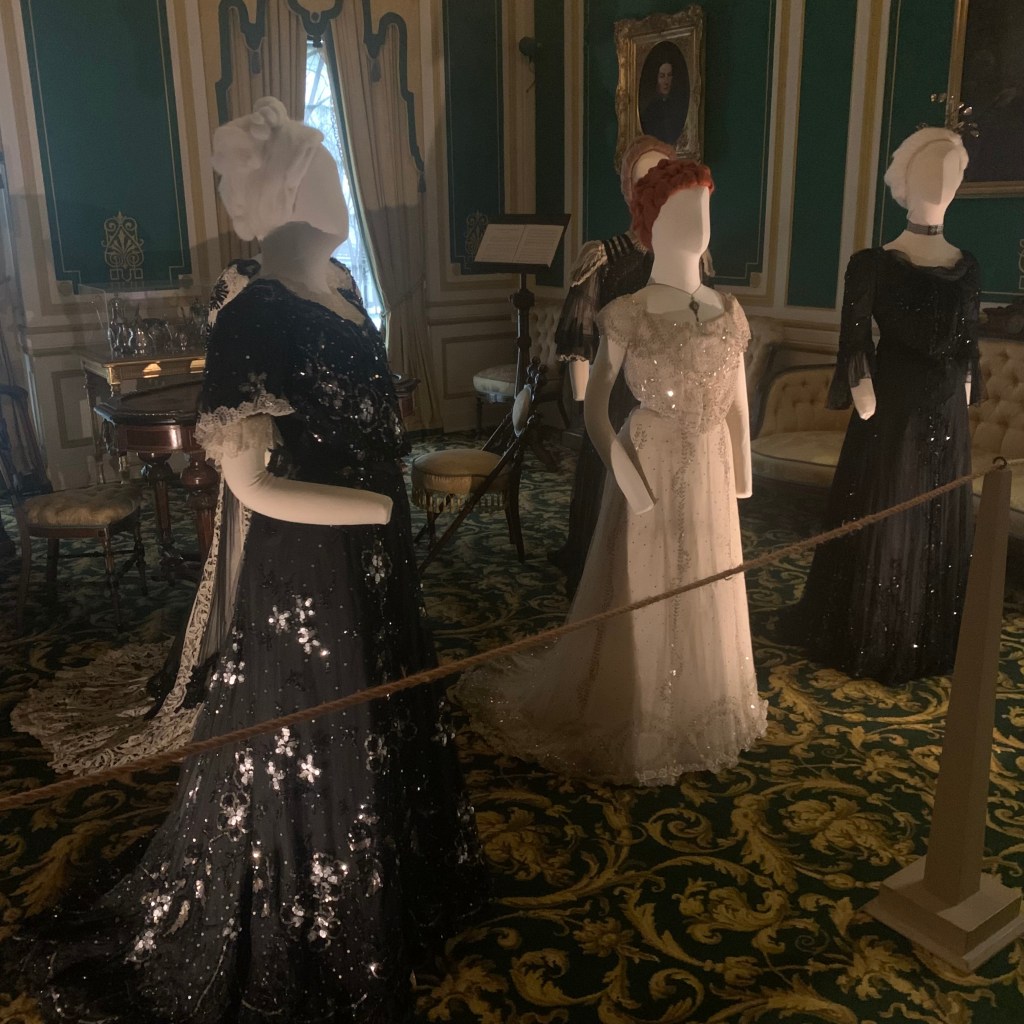
Viewing the show, “Fashion After Dark” at the Western Reserve Historical Society – Cleveland History Center, forced me to remember the famous (infamous?) dress that “changed colors” a few years ago. Depending on who was asked, a black and blue dress looked gold and white or many shades in-between. While there remains conflicting opinions on “the dress” all of the theories center on human perceptions of color. Through a combination of light and the brain, via the photoreceptors in our eyes, we see color. Most of the time, it works without a hitch. Sometimes we see different things.
In subsequent experiments, when viewed under warm light, most people agreed it was a blue and black dress. Under cooler color light, everyone saw white and gold. Light has a tremendous impact on how we perceive color and that statement was the premise of the museum exhibit.
Beginning in the 1840s, the moneyed class was introducing gas lighting to their homes. Gas light was brighter than candlelight and the flickering variations delivered a unique atmosphere not experienced before. In the 1890s change was again afoot when gas lines were switched to electric and incandescent lamping presented another different illuminance. Outdoors, arc lighting illuminated the porte-cochere entrances of theaters, the orchestra and opera, yet another variant to artificial light.
The couture designers of the day realized they could take advantage of each of these changes in lighting. Fabrics that had been created, but rarely used, were now rising in popularity. Watered Silk (moiré) and taffeta delivered a subtle movement that provided an intriguing shimmer in gaslight. The application of sequins, rhinestones and jet pulled small slices of available light and presented multiplied glints of dazzle that drew attention to the wearer. Lamé fabrics likewise reflected and magnified glistening light across the entire gown.
The problem for the society women of the 1800s is the same one that faces all of us in the new world of LED lighting. The type of light we use impacts our color perception. The best local lighting retailers have “lighting labs” that help the consumer understand what they are buying. Most commercial lighting installations are preceded with a test, or in situ model that proves what the real installation will look like. Dress and fabric shops of the era featured evening hours and artificially darkened rooms so the materials could be best appreciated.
When my wife and I were rehabbing our second house, we used a purple and green theme in the master bedroom and wanted a VERY subtle violet on the wall. We selected the quietest tone we could find among the thousands of paint swatches. When we painted the walls the minimal amounts of daylight and deep purple (no heavy metal implied) carpet magnified the paint to such an extreme that I was forced to have the paint remixed with half the pigment, resulting in the room we had envisioned.
The importance of paint, countertop, tile, cabinet and fabric selection in the planned light and space cannot be overstated. LED light will likely function for the whole time people typically live in a home. It also presents colors in slightly different ways from incandescent, halogen or fluorescent light. The addition of daylight will add yet another element to the discourse. Taking a clue from 1800s couture can be a smart way to insure the maximum impact of an aesthetic choice.
Coda
One additional point about the exhibition must be noted. To replicate the visual fluidity of gaslight, flickering LED light was used in the exhibitions, placed just as they would have in the residential dining rooms, reception halls and ballrooms of the day. Wall sconces, table lamps and chandeliers illuminated the gowns. This was a wonderful way to help curators tell the story. Pumping natural gas into a museum of flammable collectables could never be considered. The breadth of LED continues to amaze me and I know applications will only grow in in the future.
 Lighting by Jeffrey