
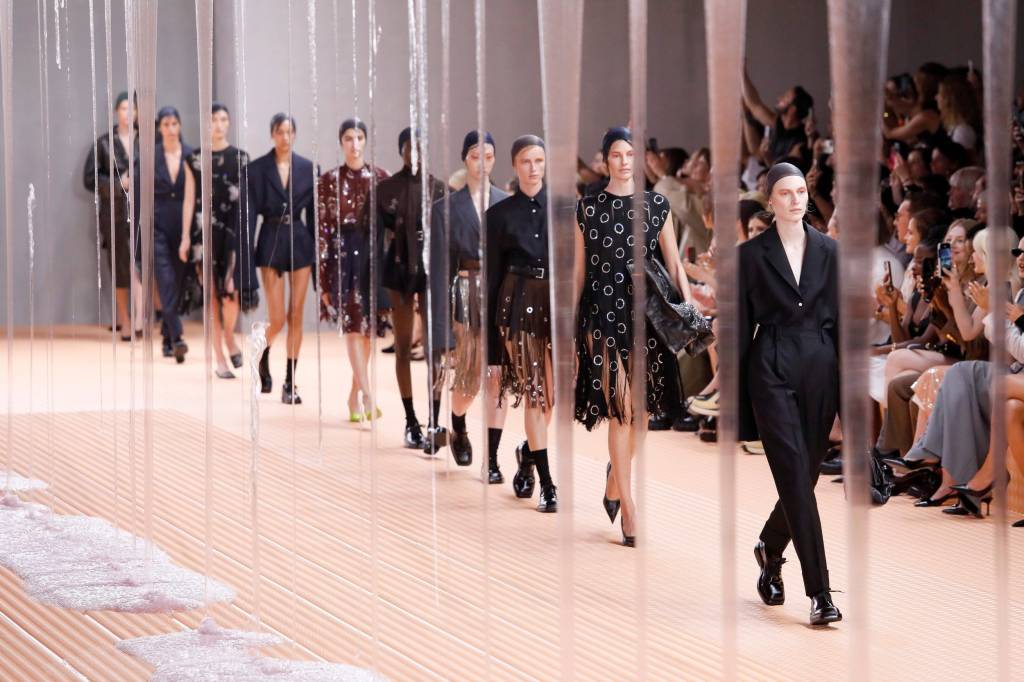
I have been studying and talking about trends for many years. I have repeatedly indicated that trends, as they relate to lighting are influenced by four factors, architecture, related residential industries, socioeconomic trends and fashion. While most folks will buy the first three, I am often questioned about how pleated pants and gold lame gowns could possibly impact chandeliers. Suffice to say, it is a bit more esoteric.
Unlike a lot of guys, I have been reading the fashion pages of newspapers for a long time. I started with the local Cleveland newspaper, The Plain Dealer. Like most major metropolitan dailies, they sent their fashion editor to Paris and New York to cover the seasonal previews. The original editor was hilarious and adroit, fully cognizant of the fact that she was reporting on a sliver of culture that barely touched the average Cleveland reader. When she retired, she was replaced with an equally deft observant of this peculiar ritual. Because this was in the era when I was supervising an engineering department and not yet working to educate the design community, I read these articles primarily because they were so well written and so filled with wit. I suspect, I didn’t notice how insightful the hidden observation could be, beyond dresses and suits.
Of course, The Plain Dealer, like scores of other local dailies long ago suspended their fashion coverage. (Cleveland’s last editor opened a fine fashion store in a trendy area and continued her success elsewhere.) I then began to read the New York Times and their fashion section. The editor, Vanessa Friedman is a consummate observer of the industry, but nowhere near as irreverent as the two Cleveland editors. Nonetheless, I still regularly glean information. As I write this, I have five articles, torn from the printed edition over three months, with ragged notes jotted in the margins.
Like so many people, you may ask, “How does this relate to lighting?” let me recap a few articles with my thoughts, pulled from those cryptic notes. (No particular order.)
John Galliano is experiencing a renaissance and will soon develop a line for fast-fashion leader, Zara. Describing the approach, which is neither inexpensive, or high-end, the NY Times stated, “It is, in other words, not exactly fast, nor cheap, nor rooted in trends (and thus disposable,) Instead, it is sort of an in-between, offering which has been missing from fashion for a while, as high-end brands have chased the luxury consumer via increasingly exorbitant prices and ultra-fast fashion competitors raced one another to the bottom.”
Summing up the summer Paris shows, an article was ended with an interesting conundrum, “And this is the choice shoppers increasingly face: between the grass roots and the grandiose, the personal and the imperial; between brands imbedded in the everyday and brands that build their own reality. That may be the biggest trend of the season….”
I like these observations. So many manufacturers are fighting a price battle, there must be an alternative. That is the approach I see taken by Hinkley. There is a sweet spot between well-priced and fashion forward and they may have found it. The same demons fight in the fashion world and it looks like both industries are coming to a nice answer.
Men have increasingly been experimenting with makeup and fashion consultants. (“She Has a Feel for Making Masculine Men Look Pretty”) This new tack for men is a brave new world. Perhaps not for your dad, but younger guys are discovering and realizing an expert can add to their outward look. Makeup and stylists have not been widely used previously, especially in the cis community, but it is growing.
The June 2026 recaps of the new menswear season detailed leather, pants under skirts, day bags, sailor hats and plenty of pink and bright yellow, in a multi-page spread entitled, “Something is Changing on Europe’s Runways.” What is deemed “acceptable” for men and masculinity is also expanding.
Can we relate this to the growing value of a lighting designer, or even good lighting in general? Sure, it is a niche market today, but it could be bigger tomorrow. As more homeowners take added pride in their home and seek to add increased value to the residence, an expert in a field heretofore ignored could become as common as men in skirts, carrying bags, both in bold colors and prints.
The recap of the Jean Paul Gaultier and Viktor&Rolf July women’s shows, was filled with observations of affordability. “…the customer seems beside the point.” The influence of influencers and marketing. “There are only a handful of individuals who can buy clothes as expensive as couture pieces, but there are so many millions more who can see them and comment. It’s possible they matter more.” The use of simultaneous young and older runway models was explained, “It was smartphone catnip of the most obvious kind.” Perhaps the most obvious for lighting folks was, “…LED lights sewn into the lining of a skirt dripping in pearlescent bugle beads to create an actual glow from within.” Surely, someone came to my LED Tape product introduction meeting fifteen years ago, where I wore an LED lined sport jacket! All of these points can be connected to running a successful lighting business and thinking beyond what we’ve “always done.”
There are huge dollars invested in the chase for fashion. Lighting is a fashion business. We should always see what they have to say. You never know when it will roll over into the lighting world. And not just the easy moments, like LED lined clothes.


