
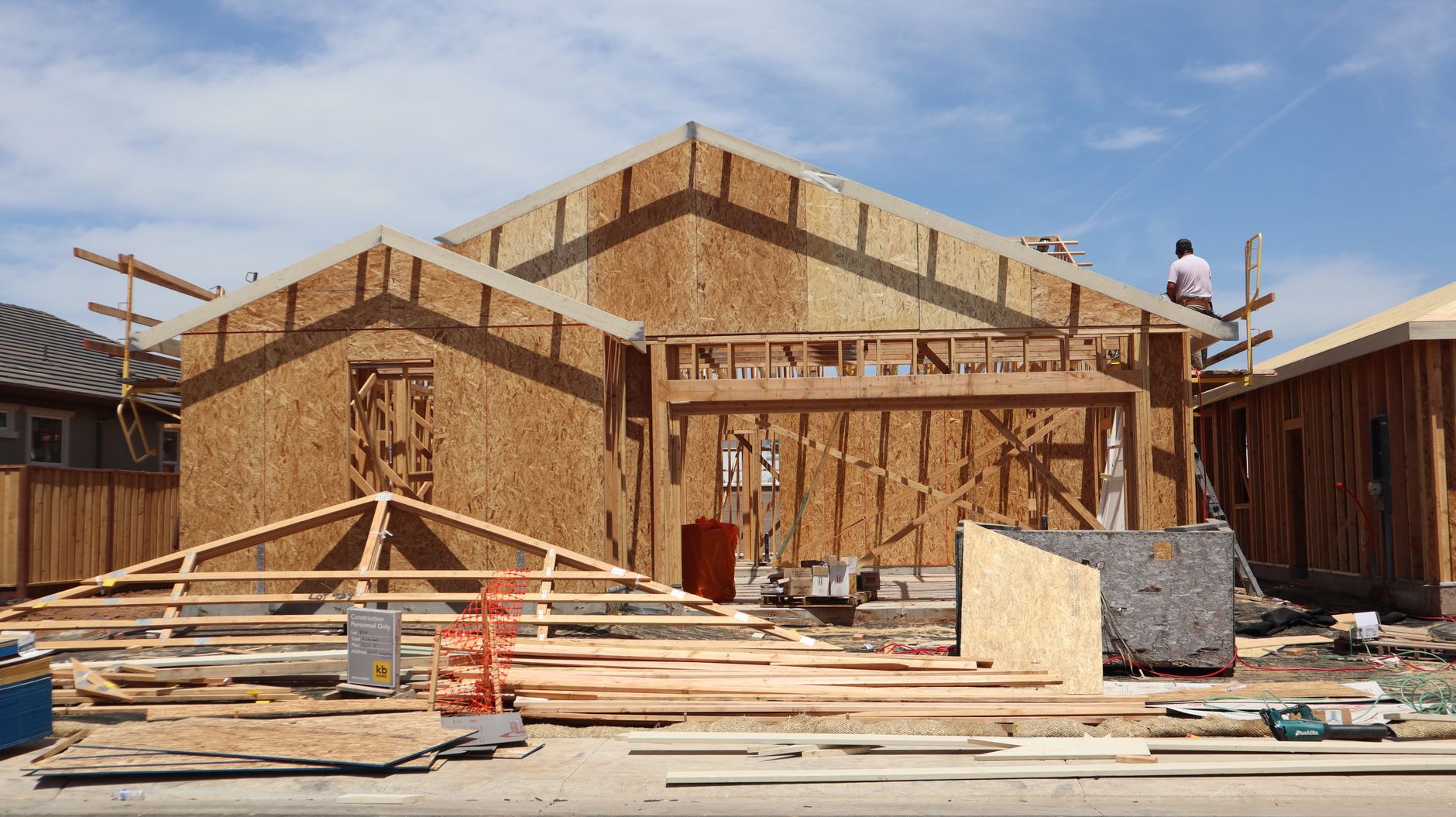
One of the most interesting email blasts to which I subscribe is published by the Harvard University Joint Center for Housing Studies. It’s free, so I urge you to do likewise. While they do have a slight bias toward affordability content, the information is timely and speaks to the lighting industry because of its tightly bound connection to new home construction and existing home sales. Their recently published annual “State of the Nation’s Housing 2026” report considers both.
Like so many other organization’s yearly assessments have stated, the industry is in a difficult spot. American citizens are in a difficult spot. If you have money, you’re probably ok, but if you earn a moderate income, you are having trouble and will likewise have difficulty affording housing and it will only get worse. Intuitively, we already know that. The remarkable book, “Evicted” by Matthew Desmond explored this exact topic ten years ago. Contrary to what Ronald Reagan promised, a trickle-down economy does not trickle. It is simply making the wealthy, wealthier and pushing more people into poverty. Coupled with our past inability to maintain a viable minimum wage, we find ourselves today in a state of crisis.
Here are a few stats pulled from the report that should frighten anyone who works in the building industry.
- Household growth, an essential driver of demand for housing fell for the third year in a row to only 1.1 million. It had reached 2.0 million in 2020 and 2021. This reduction of households among young adults is blamed on a weak job market, student loan debt and low consumer sentiment.
- One-third of people under 30 years of age, who are statistically eligible to “start a household,” are still living with their parents.
- The US added only 116,000 jobs in 2025. This is the smallest level since 2002. The Bureau of Labor Statistics attributes this to the current “low-hire, low-fire” economy.
- Student loan debt at least 90 days overdue is at 10%. This is a key demographic needed to form new households and invest in new housing. Inability to pay their loans make them unlikely homeowners.
- Consumer Sentiment is now at 45 year low (excluding the pandemic blip)
- Mobility rates, impact by the slowing job market, fell from 5.5% to 5.1% effecting states like Texas and Florida, who rely on net inflow of residents.
- Severely restricted immigration and increased deportation have reduced housing demand. This is expected to plummet another 75% in 2026, placing more burden on demand. (Immigration is a strong driver of household growth.)
- Single family house construction starts fell 7% to 940,600 units. Despite price reductions and builder incentives, sales also dropped 1% to 678,000 units, resulting in increased inventories of unsold units.
- Homeowner vacancy rates are at historic lows of 1.1%. This is exacerbated by slowing construction, making the homes available, much higher in price.
- Since 2020, the price of new homes has increased 54% nationwide and above 50% in 73 of the top 100 markets in the United States. Even small markets are seeing similar increases.
- Only 16% of renter households earn $120,800 per year. This is minimum threshold needed to purchase a medium-priced house. Even fewer have the $14,300 needed for a 3.5% down payment.
- US home ownership rates fell to 65.2%; this represents the second year of decline.
- 20.7 million homeowners (24%) are “cost burdened” spending more than 30% of their income on housing. This is an increase of 4 million since 2019. Add that to the number considered “severely burdened” (spending more than 50% of their income on housing) and the total is 9.6 million households. This is of course most severe in low-income households, especially those residing in high cost of living location.
- Only 23% of homes listed for sale were affordable to someone with a household income of $75,000. That number was 49% in 2019, a 26 point slip in six years. If earnings are less than $75,000, availability is down an incredible 60%.
- For many current homeowners who have been able to leap so many of these hurdles, a reward is still out of reach. Equity rates are at their lowest point since 2018. 1.1 million mortgage holders have a balance higher than their home’s value.
- Couple all of these stats on top of the already existing bias against people of color, which, in response to administration policy and Supreme Court rulings is expected to grow, meaning a large sector of the population is doubly burdened and even more unlikely to participate in home ownership.
There is equally daunting data covering rental housing and low-income earners:
- Despite demand, America is not addressing the need for lower priced housing. 11 million households are considered “extremely low income.” They compete for 3.8 million affordable and available rental units. The total number of affordable units is rapidly falling and private markets are not filling this gap. While government rental assistance is still available, federal public housing funds are being slashed. State governments do not have the resources to fill in the gap. If you want to know why Zohran Mamdani was elected Mayor of New York and Socialist Democrats won a number of primary elections recently, this is the reason. They are among the few public officials speaking about this crucial issue.
Home sales are down. Household growth is down. Home ownership is down. Homeowner insurance is up. Construction costs are up. Interest rate remain up. The threat to the housing stock from erratic weather is up. Utility costs are up. Housing market discrimination is up. None of this is good news.
What is the Response of Lighting?
I’m reminded of the famous scene from the movie, “Butch Cassidy and the Sundance Kid” when the “Kid” tells Butch that he can’t jump into the river because he can’t swim. Butch responds, “Are you crazy? The fall will probably kill ya!”
This is bad in multiple ways. The easiest answer is to swap all products to those that service high to very high income consumers. The problem with that logic is volume. Are there enough of these type consumers to support the whole industry? It is unlikely because the moneyed Baby Boomer’s impact on housing is waning and the Gen X demographic, while financially powerful is so very small. These issues are striking the Millennial and Gen Z demographic most severely and they are at peak home buying and household formation years, right now. The alternate is reduce prices. That too is complicated, thanks to the myopic direction of the current administration.
The outside force here is the home builder’s response. If I were a builder, I’d be looking at reducing the demand for decorative product in favor of less expensive functional lighting. With the reduced size of “starter” homes to 1800 square feet, I can’t see a dining room included. That means chandelier demand will shrink and less-expensive kitchen pendants are likely to be more important. Undercabinet lighting should already have been replaced with LED Tape and bath vanity lighting will be swapped with a lighted mirror. Recessed lights are already the victim of the dreaded “disc.” Like acne on a teenager, expect them to infest most every other area of a house. Flat panel LED luminaires are also primed for an increase. Because of their slim profile, they have a limited visibility in a room and could easily take the place of a more expensive products. They also deliver more light than the “discs” for spaces where that is needed. They are available in round, oval, square and rectangle and only about 1” deep. Many offer selectable CCT. I wouldn’t be surprised to see more of these in lower priced homes.
I’ve recently seen an uptick in the use of steel for outdoor luminaires. This has always been a no-no, even with a powder-coat finish. I suspect this barrier will be falling soon. To achieve lower costs, we’ll be installing “limited life” lighting outside. Like cheap vinyl windows, homeowners will be replacing outdoor lighting in ten to twenty years. I’ve also seen an increase in recessed lighting under eaves in lieu of surface mounted fixtures. This is new. As an industry, I’d pay attention to this. It could substantially reduce their lighting cost and have a big impact on lighting manufacturers.
There is one “bright spot” that might take a few years to create an impact. Despite being stalled by President Trump’s failure to sign, the “21st Century Road to Housing Act” has gone into law. In general, most of what is included will still require local legislative action. Perhaps the most unheralded section is the elimination of a “chassis” required on most manufactured homes. The chassis adds cost and reduces output because the inclusion of a chassis immediately categorizes it as a “mobile home.” Mobile home limitations and caps are in place across the nation. For the first time, the economy of factory-built homes and progressive construction techniques might actually help reduce new home construction costs.
Is this enough? I don’t know, but don’t worry. The fall will probably kill you.
If you’d like to read the entire report, the attached link will provide you with 48 pages of detailed insight.

