Categories
Technical Lighting Help

Is Home Automation a “Time-Saver?”

Photo by picjumbo.com on Pexels.com

My wife and I have just moved into our new-old home. We have spent almost a year restoring and reinvigorating a mid-century ranch that will deliver a more carefree (and step-free) life for us as we age. Because of the rough state of the home when we purchased it, a rewire was required. Many walls were removed (black mold) the ceilings were taken out (water ingression from a leaky roof) and fuse boxes removed (Federal Pacific Electric Panel.) The lack of physical encumbrances made the lighting choices easier. I could spec almost everything I wanted and the wiring part would be easy. (Well, easier. Doing so within the confines of maintaining the mid-century characteristic of the home soon became the hindrance.)

I decided to install a Control 4 Home Automation system to “run” the house. Security, lighting, garage door, shading controls, temperature control and intercom could fall under one umbrella. The Bosch appliances, themselves supported by a proprietary app could be brought into the group. There are other functions that could be integrated as well. Luckily, I have been using a local tech-guru that helped me through this process. More often than not, when I asked if something could be done, his answer was, “Yes!” I cannot amply stress the importance of having a tech-champion on your team. This person is as important as a plumber or an electrician. (Please note, a tech person COULD be an electrician, but an electrician is not necessarily a technology expert! Get the right person for the needed job.)

I wanted the system because of my belief that, despite the conflicting realities, automation is probably more beneficial to seniors than the tech-savvy Millennials. My wife selected faucet handles that will work better for arthritic hands, the AIP contractor suggested a drawer microwave because it is more conducive to someone who might be wheelchair bound. Wet baths were included to eliminate the possibly hazardous step and aesthetically sensitive grab bars were included, just in case. Automation systems can be equally helpful for many of the other things that become a struggle as we age.

The back of the house features sixteen large windows that look out on a wooded area (in the middle of an inner-ring urban/suburban neighborhood.) Without automation, opening and closing them daily could be an onerous task. Insuring nightlights are turned on at night has shown to reduce falls in seniors. That is an easy thing for home automation systems. Nighttime security checks can quickly be achieved by a control system. All of these things should make life for us better as we age. All of these things should not be a burden.

I was reminded of the burden of automation after reading a New York Times opinion feature that shared the fact that automation is NOT saving us any time. Workers using AI to “help” are not saving time. Technology-enhanced homes are not allowing active young homeowners added time to lollygag and “chill.” Statistics state they spend roughly the same amount of time doing (loosely defined) housework as their parents. But why? The creators of these products promised me peeled grapes and a pink pony!

Each time my wife attempts to book a doctor’s appointment online, I am reminded why technology does not always save time. The two-step authentication becoming more and more ubiquitous was probably invented by lawyers in an effort to protect their litigious-prone industry. How many times has a slow server, or a weak Wi-Fi connection caused you to “time-out” of your ability to enter the six-digit code? My moderate dyslexia invariably forces me to reenter the number more than once. Does the cybercrime version of Boris & Natasha really care my annual physical is scheduled for next Thursday?

I’ve never figured automation to save me time. In pre-computer days, when I managed an Engineering Department, I had an assistant. If I needed communication to be sent to people in the company, outside the company, whomever, I asked her to write a note to them about whatever topic was required. Later that day, she had typed a letter covering the required topic. As fax machines came online, I was required to write letters with sketches and details she could not complete. When each of us was given a computer and an email address, all of the correspondence was now my responsibility. My assistant could no longer handle that portion of my workload. I was now the typist. Luckily for her, she was an immensely talented person and went on to manage her own collection of people in a different area of the company. Automation simply meant I now had more work. Different work, but more than I had prior.

I did not buy and have installed a Control 4 home automation system to save time and money. I did not expect to save energy. I did hope a home support network would allow my wife and me to live in our last home longer by eliminating some of the more cumbersome tasks from our daily routine. I still believe this to be true. I am also realistic (and old) enough to know that sometimes you get wasabi and sometimes you get horseradish with food coloring and cornstarch, more often, the latter.

Categories
Technical Lighting Help

Why is Color Fidelity Better Than Color Rendering?

Photo by Magda Ehlers on Pexels.com

In my last blog post, I explained the recent recommendation by the CIE (International Commission on Illumination) to move away from CRI and replace it with Rf, CIE General Color Fidelity Index. Almost immediately, I was asked why. It’s a good question. On the surface, they appear to be very similar.

  • Both use a zero to 100 ranking system
  • Both use the same Spectral Power Distribution (SPD)
  • Both compare a source against reference colors

This last point is what makes the biggest difference.

Color Rendering Index (CRI) uses only eight reference colors. All eight are pastels with similar levels of saturation. For years, known flaws included the lack of red, bold colors and flesh tones, but because incandescent light does a good job rendering pastels, it never raised much concern. The rise of LED laid bare the failures.

To solve this key flaw, Rf uses 99 reference colors, evenly spread across the color spectrum. These are also colors drawn from real-world objects and dyes. A wider sampling will deliver a more realistic metric.

One additional pushback I have heard concerns the similar results garnered by each test method. Perhaps the CRI is 90 and Rf is 92. Of course, that is possible. MicroSoft Windows 1.0 could allow us to write a letter and the same can be said about today’s most current operating system. The difference is in all of the other features. As we begin to use and understand Rf, the added features will grow in value. With the added data provided by Rf, one might find one light source does a great job rendering wood tones and another a better with bold blue colors. As lighting professionals, we can select the light that best suits the application. As the CIE address the other know flaws, new measurements will build on this foundation to be more robust method of color measurement.

I can’t stress this more. Find a way to introduce yourself to this new metric. Like commercial lighting professionals have realized before us, the advantages will far outweigh the learning curve.

Categories
Technical Lighting Help

Goodbye CRI, Hello?

Photo by Alexander Grey on Pexels.com

You may have heard that the CIE (International Commission on Illumination) has finally agreed with numerous illumination and color of light experts to abandon the Color Rendering Index (CRI) method of measuring the quality of white light. That was the easy part (not really, it took a long time, but stick with me.)

While those of us who simply want to specify and use good light have referred to this characterization as CRI, the CIE calls it Ra, CIE General Color Rendering Index. They are recommending a replacement with Rf, CIE General Color Fidelity Index.

When we lived in an incandescent and fluorescent world, CRI worked fine. As we started to employ more fluorescent and then a total LED replacement, the known flaws in the CRI system became more and more apparent. Something different was needed. Early on, the CIE admitted that CRI was not acceptable, but was noncommittal on a replacement. This world organization is known for its detailed deliberation. When it makes a decision, it comes with a lot of weight.

Over the years, a number of replacement concepts were proposed and rejected until the lighting community was presented with TM-30. While there were a few objections, most everyone agreed this was a superior metric. Much of the commercial lighting industry has already begun using TM-30. We decorative lighting folks have maintained an allegiance to CRI for very clear reasons. It was easy. 100 = good; zero = bad. If we’re close to 100, we should be satisfied. Besides, we have just begun to take light quality seriously, some slack was needed to be given to those of use less technically inclined.

One reason TM-30 is so fully supported is because it is actually two different measurements packed into one metric. There is a one-for-one replacement for CRI or Ra. That is Rf (fidelity.) It also measures color saturation and that portion is call Rg (gamut.) The CIE also recognizes that a single fidelity measurement does not tell the whole story. They are setting a foundation for a more comprehensive metric that could be TM-30, or could be something else.

What Can Decorative Lighting Expect?

I understand change is hard. I was around when decorative manufacturers, retailers and the design community needed to digest a new set of data points. Color Temperature and CRI were rarely discussed and poorly understood prior. Nonetheless, we all rose to the occasion. Here’s what we should expect to see in the coming months and years.

TimingMetric 
The past and currentlyCRIWe may see many decorative manufacturers cling to the old measurement
Coming SoonCRI + RfTo help in the transition, showing both numbers will help users understand the number and the benefits of change
FutureRfWith the term an integral part of the dialog, CRI can then be eliminated
The Desired FutureRf + Rg (?) / TM-30 / ?Everyone understands we need a more comprehensive metric. Will TM-30 be the answer, or a stepping stone to something else?

I don’t know how long it will take for the decorative lighting world to see this change, but I do know, TM-30 was adopted a lot faster than I had expected in the commercial space. For that reason, I urge you to take a minute or two and understand what could be coming your way. Remember when you were the only one who understood CRI? That time is coming again.

Categories
Technical Lighting Help

Data Driven Lighting Selection

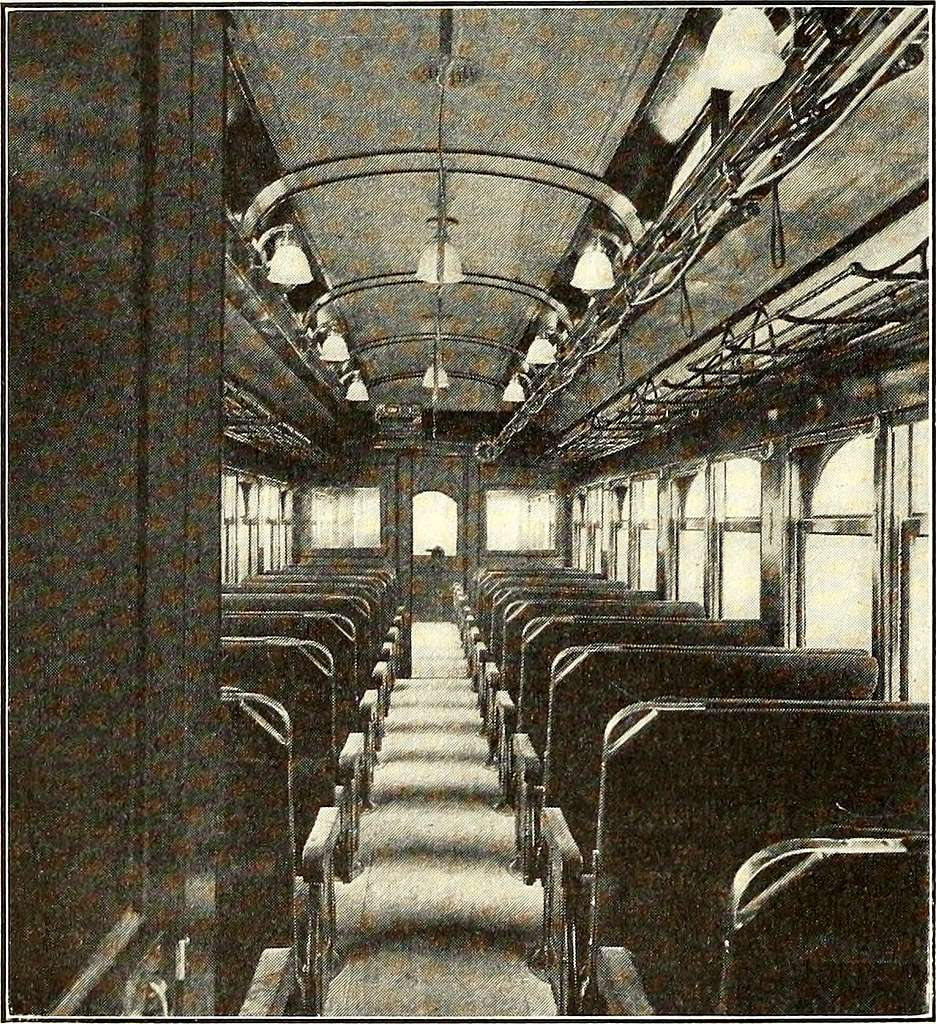
A friend of mine is doing a substantial amount of research of interurban transportation of the early 1900s. To aid in his efforts, he has acquired many years of the trade publication, Electric Railway Journal. In the midst of culling this vast haystack of data to find the “needle” he needs, he stumbled across an article covering the testing that was done by General Electric Company’s National Lamp Quality Division for the illumination of railcars. To insure there was adequate lighting at the fare box, aisles and for general passenger comfort, they took readings at multiple locations in the car. To satisfy the manufacturer, they recorded various voltage draws and power consumption. Being mindful of costs, they also compared operating expenses for three lamp options. Basically, this was an extremely thorough examination of the available lamping of the time.

As I read this report, I realized that presenting the information in a trade publication was a very fortunate thing. When selecting a product now, we can always Google, “Top 10 Best [fill-in the blank]” and read a handful of lists and reviews before buying. That would not have been the case in the 1910s. There was probably a low likelihood that a local train car lighting expert was in your neighborhood. Finding expertise was a bigger challenge then, hence the need for trade publications.

Today, there are a lot of lighting options. Almost too many. The introduction of LED has opened the floodgates of choice and we could easily drown from it. I have heard some people toss up their hands and almost give up. “Forget it, just install some pancake recessed!” Ain’t nobody wants to hear that!

What parameters should we use to select lighting? Here’s four key topics that might help make the choice easier. Style, size, lumen output and placement.

Style

Decorative lighting is an integral part of our home’s interior. When using a decorative luminaire, style becomes a very important part of the puzzle. Choose a design that melds with the room, the space and the context. Luminaires are often hanging right in the middle of a living space. They are a dominant aesthetic element. Selecting a style that does not work with the furniture, floor coverings, window dressings and wall decorations will be a huge mistake.

Size

Decorative luminaires should be sized commensurate with the application. I’ve written a few blog posts on this point in the past so I won’t repeat myself, but size relative to place is key. Too small makes the light insignificant, too large allows it to dominate a room. Care should be taken when choosing the size of a luminaire.

Lumen Output

Again, I have included the charts for expected lumen demand in various places multiple times in prior posts, for good reason. You need a specific quantity of light in specific use applications. Follow the recommendations and you will enjoy successful lighting.

Placement

Will you put a light over the mirror in a bathroom and blind the user, or will you use the more visually comforting lights flanking the mirror? Will you use surface mounted pancake LED faux recessed, or the correctly deigned recessed luminaires? Will you diffuse lamping, or will you use bare bulbs? Placing lighting in a location that will serve the room and the user will be the most well received addition to a home.

Sure, the needs of 1910s interurban rail riders seems like it has no bearing on our life a century ahead, but these early users were taking care to employ the right light for the task with the technology available at the time. 100+ years in the further, we should be doing the same.

Categories
Technical Lighting Help

Light and Health and Infrared Light

Photo by Annisa Nuriddar on Pexels.com

My last blog was on ultraviolet light, now one on infrared. Do we detect an “unseen” pattern here?

Here’s an interesting twist that few people saw coming. The Journal of Environmental Psychology recently published a report, “Effects of near-infrared radiation in ambient lighting on cognitive performance, emotion and heat rate variability.” While this is an early study and the paper itself states that additional research is needed, this initial review indicates that light minus the near infrared radiation (NIR) found in the sun may have some implications on human health.

Upon the introduction of LED, the elimination of IR light was hailed as a benefit. IR can damage tissues and cells on the body and is typically manifest as a sun burn or eye damage, such as cataracts. This study now indicates that the total elimination could cause some additional concerns, especially as humans spend so much more time indoors under artificial light; more so than our predecessors in an agrarian economy.

In a double-blind study, 151 students were monitored, half in light that contained a normal level of NIR (daylight,) compared with the other half subjected to near zero NIR, typical of standard LED lighting. The absence of NIR was found to influence the human’s physiological and psychological levels.

  • Cognitive performances improved in the participants who received light with normal levels of NIR, resulting in better attention, better perception, improved short term memory, increased working memory and better executive function.
  • Mood also improved in the participants who were tested under light with NIR. They showed increased levels of pleasure, more alertness and higher levels of environmental satisfaction.
  • Subjects exposed to the typical levels of NIR showed beneficial effects on resting high-frequency heart rate variability (HF-HRV) and the HF-HRV response to cognitive demand.

Our old incandescent and fluorescent delivered plenty of light in the infrared range. With LED in the midst of a near total domination of both commercial and industrial settings, humans will be experiencing substantially lower levels of NIR than generations prior. This possible impact on humans must be balanced against the benefits as well as the energy savings earned by more efficient LED. Again, remember, this is an EARLY study. The scientific community will be digging into this issue over the next decade. Stay tuned.

Interested in reading the entire study?

https://www.sciencedirect.com/science/article/pii/S0272494424002573

Categories
Technical Lighting Help

Round 2 GUV CALiPER Testing

Photo by cottonbro studio on Pexels.com

[It has been brought to my attention that I transposed a point of data in my paragraph concerning Long Term Performance of UV-C LED when this post was initially released 3-3-2025. I incorrectly stated that there was a 76% loss, when in-fact the product maintained 76% of its initial output. I have corrected that paragraph.]

As I read the finding of the second round of CALiPER testing on Germicidal Ultra Violet (GUV) lighting, I homed in on the final section. “Conclusions and Next Steps.” The report is chockfull of data points and detailed findings that are very interesting, but probably don’t help a typical user. I want to share a few that trouble me and should concern users and specifiers as they consider GUV.

Incomplete Product Performance Data

Some of the products had no performance data and only half had some data available via a website. This lack of information really makes it difficult to consider adding GUV to a space. One would think, when dealing with a light source that included a potentially dangerous byproduct, information would be crucial to the purchase to insure proper installation and a commensurate results. Without it, who would consider a purchase and how could a consumer determine if a purchase would be helpful? This means, only the included marketing information becomes the deciding factor. Remember how marketing told us that we should buy Chesterfield cigarettes because more doctors smoked them? We are reentering the 1950s.

Inaccurate Performance Claims

If you recall the CALiPER testing done for the original LED retrofit bulbs, this was a very common issue, No difference here. One of the great things to come from that process was better facts and more reliable packaging information. Hopefully, that will be the end result of the GUV CALiPER process if it moves forward under the new federal government that is decidedly less receptive to research, technology and education.

Potential for Unsafe Products

This round of testing concentrated on wall mounted upper room luminaires. These units are intended to treat air in a portion of the room NOT occupied by humans. That means, humans can safely navigate the room below, because the light will not reach them. CALiPER found that two of the luminaires emitted lighting below horizon (where people inhabit.) These two, plus an additional two were found to exceed UL 8802 safety limits for irradiance. These could be potentially damaging to humans. When dealing with light in the UV range, care must be taken. Failure can have significant repercussions.

Long-term Performance of UV-C LED

One tested product maintained only 76% of its initial output at 500 hours of operation, despite a claim of 8000 hours of operation. The plotted decline was also very consistent. This is a relatively quick deterioration and the typical consumer might be concerned with a 24% decline in performance in so short a time.

My Thoughts

While we lived through COVID, the rise of a lighting solution to combat airborne pathogens seemed like a godsend. As our memory fades, so too has interest in non-medical applications. The one thing we can guarantee is the blossoming of a new disease and a new problem, quickly followed by a reemergence of interest in this type of lighting solution. That we are doing these reviews now means we might be ready when the time comes. In the meantime, buyers should approach with caution these products. They should also push for a more formulaic review of these luminaires. They should seek out and ask for independent test lab reviews. Only then will manufacturers start to abandon their use of marketing promotions and replace them with fact-base statistics. Once we have that data, we will be ready to battle the next dangerous microbe.

Want to read the full report? Follow this link:

Categories
Technical Lighting Help

Indirect Light

Photo by Mo Eid on Pexels.com

A few months ago, I received an unsolicited request to write a post on indirect lighting. This sounded like a great idea to me. I immediately dropped a note into my “reminder file” figuring inspiration would quickly burrow itself into my brain and text would come flowing through my fingers into a MS Word document. Alas, that has not occurred.

Indirect light is a remarkable addition to a room. When my wife and I renovated our second home, we added perimeter lighting to a basement rec-room, tucked behind a ceiling mounted valance. Despite the other layers of light I included in the space, it became the first and typically only light we used. It was comfortable, provided no glare and seemed so natural, despite the fact that it was linear fluorescent, in those pre-LED years. In our third home, I included LED linear over-cabinet and toekick lighting in our kitchen remodel. Again, we use them much more that the four other switches in the room. Clearly, we prefer the output provided by the indirect source.

But, what science did I use when I specified it? Surely there was a method to my madness. Actually, I had no method, just a gut response to the need. In the basement installation, I used the available T8 fluorescent product sizes in double-tube, offset models, because I hated the “dark gap” left when non-offset product was used in long linear lines. I had specific lengths, so I used a combination of 48”, 36” and 24” units that would give me a full and even delivery of illumination.

In the kitchen, it was even less “scientific.” I made a decision to install an “All LED” lit room. At the time, it was quite a challenge. My electrician was VERY excited, knowing he could take the experience with him to his next job. I was a Product Manager at the time and my kitchen along with the kitchens of the Engineers involved in the design became “linear lighting guinea pigs.” We learned about output, how color temperature interacted with room settings and how lumen output informed products. (There were limited LED options at the time.) Like Henry Ford’s famous quote, “You can have any color as long as it is black.” I had one option. I made installation videos while I installed the light that I hoped could be used to help others and in the process. I learn of some issues that would inevitably arise, so I was preemptively prepared for Sales Rep questions. What I did not do and could not do was consider the options, because, they simply did not exist.

Since my early interaction with indirect light, I have tried to quantify my preferences. I’ve tried to digest the WIDE assortment of linear lighting now on the market. I’ve also attempted to integrate the needs of more light required for senior eyes and their preference for indirect light. Couple all of that with the variety of room reflectance and ranges quickly become important.

With that in mind, let’s revisit my previous installations. The double T8 installations hidden behind a valance were producing about 1400 lumens per foot. (Florescent T8 lamping produced between 650 and 750 lumens per foot and there were two, side by side in each fixture.) The valances ran the length of the room on both sides. While I no longer have the details, I believe there was about 25’-0” of light, amounting to 35,000 lumens in a 15’-0” x 28’-0” (420 sq. ft.) room. This was enough to illuminate a room comfortably with no-glare. That may seem like a huge amount of light, but we must remember, because it was indirect, a reasonable proportion is lost in absorption and reflectance.

In my second installation, using early LED linear lighting, I know the output was much lower, approximately 50 lumens per foot. With a linear length of 20’-0” in a 9’-0” x 13’-0” room, that delivered 1000 lumens of light. The toekick at 16’-0” of linear length produced 800 lumens. When used together, 1800 lumens of indirect light was easy to like.

My non-exacting use ranged from 50 to 1400 lumens per foot. Looking at the wide variety of products now on the market, we can easily specify eleven different static white options from 112 lumens per foot to 1163 lumens per foot, and that is from just one company! By developing comfort with this “lumens per foot” metric, it is easy to apply the correct amount to each application.

Today, indirect light is typically produced by linear LED. I wrote two companion blog posts on this topic (https://lightingbyjeffrey.com/2024/01/29/how-to-effectively-select-led-tape-part-one/  https://lightingbyjeffrey.com/2024/02/12/how-to-effectively-select-led-tape-part-two/  ) There is lots included there which can be reused here because most of the content referenced indirect illumination. I’ve reprinted this table, because it relates to applications. Use the range to deal with reflectance variations.

ApplicationLumens per Foot Range
Mood lighting / Light Used as a Background100 to 300
Accent lighting / For Added Aesthetics150 to 500
Task Lighting – Close275 to 500
Task Lighting – Far Away (light location)350 to 700
Indirect Lighting375 to 575
Cove Lighting180 to 500
Principle Lighting in a Room400 to 1000
As a Replacement for Linear Fluorescent Lamping500 to 950
Kitchen Under-Cabinet Lighting175 to 550*

Now, let’s understand the relationship between room size and the indirect light’s lumens per foot delivery. If we consider my original rec-room with the old fluorescent, 420 sq. ft. multiplied by the desired 20Fc illuminance level from the chart below, 8400 lumens is needed.

The indirect light in the kitchen is intentionally less functional, so the 117 sq. ft. against a desired illuminance level of 5Fc would require 585 lumens of light.

Area / TaskDesired Illuminance Level in Footcandles (Fc)
Hallway/Passageway5-10
Conversation Area / Entertaining5-20
Dining10-20
Reading (General)20-50
Bathroom / Grooming20-50
Laundry / Ironing20-50
Kitchen (General)20-50
Kitchen (Work Areas)50-100
Reading (difficult) Study / Hobby / Music50-100
Hand Sewing / Detail Hobby100-200

The 35,000 lumens I liked is four times the anticipated need. The 1800 lumens in the kitchen is closer to three times the need. Because indirect light takes a circuitous path from the light source to the user, much is absorbed in the reflecting surfaces.

Think about this, a mirror only reflects back about 92% of the original. If I measure my above cabinet light directly overhead (12”,) I record 20.7 Fc at the ceiling. My toekick lighting measures 130.8 Fc on the floor below (Very close at 4” to the floor.) Standing in the middle of the room with both systems engaged, I have a mere 3.5 Fc of usable illuminance from 3600 lumens. Obviously, a lot of that light is lost in surface absorption and distance.

To achieve usable levels of indirect light, a 3:1 to 4:1 ratio makes sense. If you want to reach the levels of usable light the second chart suggests, you need to use products that create three to four times that number.

There are more complicated calculations that could be employed to insure exacting levels of light. Many commercial projects first construct models to understand the end result of the proposed light. Both are impractical for the residential space and occasional lighting designers. At the risk of suggesting my hunch, rather than proven data is the way to go, I’ll leave you with a 3:1 to 4:1 ratio.

If anyone else has a better suggestion, or an easy calculation, let me know. Next time, I may be less accommodating when someone suggests a blog post topic!

Categories
Technical Lighting Help

“Let’s Just Eliminate the Stove.”

Photo by AS Photography on Pexels.com

At the recently completed American Lighting Association (ALA) conference, the concept of cost overruns was discussed. The lighting pros in attendance were commiserating the unfortunate fact that light, too often is the victim of an expensive refrigerator. When costs need to be cut, lighting becomes the sacrificial lamb.

I suggested we should all counter that response with a different argument.

Client: “We are spending too much money on the new kitchen. We’ll need to eliminate some of the lighting.”

Lighting Professional: “I have a better solution. Let’s remove the stove.”

At this point, the customer will respond and push back. Of course, a kitchen without a stove isn’t much of a kitchen. A kitchen without proper lighting is equally ineffective. If you can’t see the carrots, dragging out a knife could be a lethal, or at least messy problem.

There is a better way that doesn’t mean the elimination of half the light or one La Cornue. Multiple lighting options should be considered so a good lighting design will be the result.

The first design you offer should be the optimal version. You should include the luminaires that will do the best job, perform the best and deliver the finest design possible.

A second option should include alternatives and the reasons they are second should be included in the notes.

  • “Adequate, but not perfect beam angle”
  • “Shorter expected life span – 25,000 hours vs 60,000”
  • “Increased likelihood of glare”
  • “X”

You might want to offer a third, but I wouldn’t unless you like extra work, or that has been agreed upon when discussing the job.

Sometimes, the customer needs to understand why they are selecting what they are selecting. They might choose a Sub-Zero because it has a reputation and a certain amount of élan, but they do not have that connection to lighting. They can acquire a visceral connection to a chandelier, but functional lighting is different. A stove roasts a chicken, a dishwasher cleans the pots, a freezer makes ice cubes, but they might not realize properly designed recessed cans (pots) deliver glare-free light that supports all of the tasks a user achieves in a kitchen.

The accent lighting layer is an easy victim to cost overruns. In order to swing that copper farmhouse sink, the toekick and above cabinet lighting could be sacrificed. The lighting designer should ask, “At what cost?”

“Why install a Poggenpohl kitchen, if you aren’t going to light it properly?” If you can’t see the beautiful finishes, the seamless craftsmanship and the flawless functionality, what is the point?

In a perfect world, kitchens should be offered at multiple price points, each with commensurate lighting. Here are a few lighting options matched with the overarching kitchen concepts.

Entry Level Kitchens

If the client is furnishing their first home, or if they are young and just starting life’s journey they will likely be using stock cabinets, basic appliances, introductory priced granite countertops and simple flooring. The suggested lighting could be:

  • Decorative surface mounted luminaires – flush or semi-flush, depending on the ceiling height. (Surface mounted “discs” are not an option at ANY price point!!)
  • Good output, LED Tape in a plastic channel as under-cabinet lighting. Depending on price, an integrated under-cabinet option might work. LED Tape is typically less expensive (based on lumens per foot) but still confounds some less skilled electricians.

Mid-Level Kitchens

If the customer is moving into a second or “forever” home, they will likely be using semi-custom cabinets, more elevated appliances with better features, quartz countertops and ceramic or wood flooring. The suggested lighting could be:

  • Pendants at the island that have a size equal to the girth of the surface and a height that conforms with the ceiling height. In other words, avoid using tiny 5” spheres in a room with 10’-0” ceilings over a 48” wide island.
  • Well positioned recessed lighting. They may not have optimal beam angles and they might not be as recessed as those found in a perfect design. (Surface mounted “discs” are not an option at ANY price point!! Yes, I wrote this twice for a reason.)
  • 300 to 500 lumens per foot LED Tape in a channel as under-cabinet lighting
  • Above cabinet accent lighting provided by LED Tape delivering between 150-250 lumens per foot.

Luxury Kitchens

This client might have a kitchen designer. They might be using an interior design specialist or architect. They are familiar with what they want and have the funds to achieve that goal. This is not their first home purchase and might not be their last. They will be specifying the aforementioned La Cornue and Sub-Zero appliances in a SieMatic kitchen. High end backsplash and flooring materials will employed. The suggested lighting could be:

  • Pendants at the island should be perfectly sized to the girth of the counter and height of the ceiling. The quantity used should also fit the scale.
  • A separate dining area might need supplemental lighting and a fine decorative chandelier/pendant/semi-flush should be selected.
  • Well positioned recessed lighting with optimal beam angles and lumen output. They should be recessed into the ceiling a minimum of 2 ½”. (Surface mounted “discs” are not an option at ANY price point!! Once more for effect.) There will never be a reason to replace these, so buy the product that is warrantied for 50,000 hours or higher.
  • 300 to 500 lumens per foot LED Tape in a channel as under-cabinet lighting
  • Above cabinet and toekick accent lighting provided by LED Tape delivering between 150-250 lumens per foot.
  • Under countertop lip accent lighting should also be discussed and considered. It can be a wise alternate to inside drawer lighting.
  • Under island accent lighting (again, LED Tape) at about 200-300 lumens per foot will work nicely
  • There is a good chance this kitchen will feature some display cabinets. They will need to be lit to fully appreciate the items. The necessary illumination can vary widely from 150 to 500 lumens per foot depending on the goal.

There are many differences found in all the kitchen designs in America and they diverge in as many ways as the customer does. Despite that range, no one need go without a stove to have good lighting. Good lighting simply needs to be planned in concert with the rest of the kitchen’s functional elements.

Categories
Technical Lighting Help

2020 US Lighting Market Characterization

Photo by Nothing Ahead on Pexels.com

Imagine my excitement when I found out the DOE’s, 2020 U.S. Lighting Market Characterization report had been released! This is the forth in a series that attempts to understand the United States consumption of lighting and its commensurate energy use. While I was unaware of the initial 2001 report, by 2012, (the publication date of the 2010 findings) I was deeply enmeshed in energy efficient lighting. That report, along with the oddly named 2012 DOE study, Residential Lighting End-Use Consumption Study: Estimation Framework and Initial Estimates, were heralded as benchmarks of data for their comprehensive approach to understanding where we were in the lighting/energy consumption space. The 2015 report (published in 2017) helped the energy efficient lighting industry see what they had accomplished in five years. Now, ten years after the industry started to take efficient lighting seriously, solid results of a decade of blood, sweat and tears can be shown. In short, this is good news, but there is also more work that can and will be done.

History

Let’s assume you’re not like me (lucky you!) and you have not waited with bated breath for this report. Let’s also assume, you didn’t even know about the three previous editions. That’s OK. That’s why you read this blog. I’ll happily slog through a 70 page government document and extract the valuable nuggets of information. Before I do that, let me give you some background information.

Because of the importance in reduced energy consumption, the US government became involved in a number of energy saving efforts over the years. Adopting the “lowest hanging fruit” parameters, items like refrigeration, industrial motors, AC units and appliances were pushed toward greater efficiency through a combination of incentives and mandates. By the time I became involved in energy efficient lighting, they had reach better, almost optimal performance. Lighting was the “next big thing.” At the time, lighting consumed almost 15% of the typical residential consumer’s expenditure on electricity, bested only by room temperature conditioning. If nothing were done, that number was calculated to reach an incredible 45%, while other equipment became more and more efficient. To determine if the efforts were working, they needed information that no one had. How many light bulbs/luminaires are there in the US? Where are they? What type are they and how much electricity do they really consume? By creating the first, but more importantly, the 2010 report, a baseline was established. This report told us how many lights we had, how much power they consumed and how they were used. To this day, it is information I use regularly.

People will often question the need of government agencies. This information, available to all, is one of the many great reasons.

What Can We Learn From This Report?

There is an installed inventory of 8.1 billion lighting products (light bulbs and/or integrated luminaires.) This represents a 5% increase in residential, but a reduction in commercial lighting when compared with the 2015 report. That commercial reductions is attributed to multi-lamp linear fluorescent troffers being replaced with integrated LED units. Residential units account for an astounding 6.5 billion.

 201020152020
Residential5.812 billion6.219 billion6.506 billion
Commercial2.069 billion2.076 billion1.643 billion
Total7.881 billion8.295 billion8.149 billion

LED has made tremendous inroads in use. LED represented only 1% in the 2010 report, 8% in 2015 and now is responsible for almost 48% of all light sources in 2020. We can assume it to be even larger today, four years after the data collection.

Lamp Type2020 Percentage of Installed Units
Incandescent12.6%
Halogen6.6%
CFLs24.6%
Linear Fluorescent8.2%
HID0.1%
LED47.6%
Other0.3%
Miscellaneous0.3%

Reviewing the installed percentages helps us see that there are a LOT of CFLs still in place, as America’s first foray into energy efficiency. At 12.8% the tiny amount of incandescent is encouraging. I guess it means that the people who were hording light bulbs represented a lot less than were reported.

As a note, I continue to remain skeptical of the fairly large percentage of linear fluorescent used in the home. I raised this point with the DOE in 2012 and still need convincing. If we dig deeper into my concerns, the next tranche of data adds additional fuel to my fire of doubt.

The data below indicates the average quantity of installed units per 1000 sq. ft. I have expanded the LED section so you can see those details. I think they are telling as well.

If we think about an average 2000 sq. ft. home, we’ll need to double these numbers and I believe a lot of this makes sense. Incandescent lamps have burned out and have been replaced, first with CFLs and then later with LED. Because they are longer lasting than the incandescent they replaced, many are still in service.

Lamp Type2020 Average Number of Installed Units per 1000 sq. ft. of Building Space
Incandescent6.5
Halogen3.4
CFLs12.7
Linear Fluorescent4.2
HID0 / negligible
LED – Total24.5
General Service “A”14.1
General Service “Decorative”3.5
Integrated LED Luminaire1.2
Linear0.2
Reflector5.5
Miscellaneous LED0.1
Other / Miscellaneous0.36

Here also, I think you can see my concern with the linear fluorescent number. 8 ½ linear fluorescent lamps seems high. I guess a 2000 sq. ft. home could have two shop lights and a 2’-0” x 4’-0” fluorescent in the kitchen, but it seems a stretch, especially because this means EVERY home in America must have this amount. That means many people have MORE! This just does not add up.

I’m also suspicious of the LED integrated luminaires and the reflector numbers. I wonder if there is some confusion with integrated recessed units and retrofit recessed PAR & R lamps. This might just be a transition year, but with integrated recessed, integrated under cabinet lighting, integrated utility lighting, LED integrated into bathroom mirrors, 2 ½ integrated LED luminaires per 2000 sq. ft. home seems low.

The distribution of installed wattage is also telling.

Lamp Type2020 Percentage of Installed Wattage
Incandescent32.7%
Halogen15.9%
CFLs17.3%
Linear Fluorescent14.7%
HID0.1%
LED18.8%
Other0.4%
Miscellaneous0.4%

The installed wattage lets us know that incandescent still consumes 32.7% of our energy for lighting. The good news is that the next highest number is LED at 18.8%, then CFLs at 17.3%. Halogen is 4th at 15.9%, so that means almost half (48.6%) of our energy for lighting is still servicing non-efficient light! There is huge room for more reduction.

The average TOTAL wattage of the installed units has gone down to 21.6 watts in residential installations and down to 26.6 in commercial use.

Also interesting is the daily operating hours of lighting per room.

Room2020 Average Daily Operating Hours
Basement/Crawlspace1.4
Bathroom1.2
Bedroom1.1
Closet1.4
Dining Room1.5
Exterior3.1
Garage1.2
Hall/Stair/Entry0.7
Kitchen2.5
Living Room / Den1.6
Office1.7
Utility Room1.4
Other1.4
Unknown1.6
Average Overall1.6

As with past surveys, the exterior lighting is used for the longest period of time each day, followed by the kitchen. This is no surprise, except the hours is even higher for exterior lighting than in surveys of the past, meaning we are using outdoor lighting more than ever. Offices are now #3 beating out living rooms, probably because of the increase in “Work from Home” activity, although this is pre-pandemic 2020 data. If this is a trend, expect to see it even higher in the next survey.

The use of controls were also measured for effectiveness. I’m only showing residential use here as commercial use of controls is radically different and much more effective.

No ControlDimmerDay-
lighting
Occu-pancy SensorTimerEMSMulti
89%9%0%0%0%0%1%

Controls were only considered if they showed the ability to reduce wattage consumption. Based on their collection of data, 89% of the lighting used in residences is not operated with a control that can reduce energy consumption. (Think of this as the number using a simple on-off switch.) That means, the placement of energy-reducing controls per room is surprisingly low. Dimmers are the most popular and they are most used in dining rooms and living rooms, as expected. Occupancy sensors have some use, again low, primarily in garages, closets, utility rooms and exterior locations.

This is why we are seeing such a push for controls as the next step in reduced energy consumption. They have the capacity to reduce energy almost without impact to the user, but we are not seeing much movement yet, even with the mandates established by California Title 24. I had expected to see a slightly higher adoption here.

Power Consumption is also covered extensively. Remember, the whole goal of the efficiency push in lighting was to reduce overall energy use. Overall power consumption of electricity for residential and commercial lighting is 244 TWh. Overall, lighting consumes 9% of all electricity used. The data below shows the huge reductions delivered since the 2010 report.

 201020152020
Residential175 TWh148 TWh76 TWh
Commercial349 TWh237 TWh168 TWh
Total524 TWh386 TWh244 TWh

Residential lighting represents 80% of the installed base but consumes only 76 TWh or 31% of the total. Conversely, commercial lighting is only 20% of the installed units, but consume 69% of the total.

Digging deeper into the data we see clearly why the change to LED was so important.

  • 2010
    • 78% of electricity for residential lighting was consumed by incandescent
  • 2015
    • 42% of electricity for residential lighting was consumed by incandescent
    • 2% of electricity for residential lighting was consumed by LED
  • 2020
    • 28% of electricity for lighting was consumed by incandescent
    • 20% of electricity for lighting was consumed by LED

In ten years the energy consumed for lighting moved from 78% to 48%. That is quite an achievement. All you lighting people out there have earned a cookie!

As you might imagine, this report is rich with information. If you are inclined to read the whole thing, please do so. It’s a page-turner! https://www.energy.gov/eere/ssl/articles/2020-us-lighting-market-characterization

The companion piece, Residential Lighting End-Use Consumption Study: Estimation Framework and Initial Estimates can be found here: https://www1.eere.energy.gov/buildings/publications/pdfs/ssl/2012_residential-lighting-study.pdf

(Remember, this was foundational 2012 data and should be used to understand the history and where we were at that point. Nonetheless, some of the stats found in this report are still considered valid and used in the calculations of the new 2020 data.)

If you elect to forgo the entire report, I hope this was a good overview that will help you plan energy efficient actions into the future, or at the very least, provide a “pat on the back” for your past hard work.

Categories
Technical Lighting Help

The Impact of Light in the 1800s and Today

Western Reserve Historical Society – Cleveland History Center – “Fashion After Dark” Exhibit

Viewing the show, “Fashion After Dark” at the Western Reserve Historical Society – Cleveland History Center, forced me to remember the famous (infamous?) dress that “changed colors” a few years ago. Depending on who was asked, a black and blue dress looked gold and white or many shades in-between. While there remains conflicting opinions on “the dress” all of the theories center on human perceptions of color. Through a combination of light and the brain, via the photoreceptors in our eyes, we see color. Most of the time, it works without a hitch. Sometimes we see different things.

In subsequent experiments, when viewed under warm light, most people agreed it was a blue and black dress. Under cooler color light, everyone saw white and gold. Light has a tremendous impact on how we perceive color and that statement was the premise of the museum exhibit.

Beginning in the 1840s, the moneyed class was introducing gas lighting to their homes. Gas light was brighter than candlelight and the flickering variations delivered a unique atmosphere not experienced before. In the 1890s change was again afoot when gas lines were switched to electric and incandescent lamping presented another different illuminance. Outdoors, arc lighting illuminated the porte-cochere entrances of theaters, the orchestra and opera, yet another variant to artificial light.

The couture designers of the day realized they could take advantage of each of these changes in lighting. Fabrics that had been created, but rarely used, were now rising in popularity. Watered Silk (moiré) and taffeta delivered a subtle movement that provided an intriguing shimmer in gaslight. The application of sequins, rhinestones and jet pulled small slices of available light and presented multiplied glints of dazzle that drew attention to the wearer. Lamé fabrics likewise reflected and magnified glistening light across the entire gown.

The problem for the society women of the 1800s is the same one that faces all of us in the new world of LED lighting. The type of light we use impacts our color perception. The best local lighting retailers have “lighting labs” that help the consumer understand what they are buying. Most commercial lighting installations are preceded with a test, or in situ model that proves what the real installation will look like. Dress and fabric shops of the era featured evening hours and artificially darkened rooms so the materials could be best appreciated.

When my wife and I were rehabbing our second house, we used a purple and green theme in the master bedroom and wanted a VERY subtle violet on the wall. We selected the quietest tone we could find among the thousands of paint swatches. When we painted the walls the minimal amounts of daylight and deep purple (no heavy metal implied) carpet magnified the paint to such an extreme that I was forced to have the paint remixed with half the pigment, resulting in the room we had envisioned.

The importance of paint, countertop, tile, cabinet and fabric selection in the planned light and space cannot be overstated. LED light will likely function for the whole time people typically live in a home. It also presents colors in slightly different ways from incandescent, halogen or fluorescent light. The addition of daylight will add yet another element to the discourse. Taking a clue from 1800s couture can be a smart way to insure the maximum impact of an aesthetic choice.

Coda

One additional point about the exhibition must be noted. To replicate the visual fluidity of gaslight, flickering LED light was used in the exhibitions, placed just as they would have in the residential dining rooms, reception halls and ballrooms of the day. Wall sconces, table lamps and chandeliers illuminated the gowns. This was a wonderful way to help curators tell the story. Pumping natural gas into a museum of flammable collectables could never be considered. The breadth of LED continues to amaze me and I know applications will only grow in in the future.