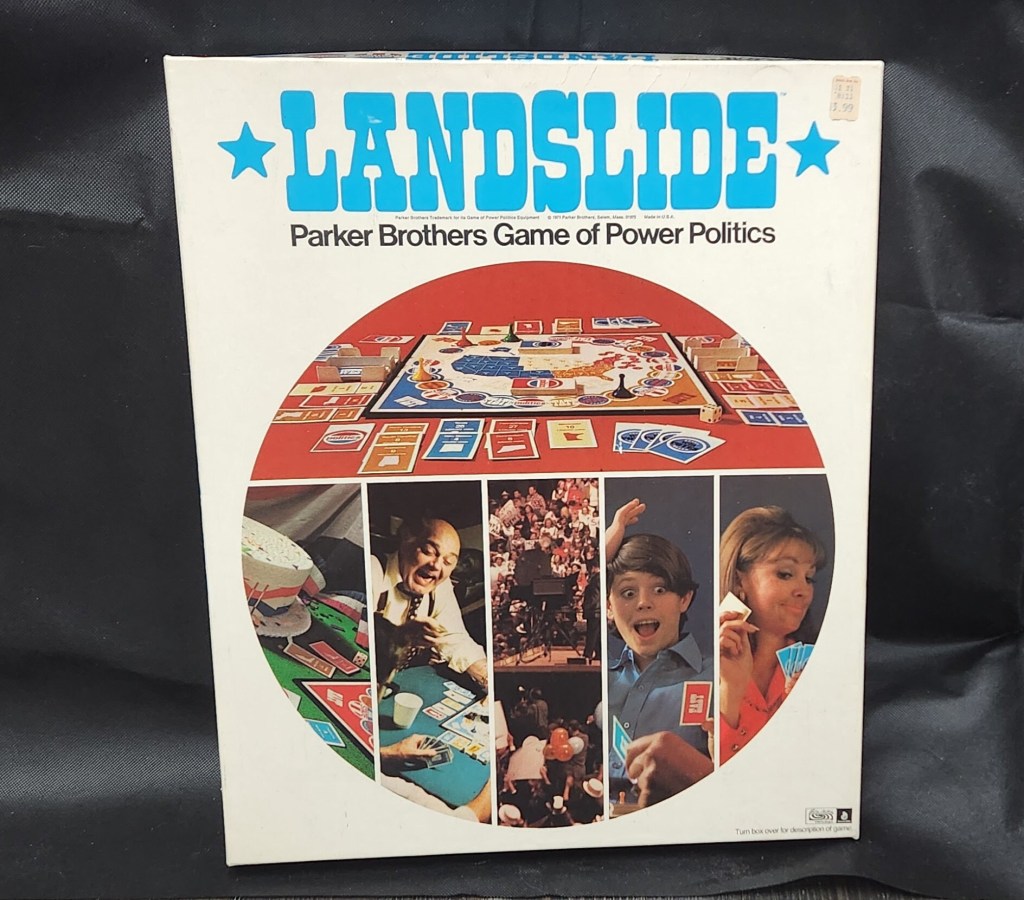
As a young guy, my group of friends loved to play the board game, Landslide. During the game, players collected electoral votes in order to win the US Presidency. (We were a VERY politically active bunch.) We cosplayed various politicians, discussed real political scenarios during the game and got so involved in the action, we managed to defeat the rules and were forced to add rule addendums to prevent us from blowing up the game. Since that time, I haven’t really played board games, so it was a quite a surprise when I read an article in the New York Times about the decimation of the current board game business thanks to Donald Trump’s tariff policies.
As I read the article, I was surprised to learn that the new board games are not big corporate endeavors. (Landslide was a Parker Brothers game, a large corporation also responsible for producing Monopoly.) Rather they are now smaller boutique businesses where the games are developed as limited-run titles for curated consumers. The reason tariffs are hitting them so hard is the same reason lighting is being blasted. Low volume.
From the outside, those not involved in lighting probably assume lighting is produced on an assembly line, much like a car or an air conditioner. Sure, some luminaires might have sales commensurate with the demands of automation, but the majority never reach that level. Low volume is typically supported by hand-built labor and that is where the reshoring argument falls apart.
In the game of Landslide there were player tokens, dice, a cardboard playing field and delegate/electorate cards. Easily produced in the US or almost anywhere. As explained in the article, the new games are much more complex with more tokens and accessory playing items, all of which require production skills not available in the United States. Those elements that can be replicated stateside, require volume, or the cost is prohibitive. These games, already pretty pricy, could rise 50% into the $80 to $300 range. That’s a lot of money for a couple of hours of comradery.
Almost everything I read in the article allowed me to harken back to family-owned lighting manufacturers and retailers. I know, many of the companies are now owned by corporations or investment groups, but volumes have nonetheless not altered much. For better or worse, decorative residential lighting is a low-volume business because it is a fashion business. The same problems that these board game producers are having are being experienced by lighting manufacturers.
The board game producers have started to back down on production. They have laid off employees and have determined they cannot produce a viably-priced game that the market will embrace. That is unfortunate. Games can bring a great amount of fun and memories to players. They are not, however, a necessity. Lighting is. We must have light. Light is a key feature of every home and its importance is growing as each new scientific study is released. We don’t have the option of stopping production. Consumers need and must buy lighting. Trump has left us with only one option, abandoned the new bejeweled, shiny boutique luminaires and go back to the lighting fixture version of glossy printed cardboard games.
Is everyone out there ready to play a game of Landslide with lighting?
A kangaroo walks into a bar and orders a martini. The bartender looks up quizzically, grabs the gin and start preparing the drink. After an appropriate shake and swirl, he pours out the drink into a glass with the olive and slides it across the bar to the kangaroo.
“That will be fifty buck.”
The kangaroo reaches into his pouch, grabs his wallet and pays the bartender.
“You know, we don’t get many kangaroos in this place.”
The kangaroo looks up from his drink and says, “At these prices, I’m not surprised.”
My favorite joke sprang to mind as I listened to a news report that indicated tariffs were starting to become a factor in consumer spending. Yes, the TACO president has kicked the can down the road time and again and the road has now apparently ended. Just a few countries have played along and those that have appear to have snookered Trump with promises of reciprocal spending that will never maturate. In a need for immediate gratification, he’ll get the press release, the news story and no change will be realized beyond the price increase to the consumer.
Products now cost more. Shipments are slowing, containers, once at a premium are waiting for freight. Prognosticators continue to suggest a bleak holiday shopping season. The US Treasury is however seeing an increased input of funds from these new duty payments. Those dollars are going to be hard to end in a country so deeply in debt. We must assume these to be the new normal. This is not good news for someone building or rehabbing a home. Lighting (and a lot of other things) is getting very close to kangaroo pricing. Nice, if you can afford it, but likely to keep away a mob of kangaroos.
I had believed that LED was going to substantially alter the type and quality of lighting used in new home construction. In some cases, it has. Think LED Tape. Other light types have fallen in the opposite direction. Good recessed light has now been replaced with surface mounted, glare-inducing blobs of light. That popularity is not because of LED, but instead, due to a low price. I now believe price will drive a total reassessment of what type lighting builders will include in new homes.
In a previous blog post I shared that builders have been forced to provide rebates or “give backs” to try and ameliorate the impact of higher interest rates, but they are not going to be able to do that forever. Manufacturers have also done the same thing with heavy buying of inventory. Ford Motors is expected to lose $2 Billion this year because of tariffs. They and every other company cannot continue this practice. Prices will rise.
Because of these new prices, inflation is a real concern and interest rates are unlikely to lower. The best case has rates remaining stable. If Donald Trump decides to fire Federal Reserve Chair, Jerome Powell and replace him with a toady, we should all assume higher inflation. Don’t believe me? Ask Richard Nixon to explain how presidential intervention in monetary policy fared for him and the country. (Who remembers his successor’s WIN [Whip Inflation Now] policy? I still have the lapel pin.) You can almost bank on it.
Builders might be forced to look again at more steel stud use in residential construction to avoid the Canadian lumber tariffs, but it is difficult to see an alternative to drywall. An almost total elimination of copper plumbing, if not already a reality is probable, but appliances, whether imported or made in the US are still going to see increased cost because of component tariffs. Electric and lighting changes COULD however result in savings.
In the recent rehab of our new, older home, a total rewire was needed. A pile of superfluous switches were code mandated, forcing the addition of way more wire and labor than I had ever expected. This is ripe for change. Builders could push for changes that automate a home, eliminate all switches and in-turn reduce the amount of copper needed to wire a home. We might also see a switch from AC wired homes to AC wall plugs and DC lighting, thus allowing much less expensive wire to run to the luminaires. Eliminating the transformer could mean a less expensive lighting fixture. As lighting people, are we ready to explore these ideas?
LED Tape has made LED undercabinet luminaires obsolete, but I still see a ton offered. Why? Manufacturers still haven’t developed a quick, stable, sure and visually appealing connection method from the service wire to the LED Tape. I’ve often said, the company that does this, wins. Cost per foot of lumen output makes this a hands down deal. Crappy wire connection points have kept the old, more expensive (lumens/foot) luminaires in business.
Dining Rooms are going to disappear in multi-family and entry level new home construction. So too will the dining room chandelier. I can’t see any trend where this stays. (Higher-priced homes will be untouched.) Have new light source types been developed to fill the sales gap these losses will create?
The bathroom bar lights concepts are the oldest remaining lighting types still in continued use. I think more lighted mirrors and mirrors with better lighting are a solution that will take over. We do need to ask ourselves how that will impact our sales numbers. In addition, we’ll need to consider additional sizes, better light output and light delivery that reduces glare. Today, we are selling mirrors that include light, in the future, we should be selling bathroom lighting that includes the mirror. Of course, the recently announced mirror tariff increases might totally change this burgeoning demand.
These are just a handful of thoughts. Were I a manufacturer with connections to mass builders, I’d try to arrange a working summit, toss out any preconceived ideas on what lighting is needed in a room and instead discuss lighting that would provide good lumen output AND cost less. Can we rethink everything about lighting with the goal of better lumen output, less wires and less cost? I think it is possible. In a world now filled with $50 martinis, it might also be necessary.
The recently released “2025 State of the Nation’s Housing” report from the Harvard Joint Center for Housing Studies is a daunting read. Try as I might, I could not find a silver lining in this cloudy collection of stats and data. As anyone involved in decorative residential lighting knows, there is a close correlation between home sales and lighting sales and like the relationship between Harvard University and Donald Trump, it looks rocky.
Let’s start with a few statistics that should make us all a bit uneasy.
The median price for a previously owned home has risen to $412,500.
The “Home Price to Income Ratio” has risen to 5.0:1, the highest it has been since the housing bubble of 2006.
Of the top 100 metro areas, only three had a “Price to Income Ratio” below 3.0.
The monthly mortgage payments on that median home have reached record highs of $2560. That is an incredible 40% higher than 1990 after adjustments for inflation.
This reality has resulted in even more harrowing information.
The lowest number of previously owned home sales since 1995 at 4.06 million.
A decline in home ownership to 65.6% of the population.
A record high median age for 1st time home buyers at 38 years old.
Add to this another stat. The Leading Indicator of Remodeling Activity (LIRA) also just published, indicates lower than expected home renovation and repair activity with just a 1.2% growth for 2026. (to the 2nd quarter)
As folks involved in supplying decorative accessories to homeowners, this does not bode well for us. New home ownership usually sparks spending on redecorating and remodeling. No new homes means no new lighting purchase.
We might be encouraged by the increase in rental market participation as an alternative, but according to the report, that too is a place of concern. Renters are experiencing an affordability crisis.
A record number of households are spending more than 30% of their income on rental housing at 22.6 million.
A record number of households are spending more than 50% of their income on rental housing at 12.1 million.
There are now record low amounts of remaining income after paying for housing of only $250/month for renters who earned less than $30,000/year.
There are record levels of homelessness, now at 771,480 humans.
Even the good news is tempered with red flags. 1.02 million new single family homes were completed in 2024, representing a 3% increase over the previous year. A 7% increase in starts was reported for 2024 as well. However, to deal with the rising price of a home, homes are now equipped with fewer or cheaper amenities. The average size at 2150 sq. ft. is the third decline in three years. The average price for a new home fell to $420,300, because builders were forced to offer incentives and mortgage rate “buy-downs.” Pointing to the reality, the reports suggested this was an untenable situation that could not legitimately continue. Inevitably, prices would need to rise, meaning fewer units would be sold. Add to this the tariff implications and the amount of new construction homes is sure to plummet.
Splashing cold water on the “it’s got to get better” argument, household formation was also included in the report. For the second year, there is deceleration. New homes are needed as new households are formed. A major driver of new households is immigration. With the near total elimination of immigration provided by the new presidential administration, a slowdown is on the horizon. Immigration is not, however, the only bellwether that should draw concern.
In 2026, Baby Boomers will reach the age of 80 and this massive driver of economic power will experience accelerated levels of mortality that will NOT be replaced with the next generation’s new household replacement levels.
As can be witnessed by the recently passed “Big Beautiful Bill” (I have a few other nom de plumes that could replace that moniker) federal housing assistance will not be maintained, further exacerbating the cost complications of housing.
What Can Lighting People Do?
I worked with a guy years ago who self-deprecatingly referred to himself as, “just an old light bulb salesman.” A few drinks into an evening and added adjectives were pasted onto his faux title. Like my former coworker, we just want to create, market, design, employ and sell lighting. How do we do this in this new environment? Here are a few thoughts. I’m sure you have a number of your own.
Cater to the Boomer generation and their much smaller sister, the “X” generation. Together they command about 75% of wealth in the United States today and they are viable consumers for at least ten, perhaps twenty years. Just realize, they are a diminishing entity.
Wealthy people are now in the driver’s seat. As we see from the afore mentioned federal funding legislation, we will be witnessing the greatest transfer of money from the middle-class and working poor to the wealthy and “well to do.” Cater to this consumer. This is a small, but mighty block of people, if you can figure out how to meet their needs, you can win.
Despite the setbacks, a lot of homes and apartments will be built, but they will likely be of lower cost, so that means a need for viable, low-cost lighting. What does that mean today? What will it mean tomorrow? I expect to see a total reassessment of what lighting is included in new construction, tract housing and multi-family housing, Forget what is used today and invent the low-cost requirements of tomorrow. If there is ever a time to toss away the box and consider what lies beyond, it is now.
Growth might be reduced. With that inevitability, how do you plan for that? A non-rising, bottom-line isn’t necessarily a bad thing, as long as you understand this reality,
Does the “middle class” disappear? Are we about to find ourselves in a world with super wealthy and everyone else? Based on the reality of politics today, this looks like the future. If that is, in fact the reality, companies and distributors might need to bisect their lines to accommodate the new norm.
This information and many others like it is available from many sectors. There is lots of information and some of it is conflicting. Read as much as you can and digest it well. I believe you will find that the home furnishings market is moments away from a paradigm shift. Are you ready? Is anyone ready?
I was reading an article the other day talking about the increase in woman who have taken up woodworking as an artistic outlet. After reading the first sentence, I stop for a moment and thought, “Wow, this is interesting. I wonder how that might manifest itself?” If I would have continued reading, I would have quickly learned that one of the artists created a 4’-0” wooden box stand perfectly sized for an 18-pack of tampons. Again, I stopped reading. This time I grabbed a pen and jotted in the blank space of the article, “Why is diversity a good thing?” It was immediately clear to me that there is not a single male woodworker I know, or have known that would have created a storage box for tampons. Had I just continued to read, the very capable writer went on to make that exact point. Not covered in the article was my final thought. “Perhaps I should just read the article and avoid the stop-think-start method of digesting information! I’m an old guy. That ship might have sailed.
Diversity, Equity and Inclusion are very much on the minds of everyone today as political leaders work to destroy the voice of all in favor of the supremacy of one. I’m not sure I understand why this is considered a favorable action. I’ve never heard a cogent argument for exclusion. If all voices are uniform, then why do you need more than one “yes man?” Who believes inequity should be a defining goal of a business, let alone a government and its people? This is just one example where there is a benefit to a different voice.
During most of my career in residential lighting, we knew our primary customer is a female between the ages of 35 and 50. That is a narrow palette and it has since widened, but while men are now more involved in home décor, most residential design decisions are still made by women. Nonetheless, more men are employed in the lighting business. That too is changing. I see multiple notices in LikedIn featuring the promotion of a woman taking on a new role. Perhaps they’ll do a great job. Maybe they’ll fail, but it won’t be genital based, it will be skill-based. In the past there was this mythical “old boys network.” We now see the ALA has a “Women in Lighting” subgroup that appears to be growing each year. This can only be a good thing.
I remember, in the early days of LED I was asked to give a talk to a Houston area NKBA meeting. By that time, I was pretty good at explaining this more complicated technology to people who only understood the simplicity of incandescent. After the talk, one of the attendees of the all-female audience stopped me. I’ve never forgotten what she said. (Some paraphrasing may be included after so many years!)
“I did not want to come to this meeting, but I knew I had to. I knew this LED technology was going to change a large portion of what I do for a living and if I was going to be a successful guide for my clients, I had to understand it. My apprehension was that some pencil-neck engineer was going to either speak down to me, or speak over my head. When I saw you with that bowtie and cool shoes, I figured it would be OK and I was right. You told me exactly what I needed to be successful. Thanks!”
Imagine if the speaker at this afternoon lunch was a female engineer. Would more female designers have attended? Would the design community have adopted LED faster? Would the LED stigma have disappeared quicker?
Sometimes the messenger is as important as the message. We can’t immediately assume acceptability, hence the importance of opening our arm to everyone. We need everyone because we never know from where the next great idea will emerge. By including a wide expanse of people, we have the best possible shot at overall and total excellence. Just because our political leaders want to narrow the future does not mean the lighting community must follow.
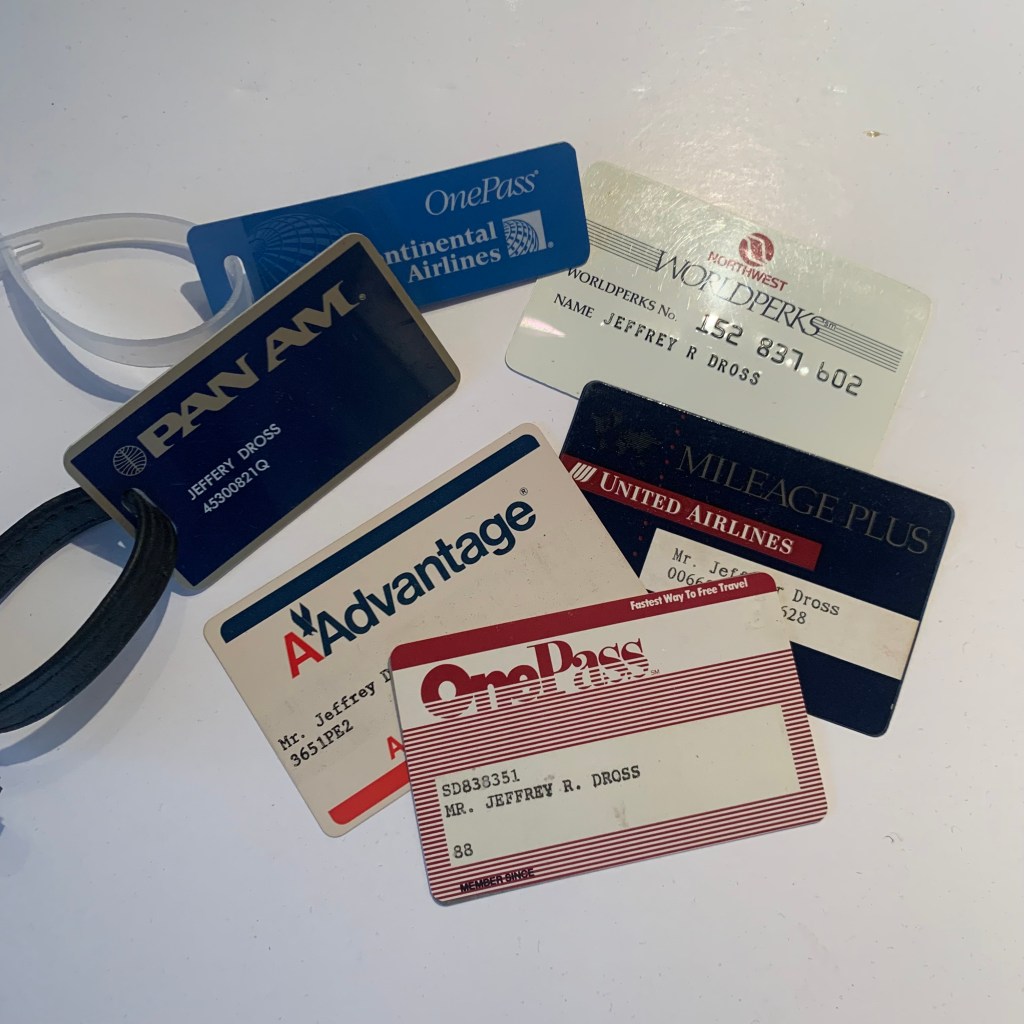
My wife and I enjoy traveling and have our entire life together. Our United frequent flyer numbers were actually generated by Eastern Airlines (which became Continental, which became United) we have (permanently) unused reward miles with TWA and PanAm. In 2018, I became a United 1 Million-Miler. I did not however, get that status from leisure travel (despite our herculean efforts!) Million Mile status came because I spent twelve years traveling back and forth to China as manufacturing of luminaires transitioned from the United States to Asia.
I was reminded of this as I listened to the “manufacturing return to America” pipe-dream espoused by our President. Tariffs will be raised, manufacturers will shutter Asian facilities, reopen US buildings, start making goods here. No more tariffs. “Easy-peasy!”
Oh, if it were as simple as this President believes. Transitioning to a new factory in a new country is HARD work. It can and has broken many companies. Simply moving a factory across town has crippled some organizations. It takes years and the efforts of countless people to make a move successful.
Before I ever set foot in Korea (my first factory visit in Asia) I was preceded by my boss, who did the initial legwork over a five-year period. While he was on the ground, I was writing directions and drawing illustrations via a fax machine to insure product outcomes were clear. Samples were shipped back and forth with detailed information on how to correct the problem and what end result we wanted. When I started to travel instead of him, I arrived with three legal pads of paper and multiple pen cartridges, leaving all of the filled paper with the factories, each sheet containing sketches, suggestions, options and instruction that needed to be done to make the product correctly. After a twelve hour day in the factory, I spent a few hours in my hotel room or lobby bar writing reports, then an hour in the “Business Center” faxing that information back to the office. (Note: fax machines were slow! Especially US to Asia!) If anyone ever asked me if I “enjoyed” my trip to China, I responded with a less than charitable answer. 24 concurrent 18-hour days does not equal “fun.” If it weren’t for the magnificent people I met and the few “days-off” I was afforded, I might not remember this time as fondly as I do now. It was a tough but rewarding part of my life’s work.
…and I wasn’t alone!
Purchasing people would make shorter trips, managers for different lines arrived for conversations, designers, planning the next release and logistics people all worked on their particular aspect of insuring good product arrived for the consumer. Perhaps even more challenged than engineering was the QA function. They were probably in the factory as long, or longer than me.
Multiply that by every other lighting company in the US and Canada. (Plenty of Europeans and Australians, too!) There was a buzzing hive of lighting people all helping a collection of 100, perhaps more factories make quality goods for the world market.
Today, a lot of that is reduced. The roads are better, so travel is easier. The hotels are more accommodating to western preferences. There are more people who speak English and more Americans who mumble through Mandarin. Some of this is being repeated right now in India, where the skills are not yet as well formed, but at least communications are easier.
A Quick Return to America?
When I read about a return to American manufacturing, I typically chuckle. Not because of the improbability, but because of the hubris. It took the blood, sweat and tears of thousands of Americans, Taiwanese, Chinese, Filipinos and Koreans over a dozen years to get manufacturing set up in Asia. Returning it to the US will be accomplished in a few months? I have more optimism that my wife and I can return to Portugal using our TWA frequent flyer miles.
Most people are unaware of the outsized place Cleveland holds in the history of lighting. I live in the inner-ring suburb of Cleveland Heights, less than a mile from Nela Park, the original home of the National Electric Lamp Co., later General Electric. Nela Park itself is considered the first “industrial park” in the nation. It is also the location of many lighting “firsts.”
In 1878, the arc light was invented in Cleveland by Charles Brush of the Brush Electric Company, later to become the lighting division of General Electric. His creation allowed Cleveland’s Public Square (then Monumental Park) to feature the first street lighting in America in 1879. That original fixture remains in place today.
Based on the foundation of work completed by scored of researchers and scientists across the globe, GE built the first prototype fluorescent lamp in 1934 in Cleveland. After a series of patent battles and product demand, egged on by the requirement of low cost lighting to run factories 24 hours a day for the war effort, they began production of the first fluorescent lamp (that delivered white light) in 1938.
Working on the concept that had confounded scientists previously, Elmer Fridrich began to experiment with halogen based lighting. By 1959, with colleagues Bill Hodge and Emmett Wiley they created Tungsten Halogen lamps. Fridrich continued to work on the improvement of lighting at GE Nela Park Cleveland until the 1980s.
While not in Cleveland, the first baseball game played at night, under artificial illumination took place on May 24, 1935. The Cincinnati Reds beat the Philadelphia Phillies 2-1. Crosley Field in Cincinnati is over 200 miles away, but the lighting was designed by GE and in the history of light, it is often mentioned in the same breath.
We all know incandescent lamping can be VERY yellow and warm. The GE Reveal lamp was an immediate success because it enriched colors and improved the look of residential surroundings. Through the efforts of Julianna Reisman, improving on the foundational work of Bill James, a viable coating that could filter out the undesirable yellows was made possible here in Cleveland (with a little help from a Spanish glass manufacturer Cristalerias de Mataro.)
Even beyond the influence of GE, there are other notable lighting milestones in Cleveland.
The world’s first red & green electric traffic light was put into service at the intersection of Euclid Avenue and East 105th Street in Cleveland in 1914. The very prolific Cleveland inventor Garrett Morgan improved on the concept after witnessing a bad automobile accident. He introduced the “caution” light, that allowed intersections to be cleared, prior to the start of traffic flow in the opposite direction. (Note to Hollywood, a biopic or documentary of this guy should be made!)
More recently (2014) the world’s largest outdoor chandelier has been in place at the intersection of Euclid Avenue and East 14th Street in Playhouse Square, downtown Cleveland. It is 20 feet tall, weighs 8500 pounds, features 4200 crystals and is suspended by a triple-post, 44 foot high steel structure. Playhouse Square is the world’s largest theater restoration project and the second largest theater district in the United States, after Lincoln Center, in New York City.
At a more professorial level, The Michelson-Morley experiment was conducted in 1887 at Western Reserve University (now Case Western Reserve University) in Cleveland. The experiment was designed to detect the motion of the earth via a theoretical substance that was essential to the transmission of light. Through the interference of light waves, precise measurements could be taken. Their failure to detect movement confirmed and supported Albert Einstein’s Theory of Relativity (E=MC2). This is very foundational work in our understanding of light.
Many average people (not lighting nerds like me) know Cleveland as the home of the creators of Superman (Jerry Siegel and Joe Shuster) and the place where the first rock concert (The Moondog Coronation Ball) was held and the term “Rock and Roll” was coined (by disc jockey Alan Freed.) The Cleveland Orchestra is generally regarded as the best symphony orchestra in America and the Cleveland Art Museum is typically considered to have the finest collection outside of New York. (Arguments will be accepted by fans of the Chicago Institute of Art and the Philadelphia Museum of Art.) At the turn of the last century, there were more millionaires in Cleveland than anywhere else on the planet. Cleveland was also know for many years as the “Sixth City” because it was “that” large and “that” influential. The endowment to cultural entities in Cleveland continues to support the arts while other cities across America struggle. (St. Louis enjoys the only other similarly endowed cultural landscape.) Add to that the foundational milestones of lighting and it is easy to understand why I really love living in Cleveland and why Cleveland is so important to the world of lighting.
I’m old enough to remember when all lighting was manufactured in the USA. I was also dropped, smack-dab in the middle of the transition from “Made in America” to “Made in China.” Let me help you understand the realities as we approach a political atmosphere with limited knowledge on the topic and the guillotine of added tariffs over our heads.
In the 1970s most lighting companies assembled parts made in-house, or by a collection of suppliers to the industry, also located in the US. Arms were bent, pipes were swaged, glass was blown and wood was turned and fabricated all by an army of small job shops. Painting, polishing and plating was done in-house, or at small local suppliers. France, Greece and Mexico made a fair amount of glass and the ubiquitous bronze was created in Spain, but that was about all that was imported.
That was followed by a short period when manufactures sourced components from around the world and assembled or packed them in the US or Mexico. This globalization of manufacturing was a precursor to the eventual shift to Asia, a move that was forming in the background.
During the energy crisis of the late 1970s, Taiwan began to build the inexpensive ceiling fans America demanded and through that effort, they inadvertently stumbled into the lighting fixture business. The floodgates were opened.
Taiwan and Korea became the primary source for lighting, but because of the highly educated local populations, neither could satiate the American demand. It was so difficult to find polishers and machine operators, Korea allowed many Bangladeshi migrants into the country, but it wasn’t enough. The Taiwanese manufacturers started to build alliances with people and facilities in China. Korea made attempts to partner with the Chinese, but for a series of reasons, they did not succeed and disappeared shortly thereafter. The Taiwan manufacturers kept the more complicated products and shifted the lesser-quality good to China. I and hundreds of other Americans spent days and weeks in the country helping the factories create the products that American consumers wanted.
The part most people don’t realize is that it took time to develop a mature global supply chain in China. Reliability, technological proficiency and production functionality needed to rise to western expectations. With that in place, the product quality, style and value progressively rose. Because decorative lighting is a low-volume business, Production automation was almost impossible. Components needed to be processed individually and the luminaires assembled one at a time. Some product would never have been made in the US. They were now possible in China. All those advancements however came at a price, duty.
To assess a duty, each product produced overseas must be assigned a Harmonized Tariff Schedule (HTS) classification code. This informs the importer how much they must pay the US government to bring this product into the country. There are also duty brokers who facilitate this transfer of payment who need to be paid. The final adder can also be sizable, overseas and across-land freight.
To better understand this, let’s consider buying a wall sconce from China. Here is a theoretical cost breakdown.
Cost
Description
Paid to:
$10.00
Cost of the wall sconce, assembled and packed
Chinese Manufacturer
$0.76
HTS Code 9405.11.60 (Chandelier & other electrical ceiling or wall lighting fixture) 7.6% (not made of brass) duty
US Government
$1.00
10% added tariff by President Trump in September 2018
US Government
$1.50
15% added tariff by President Trump in September 2019
US Government
$0.05*
½% Broker’s Fees (est.)
Brokerage Company
$2.36
Ocean Freight 1 cu. Ft. volume carton. $5000 avg. cost for 40’ container w/ 90% efficiency.
Freight Company
$0.38*
Overland Freight $3/mile approx. 300 miles
Freight Company
$0.80*
Importer Overhead at 8% For Purchasing, Importation and Warehouse personnel + any drayage fees
Held by Manufacturer/Importer
$16.85
Total cost in 2024
* Educated guesses
Now, let’s assume new tariffs are assessed to all imported products. All of the above will remain, but a new number will be added;
Cost
Description
Paid to:
$1.00
10% added tariff promised by President Trump when he takes office (Per his 11/26/24 announcement)
US Government
$17.85
New 2025 Total
To this number, the manufacturer must now add their profit and the cost of doing business. If you’ve watched enough Shark Tank, this is called “margin” and can mean the difference of staying in business and going out of business. Simply, the margin is the percentage of the selling price that is profit. For this exercise, let’s assume we need a 50% margin to keep our theoretical company afloat. (in practice, this number can vary quite a bit.)
Now, let’s see how tariff increases impact the consumer costs.
Importer/Manufacturer’s Cost
Profit Margin
Distributor’s Net Price
Pre-2018 w/ duty base of 7.6%
$14.35
50%
$28.70
Current state with the 25% 2018/2019 tariff upcharges
$16.85
50%
$33.70
2025 with the promised additional 10% tariff
$17.85
50%
$35.70
The retailer, who prior to 2018 purchase the sconce for $28.70, saw a 17.4% increase over two years and will see another 5.9% increase in 2025, if the new administration follows through with its plan. That means, the collective Trump administrations will be responsible for a 24.4% cost increase. This is in addition to any inflation-related increases.
The retailer must now take the price they paid to the importer/manufacturer and add a level of profit required to run their retail establishment. I am not a retail expert, but have learned that number can range from two to three times the incoming cost of goods. Some retailers might actually need a higher level of profit, especially if they are located in a high-rent district, or a city with a higher cost of living. For this exercise, I’ll provide a range of two to three times their cost of goods. Understand, it could be higher.
Retailer paid Cost
Profit Margin
Retail Selling Price
Pre-2018
$28.70
2 to 3 times the cost
$57.40 to $86.10 paid by the end consumer
Current state with the 2018/2019 tariff upcharges
$33.70
2 to 3 times the cost
$67.40 to $101.10 paid by the end consumer
2025 with the promised 10% added tariff
$35.70
2 to 3 times the cost
$71.40 to $107.10 paid by the end consumer
The impact to the end consumer can now be assessed. An increased price in excess of inflation of 24.4% is the result. Most of that addition will be paid to the Federal Government.
Could the importer/manufacturer reduce their margins? Perhaps slightly, but most companies know their cost of running a business. If they slip below their 50% margin (in this hypothetical) or 2-3 time markup, something will need to be sacrificed. Service, salaries, employee/customer benefits, something will need to be reduced to make up for the loss. Retailers and manufacturers have no choice but to pass the added expense on to the consumer. It will either be that, or bankruptcy. In the last few years we have seen consolidation as an effort to reduce margins, initiated, in part, due to these increases. Perhaps more will be forthcoming.
Of course, the new President’s concept is that manufacturing will be returned to the United States, thereby eliminating the cost of duty, brokerage fees and ocean freight. (The Import Overhead will switch to Manufacturing Overhead and stay basically the same.) That supposes someone in America can hand-build, low volume products. Like the initiation of bringing lighting to China, all that will need to be repeated, this time in America. Labor, skill, investment and time will make this VERY difficult. It might work for highly automated, high volume industries like steel or automobiles, but the likelihood of lighting returning to the days of 1970 is slim.
That means a few realities will take place:
Customers will pay more for lighting.
The federal government will see a windfall of incoming dollars, all borne by the consumer.
Things will remain pretty much the same for the Chinese manufacturers and the Chinese government.
Who is being helped and who is being harmed in this new scenario? It seems to me that someone from the new administration might be well served spending a day in the office of a lighting supplier before doing something rash.
In the 1976 election, I worked on the presidential campaign of Mo Udall. I didn’t care much for Jimmy Carter as a candidate, or the emerging neoliberal era he would ultimately introduce. During the 1980 reelection campaign, after it was clear Ted Kennedy could not unseat him for the Democratic nomination, I supported third-party candidate, John Anderson. Carter was not worthy of reelection and Ronald Reagan proved to be as divisive and damaging to the United States as I had imagined at the time. It is safe to say, I was not a fan of Jimmy Carter’s presidency. There are, however a few things worthy of respect as it regards Mr. Carter.
After defeat he established a pattern to which all Ex-Presidents should aspire. He is the best Ex-President America has ever had. He used his celebrity and stature where it could do the most good and forewent notice when the only result would be narcissistic. This was so tough, 36 others could not and have not been able to pull it off.
More importantly to this blog, in the face of much derision, Jimmy Carter introduced America to the frailty of fossil fuel use and the inevitable problems that would bring to the country if changes were not made. In response to what he saw, he delivered speeches to the American public indicating that this problem was “the moral equivalent of war.” He addressed the nation wearing a cardigan sweater rather than the typical suit, he urged Americans to use less energy, reduce the wintertime temperature of homes to 65°F, and changed highway speed limits to a maximum of 55 miles-per-hour. He installed solar panels on the White House and in a speech delivered April 5, 1979 he said:
“The energy crisis is real. It is worldwide. It is a clear and present danger to our Nation. These are facts and we simply must face them.”
Despite a pretty consistent message, the American public ignored almost all of what he said. After his reelection defeat, the shortsighted and backward-looking Reagan removed the solar panels. Surely we could “drill” our way out of this crisis. That was, after all the probable reason for his election. We don’t have to face up to our problems because America is “stronger, number one, unbeatable” or some other diversionary adjective. All we need is a different leader who will change the storyline. A spent “B” movie actor was just the person to do it. We are still reeling from the wayward direction of his leadership.
In high school, we were required to periodically deliver “current events” reports. The job was to find a story in the newspaper, read it and deliver a three or five minute speech about the subject. While I likely did this scores of times, I only remember one. In the early 1970s, I found an article in the Cleveland Press that indicated we would run out of oil by a date in the reasonably near future. As was the case with all current events reports, the class ignored the information, just like America ignored Jimmy Carter.
Jimmy Carter was an untypical politician. He was not a lawyer. Instead, he was an engineer. He looked at information differently than most political people. He knew that fossil fuels were a finite source and hence would need replacement eventually. Imagine if we had listened in 1979 rather than acquiescing to faux cowboy bluster about superiority.
If we would have treated shrinking fuel availability as a true “moral equivalent of war,” America could have led the world in new power source creation, elevated product performance and developed thousands of other energy saving advances. Countries around the world would have been compelled to buy goods from the US rather than the reverse. Perhaps more manufacturing would have remained in America rather than fleeing as a result of the anti-worker policies heralded by Reagan. We would never have had to listen to the foolish “don’t take my light bulbs” arguments by light-brained politicians like Michele Bachmann, Joe Barton and Mike Enzi because we would have been in the middle of a national effort to move beyond. One could also argue that the climate crisis and sustainability drive we are now facing would be of substantially less a world concern had we addressed fossil fuel use when Carter suggested, rather than 40 years later.
While I barely supported the political life of Jimmy Carter, I had grown to respect him since. Under different circumstances and perhaps with different political advisors, he could have been a better president. Nonetheless, he made an impact and proved a very prophetic voice in a central part of my career, energy efficiency. If on this one point, we would have listened more carefully to a man from Plaines, Georgia, we’d all be in a much better place.
When it was suggested I write a series of blog post dealing with lighting, I thought, deep down inside, “Do I really have enough to say?” With this being my one-hundredth blog post, I guess I do!
Long ago, while working for a manufacturer, when I originally proposed a blog on lighting, I received pushback of a different kind. There were scores of legal and marketing concerns that stretched far beyond simply typing out 500 words. You would have though I solved the problems of campaign financing, only to realize that there would be no influence left to abuse. Everyone wants “content” but content is problematic for a corporation. Upon retirement the problem part of the blog disappeared. This is just Jeffrey sharing thoughts, opinions and best practices, not a company existing in a litigious society.
Post-retirement, when people found out I was still alive and asked me if I would take on some consulting jobs, I realized I would need to stay current with fashion, aesthetic, architectural and lighting trends. That meant I needed to rebuild the network of tools I used for that purpose in the past. I did that. Once the pandemic waned, I could get out in the world and continue the hands-on research in showrooms, galleries, trade shows and design centers. Translating those finding, from internal documents to blogs was pretty easy. That left me with a wide swath of subject matter on which to draw.
Trade show reports, administrative agency findings, scientific discoveries, legislative initiatives, design best practices and personal observations have allowed me to create 100 blog posts over four years. I regularly acquire new subscribers, so they must be of some value. I like to write, therefore the process is far from daunting. Overall, this is a win-win; I learn something and share it with anyone who cares to read it. In my mind, this is a formula that could last another 100 post, at least!
I hope you’ve enjoyed reading! Stay tuned for more.
I love to have my shoes shined at the airport. In a world where most people are wearing sneakers and air-travel clothing has skidded on, beyond casual, I realize I am an anomaly. Having this service performed has increasingly been a challenge. The Cleveland Hopkins Airport shoeshine stand is essentially closed until long after the morning flights are gone and prior to the return of evening flights, so an open and inviting stand in the Denver airport was a welcome sight.
I was wearing a pair of olive green, Spanish made Mezlan slip-ons. I asked the gentleman if he felt he could do something with the odd color. The woman at the next chair, delivering a killer shine to a pair of tan boots owned by another customer, could not help diverting her eyes from my green shoes. The supervisor, who escorted me to the chair, also gathered around my odd shoes. Whispers abound. With a lifetime of wearing “odd” shoes, I did not find this attention unusual. People typically appreciate and admire my unusual shoes, even if they are unwilling to wear the same.
After giving my temporary neighbor a few last-minute tips on caring for his newly refurbished boots, the other shoeshine artist placed herself at my feet. She immediately took control of the shine while the supervisor and other shiner looked on. She asked the others if they had green polish. A feverish search ensued. Not finding what she wanted, she told the first guy to deal with my soles while she ran to the other shoeshine stand to grab green polish.
Upon her return, she got to work, but she did not leave her coworker or supervisor in the dust. She explained that she was mixing the green with a dot of brown to achieve the right tone. She defined how she applied the mix, how she buffed the polish and how to properly finish-buff the softer Mezlan leather. She conducted a master class on shoe shining, but she did not do it in a vacuum. At each step, she narrated her efforts. Amidst our casual chit-chat, she said, “We can all learn with each new challenge.”
Over the last two weeks I traveled to the American Lighting Association (ALA) and the Interior Design Society (IDS) annual conferences to deliver educational presentations and I hope I was as effective a teacher as this young woman. Her summation was very similar to the goal of each conference. Yes, there was talk about family, vacations and golf scores, but the crux of the conversation revolved around design and lighting. Ideas were shared, challenges were aired, problems were solved and “doing better” was the takeaway. Like the trio of shoeshine professionals, when information is shared it raises the level of excellence for the entire organizations.
If I owned a company, I would have hired this woman straightaway. She would and will be an asset wherever she works, or whatever company she forms, but that is not the point here. She could have easily buried her head and performed her task. Instead, she talked through the process and checked to insure each step was understood. Head nodding confirmed her efforts. Her messaging was the goals of each conference. Gather likeminded people, pull them into groups and teach them something that will raise their value to their consumers. The ALA and IDS Conferences achieved those goals and were worth attending for these very reasons. Attendance should be considered at both in 2025.
Next time I pass through DEN, I plan on wearing my red or purple shoes and hope there is no flight delay! I await a new lesson.