I was reading an article the other day talking about the increase in woman who have taken up woodworking as an artistic outlet. After reading the first sentence, I stop for a moment and thought, “Wow, this is interesting. I wonder how that might manifest itself?” If I would have continued reading, I would have quickly learned that one of the artists created a 4’-0” wooden box stand perfectly sized for an 18-pack of tampons. Again, I stopped reading. This time I grabbed a pen and jotted in the blank space of the article, “Why is diversity a good thing?” It was immediately clear to me that there is not a single male woodworker I know, or have known that would have created a storage box for tampons. Had I just continued to read, the very capable writer went on to make that exact point. Not covered in the article was my final thought. “Perhaps I should just read the article and avoid the stop-think-start method of digesting information! I’m an old guy. That ship might have sailed.
Diversity, Equity and Inclusion are very much on the minds of everyone today as political leaders work to destroy the voice of all in favor of the supremacy of one. I’m not sure I understand why this is considered a favorable action. I’ve never heard a cogent argument for exclusion. If all voices are uniform, then why do you need more than one “yes man?” Who believes inequity should be a defining goal of a business, let alone a government and its people? This is just one example where there is a benefit to a different voice.
During most of my career in residential lighting, we knew our primary customer is a female between the ages of 35 and 50. That is a narrow palette and it has since widened, but while men are now more involved in home décor, most residential design decisions are still made by women. Nonetheless, more men are employed in the lighting business. That too is changing. I see multiple notices in LikedIn featuring the promotion of a woman taking on a new role. Perhaps they’ll do a great job. Maybe they’ll fail, but it won’t be genital based, it will be skill-based. In the past there was this mythical “old boys network.” We now see the ALA has a “Women in Lighting” subgroup that appears to be growing each year. This can only be a good thing.
I remember, in the early days of LED I was asked to give a talk to a Houston area NKBA meeting. By that time, I was pretty good at explaining this more complicated technology to people who only understood the simplicity of incandescent. After the talk, one of the attendees of the all-female audience stopped me. I’ve never forgotten what she said. (Some paraphrasing may be included after so many years!)
“I did not want to come to this meeting, but I knew I had to. I knew this LED technology was going to change a large portion of what I do for a living and if I was going to be a successful guide for my clients, I had to understand it. My apprehension was that some pencil-neck engineer was going to either speak down to me, or speak over my head. When I saw you with that bowtie and cool shoes, I figured it would be OK and I was right. You told me exactly what I needed to be successful. Thanks!”
Imagine if the speaker at this afternoon lunch was a female engineer. Would more female designers have attended? Would the design community have adopted LED faster? Would the LED stigma have disappeared quicker?
Sometimes the messenger is as important as the message. We can’t immediately assume acceptability, hence the importance of opening our arm to everyone. We need everyone because we never know from where the next great idea will emerge. By including a wide expanse of people, we have the best possible shot at overall and total excellence. Just because our political leaders want to narrow the future does not mean the lighting community must follow.
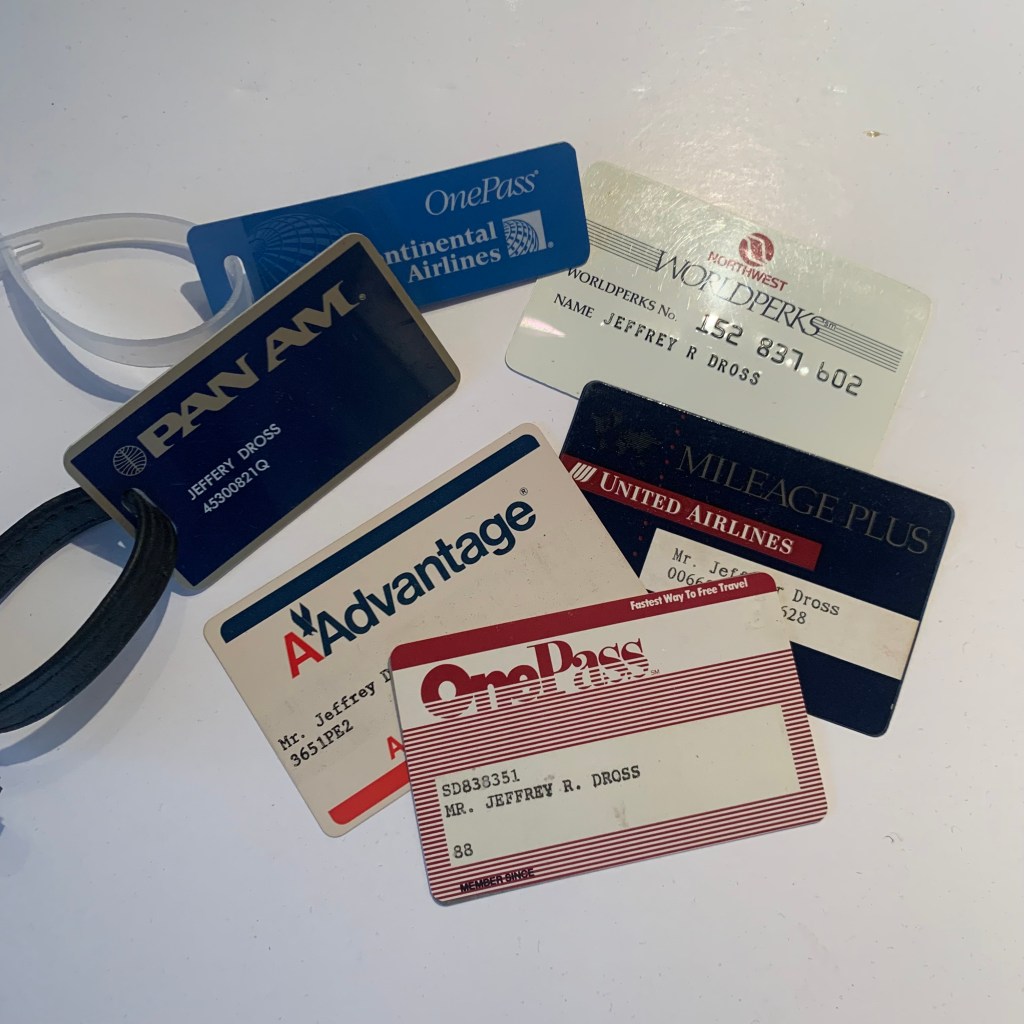
My wife and I enjoy traveling and have our entire life together. Our United frequent flyer numbers were actually generated by Eastern Airlines (which became Continental, which became United) we have (permanently) unused reward miles with TWA and PanAm. In 2018, I became a United 1 Million-Miler. I did not however, get that status from leisure travel (despite our herculean efforts!) Million Mile status came because I spent twelve years traveling back and forth to China as manufacturing of luminaires transitioned from the United States to Asia.
I was reminded of this as I listened to the “manufacturing return to America” pipe-dream espoused by our President. Tariffs will be raised, manufacturers will shutter Asian facilities, reopen US buildings, start making goods here. No more tariffs. “Easy-peasy!”
Oh, if it were as simple as this President believes. Transitioning to a new factory in a new country is HARD work. It can and has broken many companies. Simply moving a factory across town has crippled some organizations. It takes years and the efforts of countless people to make a move successful.
Before I ever set foot in Korea (my first factory visit in Asia) I was preceded by my boss, who did the initial legwork over a five-year period. While he was on the ground, I was writing directions and drawing illustrations via a fax machine to insure product outcomes were clear. Samples were shipped back and forth with detailed information on how to correct the problem and what end result we wanted. When I started to travel instead of him, I arrived with three legal pads of paper and multiple pen cartridges, leaving all of the filled paper with the factories, each sheet containing sketches, suggestions, options and instruction that needed to be done to make the product correctly. After a twelve hour day in the factory, I spent a few hours in my hotel room or lobby bar writing reports, then an hour in the “Business Center” faxing that information back to the office. (Note: fax machines were slow! Especially US to Asia!) If anyone ever asked me if I “enjoyed” my trip to China, I responded with a less than charitable answer. 24 concurrent 18-hour days does not equal “fun.” If it weren’t for the magnificent people I met and the few “days-off” I was afforded, I might not remember this time as fondly as I do now. It was a tough but rewarding part of my life’s work.
…and I wasn’t alone!
Purchasing people would make shorter trips, managers for different lines arrived for conversations, designers, planning the next release and logistics people all worked on their particular aspect of insuring good product arrived for the consumer. Perhaps even more challenged than engineering was the QA function. They were probably in the factory as long, or longer than me.
Multiply that by every other lighting company in the US and Canada. (Plenty of Europeans and Australians, too!) There was a buzzing hive of lighting people all helping a collection of 100, perhaps more factories make quality goods for the world market.
Today, a lot of that is reduced. The roads are better, so travel is easier. The hotels are more accommodating to western preferences. There are more people who speak English and more Americans who mumble through Mandarin. Some of this is being repeated right now in India, where the skills are not yet as well formed, but at least communications are easier.
A Quick Return to America?
When I read about a return to American manufacturing, I typically chuckle. Not because of the improbability, but because of the hubris. It took the blood, sweat and tears of thousands of Americans, Taiwanese, Chinese, Filipinos and Koreans over a dozen years to get manufacturing set up in Asia. Returning it to the US will be accomplished in a few months? I have more optimism that my wife and I can return to Portugal using our TWA frequent flyer miles.
Most people are unaware of the outsized place Cleveland holds in the history of lighting. I live in the inner-ring suburb of Cleveland Heights, less than a mile from Nela Park, the original home of the National Electric Lamp Co., later General Electric. Nela Park itself is considered the first “industrial park” in the nation. It is also the location of many lighting “firsts.”
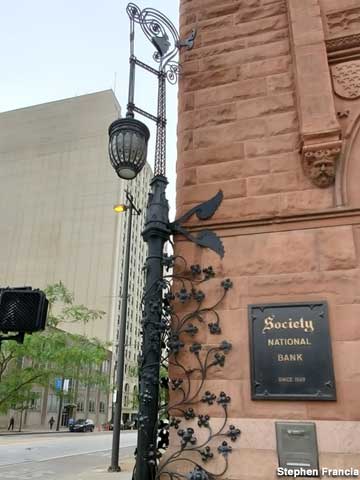
In 1878, the arc light was invented in Cleveland by Charles Brush of the Brush Electric Company, later to become the lighting division of General Electric. His creation allowed Cleveland’s Public Square (then Monumental Park) to feature the first street lighting in America in 1879. That original fixture remains in place today.
Based on the foundation of work completed by scored of researchers and scientists across the globe, GE built the first prototype fluorescent lamp in 1934 in Cleveland. After a series of patent battles and product demand, egged on by the requirement of low cost lighting to run factories 24 hours a day for the war effort, they began production of the first fluorescent lamp (that delivered white light) in 1938.
Working on the concept that had confounded scientists previously, Elmer Fridrich began to experiment with halogen based lighting. By 1959, with colleagues Bill Hodge and Emmett Wiley they created Tungsten Halogen lamps. Fridrich continued to work on the improvement of lighting at GE Nela Park Cleveland until the 1980s.
While not in Cleveland, the first baseball game played at night, under artificial illumination took place on May 24, 1935. The Cincinnati Reds beat the Philadelphia Phillies 2-1. Crosley Field in Cincinnati is over 200 miles away, but the lighting was designed by GE and in the history of light, it is often mentioned in the same breath.
We all know incandescent lamping can be VERY yellow and warm. The GE Reveal lamp was an immediate success because it enriched colors and improved the look of residential surroundings. Through the efforts of Julianna Reisman, improving on the foundational work of Bill James, a viable coating that could filter out the undesirable yellows was made possible here in Cleveland (with a little help from a Spanish glass manufacturer Cristalerias de Mataro.)
Even beyond the influence of GE, there are other notable lighting milestones in Cleveland.
The world’s first red & green electric traffic light was put into service at the intersection of Euclid Avenue and East 105th Street in Cleveland in 1914. The very prolific Cleveland inventor Garrett Morgan improved on the concept after witnessing a bad automobile accident. He introduced the “caution” light, that allowed intersections to be cleared, prior to the start of traffic flow in the opposite direction. (Note to Hollywood, a biopic or documentary of this guy should be made!)
More recently (2014) the world’s largest outdoor chandelier has been in place at the intersection of Euclid Avenue and East 14th Street in Playhouse Square, downtown Cleveland. It is 20 feet tall, weighs 8500 pounds, features 4200 crystals and is suspended by a triple-post, 44 foot high steel structure. Playhouse Square is the world’s largest theater restoration project and the second largest theater district in the United States, after Lincoln Center, in New York City.
At a more professorial level, The Michelson-Morley experiment was conducted in 1887 at Western Reserve University (now Case Western Reserve University) in Cleveland. The experiment was designed to detect the motion of the earth via a theoretical substance that was essential to the transmission of light. Through the interference of light waves, precise measurements could be taken. Their failure to detect movement confirmed and supported Albert Einstein’s Theory of Relativity (E=MC2). This is very foundational work in our understanding of light.
Many average people (not lighting nerds like me) know Cleveland as the home of the creators of Superman (Jerry Siegel and Joe Shuster) and the place where the first rock concert (The Moondog Coronation Ball) was held and the term “Rock and Roll” was coined (by disc jockey Alan Freed.) The Cleveland Orchestra is generally regarded as the best symphony orchestra in America and the Cleveland Art Museum is typically considered to have the finest collection outside of New York. (Arguments will be accepted by fans of the Chicago Institute of Art and the Philadelphia Museum of Art.) At the turn of the last century, there were more millionaires in Cleveland than anywhere else on the planet. Cleveland was also know for many years as the “Sixth City” because it was “that” large and “that” influential. The endowment to cultural entities in Cleveland continues to support the arts while other cities across America struggle. (St. Louis enjoys the only other similarly endowed cultural landscape.) Add to that the foundational milestones of lighting and it is easy to understand why I really love living in Cleveland and why Cleveland is so important to the world of lighting.
I’m old enough to remember when all lighting was manufactured in the USA. I was also dropped, smack-dab in the middle of the transition from “Made in America” to “Made in China.” Let me help you understand the realities as we approach a political atmosphere with limited knowledge on the topic and the guillotine of added tariffs over our heads.
In the 1970s most lighting companies assembled parts made in-house, or by a collection of suppliers to the industry, also located in the US. Arms were bent, pipes were swaged, glass was blown and wood was turned and fabricated all by an army of small job shops. Painting, polishing and plating was done in-house, or at small local suppliers. France, Greece and Mexico made a fair amount of glass and the ubiquitous bronze was created in Spain, but that was about all that was imported.
That was followed by a short period when manufactures sourced components from around the world and assembled or packed them in the US or Mexico. This globalization of manufacturing was a precursor to the eventual shift to Asia, a move that was forming in the background.
During the energy crisis of the late 1970s, Taiwan began to build the inexpensive ceiling fans America demanded and through that effort, they inadvertently stumbled into the lighting fixture business. The floodgates were opened.
Taiwan and Korea became the primary source for lighting, but because of the highly educated local populations, neither could satiate the American demand. It was so difficult to find polishers and machine operators, Korea allowed many Bangladeshi migrants into the country, but it wasn’t enough. The Taiwanese manufacturers started to build alliances with people and facilities in China. Korea made attempts to partner with the Chinese, but for a series of reasons, they did not succeed and disappeared shortly thereafter. The Taiwan manufacturers kept the more complicated products and shifted the lesser-quality good to China. I and hundreds of other Americans spent days and weeks in the country helping the factories create the products that American consumers wanted.
The part most people don’t realize is that it took time to develop a mature global supply chain in China. Reliability, technological proficiency and production functionality needed to rise to western expectations. With that in place, the product quality, style and value progressively rose. Because decorative lighting is a low-volume business, Production automation was almost impossible. Components needed to be processed individually and the luminaires assembled one at a time. Some product would never have been made in the US. They were now possible in China. All those advancements however came at a price, duty.
To assess a duty, each product produced overseas must be assigned a Harmonized Tariff Schedule (HTS) classification code. This informs the importer how much they must pay the US government to bring this product into the country. There are also duty brokers who facilitate this transfer of payment who need to be paid. The final adder can also be sizable, overseas and across-land freight.
To better understand this, let’s consider buying a wall sconce from China. Here is a theoretical cost breakdown.
Cost
Description
Paid to:
$10.00
Cost of the wall sconce, assembled and packed
Chinese Manufacturer
$0.76
HTS Code 9405.11.60 (Chandelier & other electrical ceiling or wall lighting fixture) 7.6% (not made of brass) duty
US Government
$1.00
10% added tariff by President Trump in September 2018
US Government
$1.50
15% added tariff by President Trump in September 2019
US Government
$0.05*
½% Broker’s Fees (est.)
Brokerage Company
$2.36
Ocean Freight 1 cu. Ft. volume carton. $5000 avg. cost for 40’ container w/ 90% efficiency.
Freight Company
$0.38*
Overland Freight $3/mile approx. 300 miles
Freight Company
$0.80*
Importer Overhead at 8% For Purchasing, Importation and Warehouse personnel + any drayage fees
Held by Manufacturer/Importer
$16.85
Total cost in 2024
* Educated guesses
Now, let’s assume new tariffs are assessed to all imported products. All of the above will remain, but a new number will be added;
Cost
Description
Paid to:
$1.00
10% added tariff promised by President Trump when he takes office (Per his 11/26/24 announcement)
US Government
$17.85
New 2025 Total
To this number, the manufacturer must now add their profit and the cost of doing business. If you’ve watched enough Shark Tank, this is called “margin” and can mean the difference of staying in business and going out of business. Simply, the margin is the percentage of the selling price that is profit. For this exercise, let’s assume we need a 50% margin to keep our theoretical company afloat. (in practice, this number can vary quite a bit.)
Now, let’s see how tariff increases impact the consumer costs.
Importer/Manufacturer’s Cost
Profit Margin
Distributor’s Net Price
Pre-2018 w/ duty base of 7.6%
$14.35
50%
$28.70
Current state with the 25% 2018/2019 tariff upcharges
$16.85
50%
$33.70
2025 with the promised additional 10% tariff
$17.85
50%
$35.70
The retailer, who prior to 2018 purchase the sconce for $28.70, saw a 17.4% increase over two years and will see another 5.9% increase in 2025, if the new administration follows through with its plan. That means, the collective Trump administrations will be responsible for a 24.4% cost increase. This is in addition to any inflation-related increases.
The retailer must now take the price they paid to the importer/manufacturer and add a level of profit required to run their retail establishment. I am not a retail expert, but have learned that number can range from two to three times the incoming cost of goods. Some retailers might actually need a higher level of profit, especially if they are located in a high-rent district, or a city with a higher cost of living. For this exercise, I’ll provide a range of two to three times their cost of goods. Understand, it could be higher.
Retailer paid Cost
Profit Margin
Retail Selling Price
Pre-2018
$28.70
2 to 3 times the cost
$57.40 to $86.10 paid by the end consumer
Current state with the 2018/2019 tariff upcharges
$33.70
2 to 3 times the cost
$67.40 to $101.10 paid by the end consumer
2025 with the promised 10% added tariff
$35.70
2 to 3 times the cost
$71.40 to $107.10 paid by the end consumer
The impact to the end consumer can now be assessed. An increased price in excess of inflation of 24.4% is the result. Most of that addition will be paid to the Federal Government.
Could the importer/manufacturer reduce their margins? Perhaps slightly, but most companies know their cost of running a business. If they slip below their 50% margin (in this hypothetical) or 2-3 time markup, something will need to be sacrificed. Service, salaries, employee/customer benefits, something will need to be reduced to make up for the loss. Retailers and manufacturers have no choice but to pass the added expense on to the consumer. It will either be that, or bankruptcy. In the last few years we have seen consolidation as an effort to reduce margins, initiated, in part, due to these increases. Perhaps more will be forthcoming.
Of course, the new President’s concept is that manufacturing will be returned to the United States, thereby eliminating the cost of duty, brokerage fees and ocean freight. (The Import Overhead will switch to Manufacturing Overhead and stay basically the same.) That supposes someone in America can hand-build, low volume products. Like the initiation of bringing lighting to China, all that will need to be repeated, this time in America. Labor, skill, investment and time will make this VERY difficult. It might work for highly automated, high volume industries like steel or automobiles, but the likelihood of lighting returning to the days of 1970 is slim.
That means a few realities will take place:
Customers will pay more for lighting.
The federal government will see a windfall of incoming dollars, all borne by the consumer.
Things will remain pretty much the same for the Chinese manufacturers and the Chinese government.
Who is being helped and who is being harmed in this new scenario? It seems to me that someone from the new administration might be well served spending a day in the office of a lighting supplier before doing something rash.
In the 1976 election, I worked on the presidential campaign of Mo Udall. I didn’t care much for Jimmy Carter as a candidate, or the emerging neoliberal era he would ultimately introduce. During the 1980 reelection campaign, after it was clear Ted Kennedy could not unseat him for the Democratic nomination, I supported third-party candidate, John Anderson. Carter was not worthy of reelection and Ronald Reagan proved to be as divisive and damaging to the United States as I had imagined at the time. It is safe to say, I was not a fan of Jimmy Carter’s presidency. There are, however a few things worthy of respect as it regards Mr. Carter.
After defeat he established a pattern to which all Ex-Presidents should aspire. He is the best Ex-President America has ever had. He used his celebrity and stature where it could do the most good and forewent notice when the only result would be narcissistic. This was so tough, 36 others could not and have not been able to pull it off.
More importantly to this blog, in the face of much derision, Jimmy Carter introduced America to the frailty of fossil fuel use and the inevitable problems that would bring to the country if changes were not made. In response to what he saw, he delivered speeches to the American public indicating that this problem was “the moral equivalent of war.” He addressed the nation wearing a cardigan sweater rather than the typical suit, he urged Americans to use less energy, reduce the wintertime temperature of homes to 65°F, and changed highway speed limits to a maximum of 55 miles-per-hour. He installed solar panels on the White House and in a speech delivered April 5, 1979 he said:
“The energy crisis is real. It is worldwide. It is a clear and present danger to our Nation. These are facts and we simply must face them.”
Despite a pretty consistent message, the American public ignored almost all of what he said. After his reelection defeat, the shortsighted and backward-looking Reagan removed the solar panels. Surely we could “drill” our way out of this crisis. That was, after all the probable reason for his election. We don’t have to face up to our problems because America is “stronger, number one, unbeatable” or some other diversionary adjective. All we need is a different leader who will change the storyline. A spent “B” movie actor was just the person to do it. We are still reeling from the wayward direction of his leadership.
In high school, we were required to periodically deliver “current events” reports. The job was to find a story in the newspaper, read it and deliver a three or five minute speech about the subject. While I likely did this scores of times, I only remember one. In the early 1970s, I found an article in the Cleveland Press that indicated we would run out of oil by a date in the reasonably near future. As was the case with all current events reports, the class ignored the information, just like America ignored Jimmy Carter.
Jimmy Carter was an untypical politician. He was not a lawyer. Instead, he was an engineer. He looked at information differently than most political people. He knew that fossil fuels were a finite source and hence would need replacement eventually. Imagine if we had listened in 1979 rather than acquiescing to faux cowboy bluster about superiority.
If we would have treated shrinking fuel availability as a true “moral equivalent of war,” America could have led the world in new power source creation, elevated product performance and developed thousands of other energy saving advances. Countries around the world would have been compelled to buy goods from the US rather than the reverse. Perhaps more manufacturing would have remained in America rather than fleeing as a result of the anti-worker policies heralded by Reagan. We would never have had to listen to the foolish “don’t take my light bulbs” arguments by light-brained politicians like Michele Bachmann, Joe Barton and Mike Enzi because we would have been in the middle of a national effort to move beyond. One could also argue that the climate crisis and sustainability drive we are now facing would be of substantially less a world concern had we addressed fossil fuel use when Carter suggested, rather than 40 years later.
While I barely supported the political life of Jimmy Carter, I had grown to respect him since. Under different circumstances and perhaps with different political advisors, he could have been a better president. Nonetheless, he made an impact and proved a very prophetic voice in a central part of my career, energy efficiency. If on this one point, we would have listened more carefully to a man from Plaines, Georgia, we’d all be in a much better place.
When it was suggested I write a series of blog post dealing with lighting, I thought, deep down inside, “Do I really have enough to say?” With this being my one-hundredth blog post, I guess I do!
Long ago, while working for a manufacturer, when I originally proposed a blog on lighting, I received pushback of a different kind. There were scores of legal and marketing concerns that stretched far beyond simply typing out 500 words. You would have though I solved the problems of campaign financing, only to realize that there would be no influence left to abuse. Everyone wants “content” but content is problematic for a corporation. Upon retirement the problem part of the blog disappeared. This is just Jeffrey sharing thoughts, opinions and best practices, not a company existing in a litigious society.
Post-retirement, when people found out I was still alive and asked me if I would take on some consulting jobs, I realized I would need to stay current with fashion, aesthetic, architectural and lighting trends. That meant I needed to rebuild the network of tools I used for that purpose in the past. I did that. Once the pandemic waned, I could get out in the world and continue the hands-on research in showrooms, galleries, trade shows and design centers. Translating those finding, from internal documents to blogs was pretty easy. That left me with a wide swath of subject matter on which to draw.
Trade show reports, administrative agency findings, scientific discoveries, legislative initiatives, design best practices and personal observations have allowed me to create 100 blog posts over four years. I regularly acquire new subscribers, so they must be of some value. I like to write, therefore the process is far from daunting. Overall, this is a win-win; I learn something and share it with anyone who cares to read it. In my mind, this is a formula that could last another 100 post, at least!
I hope you’ve enjoyed reading! Stay tuned for more.
I love to have my shoes shined at the airport. In a world where most people are wearing sneakers and air-travel clothing has skidded on, beyond casual, I realize I am an anomaly. Having this service performed has increasingly been a challenge. The Cleveland Hopkins Airport shoeshine stand is essentially closed until long after the morning flights are gone and prior to the return of evening flights, so an open and inviting stand in the Denver airport was a welcome sight.
I was wearing a pair of olive green, Spanish made Mezlan slip-ons. I asked the gentleman if he felt he could do something with the odd color. The woman at the next chair, delivering a killer shine to a pair of tan boots owned by another customer, could not help diverting her eyes from my green shoes. The supervisor, who escorted me to the chair, also gathered around my odd shoes. Whispers abound. With a lifetime of wearing “odd” shoes, I did not find this attention unusual. People typically appreciate and admire my unusual shoes, even if they are unwilling to wear the same.
After giving my temporary neighbor a few last-minute tips on caring for his newly refurbished boots, the other shoeshine artist placed herself at my feet. She immediately took control of the shine while the supervisor and other shiner looked on. She asked the others if they had green polish. A feverish search ensued. Not finding what she wanted, she told the first guy to deal with my soles while she ran to the other shoeshine stand to grab green polish.
Upon her return, she got to work, but she did not leave her coworker or supervisor in the dust. She explained that she was mixing the green with a dot of brown to achieve the right tone. She defined how she applied the mix, how she buffed the polish and how to properly finish-buff the softer Mezlan leather. She conducted a master class on shoe shining, but she did not do it in a vacuum. At each step, she narrated her efforts. Amidst our casual chit-chat, she said, “We can all learn with each new challenge.”
Over the last two weeks I traveled to the American Lighting Association (ALA) and the Interior Design Society (IDS) annual conferences to deliver educational presentations and I hope I was as effective a teacher as this young woman. Her summation was very similar to the goal of each conference. Yes, there was talk about family, vacations and golf scores, but the crux of the conversation revolved around design and lighting. Ideas were shared, challenges were aired, problems were solved and “doing better” was the takeaway. Like the trio of shoeshine professionals, when information is shared it raises the level of excellence for the entire organizations.
If I owned a company, I would have hired this woman straightaway. She would and will be an asset wherever she works, or whatever company she forms, but that is not the point here. She could have easily buried her head and performed her task. Instead, she talked through the process and checked to insure each step was understood. Head nodding confirmed her efforts. Her messaging was the goals of each conference. Gather likeminded people, pull them into groups and teach them something that will raise their value to their consumers. The ALA and IDS Conferences achieved those goals and were worth attending for these very reasons. Attendance should be considered at both in 2025.
Next time I pass through DEN, I plan on wearing my red or purple shoes and hope there is no flight delay! I await a new lesson.
My wife and I current live in a home that is listed on the US Department of the Interior, National Register of Historic Places. We have both served on the board of the local historic preservation society and remain active members of the Cleveland Restoration Society. It is safe to assume we like the look and feel of older architecture…of any generation. That last part is becoming important, now that we have reached “old age.” Our current home features LOTS of stairs and living with them increases mobility difficulty. We are both very healthy, but my wife has the cumulative effect of having stood in a surgery theater for most of her career and I have a degenerative joint disorder that has impacted my wrists and already eliminated one of the discs in my spine. Who knows what will be next for us?
Luckily, there are a number of one-story homes in our neighborhood. These are classic mid-century ranches build in the 50s that feature some very “cool” attributes, such as real hardwood paneling, under-counter vertical refrigerators and front doors with the doorknob in the center. For the last few (five?) years, we have been looking for a home with great bones that has seen better days. We have finally found, what will ultimately be our retirement home. To get to that point will require months (and months) of repairs and restoration.
It is our intent to bring in as many elements of home automation as possible. We are also providing for accessibility needs that might be required as we age and deteriorate. Of course, the lighting must be right and there are hundreds of other things we want to do, so we won’t have to worry about them when we’re 90 years old. All of that will of course be wrapped around our desire to be sensitive to the mid-century roots of the building design.
To remain cognizant of energy consumption, we talked about added insulation, but what of solar panels? That is where our two desires have collided.
If you drive around new neighborhoods in the south and southwestern US, you will immediately see solar panels slapped on roof in whatever pattern and manner possible. Most new construction has only a marginal concern for exterior aesthetics, so a couple of big black plates on the roof are no more a deterrent to style than the plastic faux shutters, veneered brick façade and vinyl siding. That they are arranged on the roof in no particular pattern and with no regard to appearance probably isn’t a concern. Plopping these panels on a piece of classic mid-century architecture that includes an old-growth, cedar shake roof is.
This is where my active, dual, right-side/left-side brain gets me in trouble. I love the confluence of design and space and visuals, but I also see the statistical importance of energy savings and the mounting cost per kilowatt hour of electricity. I could easily create a spreadsheet that details the month and year when I would break-even on the solar panel investment. I also know it will never happen, because that pesky “other-side” of my brain won’t allow it.
My plea to the solar panel world remains the same and has remained the same for years. Design a panel or panels that include some aesthetic finesse. Come to terms with the fact that your product is big and highly visible. Do something to ameliorate the appearance of big, black blobs glued on a roof.
A few years ago, someone developed an individual solar shingle that interlocked with the adjoining shingles to form a solar roof that delivered the appearance of typical roofing material. They were shaped as slate, tile, shingle, shake, etc. I assumed the look and benefits would quicken their adoption. Perhaps they were cost prohibitive, but I never saw them again.
I have also heard of growing complaints with solar panels, not the performance, but instead, with installation. Solar installers are typically not roofers, but installation requires hole drilled into the roof of a home or building. The solution to roof holes is often caulk. To a roofer, caulk is a supplement to proper installation technique, not a solution. Their advice; select a roofer who installs solar panels, not a solar specialist who will install a panel anywhere you need, including a roof. You want an installer who knows how to properly flash around every hole added to a roof. Failure will result in a leaky roof.
A renovated mid-century ranch can have the latest home automation, it can be equipped with integrated LED luminaires throughout, the garage can feature electrical plugs and capacity to charge an electric vehicle and it can be packed with insulation to control HVAC energy consumption. In my case, it will not include solar collection panels on the roof, until the solar panel industry makes a product that can live in visual concert with the architecture of a home. That is where I draw the line.
The Wirecutter feature of the New York Times was added a little while ago to provide product assessments across a wide variety of categories. A quick look at the internet and it is easy to see that “Top 10” and “Best of…” lists abound. It seems natural that The Times would jump into the fray. Honestly, I haven’t found this feature as good as the news coverage. The few analyses I read have been a mixed bag. I have found a few brands of gin that have improved the occasional Martini and Negroni I drink, but the other “bests” they promoted have been ok, at best. In general I ignore the section while I’m reading the news online.
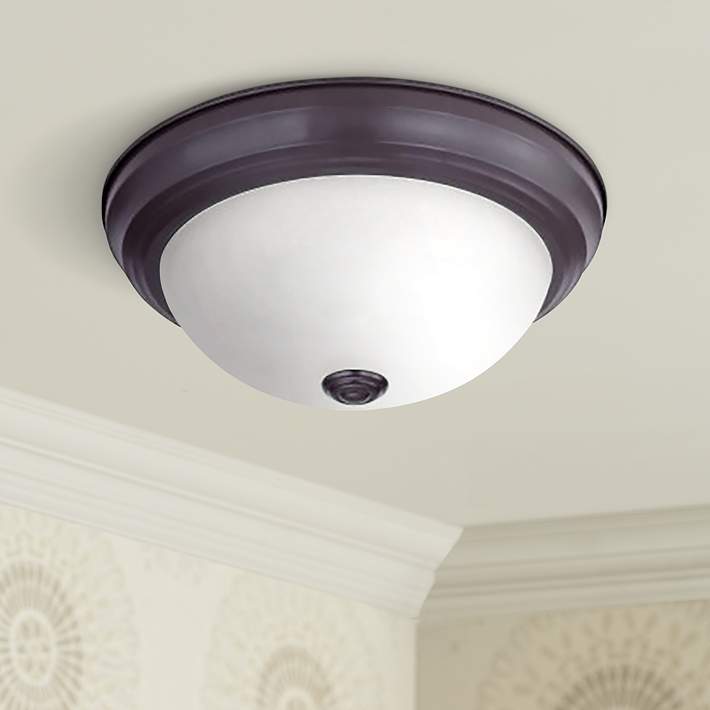
When the NYT email arrived announcing their next Wirecutter finding, I was a bit taken aback with their use of a rude, perhaps sexist trope. “We Tested Tulip’s Renter-Friendly Boob-Light Cover in 3 of Our Own Homes” https://www.nytimes.com/wirecutter/reviews/tulip-shade-review/?searchResultPosition=1 Because it concerned lighting, I did reread the title to be certain I understood their intent. After I realized they were talking about flush pan luminaires, I shook my head and deleted the email.
A few days later, a friend forwarded his email to me, knowing I spent a career in lighting. He indicated that he always disliked this crude colloquialism. I jotted a note back telling him, while I have of course heard of the reference, it was rarely used by most of the people I know in the industry. Flush ceiling light, ceiling pans, ceiling mushroom and just plain “ceiling” are much more common.
Interior aesthetics is overwhelmingly populated by female professionals. As a guy talking about design, trends, color, tone, shape and the nuances of space, I have always tried to be respectful of the audience. Even if every design pro was a man, I don’t think I’d use this definer. It just seemed too much like salacious jargon for me. I wouldn’t want anyone to be uncomfortable with something I’ve said. I am very surprised its use got past the NY Times editorial staff.
Both my friend and I stumbled over a poorly employed phrase, but we ignored the reviewed product. I thought that was interesting. These types of ceiling flush units are quickly becoming dated. I remember their mass introduction over 25 years ago. Much nicer options are now available. However, if you have limited funds, or if you are a renter (as the article concentrates) can anything be done? A magnetic rimmed-fabric shade could be a solution, but I didn’t think much of the look they created. Kind of a sloppy Noguchi paper lantern pendant stuck on the ceiling. Interesting concept, but poor implementation. Did the headline writer make a mistake by alienating a population sector with a poorly chosen word?
The headline writer should have been more sensitive to their audience. I’d like to believe that most people in the industry he discussed already are.
While in New York two months ago, I had a few unused hours, so I took the opportunity to check out the Whitney Biennial. Over the years, I have walked a number of editions of this thought provoking show. Some were good, some a waste of time, but I was fully taken aback by this year’s offering. By definition, the show is designed to be a showcase of the most relevant art of the time. What we forget is that artists are trained to think differently, so while we are commiserating over the impending technological leaps, artists are exploring them and working out ways to employ them in their work. By using 3-D printing and AI technology, these creative people are blazing a path which the rest of us can use in our more pedestrian endeavors. Following are a few works that force me to consider how it might change non-art products.
There have been countless editorials and a generous amount of handwringing over Artificial Intelligence (AI.) Accordingly, artists, writers, designers and composers will no longer be needed. All of their efforts can easily and cheaply be repeated as AI matures and naturally improves. Holly Herndon, a musician who has worked with AI in its most primitive form and continues to create inventive music supported by AI, understands the reality of the technology. Her preferred term is Collective Human Intelligence because AI is simply digesting all of the currently available data (created by humans) and reconfiguring it into new forms. For the Biennial, Herndon and her partner, Mat Dryhurst focus on this core data to essentially “game” the AI system to create false results. By infusing the systems with key data points of “female, red hair, white skin, blue eyes, straight bangs” to equal “Holly Herndon,” text-to-image” AI models of “Holly Herndon” have produced an odd collection of results that distort reality, essentially resulting in consistently “wrong” AI output. Basically, we are not forced to accept the intended reality of AI. Like all technology, it should support the human work, not supplant human ideas.
Holly Herndon – as imagined by AI
Who among us hasn’t looked in wonder at Pre-Columbian earthenware? Clarissa Tossin has recreated Pre-Columbian musical instruments using 3-D printing. She then had musicians play the instruments so that, for the first time, modern museumgoers could experience the sound in addition to the beauty of the ceramic pieces. Yes, today, these are precious pieces of art. When created, they were simply tools for making music. She is hoping to return these pieces to their proper functional perspective.
Clarissa Tossin – 3D printed replicas of Pre-Columbian musical instruments that can now be played and heard
A piano is designed solely to convey sounds input by a musician. The combined human action and mechanical reaction of the instruments delivers music. What would happen if the musicality of the piano were extricated? There are still piano keys being pushed and piano hammers striking and those action do deliver visual movement and sound, just not music. Nikita Gale shared just that scenario in “Tempo Rubato.” In a quiet space a “player piano” keys and pedals moved, hammers struck and sound was heard, just not the sound you’d expect. Siting and listening for a couple of minutes was a delightfully contemplative time in a busy museum floor. Not music, but rhythmic sound and movement.
Nikita Gale – “Tempo Rubato” – A piano without human intervention and the expected music, but nonetheless, sound and motion
Can we imagine an artist making a painting without canvas? Suzanne Jackson uses acrylic paint as the medium to created suspended paintings. The acrylic and gel are mixed with natural objects to form translucent shields of amorphous forms and color. This is simply a different way to create a piece of art without the use of a predefined substructure.
Susan Jackson – canvas-less paintingSuzanne Jackson – canvas-less paintings
Artist, Jes Fan used 3-D printed CAT scans of his body to create a series of sculptures. Because they are personal CAT scans, the work is very intimate, but the result has no visual reference to human form owning to his duplication and manipulation. Again, we have a tool, 3-D printing thought to produce a series of repeatable units, instead being used and configured into unique art.
Jes Fan – Artist manipulated 3D printed CAT scans of his body parts
Using video and five screens, Isaac Julien asks us to rethink the connection of Black Americans to African art and African-American cultural heritage. It forces the question why the art is honored within the halls of venerable institutions while the creators are/were often ignored or dismissed, especially during the era of thinker, Alain Locke, who is used as a voice here. This piece asks a lot of tough questions.
Some artists provide an inexplicable artist bio with a complicated raison d’être that belies their work. Even after reading it again, I don’t understand Ektor Garcia mission statement, (other than learning the crochet craft from family elders) but the work is detailed and remarkable fiber sculptures.
Ektor Garcia – Crocheted fiber sculpture
Just for pure fun, I want to live in the world of Pippa Garner. Her wall of inventive and wholly impractical consumer goods (called “Impossible Inventions”) should make any industrial designer smile. What is does do is remind us all that the creative process is filled with “bad ideas” and it takes a bunch of them to arrive at the one idea that is good.
Pippa Gardner – “Impossible Inventions” – Not sure any of these designs would be picked up by a major luminaire manufacturer.
So What Does All This Have to Do With Lighting?
More than once, I have heard designers express concern over the possible ramifications of AI. Manufacturers have grown concerned about where 3-D printing might leave them. As sustainability drives so much of the trend conversations, new materials are almost inevitable. These challenges are being met head-on by artists and the paths they are blazing should help everyone else. By viewing complex art accomplishments, we should feel more comfortable approaching these tasks for consumer goods. Change can be scary, but change is inevitable. The quicker we adopt new ideas, the more valuable we become as professionals. Artists can be the gatekeepers, ushers and guides that make our journey easier.