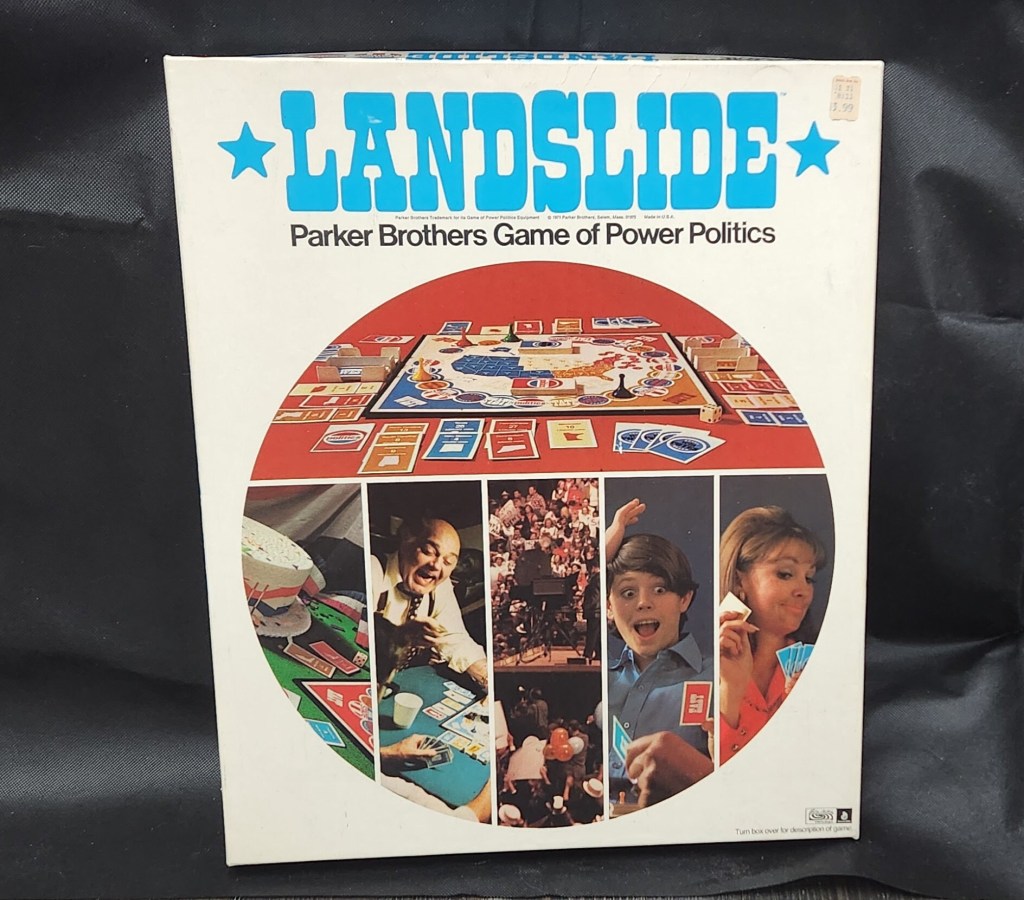
As a young guy, my group of friends loved to play the board game, Landslide. During the game, players collected electoral votes in order to win the US Presidency. (We were a VERY politically active bunch.) We cosplayed various politicians, discussed real political scenarios during the game and got so involved in the action, we managed to defeat the rules and were forced to add rule addendums to prevent us from blowing up the game. Since that time, I haven’t really played board games, so it was a quite a surprise when I read an article in the New York Times about the decimation of the current board game business thanks to Donald Trump’s tariff policies.
As I read the article, I was surprised to learn that the new board games are not big corporate endeavors. (Landslide was a Parker Brothers game, a large corporation also responsible for producing Monopoly.) Rather they are now smaller boutique businesses where the games are developed as limited-run titles for curated consumers. The reason tariffs are hitting them so hard is the same reason lighting is being blasted. Low volume.
From the outside, those not involved in lighting probably assume lighting is produced on an assembly line, much like a car or an air conditioner. Sure, some luminaires might have sales commensurate with the demands of automation, but the majority never reach that level. Low volume is typically supported by hand-built labor and that is where the reshoring argument falls apart.
In the game of Landslide there were player tokens, dice, a cardboard playing field and delegate/electorate cards. Easily produced in the US or almost anywhere. As explained in the article, the new games are much more complex with more tokens and accessory playing items, all of which require production skills not available in the United States. Those elements that can be replicated stateside, require volume, or the cost is prohibitive. These games, already pretty pricy, could rise 50% into the $80 to $300 range. That’s a lot of money for a couple of hours of comradery.
Almost everything I read in the article allowed me to harken back to family-owned lighting manufacturers and retailers. I know, many of the companies are now owned by corporations or investment groups, but volumes have nonetheless not altered much. For better or worse, decorative residential lighting is a low-volume business because it is a fashion business. The same problems that these board game producers are having are being experienced by lighting manufacturers.
The board game producers have started to back down on production. They have laid off employees and have determined they cannot produce a viably-priced game that the market will embrace. That is unfortunate. Games can bring a great amount of fun and memories to players. They are not, however, a necessity. Lighting is. We must have light. Light is a key feature of every home and its importance is growing as each new scientific study is released. We don’t have the option of stopping production. Consumers need and must buy lighting. Trump has left us with only one option, abandoned the new bejeweled, shiny boutique luminaires and go back to the lighting fixture version of glossy printed cardboard games.
Is everyone out there ready to play a game of Landslide with lighting?
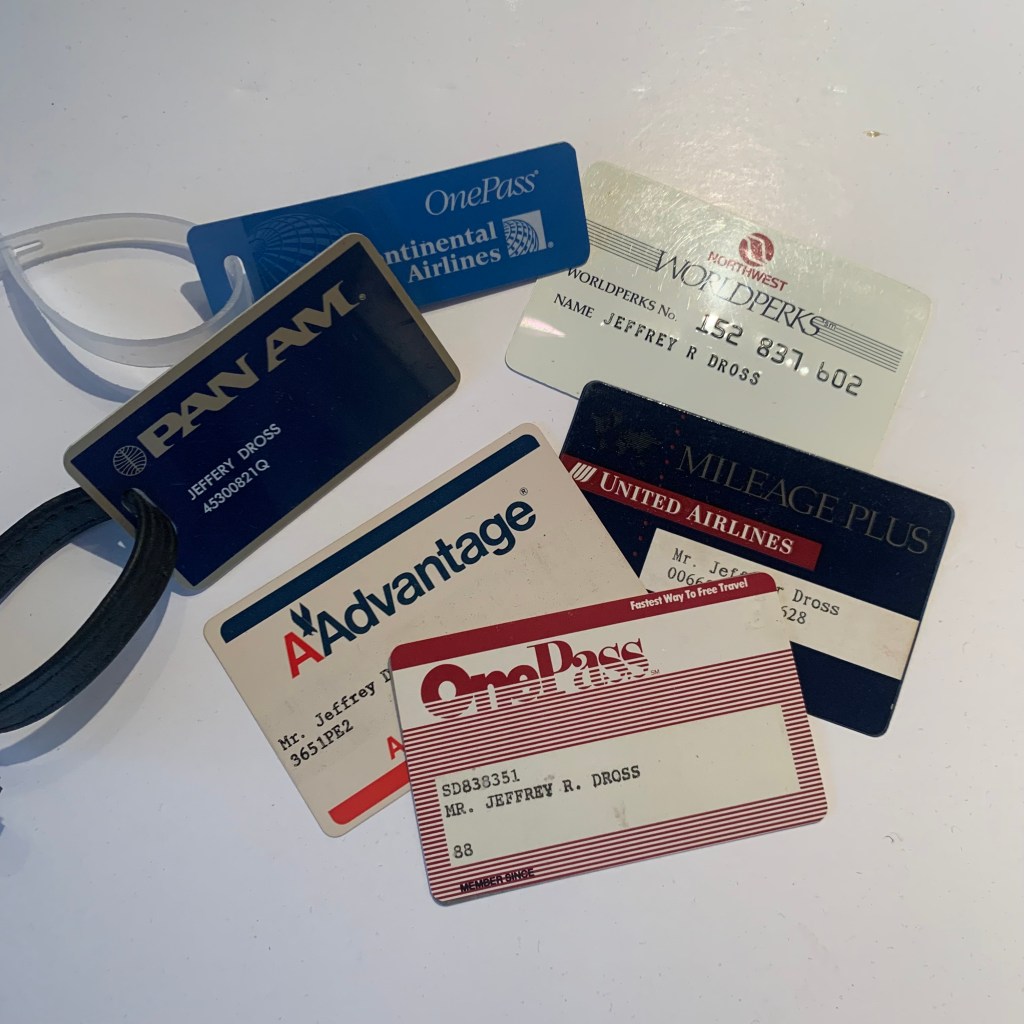
My wife and I enjoy traveling and have our entire life together. Our United frequent flyer numbers were actually generated by Eastern Airlines (which became Continental, which became United) we have (permanently) unused reward miles with TWA and PanAm. In 2018, I became a United 1 Million-Miler. I did not however, get that status from leisure travel (despite our herculean efforts!) Million Mile status came because I spent twelve years traveling back and forth to China as manufacturing of luminaires transitioned from the United States to Asia.
I was reminded of this as I listened to the “manufacturing return to America” pipe-dream espoused by our President. Tariffs will be raised, manufacturers will shutter Asian facilities, reopen US buildings, start making goods here. No more tariffs. “Easy-peasy!”
Oh, if it were as simple as this President believes. Transitioning to a new factory in a new country is HARD work. It can and has broken many companies. Simply moving a factory across town has crippled some organizations. It takes years and the efforts of countless people to make a move successful.
Before I ever set foot in Korea (my first factory visit in Asia) I was preceded by my boss, who did the initial legwork over a five-year period. While he was on the ground, I was writing directions and drawing illustrations via a fax machine to insure product outcomes were clear. Samples were shipped back and forth with detailed information on how to correct the problem and what end result we wanted. When I started to travel instead of him, I arrived with three legal pads of paper and multiple pen cartridges, leaving all of the filled paper with the factories, each sheet containing sketches, suggestions, options and instruction that needed to be done to make the product correctly. After a twelve hour day in the factory, I spent a few hours in my hotel room or lobby bar writing reports, then an hour in the “Business Center” faxing that information back to the office. (Note: fax machines were slow! Especially US to Asia!) If anyone ever asked me if I “enjoyed” my trip to China, I responded with a less than charitable answer. 24 concurrent 18-hour days does not equal “fun.” If it weren’t for the magnificent people I met and the few “days-off” I was afforded, I might not remember this time as fondly as I do now. It was a tough but rewarding part of my life’s work.
…and I wasn’t alone!
Purchasing people would make shorter trips, managers for different lines arrived for conversations, designers, planning the next release and logistics people all worked on their particular aspect of insuring good product arrived for the consumer. Perhaps even more challenged than engineering was the QA function. They were probably in the factory as long, or longer than me.
Multiply that by every other lighting company in the US and Canada. (Plenty of Europeans and Australians, too!) There was a buzzing hive of lighting people all helping a collection of 100, perhaps more factories make quality goods for the world market.
Today, a lot of that is reduced. The roads are better, so travel is easier. The hotels are more accommodating to western preferences. There are more people who speak English and more Americans who mumble through Mandarin. Some of this is being repeated right now in India, where the skills are not yet as well formed, but at least communications are easier.
A Quick Return to America?
When I read about a return to American manufacturing, I typically chuckle. Not because of the improbability, but because of the hubris. It took the blood, sweat and tears of thousands of Americans, Taiwanese, Chinese, Filipinos and Koreans over a dozen years to get manufacturing set up in Asia. Returning it to the US will be accomplished in a few months? I have more optimism that my wife and I can return to Portugal using our TWA frequent flyer miles.
I’m old enough to remember when all lighting was manufactured in the USA. I was also dropped, smack-dab in the middle of the transition from “Made in America” to “Made in China.” Let me help you understand the realities as we approach a political atmosphere with limited knowledge on the topic and the guillotine of added tariffs over our heads.
In the 1970s most lighting companies assembled parts made in-house, or by a collection of suppliers to the industry, also located in the US. Arms were bent, pipes were swaged, glass was blown and wood was turned and fabricated all by an army of small job shops. Painting, polishing and plating was done in-house, or at small local suppliers. France, Greece and Mexico made a fair amount of glass and the ubiquitous bronze was created in Spain, but that was about all that was imported.
That was followed by a short period when manufactures sourced components from around the world and assembled or packed them in the US or Mexico. This globalization of manufacturing was a precursor to the eventual shift to Asia, a move that was forming in the background.
During the energy crisis of the late 1970s, Taiwan began to build the inexpensive ceiling fans America demanded and through that effort, they inadvertently stumbled into the lighting fixture business. The floodgates were opened.
Taiwan and Korea became the primary source for lighting, but because of the highly educated local populations, neither could satiate the American demand. It was so difficult to find polishers and machine operators, Korea allowed many Bangladeshi migrants into the country, but it wasn’t enough. The Taiwanese manufacturers started to build alliances with people and facilities in China. Korea made attempts to partner with the Chinese, but for a series of reasons, they did not succeed and disappeared shortly thereafter. The Taiwan manufacturers kept the more complicated products and shifted the lesser-quality good to China. I and hundreds of other Americans spent days and weeks in the country helping the factories create the products that American consumers wanted.
The part most people don’t realize is that it took time to develop a mature global supply chain in China. Reliability, technological proficiency and production functionality needed to rise to western expectations. With that in place, the product quality, style and value progressively rose. Because decorative lighting is a low-volume business, Production automation was almost impossible. Components needed to be processed individually and the luminaires assembled one at a time. Some product would never have been made in the US. They were now possible in China. All those advancements however came at a price, duty.
To assess a duty, each product produced overseas must be assigned a Harmonized Tariff Schedule (HTS) classification code. This informs the importer how much they must pay the US government to bring this product into the country. There are also duty brokers who facilitate this transfer of payment who need to be paid. The final adder can also be sizable, overseas and across-land freight.
To better understand this, let’s consider buying a wall sconce from China. Here is a theoretical cost breakdown.
Cost
Description
Paid to:
$10.00
Cost of the wall sconce, assembled and packed
Chinese Manufacturer
$0.76
HTS Code 9405.11.60 (Chandelier & other electrical ceiling or wall lighting fixture) 7.6% (not made of brass) duty
US Government
$1.00
10% added tariff by President Trump in September 2018
US Government
$1.50
15% added tariff by President Trump in September 2019
US Government
$0.05*
½% Broker’s Fees (est.)
Brokerage Company
$2.36
Ocean Freight 1 cu. Ft. volume carton. $5000 avg. cost for 40’ container w/ 90% efficiency.
Freight Company
$0.38*
Overland Freight $3/mile approx. 300 miles
Freight Company
$0.80*
Importer Overhead at 8% For Purchasing, Importation and Warehouse personnel + any drayage fees
Held by Manufacturer/Importer
$16.85
Total cost in 2024
* Educated guesses
Now, let’s assume new tariffs are assessed to all imported products. All of the above will remain, but a new number will be added;
Cost
Description
Paid to:
$1.00
10% added tariff promised by President Trump when he takes office (Per his 11/26/24 announcement)
US Government
$17.85
New 2025 Total
To this number, the manufacturer must now add their profit and the cost of doing business. If you’ve watched enough Shark Tank, this is called “margin” and can mean the difference of staying in business and going out of business. Simply, the margin is the percentage of the selling price that is profit. For this exercise, let’s assume we need a 50% margin to keep our theoretical company afloat. (in practice, this number can vary quite a bit.)
Now, let’s see how tariff increases impact the consumer costs.
Importer/Manufacturer’s Cost
Profit Margin
Distributor’s Net Price
Pre-2018 w/ duty base of 7.6%
$14.35
50%
$28.70
Current state with the 25% 2018/2019 tariff upcharges
$16.85
50%
$33.70
2025 with the promised additional 10% tariff
$17.85
50%
$35.70
The retailer, who prior to 2018 purchase the sconce for $28.70, saw a 17.4% increase over two years and will see another 5.9% increase in 2025, if the new administration follows through with its plan. That means, the collective Trump administrations will be responsible for a 24.4% cost increase. This is in addition to any inflation-related increases.
The retailer must now take the price they paid to the importer/manufacturer and add a level of profit required to run their retail establishment. I am not a retail expert, but have learned that number can range from two to three times the incoming cost of goods. Some retailers might actually need a higher level of profit, especially if they are located in a high-rent district, or a city with a higher cost of living. For this exercise, I’ll provide a range of two to three times their cost of goods. Understand, it could be higher.
Retailer paid Cost
Profit Margin
Retail Selling Price
Pre-2018
$28.70
2 to 3 times the cost
$57.40 to $86.10 paid by the end consumer
Current state with the 2018/2019 tariff upcharges
$33.70
2 to 3 times the cost
$67.40 to $101.10 paid by the end consumer
2025 with the promised 10% added tariff
$35.70
2 to 3 times the cost
$71.40 to $107.10 paid by the end consumer
The impact to the end consumer can now be assessed. An increased price in excess of inflation of 24.4% is the result. Most of that addition will be paid to the Federal Government.
Could the importer/manufacturer reduce their margins? Perhaps slightly, but most companies know their cost of running a business. If they slip below their 50% margin (in this hypothetical) or 2-3 time markup, something will need to be sacrificed. Service, salaries, employee/customer benefits, something will need to be reduced to make up for the loss. Retailers and manufacturers have no choice but to pass the added expense on to the consumer. It will either be that, or bankruptcy. In the last few years we have seen consolidation as an effort to reduce margins, initiated, in part, due to these increases. Perhaps more will be forthcoming.
Of course, the new President’s concept is that manufacturing will be returned to the United States, thereby eliminating the cost of duty, brokerage fees and ocean freight. (The Import Overhead will switch to Manufacturing Overhead and stay basically the same.) That supposes someone in America can hand-build, low volume products. Like the initiation of bringing lighting to China, all that will need to be repeated, this time in America. Labor, skill, investment and time will make this VERY difficult. It might work for highly automated, high volume industries like steel or automobiles, but the likelihood of lighting returning to the days of 1970 is slim.
That means a few realities will take place:
Customers will pay more for lighting.
The federal government will see a windfall of incoming dollars, all borne by the consumer.
Things will remain pretty much the same for the Chinese manufacturers and the Chinese government.
Who is being helped and who is being harmed in this new scenario? It seems to me that someone from the new administration might be well served spending a day in the office of a lighting supplier before doing something rash.

 Lighting by Jeffrey