
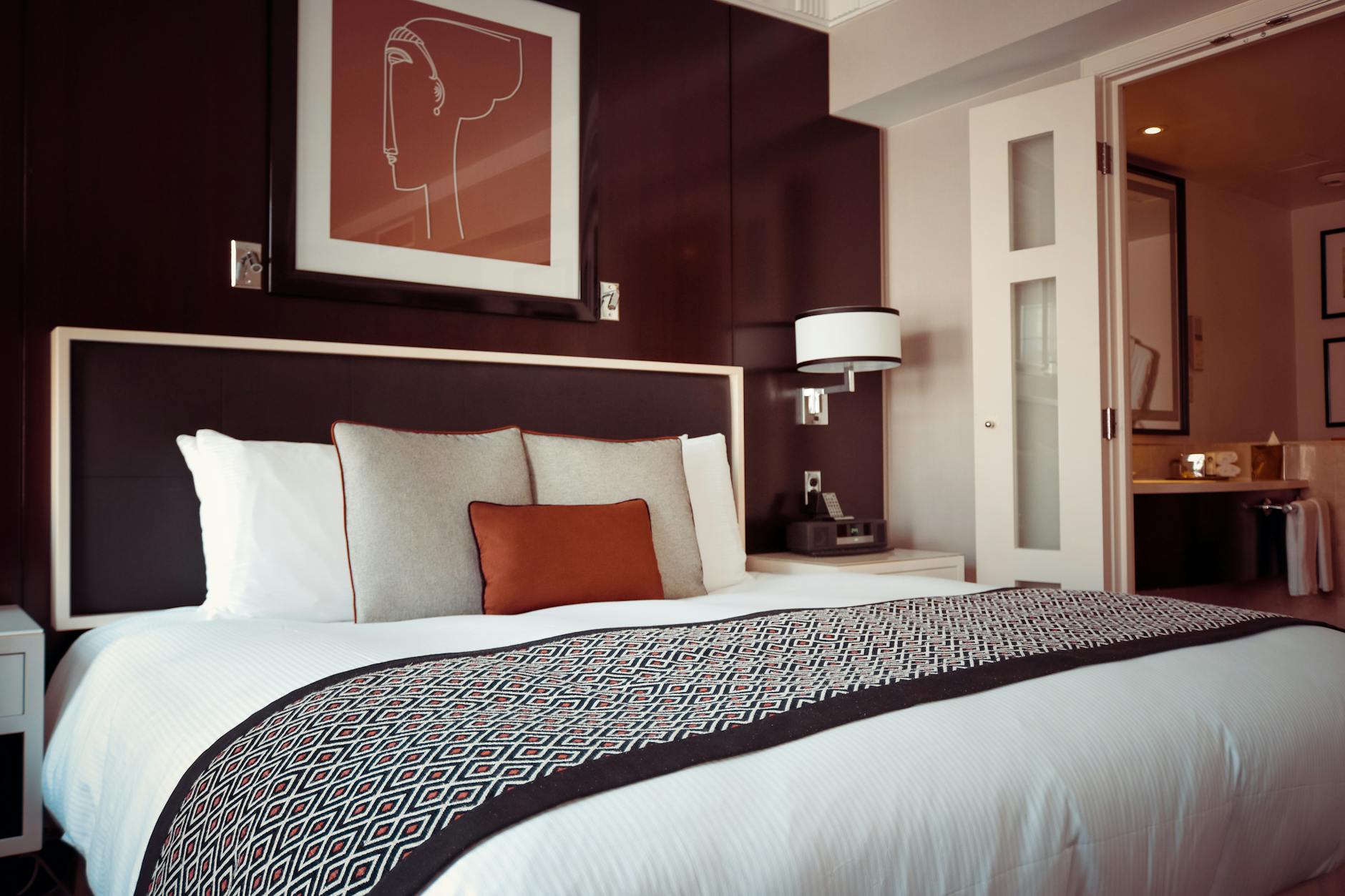
How often do we think about bedding? I believe I read somewhere that most people need (or should) visit a bedding store every seven years, that being the viable life expectancy of a typical spring & fabric mattress. Interestingly, that same seven years is the average span of time most people visit a lighting store. A recent article in Bedding News Now pointed out that there is more commonality than consumer visit frequency.
The article written by Texas Mattress owner, Lawrence Heilers, detailed how smart mattress showroom layouts can elevate the store and increase the customer satisfaction and ease of shopping.
“When mattresses are placed too close together, the display can feel cluttered and overwhelming. The customer’s eye is drawn to the sheer number of options rather than the unique qualities of each product. However, when you provide ample space, each mattress becomes its own focal point.”
Now, remove the word mattress in this article’s paragraph above and replace it with lighting fixture. Mattress showrooms apparently have the same problem as lighting showrooms.
Over the years I have visited hundreds of lighting showrooms across America and 90%, perhaps even 95% are too crowded, packed wall-to-wall, floor to ceiling with products.
“…when you provide ample space, each mattress becomes its own focal point This simple change subtly tells the customer that each bed is a distinct, high-quality item worthy of individual attention.”
Isn’t that what we want? Don’t we want customers to see the unique character of the product we sell? Allowing the consumer to envision the luminaire in their personal space is the best way to secure a sale.
Years ago, I was a guest speaker for the grand owning of a newly remodeled showroom. The place took my breath away. It was the most perfectly designed showroom I had seen in my career. The invited designers and architects were likewise mesmerized. Finally, a showroom that understood what was needed to help the client.
Two years later, I was asked to provide an educational program for the local NKBA chapter, hosted by the same showroom. What I saw was Mr. Hyde. Product was stuffed everywhere. Aisles were cluttered with boxes to support a “truckload sale of ceiling fans!” Traditional crystal was mixed with Mid-Century pendants. It was a mess and it was a shame.
On one of my first trips, to a reportedly, “good customer” showroom, I saw displayed products from a company that, at the time, had been out of business for 30 years! (In their defense, it was marked down 40%.) I asked the local sales rep for an explanation. He told me, “The owner is in love with his inventory.” Apparently, he’d rather clog up ceiling space with a quarter century old item then toss it away as a business loss, which consequently prevents the display of a more saleable items. Is this a viable use of showroom space?
Last example. After a fire, a popular showroom rebuilt, but instead of the typical slats displays, installed individual outlet boxes, thereby creating a finite quantity of display options for the showroom. Their grand re-opening was met with praise from the industry. Subsequent visits a decade later and again, almost two decades afterwards presents the same satisfactory reaction. It never looks cluttered, it is easy to imagine the pieces in your home. The showroom is a joy to visit. Shopping is effortless and pleasant.
(Sorry, no showroom names will be shared, but I will be happy to share the name of the retailer who does it correctly, if you ask me!)
Displaying lighting is more difficult than a lot of retail industries, but we are not alone. Window treatments need lots of walls and must be equally challenging. Flooring needs lots of floor space and must surely be overwhelming. Furniture can’t be stacked on racks or selected from behind a glass cabinet. Despite their dissimilarities, one thing is clear, to help in the selection process, customers need retailers to step out of their own heads, take off their industry hats and imagine themselves buying a new mattress.
 Lighting by Jeffrey