
As I try to wrap my thoughts around all of the things I saw in New York and on the ICFF show floor, I wondered if there is a theme, a common thread that might tie new products to birth in 2024. I suspect that might be too easy. There are far too many creative ideas and this is a worldwide showcase. One thing did come up, time and again and it is a movement with which I have had some struggles. Sustainability is something we all know is needed. It is a direction we all know we must follow, but it runs counter to so much of what we do as creators of interesting, unique and personal interiors. I’ve asked this question before and will probably ask it again. “Can design, trends and sustainability coexist?” I’m no closer to an answer, but I have more fuel for the argument.

Upon seeing the showrooms, stores and galleries of SOHO, the dichotomy couldn’t be stronger. In one short section of a block, the fashion industry was having this same battle. The Kirna Zabete window featured bold, funky “Maxi” dresses that are sure to have a short shelf life, while across the street, the Marni storefront showed simple and clean blue and white suits, designs that could easily transition trends and time. Likewise, the Simkhai showroom next door and Lavin, two-doors down kept it simple and stately. A few more steps and the Mango showroom, a new fast-fashion brand who makes trendy product quickly and offered it for less money pulled us back to a typical merry-go-round of fashion retailer.
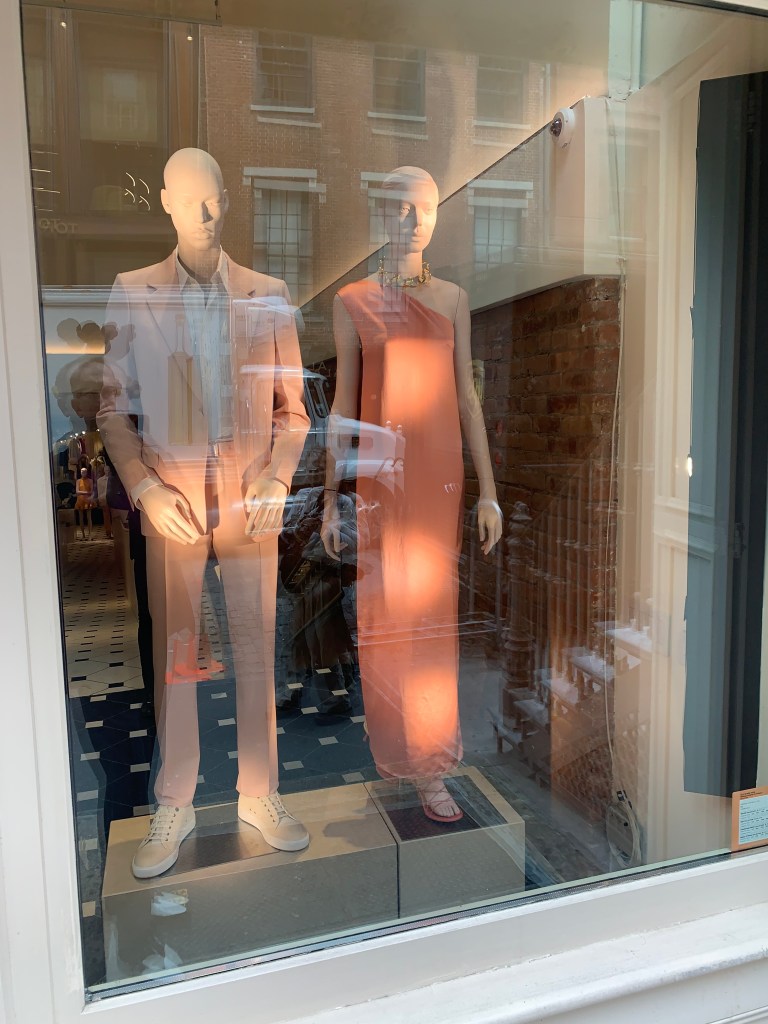
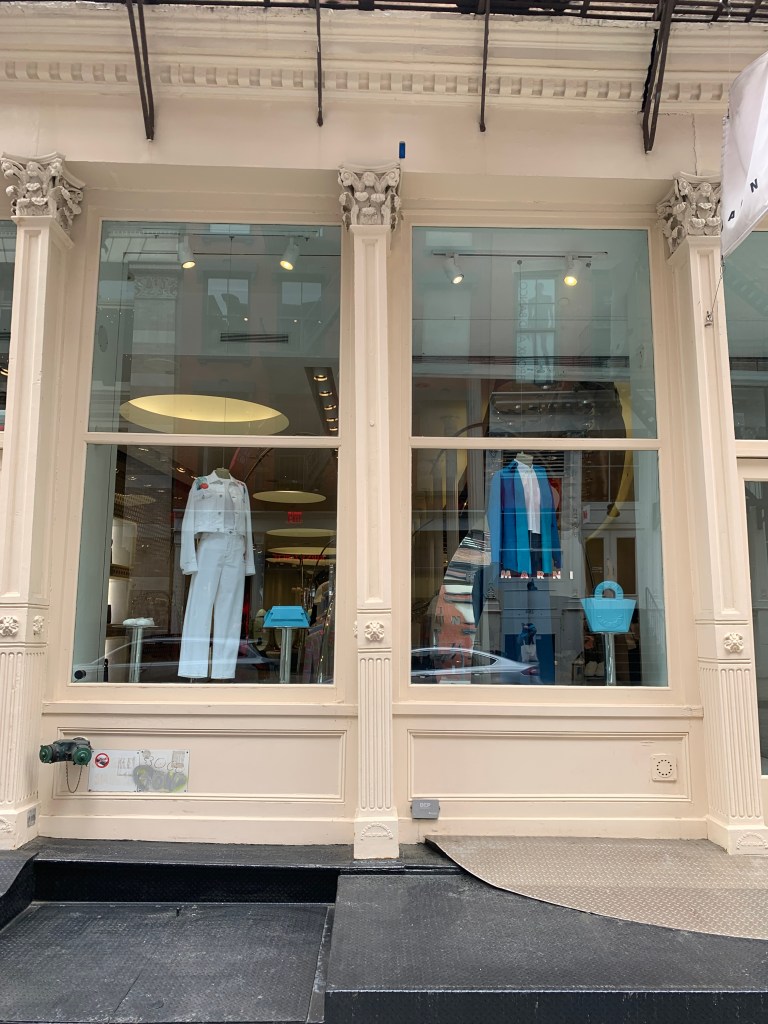
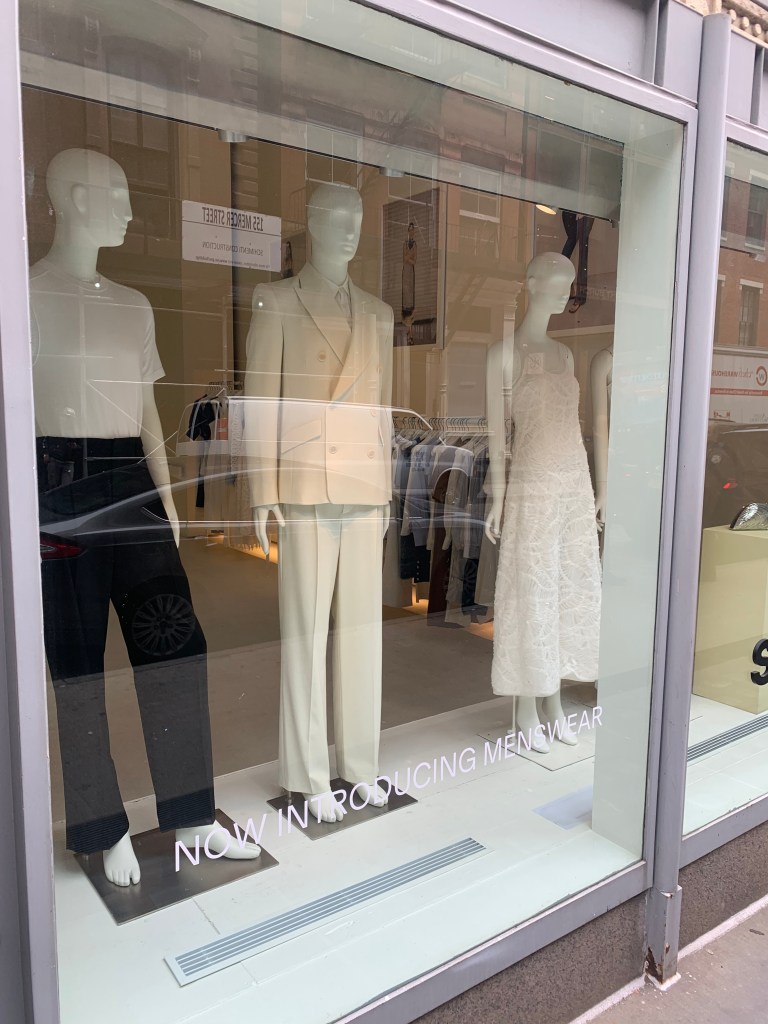
I think the fashion industry is wrestling with itself on this topic. For the average consumer who has moved into a type of American Mao Suit of jeans, sneakers and tees, the question is moot. They have already established a de facto sustainability. This further begs the question, “Can fashion survive?” North Americans are, however a much more quantitative based consumer than the rest of the world. Sure, we wear jeans 90% of the time, but we want a closet full of clothes to service the remaining 10%. That, I think is where we get into trouble balancing the need for sustainability. Other geographic areas of the world are emotionally better equipped to handle a smaller closet of well-built clothes. Citizens of the US and Canada, not so much.
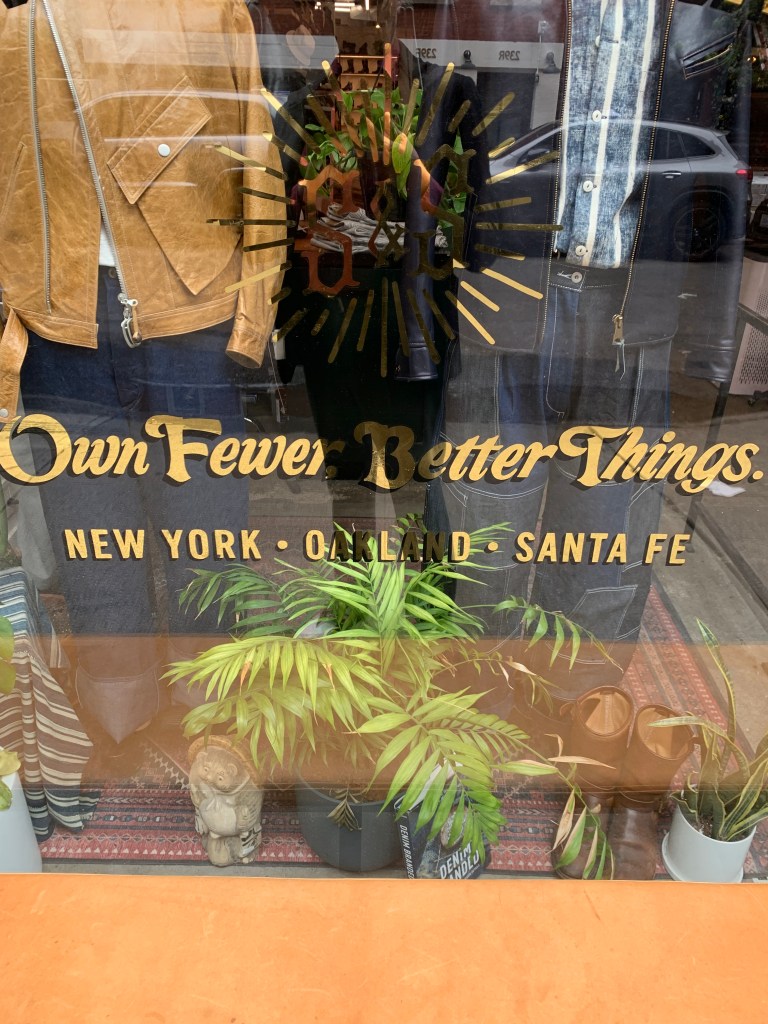
Retailers are trying. Yet a few more steps down the street is Standard & Strange with their moto. “Own Fewer, Better Things” emblazoned on the window. Will it work? I’m still not sure.
Fashion
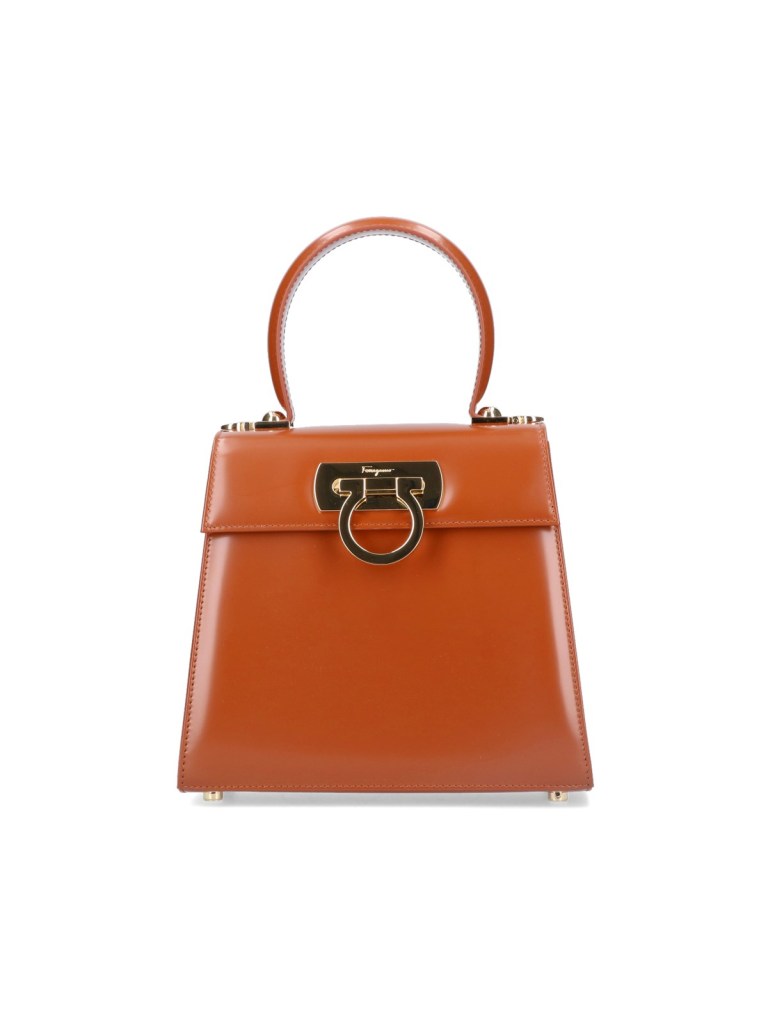
Despite being involved in residential consumer goods, we can learn a lot from trends in fashion. The sustainable battle is only one point on which we can draw inspiration. For example, I’m surprised the short handled trapezoid shaped purse hasn’t inspired some sort of home-related product. This shape is everywhere in woman’s apparel stores and fine leather establishments, but I don’t see the crossover. I’m not sure what I expected, but I had expected something.
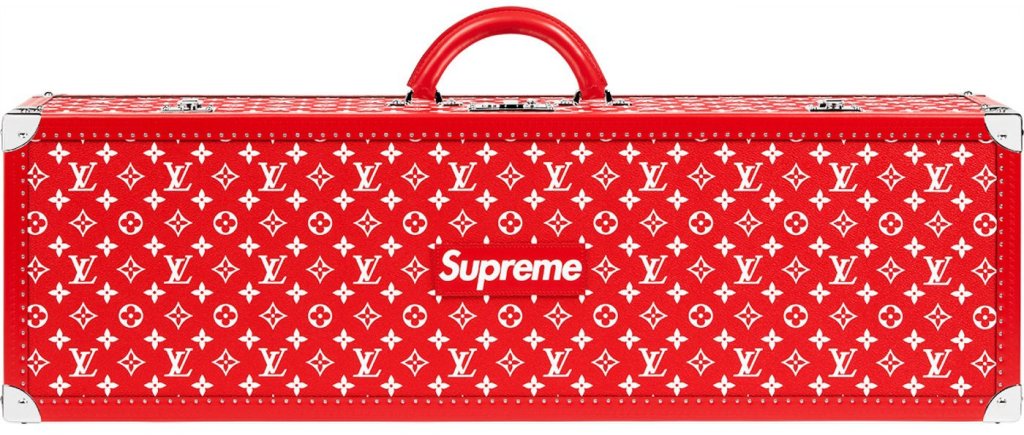
The cobranding of Louis Vuitton and Supreme is an odd one, but it does speak to the need for old brands to stay relevant and new brands to gain some legacy in order to survive. It can benefit both if done well. The challenge will always be in the implementation.
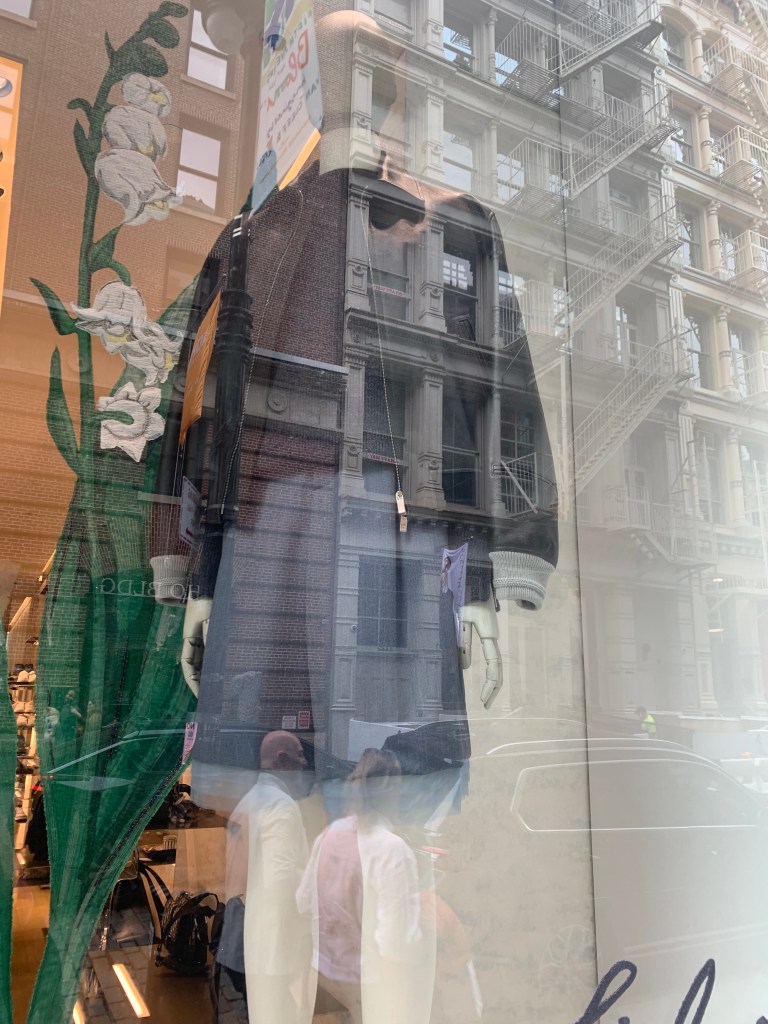
Men’s pants are of course shifting from ultra-skinny to massive and floppy. Men’s short pants had been minimal for a few years and Dior wants that to continue to the obvious extreme as exemplified by their window display. Men’s shorts so full they appear as a skirt. Yet another step in the gender blurring of clothing.
Floor Covering
I enjoyed a number of conversations with the rug creators at ICFF this year. Why is a lighting guy looking at rugs? In each case, the people staffing the booths pointed out the importance of lighting to handmade rugs. One gentleman even mentioned he will not begin the weave of a custom piece until he understands the placement of light. Fiber has a nap that conversely reflects and absorbs light. If placed in one direction, the rug will look different than positioned in the opposite direction. We also discussed the difficulty with showroom lighting, to say nothing of the 5000K warehouse lighting on the Javits Center show floor. I left these conversations feeling much more positive than I had expected.
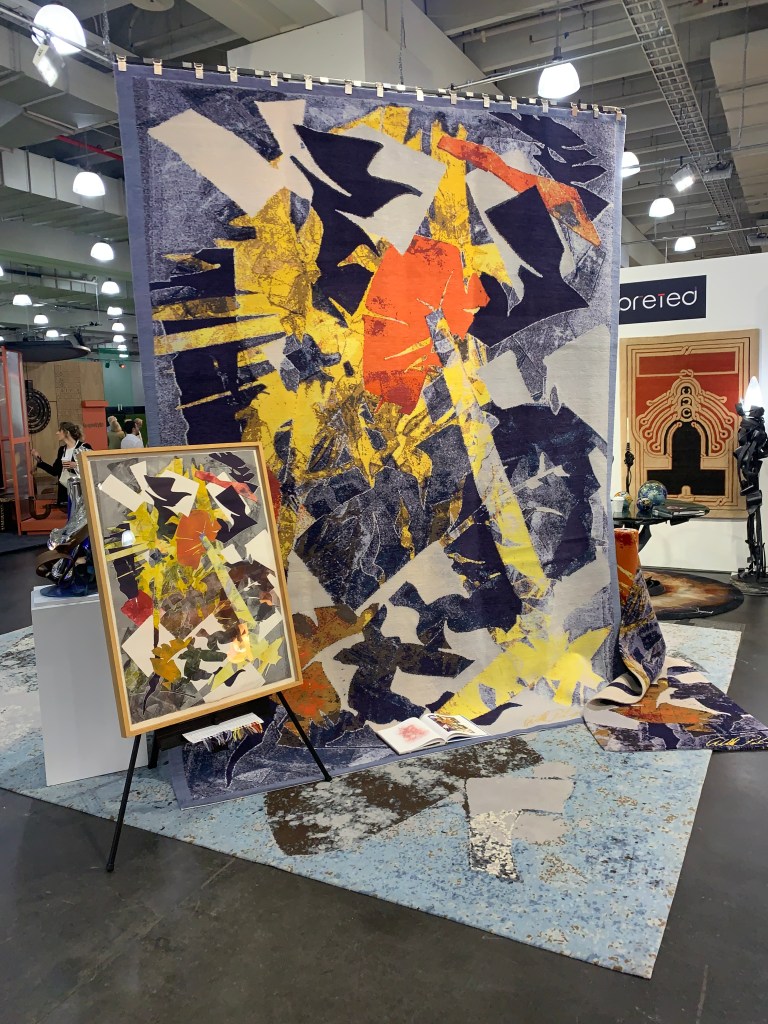
Art Interpreted hires artists to create works, then recreates those pieces in fiber. The artist’s signature is prominent in the recreation. Illulian has hired famed Industrial Designer, Karim Rashid to develop designs. Using a different approach, Warp & Weft drew inspiration from organic elements such as birch and earth along with urban topographies simplified into unidimensional planes. JD Staron, a favorite from last year, took a more psychedelic, funky approach. This has to be some sort of renaissance period for rug manufacturers. They are creating interesting, fun and exciting designs that are allowing homes to really shine with the vibrancy they add.

Wall Art / Wall Covering
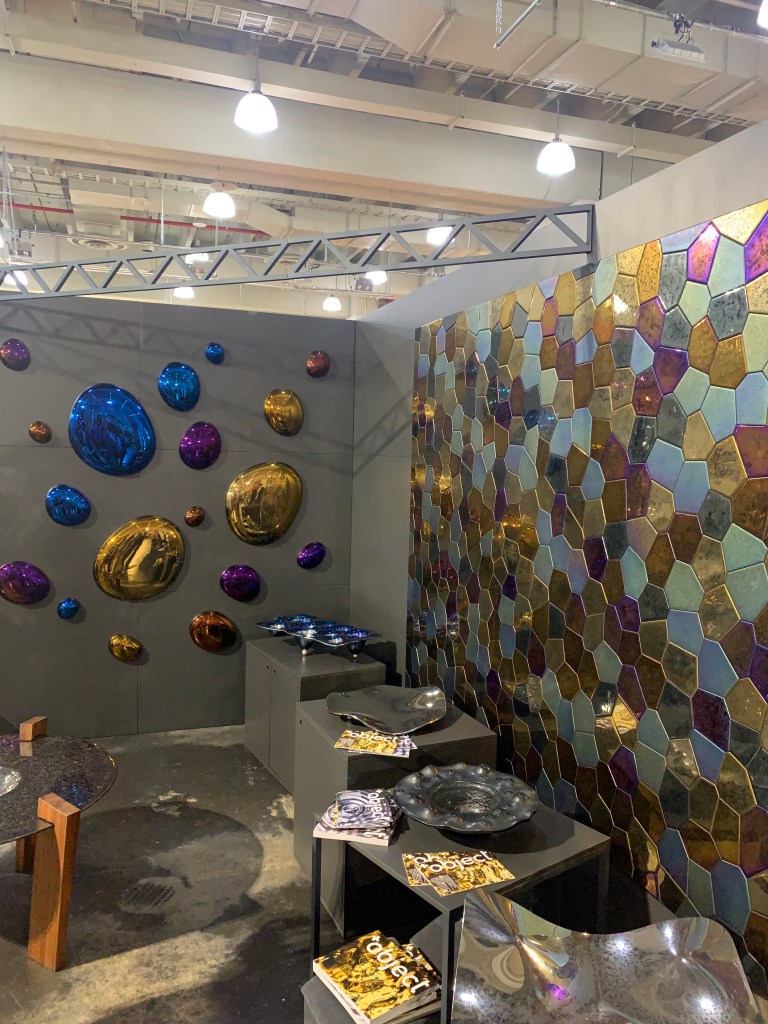
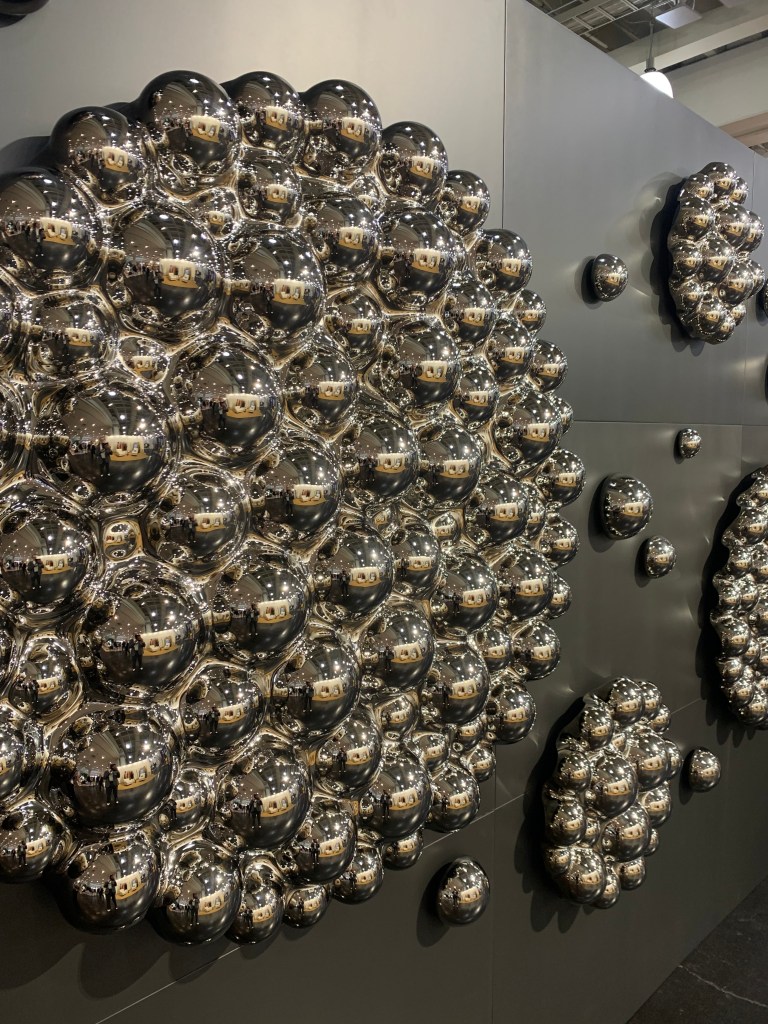
By combining glass and titanium, PlusObject has created some very interesting wall art/wall coverings. They are at once, polished and textural and can easily add a dynamic touch where one is not expected. There are so many ways these could be used. There are also so many other industries that could borrow this concept within their own product lines.

I liked the soft color tiles shown at Bert & May. They featured nice subtle patterns that will work in softer, organic contemporary spaces.
Kitchens
The overall design of a high-end kitchen is not experiencing much movement. A visit to Bulthup, Poggenpohl, Boffi and Scavolini this year could be easily swapped out for a visit in 2022. Kitchens are increasingly minimalist, with clean lines and tailored finishes. The rise of convection stovetops is further smoothing surfaces. With kitchens open to the whole home, they have adopted a higher level of aesthetics than these workplaces ever had in the past. Appliances are hidden, cooking tools are housed and dinnerware is barely tolerated. No wonder there is a rise of “back kitchens” or “dirty kitchens” in higher end homes. Despite the desire for the contrary, food preparations can sometimes make a mess. I wonder if the pendulum is at its turning point and we are about to see a shift. Stay tuned.
I continue to see increased use of glass countertops. A number of these showrooms and related spots include smoked glass, clear glass with etched underside and a number of other variants.
Furniture
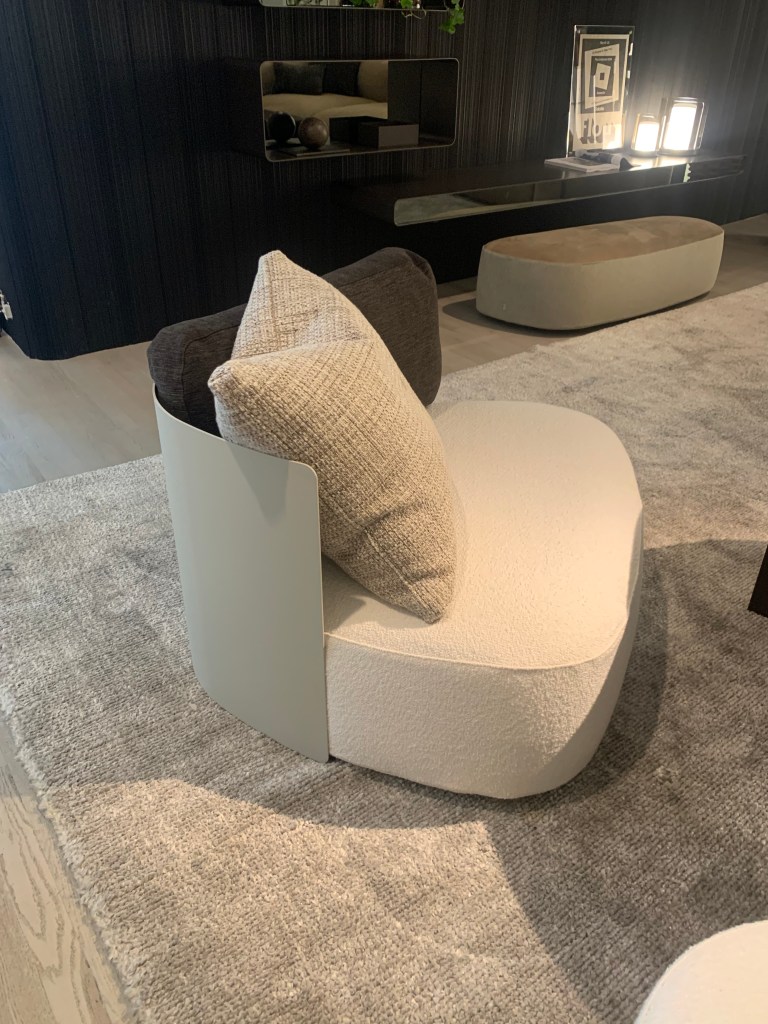
There were a handful of things to note in the Flou showroom this year. Metal-backed chairs really hardened the appearance of what could have been a “cozy” chair. I liked this combination. A huge pouf ottoman was a nice compliment. Also of note was the extra deep sofa seat. This feature can be found in many other brands, likely a result of demand from people who use the seating in a much more casual way than in the past. (feet up, curled up, snoozing, etc.) Even higher-end manufactures are serving a more casual need.
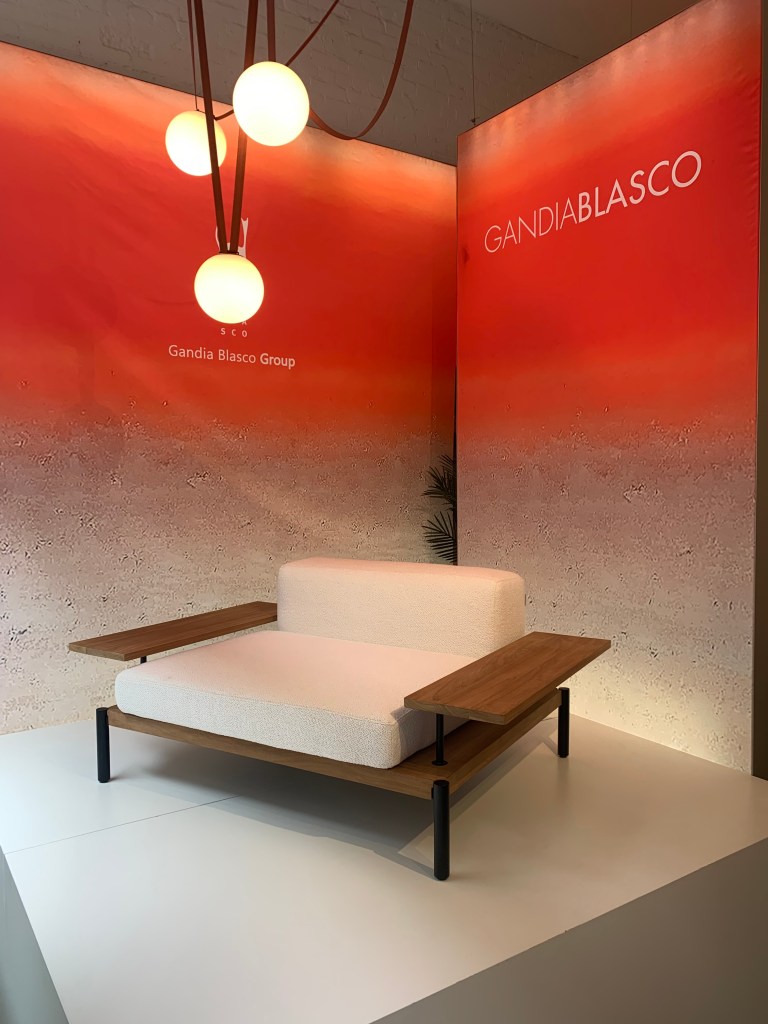
Take the wide arm of an Adirondack chair and plant them on a new lounge chair and you have the new Lademadera seat by Gandia Blasco. The deeper and wider seat is perfect for casual relaxation. It is also available as a sofa and two-person loveseat.
To accommodate people who both sit and stand at a desk, Beflo has developed a desk that easily transitions between the two demands. Couple that with an effective “wire management” system and this desk could become as hardworking as you!
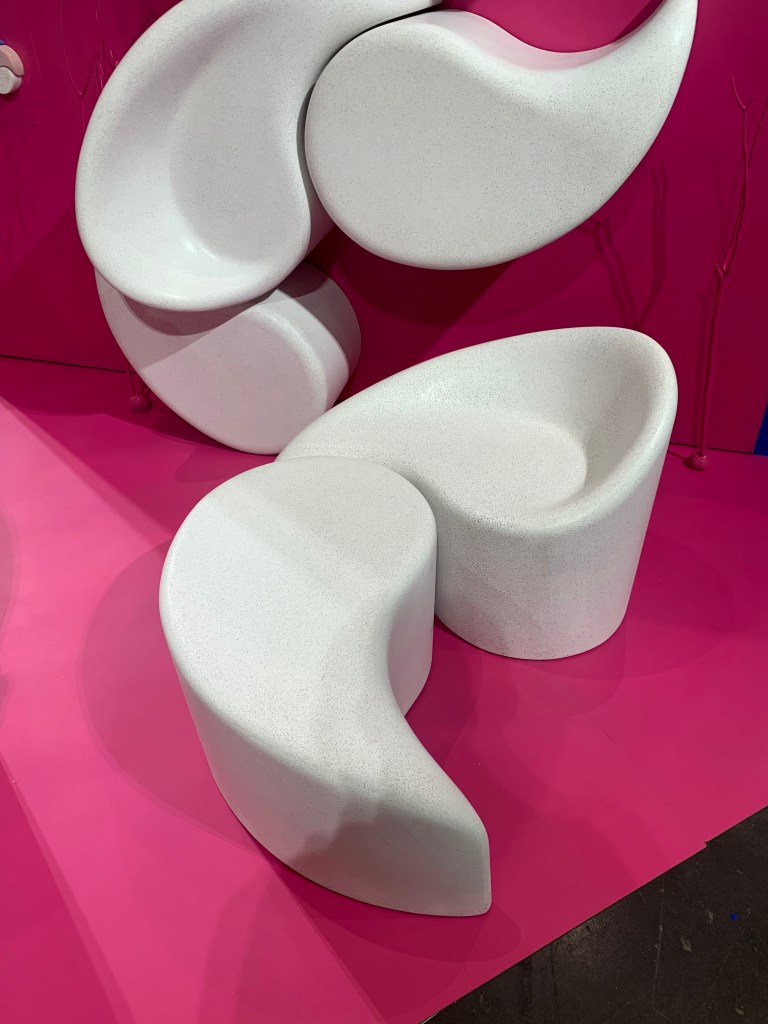
Hand cast in the US from thin wall resin, the Polli collection from Zachary A. Design has a real amorphous look that I felt could quickly adapt to outdoor environments. Luckily, the material can be used indoors and outdoors.
https://www.zacharyadesign.com/
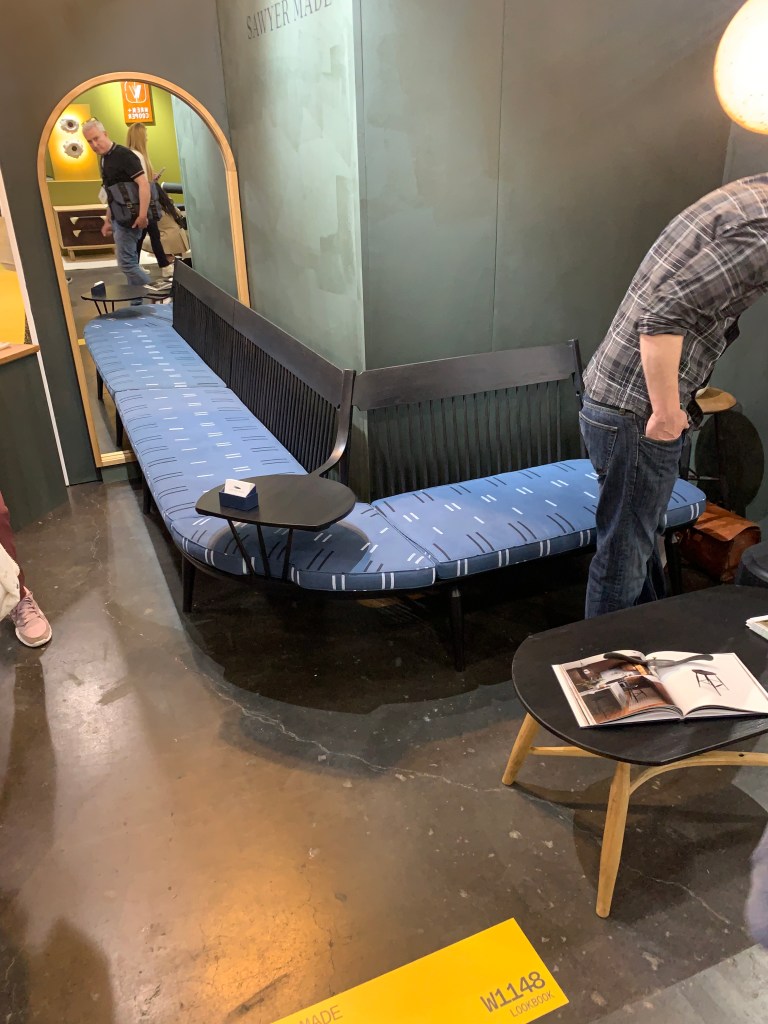
So much at the ICFF is contemporary. It is, after all, right there in the name! When I saw the work at Sawyer Made, the classic traditional shapes and forms were a bit startling. This is beautiful handcrafted work.
Miscellaneous “Others”
There are often items that defy category; where interest is not typically found. A few of those popped up and I could not help but notice.
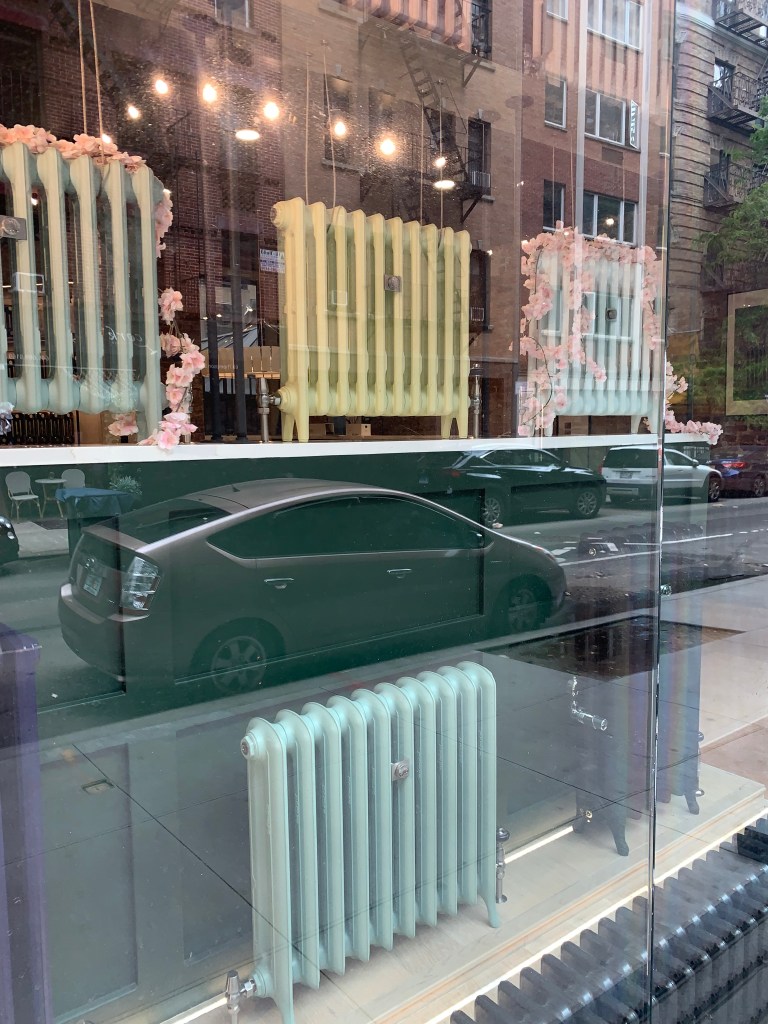
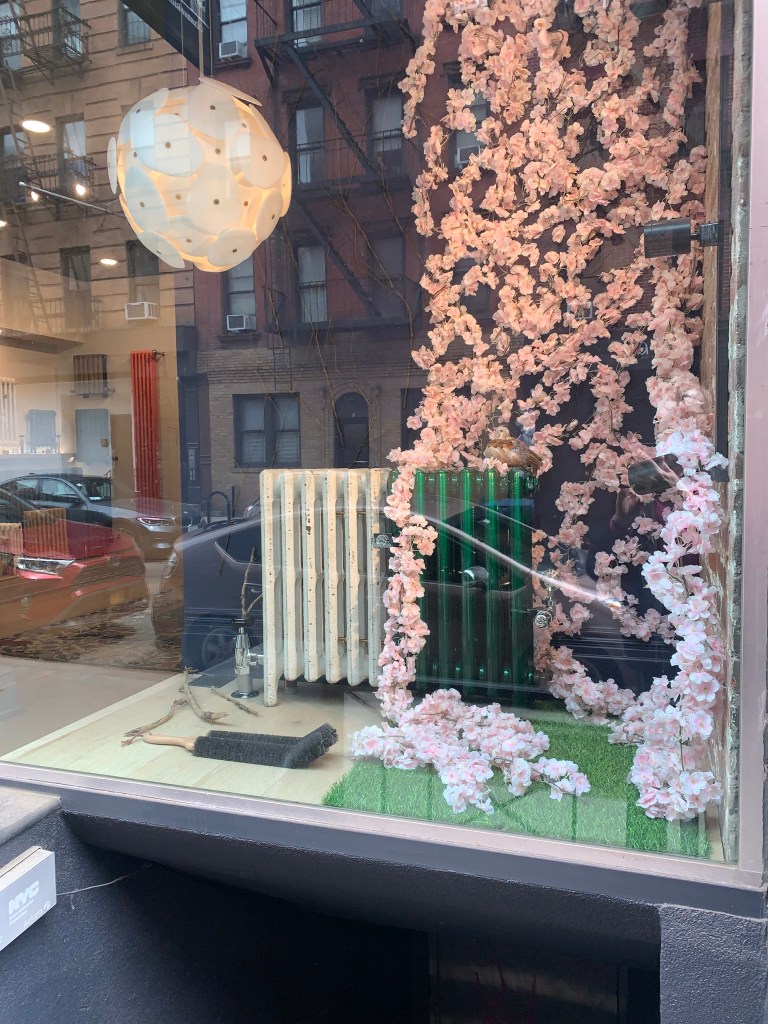
If you live in an older home (like me!) and have looked at beaten-up radiators you can imagine the excitement stumbling upon Castrads. They can either create bespoke replacements or refurbish your old, worm unit. Radiators are such a dominant piece of architecture in an older home and very few people know what to do with them, they just sort of “exist” in perpetuity, brown, decaying and hissing. What a refreshing difference new radiators can make to a space.
Equally ignored are fireplace grates. Most of us have probably never replaced one and fewer have thought about them overall. DFA Fire Chair has created a better grate that allows wood to burns better, prevents fire “spitting” and reduces smoke escaping into the living space. That it is a much sexier design is simply icing on the cake.

We might not think of storage as a place for clean and effective design, but Ylisse does. They have developed a collection of beautifully simple, clean storage accessories. Shelves, coat racks, magazine pockets and tables are solid and simple. Made in Canada, they are also well priced. Can we ask for more?
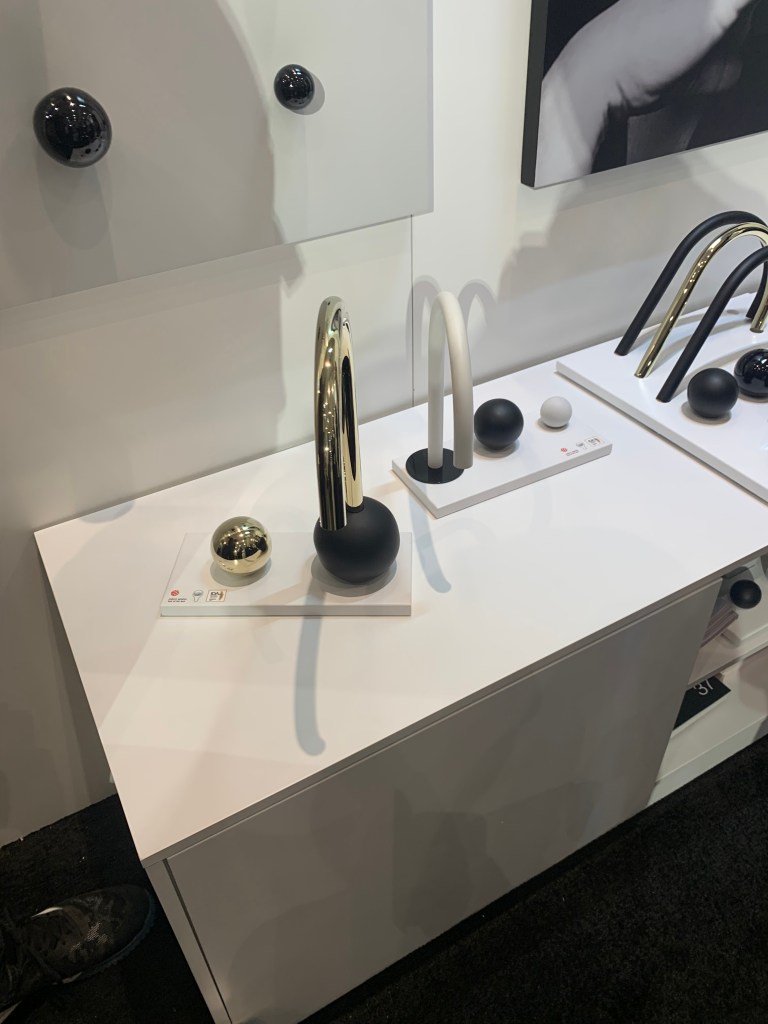
Perhaps the most exciting plumbing I saw this trip was from a Quebec based, family owned plumbing manufacturer, Baril. I’ve never heard of them, but found their new designs, which incorporated spheres into the faucets very creative and exciting.
I haven’t thought much about exterior hardscapes, but the products offered by Prism Hardscapes was interesting. Fire pits, planters and outdoor furniture had a nice clean look.

Prado wants technology to disappear into a home. “Invisible Home Technology” is their slogan. There when you need and invisible (or barely visible) when no longer required. They started with an award winning, round C/O and have moved into recessed lighting that is combined with ventilation. At this point, no information is available online for their lighting. Let’s watch this space. It could be exciting.
While at the hotel gym prior to the show, I noticed that the huge and heavy mirrors affixed to the gym wall were pulling away from their mountings. One of the three mirrors was akimbo, looking very precarious. I thought of this as I walked past Lite Mirror while a person was tossing about a VERY large mirror. To solve this problem of weight, they use a highly reflective optical film to create unbreakable, glassless mirrors. The available sizes are very large, so most applications can be filled. Good news for a particular hotel gym I use.
Reishi is a proprietary name for the mycelium based leather alternative developed by MycoWorks. They promise equal durability, performance and feel. I agree on the feel. If I didn’t know better, I’d have said it was fine calves leather. Of course, I can’t speak to the longevity, but over the years there have been many attempts to find a vegan replacement for leather. While I’m not a fabric expert, I’d say they are getting mighty close.
As you can see, there is much to gather from related industries. Lighting shares the home with all of these things. To understand them is to understand how they will comingle with illumination. We want the very apparent product, such as a chandelier and pendant to work together, but we also need to respect the room as functional lighting is positioned. Mutual respect will deliver excellent results for the overall design of a home.
 Lighting by Jeffrey