
While in New York two months ago, I had a few unused hours, so I took the opportunity to check out the Whitney Biennial. Over the years, I have walked a number of editions of this thought provoking show. Some were good, some a waste of time, but I was fully taken aback by this year’s offering. By definition, the show is designed to be a showcase of the most relevant art of the time. What we forget is that artists are trained to think differently, so while we are commiserating over the impending technological leaps, artists are exploring them and working out ways to employ them in their work. By using 3-D printing and AI technology, these creative people are blazing a path which the rest of us can use in our more pedestrian endeavors. Following are a few works that force me to consider how it might change non-art products.
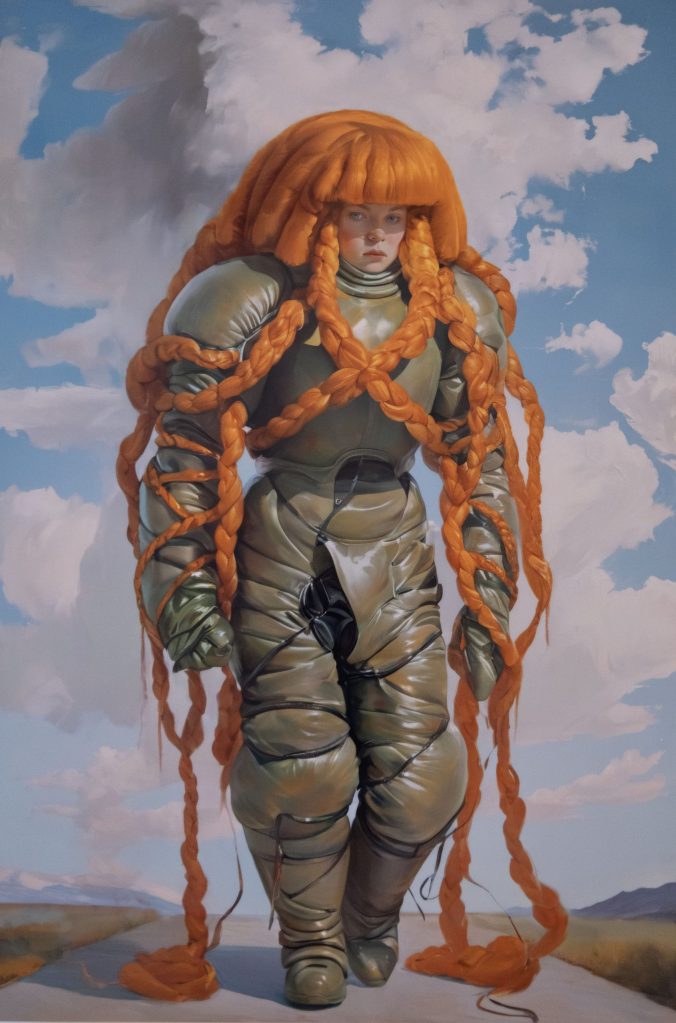
There have been countless editorials and a generous amount of handwringing over Artificial Intelligence (AI.) Accordingly, artists, writers, designers and composers will no longer be needed. All of their efforts can easily and cheaply be repeated as AI matures and naturally improves. Holly Herndon, a musician who has worked with AI in its most primitive form and continues to create inventive music supported by AI, understands the reality of the technology. Her preferred term is Collective Human Intelligence because AI is simply digesting all of the currently available data (created by humans) and reconfiguring it into new forms. For the Biennial, Herndon and her partner, Mat Dryhurst focus on this core data to essentially “game” the AI system to create false results. By infusing the systems with key data points of “female, red hair, white skin, blue eyes, straight bangs” to equal “Holly Herndon,” text-to-image” AI models of “Holly Herndon” have produced an odd collection of results that distort reality, essentially resulting in consistently “wrong” AI output. Basically, we are not forced to accept the intended reality of AI. Like all technology, it should support the human work, not supplant human ideas.
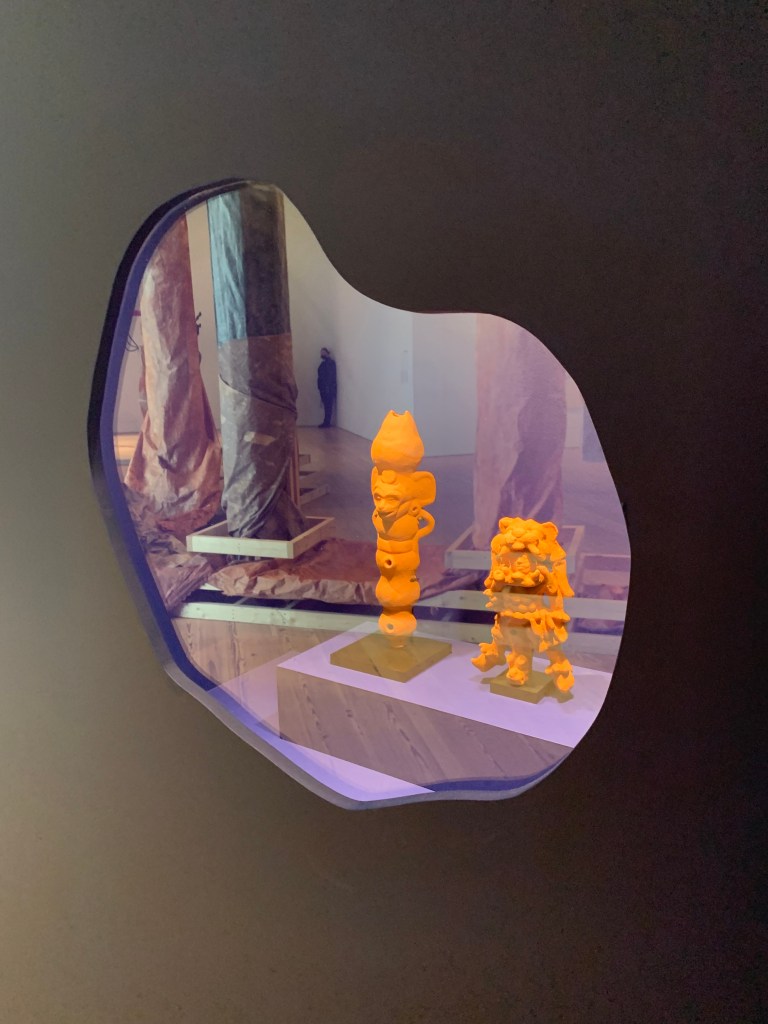
Who among us hasn’t looked in wonder at Pre-Columbian earthenware? Clarissa Tossin has recreated Pre-Columbian musical instruments using 3-D printing. She then had musicians play the instruments so that, for the first time, modern museumgoers could experience the sound in addition to the beauty of the ceramic pieces. Yes, today, these are precious pieces of art. When created, they were simply tools for making music. She is hoping to return these pieces to their proper functional perspective.
A piano is designed solely to convey sounds input by a musician. The combined human action and mechanical reaction of the instruments delivers music. What would happen if the musicality of the piano were extricated? There are still piano keys being pushed and piano hammers striking and those action do deliver visual movement and sound, just not music. Nikita Gale shared just that scenario in “Tempo Rubato.” In a quiet space a “player piano” keys and pedals moved, hammers struck and sound was heard, just not the sound you’d expect. Siting and listening for a couple of minutes was a delightfully contemplative time in a busy museum floor. Not music, but rhythmic sound and movement.

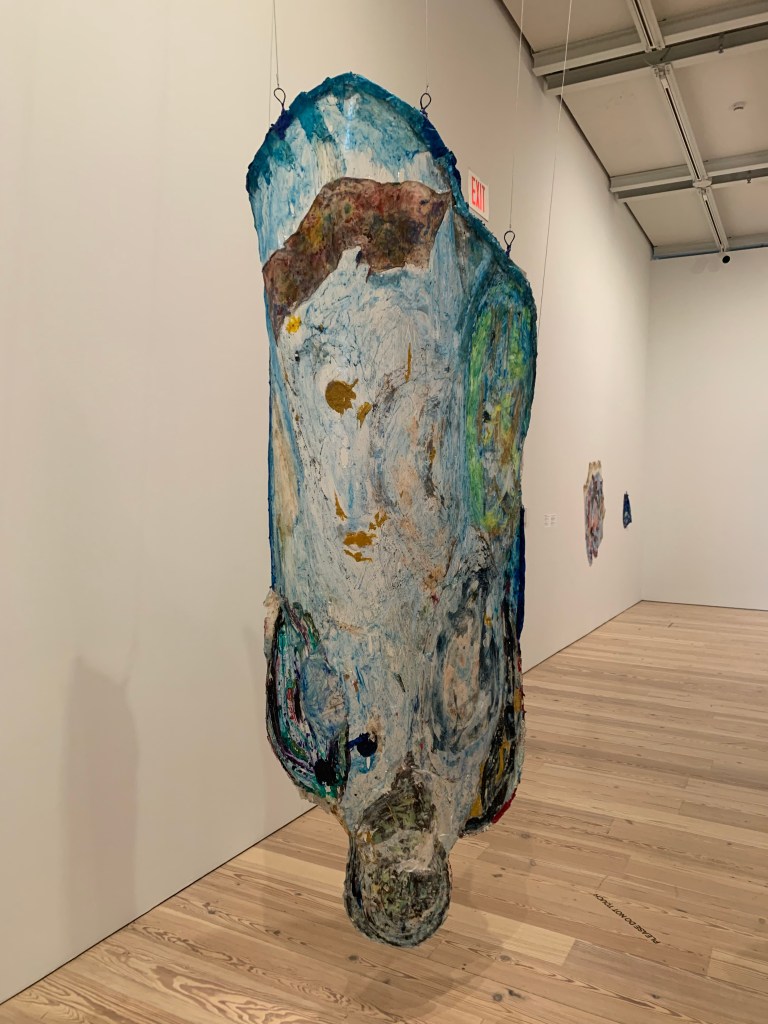
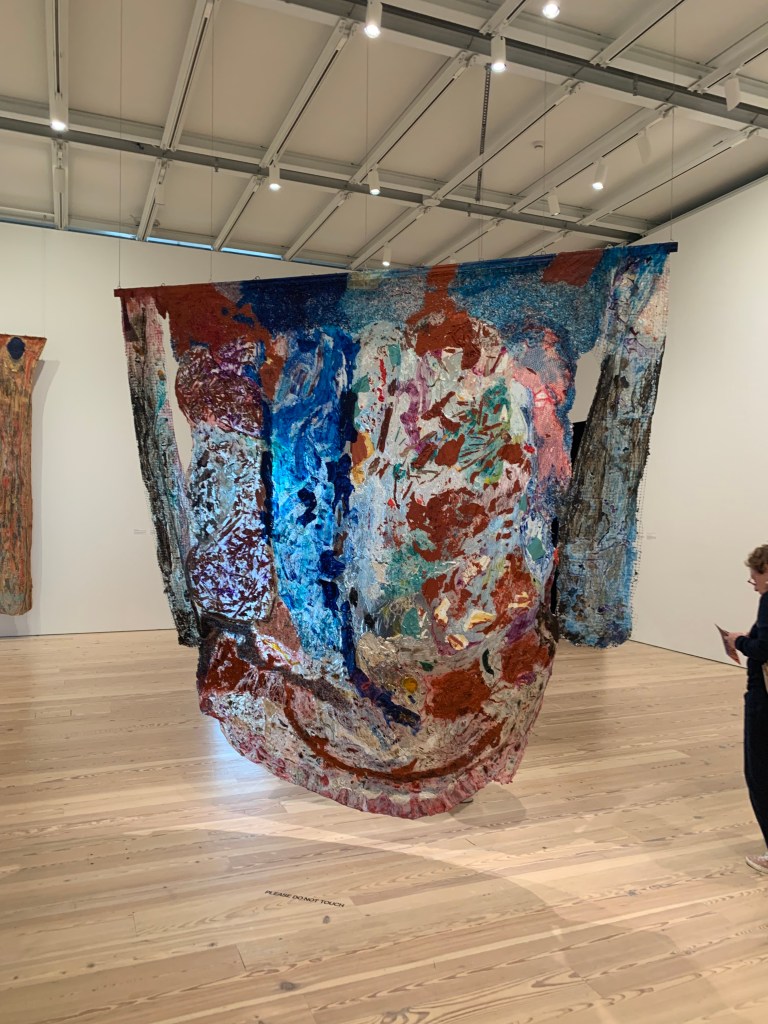
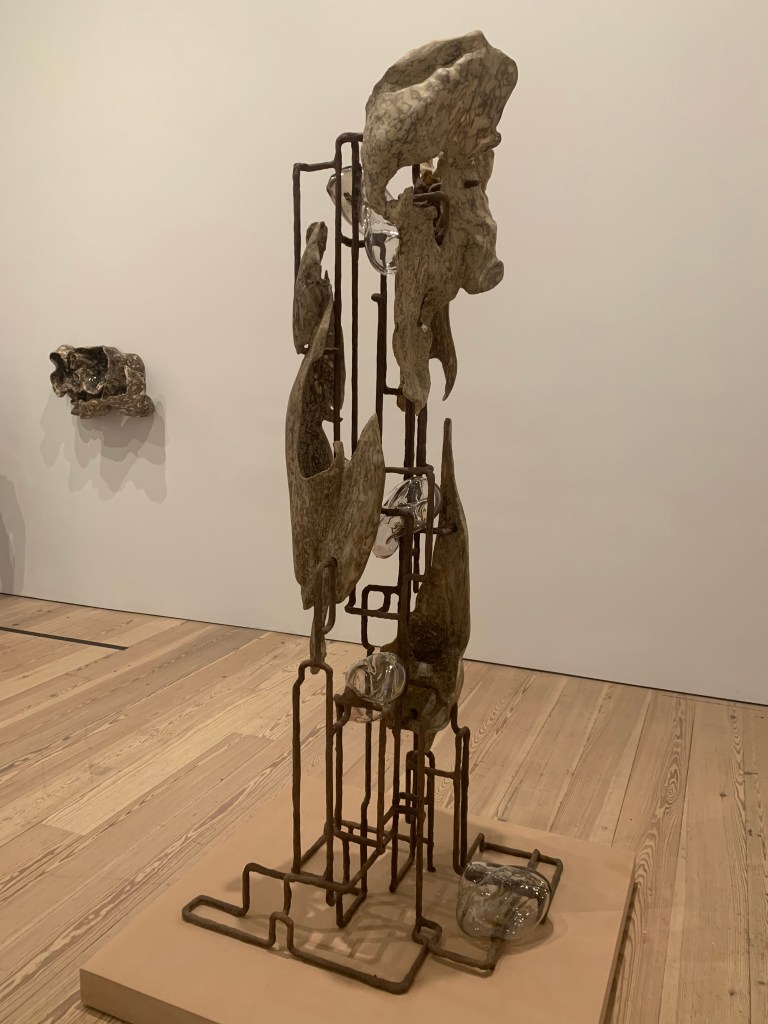
Can we imagine an artist making a painting without canvas? Suzanne Jackson uses acrylic paint as the medium to created suspended paintings. The acrylic and gel are mixed with natural objects to form translucent shields of amorphous forms and color. This is simply a different way to create a piece of art without the use of a predefined substructure.
Artist, Jes Fan used 3-D printed CAT scans of his body to create a series of sculptures. Because they are personal CAT scans, the work is very intimate, but the result has no visual reference to human form owning to his duplication and manipulation. Again, we have a tool, 3-D printing thought to produce a series of repeatable units, instead being used and configured into unique art.
Using video and five screens, Isaac Julien asks us to rethink the connection of Black Americans to African art and African-American cultural heritage. It forces the question why the art is honored within the halls of venerable institutions while the creators are/were often ignored or dismissed, especially during the era of thinker, Alain Locke, who is used as a voice here. This piece asks a lot of tough questions.
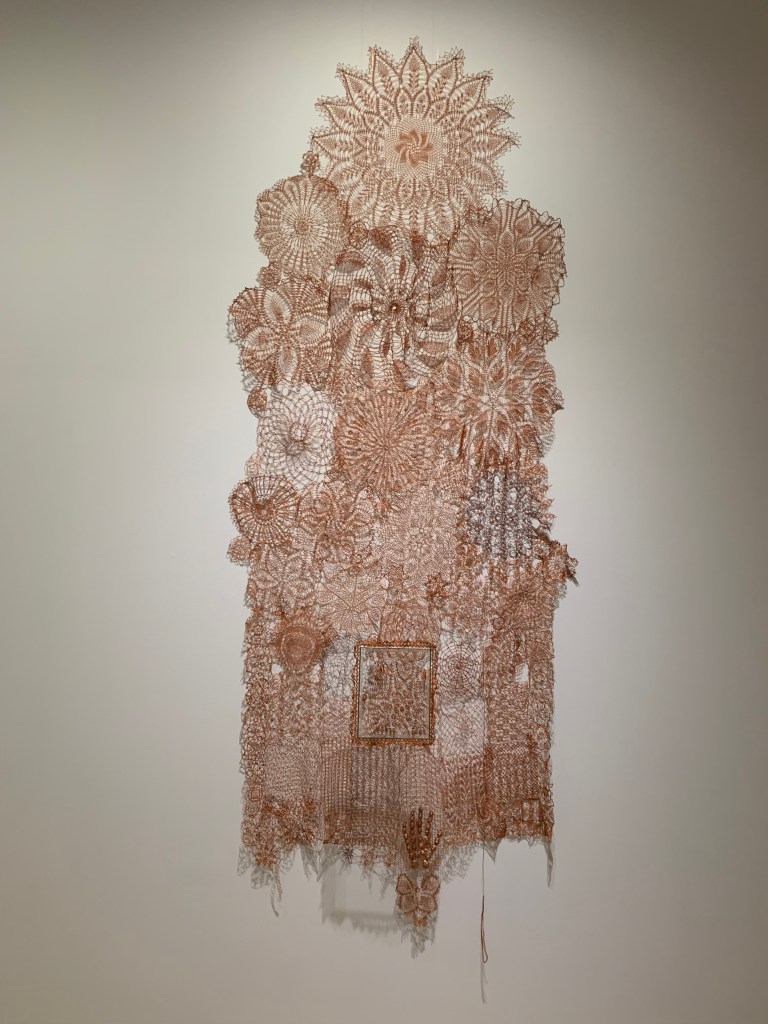
Some artists provide an inexplicable artist bio with a complicated raison d’être that belies their work. Even after reading it again, I don’t understand Ektor Garcia mission statement, (other than learning the crochet craft from family elders) but the work is detailed and remarkable fiber sculptures.
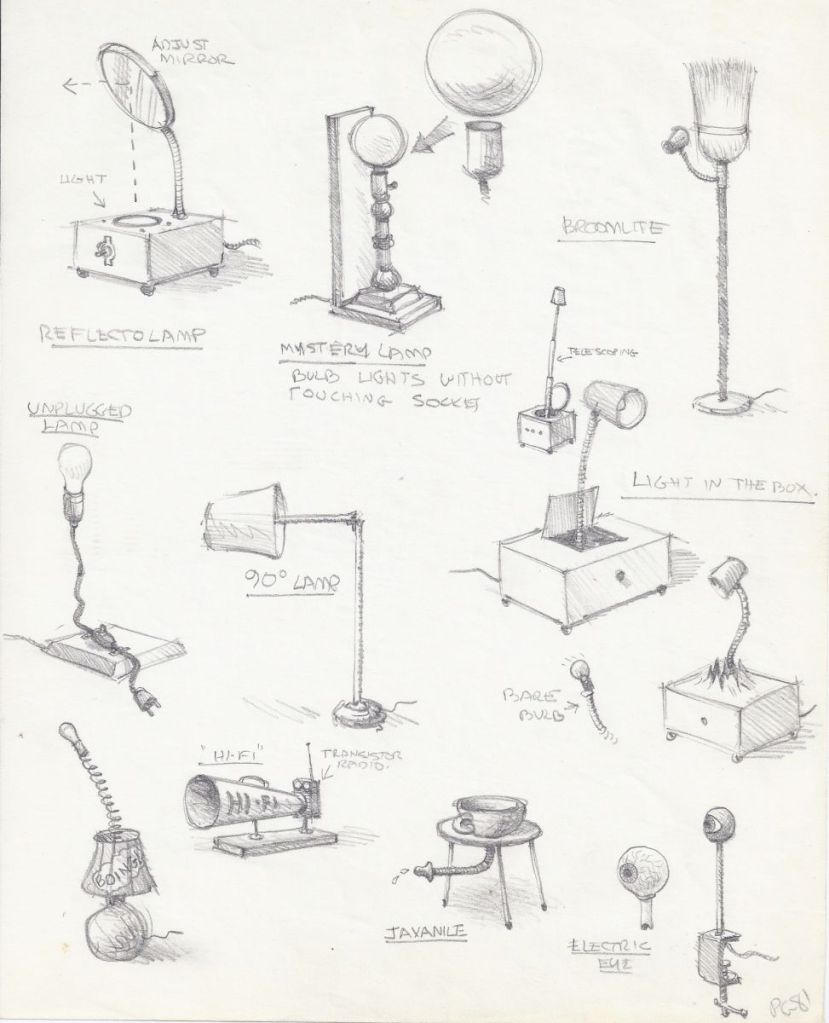
Just for pure fun, I want to live in the world of Pippa Garner. Her wall of inventive and wholly impractical consumer goods (called “Impossible Inventions”) should make any industrial designer smile. What is does do is remind us all that the creative process is filled with “bad ideas” and it takes a bunch of them to arrive at the one idea that is good.
So What Does All This Have to Do With Lighting?
More than once, I have heard designers express concern over the possible ramifications of AI. Manufacturers have grown concerned about where 3-D printing might leave them. As sustainability drives so much of the trend conversations, new materials are almost inevitable. These challenges are being met head-on by artists and the paths they are blazing should help everyone else. By viewing complex art accomplishments, we should feel more comfortable approaching these tasks for consumer goods. Change can be scary, but change is inevitable. The quicker we adopt new ideas, the more valuable we become as professionals. Artists can be the gatekeepers, ushers and guides that make our journey easier.
 Lighting by Jeffrey