
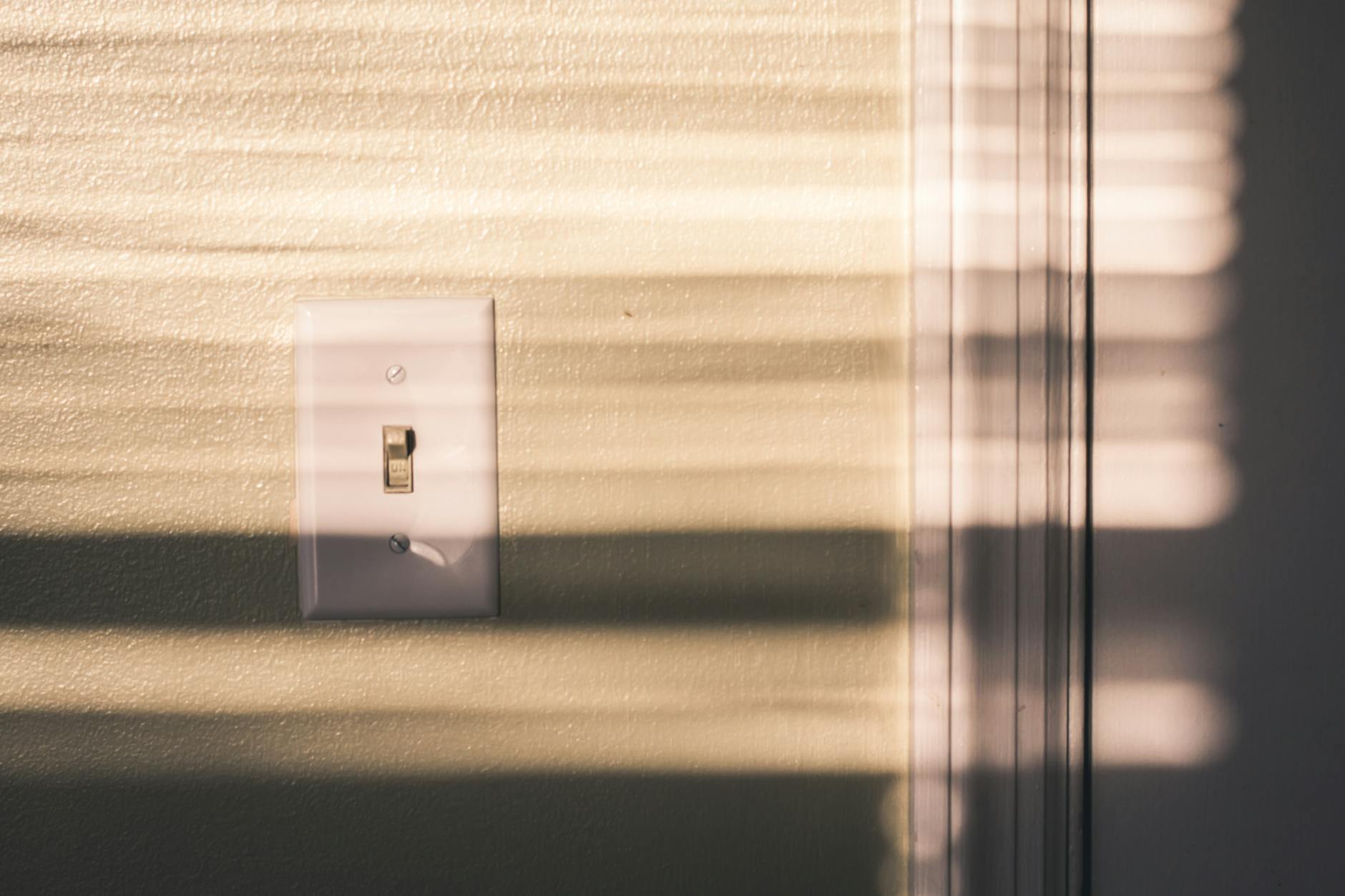
A friend sent me an article from the Wall Street Journal about confusing hotel light switches. (The Latest Traveler Kvetch: Hotel Lights Are Confusing by Dawn Glbertson 4-24-2024) A few sentences into the article and I knew exactly what the writer was discussing. I spent a fair amount of time traveling in China at the end of the 1990s and early 2000s. Hundreds of new hotels were being built to service the Americans who were arriving to facilitate Chinese production. Each new hotel came equipped with a newfangled feature, as yet unseen in the US. Keycard control of the suite’s AC and electricity, TV screens embed in the bathroom mirror and yes, a dashboard of light switches to control scores of luminaires were included. Each new hotel room meant an introductory ten to fifteen minutes spent trying to figure out how to shut off the alcove spot light and turn on the bathroom toekick lighting. It was always a joy walking into an old hotel with recognizable toggles. My daily tutorial could be avoided.
The article allowed me to reminisce about my days/weeks/months in China, but it also brought up the question I have asked before, multiple times, “Why do we even need light switches today?”
Whenever I ask this question, I am greeted with the same askew face and puzzled reaction. “Well, dumbbell, to turn the light in a room, on and off. Duh?”
Most people fail to get my point. We have an evolving tech industry that is intermingling with most building support equipment. They are allowing Alexa and Google Home voice-activated systems to control those products. Light bulbs are now offered that can be controlled by voice and a number of luminaires are on the market that include the same feature. What is missing is control of the “average” luminaire.
By average, I do not mean substandard, I just mean the chandelier in virtually every dining room in North America, the flush mounted piece in hallways and bedrooms and the lights at every bathroom mirror in every house. These products are not “Smart.” Because they are so “normal” most consumers do not expect them to be voice-control compliant. They expect control to be handled by a separate switch, as they have since Thomas Edison.
The easier control would be a “node” wired between the luminaire and the house wires. It could be included with the luminaire or sold separate. Its job would be to communicate with the voice system.
“But Why Bother, Jeff?”
The WSJ article explains that many hotels do not always use a panel of controls because older hospitality rehabs would require too extensive a teardown to run wires from control panel to luminaire.
Think about the labor and cost required for a light switch. A switchbox must be assembled to a structural stud. Wire must be run from that box to the luminaire outlet box. If this is a three-way assembly, tracer wire must be run from switch number one to the second switch. More would be required if 4-way or 5-way configurations are planned. As the article intimated, lots of wires would need to converge at a bank of toggles, bedside.
A hole must be cut into the drywall to accommodate this box. When the walls are painted, trim painting around the box takes longer than simply rolling or spraying a flat, straight wall. The electrician must wire the control switch. A decorative plate must be screwed onto the switchbox. There are material costs, labor costs and time to facilitate lighting control. Multiply this by every room and the dollars add quickly. Frankly, I’m surprised production home builders haven’t pushed this in their constant effort to reduced costs. A home-wide voice system would be less expensive than the box, wire and switch material costs, plus the labor saved by electricians, drywall installers and painters (even further savings would be had if the wall were tiled or papered.)
So What is Stopping Jeffrey’s “Brave New World?”
Two major factors seem to be the stumbling block for a quicker adaptation of switch removal.
- Whenever I mention this to other lighting folks, I’m told the “node” exists, but I’ve not seen one, if it is, it is not widely distributed. Perhaps it is not small enough to fit in every luminaire canopy or outlet box. I’m waiting for the theoretical, “Apple iVoice” module to be mass-marketed. Then perhaps, we’ll start to cook.
- Including the voice-control with the luminaire might not yet be financially feasible, but manufacturers will need to watch and react quickly. Again, builders could drive this demand. There will be a tipping point, much like we experienced with LED, where the cost and availability of a connected luminaire will make far more sense than a luminaire and switch.
“But, But, What If…?”
Many people cannot envision a world where switches would disappear from their walls. Whenever I mention this, the “what-ifs” start pouring from people’s lips. “What if the internet goes down?” “What if the electric fails?” “What if the “node” dies?” and on and on.
Yes, things may happen. Everyone has a mobile phone, in some cases it is their ONLY phone. Sometimes the supporting cellular network fails. How often? Rarely, but it happens. How often does your home internet fail? Occasionally. That has not stopped most people from using home computers and even transitioning to “work from home” employment, totally reliant on technology at a much more substantive level than a light switch. There are countless other examples where we abandoned one old system and replaced it with a more technologically streamlined method. Who among us, of a certain age, did not initially serve as our parent’s personal television “remote control” before it was actually a stock feature of even the least expensive flat screen on the market. We only need to think in broader terms. How many people still have a telephone hanging from the wall in their kitchen? Fewer and fewer.
Challenges
Perhaps the biggest challenge with greater voice activation is naming. When we had a single luminaire in each room, the voice control naming would have been easy. “Turn on bedroom light.” “Turn on bathroom light.” With a wider variety of lighting options, more succinct naming will be required…and remembered. Expect to see hundreds of magazine and online articles with naming convention suggestions.
If we go back to the hotel analysis, hospitality suites might come equipped with a posted naming “cheat sheet” so each guest will understand the exact name for the lights under a vanity or the recessed can in the shower. Hospitality managers might also be well served in setting an assorted of typical scenes, such as “Nighttime” which might shut off all lights except the bathroom toekick lighting. As users, we will grow accustomed to the new concept, just as we acclimated to automobile seat belt warnings and legally turning right at an intersection, when the traffic light is red.
Sure, many will simply want to avoid all of this. That’s ok, it doesn’t make them Narendra Modi voters. Like the old electricians who didn’t want to bother with LED, they will disappear and be replaced with a larger population who currently interact with their automobile and most customer service bots via voice commands. Illuminating a room can be as easy as saying, “Dining room chandelier, on!”
 Lighting by Jeffrey