Categories
Lighting Commentary

Peak China

Photo by u9f94 u6708u5f37 on Pexels.com

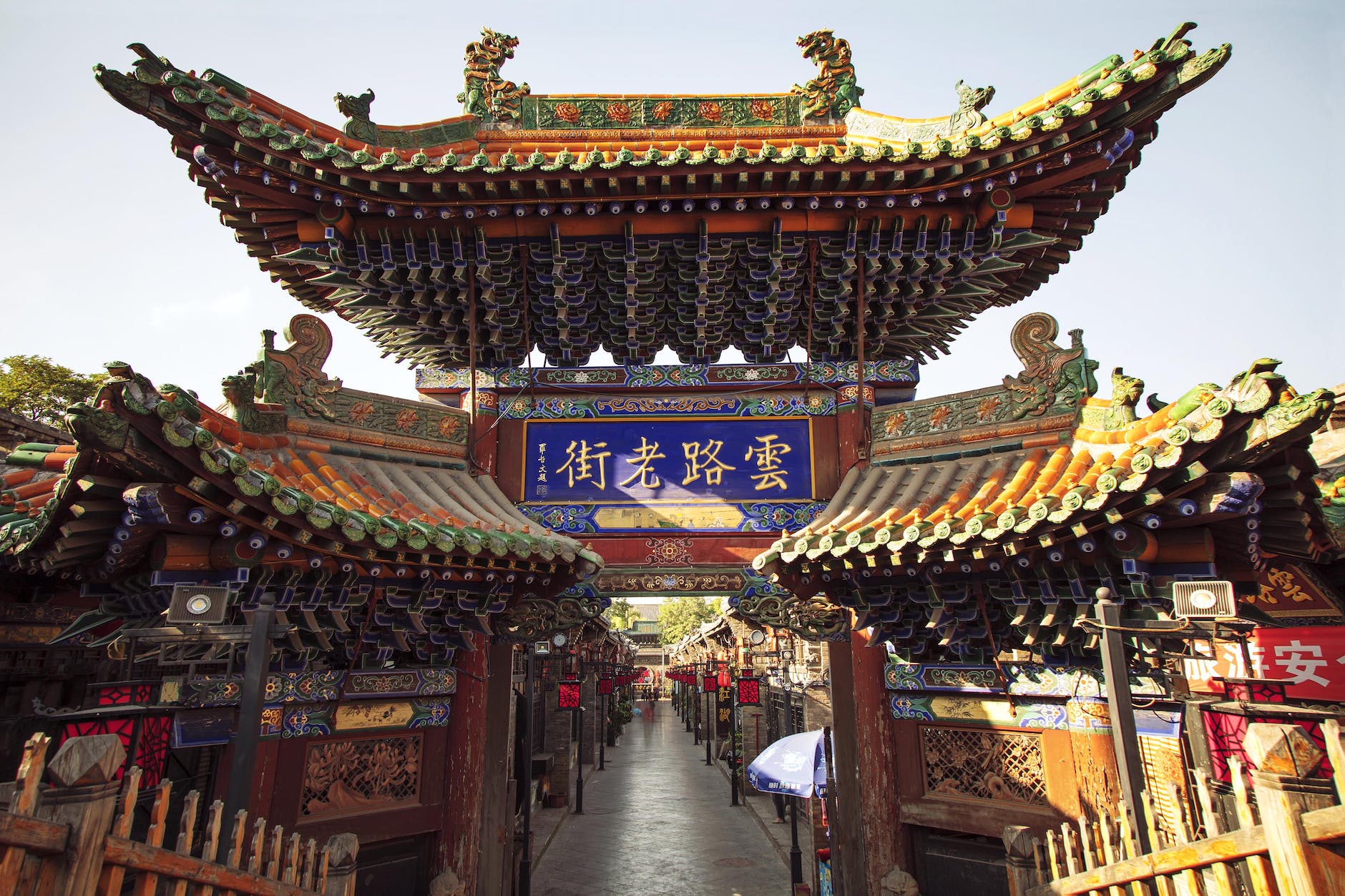
I spent a considerable amount of time in China between 1995 and 2006. During that time I enjoyed friendships with a fairly large group of Chinese citizens, one gentleman in particular. During the Cultural Revolution his parents, both “Country Doctors” (his term) were victimized as intellectuals and he was subjected to levels of degradation that would belie his genial nature. (His story was not unique. Almost everyone of the same age had similar stories about that time period.)

After a day of LONG hours working to insure the product that reached the United States was in excellent shape, we talked about many things over dinner, personal, political and professional. These conversations were among the most rewarding in my life. I remember him telling me of the importance of Deng Xioping, former Chairman of the People’s Republic of China. Through his policies, Deng finally allowed my friend’s education to be of value and found to be unapologetically well-respected. His parents had suffered; he had suffered, but it would be a greater day for his son. Virtually every Chinese person I had the joy of knowing, expressed the optimism of the New Year greeting, “gong xi fa cai” or “great happiness and prosperity for the future.” A better life is around the corner.

It is an opinion now share by scores of people, that the current Chairman of China, Xi Jinping has effectively ended that optimism. I haven’t been to China in eighteen years, but the hope I encountered must be depleting. “Peak China” is over and Xi, like his communist partner Vladimir Putin of Russia, is attempting to reestablish an idyllic version of his country in a world that has experienced substantive change. In the process, he has alienated the bulk of the world and disenfranchised his own population.

The majority of lighting products and lighting components are made in China. Unfathomable just a decade ago, India is growing in importance to the lighting industry, almost exclusively at the expense of China. The importance of China to the lighting industry is shrinking each week. I suspect people in many other industry are saying something similar. That is going to have an impact on every Chinese citizen, including my old group of friends.

This is unfortunate. The move to Chinese manufacturing elevated lighting to new aesthetic, technological and mechanical heights. Advances were quickly made possible and fashion trends could be rapidly answered. Hundreds of talented young people were brought into companies across the country to learn from older industry experts and lend their skills in the English language to a parade of American, Australian and European customers. No doubt, much of that experience will now be employed servicing the growing domestic market, but “Peak China” has passed. Gone are the double-digit growth percentages and an era of mutual benefit. For their sake, I hope the new domestic market can support this mass of talent. I fear it cannot.

I’m glad I had an opportunity to learn from my involvement in this transformative era and hopefully, I left something in China with which they were able to grow their knowledge and businesses. It is unfortunate when politics and narrow minds ruin a good thing.

Categories
Lighting Commentary

The Complex Lighting Supply Chain

Photo by Luis Yanez on Pexels.com

Since moving into her first home, my niece has undertaken a beautiful renovation of her charming house. Upon her request, I suggested some appropriate lighting fixtures months ago and recommended a local supplier who could help her. (We’re in different states.)

Jump ahead nine months. She sent photos of her completed bathroom renovation, with a “thank-you” included. It took a few minutes to register the fact I had anything, albeit minor to do with this fresh new space. I completely forgot because, unfortunately, she was caught up in this crazy “supply chain” mess that has remained a news story for almost one year.

Shortly thereafter, the New York Times published an article, “4 Bed, 3 Bath, No Garage Door: The Unlikely Woes Holding Up Home Building,” https://www.nytimes.com/2022/02/15/upshot/homes-garage-door-shortage.html?referringSource=article  The article dug into the complicated reality of building a home in a global economy. While the story spotlighted garage doors, as I dug deeper I learned that lighting fixtures have an even more complex supply chain than the doors featured in the headline. They were in fact in first place! I guess, “4 Bed, 3 Bath, No Lighting” didn’t have the punch needed to grab readers!

Why Lighting?

Prior to retirement, I spent 35 of my 47 working years in the development of residential lighting fixtures. I had been responsible for the drawing, engineering and product management of hundreds (OK, I’m old, thousands!) of luminaires. While this supply chain information might come as a surprise to many, I’m not one of them. Over the years I spent weeks and months in factories all over Asia. When not in another country, each day, emails, faxes prior to that and telex message before that arrived on my desk, asking for answers to unexpected issues. Today it is supply chain, fifteen years ago it was plating in China. (At that time, due to newly installed EPA-like regulations.) Like Roseanne Roseannadanna used to say, “…If it’s not one thing, it’s another.”

Humans

If you have observed lighting for any period of time, you will likely note that there are tens of thousands of different designs in the market. With that massive quantity of products, it might not surprise you to know that many of the components have far less automation involved in the production than you might imagine. There is NO automation in the assembly of lighting. Each piece is hand-built. Sales quantities of even the best sellers do not warrant robotic or automated assembly. Because of this, lighting is desperately reliant on humans. When humans disappear from the equation there is slowdown.

While the numbers continue to mount, COVID has taken a massive toll on the human population. Laborers have been much more vulnerable to acquiring the disease and dying because of that contact. Add to that number, the amount of “baby-boomers” who decided, or were “invited” to retire early and you have a massive chunk of the functioning human supply chain simply out of the picture. These are numbers that cannot easily be rebuilt.

Chinese New Year

To most Americans, Chinese New Year (actually, the lunar new year) is a time to visit your favorite restaurant and perhaps watch a small dragon dance in their parking lot. For companies, it is a HUGE annual business interrupter. It is no exaggeration to state that the “entire” country shuts down, reconnects with family, relaxes and celebrates. If you have not seen the documentary film, “Last Train Home” you may not realize the magnitude of disruption the Lunar New Year has on factories. Somewhere between 10% and 25% of workers do not return to the company after the holiday. To prepare, American companies order and Chinese factories build extra inventory to cover a six to eight week interruption. When added to an already strained system, there is no other way to go, than down. Training a large, new quadrant of employees every spring, also slows the restart process.

Cheap, Please!

Americans, over the last twenty years have been on a toboggan ride to the bottom of price; the price on everything and anything. To provide customers the cheap they expect, manufacturers have had no choice but to run, pell-mell into Asia (next stop, Africa!) for inexpensive goods. What is the weak link in that shift? Everything must be boxed up and shipped, via container, in the hull of massive cargo ships. Ships have become the funnel, the weak link in the chain. Ships are also expensive and take long to build, so you just can’t go to “ocean-freighter.com” and order a new one. With a waning pandemic, a good economy and record-high employment, there is pent-up demand and plenty of money for everything. That “everything” must now pass through the funnel of a freight container.

USA Manufacturing

Making goods in America can surely help, IF customers will pay a bit more. When I started in the lighting world, around the time of the Coolidge administration, every lighting fixture was made in the US. Same with the components. Some glass was produced in Mexico. A lot of glass came from France, Spain and Greece, but the majority was manufactured in America. That was great until the largest manufacturer of US lighting glass experienced a devastating fire. The industry was decimated for almost two months. There wasn’t a container, or container of dollars that could help.

Et Al

Supply chain disruption can happen at any time and for a number of reasons. While I am intimately familiar with the problems of lighting, you can take the above factors, adjust and apply them to appliances, windows and garage doors to understand the reason why things are not now available when they are needed. Keep that in mind next time you watch the national news.