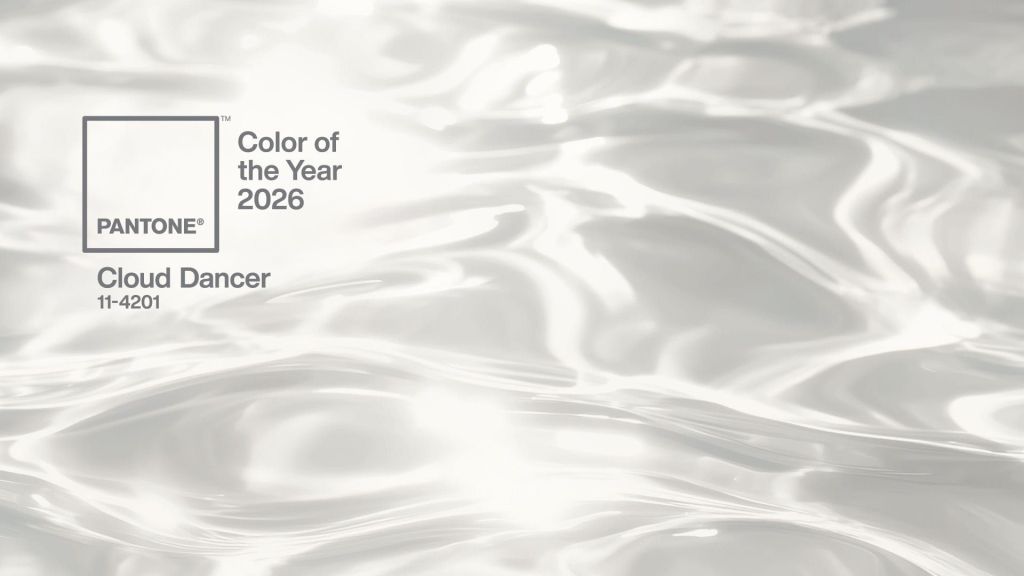
As usual, lots of comments have been tossed around this week concerning the Pantone choice of “Cloud Dancer” white as the color of the year. Much has been political. In a country where white supremacy is on the rise, DEI hiring is decreasing and disproportionate amounts of Black and Brown people are being targeted by immigration enforcement agencies, it might be easy to assume we are in for an elevation of all things white. Citizens can no longer drift from the centerline path. Keep your eyes pointed forward. Blasé white classicist design and architecture are now mandated by the president and the federal government. No bold hues will be accepted.
I’m looking instead at the tone of the white selected by Pantone. From my observation, this is a cooler, greyer white. Definitely NOT on the warm side. I’m reading this as a push against the “beige-ification” of style.
If you’ve read my previous post on BDNY 2026, and a few other this years, I have been sharing my observation that beige is EVERYWHERE. Pantone’s color for 2025 was Mocha Mousse, a warm and embracing brown that felt completely at home in the beige world we have. By all accounts, Mocha Mousse was well received and heavily adopted across industries. Both beige and mocha are also well suited for the shift to brass/gold we are seeing in lighting. Cloud Dancer white is Pantone’s antidote from such dominance. I don’t think they want to see beige, “everything, everywhere, all at once.” There should be more variety. Endorsing an alternative is a good way to stir up change.
Why can’t my idea be right? I just read a very thoughtful piece by three highly regarded critics of fashion and they could not agree on the reason or impact of a greyish-white tone of white being named the most important color for the coming year. Why not the opinion of an old lighting guy who has tracked trends for forty years? I could be right.
I continue to be fascinated by the connection of lighting and health. I remember attending a lecture on the topic about twenty years ago at LightFair and it opened up a wide avenue of thought. If you read these blog postings regularly, you know that the topic is a reoccurring feature. This one came to me totally out of the blue. Neither my wife, nor I contracted COVID. We remained stubbornly healthy, despite people all around us succumbing to the virus. For that reason, I haven’t really thought about it much. Nonetheless, for the handful of people who have “Long COVID” it does appear to be quite devastating. I can’t imagine the worst flu you’ve ever had hanging on for months. It seems unbearable.
When I read the medical study, “The possibility of circadian rhythm disruption in long COVID” I was intrigued, but not necessarily surprised. Since my first exposure to the power of the circadian cycle and all of the subsequent research, we are learning more and more about the healthy power of light. As research enlarges, we might just find out that the move from an agrarian society to a manufacturing economy, now to a service economy is having a substantial impact on our bodies. Because we are not outside enough and because the artificial light we use does not contain a full enough spectrum of light, our bodies are revolting in interesting and amazing ways.
Solutions are coming to the rescue and they do not involve each one of us becoming farmers again. (Thanks for that; my green thumb is actually gangrene.) At the recently concluded MWC Barcelona tech fair, a Dutch tech start-up introduced SunBooster, a computer mounted devise intent on delivering Near Infrared light (NIR.) (You may have read my very recent blog post on this topic https://lightingbyjeffrey.com/2025/03/17/light-and-health-and-infrared-light/ While working at your indoor job typically at the computer, the devise passively delivers the needed NIR light at a targeted wavelength of 850nm. Help, you didn’t even know you needed, delivered in a way you won’t notice.
Like the GUV equipment introduced mid-pandemic, expect more IR tools to appear as we unearth more knowledge about its impact. As I have mentioned many times prior, the facts may arrive slowly as scientists work carefully to determine the best way to solve the problem. As lighting professionals, we should keep our eye on the pulse of new developments, in service of the end consumer.
You had to have it. You finally bought that RGB lighting. Wow! Thousands of color options! In the first week, you bored your friends and family with all the variations. Then you realized that a purple dining room does nothing for the appeal of a roast chicken dinner. Berber carpet turns a horrible shade when lit with blue light. Flesh tones, no matter what the level of melanin, do not look good in red light. After the first week of playing with the RGB controller, you’ve permanently set it to “white light” and tossed it in the junk drawer.
Until now! We are approaching the holiday season and this is the time to finally use the RGB lights you so coveted. Set them for green and red, or blue and white. Go wild! Have fun! Those “ugly sweaters” will never look better. People and food won’t look any better, but at least they’ll have egg nog to blame. Just remember to reset them back to “white” for the remaining 50 weeks pf the year.
Here’s hoping you have a “colorful” RGB-filled holiday season! I’ll be back in 2025 with a whole new collection of topics. If there is lighting information that Santa has failed to help you with, drop me a line. It might be a subject that is confusing others, as well.
Fifty years ago last week, I was hired into my first job in lighting. I was studying Architectural Engineering and my part-time job was coming to an end. I worked as a drafter for a rubber machinery rehab company. (Sort of a used-car lot for rubber machinery.) They needed a full-time person and preferred someone with machine-engineering skills. Gear pitch and key dimensions were not my idea of a life’s work, so I was not too upset. The school readily accepted employment requests from the local business community, so I asked if there were any available options. I was told a local lighting company needed a part-time drafter. I had no more knowledge of lighting than any other nineteen-year old, but it was a job. I requested an interview, met with the General Manager, Department Manager and on a card table in the VP’s office, I filled out an employment test and some required paperwork. I was hired a week, or so later.
My first job was creating a library of every component part used in the factory. Every luminaire was made in-house from hundreds of components and only a few had engineering drawings. (I know. It was a different time.) With a warehouse filled with parts, employees were having a hard time disseminating one socket from another, one screw from the next and recalling a part-number for a less-than-popular lockwasher. I made scaled drawings and some full-sized drawings on 8 ½” x 11” sheets of every component category in the company. As the company grew, these books became indispensable tools for foreman, storage personnel and engineering.
I graduated, but architecture in Cleveland in the 1970s was challenging. There was little work and less construction. The lighting company asked if I would consider taking a full-time job. I accepted, figuring I could do this for a while, until a “real” job in architecture popped-up.
My second assignment, the first as a full-time employee, was the cleansing of each product’s Bill of Material. I pulled a unit out of stock, opened the carton, removed the parts, disassembled, reassembled and hung it to insure each component worked and was accounted for on the B/M. I then restructured the layout of the B/M to better service the costing, parts acquisition and inventory set-up for construction and assembly. In one year’s time, I had broken-down, build and hung hundreds of luminaires. I still can think of no better introduction to lighting, or if similarly structured, any other career.
While I still love architecture and always treat it as my, “what if” career, my life took multiple detours that filled the non-professional half of my vessel. I continued to act in local amateur stage productions, eventually directing. My friend and I wrote five theatrical plays, I learned to sculpt, paint, weld and blow glass. I traveled and ran for local political office. Underpinning all of this was a growing knowledge of lighting.
I began to write all new Bills of Material for the company, handled all of the “change requests,” wrote all of the catalog copy and dove into the layout and orchestrated order of each printed catalog. I spent so much time with printers, I devoted a year of evenings at a local community college to learning the fundamentals of Graphics Arts so I could intelligently communicate with these professionals. A Graphics pro was eventually hired. I was also the Quality Assurance person prior to a professional being hired and I troubleshot production issues before a manufacturing expert was brought onboard. I was becoming a pretty good “generalist.” A career I now know to be very valuable.
The company grew. I no longer actually made drawings; drafters with CAD skills were hired and I was the last person in the company to receive an “official” title beyond employee. I became the Engineering Supervisor. As production transitioned to Asia, I found ways to communicate with people speaking a different language by creating documents filled with sketches that indicated errors, suggestions and changes. Because they did not rely on the one or two people in the company who spoke English, they were widely welcomed. Eventually, I became the Engineering Manager.
When a computer was introduced into the company, (there were no computer when I was hired,) I oversaw the data input. As the Millennium approached, like so many other companies, a computer update was required and I worked on a core team to transition the company to a new ERP system.
As lighting became more complex and new light sources were just peaking their heads around the corner, I realized my mechanical engineering skills were not going to serve the company. It was time for a change. I took an assignment to live on and off in China for a year, the goal being to educate Chinese manufacturers and guide the company staff located in China. What did North American consumers want? What expectations did US consumers have? Incoming quality improved to 99% after my sojourn. I believe vendors and staff were better for the effort.
I eventually was moved to Product Management where, over my years in the department, I directed almost every sector of the company’s many lines. During oversight of the more complex items, LED became a factor and I realized that important product education was missing. I started to develop educational tools for the design-professional user community. That led to yet another career transition.
I was asked to abandon my Product Management responsibilities and concentrate on Education, but also, stay aware of related industry aesthetic trends, serve as corporate spokesperson and keep involved in the emerging “Energy Efficiency” community. That was my concentration until the “pandemic” interrupted the world and I was “invited” to retire.
I thought it a good time to exit. More plays needed to be written. I had arranged a comfortable post-work existence. A funny thing happened on the way to the retirement forum. (Musical theater reference intended!) Somewhat surprising to me, other people outside the company knew who I was and I was asked repeatedly if I could help them with a wide variety of problems.
Sharing information about lighting, using 50 years of experience has been a very rewarding way to slowly move away from full time employment. I am able to spend time writing a new play, but I am continually challenged to reflect on a variety of topics thanks to the large population of design practitioners who listen to my regular educational talks. I have volunteered my time with The Illuminating Engineering Society, restructuring industry “best practices” standards, I have also been asked to help in other facets of the industry and that has been very rewarding. Reports of my death were, apparently, greatly exaggerated.
When I muse about a total exit from lighting, my wife asked me what I would do to stay active. Sure, theater still serves as a siren, but is it enough? Right now, it looks like I will continue until I see my value reduced. I still find myself interested in the transition of an industry that, when I was first hired, had operated for over 100 years with nary a change. The last twenty years have admirably made up for lost time. I can’t wait to see what it will do in the next 25, at which time I will celebrate my diamond anniversary in lighting!
As I try to wrap my thoughts around all of the things I saw in New York and on the ICFF show floor, I wondered if there is a theme, a common thread that might tie new products to birth in 2024. I suspect that might be too easy. There are far too many creative ideas and this is a worldwide showcase. One thing did come up, time and again and it is a movement with which I have had some struggles. Sustainability is something we all know is needed. It is a direction we all know we must follow, but it runs counter to so much of what we do as creators of interesting, unique and personal interiors. I’ve asked this question before and will probably ask it again. “Can design, trends and sustainability coexist?” I’m no closer to an answer, but I have more fuel for the argument.
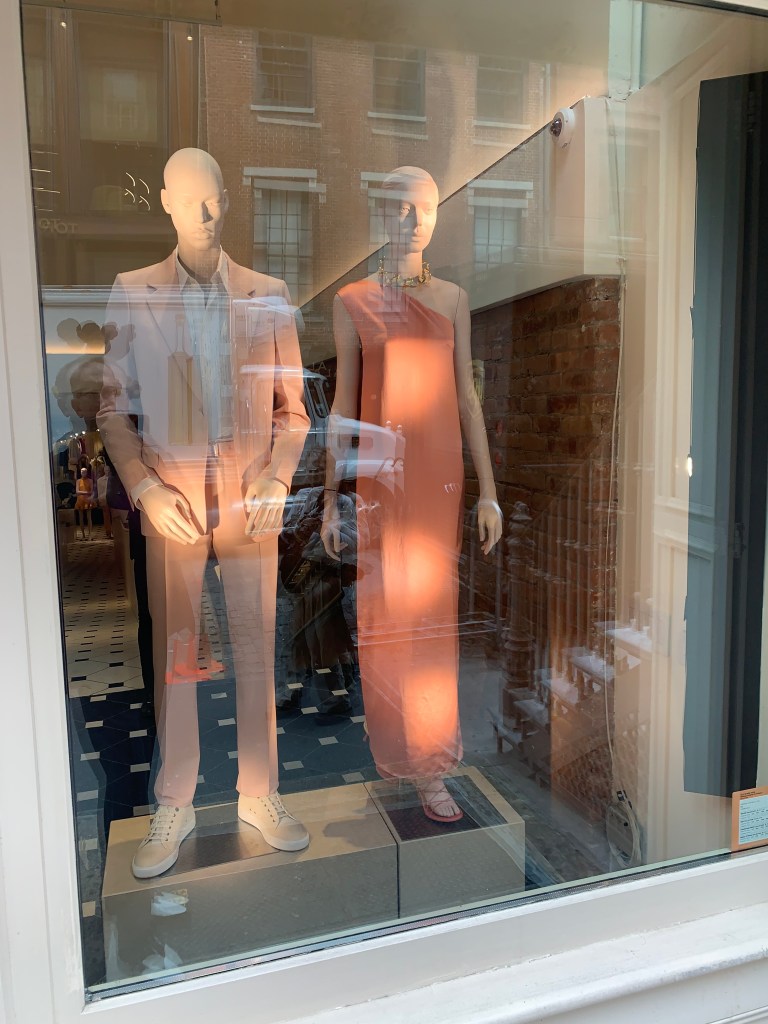
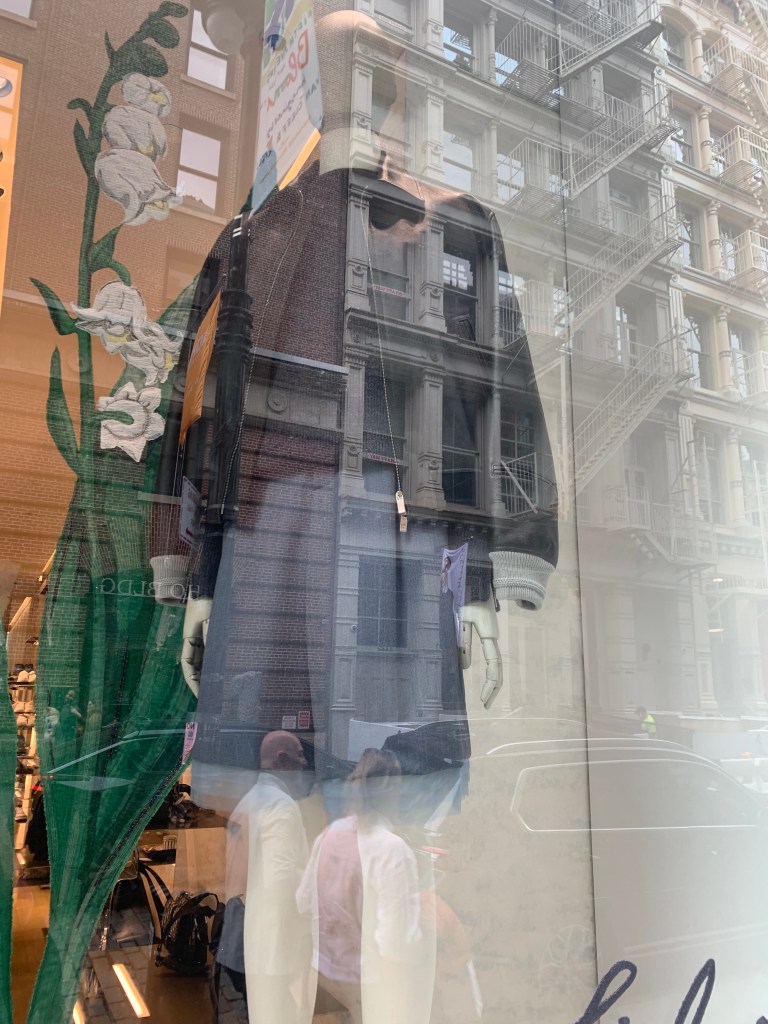
New York 2024 – Kirna Zabete window
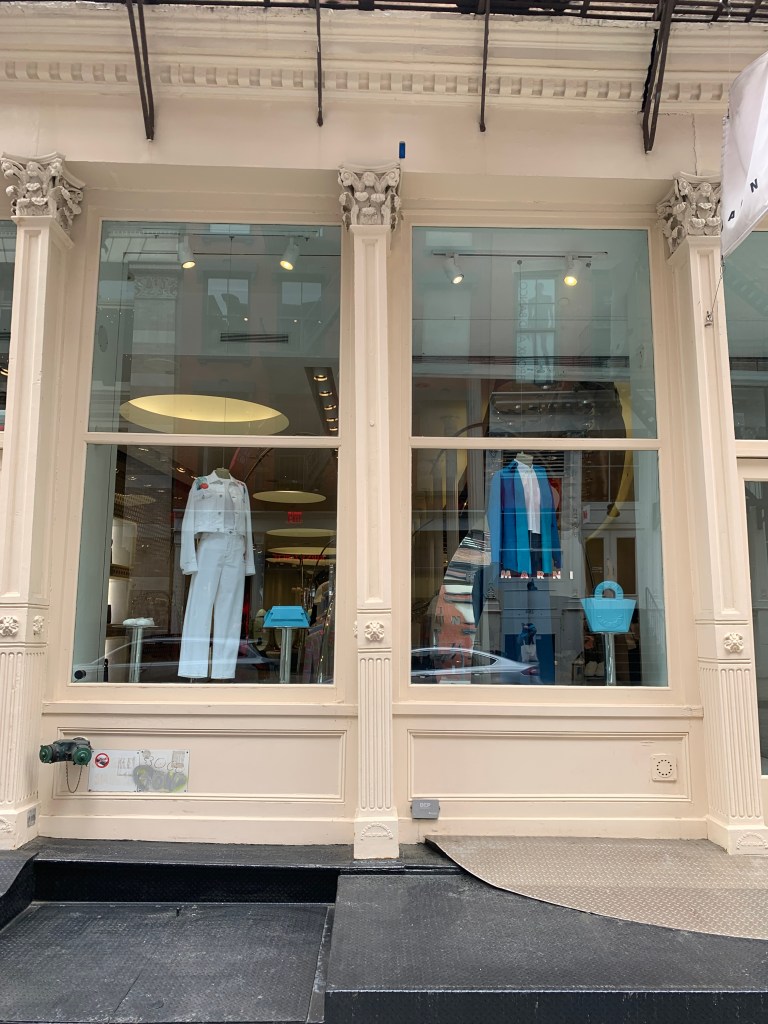
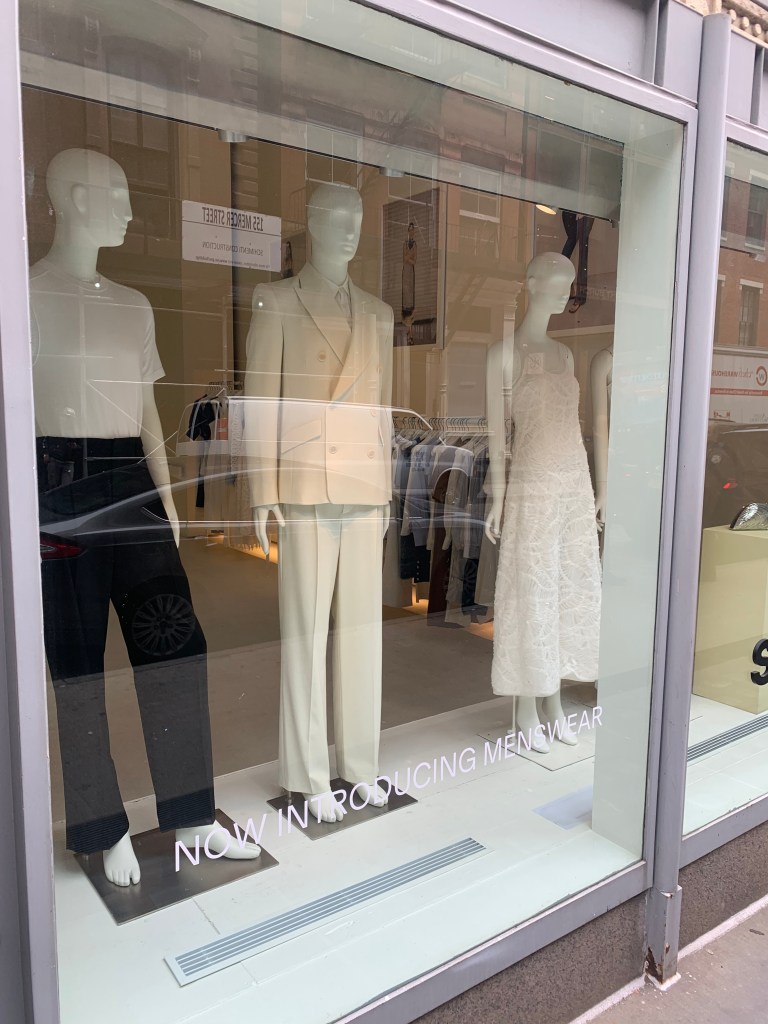
Upon seeing the showrooms, stores and galleries of SOHO, the dichotomy couldn’t be stronger. In one short section of a block, the fashion industry was having this same battle. The Kirna Zabete window featured bold, funky “Maxi” dresses that are sure to have a short shelf life, while across the street, the Marni storefront showed simple and clean blue and white suits, designs that could easily transition trends and time. Likewise, the Simkhai showroom next door and Lavin, two-doors down kept it simple and stately. A few more steps and the Mango showroom, a new fast-fashion brand who makes trendy product quickly and offered it for less money pulled us back to a typical merry-go-round of fashion retailer.
New York 2024 – Lanvin windowNew York 2024 – Marni windowNew York 2024 – Simkhai window
I think the fashion industry is wrestling with itself on this topic. For the average consumer who has moved into a type of American Mao Suit of jeans, sneakers and tees, the question is moot. They have already established a de facto sustainability. This further begs the question, “Can fashion survive?” North Americans are, however a much more quantitative based consumer than the rest of the world. Sure, we wear jeans 90% of the time, but we want a closet full of clothes to service the remaining 10%. That, I think is where we get into trouble balancing the need for sustainability. Other geographic areas of the world are emotionally better equipped to handle a smaller closet of well-built clothes. Citizens of the US and Canada, not so much.
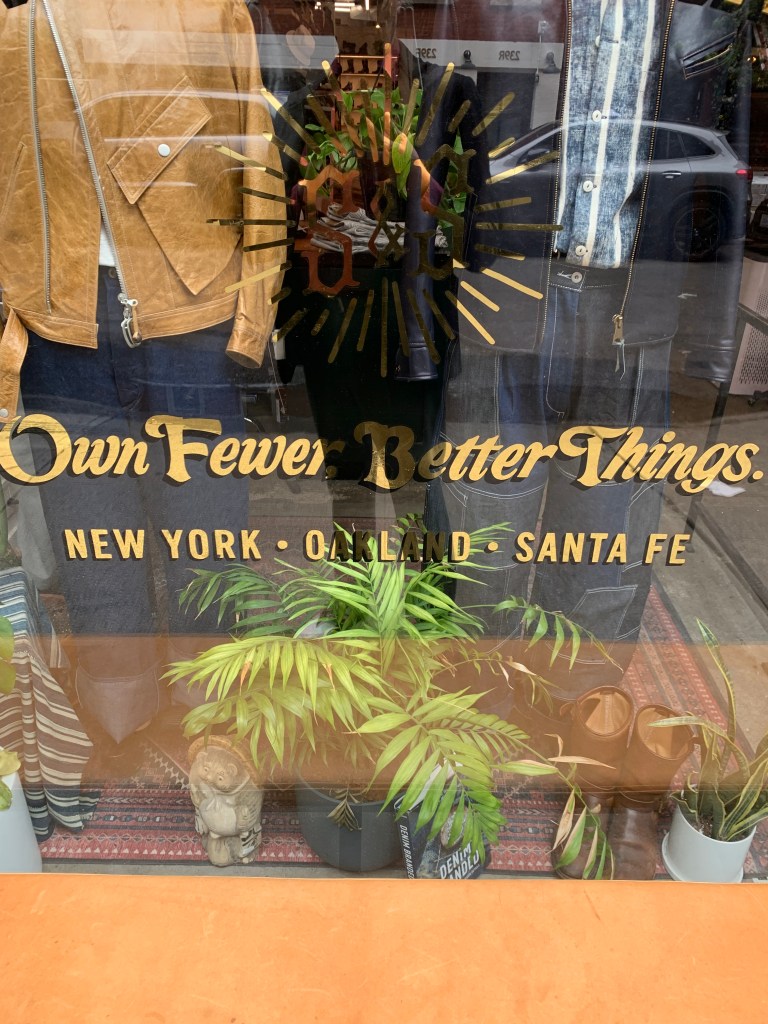
New York 2024 – Standard & Strange window
Retailers are trying. Yet a few more steps down the street is Standard & Strange with their moto. “Own Fewer, Better Things” emblazoned on the window. Will it work? I’m still not sure.
Fashion
New York 2024 – Fendi handbag
Despite being involved in residential consumer goods, we can learn a lot from trends in fashion. The sustainable battle is only one point on which we can draw inspiration. For example, I’m surprised the short handled trapezoid shaped purse hasn’t inspired some sort of home-related product. This shape is everywhere in woman’s apparel stores and fine leather establishments, but I don’t see the crossover. I’m not sure what I expected, but I had expected something.
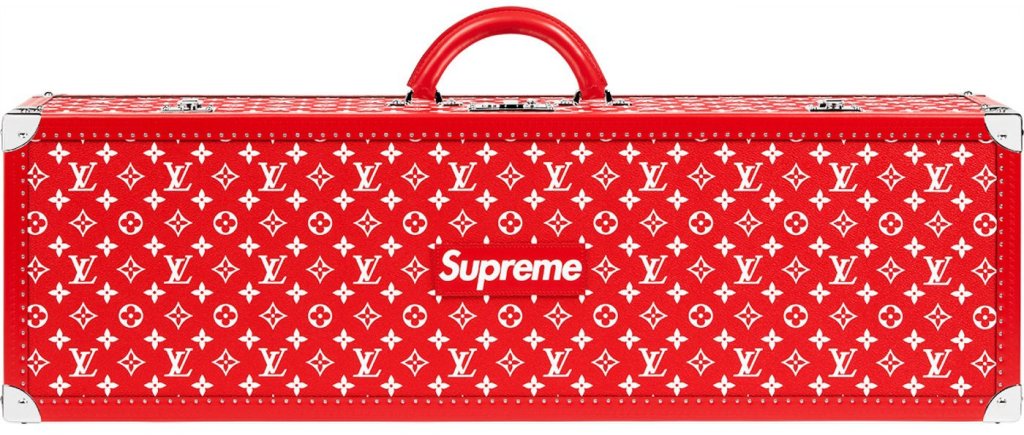
New York 2024 – Louis Vuitton / Supreme collaboration
The cobranding of Louis Vuitton and Supreme is an odd one, but it does speak to the need for old brands to stay relevant and new brands to gain some legacy in order to survive. It can benefit both if done well. The challenge will always be in the implementation.
New York 2024 – Dior Men’s window
Men’s pants are of course shifting from ultra-skinny to massive and floppy. Men’s short pants had been minimal for a few years and Dior wants that to continue to the obvious extreme as exemplified by their window display. Men’s shorts so full they appear as a skirt. Yet another step in the gender blurring of clothing.
Floor Covering
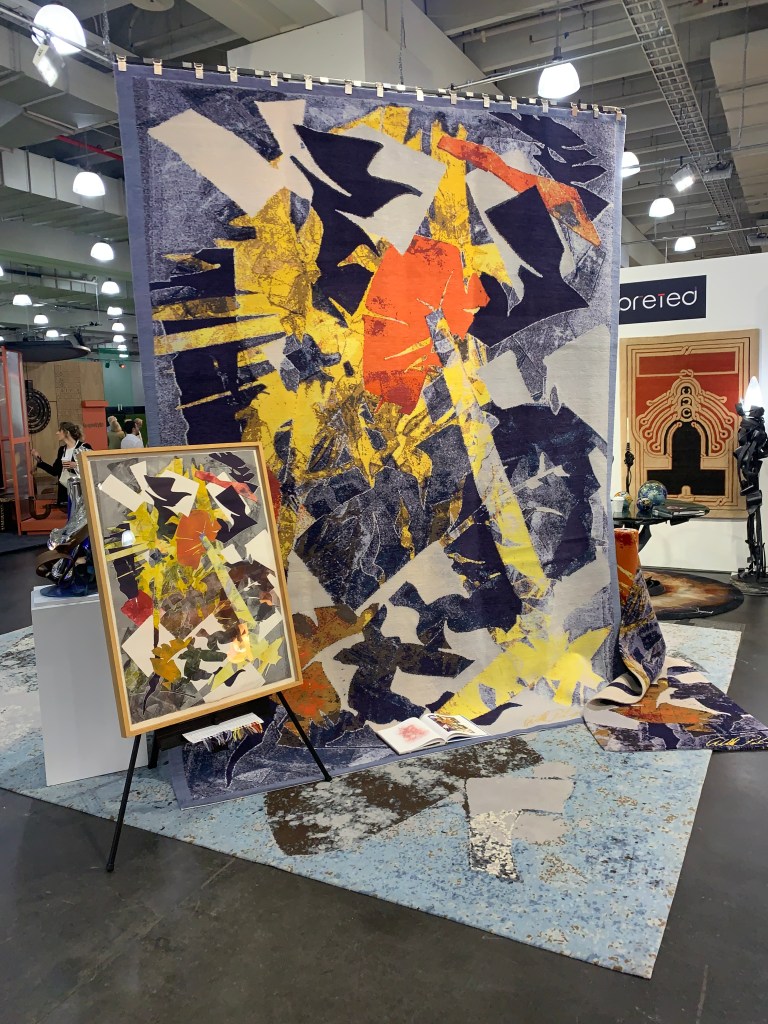
I enjoyed a number of conversations with the rug creators at ICFF this year. Why is a lighting guy looking at rugs? In each case, the people staffing the booths pointed out the importance of lighting to handmade rugs. One gentleman even mentioned he will not begin the weave of a custom piece until he understands the placement of light. Fiber has a nap that conversely reflects and absorbs light. If placed in one direction, the rug will look different than positioned in the opposite direction. We also discussed the difficulty with showroom lighting, to say nothing of the 5000K warehouse lighting on the Javits Center show floor. I left these conversations feeling much more positive than I had expected.
ICFF 2024 – Art Interpreted
Art Interpreted hires artists to create works, then recreates those pieces in fiber. The artist’s signature is prominent in the recreation. Illulian has hired famed Industrial Designer, Karim Rashid to develop designs. Using a different approach, Warp & Weft drew inspiration from organic elements such as birch and earth along with urban topographies simplified into unidimensional planes. JD Staron, a favorite from last year, took a more psychedelic, funky approach. This has to be some sort of renaissance period for rug manufacturers. They are creating interesting, fun and exciting designs that are allowing homes to really shine with the vibrancy they add.
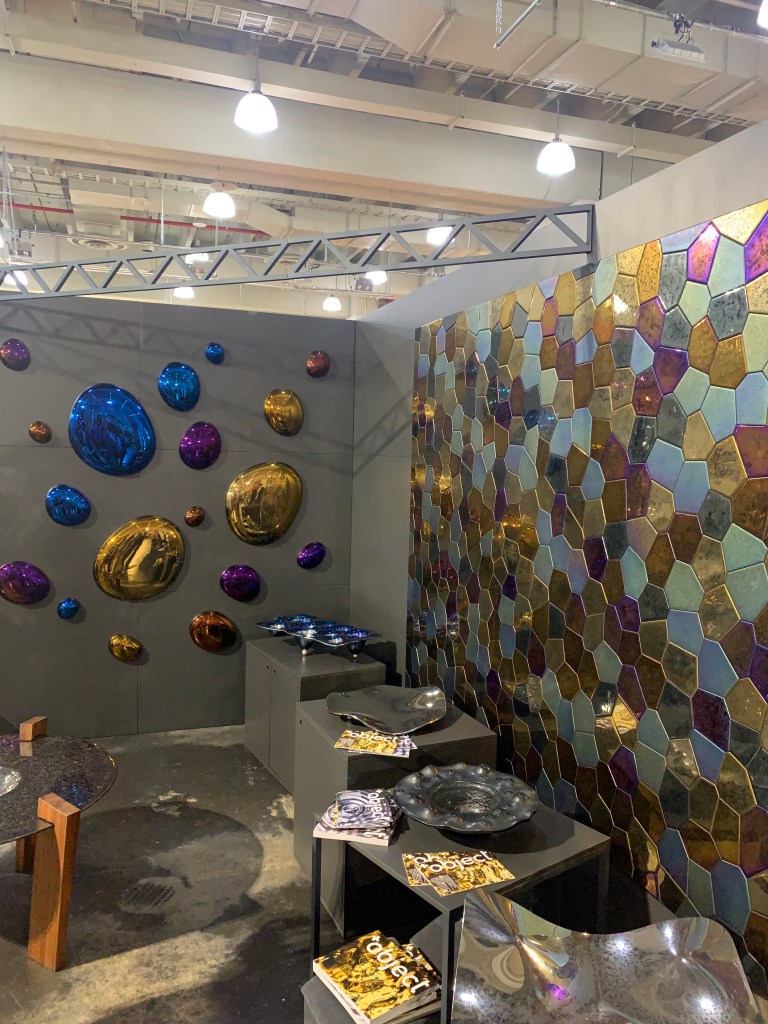
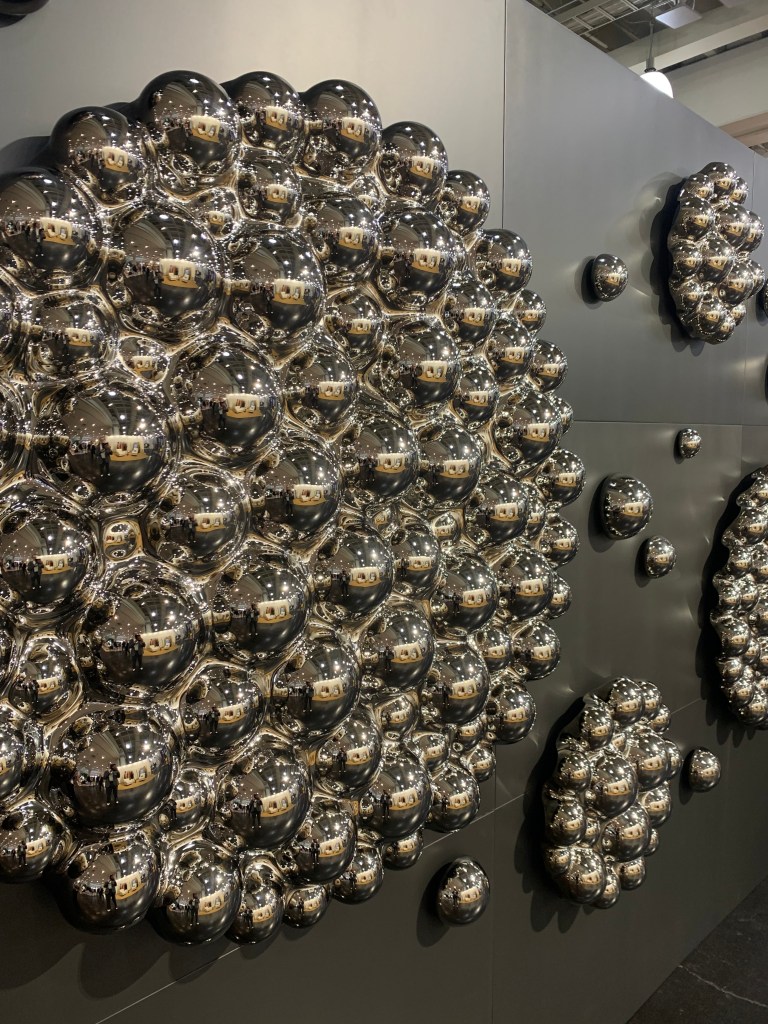
By combining glass and titanium, PlusObject has created some very interesting wall art/wall coverings. They are at once, polished and textural and can easily add a dynamic touch where one is not expected. There are so many ways these could be used. There are also so many other industries that could borrow this concept within their own product lines.
The overall design of a high-end kitchen is not experiencing much movement. A visit to Bulthup, Poggenpohl, Boffi and Scavolini this year could be easily swapped out for a visit in 2022. Kitchens are increasingly minimalist, with clean lines and tailored finishes. The rise of convection stovetops is further smoothing surfaces. With kitchens open to the whole home, they have adopted a higher level of aesthetics than these workplaces ever had in the past. Appliances are hidden, cooking tools are housed and dinnerware is barely tolerated. No wonder there is a rise of “back kitchens” or “dirty kitchens” in higher end homes. Despite the desire for the contrary, food preparations can sometimes make a mess. I wonder if the pendulum is at its turning point and we are about to see a shift. Stay tuned.
I continue to see increased use of glass countertops. A number of these showrooms and related spots include smoked glass, clear glass with etched underside and a number of other variants.
Furniture
New York 2024 – Flou showroom
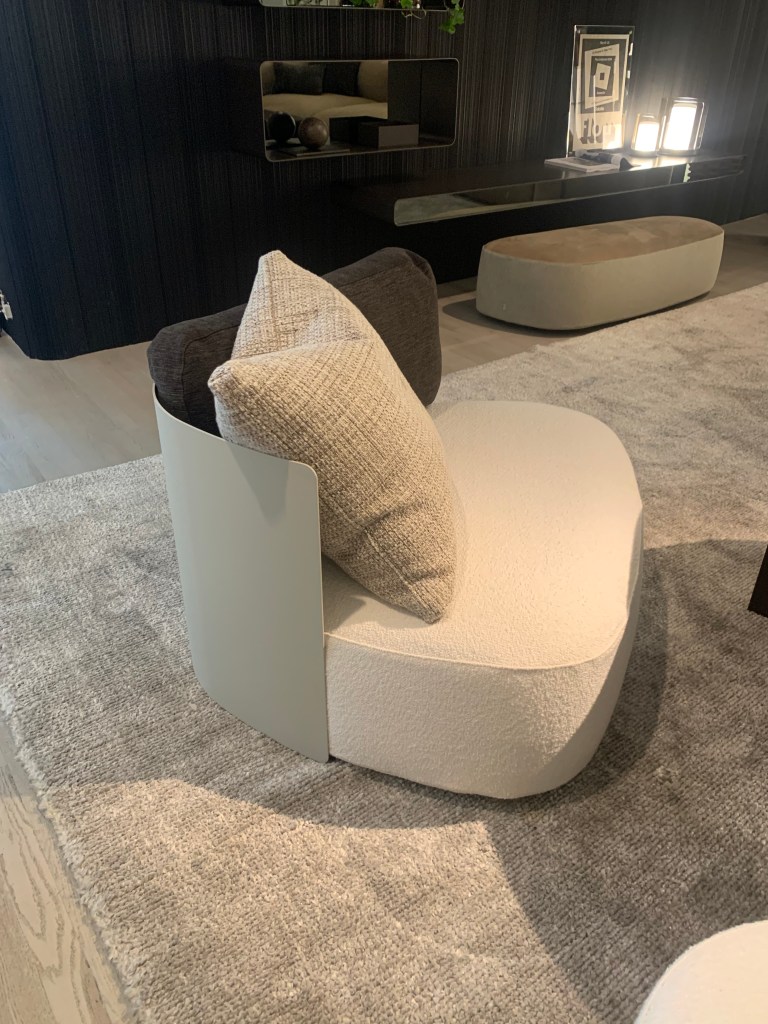
There were a handful of things to note in the Flou showroom this year. Metal-backed chairs really hardened the appearance of what could have been a “cozy” chair. I liked this combination. A huge pouf ottoman was a nice compliment. Also of note was the extra deep sofa seat. This feature can be found in many other brands, likely a result of demand from people who use the seating in a much more casual way than in the past. (feet up, curled up, snoozing, etc.) Even higher-end manufactures are serving a more casual need.
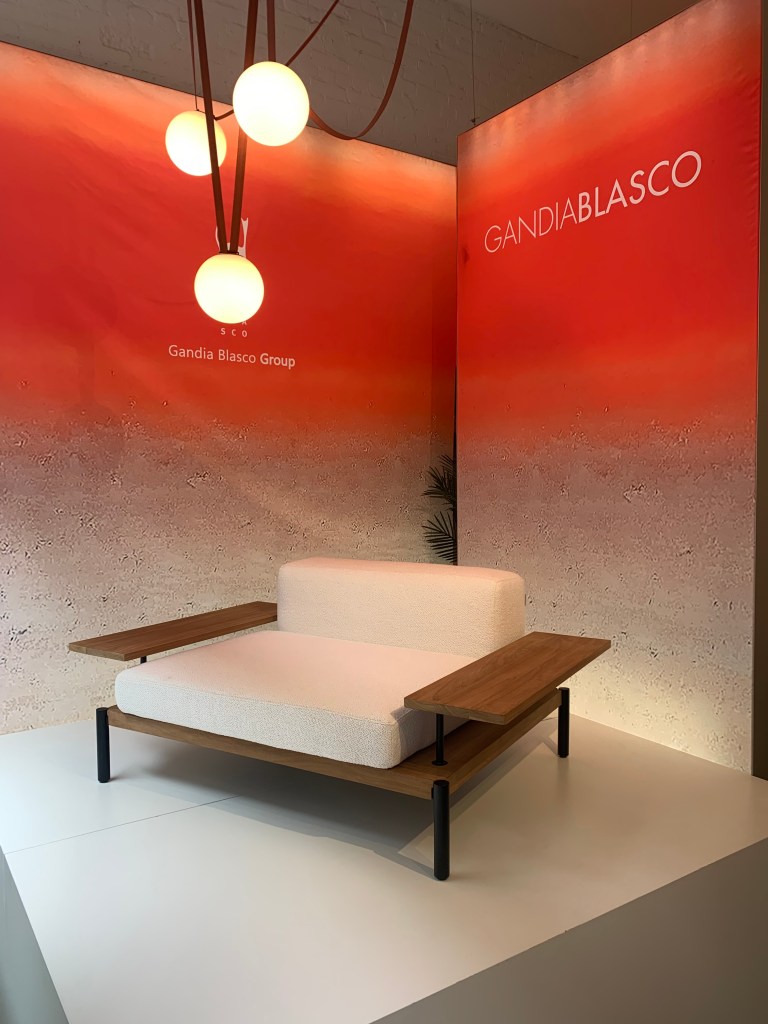
Take the wide arm of an Adirondack chair and plant them on a new lounge chair and you have the new Lademadera seat by Gandia Blasco. The deeper and wider seat is perfect for casual relaxation. It is also available as a sofa and two-person loveseat.
To accommodate people who both sit and stand at a desk, Beflo has developed a desk that easily transitions between the two demands. Couple that with an effective “wire management” system and this desk could become as hardworking as you!
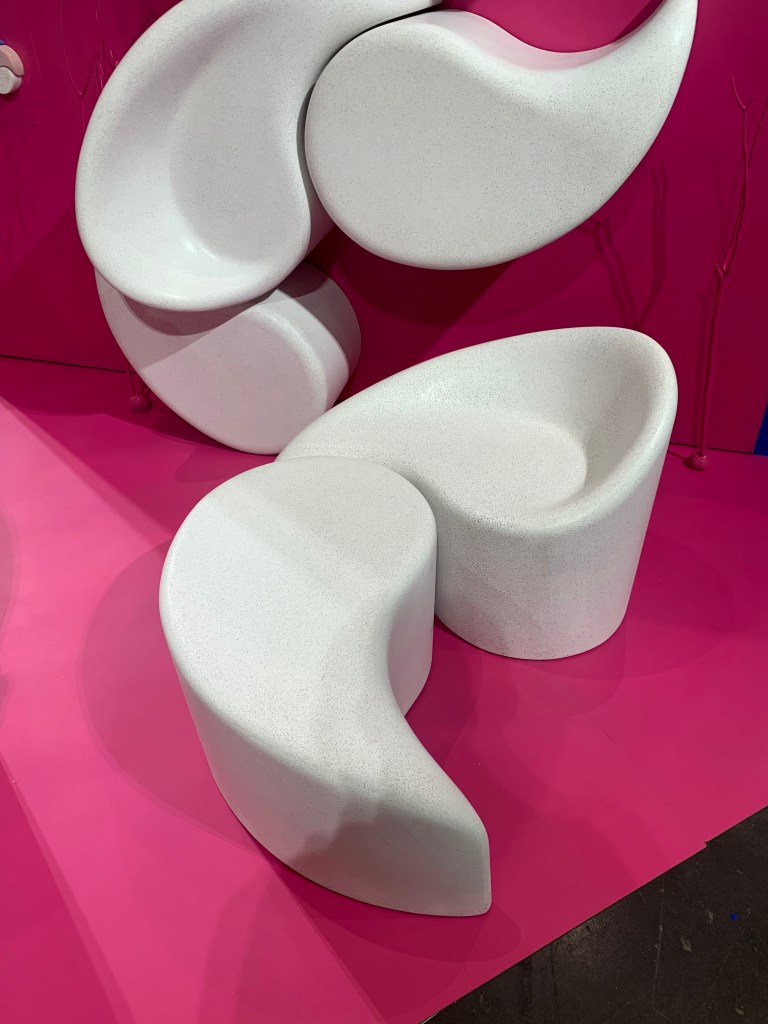
Hand cast in the US from thin wall resin, the Polli collection from Zachary A. Design has a real amorphous look that I felt could quickly adapt to outdoor environments. Luckily, the material can be used indoors and outdoors.
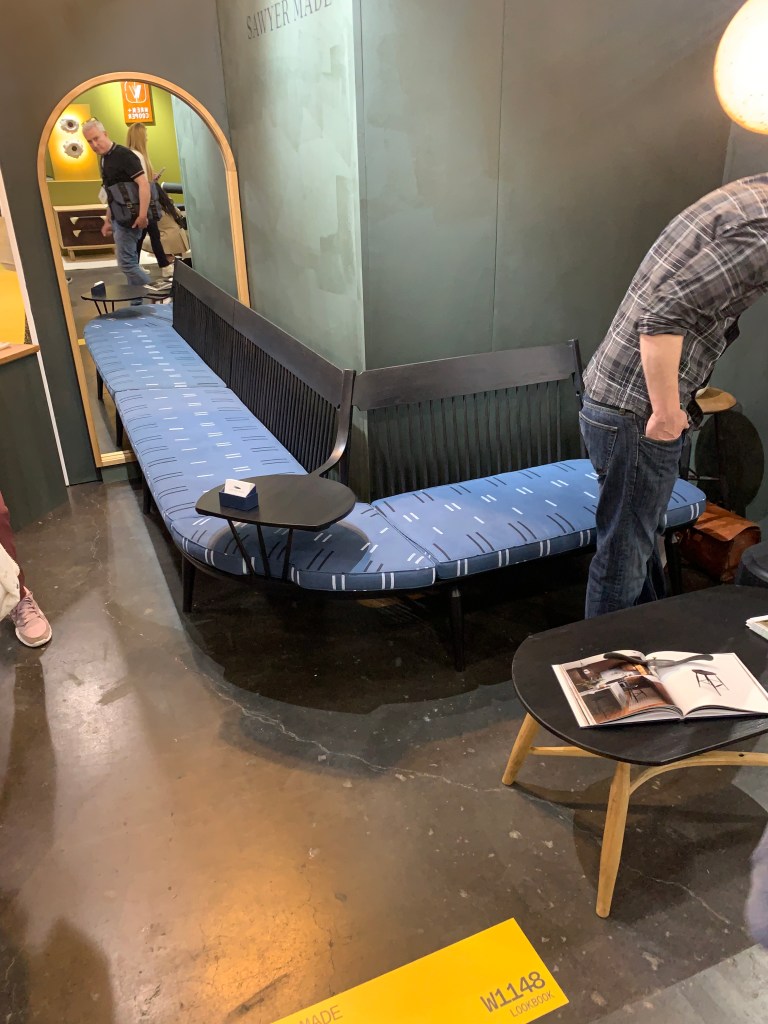
So much at the ICFF is contemporary. It is, after all, right there in the name! When I saw the work at Sawyer Made, the classic traditional shapes and forms were a bit startling. This is beautiful handcrafted work.
There are often items that defy category; where interest is not typically found. A few of those popped up and I could not help but notice.
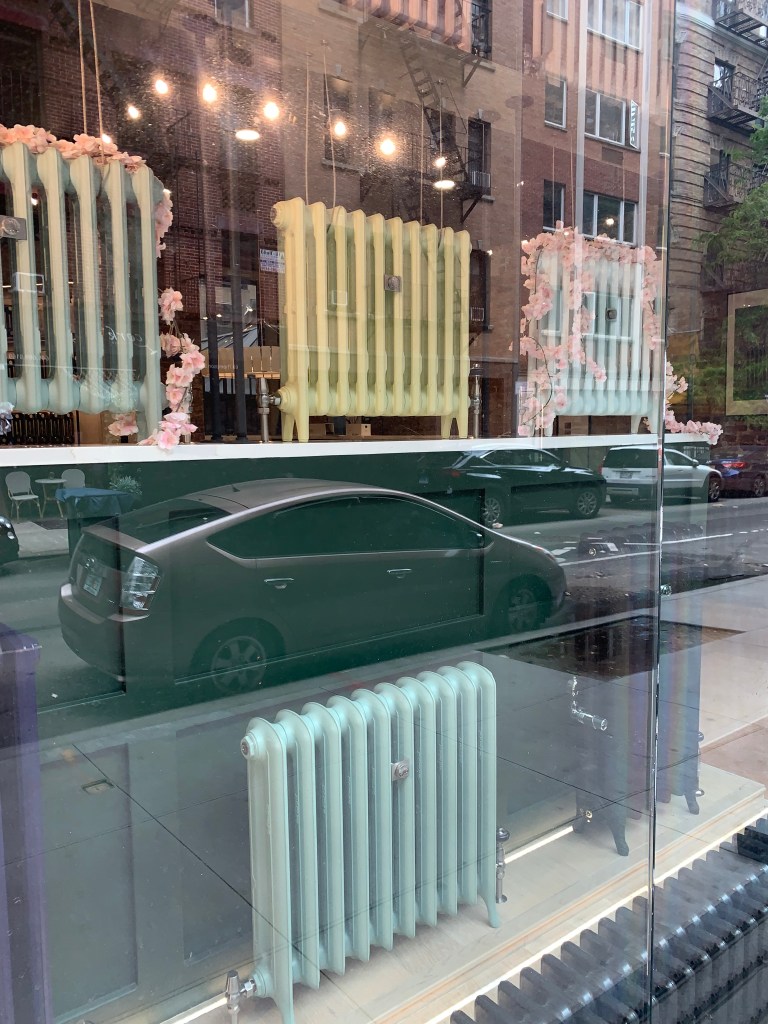
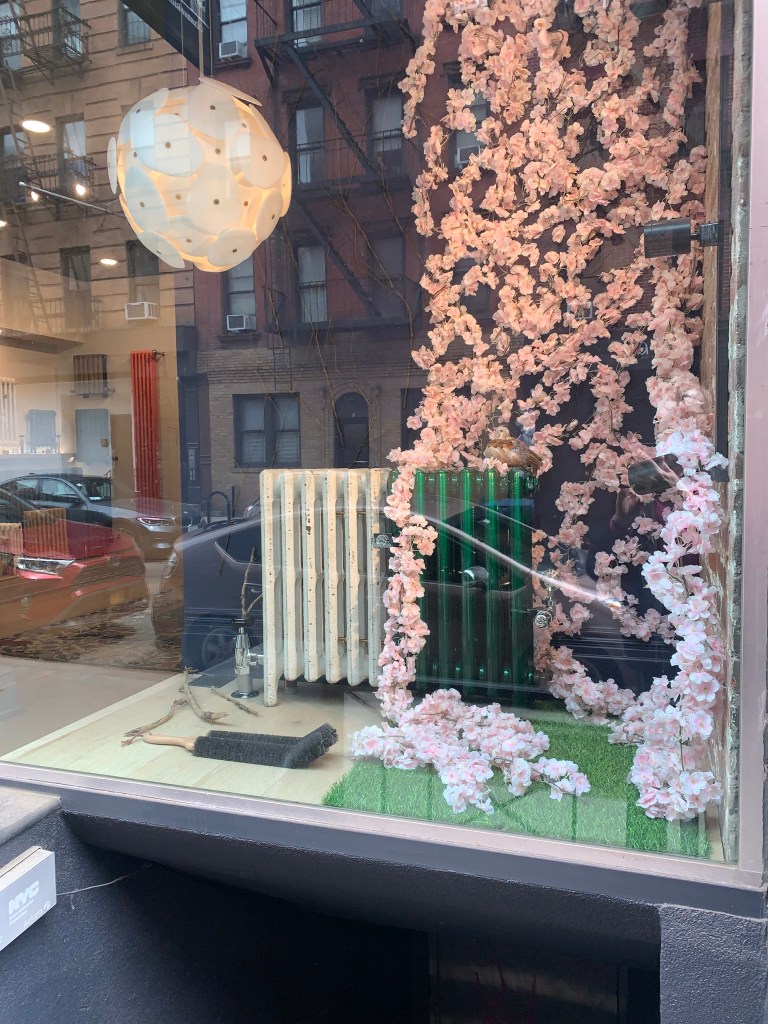
New York 2024 – Castrads radiators New York 2024 – Castrads radiators
If you live in an older home (like me!) and have looked at beaten-up radiators you can imagine the excitement stumbling upon Castrads. They can either create bespoke replacements or refurbish your old, worm unit. Radiators are such a dominant piece of architecture in an older home and very few people know what to do with them, they just sort of “exist” in perpetuity, brown, decaying and hissing. What a refreshing difference new radiators can make to a space.
Equally ignored are fireplace grates. Most of us have probably never replaced one and fewer have thought about them overall. DFA Fire Chair has created a better grate that allows wood to burns better, prevents fire “spitting” and reduces smoke escaping into the living space. That it is a much sexier design is simply icing on the cake.
We might not think of storage as a place for clean and effective design, but Ylisse does. They have developed a collection of beautifully simple, clean storage accessories. Shelves, coat racks, magazine pockets and tables are solid and simple. Made in Canada, they are also well priced. Can we ask for more?
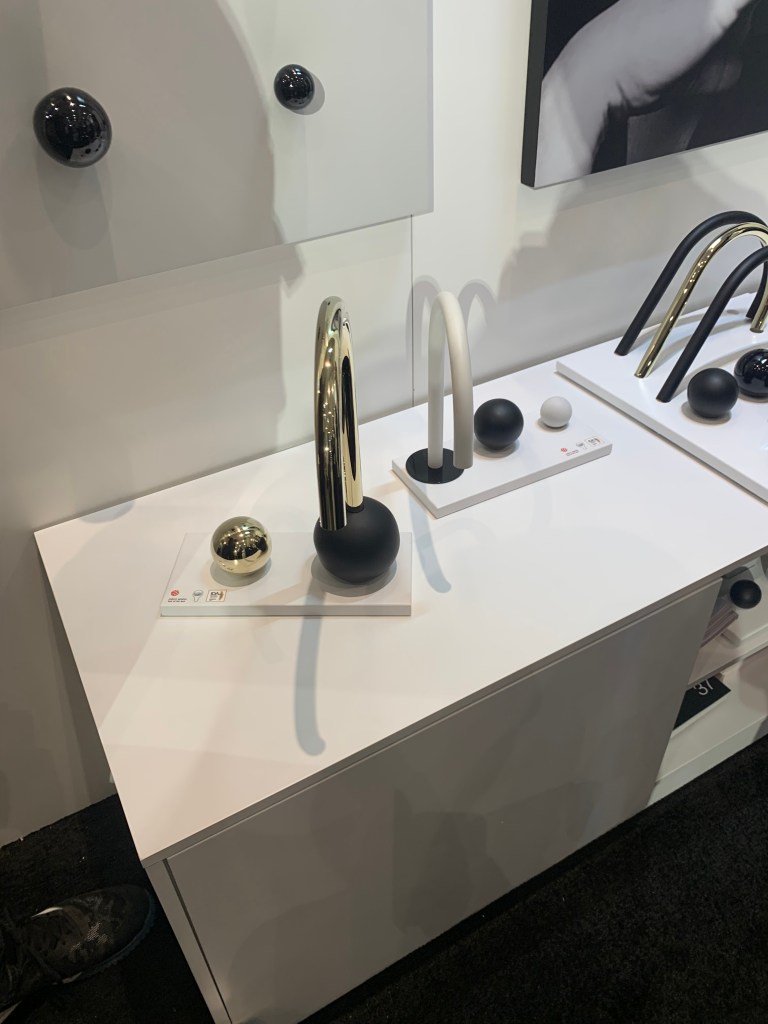
Perhaps the most exciting plumbing I saw this trip was from a Quebec based, family owned plumbing manufacturer, Baril. I’ve never heard of them, but found their new designs, which incorporated spheres into the faucets very creative and exciting.
I haven’t thought much about exterior hardscapes, but the products offered by Prism Hardscapes was interesting. Fire pits, planters and outdoor furniture had a nice clean look.
Prado wants technology to disappear into a home. “Invisible Home Technology” is their slogan. There when you need and invisible (or barely visible) when no longer required. They started with an award winning, round C/O and have moved into recessed lighting that is combined with ventilation. At this point, no information is available online for their lighting. Let’s watch this space. It could be exciting.
While at the hotel gym prior to the show, I noticed that the huge and heavy mirrors affixed to the gym wall were pulling away from their mountings. One of the three mirrors was akimbo, looking very precarious. I thought of this as I walked past Lite Mirror while a person was tossing about a VERY large mirror. To solve this problem of weight, they use a highly reflective optical film to create unbreakable, glassless mirrors. The available sizes are very large, so most applications can be filled. Good news for a particular hotel gym I use.
Reishi is a proprietary name for the mycelium based leather alternative developed by MycoWorks. They promise equal durability, performance and feel. I agree on the feel. If I didn’t know better, I’d have said it was fine calves leather. Of course, I can’t speak to the longevity, but over the years there have been many attempts to find a vegan replacement for leather. While I’m not a fabric expert, I’d say they are getting mighty close.
As you can see, there is much to gather from related industries. Lighting shares the home with all of these things. To understand them is to understand how they will comingle with illumination. We want the very apparent product, such as a chandelier and pendant to work together, but we also need to respect the room as functional lighting is positioned. Mutual respect will deliver excellent results for the overall design of a home.
Of course, my main reason for writing this blog is lighting, but shows such as BDNY offer other products beyond lighting. Likewise, New York is New York is New York. I couldn’t resist the opportunity to see the new production of “X: The Life and Times of Malcolm X” at the Metropolitan Opera. Very good, with amazing vocals provided by Leah Howard as Betty Shabazz. Even though the ending is known to all, in this telling, it was riveting. I was very interested in the retrospective of the work of Judy Chicago at The New Museum. I especially enjoyed her earlier work, but was somewhat unaware of her pieces dealing with childbirth, “The Birth Project.” The collaborative fiber/needlework pieces were stunning. I love theater. My wife and I were able to see the original production of “Sweeney Todd” MANY years ago, so I thought it would be fun to see the most recent production. It was excellent. I also saw the just opened, “Harmony” (Very Good!) The soon closing, “Here Lies Love” (some of the most inventive staging I’ve seen in years) and the hottest show on Broadway, “Merrily We Roll Along” (a mesmerizing revival of Steven Sondheim’s first theatrical failure.) Dinners at Shuka, Le Rock and Claud were uniformly excellent. Most importantly, here are a few non-lighting things I found of interest.
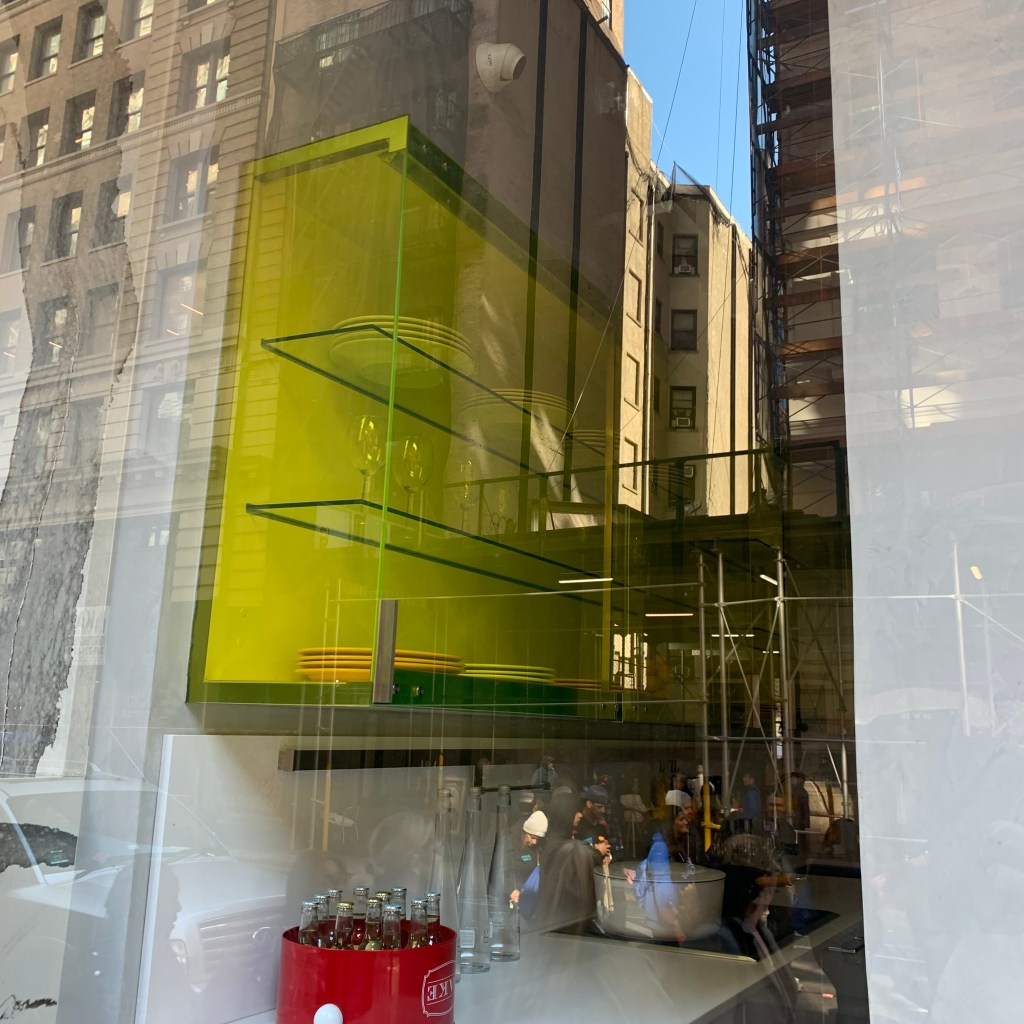
The Klein Kitchen & Bath showroom in the Flatiron design district showed a kitchen with tinted glass upper cabinets. We’ve moved from cabinets, to no upper cabinets, then a rebuke of that shift. Could this be the next option? I found it interesting.
I suspect I don’t think much about doors and wall systems, but the showroom for the Italian firm, Rimadesio is elegantly beautiful. As we live in a world with more “open-space” design, there is an inevitable desire to cordon ourselves for privacy or quiet. Done tastefully, a space can look right, even with the addition of such grand architectural elements.
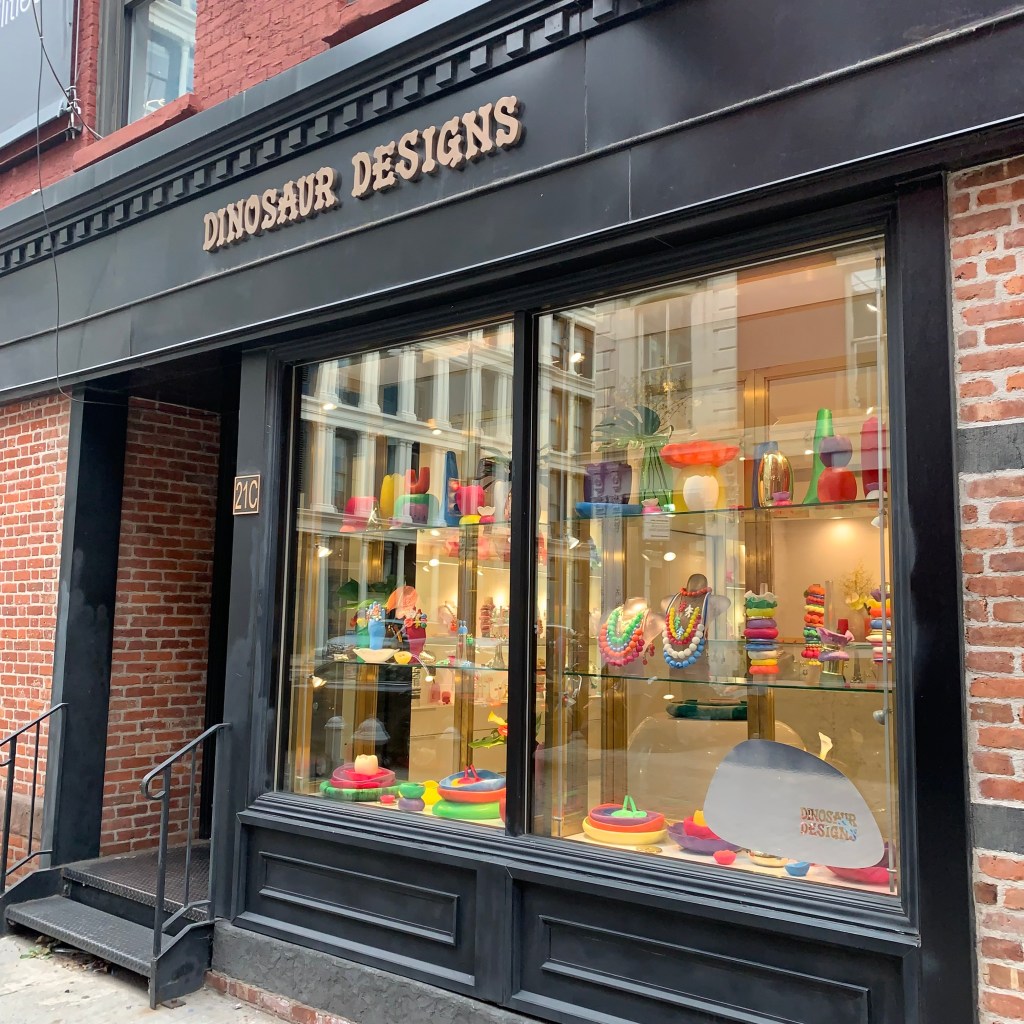
Everyone and every space needs a jolt of color. The Dinosaur Designs showroom is a reprive to a world of beige. Glass bowls, drinkware, plates, vases and equally colorful rugs allow this space to explode with possibilities. Need to differentiate a room? Check out these options!
New York 2023 – Dinosaur Design Colorful Display Window
There is a class of “full function.” smart, high-end toilets offered today by both Kohler and Toto. The Kohler Numi was perhaps the first to gain my attention. It is a beautiful piece. Their subsequent designs are equally intriguing. Toto, on the other hand is offering very pedestrian designs with the same features. They appear clunky and oversized. Smart toilets are substantially more expensive than “standard” toilets and for that reason, I believe Kohler has the right idea. Combine the higher price with higher style to make the cost more palatable. I’ve learned from friends in the plumbing business that Toto quality is superior to Kohler. I suspect that might be better debated on an episode of “Firing Line.” At this juncture, I think Kohler is approaching smart toilets correctly. As the technology becomes common, opinions might change.
This was unique. SG Tree Art Rugs showed rugs made from strips of leather shaped as a slice of a tree trunk. Yes, a niche market, but really beautiful work.
BDNY 2023 – SG Tree Art – Rugs borrowing the look of tree trunks
Ceramic Tile
There are a lot of tile showrooms in the Flatiron Design District. All were also represented at BDNY, so I had a double helping of influence.
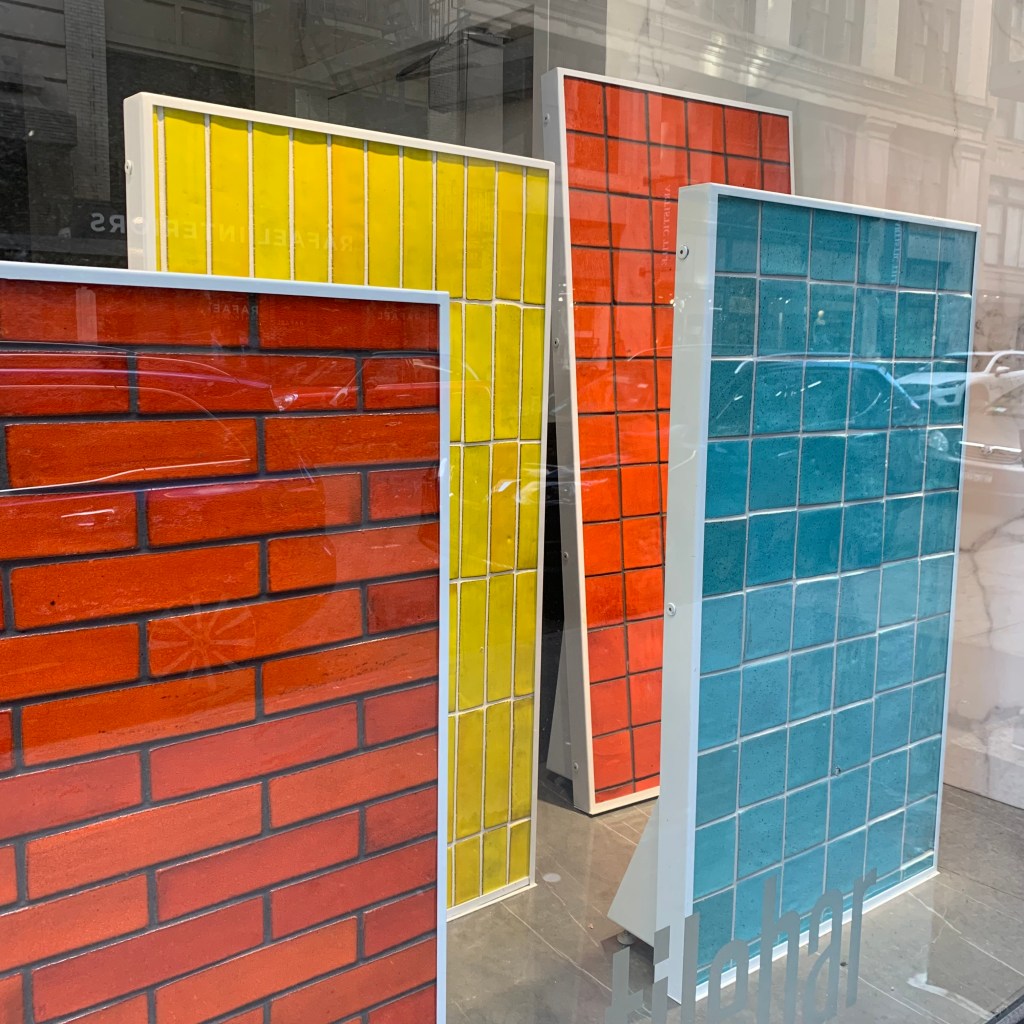
Tilebar showed their new collection of high-gloss, bold color tiles. These reminded me of the walls on my elementary school building, constructed in the late 50s. Placed pell-mell across the surface of typical brown bricks were these highly glazed, colorful anomalies. I loved it. Thinking back, I wonder if this was done to help kids realize they could be diamonds in the a field of chaff, or just some yeoman laborer trying to make mundane work more fun.
New York 2023 – Tilebar – Colorful, high gloss tiles
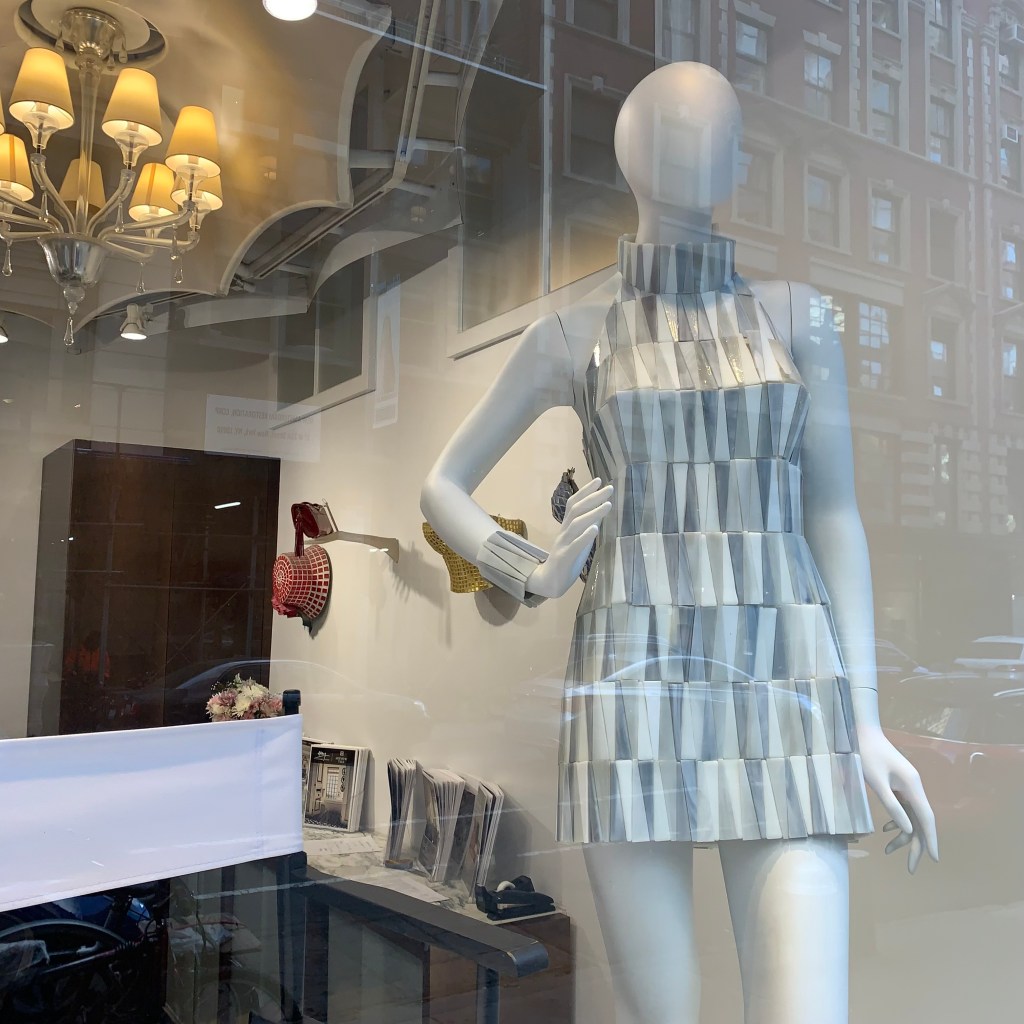
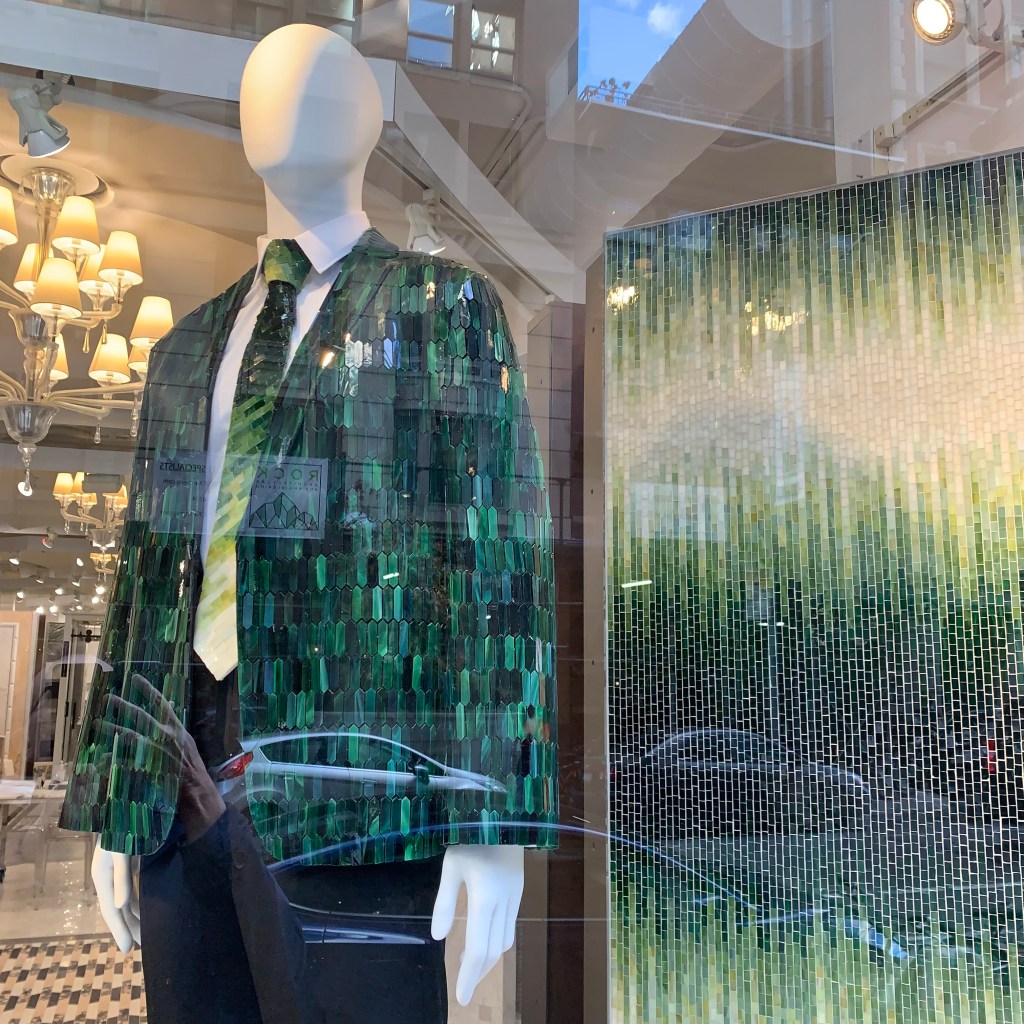
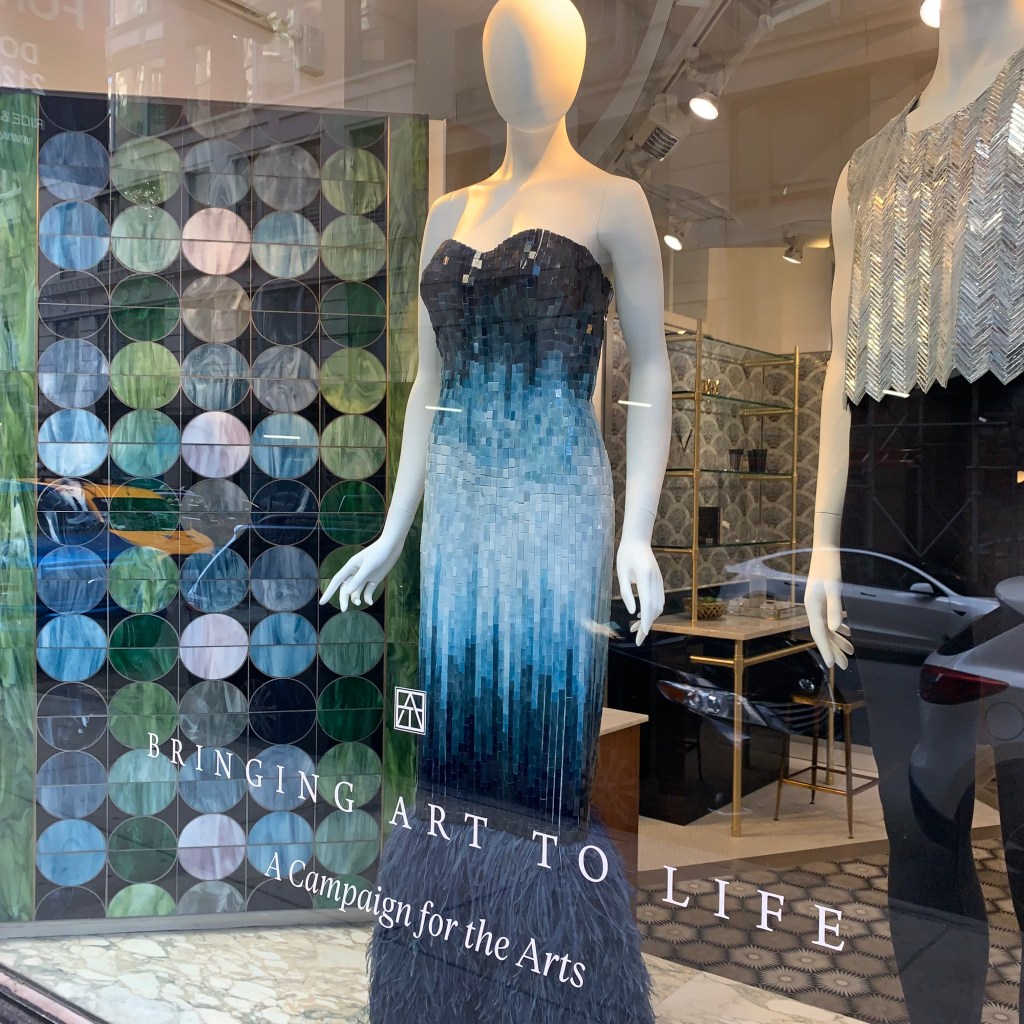
The windows of Artistic Tile were dressed with mannequins using tile and mosaic as clothing. This was a nice way to help people understand the flexibility of tile as a wall or floor covering. Tile can be a media used in places beyond those currently considered.
New York 2023 – Artistic Tile – using mannequins to show the flexibility of tile and mosaicNew York 2023 – Artistic Tile – using mannequins to show the flexibility of tile and mosaicNew York 2023 – Artistic Tile – using mannequins to show the flexibility of tile and mosaic
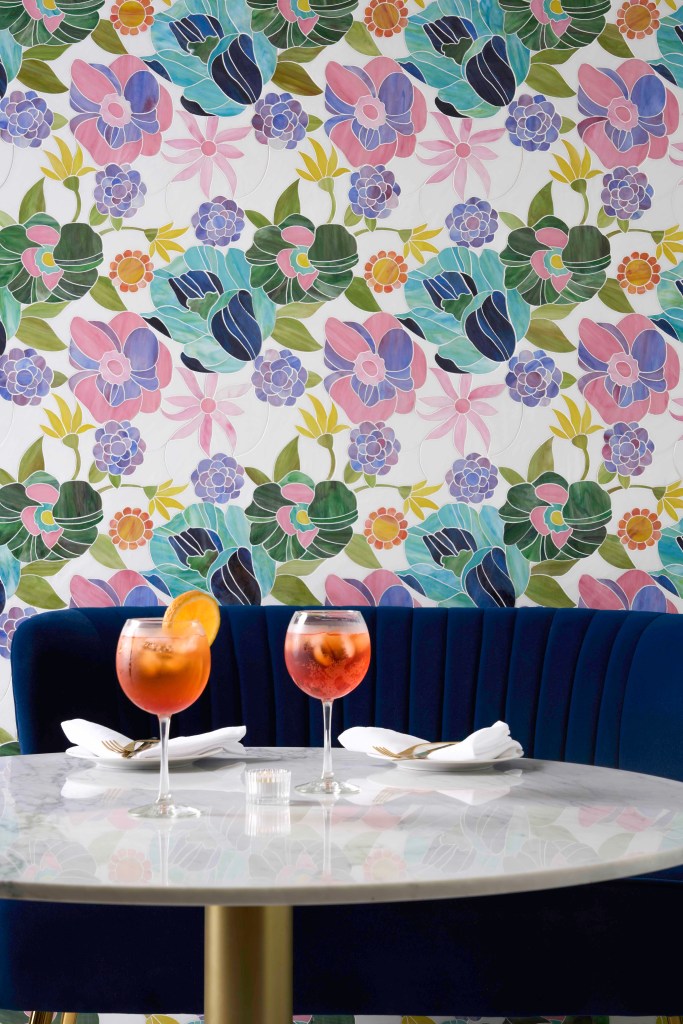
The new Botanicus collection designed by Allison Eden for Akdo is a colorful arrangement of glass mosaic arranged in a floral pattern. An entire wall has been completed in their showroom and it was such a bright spot, it was impossible to ignore. This would certainly enliven any residential space.
A trip to New York can be inspiring and exciting. I always come away exhausted, but replenished. I hope this short recap can help as you consider your next project, with or without lighting.
I have been involved in lighting for over 45 years. During that time, I believe I have learned a thing, or two. I hope to share share some of that information with you through regular blog posts. If you are interested to know more about residential lighting, stop back to this site, or sign-up below to receive notice when I’ve posted something new. If you have questions about lighting, let me know, it could be the topic of my next blog post! My hope is that I can provide something helpful and meaningful.













 Lighting by Jeffrey