
The recently released “2025 State of the Nation’s Housing” report from the Harvard Joint Center for Housing Studies is a daunting read. Try as I might, I could not find a silver lining in this cloudy collection of stats and data. As anyone involved in decorative residential lighting knows, there is a close correlation between home sales and lighting sales and like the relationship between Harvard University and Donald Trump, it looks rocky.
Let’s start with a few statistics that should make us all a bit uneasy.
- The median price for a previously owned home has risen to $412,500.
- The “Home Price to Income Ratio” has risen to 5.0:1, the highest it has been since the housing bubble of 2006.
- Of the top 100 metro areas, only three had a “Price to Income Ratio” below 3.0.
- The monthly mortgage payments on that median home have reached record highs of $2560. That is an incredible 40% higher than 1990 after adjustments for inflation.
This reality has resulted in even more harrowing information.
- The lowest number of previously owned home sales since 1995 at 4.06 million.
- A decline in home ownership to 65.6% of the population.
- A record high median age for 1st time home buyers at 38 years old.
- Add to this another stat. The Leading Indicator of Remodeling Activity (LIRA) also just published, indicates lower than expected home renovation and repair activity with just a 1.2% growth for 2026. (to the 2nd quarter)
As folks involved in supplying decorative accessories to homeowners, this does not bode well for us. New home ownership usually sparks spending on redecorating and remodeling. No new homes means no new lighting purchase.
We might be encouraged by the increase in rental market participation as an alternative, but according to the report, that too is a place of concern. Renters are experiencing an affordability crisis.
- A record number of households are spending more than 30% of their income on rental housing at 22.6 million.
- A record number of households are spending more than 50% of their income on rental housing at 12.1 million.
- There are now record low amounts of remaining income after paying for housing of only $250/month for renters who earned less than $30,000/year.
- There are record levels of homelessness, now at 771,480 humans.
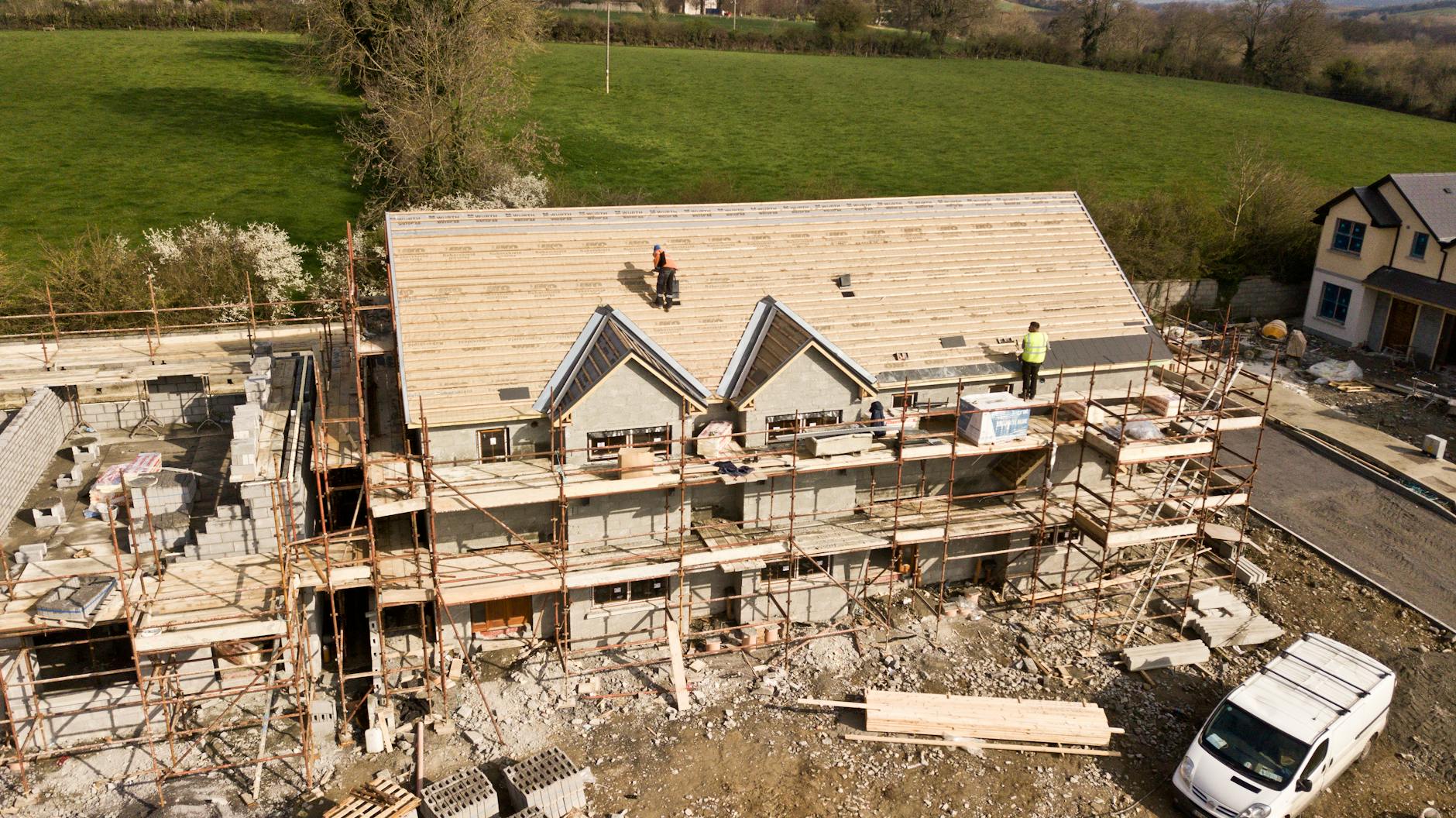
Even the good news is tempered with red flags. 1.02 million new single family homes were completed in 2024, representing a 3% increase over the previous year. A 7% increase in starts was reported for 2024 as well. However, to deal with the rising price of a home, homes are now equipped with fewer or cheaper amenities. The average size at 2150 sq. ft. is the third decline in three years. The average price for a new home fell to $420,300, because builders were forced to offer incentives and mortgage rate “buy-downs.” Pointing to the reality, the reports suggested this was an untenable situation that could not legitimately continue. Inevitably, prices would need to rise, meaning fewer units would be sold. Add to this the tariff implications and the amount of new construction homes is sure to plummet.
Splashing cold water on the “it’s got to get better” argument, household formation was also included in the report. For the second year, there is deceleration. New homes are needed as new households are formed. A major driver of new households is immigration. With the near total elimination of immigration provided by the new presidential administration, a slowdown is on the horizon. Immigration is not, however, the only bellwether that should draw concern.
- In 2026, Baby Boomers will reach the age of 80 and this massive driver of economic power will experience accelerated levels of mortality that will NOT be replaced with the next generation’s new household replacement levels.
- As can be witnessed by the recently passed “Big Beautiful Bill” (I have a few other nom de plumes that could replace that moniker) federal housing assistance will not be maintained, further exacerbating the cost complications of housing.
What Can Lighting People Do?
I worked with a guy years ago who self-deprecatingly referred to himself as, “just an old light bulb salesman.” A few drinks into an evening and added adjectives were pasted onto his faux title. Like my former coworker, we just want to create, market, design, employ and sell lighting. How do we do this in this new environment? Here are a few thoughts. I’m sure you have a number of your own.
- Cater to the Boomer generation and their much smaller sister, the “X” generation. Together they command about 75% of wealth in the United States today and they are viable consumers for at least ten, perhaps twenty years. Just realize, they are a diminishing entity.
- Wealthy people are now in the driver’s seat. As we see from the afore mentioned federal funding legislation, we will be witnessing the greatest transfer of money from the middle-class and working poor to the wealthy and “well to do.” Cater to this consumer. This is a small, but mighty block of people, if you can figure out how to meet their needs, you can win.
- Despite the setbacks, a lot of homes and apartments will be built, but they will likely be of lower cost, so that means a need for viable, low-cost lighting. What does that mean today? What will it mean tomorrow? I expect to see a total reassessment of what lighting is included in new construction, tract housing and multi-family housing, Forget what is used today and invent the low-cost requirements of tomorrow. If there is ever a time to toss away the box and consider what lies beyond, it is now.
- Growth might be reduced. With that inevitability, how do you plan for that? A non-rising, bottom-line isn’t necessarily a bad thing, as long as you understand this reality,
- Does the “middle class” disappear? Are we about to find ourselves in a world with super wealthy and everyone else? Based on the reality of politics today, this looks like the future. If that is, in fact the reality, companies and distributors might need to bisect their lines to accommodate the new norm.
This information and many others like it is available from many sectors. There is lots of information and some of it is conflicting. Read as much as you can and digest it well. I believe you will find that the home furnishings market is moments away from a paradigm shift. Are you ready? Is anyone ready?
 Lighting by Jeffrey
2 replies on “Housing Stats and Lighting Use”
Jeffrey,
This is exceptional insight.
Thank you for sharing.
Are you doing any classes online? I have not seen any from Lumen lately.
If so, please send me the link. I love your teaching.
Carolyn Jefferson
Behind Closed Doors 9090 Skillman 182A PMB 254 Dallas, TX 75243
972.234.2025 office
http://www.bcdhome.com
>
LikeLike
Carolyn,
Thanks so much! Glad it was helpful.
I am supposed to do some sessions later in 2025, but they have not yet reached out. Stay tuned!
Jeff
LikeLike